
Key Takeaways
1. Dyslexia: A Hidden Catalyst for Drive and Detail
My brain does better with nonfiction, but only if the words have room to breathe.
Early struggles. Gavin Newsom's childhood was profoundly shaped by undiagnosed dyslexia, a neurological disorder that made reading and writing a constant battle. This challenge led to early academic difficulties, including being "booted out" of third grade and struggling with basic tasks like pronouncing words or reading aloud. The lack of a formal diagnosis meant he navigated these struggles in isolation, often feeling a deep sense of frustration and inadequacy.
Compensatory strengths. Despite the academic hurdles, dyslexia inadvertently fostered a unique set of compensatory skills and an intense work ethic. His difficulty with linear text led him to excel in visual subjects like art history and to develop an acute memory for information presented in accessible formats. This neurological wiring also fueled a "compulsion to master every facet of policy and every number in the state budget," driving him to meticulous note-taking and record-keeping as a means of control and understanding.
Redefining learning. The discovery of books with "wider spaces, bigger type, paragraphs broken up and punctuated with charts and graphs" was a revelation, allowing him to engage with complex subjects in a way that clicked with his brain. This experience, coupled with his grandmother Jean's unconventional art lessons that reframed "mistakes" as paths to new forms of perfection, taught him to embrace his unique cognitive process and build confidence in his ability to learn and excel.
2. The Weight of Dual Family Legacies
The two realms of my life, the characters of my mother’s world and the characters of my father’s world, did not fit together in the least.
Contrasting worlds. Newsom's upbringing was a constant negotiation between two vastly different family legacies. His paternal Newsom side, rooted in Irish-American San Francisco, was characterized by political ambition, business acumen (Bank of America, real estate), and a love for storytelling and social engagement, often intertwined with drinking. They were "kingmakers" and community builders, but also carried their own "Irish curse" of emotional distance and alcoholism.
Bohemian intellectuals. In stark contrast, his maternal Menzies and Addis families were a lineage of brilliant, daring, and often troubled misfits. They were suffragists, anti-fascist activists, pioneering medical researchers, and bohemians who valued intellectual pursuits and social justice. However, this side also carried the heavy burdens of:
- Alcoholism and depression (Grandpa Arthur)
- Anorexia and emotional repression (Grandma Jean)
- Political persecution (Great-Grandpa Thomas Addis, tracked by the FBI)
Navigating identity. This stark duality created a complex landscape for Newsom's identity. He moved effortlessly between the "stone castles of Nob Hill" and the "flophouses of the Tenderloin," but the emotional and social chasm between his parents' worlds left him with a "narrative shot full of holes." His father mythologized the past, while his mother concealed it, leaving him to piece together a history that profoundly shaped his understanding of himself and his place in the world.
3. Entrepreneurship: A Path Forged by Irreverence and Resilience
Our idea had quickly turned into something real.
From busboy to visionary. After college, Newsom's entrepreneurial journey began with a series of seemingly mundane jobs, from delivering orthotic inserts to working as a janitor. These experiences, however, instilled in him a relentless work ethic and an eye for efficiency. Inspired by Pat Kelley's business savvy and a desire to democratize fine wines, he conceived PlumpJack Wines, a concept that challenged industry norms by offering high-quality wines at competitive prices and by the glass.
Innovation through adversity. The path to establishing PlumpJack was fraught with challenges, including bureaucratic red tape, financial constraints, and unexpected disasters. His battles with city hall over permits and liquor licenses, coupled with a devastating heat wave that ruined a quarter of their initial inventory, forced him and his team to innovate. This led to:
- Aggressive marketing and customer outreach (free delivery, price comparisons)
- Creative promotions (Romeo and Juliet performance with free condoms)
- A bold decision to introduce screw-top bottles for fine wines, a move initially scoffed at but later adopted by industry giants like Robert Mondavi.
Culture of calculated risk. PlumpJack's growth into a diverse portfolio of wineries, hotels, and restaurants was built on a core ideology of customer relationships and a willingness to take risks. Newsom even instituted a "Failure Award" to celebrate employees who dared to innovate, even if their ideas didn't pan out, as exemplified by the humorous "catfish in the pond" incident. This entrepreneurial spirit, honed by early struggles and a drive for perfection, became a foundational aspect of his public persona.
4. The Audacity of Civil Rights: Leading on Same-Sex Marriage
I could not have given him a more simple and true answer, and it seemed to hit Joe, who had built his career out of representing the underdog, right in the gut.
A moral imperative. Newsom's decision to legalize same-sex marriage in San Francisco, just 36 days into his first term as mayor, was a direct response to President Bush's call for a constitutional amendment to ban it. He saw the state's Defense of Marriage Act as a discriminatory abridgment of the California Constitution's promise of "inalienable rights" to "safety, happiness and privacy." This conviction, born from a deep sense of justice for his constituents, outweighed the political risks.
Defying convention. Despite strong opposition from his own staff, who warned of "political suicide," and a last-minute intervention from his father and legal mentors, Newsom pressed forward. He worked with LGBTQ+ advocates and city officials to fashion a plan, leading to the "Winter of Love" where 4,035 same-sex couples were married at City Hall. This bold act, though temporarily overturned by the state Supreme Court, ignited a national conversation and laid the groundwork for future legal victories.
Political fallout and vindication. The decision drew widespread criticism, with some Democratic elites and even LGBTQ+ allies accusing him of being a "naive attention seeker" who imperiled the cause. He was snubbed by the Democratic National Convention and then-Senator Barack Obama. However, Newsom's unwavering stance was eventually vindicated when the California Supreme Court legalized same-sex marriage in 2008, and later, the U.S. Supreme Court extended that right nationwide. His actions, though controversial at the time, cemented his reputation as a leader willing to take principled stands.
5. Navigating Personal Betrayal and the Quest for Self-Truth
It was the stupidest and also briefest of affairs.
A public fall. Newsom's affair with Ruby Rippey-Tourk, his appointments secretary and the wife of his deputy chief of staff, Alex Tourk, became a public scandal that forced a painful reckoning. The "worst betrayal of my life" exposed a pattern of emotional distance and self-sabotage, prompting him to seek intensive counseling with Mimi Silbert, the formidable founder of Delancey Street. This period marked a crucial turning point in his personal growth.
Unpacking the past. Silbert's direct and unspsparing approach forced Newsom to confront the deep-seated psychological patterns stemming from his childhood. He explored how his dyslexia, his parents' divorce, his "latchkey kid" upbringing, and the contrasting worlds of his family had contributed to his emotional repression and his tendency to seek comfort and purpose in isolation and relentless work. This therapeutic journey aimed to "disconnect the loop" and build a more authentic self.
Rebuilding and self-awareness. The process was not about finding excuses but about understanding the roots of his behavior. Silbert challenged his "thin plaster" approach to fixing internal cracks, pushing him to "go a level deeper" into his feelings. This period of intense self-reflection, though painful, ultimately led to a greater sense of self-awareness and a commitment to becoming a more present and emotionally engaged partner and father, laying the groundwork for his relationship with Jen Siebel.
6. California's Environmental Leadership in a Hostile Political Climate
This became one of my first real lessons in the power and gall of a corporate lobby.
Local action, global impact. As mayor, Newsom recognized that environmental challenges like global warming were fundamentally local issues. Inspired by a conversation about Ireland's plastic bag tax, he spearheaded San Francisco's initiative to become the first U.S. city to ban plastic shopping bags, despite fierce opposition from corporate lobbyists. This bold move, initially met with resistance, spurred other municipalities and even manufacturers to adopt more sustainable practices.
Green Cities movement. Newsom collaborated with other forward-thinking mayors, like Seattle's Greg Nickels, to create a coalition of over six hundred U.S. cities committed to reducing greenhouse gas emissions, mirroring the rejected Kyoto Protocol. San Francisco hosted "World Environment Day," showcasing its innovations in composting, electric vehicle fleets, and biodiesel fuel. These efforts demonstrated that a "Green Economy" could create jobs and reduce emissions without harming business, directly challenging the prevailing narrative of environmental deniers.
Clash with federal policy. This progressive environmental stance put California on a collision course with the Trump administration, which actively sought to dismantle environmental protections and revoke California's unique authority to regulate tailpipe emissions. Newsom viewed this as a direct assault on California's values and its leadership in combating climate change. His first encounter with Trump, amidst the devastation of the Paradise wildfire, highlighted the stark contrast between California's commitment to climate action and the federal administration's "hopelessly incurious" denial.
7. The Complexities of Fatherhood in a Life of Public Service
I wanted to believe I wasn’t the distant presence in my children’s lives that my father had been in mine.
A conscious effort. Newsom's journey into fatherhood was marked by a conscious desire to be more present than his own emotionally distant father. The low-profile role of lieutenant governor allowed him to be home for dinner, bathe his children, and put them to bed, a stark contrast to his earlier, all-consuming work habits. He learned the nuances of parenting, from the "sopoforic of swaddling" to the uncalmable cries of a baby.
Balancing ambition and family. Despite his intentions, the demands of public office and his own "compulsive notion that hard work led to a state of being ahead" often pulled him away. He envied fathers who had the privilege of more time, acknowledging that he couldn't pass on his beloved game of baseball to his sons, a sport that had "saved" him as a child. This struggle was further complicated by Jen's own demanding career as a documentary filmmaker and advocate for gender equality, which highlighted the uneven division of domestic labor.
Learning from his children. The emergence of dyslexia in his own children was a heartbreaking but galvanizing moment, prompting immediate diagnosis and remediation, unlike his own childhood experience. His children, in turn, taught him about his own "weak spot" – guilt – which they quickly learned could be a "sure path to clemency." His sister Hilary's anecdotes about his protective nature as a brother offered a glimpse into a past self, reminding him of the innate kindness he sought to embody as a father.
8. Confronting the Past: Unraveling Family Secrets for Deeper Understanding
I couldn’t very well puzzle out myself without puzzling out who and what had come before me.
The need for deeper truth. After his public scandal and subsequent therapy, Newsom embarked on a determined quest to understand his family history beyond the sanitized narratives he had grown up with. He sought out his mother's older sister, Aunt Cindy, a "pistol of a woman" with "no filter," who was willing to reveal the painful, unvarnished truths that his parents had concealed. This deep dive was essential for him to comprehend his own "demons" and emotional patterns.
Unveiling maternal trauma. Aunt Cindy's revelations painted a picture of profound dysfunction and repression on his mother's side. He learned about:
- Grandma Jean's hidden past: a "Red" activist, a failed first marriage, and a secret biological father for Aunt Cindy.
- Grandpa Arthur's PTSD: a brilliant botanist broken by a Japanese POW camp, whose alcoholism and violent outbursts terrorized his family.
- The "house of terror" on Stanyan Street: a tiny, peculiar home where secrets, silence, and fear reigned, and where his grandmother destroyed her husband's beloved garden after he left.
The legacy of silence. His mother, Tessa, and Aunt Anne grew up in this environment, developing a "private language" and a profound muteness as a coping mechanism. Tessa's "sad and stunted upbringing" left her "clueless about so many things in life" and ill-prepared for marriage and motherhood. This understanding allowed Newsom to see his mother's struggles with new empathy, recognizing that her "unceasing motion" was a lifelong effort to provide the comforts she herself had lacked. The painful clarity of this knowledge, however, came "too late for anything but knowledge."
9. California's Enduring Paradox: A Dream Constantly Challenged and Reimagined
They are children of paradox and begetters of paradox.
A land of extremes. California, from its Gold Rush origins to its modern-day tech boom, has always been a land of paradox and reinvention. It's a place where "saints and scoundrels alike" seek new beginnings, where immense wealth coexists with profound poverty, and where natural beauty is constantly threatened by environmental calamities. Newsom's governorship inherited a state grappling with "twenty-first-century pandemic and climate change, by drought and wildfire and the rise of authoritarian forces."
The Sisyphean task of governance. The challenges facing California are immense and often feel intractable, like the "Sisyphean nature" of homelessness, where for every person housed, new individuals arrive on the streets. The state's geography itself, with its "sprawling landmass" and diverse ecosystems, presents a unique administrative burden. Newsom recognized that solving these problems required more than traditional governance; it demanded innovation, resilience, and a willingness to challenge entrenched systems.
A beacon of hope and division. Despite its internal contradictions and external attacks (like those from Fox News and the Trump administration), California remains a powerful lure for dreamers and a model for progressive values. Newsom's vision for the state is one that "celebrates diversity," "protects the most vulnerable," and prioritizes "clean air, clean water, or clean coastlines" over profits. This ongoing struggle to embody its ideals, to constantly invent and reinvent itself, is the essence of the "California Dream" – a dream that is both perpetually challenged and endlessly reimagined.
Review Summary
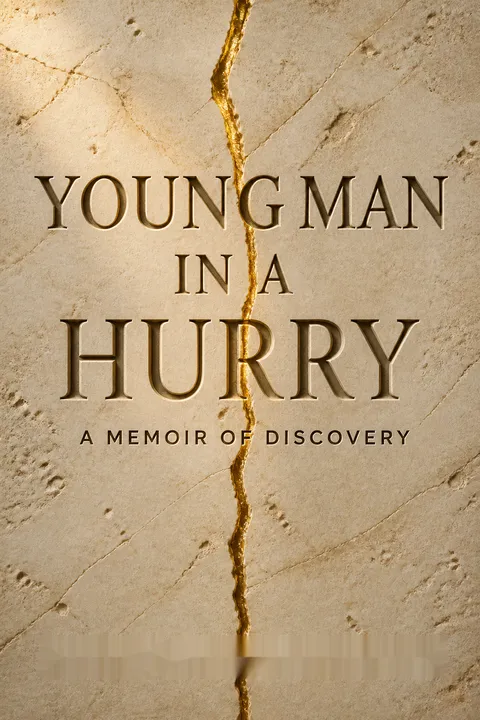
Young Man in a Hurry receives mixed reviews (3.97/5). Readers appreciate Newsom's candor about personal struggles, dyslexia, and political failures. Many praise his honest discussion of his divorce scandal and writing quality. However, a recurring criticism is his failure to fully acknowledge his privilege, particularly his connections to the wealthy Getty family. While some view him as authentically vulnerable, others see calculated self-promotion for a presidential run. Reviewers disagree on whether his mix of struggle and privilege comes across as genuine or tone-deaf. The audiobook narrated by Newsom is highly recommended.
People Also Read







Download PDF
Download EPUB
.epub digital book format is ideal for reading ebooks on phones, tablets, and e-readers.








































