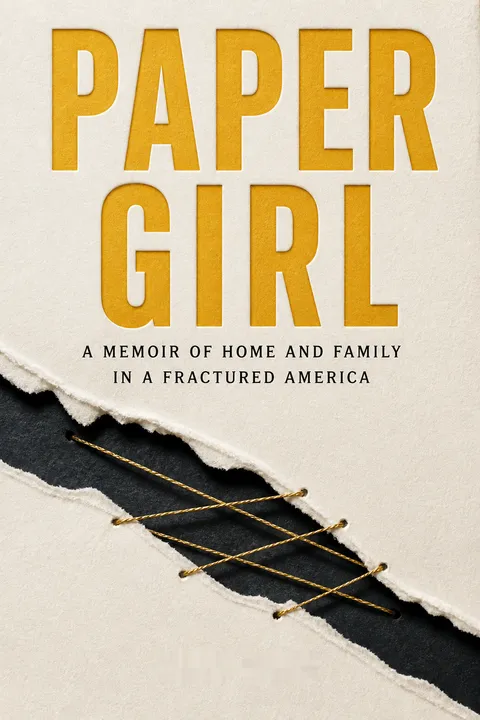

Key Takeaways
1. The Fading Promise of Upward Mobility
As I got to know Silas, I was struck by how much harder the situation was for him than it was for me.
A stark contrast. The author's journey from a chaotic, low-income childhood in Urbana, Ohio, to a stable, middle-class life through education, stands in stark contrast to the struggles of today's youth. While the author benefited from a fully funded Pell Grant in the 1980s, enabling her to attend college and escape a cycle of addiction and poverty, young people like Silas James face unprecedented barriers. Silas, despite his intelligence and ambition, found his college dreams derailed by a broken-down car and overwhelming family responsibilities, highlighting how precarious upward mobility has become.
Systemic hurdles. For Silas, even with two full scholarships to community college, unreliable transportation and family crises proved insurmountable in his first attempt. His story, and that of Maddie Allen who planned to bike 90 minutes to college, illustrates how basic necessities like a reliable car can be the difference between opportunity and despair. The author notes that while she left Urbana before falling into premature parenthood or addiction, these issues now saddle many families for generations, making escape far more difficult for today's striving poor kids.
The vanishing ladder. The author's personal experience, where leaving Urbana for Bowling Green State University was a "portal to stability," is a testament to a bygone era. Today, the "ladder of upward mobility" has been pulled away from low-wage families, replaced by economic fatalism and resentment. This shift means that even bright, determined students like Silas, who manipulate metal and gas like an artist, find themselves trapped by circumstances that were less prevalent or less severe four decades ago.
2. Education's Decline: A Systemic Betrayal
How does a community lose contact with its faith in schools? And what happens when it does?
Undermining public education. The book highlights a staggering decline in education in Urbana, both formal and informal, since the author's youth. This erosion is not just about acquiring skills but also about learning to be human beings with each other, fostering ambition, and providing role models. The community's faith in schools has waned, with many students not even finishing high school, a stark contrast to the author's era when school was a sanctuary.
Policy shifts and consequences. Decades of defunding higher education by both Republican and Democratic leaders, coupled with the privatization of college costs, have made higher education largely inaccessible for poor students. The Pell Grant, once a lifeline covering tuition, room, board, and books, now covers only about 30% of public school tuition. This has led to:
- A drop in U.S. college completion rankings from first to thirteenth globally.
- A belief among many Americans that "college makes you lose common sense" or teaches "liberal propaganda."
- A significant increase in homeschooling, sometimes for questionable reasons, further weakening public schools.
The cost of neglect. The consequences of this educational decline are profound, contributing to a poorer, sicker, and angrier community. When schools fail to provide a pathway to a better life, the social compact breaks down. The author argues that this systemic neglect has fueled partisan hatred and inequality, leaving many feeling resentful and betrayed by a system that no longer invests in their future.
3. Globalization's Scars: Economic Ruin in the Heartland
Our country still suffers the fallout of those disastrous decisions, which were cheered by business schools and Nobel Prize–winning economists, including several who have since recanted their pro-offshoring views.
The implosion of the middle class. The author attributes much of Urbana's decline to the implosion of the middle class, driven by technology, offshoring, and the decline of unions, which began in earnest after she left Ohio in the mid-1980s. Companies like Grimes Manufacturing, once the town's largest employer, were sold to international conglomerates, and production moved overseas for cheaper wages. This left communities hollowed out, with millions of manufacturing jobs lost due to trade agreements like NAFTA and China's admission into the WTO.
A "win-win" that wasn't. Politicians promised that globalization would be a "win-win" for American workers, but for many blue-collar families, it felt like a betrayal. Displaced factory workers often ended up in service jobs earning half their previous pay with no benefits, experiencing a "19.2 percent fall in their standard of living." This economic precarity, coupled with the Great Recession, led to:
- A "shared fate" mentality in small towns, often manifesting as resentment towards urban elites.
- A sense that the system was rigged, fueling anger that Donald Trump effectively tapped into.
- A severe shortage of skilled tradespeople, as vocational training was neglected and the allure of factory jobs diminished.
The human cost of "creative destruction." The economic shifts were not just statistics; they were deeply personal. The author's brother, Tim, a high school dropout, taught himself computer-aided design to climb the ranks at Honda, a rare success story. However, many others were left behind, struggling with underemployment and a sense of lost pride. The "magnificent cruelty" embedded in the idea that low-wage suffering is the cost of national greatness is a central critique, as other globalized countries avoided similar levels of child poverty and income inequality.
4. The Chasm of Political Polarization and Misinformation
The more we try, the more we find ourselves flung into opposing corners.
A fractured reality. The book vividly illustrates how political polarization has fractured communities and even families, making it impossible to agree on basic facts, let alone complex issues. The author's own family, once united, now finds itself in "opposing corners," with siblings consuming partisan news from Fox or Newsmax and embracing conspiracy theories like QAnon. This breakdown of shared reality is exacerbated by the decline of local journalism, which once provided common narratives and fact-checked information.
The rise of outrage and conspiracy. The internet and 24-hour cable news have replaced measured political debate with shock value and partisan rancor. Social media platforms, designed to profit from "amped-up outrage," have become breeding grounds for misinformation and conspiracy theories. Examples include:
- QAnon beliefs about "Satan-worshipping pedophiles" and "fake" political figures.
- The spread of false narratives about the 2020 election and the January 6 insurrection.
- The demonization of immigrants and LGBTQ+ individuals, often fueled by "white-identity politics."
The weaponization of division. This environment of distrust and anger is not accidental. Politicians and platforms exploit these divisions, turning local news consumers into national news consumers, and internet outrage into a reigning "religion." The author's ex-boyfriend, once a liberal Deadhead, transformed into an angry right-winger consuming Russian propaganda, illustrating how easily individuals can be "red-pilled" and lose their former selves in this new information ecosystem.
5. Generational Trauma and the Mental Health Crisis
This was a reality I could not have conceived of in Urbana forty years before, when I knew of no homeless people and certainly no one who’d lost a parent to overdose.
The opioid crisis's devastating legacy. The book reveals a profound mental health crisis in Urbana, largely driven by generational trauma stemming from the opioid epidemic. The author notes that the number of children orphaned by the crisis has tripled since 2015, leading to high "adverse childhood experiences" (ACEs) scores among youth. Silas James, with an ACE score of 10 (the maximum), embodies this crisis, having lost his father to overdose and his mother jailed repeatedly on drug charges.
Overwhelmed systems and unmet needs. The prevalence of trauma is overtaxing every system meant to address it. Mental health services are severely lacking:
- No full-time psychiatrists in the county.
- A six-month waiting list for counseling appointments at the only sliding-scale clinic.
- Police calls for mental health incidents have increased ninefold since the author left Urbana.
- Teen suicide attempts now outnumber overdoses.
The cycle of despair. This environment creates a vicious cycle where trauma leads to addiction, which in turn perpetuates more trauma. The author's friend, a former fire chief, now regularly revives the children and grandchildren of people she first saved during OxyContin's heyday, highlighting how addictions are now "third and fourth generation." Without adequate support, many individuals, like Silas, resort to self-medication or struggle with mental health disorders, making it incredibly difficult to break free from their circumstances.
6. Erosion of Trust and Local Institutions
Local news once served as democracy’s immune system.
The collapse of community glue. The book laments the severe decline of local institutions that once held Urbana together, particularly newspapers. The Urbana Daily Citizen, once a robust daily, is now a skeleton of its former self, printing twice a week with a minimal staff and relying on press releases. This "gaping information void" means residents know little about their neighbors' lives or local issues, instead relying on national news and social media, which often fuels division.
Distrust in authority. Beyond local news, trust in government and other institutions has plummeted. The author notes that Americans' trust in the federal government is at an all-time low, and many Republicans view journalists as "the enemy of the people." This widespread distrust makes it difficult to address community problems, as evidenced by:
- The stalled efforts to add a second school resource officer due to funding disagreements.
- The refusal of city leaders to support a grant for the Urbana Youth Center, despite its vital services.
- The rise of "sovereign citizens" who reject government authority and refuse to send their children to public schools.
A fragmented society. The absence of shared, fact-based information and trusted local voices contributes to a fragmented society where people sort themselves into "separate epistemological universes." This makes collaboration on shared economic concerns nearly impossible, as individuals become more isolated and susceptible to extreme ideologies. The author's observation that "people now knew every detail of what their national political candidates were saying and doing, but almost nothing about the lives of their neighbors" perfectly encapsulates this erosion of community.
7. The Unseen Heroes: Relentless Support for Vulnerable Youth
Flowers vowed to become that same kind of educator, one who refused to place test scores above humanity.
Going above and beyond. Despite systemic failures, the book highlights dedicated individuals who act as lifelines for Urbana's most vulnerable youth. Christina Flowers, the school attendance and homeless liaison, embodies this spirit, driving 115,000 miles in five years to check on truant students, mediate family conflicts, and provide essential support. Her personal history of overcoming childhood trauma fuels her commitment to ensuring no child is left behind, even offering her guest bedroom to Silas.
Filling critical gaps. These "chaos coaches" and mentors step in where families and traditional systems fail. They provide:
- Transportation for homeless students (McKinney-Vento Act).
- Emotional support and counseling, often acting as de facto therapists.
- Life skills training, from basic hygiene to job interview etiquette ("how to human").
- Advocacy for students' educational and personal needs, navigating bureaucratic hurdles.
- Financial assistance, like gas cards or help with FAFSA paperwork.
The power of human connection. Figures like David M. Sapp, Silas's band director, who offered his office as a "de facto counseling center," and Natalie Yoder, who took Grace Slagle into her home, demonstrate the transformative power of unconditional support. These individuals prioritize humanity over metrics, understanding that a stable, caring environment is crucial for traumatized youth to thrive. Their efforts, though often localized and underfunded, offer glimmers of hope amidst widespread despair.
8. The Perilous Price of Ignorance
Knowledge will forever govern ignorance: And a people who mean to be their own Governors must arm themselves with the power which knowledge gives.
Madison's warning. James Madison's quote serves as a powerful epigraph, underscoring the book's central argument: a popular government cannot function without popular information. The current state of Urbana, plagued by misinformation, declining education, and a fractured populace, is a tragic testament to the price of ignorance. When people lack access to reliable facts and critical thinking skills, they become vulnerable to manipulation and extreme ideologies.
Rigid thinking as a trauma response. The author connects the rise of conspiratorial thinking and hatred to "rigid thinking," which an addiction scholar describes as a "trauma response." Decades of job losses, economic precarity, and the opioid crisis have left many middle-aged white Americans feeling a "loss of hope" and "expectations of progress." This vulnerability makes them susceptible to narratives that blame "others" (immigrants, LGBTQ+ people, liberals) for their struggles, rather than the systemic issues that have failed them.
The erosion of critical thought. The decline in education, coupled with the proliferation of unchecked online information, has created a populace less equipped to discern truth from falsehood. The author's ex-boyfriend, once a liberal, now believes the New York Times is "wholly owned by the CIA," illustrating how easily individuals can be drawn into alternative realities. This collective ignorance, fueled by a desire for simple answers and a sense of belonging, poses an existential threat to democracy, as people become unwilling to engage with facts that challenge their tribal beliefs.
9. Reclaiming Hope: Action Over Apathy
We must scramble for hope fiercely, the way a farm girl wrestles a muddy sow.
Beyond despair. Despite the bleak landscape, the author refuses to succumb to "doomism," advocating for active resistance and rebuilding. The book concludes with a call to action, emphasizing that while systemic problems are vast, individual and community efforts can make a difference. This involves moving beyond apathy and engaging in concrete steps to foster knowledge, empathy, and collective well-being.
Practical steps for engagement: The author suggests a series of actionable interventions to counter the forces of division and decline:
- Support local news: Rebuilding democracy's "immune system" by funding fact-checked journalism.
- Strengthen public schools: Prioritizing mental health, offering diverse learning paths, and ensuring equitable access to resources.
- Practice grace and empathy: Engaging in non-judgmental conversations and seeking to understand differing perspectives.
- Community involvement: Participating in mutual-aid groups, supporting low-wage families, and running for local office.
- Resist rigid thinking: Challenging misinformation and seeking out diverse sources of information.
The power of showing up. The stories of individuals like Silas and Grace, who find stability and purpose through the unwavering support of mentors, underscore the importance of human connection. The author's own journey, from a "feral" child to a successful writer, was made possible by a network of caring individuals and institutions. Reclaiming hope means actively "scrambling for hope fiercely," recognizing that collective action, even in small ways, can create a world where more Americans prosper and democracy endures.
People Also Read







Download PDF
Download EPUB
.epub digital book format is ideal for reading ebooks on phones, tablets, and e-readers.








































