


Key Takeaways
Harder wings won't break glass — find the open door instead
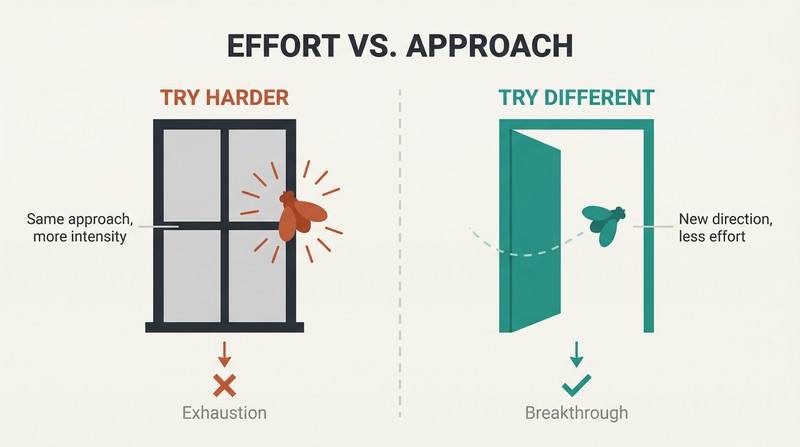
The book opens with a parable. Pritchett watches a fly at a Canadian inn exhaust itself trying to fly through a closed windowpane. Ten steps away, a door stands wide open — ten seconds of easy flight to freedom. Instead, the fly stakes its life on raw effort and determination, beating its wings against the glass until it dies on the dusty windowsill.
The fly's fatal strategy is "try harder." Most people operate identically: when progress stalls, they double down on the same approach with more intensity. But more of the same usually gives you more of the same. Discipline and persistence matter, but when effort hits diminishing returns, the breakthrough requires turning 180 degrees and finding the path of least resistance.
Skip levels entirely — exponential leaps replace incremental climbing
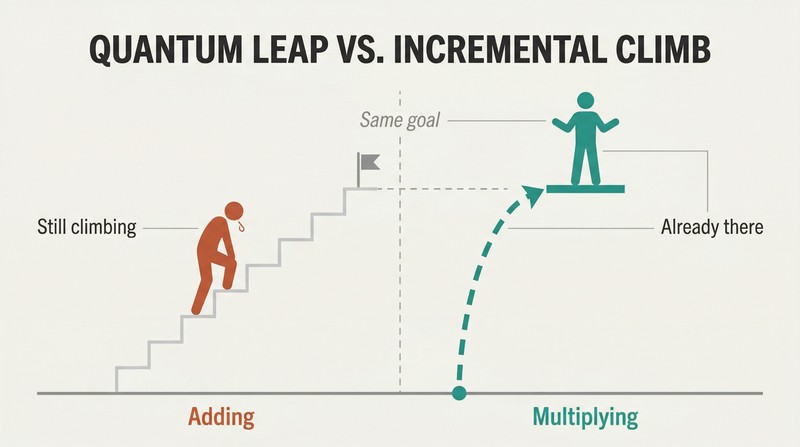
Pritchett borrows "quantum leap" from physics — where subatomic particles make explosive jumps between locations without covering the space in between. Applied to personal performance, you² means skipping several stages of achievement directly, rather than grinding through each level sequentially. Think multiplying instead of adding — a geometric progression in your effectiveness.
The counterintuitive part: these leaps seem to violate common sense, but in retrospect their logic is obvious. Most people assume success must come one step at a time — incremental gains, gradual progress, modest improvements. Pritchett argues this assumption itself is what keeps people performing far below their potential. The you² alternative doesn't require more time or more struggle; it requires a fundamentally different approach.
Your most reliable strategies eventually become invisible prisons
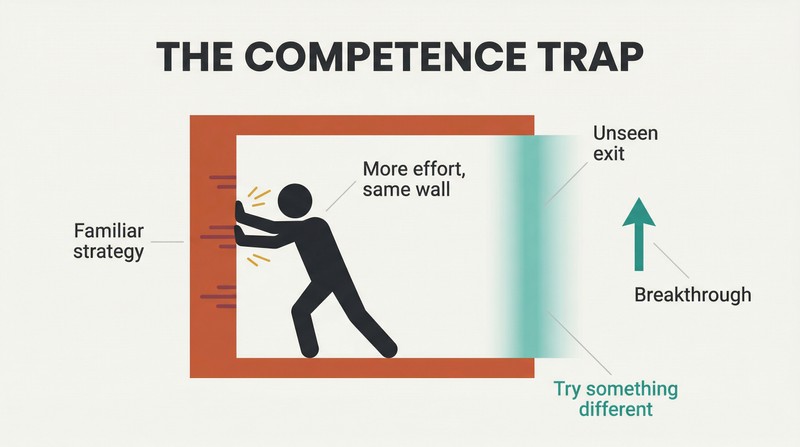
Competence creates complacency. When an approach works well, you refine it, rely on it more, and resist anything unfamiliar. Over time, this overdependence blinds you to better options — just like the fly locked onto the window. Pritchett calls this trap faith in the familiar: the tendency to reinvest in what logically should work because it usually worked before.
The trap springs when performance flattens and you respond by going "back to basics." Quantum leaps demand paradoxical moves instead: reverse your field, try being illogical, use finesse instead of force. Look for the elegant solution — characterized by simplicity, precision, and efficiency. If what you're doing has quit working, the first step is simply to stop doing it.
Act as if your success is certain — your skepticism is just habit
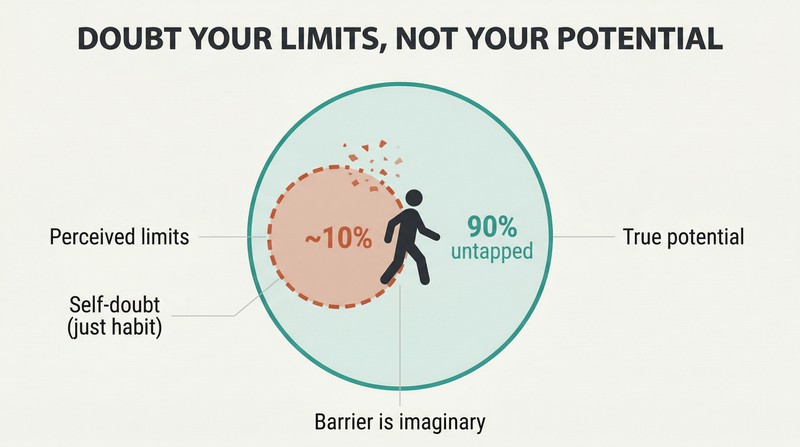
Your self-doubt is inherited, not earned. Pritchett argues that years ago you accepted flawed conclusions about your capabilities as correct, then lived as if those warped ideas were true. Your skepticism about making a quantum leap isn't rational analysis — it's mental junk accumulated over a lifetime. Experts generally agree people use only about ten percent of their true potential.
The prescription: behave as if failure is inconceivable. You don't need conviction that you'll succeed. Just stop believing your old limiting stories. Do what you'd do if success were guaranteed. Suspend disbelief long enough to test whether your perceived limits are real or imagined. The evidence will sort itself out — but only if you actually run the experiment.
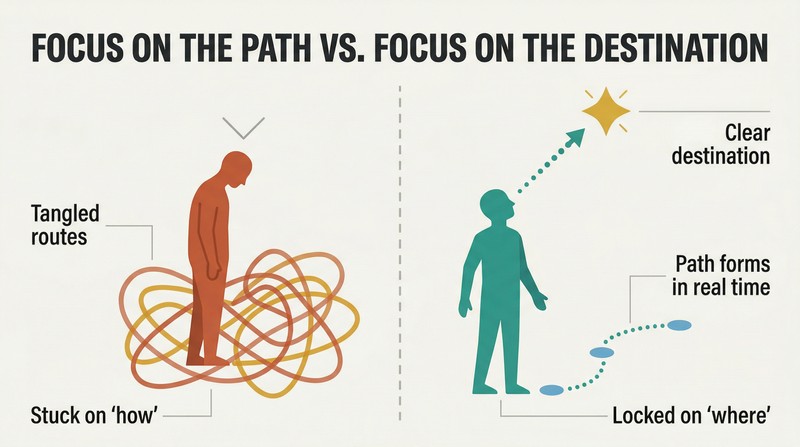
Lock onto where you want to land; the path reveals itself
Visualize the destination, not the route. Pritchett insists on having a crystal-clear picture of your desired outcome but warns against getting trapped by "how to" questions. When you rivet attention on where you want to land, you magnetize yourself to the methods for getting there. Solutions surface. Answers arrive through what he describes as an intuitive, instinctive discovery process.
You don't need a perfect plan before you begin. You'll draw the map in real time, shaping strategy through experience rather than theory. If you obsess over step-by-step logistics, you'll brood over roadblocks instead of moving. A quantum leap, by definition, means entering uncharted territory with no guide. Focus on the landing spot, not what happens mid-jump.
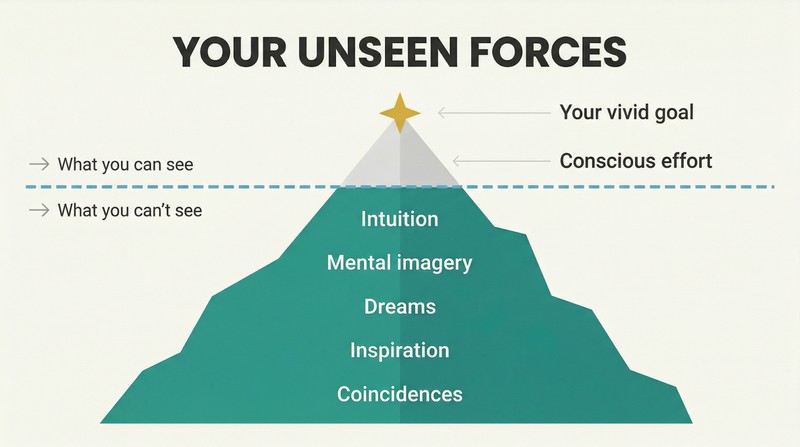
Trust your subconscious — unseen forces are your silent partners
Think of playing bridge. You don't bid your hand alone — you factor in your partner's unseen cards, trusting they'll bring valuable strength when it's time to play. Pritchett argues the same principle applies to quantum leaps: invisible resources — your subconscious, mental imagery, intuition, and what others call luck — are ready to support your efforts.
These forces work through flashes of inspiration, creative solutions arriving in dreams, breakthrough ideas during visualization, and resources appearing "by coincidence." Like an iceberg, what you see is only the tip. Paint a vivid mental picture of your goal so these unseen forces know precisely what to support. You don't need to understand electricity to flip a light switch — you just use it.
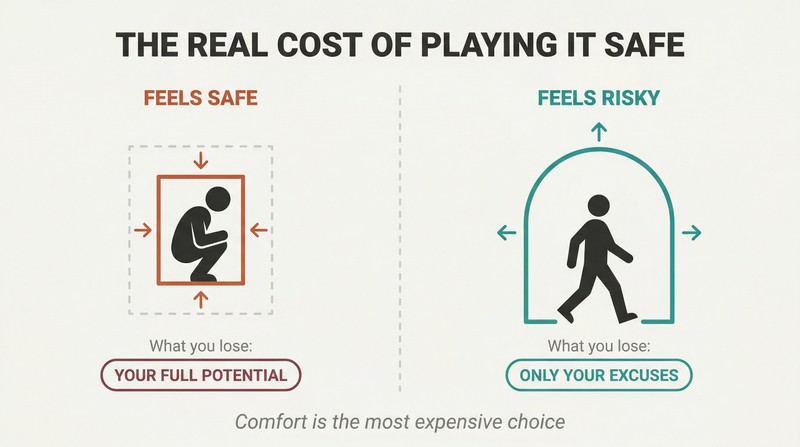
'Playing it safe' gambles away your best possible life
Risk is inescapable — you only choose which kind. Going for a quantum leap feels chancy, but Pritchett forces a harder question: what are you risking by not going? The answer: settling for a fraction of what life could give you. The appearance of safety in the status quo is an illusion that guarantees you'll never reach your real potential.
A quantum leap isn't gambling or recklessness. You move on an opportunity you've been ignoring, abandon your excuses, and reframe the problem. The major obstacle to beating the odds is never challenging them. Until you test your limits, you can't know your real chances — and the odds shift in your favor the moment you start pushing. The comfortable path is often the most expensive one.
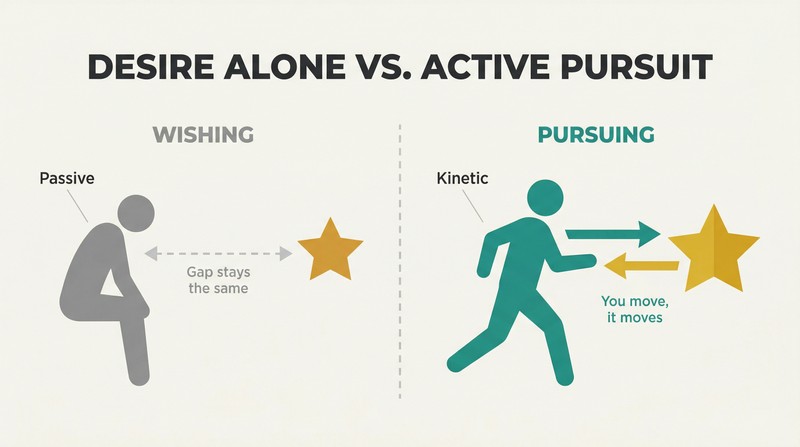
Desire without pursuit is a spectator sport
Wishing is passive; pursuit is kinetic. Most people confuse deep desire with active pursuit. They want something desperately, and when desire alone doesn't deliver, they conclude the dream wasn't meant to be. But the only thing they've proven is that longing isn't enough. Pursuit — actual movement toward the goal — alters the odds immediately and drastically.
When you act, the world responds. Your dream moves toward you even as you reach for it. "What you want" enters a dynamic exchange — a partnership activated only through movement. You can't achieve exponential gains from a defensive or passive posture. You must leave the cover that goes with merely wishing for something, trust in action, and close the distance yourself.
If you're comfortable and problem-free, you've aimed too low
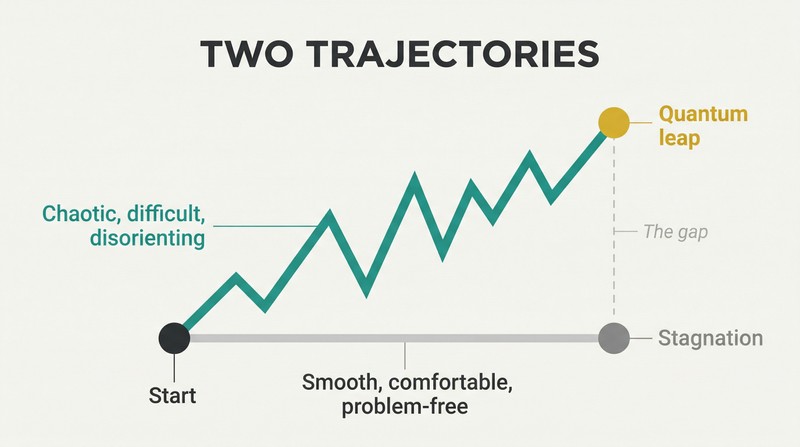
Discomfort is diagnostic. Pritchett states flatly: if you're experiencing no difficulties, problems, or pain, you've probably leveled off in your growth. A performance lag at the outset of a quantum leap is normal — it's the pause before the poise, the temporary loss of momentum while changing gears. Breaking from the status quo deliberately destabilizes you.
Expect chaos as part of the equation. A rocket heading to the moon is off course about ninety percent of the time, "failing" its way there through constant correction. Halfway through surgery looks like murder in the operating room. Confusion, anxiety, and setbacks aren't proof your ambitions are futile — they're evidence of growth. The stress will seduce you toward retreat, but failure at this stage is a sign of progress, not defeat.
'Getting ready' is a con game you're running on yourself
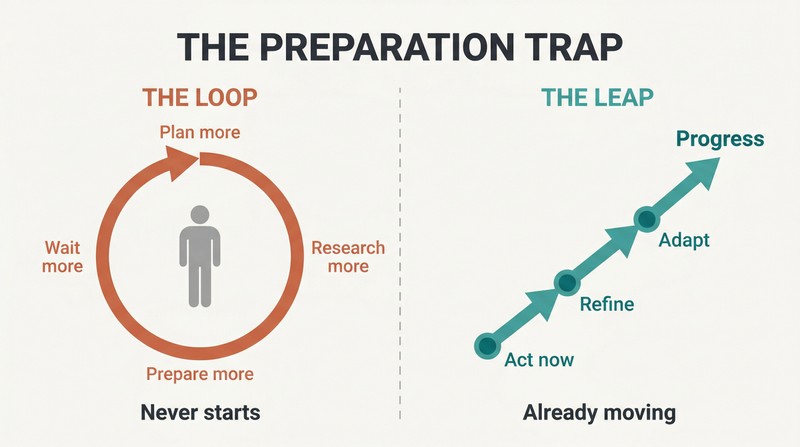
Preparation is procrastination in responsible clothing. A person could build an entire career out of laying groundwork for something big and never actually do the thing. Pritchett argues a quantum leap is something you're already prepared to make — you just haven't pulled the trigger. It's not an absurd scheme requiring fantastic luck; it's a move that's yours for the taking right now.
The sequence is reversed: first you act, then you refine strategy. Move on the dream, and let what happens shape your game plan. You'll discover you know more than you think you know. Perfection before launch — what Pritchett calls the "zero defects" mentality — is hostile to the you² process. Mobility is the crucial element. The time to start is always now.
Analysis
You² is a fascinating artifact: a 7,000-word pamphlet that has sold over 20 million copies. That ratio of brevity to cultural impact is itself a kind of quantum leap, and it reveals something important about the book's actual contribution. Pritchett doesn't offer new evidence or rigorous frameworks — he offers a single, potent reframe delivered before the reader's resistance can activate.
The central insight — that breakthrough performance comes from directional change rather than intensified effort — echoes principles well-established elsewhere. What Pritchett calls a 'quantum leap' resembles what Clayton Christensen later termed disruptive innovation at the organizational level, or what Thomas Kuhn described as paradigm shifts in science. The fly parable is essentially the sunk cost fallacy and escalation of commitment, repackaged as visceral metaphor. The book's real intellectual contribution isn't novelty but compression and reframing.
Its strengths are memorable imagery and ruthless brevity. The fly story is genuinely unforgettable. The reframing of 'playing it safe' as the riskiest choice, and 'getting ready' as self-deception, are psychologically acute observations consistent with research on loss aversion that Pritchett doesn't cite but could have. His weaknesses are equally apparent: the 'unseen forces' chapter veers into magical thinking without distinguishing legitimate intuition (pattern recognition) from mysticism, and the oft-cited claim that people use 'only ten percent of their potential' is a persistent neuromyth.
What makes You² endure isn't its rigor but its intervention design. It arrives when a reader feels stuck, delivers one powerful reframe in under an hour, and exits before overstaying its welcome. The best self-help books change behavior; You² tries to change your willingness to behave differently. That's narrower but sometimes more consequential — removing the psychological brake rather than installing a new accelerator.
Review Summary
You 2 receives mostly positive reviews, praised for its concise yet impactful message about making quantum leaps in personal growth. Readers appreciate its motivational content, encouraging them to challenge conventional thinking and embrace discomfort. Some find it life-changing, while others criticize its lack of concrete action steps. The book's brevity is both a strength and weakness, with some feeling it lacks depth. Overall, it's seen as a quick, inspiring read that may require multiple revisits to fully grasp and apply its concepts.
People Also Read




Glossary
you²
exponential personal performance leapThe book's core concept: an explosive jump in personal achievement that skips intermediate stages, analogous to a quantum leap in physics. Rather than gradual, incremental improvement (adding), you² represents geometric or exponential gains (multiplying). Achieved through unconventional approaches, suspended disbelief, and willingness to abandon familiar methods.
Quantum leap
skipping levels of achievement directlyBorrowed from quantum physics, where subatomic particles jump between energy states without traversing the space in between. Pritchett applies this as a metaphor for personal performance: moving directly from your current achievement level to one several stages higher without covering every intermediate step. Characterized by simplicity, efficiency, and apparent effortlessness rather than complex planning.
Faith in the familiar
overdependence on past success strategiesPritchett's term for the psychological trap of reinvesting in strategies and behaviors because they worked in the past, even when they've stopped producing results. This attachment to proven methods creates resistance to new approaches and becomes the primary obstacle to making a quantum leap. The trap springs when performance flattens and you respond by doubling down on old routines.
Unseen forces
invisible allies supporting personal breakthroughsPritchett's term for invisible resources that support quantum leaps: the subconscious mind, mental imagery, intuition, flashes of inspiration, and apparent coincidences. Illustrated through a bridge metaphor—you bid your hand based on your partner's unseen cards, trusting they will bring valuable strength. Activated by maintaining a vivid mental picture of your goal and committing to pursuit.
FAQ
What's "You2" by Price Pritchett about?
- Concept of Quantum Leap: "You2" introduces the idea of making a quantum leap in personal performance, which involves achieving exponential improvement rather than incremental progress.
- Breaking Conventional Limits: The book challenges the notion that success must be achieved step-by-step, advocating for dramatic changes in approach to reach higher levels of achievement.
- Mindset Shift: It emphasizes the need to change one's mindset and adopt unconventional strategies to unlock untapped potential.
- Personal Transformation: The book is about transforming oneself into a more effective version, referred to as "you squared," by leveraging unseen forces and opportunities.
Why should I read "You2" by Price Pritchett?
- Unlock Potential: The book provides insights into how you can unlock your full potential and achieve more than you thought possible.
- Practical Advice: It offers practical advice on how to make significant changes in your life with less effort than traditional methods.
- Inspiration for Change: "You2" serves as a motivational guide for those looking to break free from conventional limits and achieve extraordinary success.
- Expert Insights: Written by a renowned expert in breakthrough performance, the book is backed by Price Pritchett's extensive experience and research.
What are the key takeaways of "You2" by Price Pritchett?
- Quantum Leap Concept: Success can be achieved through dramatic, exponential changes rather than gradual improvements.
- Change Your Approach: Conventional methods may not lead to breakthroughs; instead, seek new, unconventional strategies.
- Embrace Uncertainty: Be willing to take risks and embrace uncertainty as part of the journey to success.
- Focus on Ends: Concentrate on the desired outcome rather than the means, allowing solutions to naturally emerge.
How does Price Pritchett define a "Quantum Leap" in "You2"?
- Physics Inspiration: The term is borrowed from quantum physics, where particles make sudden, significant jumps without apparent effort.
- Effortless Transition: Quantum leaps involve moving to a higher level of performance without the usual step-by-step progression.
- Uncharted Territory: It requires taking risks and venturing into unknown areas without a clear guide.
- Exponential Gains: The leap results in exponential improvements, far beyond incremental progress.
What is the "you²" concept in "You2" by Price Pritchett?
- Exponential Improvement: "You squared" refers to multiplying your personal effectiveness and achieving new heights in performance.
- Beyond Incremental Growth: It emphasizes making significant leaps in achievement rather than settling for gradual improvements.
- Less Effort Required: The approach requires less effort than traditional methods, focusing on efficiency and effectiveness.
- Personal Transformation: It involves a transformation into a more capable and successful version of oneself.
What advice does Price Pritchett give about "Trying Harder" in "You2"?
- Not Always Effective: Trying harder is not always the solution and can sometimes be part of the problem.
- Seek New Approaches: Instead of intensifying efforts, consider changing your strategy to achieve breakthroughs.
- Avoid Burnout: Over-reliance on effort can lead to burnout and diminishing returns.
- Look for Simplicity: Focus on finding simple, efficient solutions rather than struggling with complex, effort-intensive methods.
How does "You2" by Price Pritchett suggest you "Ignore Conventional Approaches"?
- Abandon Status Quo: To achieve quantum leaps, you must abandon conventional methods and seek new, innovative strategies.
- Paradoxical Moves: Consider making moves that seem illogical or counterintuitive to break free from routine.
- Seek Elegance: Look for solutions characterized by simplicity and efficiency, rather than complexity.
- Challenge Routines: Question and break away from habitual behaviors that no longer serve your growth.
What role does "Passion" play in achieving a quantum leap according to "You2"?
- Fuel for Action: Passion energizes and motivates you to pursue your goals with intensity and commitment.
- Overcome Challenges: It helps you push through doubts, criticism, and failures that may arise during the journey.
- Desire-Driven: A strong desire for a remarkable goal is essential to ignite the passion needed for a quantum leap.
- Emotional Investment: Passionate pursuit of a goal ensures that your efforts are wholehearted and persistent.
What does "You2" by Price Pritchett say about "Making Your Move Before You're Ready"?
- Avoid Over-Preparation: The book advises against waiting for perfect conditions before taking action.
- Act First, Plan Later: Start moving towards your goal and let the details of your strategy evolve naturally.
- Trust Instincts: Rely on your instincts and existing resources to guide you as you progress.
- Present Action: Emphasizes that quantum leaps can only occur in the present, not in a future state of readiness.
How does "You2" by Price Pritchett address "Failure" in the pursuit of success?
- Embrace Mistakes: Failure is seen as a necessary part of the process and a sign of progress.
- Learning Opportunity: Mistakes provide valuable insights and help you test the limits of your capabilities.
- Positive Sign: Experiencing difficulties indicates that you are pushing beyond your comfort zone.
- Resource for Growth: Failure is a resource that helps you refine your approach and achieve greater success.
What are the best quotes from "You2" by Price Pritchett and what do they mean?
- "Trying harder isn’t necessarily the solution to achieving more." This quote highlights the importance of changing strategies rather than just increasing effort.
- "Quantum leaps require paradoxical behavior." It suggests that unconventional actions are often necessary to achieve significant breakthroughs.
- "Act as if your success is for certain." Encourages adopting a mindset of confidence and certainty to attract success.
- "You must move on the dream." Stresses the importance of taking action and pursuing your goals actively.
How does "You2" by Price Pritchett suggest you "Look Inside for the Opportunity"?
- Internal Resources: Emphasizes that the power to achieve a quantum leap lies within you, not in external circumstances.
- Listen to Yourself: Pay attention to your dreams and desires as they guide you towards your breakthrough.
- Self-Discovery: The journey to you² involves discovering and utilizing your inner potential and gifts.
- Present Readiness: Asserts that you are already prepared to make the leap, and the opportunity is waiting for you to act.
Download PDF
Download EPUB
.epub digital book format is ideal for reading ebooks on phones, tablets, and e-readers.








































