
Plot Summary
Manhattan Burns, Chaos Unleashed
The world teeters on the edge of civil war as the fragile peace between the gifted "brilliants" and normals shatters. In Manhattan, Nick Cooper, a former government agent and brilliant himself, races through a city transformed by fear and violence. The White House lies in ruins, and abnorms are lynched in the streets. Cooper's desperate pursuit of Dr. Abraham Couzen, a scientist who holds the key to ending the conflict, is interrupted by chaos and bloodshed. The city's tension is palpable, with every citizen a potential enemy or victim. Cooper's mission is urgent: find Couzen before others do, as the fate of the world may hinge on the scientist's secret. The emotional weight of failure and the horror of a society unraveling drive Cooper forward, haunted by the cost of every lost life.
The Serum's Secret Unleashed
Dr. Abraham Couzen, once a reclusive genius, has injected himself with a serum that can turn any normal into a brilliant. The serum, developed with his protégé Ethan Park, is the "perfect potato"—a flawless, targeted genetic modification. But Couzen's transformation is more than anyone expected: he manifests multiple, powerful gifts, making him nearly unstoppable. As Cooper and Ethan chase him through New York, they realize Couzen is now a "tier zero," the ultimate brilliant. The hope that the serum could end the war by leveling the playing field is dashed as Couzen vanishes, taking the secret with him. The line between salvation and destruction blurs, and the world's last hope slips into the shadows, leaving Cooper and Ethan to question whether brilliance is a blessing or a curse.
Power Shifts and Assassinations
In Washington, D.C., the government reels from the destruction of the White House and the assassination of the president. Gabriela Ramirez, the new president, struggles to maintain order as Secretary of Defense Owen Leahy maneuvers behind the scenes. The military is being stripped of its technological edge to prevent further attacks by brilliants, but this leaves the nation vulnerable. An assassination attempt on Ramirez underscores the chaos, while Leahy's clandestine plans to use civilian militias as proxies against the New Canaan Holdfast take shape. The lines between patriotism, vengeance, and self-preservation blur, and the machinery of government grinds on, indifferent to the suffering of its people. The emotional toll of leadership in crisis is palpable, as is the sense that the old world is dying.
The Gathering Storm in Wyoming
In the windswept plains of Wyoming, thousands of grieving, angry Americans gather outside the New Canaan Holdfast, the abnorm enclave led by Erik Epstein. Luke Hammond, a father who lost both sons in the recent violence, becomes a reluctant leader among the militia. The encampment is a patchwork of pain and purpose, united by a desire for retribution and a fear of abnorm power. General Miller, a retired officer, organizes the disparate groups into a force with a singular goal: to reclaim America from the gifted. The emotional core of this chapter is loss—of children, of country, of hope—and the dangerous alchemy that turns grief into violence. The militia's march is not just a physical journey but a descent into the heart of darkness.
Family Ties, Fractured Loyalties
Cooper's personal life is as fractured as the world around him. His son Todd recovers from a coma, his ex-wife Natalie and their children are trapped in the Holdfast, and his lover Shannon is drawn into the conflict. The emotional stakes are heightened by the impossibility of protecting those he loves. Cooper's relationships are strained by secrets, guilt, and the demands of a world at war. The reunion with his family is bittersweet, shadowed by the knowledge that safety is an illusion. The bonds of love and loyalty are tested as Cooper is forced to choose between personal happiness and the greater good, knowing that every choice carries a cost.
Shannon's Deadly Temptation
Shannon, Cooper's lover and a brilliant with the power to move unseen, is tasked with luring John Smith, the infamous abnorm terrorist, into a trap. On a silent train, she faces Smith's deadly gambit: a teenage suicide bomber ready to kill everyone aboard. Shannon's own ace is the captive Soren, Smith's friend, held in agony as leverage. The confrontation is a battle of wits and wills, with innocent lives hanging in the balance. Shannon's victory is pyrrhic—she saves the train but is left shaken by the moral compromises required. The emotional aftermath is one of disgust and exhaustion, as the lines between heroism and monstrosity blur.
The Hunt for Couzen
Cooper and Ethan's search for Couzen leads them through a city transformed into a surveillance state and a prison for the gifted. They navigate the labyrinth of Madison Square Garden, now an internment camp, and confront the ugly realities of fear and prejudice. Vincent Luce, Couzen's former lover, provides a crucial lead, revealing the location of Couzen's secret lab. But the hunt is complicated by betrayals, shifting alliances, and the ever-present threat of violence. The emotional core is desperation—the sense that time is running out, and that every step forward is shadowed by loss and regret.
Militia and Machinations
Secretary Leahy's backroom dealings with the militia leadership in Wyoming set the stage for a proxy war. The government's hands are tied by the threat of abnorm retaliation, so Leahy offers the militia a free hand to attack the Holdfast, promising non-interference. The plan is to provoke a limited, "manageable" conflict, but the reality is far messier. The emotional tone is one of cynicism and moral exhaustion, as leaders on all sides sacrifice principle for expediency. The seeds of genocide are sown in the language of patriotism and necessity, and the machinery of war grinds inexorably forward.
The March to War
The New Sons of Liberty, now twenty thousand strong, march on the Holdfast, driven by speeches that invoke the spirit of the American Revolution. The emotional fervor is palpable, but so is the underlying fear and hatred. The Holdfast braces for siege, its residents torn between hope and terror. Cooper, reunited with his family, faces the impossible task of preparing for war while trying to hold onto his humanity. The emotional arc is one of rising dread, as the inevitability of violence becomes clear and the possibility of peace slips away.
The Holdfast Besieged
The militia breaches the Holdfast's defenses, using abducted abnorm children as human shields against the city's deadly microwave perimeter, the Vogler Ring. Inside Tesla, the abnorms prepare for a last stand, arming civilians and fortifying buildings. The emotional horror of children being marched to their deaths is matched by the moral agony of those forced to choose between survival and their souls. Cooper intervenes, convincing Epstein to lower the defenses and spare the children, but at the cost of opening the city to invasion. The emotional climax is one of heartbreak and impossible choices.
Soren's Prison of Time
Soren, the temporal abnorm assassin, is held in a high-tech cell, his perception of time a curse that makes every second an eternity. Cooper, desperate for information, offers Soren a simulated "normal" life as a carrot, and then tortures him with a virtual hell as a stick. The psychological battle is brutal, exposing the limits of empathy and the cost of survival. Soren's eventual betrayal of John Smith is a moment of both triumph and tragedy, as the boundaries between victim and villain dissolve. The emotional core is the horror of isolation and the longing for connection, even in monsters.
The Virus and the Pawn
John Smith's true plan is revealed: a genetically engineered virus, piggybacked on a super-flu, designed to turn every normal into a brilliant—or kill them if they're too old. The virus is to be released amidst the chaos of the battle, ensuring maximum spread. Hawk, a lonely teenager desperate to be special, becomes the unwitting patient zero. The emotional impact is devastating: the hope of a better world twisted into a weapon of mass destruction. The line between savior and destroyer vanishes, and the future of humanity hangs by a thread.
The Battle for Tesla
The militia's assault on Tesla is apocalyptic. Civilians, including Natalie, fight desperately to protect their children. Cooper and Shannon race to stop Soren from releasing the virus, battling through burning streets and waves of violence. Shannon sacrifices herself to destroy one of the virus-laden drones, while Cooper faces Soren in a final, brutal confrontation. The emotional arc is one of agony and resilience, as love and loyalty are tested to their limits. The cost of victory is almost unbearable, and the survivors are left to pick up the pieces of a shattered world.
The Truth Broadcast
With the city in flames and hope nearly lost, Cooper makes a desperate gamble: a live broadcast to every screen in America, revealing the truth about the virus, the government's complicity, and the lies that have fueled the war. His plea is raw, personal, and unvarnished, aimed at the hearts of ordinary people. The emotional power of truth cuts through the noise, forcing a reckoning that neither side can ignore. The broadcast becomes a turning point, halting the violence and opening the door to fragile peace.
Aftermath and Reckoning
In the days that follow, the world reels from the revelations. The government and the Holdfast negotiate a new peace, with amnesty for most but trials for the worst offenders. The virus is contained, but the scars—physical, emotional, and moral—remain. Cooper and Natalie confront the cost of survival, the loss of innocence, and the impossibility of returning to the world they once knew. Shannon and Cooper, battered but alive, find solace in each other. The emotional tone is one of exhaustion, relief, and the tentative hope that healing is possible.
The Future Unleashed
The trilogy ends with the world forever changed. The secret of brilliance is out, and the possibility of a new, more equal humanity beckons. But the dangers of power, prejudice, and ambition remain. Hawk, now a brilliant himself and patient zero, sets out across America, unknowingly carrying the future—and the virus—with him. The emotional arc closes on ambiguity: hope and fear entwined, the promise of greatness shadowed by the specter of destruction. The story ends not with answers, but with the question of what kind of world we will choose to build.
Analysis
A meditation on power, fear, and the cost of survivalWritten in Fire is a blistering exploration of what happens when difference becomes destiny and fear becomes law. Marcus Sakey's trilogy is both a high-octane thriller and a philosophical inquiry into the nature of power, prejudice, and progress. The brilliants are a stand-in for any marginalized or exceptional group, and the normals' response—ranging from awe to terror to violence—mirrors the darkest chapters of human history. The story's emotional core is the impossibility of clean choices: every victory is tainted, every survival comes at a cost. The use of the virus as both salvation and curse is a masterstroke, forcing characters and readers alike to confront the dangers of forced equality and the seductions of power. Ultimately, the book argues that only truth—painful, unvarnished, and shared—can break the cycle of violence. But it offers no easy answers: the future is left uncertain, shaped by the choices of the flawed, the wounded, and the brave. The lesson is clear: we are better than this, but only if we choose to be.
Review Summary
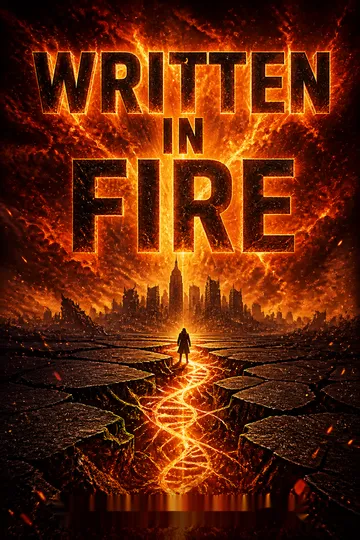
Written in Fire concludes the Brilliance trilogy with mixed reviews. While some praise its action-packed plot and thought-provoking themes, others criticize its pacing and character development. The book explores the escalating conflict between normal humans and "brilliants" with superhuman abilities. Nick Cooper, the protagonist, works to prevent all-out war while navigating personal relationships. Many readers found the ending satisfying, though some felt it was too neatly resolved. Overall, the trilogy is praised for its imaginative premise and social commentary, despite some flaws in execution.
People Also Read


Characters
Nick Cooper
Nick Cooper is the emotional and moral center of the trilogy—a brilliant with the power to read intention, a former government agent, and a father desperate to protect his children. His journey is one of constant sacrifice, forced to choose between personal happiness and the greater good. Cooper's relationships—with his ex-wife Natalie, his lover Shannon, and his children—are fraught with guilt, longing, and the ever-present threat of loss. Psychologically, Cooper is driven by a need for control and a terror of failure, haunted by the violence he has committed and the lives he could not save. Over the course of the story, he evolves from a man of action to a reluctant truth-teller, realizing that only honesty and vulnerability can break the cycle of violence. His arc is one of hard-won wisdom, scarred but unbroken.
Shannon
Shannon is a brilliant with the ability to move unseen through crowds, a skill that makes her both invaluable and isolated. She is Cooper's lover and equal, a woman who thrives in danger but is weary of the endless conflict. Shannon's psychological complexity lies in her struggle to reconcile her gifts with her humanity; she is both predator and protector, capable of ruthless violence and deep empathy. Her relationship with Cooper is passionate but fraught, complicated by his ties to Natalie and the demands of war. Shannon's arc is one of self-acceptance and sacrifice—she risks everything to save others, ultimately finding meaning not in victory, but in truth and love.
Natalie
Natalie, Cooper's ex-wife, is the emotional anchor for their children and, in many ways, for Cooper himself. Initially a bystander to the conflict, Natalie is drawn into the heart of the war, forced to fight to protect her family. Her psychological journey is one of transformation—from fear and helplessness to agency and resolve. Natalie's experience in the siege of Tesla is harrowing, stripping away her innocence and leaving her with scars that will never fully heal. Her relationship with Cooper is marked by love, regret, and the painful recognition that some wounds cannot be undone. Natalie embodies the cost of survival and the quiet heroism of those who endure.
John Smith
John Smith is the trilogy's most enigmatic and dangerous antagonist—a brilliant strategist who believes that only war can secure the future of the gifted. Smith's psychological profile is that of a grandmaster, always thinking several moves ahead, willing to sacrifice anything and anyone for his vision. He is both charismatic and chilling, capable of genuine affection for his followers but utterly ruthless in pursuit of his goals. Smith's relationship with Soren and Shannon reveals flashes of humanity, but his ultimate loyalty is to the cause. His death is not the end of his influence; his plans continue to unfold, a testament to the enduring power of ideas—and the dangers of fanaticism.
Soren
Soren is a brilliant whose gift is a curse: he experiences time at a fraction of normal speed, making him a deadly assassin but a perpetual outsider. His psychological torment is profound—every moment is an eternity, every connection fleeting. Soren's relationship with John Smith is one of loyalty and dependence, while his love for Samantha is his only solace. Imprisoned and tortured, Soren becomes both victim and villain, ultimately betraying Smith under duress. His final acts are driven by guilt and a desperate need for meaning, making him one of the story's most tragic figures.
Erik Epstein
Erik Epstein is the billionaire founder of the New Canaan Holdfast, a brilliant whose pattern recognition has made him both fabulously wealthy and deeply isolated. Epstein is a man of data and logic, struggling to understand the emotional realities of war and leadership. His decisions are often coldly rational, but he is haunted by the consequences—especially the deaths he causes in self-defense. Epstein's relationship with his brother Jakob and with Cooper is marked by mutual dependence and mistrust. Psychologically, he is a man trapped by his own intellect, seeking redemption in a world that offers little forgiveness.
Ethan Park
Ethan Park is Couzen's protégé and the co-creator of the serum that can make anyone brilliant. Driven by curiosity and a desire to help, Ethan is unprepared for the moral and practical fallout of his discovery. His arc is one of disillusionment, as he watches his work become a weapon and his mentor self-destruct. Ethan's relationship with Cooper is one of mutual respect and frustration, while his longing for his family grounds him in the midst of chaos. Psychologically, Ethan is the embodiment of the dangers of unchecked ambition and the tragedy of unintended consequences.
Owen Leahy
Owen Leahy, Secretary of Defense, is a master manipulator, willing to sacrifice anything for what he perceives as the greater good. His psychological makeup is a blend of patriotism, cynicism, and self-justification. Leahy's backroom deals with the militia and his willingness to provoke genocide are chilling, but he is not a cartoon villain—he genuinely believes he is saving America. His downfall is a reckoning with the limits of power and the cost of moral compromise.
Luke Hammond
Luke Hammond is a former soldier whose sons are killed in the war, propelling him into the leadership of the New Sons of Liberty. His psychological journey is one of grief transformed into violence, as he seeks meaning in vengeance. Luke's actions are both heroic and monstrous, and his arc is a meditation on the corrosive power of loss. His final acts—using children as shields, executing prisoners—are both a betrayal of his values and a testament to the ways war destroys the soul.
Hawk (Aaron Hakowski)
Hawk is a teenage normal desperate to belong, who becomes John Smith's "pioneer" and the first to receive the virus. His psychological profile is one of longing and vulnerability, making him the perfect pawn in Smith's endgame. Hawk's journey from invisibility to unwitting patient zero is both heartbreaking and terrifying, a reminder that the future is shaped as much by the overlooked as by the powerful.
Plot Devices
Duality of Brilliance and Normalcy
The central device of the trilogy is the division between brilliants and normals—a metaphor for all forms of difference and inequality. The narrative structure alternates between perspectives, showing the costs and consequences of power from both sides. Foreshadowing is used extensively, with early hints of the serum's dangers and the inevitability of war. The story employs parallel plotlines—Cooper's hunt for Couzen, the rise of the militia, the siege of Tesla—that converge in a final, explosive confrontation. The use of children as both victims and vectors is a recurring motif, underscoring the generational stakes. The virus as a plot device is both literal and symbolic: a means of forced evolution, a weapon of genocide, and a test of humanity's capacity for change. The broadcast of truth is the ultimate narrative device, breaking the cycle of lies and violence and offering a fragile hope for reconciliation.
Brilliance Saga Series
Download PDF
Download EPUB
.epub digital book format is ideal for reading ebooks on phones, tablets, and e-readers.








































