
Plot Summary
A New Kind of Child
In the 1980s, a new phenomenon emerges: children born with extraordinary abilities, called "brilliants" or "abnorms." Unlike previous savants, these children are otherwise normal, but their gifts—pattern recognition, strategic genius, and more—are world-altering. As their numbers grow, society's curiosity turns to fear. The government forms the Department of Analysis and Response (DAR) to monitor, test, and control the gifted. The question looms: what happens when these children grow up? The world is on the brink of transformation, and the old order is threatened by a new generation whose very existence challenges the meaning of normalcy, power, and humanity.
The Hunter and the Hunted
Nick Cooper, a top agent in DAR's Equitable Services, is himself a tier-one brilliant with a gift for reading patterns and intentions. He hunts abnorm terrorists, using his abilities to predict and outmaneuver them. When he tracks down Alex Vasquez, a gifted programmer planning a military virus, she kills herself rather than betray her cause. Cooper's world is one of moral ambiguity: he's an abnorm hunting abnorms, a man trusted by his superiors but distrusted by many colleagues. The line between justice and oppression blurs as Cooper's work brings him closer to the heart of a growing conflict between the gifted and the rest of society.
Family Patterns, Family Fears
After a long mission, Cooper visits his ex-wife Natalie and their children, Todd and Kate. Natalie reveals her fear: Kate, only four, arranges her toys and books with uncanny precision—signs of a powerful gift. Cooper resists the idea, dreading the possibility that Kate could be taken from them and sent to a government academy for gifted children. The family's love is shadowed by anxiety, as the world's fear of brilliants threatens to tear them apart. Cooper's personal and professional lives collide, forcing him to confront the cost of his work and the future awaiting his daughter.
The Academy's Secret Lessons
Cooper visits a government academy for brilliants, where he witnesses the psychological conditioning of gifted children. The academies teach distrust, isolation, and obedience, ensuring the gifted never unite against the majority. Children are renamed, bugged with biometric devices, and manipulated through engineered betrayals and punishments. The system's goal is clear: prevent the gifted from ever becoming a cohesive threat. Cooper is horrified by the cruelty and control, recognizing that the seeds of future conflict are sown in these institutions. The experience deepens his doubts about the world he serves.
The Monocle Massacre
Years earlier, a massacre at the Monocle restaurant in DC—seventy-three dead, including a senator—shocks the nation. John Smith, a brilliant strategist and abnorm rights activist, is blamed and becomes America's most wanted terrorist. The attack justifies the expansion of Equitable Services, granting them unprecedented power to hunt and kill abnorms. Cooper, haunted by the footage and the horror, is driven by a desire to stop Smith and prevent further bloodshed. Yet, the true nature of the Monocle attack remains shrouded in mystery, its consequences rippling through every level of society.
The Enemy Within
Cooper's investigation into a new terrorist plot leads him to Bryan Vasquez, Alex's brother, who claims to be working with John Smith. When Bryan is used as bait to catch a contact, he is killed by a bomb in a public square—an attack orchestrated with chilling precision. The DAR's efforts to stop the abnorm threat are met with cunning and violence. Cooper's team is shaken, and the sense of being outmatched grows. The enemy is not only brilliant but always one step ahead, forcing Cooper to question the effectiveness and morality of his own side.
The Exchange Explodes
Cooper uncovers a plot to bomb the newly reopened stock exchange in New York, a symbol of a world struggling to adapt to the gifted. Despite his efforts, the attack succeeds: over a thousand die in a devastating explosion. The nation reels, and the government's response is swift and severe—calls for microchipping all abnorms, violent protests, and a surge in fear and hatred. Cooper is consumed by guilt and rage, knowing he was close to stopping the attack but failed. The world edges closer to open war, and the cost of failure is measured in lives.
The Price of Truth
In the aftermath, Cooper's daughter Kate is flagged for early testing. Desperate to protect her, he begs his boss, Drew Peters, for help, but is refused. The system he serves is now a threat to his own child. Cooper is forced to confront the reality that his loyalty to the DAR may cost him everything he loves. The personal stakes become unbearable, and he is driven to make a choice: continue serving a system that endangers his family, or risk everything to change it. The price of truth is steep, and Cooper must decide what he is willing to pay.
Rogue Agent, Rogue Mission
Cooper strikes a secret deal with Peters: he will go rogue, allowing himself to be blamed for the Exchange bombing, in exchange for Kate's safety. He becomes a fugitive, hunted by his former colleagues and the world. To get close to John Smith, Cooper builds a criminal reputation, navigating the underworld and evading capture. Along the way, he meets Shannon Azzi, a gifted operative with her own secrets. Their partnership is uneasy, built on mutual need and growing trust. Cooper's mission is clear: find and kill John Smith, and earn his daughter's freedom.
The Girl Who Walks Through Walls
Shannon, known for her uncanny ability to move unseen, becomes Cooper's guide into the world of abnorm resistance. Together, they navigate betrayals, sweatshops, and the hidden communities of the gifted. Shannon's past is marked by trauma and survival, her loyalty to John Smith complicated by her own sense of justice. As they grow closer, Cooper is forced to confront his own prejudices and the possibility that the enemy he hunts may not be the true villain. Their alliance is tested by danger, deception, and the ever-present threat of betrayal.
The Chessmaster's Gambit
Cooper finally meets John Smith, only to discover that everything he believed is a lie. Smith is not the monster the world believes; the Monocle massacre was orchestrated by the government to justify war against the gifted. Smith's true crime is survival and resistance. Cooper is devastated, realizing he has been a pawn in a larger game. The real enemy is within: Drew Peters and the system that created the war. Smith challenges Cooper to find the evidence and expose the truth, forcing him to choose between loyalty and justice.
The World Burns
Armed with evidence of the government's crimes, Cooper races against time to save his family, now held hostage by Peters. The world teeters on the edge: the exposure of the truth could destroy the government, unleash chaos, and make John Smith a hero. Cooper is torn between using the evidence for leverage or releasing it to the world. The stakes are nothing less than the future of humanity—whether the gifted and normals can coexist, or whether fear and violence will consume them all.
The Trap Is Sprung
Cooper arranges a desperate exchange: the evidence for his family's lives. In a tense showdown, he and his allies outmaneuver Peters and Dickinson, rescuing his wife and children. The cost is high—lives are lost, and Cooper is forced to kill former friends. The evidence is nearly lost, but Cooper retrieves it in a rooftop struggle, ending Peters's reign. The world is left in turmoil, the old order shattered, and the path forward uncertain. Cooper's victory is bittersweet, marked by loss, trauma, and the knowledge that the war is far from over.
The Final Pattern
With the fate of the world in his hands, Cooper must decide: use the evidence to seize control and reform the system from within, or release it and let the world judge for itself. He chooses truth, uploading the damning video for all to see. The consequences are unpredictable—chaos, justice, or a new beginning. Cooper reunites with his family, forever changed by what he has done and what he has learned. The future is uncertain, but for the first time, it belongs to those willing to face the truth.
Truth or Power
As the world reels from the revelations, Cooper reflects on the meaning of sacrifice, loyalty, and love. He has lost friends, killed enemies, and risked his soul to protect his children. The war between brilliants and normals is not over, but the lines have shifted. Cooper's journey is a testament to the power of choice—the willingness to see patterns, to question authority, and to fight for a better world. The price of truth is high, but the cost of silence is higher.
Reunion and Reckoning
In the aftermath, Cooper is reunited with Natalie, Todd, and Kate. The wounds of the past remain, but hope flickers in the possibility of healing. Shannon, too, survives, her relationship with Cooper marked by mutual respect and the promise of something more. The world is forever changed, the future uncertain. But for Cooper, the fight continues—not just for his family, but for a world where gifted and normal can live together. The story ends with a moment of peace, a reminder that the struggle for justice and truth is never truly over.
Analysis
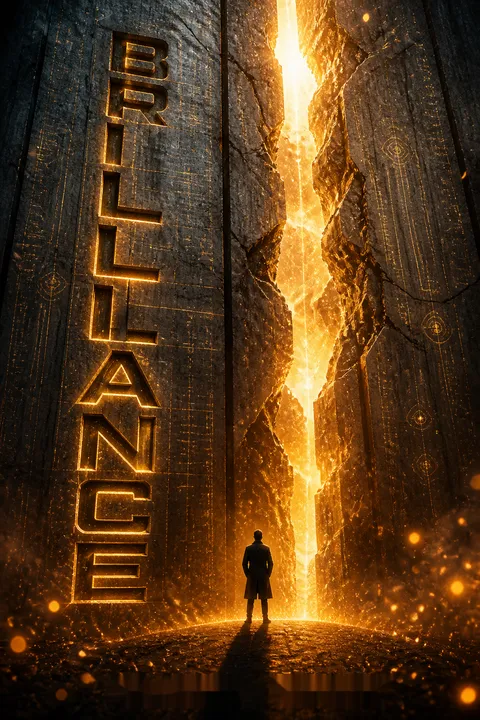
"Brilliance" is a razor-sharp exploration of power, fear, and the cost of difference in a world on the brink of transformation. Marcus Sakey's novel uses the lens of speculative fiction to interrogate the real-world anxieties of technological change, social division, and the abuse of authority. At its core, the book asks what it means to be human when some are born with gifts that threaten the status quo. Through Nick Cooper's journey—from loyal agent to hunted rebel to reluctant truth-teller—the story exposes the dangers of systems built on fear and the seductive allure of control. The gifted are both a metaphor for any marginalized group and a literal challenge to the old order, forcing society to choose between coexistence and conflict. The novel's greatest strength lies in its refusal to offer easy answers: every victory comes at a cost, every truth is double-edged, and the line between hero and villain is always shifting. In the end, "Brilliance" is a call to courage—the courage to see patterns, to question authority, and to fight for a future where difference is not a crime but a source of hope.
Review Summary
Brilliance receives mostly positive reviews, praised for its fast-paced, thrilling plot and intriguing premise of "brilliants" with enhanced abilities. Readers enjoy the action, character development, and thought-provoking themes. Some criticize the lack of originality, comparing it to X-Men, and find the dialogue weak. The book is described as a page-turner with cinematic potential. Many reviewers express excitement for the sequel, while a few find the story predictable or overly long. Overall, it's considered an entertaining and addictive read.
People Also Read

Characters
Nick Cooper
Nick Cooper is a tier-one brilliant with an extraordinary gift for reading patterns and intentions, making him a formidable agent in DAR's Equitable Services. As an abnorm hunting his own kind, Cooper is torn between loyalty to his country and the moral cost of his work. His love for his children, especially his potentially gifted daughter Kate, drives him to desperate choices. Cooper's journey is one of self-discovery, betrayal, and redemption. He evolves from a true believer in the system to a man willing to risk everything for truth and justice, even as he grapples with guilt, loss, and the burden of his own actions.
Shannon Azzi
Shannon is a gifted abnorm with the uncanny ability to move unseen, reading and manipulating the intentions of those around her. Her past is marked by trauma, exploitation, and resilience. As an operative for John Smith, she is both ally and enigma to Cooper, challenging his assumptions and forcing him to confront uncomfortable truths. Shannon's loyalty is complex—rooted in her own sense of justice rather than blind allegiance. Her relationship with Cooper is fraught with tension, trust, and the possibility of love. She represents the hope that even in a world of lies, connection and integrity are possible.
John Smith
John Smith is the most wanted man in America, blamed for terrorist attacks he did not commit. A tier-one brilliant with a gift for strategy, Smith is both a symbol and a leader for the abnorm resistance. He is a master manipulator, always several moves ahead, but his true motives are more complex than simple rebellion. Smith is a victim of the system's need for an enemy, a man forced into war by the lies and violence of those in power. His relationship with Cooper is adversarial yet respectful, each recognizing the other's gifts and burdens.
Drew Peters
As the director of Equitable Services, Peters is Cooper's mentor and the mastermind behind the government's war on the gifted. Outwardly calm, rational, and paternal, Peters is driven by a belief in order and the necessity of hard choices. His trust in Cooper is genuine, but ultimately, he is willing to sacrifice anyone—including Cooper and his own family—for the greater good as he sees it. Peters's greatest crime is orchestrating the Monocle massacre to justify his agency's power, making him the true villain of the story.
Natalie Cooper
Natalie is Cooper's ex-wife and the mother of Todd and Kate. Intelligent, honest, and fiercely protective, she is the emotional center of Cooper's world. Her relationship with Cooper is marked by love, pain, and mutual respect, even after their divorce. Natalie's fears for Kate's future and her willingness to fight for her children's safety ground the story in personal stakes. She represents the cost of the conflict on ordinary families and the enduring power of love.
Kate Cooper
Kate, Cooper's four-year-old daughter, shows early signs of being a powerful brilliant. Her uncanny pattern recognition and emotional sensitivity make her both a source of pride and terror for her parents. Kate's fate is the catalyst for Cooper's transformation, embodying the story's central question: can the gifted and normals coexist, or will fear destroy the next generation? Her innocence and vulnerability highlight the stakes of the war and the need for a better future.
Todd Cooper
Todd is Cooper's nine-year-old son, a normal child caught in the crossfire of a world at war with itself. His relationship with his father is loving but strained by absence and fear. Todd's presence reminds Cooper of what is at stake—not just the fate of the gifted, but the safety and happiness of all children. He is a symbol of what could be lost if the world fails to change.
Bobby Quinn
Bobby Quinn is Cooper's longtime partner in Equitable Services, a straight-talking, quick-witted agent with a deep sense of loyalty. Quinn is both friend and foil to Cooper, providing support, skepticism, and occasional comic relief. His journey mirrors Cooper's, as he is forced to confront the truth about the agency he serves and choose between loyalty and conscience. Quinn's decision to help Cooper is a turning point, demonstrating the power of friendship and the possibility of change.
Roger Dickinson
Dickinson is a driven, ambitious agent in Equitable Services, embodying the dangers of blind faith in authority. He is relentless in his pursuit of Cooper, convinced that strength and belief justify any action. Dickinson's inability to question the system makes him both a formidable adversary and a tragic figure, ultimately destroyed by the very power he serves.
Erik Epstein
Epstein is the world's richest man and the founder of New Canaan Holdfast, a sanctuary for the gifted. A tier-one brilliant with a gift for data and pattern recognition, Epstein is both a creator and a prisoner of his own vision. He manipulates events from behind the scenes, seeking to protect his people while fearing the consequences of open conflict. Epstein's alliance with Cooper is pragmatic, driven by the need to prevent war and preserve his dream of a better world.
Plot Devices
Pattern Recognition and Intuition
The story's central device is the extraordinary pattern recognition of the gifted, especially Cooper. This ability shapes the narrative structure, allowing for leaps in logic, foreshadowing, and the unraveling of conspiracies. The reader experiences the world through Cooper's eyes, seeing the hidden connections and intentions that drive events. This device blurs the line between intuition and superhuman power, raising questions about free will, destiny, and the nature of genius.
Misdirection and False Narratives
The plot is built on layers of deception: the government's framing of John Smith, the manipulation of public perception, and the personal lies characters tell themselves and each other. Foreshadowing is used to plant doubts about the official story, while revelations are timed to maximize emotional impact. The narrative structure mirrors a chess game, with each move revealing new possibilities and dangers. The ultimate twist—that the true enemy is within—reframes the entire story, forcing both characters and readers to question everything they thought they knew.
Duality and Moral Ambiguity
The story constantly subverts expectations, presenting characters who are both victims and perpetrators, heroes and villains. Cooper's journey from hunter to hunted, from believer to rebel, is mirrored by the shifting roles of Smith, Peters, and others. The use of parallel plotlines—family drama, political intrigue, and action thriller—creates a sense of complexity and uncertainty. The narrative structure emphasizes choice, consequence, and the impossibility of simple answers in a divided world.
High-Stakes Personalization
The plot's global stakes are always grounded in personal relationships: Cooper's love for his children, his partnership with Quinn, his connection to Shannon. The use of family as both motivation and vulnerability heightens the emotional stakes and makes the abstract conflict tangible. The narrative structure alternates between intimate moments and explosive action, reinforcing the idea that the world's fate is decided by individual choices.
Brilliance Saga Series
Download PDF
Download EPUB
.epub digital book format is ideal for reading ebooks on phones, tablets, and e-readers.








































