


Plot Summary
Prologue
Seventeen-year-old Eveline1 sits at her sister Nessa's9 memorial mass, consumed by grief and fury. Their father,4 newly released from prison, wraps an arm around her other sister, Dorothy,3 while ignoring Eveline1 entirely. When the priest calls for a family member to speak, Dorothy3 rises before Eveline1 can, wearing Nessa's9 red heels.
Eveline1 clenches her fists, sitting on her hands to keep from attacking. Nessa,9 ten years older, raised Eveline1 after their father's4 imprisonment and their mother's abandonment. Now she is dead under mysterious circumstances, and Eveline1 believes Dorothy3 is responsible.
Inside her chest, grief and rage fuse into something singular and permanent. She identifies herself silently as the bad witch of the family, the one who will not forget. The memorial passes, and Eveline1 leaves with a single certainty: she will never let anyone take from her again without consequence.
The prologue plants Eveline's core wound with surgical precision. Everyone who should have loved her has either abandoned her (mother), ignored her (father), or been stolen from her (Nessa). Dorothy's performance of grief while literally wearing the dead sister's shoes is a grotesque display of appropriation that cements their lifelong rivalry. Eveline's self-identification as the 'bad witch' is a defensive adaptation: if she preemptively claims the role of villain, rejection cannot surprise her. Her impulse-control ritual of counting backward from ten, introduced here as she restrains herself from violence, will become her primary coping mechanism. The prologue functions as both origin story and thesis statement: this is what happens when a child learns that love is always conditional and violence is the only reliable currency.
Nick at the Chicago Club
DEA agent Nicholas Woodsworth2 prepares to go undercover in Kinland to infiltrate Farrell Westerly's4 drug operation. His assignment: get close to Farrell4's daughter Dorothy.3 Before leaving, Nicholas2 celebrates at a Chicago club with his partner Seth.8
He approaches a sharp-tongued blonde woman1 at the bar, intrigued by her refusal to give her name and her claim that she is a taker, not a giver. When she heads to the restroom, Nicholas2 follows. They have rough, anonymous sex against the bathroom wall. She moans into his mouth but still refuses to identify herself.
He tells her his name is Nick2 and mentions he is starting a new job out of town. Neither knows the truth: she is Eveline Westerly,1 in disguise to hunt a wayward bartender for her father.4 Hours later, Eveline1 shoots that bartender dead in the back alley, Nicholas2 still on her mind.
This encounter is a dramatic irony engine. Two people who will later become everything to each other meet as strangers, both operating under false identities. Nicholas's pursuit of anonymous sex reflects his emotional vacancy and professional compartmentalization: intimacy is a physical transaction, never a vulnerability. Eveline's willingness to engage with a stranger mid-mission reveals her own disconnection between body and heart. The bathroom setting (grimy, transactional, temporary) mirrors what they both believe relationships to be. That she kills a man hours later without apparent remorse, while still thinking of Nicholas, establishes her capacity for violence alongside an unexpected capacity for longing. Neither knows the other is the enemy they will be assigned to destroy.
The Winkies Recognition
Farrell4 sends Eveline1 to Winkies bar to vet a new associate named Brayden Walsh,2 a jewel thief Zeke O'Connor5 has vouched for. When Brayden2 walks through the door, Eveline1's stomach drops: it is the man from Chicago, the one who called himself Nick.2 He wears the same leather jacket, the same smirk.
Shock flickers across his face before he masks it. He notes he pictured her blonder, and she corrects him coldly that her name is Eveline.1 Dorothy3 fawns over him, touching his arm, leading him to a booth. Eveline1 seethes while watching her sister3 flirt with the man who fucked her in a bathroom weeks ago.
After, she corners him in the dark hallway. She calls him Nicholas.2 He deflects with sexual taunts about her being a clinger. She warns him to stay away from her family. He steps closer and tells her he does not give a fuck about what she wants.
Recognition transforms an anonymous hookup into an existential threat. For Eveline, Nicholas's presence in her family's orbit violates the compartment she placed him in and proves her instincts correct: people are never what they seem. Her anger is partly at his deception and partly at her own vulnerability; she wanted to give him her name that night, and now he knows it without her consent. Nicholas's deflection through sexual aggression is his panic response. He realizes his error in not recognizing her from surveillance photos, and his instinct is to reassert control through the only dynamic they share. Dorothy's immediate attraction triangulates the sisters into an unacknowledged competition. The scene locks the central conflict: two people chemically bonded who should be enemies.
Blade to Liam's Crotch
At The Yellow Brick strip club, Nicholas2 accompanies Liam10 to confront an Italian associate who sold Farrell4 a fake necklace. Nicholas2 smashes the man's head into a glass table to prove his usefulness, cutting his own wrist. Sent to clean up, he runs into Eveline,1 who drags him to an office and methodically bandages his wound.
When Liam10 bursts in and tells Eveline1 dismissively to sit there, look pretty, and run the numbers like her daddy4 asks, her demeanor shifts instantly. She pins the much larger man10 against the wall, her stiletto heel stabbing his foot, a silver letter opener pressed to his crotch.
She asks if he would like her to cut off his testicles, making him whimper and apologize before releasing him. Nicholas2 watches, frozen mid-stand, realizing the woman from the club was a mask. The real Eveline1 is something far more dangerous.
This scene shatters Nicholas's image of Eveline as a sharp-tongued but fundamentally vulnerable woman. Her calm during the assault is more disturbing than rage would be; this is practiced competence, not impulse. The letter opener is a phallic symbol inverted: she wields the threat of emasculation literally, punishing a man for the crime of underestimating her. Nicholas's paralysis is multivocal: he does not intervene from cover preservation, from self-preservation, and from a sick fascination he cannot name. The scene also establishes the contempt Eveline endures from her father's men despite being the operation's true architect. Her performance of power is a warning meant for Nicholas as much as punishment for Liam.
Two Bodies in Kinland Heights
Eveline1 and Nicholas2 visit a drug dealer named Cillian, Liam10's cousin, whose house contains bricks of Flying Monkey heroin being cut with baking soda and rat poison, then rebagged with counterfeit Westerly branding. Eveline1 interrogates Cillian at gunpoint.
When a woman at the table begs for her life, Eveline1 shoots her in the head without breaking her conversational rhythm. She forces Cillian's mouth open, pours the cut heroin down his throat, and demands to know who authorized the skimming. He names Liam.10 As Cillian lunges, Eveline1's knife slices his throat.
Blood sprays across her skin and clothes. She hands Nicholas2 her phone and instructs him to call Zeke5 for cleanup. In the car afterward, her hands tremble, but she insists she is only upset about losing control, not about the deaths. Nicholas2 drives in silence, his moral compass spinning wildly.
This is the point of no return for Nicholas's moral calculus. He has now witnessed Eveline commit double homicide, and he did nothing to stop it, even handing her the knife. His rationalization that the victims were drug dealers who deserved their fates is a psychological defense that will slowly erode his professional identity. Eveline's post-violence tremor is perversely revealing: it is not remorse but irritation at her own loss of composure. For her, control is the highest virtue, and slipping means failing Nessa's posthumous training. The counterfeit heroin introduces a theme of corrupted legacy: the Westerly brand is being diluted from within, mirroring how the family itself rots. Nicholas's compliance in the cover-up transforms him from observer to accomplice.
Poetry as Foreplay
After the killings, Nicholas2 follows Eveline1 through the woods to a hidden cottage, her private sanctuary. She admits she is upset about losing control, not about the deaths. He tells her to take control back, then sinks to his knees. He recites Keats against her skin while pleasuring her with his mouth.
Afterward, she ties his wrists behind a chair with his own belt and takes command of their encounter, telling him to follow directions like a good pup. He submits completely, straining against the restraint while she brings him to the edge repeatedly.
When she finally lets him finish inside her, she collapses against his chest, feeling something tender and terrifying. Then he announces he must leave to keep his promise to take Dorothy3 out. The softness in Eveline1's eyes dies instantly. He walks away, using her sister3 as an excuse to flee from feelings that threaten everything he is.
The cottage becomes a liminal space where their true selves can emerge. Nicholas's recitation of poetry is not mere seduction but a return to his one pure childhood memory: his mother reading Keats to him before addiction consumed her. He offers Eveline the same comfort words once gave him. Her tying him up reverses their usual dynamic: she demands the control he willingly yields, and his submission is more intimate than any previous encounter. This mutual vulnerability is what frightens him most. His deliberate cruelty in mentioning Dorothy afterward is archetypal self-sabotage: he senses he is falling in love with a woman he is professionally obligated to destroy, and he punishes her to force distance. It succeeds brutally.
Dorothy's Yacht Confession
On the SS Toto yacht for a charity gala, the Westerlys meet mob boss Giacomo Cantanelli11 below deck. Farrell4 offers product samples and agrees to reveal his supplier if the deal proceeds, betraying Eveline1's lifelong anonymity.
Afterward, Eveline,1 who has been terrified of water since Nessa9 drowned, freezes on the back deck, gripping the railing. Nicholas2 finds her, drapes his jacket over her shoulders, and recites Keats's 'Bright Star' until her breathing steadies. Dorothy3 interrupts, wearing Nessa's9 red heels. When Eveline1 lunges, Dorothy3 casually admits she killed Nessa,9 calling it a favor to the family.
Then she pulls off the coveted shoes and hurls them into the dark lake. Eveline1 attacks her, and Nicholas2 physically restrains Eveline,1 not to protect Dorothy3 but to stop Eveline1 from committing murder in front of a yacht full of witnesses.
The yacht is psychologically loaded: it is where Nessa died, where Eveline's deepest trauma anchors, and where her father sells her autonomy to outsiders. Nicholas's recitation of 'Bright Star' (a poem about wanting to live eternally with one's beloved or die) is his most honest declaration yet, given in the one place she feels least safe. Dorothy's confession lands differently after chapters of her performing innocence; her framing of murder as a 'favor' reveals narcissistic logic: she eliminated competition for paternal love and calls it altruism. Nicholas restraining Eveline marks his full allegiance shift. He is no longer working the case; he is protecting a woman he loves from the legal consequences of avenging her sister. The shoes sinking into the lake are Nessa's final disappearance.
Eveline Is The Flying Monkey
Days later, Eveline1 invites Nicholas2 to the cottage and tells him she loves him. She confesses she does not know trivial things about him, but the feeling is enormous and undeniable. He freezes, then kisses her passionately, quoting Shakespeare.
He tells her his favorite color is blue, that he did poorly at homework, and that he is grateful for her love. But when Zeke5 calls, Nicholas2 flees before saying the words back. Outside, he runs into Dorothy,3 who casually reveals she is learning to manufacture Eveline1's product in a greenhouse on the property. Nicholas2's world tilts: Eveline1 is not just involved in the family business.
She is the supplier, the creator of The Flying Monkey, the chemist whose heroin floods streets and destroys lives. The woman he loves is the embodiment of everything he became a DEA agent to annihilate. He drives to a motel to meet Seth,8 his resolve hardening.
This is the novel's structural pivot, where the romantic and professional plots collide catastrophically. Eveline's love confession is remarkable for its specificity: she does not need to know trivia to know what she feels, and her willingness to say it first is a monumental risk for someone with her history. Nicholas's response (sharing real details but withholding 'I love you') is a half-measure that reveals his paralysis. He wants to be known but cannot fully commit to honesty. Dorothy's casual revelation is the universe's cruel timing: just as Nicholas tentatively accepts his feelings, he learns the one truth that makes those feelings morally untenable. The heroin he has spent his career fighting was synthesized by her hands in her sanctuary, the same cottage where she tied him to a chair and asked for nothing but his presence.
Federal Agent at Gunpoint
Sensing something wrong after Nicholas2's abrupt exit, Eveline1 tails his car to a rundown motel in Kinland Heights. She watches him sit in the parking lot for hours, visibly agonizing, before entering a room.
Creeping to the door, she eavesdrops as a man inside calls him 'Nick2' and references 'Cap' and 'the case.' She kicks the door open, Desert Eagle raised. Nicholas2 drops his weapon while Seth8 keeps his trained on her. Voice cracking, she demands the truth. Nicholas2 admits he is a DEA federal agent.
Her face crumples; tears track through her mascara. She asks if he would let Seth8 shoot her. His silence is the answer. She lowers her gun and walks out, leaving both men alive but her heart obliterated. He lets her go, knowing he does not deserve to stop her.
The motel confrontation flips the power dynamic permanently. Eveline, who has been the predator throughout the novel, becomes prey to a system she did not know was hunting her. Her tears are not weakness but the rupture of the one relationship she permitted past her defenses. Nicholas's silence when she asks if he would let Seth kill her is the cruelest answer he has ever given: he cannot lie anymore, but the truth confirms her lifelong conviction that love is always conditional and temporary. His choice to let her walk rather than arrest her is his first decision that prioritizes her over his career. The scene echoes the club bathroom where they met: identities finally revealed, but this time the intimacy is emotional destruction rather than physical release.
Rose's Hard-Won Wisdom
Pulled from the case, Nicholas2 returns to his Chicago apartment where his sister Rose7 waits. He confesses he is in love with a woman who is not a good person. Rose,7 a recovering heroin addict whose scars track her arms, listens to him spiral.
Then she reveals something she has never told him: during her addiction, she sold drugs to survive. She asks if he hates her now. He says of course not. Rose7 points out the contradiction: if he can love her despite what she did while sick and desperate, why cannot he extend the same complexity to Eveline?1
She tells him he has spent his life taking responsibility for other people's choices, their mother's, hers, and that neither she nor Eveline1 should bear the weight of his past. Nicholas2's rigid framework begins to splinter.
Rose functions as Nicholas's moral mirror and the novel's ethical conscience. Her revelation that she sold drugs shatters his binary worldview in which dealers are evil and victims are innocent. If his beloved sister, whom he rescued and protects, participated in the very system he despises, then his categories collapse. Her question 'do you hate me now?' forces Nicholas to confront that his love has never been conditional on moral purity. Rose's framing of addiction as a survival mechanism parallels Eveline's violence: both are adaptive responses to environments that offered no better options. This conversation plants the seed for Nicholas's eventual choice. He will not destroy the woman he loves because he finally understands that people are more than their worst acts.
Dorothy Melts, Farrell Falls
Eveline1 lures Dorothy3 to the underground greenhouse with a promise to teach her the product. She injects Dorothy3 with liquid opium, knocking her unconscious, then suspends her above a black plastic barrel. She fills the barrel with hydrofluoric acid and texts Farrell4 to come.
When he arrives, Eveline1 confronts him: he knew Dorothy3 murdered Nessa9 and did nothing. He never loved her, only what she could produce. As Dorothy3 wakes and begins screaming, Eveline1 lowers her slowly into the acid, her flesh dissolving as she thrashes.
Enraged, Farrell4 lunges at Eveline1 and wraps his hands around her throat, choking her on the greenhouse floor. As her vision darkens, a gunshot cracks the air. Farrell4's body slumps. Zeke5 stands over them, a smoking gun in his hand, having finally found the courage to act.
This is Eveline's annihilation of her bloodline: the family that failed to love her dies by her orchestration. Dorothy's acid death is symbolically precise; the sister who sparkled and performed dissolves into nothing, her exterior consumed. Farrell's death is almost incidental; his real crime was not violence but indifference, and his strangulation of Eveline is the physical manifestation of a lifetime of emotional suffocation. Zeke's intervention completes his arc from paralyzed coward to active protector. He has spent the novel fearing he would become his father, a mob king murdered in prison, and in killing Farrell, he finally acts on his own moral terms. Eveline's survival is not heroic: she was ready to die, and someone else chose life for her.
Cody Baum's Badge
After Zeke5 disappears, leaving only a note, Eveline1 is packing to flee the country when her best friend Cody6 arrives at the cottage wearing a gray suit. She feels relief until she notices the gun on his hip and the badge he flashes.
Cody6 explains he is FBI Special Agent Baum,6 assigned years ago to build a case against the Westerly family. Their friendship, begun in high school chemistry class, was always an assignment. The greenhouse information she recently shared with him was the final evidence he needed.
He handcuffs her on the cottage floor, telling her not to take it personally. Eveline,1 face pressed against the wood, realizes she has been entirely alone her whole life. Every relationship she built, romantic or platonic, was a lie constructed by someone wearing a badge or a mask.
Cody's betrayal is the cruelest because their friendship predated all other deceptions and survived the longest. While Nicholas's undercover operation lasted months, Cody's lasted years, from adolescence into adulthood. His casual 'don't take it personally' reveals the fundamental schism between how he experienced their relationship (as a professional achievement) and how she experienced it (as her only true friendship). The revelation retroactively taints every interaction they ever shared: his listening ear, his computer wizardry, his gentle teasing. This is the final, devastating proof of Eveline's core belief: love is always a weapon eventually wielded against her. She was not paranoid; she was correctly reading the world all along, and it was worse than she imagined.
Nicholas Kills for Her
Before Cody6 can transport Eveline,1 a gunshot sounds. Cody6 collapses, a bullet hole in his forehead. Nicholas2 stands in the doorway holding Eveline's Desert Eagle. He rushes to her, finds the handcuff keys on Cody6's body, and frees her wrists.
Federal agents will swarm the cottage in minutes, he says. She must run through the underground tunnel. She tries to speak, but he interrupts: his full name is Nicholas Tennyson Woodsworth,2 his favorite color is blue, he hated school, and he loves her so completely that a world without her is unimaginable.
He kisses her fiercely, then shoves her toward the back door. She runs. Nicholas2 steps outside, drops the smoking gun on the porch, raises his hands, and surrenders to the arriving agents, claiming he arrived as backup too late to save Agent Baum.6
Nicholas's choice to kill a federal agent is the ultimate rejection of his former self. He has become the criminal he was sent to capture, and he does it without hesitation. His confession of love, containing all the mundane personal details she once said did not matter, is the delayed answer to her earlier 'I love you' that he could not return. He kills for her not to possess her but to free her, accepting that freedom means permanent separation. His surrender and cover story are a final act of atonement: he will face the consequences of his choices, but she will not. This inverts the conventional dark romance dynamic where the hero captures the heroine; here, his greatest act of love is releasing her entirely, trusting that her survival matters more than their togetherness.
Twelve Months of Waiting
Nicholas2 resigns from the DEA, turning in his badge and gun. He starts a custom furniture business to fill the silent hours, but nothing fills the hollow space Eveline1 carved out. Rose7 tells him she is sick of his moping and threatens to burn his endless supply of handcrafted end tables.
He hires a private investigator who operates in legal gray areas, someone who will find Eveline1 without turning her in. Month after month passes with nothing. Eveline1's face appears on wanted posters, then fades from the news cycle.
Twelve months and seventeen days after he killed Cody Baum,6 his phone rings. The PI has found her at a small bed-and-breakfast in Doolin Village, on Ireland's west coast. Exactly where she always dreamed of going. Rose7 tells him to get on a plane.
The waiting period is structurally necessary: Eveline needed time to heal from a lifetime of trauma, and Nicholas needed time to fully shed his old identity. His woodworking is a symbolic transformation; where he once destroyed as an agent and as a liar, he now builds tangible things with his hands. The twelve months echo fairy-tale structure, a year of penance before reunion. Rose's impatience voices what the reader feels. Nicholas's restraint in not immediately pursuing Eveline demonstrates genuine growth: he is no longer the man who would follow a woman into a bathroom to take what he wanted. He waits for permission the universe has not yet granted. The Ireland address is the fulfillment of Eveline's earliest stated dream, a place she mentioned in passing during one of their first car rides together.
Epilogue
Nicholas2 follows Eveline1 along the cliffs of Doolin, watching the wind whip her natural brown hair around her shoulders. She sits down with a notebook, scribbling and scratching out lines, just as she always did. When she notices him, her face shifts through shock into a radiant smile that crinkles her eyes.
He introduces himself formally: Nicholas Tennyson Woodsworth.2 She teases him about the long name, echoing their first meeting when he asked for hers and she refused. He recites Walt Whitman about strangers destined to recognize each other across lifetimes.
She pulls a new gun from beneath her skirt, presses it to his chin, and demands his words. He gives them. She lowers the weapon and kisses him. Behind them, a rainbow arcs over the sea and the cliffs. They are finally home.
The epilogue is a deliberate mirror of their first encounter at the Chicago club, but with every element transformed by honesty. Where she was anonymous and blonde in a wig, she is now herself, brown-haired and freckled, with no disguise. Where he was evasive, he gives his full name unprompted. The gun she pulls is new, not the Desert Eagle he once used on her body; their dynamic of weaponized intimacy has become playful rather than dangerous. The Whitman poem celebrates strangers who recognize each other as destined lovers, the opposite of their original anonymous hookup. The rainbow over the Irish sea is an earned symbol. In a novel that played constantly with Oz allusions through the Emerald City of Kinland, this is the real Emerald Isle, not a green-tinted illusion. They have both stopped performing and arrived at something true.
Analysis
Wretched is a study in the moral architecture of love: what happens when two people who should be enemies recognize themselves in each other? Eveline Westerly1 and Nicholas Woodsworth2 are mirror images. Both were abandoned by mothers, both built identities around control (hers through violence, his through professional detachment), and both use poetry as a private refuge from worlds that demand their hardness. The novel's darkness is not ornamental. It is the necessary condition for its central question: can love survive when stripped of innocence, when both parties have blood on their hands?
The book's Oz allusions (the Yellow Brick road to the cottage, the Emerald City of Kinland, the flying monkey heroin, 'Skip' for the man behind the curtain, Dorothy3 and her coveted red shoes) serve a sophisticated purpose. In Baum's original, Dorothy discovers the wizard is a fraud and that home was always within her reach. Here, every wizard is fraudulent: fathers, federal agents, best friends. Home is not a place but a person who sees the worst of you and stays. Eveline1's journey is not about becoming good but about finding someone for whom her 'wretchedness' is not a dealbreaker.
Structurally, the novel operates as a double unmasking. Nicholas2's DEA identity is the obvious secret, but Cody6's FBI identity is the deeper betrayal, the one that retroactively poisons years of assumed friendship. This layered deception reinforces Eveline1's tragic epistemology: she was right to trust no one, and being right is the cruelest vindication. Nicholas2's growth requires him to abandon the moral absolutism that gave his life meaning. Rose7's revelation that she sold drugs forces him to accept that people exist in gray zones, that the woman he loves can manufacture heroin and still be worthy of love.
The novel's happy ending is hard-won and surprisingly tender given the brutality that precedes it. The epilogue on the Irish cliffs, with its rainbow and Whitman poem, is not a sanitization but an earned peace. Eveline1 is still a fugitive. Nicholas2 is still a man who killed a federal agent. But they are together, and the poetry that was once their only private language has become their public declaration. In a genre that often conflates possession with love, Wretched makes a radical argument: Nicholas2's greatest act of devotion is not capturing Eveline1 but releasing her, trusting that freedom, not ownership, is what makes reunion possible.
Review Summary
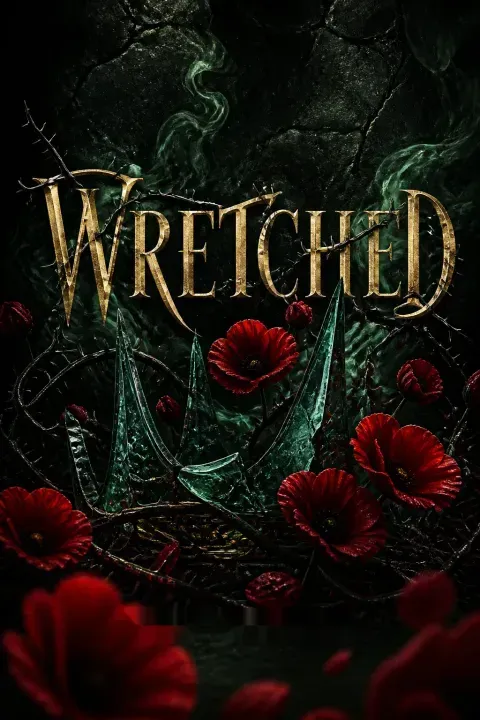
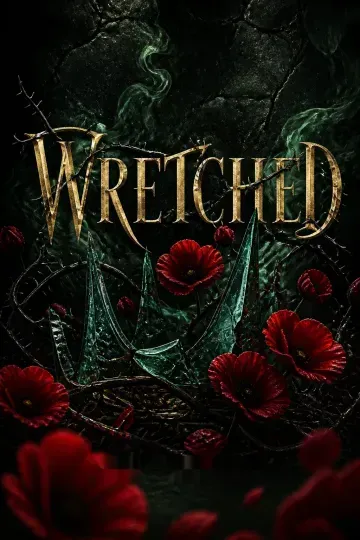
Wretched by Emily McIntire is a dark romance retelling of The Wizard of Oz, featuring a morally grey female villain and an undercover agent. Readers praise the intense chemistry, steamy scenes, and compelling characters, particularly the unapologetically wicked Eveline. The book is described as action-packed, with witty banter and a gripping plot. While some found issues with pacing or character development, many consider it the best in the series, appreciating McIntire's unique take on a classic tale.
People Also Read






Characters
Eveline Westerly
Drug manufacturer and mob daughterThe youngest Westerly daughter, a brilliant chemist who secretly creates The Flying Monkey heroin that powers her family's criminal empire. Raised by her older sister Nessa9 after their father's4 imprisonment and their mother's abandonment, she learned early that love is unreliable and violence is the only certainty. She controls her volatile impulses by counting backward from ten, a ritual Nessa9 taught her. She is lethally competent, socially isolated, and uses aggression to preempt rejection. Beneath the piercings, dyed-black hair, and razor tongue lies a woman who writes poetry in private notebooks and dreams of escaping to Ireland. Her deepest wound is Nessa9's death, which she believes her sister Dorothy3 caused. She trusts no one because everyone who should have loved her has either left or used her.
Nicholas Woodsworth
Undercover DEA agent posing as thiefA DEA agent who goes undercover as 'Brayden Walsh,' a jewel thief seeking work with the Westerly4 crime family. His mother was a heroin addict who abandoned him and his sister Rose7 when he was young, leaving him with a visceral hatred of drug dealers and a collection of poetry books as his only comfort. He compartmentalizes emotion ruthlessly, using casual sex and professional ambition to avoid intimacy. He is fiercely protective of Rose7, a recovering addict he rescued from the streets. His undercover persona is lazy, violent, and confident, but his real self is disciplined, literate, and emotionally frozen. Eveline1 cracks that ice against his will, forcing him to confront that his black-and-white morality cannot account for the complicated woman he is falling in love with.
Dorothy Westerly
Favored daughter and secret murdererThe middle Westerly sister, polished and conventionally beautiful, who performs innocence while harboring ruthless ambition. After their father's4 imprisonment, she transformed from a bitter child into the ideal daughter, leveraging his guilt over Nessa9 to become his favorite. She secretly murdered Nessa9 during a boating trip, resenting the attention their oldest sister Nessa9 gave Eveline1. Dorothy craves the spotlight, flirting with Nicholas2 to provoke Eveline1's jealousy. Beneath her designer clothes and bright smile is a narcissistic streak that allows her to frame murder as a favor. She represents everything Eveline1 is not: loved openly by their father4, comfortable in public, and willing to destroy anyone who threatens her position.
Farrell Westerly
Crime boss and neglectful fatherPatriarch of the Westerly family and head of a growing drug operation in Kinland. After serving eight years in prison, he rebuilt the family name using Nessa9's groundwork and Eveline1's product. He is a man of tattoos and cigars who values loyalty but offers little warmth. He openly favors Dorothy3, whom he shields from the darkest aspects of the business, while exploiting Eveline1's brilliance while keeping her invisible. He knew Dorothy3 killed Nessa9 and chose to protect his favored daughter over seeking justice. His love is transactional: he values people for what they produce, not who they are. This fundamental failure as a father drives Eveline1's eventual reckoning.
Zeke O'Connor
Informant seeking redemptionA large, auburn-haired associate of the Westerlys4 and the son of a notorious Irish mobster who was murdered in prison. Zeke vouches for Nicholas2's undercover alias and becomes a reluctant DEA informant after being threatened with prison himself. He genuinely cares for Eveline1, treating her with a respect others deny her, but his fear of ending up like his father paralyzes him into complicity and betrayal. He watches Eveline1's father4 neglect her, recognizes her worth, yet cooperates with the investigation that threatens to destroy her. His defining arc is the struggle between self-preservation and moral courage, resolved only at the final moment when he shoots Farrell4 to save Eveline1's life.
Cody Baum
FBI agent disguised as best friendAn FBI agent who befriended Eveline1 in high school as part of a long-term undercover operation targeting the Westerly family4. He poses as a failed Silicon Valley programmer living in his mother's basement, but he is actually a skilled hacker and federal operative. He is Eveline1's only friend for years, the person she calls when she needs information or companionship. His patient cultivation of her trust, while always serving the investigation, makes his eventual betrayal the most psychologically devastating. When he finally arrests her, his casual 'don't take it personally' reveals the profound disconnect between her experience of their friendship and his experience of it as a professional assignment.
Rose Woodsworth
Recovering addict and moral compassNicholas2's older sister, a recovering heroin addict whose scars and track marks tell the story of years on the streets. Nicholas2 found her, got her clean, and installed her in his apartment, where she is rebuilding a fragile stability. She is blunt, perceptive, and the only person who can cut through Nicholas2's emotional walls. Her revelation that she once sold drugs to survive forces Nicholas2 to confront the hypocrisy of his moral absolutism. She tells him he cannot blame Eveline1 for choices made in desperate circumstances any more than he blames her. Her hard-won wisdom gives Nicholas2 permission to love someone society would condemn.
Seth Adams
DEA partner and loyal friendNicholas2's DEA partner who serves as his contact during the undercover operation. He deletes incriminating audio evidence of Nicholas2's sexual encounters with Eveline1 to protect his friend, risking his own career. He is the steady, grounded counterweight to Nicholas2's recklessness.
Nessa Westerly
Murdered sister and guiding ghostThe oldest Westerly sister, ten years Eveline1's senior, who raised her after their father's4 imprisonment. She was the true architect of the family's criminal rehabilitation, grooming contacts and teaching Eveline1 the trade. Dorothy3 killed her on Oscar Norman12's yacht. Her death is the gravitational center around which Eveline1's grief and rage orbit.
Liam
Disrespectful Westerly enforcerA hot-tempered associate in Farrell4's crew who resents Nicholas2 and constantly dismisses Eveline1. He is running a side operation cutting the Westerly heroin and skimming profits through his cousin Cillian. Farrell4 executes him with two shots to the head when confronted with his betrayal.
Giacomo Cantanelli
Italian mob boss seeking expansionThe powerful head of the Chicago-based Cantanelli crime family. He agrees to negotiate with Farrell4 about distributing the Flying Monkey, but his terms require knowing the supplier's identity. His condescension toward Eveline1 during the yacht meeting reveals the misogyny she has navigated her entire life.
Oscar Norman
Corrupt mayor under blackmailThe mayor of Kinland whose political career was bankrolled by the Westerlys4 under Nessa9's direction. Eveline1 blackmails him with a recording of his sexual encounter with the city commissioner. He eventually cooperates with the FBI, wearing a wire to help build cases against both the Westerlys4 and the Cantanellis11.
Plot Devices
The Flying Monkey Heroin
Drug empire's core productA highly pure strain of heroin manufactured by Eveline1 in her underground greenhouse laboratory, named after the winged monkey silhouettes on its branding. Its unmatched quality makes the Westerly4 operation uniquely valuable, attracting attention from larger criminal organizations like the Cantanellis11 and from federal law enforcement. The product is Eveline1's creation from start to finish: she grows the poppies, lances the pods, extracts the raw opium, and processes it through a chemical procedure she perfected as a teenager. It is simultaneously her greatest source of pride and the object that makes her a target. The heroin's purity becomes a metaphor for Eveline1 herself: powerful, dangerous, and created in isolation by someone the world consistently underestimates.
The Underground Greenhouse
Hidden drug manufacturing facilityA concealed two-acre poppy-growing operation and heroin laboratory built beneath Eveline1's cottage in the woods behind the Westerly estate. Access requires fingerprint scanning and navigating a hidden door in a closet. The facility is insulated against thermal detection and equipped with climate control systems, chemistry equipment, and processing vats. Farrell4 built it for Eveline1 after his prison release, recognizing her talent could give him an empire. It serves as Eveline1's sanctuary, the only place she feels truly in control. The greenhouse represents her paradoxical position: she is the operation's indispensable brain, yet her father4 keeps her hidden there like a secret, valuing her output but not her person.
Nicholas's Wire Necklace
Covert surveillance transmitterA silver chain Nicholas2 wears around his neck that contains a hidden camera and audio transmitter, sending real-time surveillance footage back to the DEA. He deliberately pulls it over his shirt during sensitive encounters to capture evidence. The wire becomes a source of crisis when Seth8 must delete hours of audio recording Nicholas2's sexual encounter with Eveline1 to protect him from internal investigation. It symbolizes the inescapable tension between Nicholas2's professional duty and his personal entanglement: the device meant to destroy Eveline1 becomes the thing that could destroy him if anyone reviews what it captured.
Eveline's Desert Eagle
Signature weapon and intimacy objectA rose-gold Desert Eagle pistol that Eveline1 keeps in a thigh holster beneath her signature flowing black skirts. She treats the weapon with near-affection, caressing it lovingly before missions. Nicholas2 uses the gun on her body during their sexual encounter in a Chicago alley, sliding the barrel against her skin and into her while she recites Emily Dickinson, fusing violence and intimacy into a single act. The gun reappears at critical moments: pressed to informants' heads, aimed at Nicholas2 when she discovers his deception, and finally in his hands when he kills Cody6 to save her. It is replaced by a new weapon in the epilogue, symbolizing their fresh start.
Poetry as Emotional Currency
Vulnerability's shared languageBoth Nicholas2 and Eveline1 use poetry as their private language for emotions they cannot otherwise express. Nicholas2 carries his mother's worn poetry collection, the only comfort she gave him before addiction destroyed her. He recites Keats, Shakespeare, and Emily Dickinson to Eveline1 during moments of genuine connection. Eveline1 writes her own 'little love spells' in a notebook, harsh poems that Dorothy3 mocks but that capture her hidden longing. Their mutual recognition of verses becomes a shorthand for intimacy: when Nicholas2 finishes a Keats sonnet she started, or when he quotes Dickinson while using her gun on her body, they are speaking a language no one else in their violent world understands. The poetry is the proof that beneath their armor, they are the same.
FAQ
Synopsis & Basic Details
What is Wretched about?
- Dark contemporary romance: Wretched is a dark contemporary romance that explores themes of grief, betrayal, and redemption within a fractured fairy tale setting.
- Villain's perspective: The story is told from the perspective of Eveline Westerly, a complex and morally ambiguous character who is deeply involved in her family's legacy of criminal activities.
- Undercover infiltration: DEA agent Nicholas Woodsworth infiltrates the Westerly family, leading to a dangerous game of deception and a complicated relationship with Eveline.
Why should I read Wretched?
- Complex characters: The characters in Wretched are multi-layered and morally gray, making them compelling and relatable despite their flaws.
- Intense emotional journey: The story takes readers on an emotional rollercoaster, exploring themes of grief, betrayal, and the search for identity and belonging.
- Dark and captivating romance: The romance between Eveline and Nicholas is intense and passionate, adding a layer of complexity to the already dark and gritty storyline.
What is the background of Wretched?
- Small-town crime: The story is set in Kinland, a small town with a strong Irish American presence, where the Westerly family has established a powerful criminal empire.
- Drug trade: The Westerlys are involved in the production and distribution of a highly addictive drug called "The Flying Monkey," which is causing widespread death and destruction.
- Irish mob influence: The story also touches on the history of the Irish mob in Chicago and their attempts to expand their influence into Kinland.
What are the most memorable quotes in Wretched?
- "Grief is a weird thing.": This quote, from the prologue, encapsulates the novel's exploration of grief as a complex and often misunderstood emotion. It sets the stage for Eveline's journey of loss and resentment.
- "Love. It's fake. Just a chemical reaction that people pretend is more.": This quote reveals Nicholas's cynical view on love, which is challenged as he develops feelings for Eveline. It highlights the theme of questioning societal norms and expectations.
- "There's no one like family, Evie, and there's no place like home. We have to stick together.": This quote, attributed to Nessa, represents the Westerly family's legacy and twisted sense of loyalty and the pressure Eveline feels to uphold their legacy. It underscores the theme of family bonds and their potential for both support and manipulation.
What writing style, narrative choices, and literary techniques does Emily McIntire use?
- Alternating POV: McIntire employs alternating points of view between Eveline and Nicholas, providing insight into their inner thoughts and motivations. This allows readers to understand the complexities of their relationship and the conflicts they face.
- Dark and gritty prose: The writing style is dark and gritty, reflecting the harsh realities of the characters' lives and the criminal underworld they inhabit. The language is often raw and explicit, adding to the story's intensity.
- Foreshadowing and symbolism: McIntire uses foreshadowing and symbolism to create suspense and add layers of meaning to the story. Recurring motifs, such as the poppies and the color black, contribute to the novel's overall atmosphere and themes.
Hidden Details & Subtle Connections
What are some minor details that add significant meaning?
- Tattoos as hidden stories: Farrell's tattoos, initially described as mere prison ink, hint at a deeper, unrevealed history and potentially symbolize his past actions and affiliations. Eveline's curiosity about them suggests a desire to understand her father's hidden life.
- The significance of shoes: Dorothy wearing Nessa's shoes to the memorial mass is a seemingly small detail that speaks volumes about her envy and disrespect towards her deceased sister. It foreshadows her later betrayal and adds another layer to her complex character.
- Cody's computer skills: Cody's seemingly innocuous computer skills, initially presented as a sign of his "loser" status, become a crucial asset for Eveline, highlighting the importance of looking beyond surface appearances and recognizing hidden talents.
What are some subtle foreshadowing and callbacks?
- Eveline's "impulses": Eveline's repeated references to her "impulses" foreshadow her violent tendencies and her struggle to control her emotions. This is a subtle hint at her darker nature and her potential for both good and evil.
- The significance of "sweetheart": The term "sweetheart," initially used by Nicholas as a playful endearment, becomes a trigger for Eveline, highlighting the power dynamics in their relationship and the way language can be used to manipulate and control.
- The poem book: The book of poems, a remnant of Nicholas's mother, serves as a callback to his past and a reminder of his motivations for becoming a DEA agent. It also foreshadows his connection with Eveline, who shares a love for poetry.
What are some unexpected character connections?
- Oscar Norman and Nessa: The revelation that Oscar Norman, the mayor, was once closely associated with Nessa adds a layer of intrigue to her character and suggests that she may have been more involved in the family's legacy of criminal activities than initially believed.
- Zeke and Jack O'Connor: Zeke's connection to the notorious Jack O'Connor, king of the Irish mob in Chicago, adds depth to his character and provides context for his involvement in the Westerly's operations. It also highlights the cyclical nature of crime and the way legacies can shape individuals' destinies.
- Cody and the commissioner: The subtle hint that the city commissioner might be interested in Cody, referred to as "Oz," adds a layer of complexity to Cody's character and suggests that he may have more influence and connections than initially believed.
Who are the most significant supporting characters?
- Zeke O'Connor: Zeke serves as a bridge between the Westerly family and the criminal underworld, providing valuable insights into their operations and motivations. His conflicted loyalties and his eventual decision to betray the Westerlys make him a pivotal figure in the story.
- Cody Baum: Cody's role as Eveline's confidant and tech expert provides her with the resources and information she needs to maintain her power. His betrayal as an undercover agent adds a layer of complexity to Eveline's world and forces her to confront the harsh realities of trust and loyalty.
- Rose Woodsworth: Rose's presence as Nicholas's sister provides a glimpse into his past and his motivations for becoming a DEA agent. Her struggles with addiction and her eventual recovery highlight the devastating impact of drugs on individuals and families.
Psychological, Emotional, & Relational Analysis
What are some unspoken motivations of the characters?
- Eveline's need for control: Eveline's meticulous control over the poppy cultivation and drug production stems from a deep-seated need to protect herself and her family. It's a way to compensate for the chaos and instability she experienced in her childhood.
- Nicholas's desire for redemption: Nicholas's relentless pursuit of justice is driven by a desire to atone for his past failures and to protect others from the pain and suffering he experienced as a child. His relationship with Eveline challenges his ability to remain detached and objective.
- Dorothy's craving for attention: Dorothy's constant need for validation and her willingness to betray her family stem from a deep-seated insecurity and a desire to be seen as worthy of love and attention. Her actions are driven by a desperate attempt to fill the void left by her absent mother and her father's favoritism towards Nessa.
What psychological complexities do the characters exhibit?
- Eveline's moral ambiguity: Eveline grapples with the moral implications of her actions, struggling to reconcile her desire for control and her loyalty to her family with her growing awareness of the harm they are causing. Her internal conflict is a key aspect of her character development.
- Nicholas's emotional detachment: Nicholas struggles to maintain emotional distance from Eveline, blurring the lines between his professional duty and his personal feelings. His internal conflict highlights the psychological toll of undercover work and the challenges of maintaining objectivity in emotionally charged situations.
- Dorothy's narcissistic tendencies: Dorothy exhibits narcissistic tendencies, characterized by a grandiose sense of self-importance, a need for admiration, and a lack of empathy. Her actions are driven by a desire to maintain her sense of superiority and to manipulate others to her own advantage.
What are the major emotional turning points?
- Eveline discovering Nicholas's true identity: This revelation shatters Eveline's trust and forces her to confront the reality of her relationship with Nicholas. It marks a turning point in her emotional journey, leading her to question everything she thought she knew about him and herself.
- Eveline learning about Dorothy's role in Nessa's death: This discovery ignites a fierce desire for revenge and forces Eveline to confront the dark truths about her family's legacy. It marks a turning point in her relationship with Dorothy and sets the stage for a dramatic confrontation.
- Nicholas admitting his love for Eveline: This confession challenges Nicholas's cynical view of love and forces him to confront the depth of his feelings for Eveline. It marks a turning point in their relationship, leading them to question their loyalties and their future together.
How do relationship dynamics evolve?
- Eveline and Nicholas: Their relationship evolves from suspicion and deception to intense passion and a shared understanding of their chaotic lives. Their connection challenges their loyalties and forces them to confront their deepest fears.
- Eveline and Dorothy: Their relationship evolves from sibling rivalry and resentment to open hostility and betrayal. The revelation of Dorothy's role in Nessa's death shatters their bond and sets the stage for a dramatic confrontation.
- Eveline and Farrell: Their relationship evolves from a power struggle and a desire for control to a final reckoning. Eveline's decision to break free from her father's influence marks a turning point in her journey toward self-discovery and independence.
Interpretation & Debate
Which parts of the story remain ambiguous or open-ended?
- The extent of Nessa's criminal involvement: The story leaves ambiguous the full extent of Nessa's involvement in the Westerly's criminal activities, leaving readers to speculate about her true motivations and her role in shaping Eveline's life.
- The future of Kinland: The ending leaves open-ended the future of Kinland and the fate of the Westerly's criminal empire. It is unclear whether the town will be able to recover from the damage caused by the drug trade and whether a new power will emerge to fill the void.
- The long-term viability of Eveline and Nicholas's relationship: While the ending suggests a hopeful future for Eveline and Nicholas, the story leaves open the question of whether their relationship can truly overcome the challenges of their past and the differences in their backgrounds.
What are some debatable, controversial scenes or moments in Wretched?
- The bathroom scene: The explicit and non-consensual nature of the bathroom scene between Eveline and Nicholas is a controversial moment that raises questions about power dynamics and consent.
- Eveline's violence: Eveline's violent tendencies and her willingness to kill are morally ambiguous aspects of her character that may be disturbing to some readers.
- Nicholas's actions as an undercover agent: Nicholas's deception and manipulation of Eveline raise ethical questions about the use of undercover tactics and the potential for harm to innocent individuals.
Wretched Ending Explained: How It Ends & What It Means
- Eveline and Nicholas escape: The ending sees Eveline and Nicholas escaping to Ireland, leaving behind their past lives and the chaos they created. This symbolizes a desire for a fresh start and a chance to build a new life together.
- Leaving the criminal world: By leaving the criminal world behind, Eveline is choosing to break free from the cycle of violence and betrayal that has defined her family's legacy. This represents a rejection of her past and a commitment to a more peaceful future.
- Hope for redemption: The ending offers a glimmer of hope for redemption, suggesting that even in the darkest of circumstances, love can light the way to a brighter future. However, the story also acknowledges the challenges and uncertainties that lie ahead, leaving readers to speculate about the long-term viability of Eveline and Nicholas's relationship.
Never After Series

About the Author
Other books by Emily McIntire






Download PDF
Download EPUB
.epub digital book format is ideal for reading ebooks on phones, tablets, and e-readers.








































