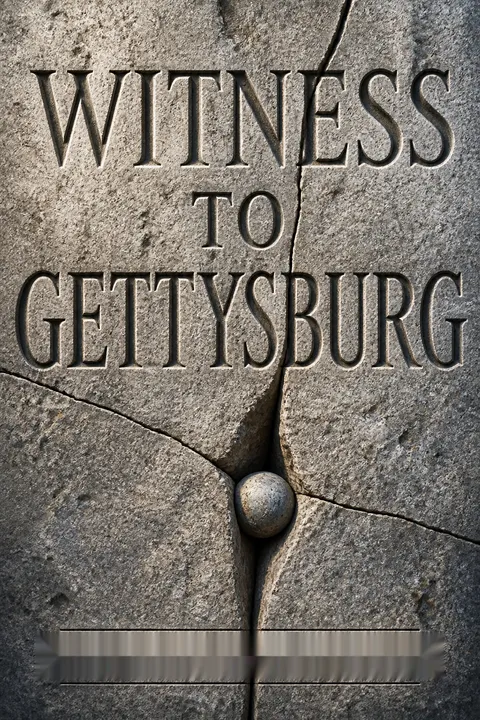

Key Takeaways
1. Lee's Bold Invasion Plan and Stuart's Costly Detour
Lee relied on Stuart to screen the movements of the Confederate infantry and to gain information on the movements of the enemy.
Lee's audacious strategy. In mid-1863, emboldened by victory at Chancellorsville, Robert E. Lee planned a second invasion of the North to relieve Virginia, gather supplies, and potentially force a Union peace. His Army of Northern Virginia, now 75,000 strong, moved in three corps, with cavalry under Jeb Stuart tasked with screening and reconnaissance. This strategic offensive aimed to shift the war's focus and exploit Northern vulnerabilities.
Stuart's miscalculation. Stuart, known for his dashing raids, was given discretion on his route north, choosing a spectacular swing between the Union army and Washington. This decision, made to refurbish a reputation dimmed by Brandy Station, proved disastrous as it cut him off from Lee for crucial days. His capture of a Union supply train further slowed his progress, leaving Lee blind to Federal movements.
Brandy Station's impact. Before the main invasion, Stuart's cavalry was surprised at Brandy Station by Union forces, resulting in the largest cavalry battle of the war. Though the Confederates held the field, the engagement boosted Federal cavalry confidence and revealed Lee's northward intentions to Hooker, albeit with lingering uncertainty. Stuart's subsequent absence would prove critical for Lee's intelligence.
2. Hooker's Hesitation and Meade's Timely Command
I think Lee’s army, and not Richmond, is your sure objective point.
Hooker's strategic dilemma. Union General Joseph Hooker, still reeling from Chancellorsville, remained uncertain of Lee's full intentions, oscillating between defending Washington and attacking Richmond. Despite intelligence suggesting a major invasion, he believed Lee might only be conducting a large-scale raid, leading to a cautious, reactive posture. Lincoln and Halleck, distrusting Hooker, kept him on a tight leash.
Washington's intervention. Lincoln and Halleck continually urged Hooker to focus on Lee's army, not Richmond, and to cover Washington and Baltimore. Hooker's frustration with these constraints and his request to abandon Harpers Ferry led him to offer his resignation. This pivotal moment occurred just as the Union army was crossing the Potomac into Maryland.
Meade assumes command. On June 28, Major General George G. Meade, a dependable but unassuming Pennsylvanian, was unexpectedly appointed to lead the Army of the Potomac. Meade, granted unprecedented freedom by Washington, immediately began concentrating his 95,000 men towards the Susquehanna, while also covering the capital. His arrival instilled a renewed sense of purpose and confidence among the troops.
3. The First Day: Buford's Stand and the Union's Retreat to the Heights
The enemy will attack us in the morning, and we shall have to fight like devils to maintain ourselves until the arrival of the infantry.
Collision at Gettysburg. On July 1, Confederate General Henry Heth's division, seeking shoes in Gettysburg, unexpectedly encountered Union cavalry under John Buford. Buford, recognizing the strategic importance of the surrounding hills, dismounted his troopers and made a valiant stand west of town, buying precious time for Union infantry to arrive. This unplanned engagement initiated the battle.
Reynolds' sacrifice. Union Major General John F. Reynolds, commanding the lead infantry corps, galloped ahead of his troops and quickly reinforced Buford's lines. Tragically, he was killed early in the fighting while directing his "Iron Brigade." His death was a severe blow, but his timely arrival and decision to commit infantry solidified the Union's initial defense.
Union falls back to Cemetery Hill. Despite fierce resistance, the combined forces of A.P. Hill and Ewell's corps overwhelmed the outnumbered Union 1st and 11th Corps. The Federals were driven through Gettysburg, suffering heavy casualties and many captures. However, they successfully retreated to the commanding ground of Cemetery Hill and Culp's Hill, establishing a strong defensive "fish hook" position that Lee failed to immediately exploit.
4. The Second Day: Sickles' Salient and the Desperate Fight for the Round Tops
I saw that this was the key of the whole position, and that our troops in the woods in front of it could not see the ground in front of them, so that the enemy would come upon them before they would be aware of it.
Sickles' ill-advised advance. On July 2, General Daniel Sickles, commanding the Union 3rd Corps, unilaterally advanced his lines forward to a secondary ridge, creating a vulnerable salient at the Peach Orchard and Devil's Den. This move, intended to seize higher ground, dangerously exposed his corps and left the crucial Little Round Top undefended.
The fight for Little Round Top. Confederate General John Bell Hood's division launched a furious assault on the Union left, aiming for the undefended Round Tops. Union Chief Engineer Gouverneur K. Warren, recognizing Little Round Top as the "key of the whole position," frantically redirected Colonel Strong Vincent's brigade to its defense. The 20th Maine, under Joshua Chamberlain, famously held the extreme left flank with a desperate bayonet charge, saving the hill.
Bloody struggles in the salient. The Peach Orchard, Wheat Field, and Devil's Den became scenes of horrific, close-quarters combat. Confederate brigades, including William Barksdale's Mississippians, repeatedly attacked Sickles' exposed lines, inflicting and sustaining immense casualties. Sickles himself was severely wounded, losing a leg, as his corps was shattered and forced to retreat.
5. The Second Day: Union Holds Firm Against Flank Attacks
The wave has rolled upon the rock, and the rock has smashed it.
Humphreys' heroic retreat. As Sickles' salient collapsed, General Andrew A. Humphreys' division, holding the Emmitsburg Road, faced overwhelming pressure from multiple directions. Despite heavy losses and confusion, Humphreys' men conducted a fighting withdrawal, preventing a complete rout and buying time for reinforcements to stabilize the line on Cemetery Ridge. Their tenacity was crucial in preventing a breakthrough.
Hancock rallies the center. Major General Winfield Scott Hancock, Meade's trusted commander, arrived to rally the shattered Union forces on Cemetery Ridge. His inspiring presence and decisive actions, even after being wounded, helped stem the Confederate tide. He organized a desperate defense, throwing in reserves like the 1st Minnesota, which made a costly but critical counterattack.
Ewell's late assault on Culp's Hill. Late in the day, Confederate General Ewell launched a diversionary attack on the Union right at Culp's Hill. Though one brigade gained a foothold in abandoned breastworks, the main assault was repulsed by George S. Greene's tenacious defense. This failure to coordinate with Longstreet's main attack prevented a decisive Confederate breakthrough on the Union right.
6. The Third Day: The Great Artillery Barrage
The whole hundred and thirty-seven guns which now began to play upon us seemed to be discharged simultaneously, as though by electricity.
Lee's final gamble. Convinced that the Union flanks were too strong, Lee decided on a massive frontal assault against the Union center on Cemetery Ridge. This plan, against Longstreet's advice for a flanking maneuver, relied on a devastating artillery bombardment to soften the Federal defenses before the infantry charge.
A storm of iron. At 1:00 PM, Confederate artillery unleashed the largest cannonade of the war, with 137 guns pounding Cemetery Ridge for nearly two hours. The bombardment was terrifying, tearing through Union lines, exploding caissons, and causing immense destruction. Soldiers and civilians alike described it as an "infernal hell of fire," with shells shrieking and bursting everywhere.
Union's resilient response. Despite the ferocity of the barrage, Union artillery, though initially forced to conserve ammunition or withdraw, responded with equal fury. The Federal infantry, largely protected by terrain and stone walls, endured the storm with remarkable fortitude. This resilience, combined with the Confederate artillery's eventual ammunition shortage, set the stage for the climactic infantry assault.
7. Pickett's Charge: The High Water Mark of the Confederacy
For God’s sake, come quick. The 18 guns are gone. Come quick or my ammunition won’t let me support you properly.
The fateful order. Confederate artillery commander E. Porter Alexander, misinterpreting a temporary lull in Union fire, urged Pickett to charge, believing the Federal guns were silenced. Longstreet, still reluctant, reluctantly gave Pickett the nod. Pickett, with his divisions of fresh troops, began the nearly mile-long march across open fields towards the Union center.
A magnificent, doomed advance. Pickett's, Pettigrew's, and Trimble's divisions, numbering about 12,500 men, advanced with incredible courage and perfect alignment, a "grand a sight as ever a man looked on." They faced a murderous crossfire from Union artillery and infantry, their ranks decimated by canister and musket volleys. Despite the carnage, they pressed on, closing gaps and maintaining their resolve.
The breakthrough and repulse. A small Confederate spearhead, led by General Lewis Armistead, breached the Union line at the "Angle" on Cemetery Ridge, reaching the Federal guns. However, lacking sufficient support and facing overwhelming Union reinforcements, the breakthrough was quickly contained. The Confederates were shattered, with thousands killed, wounded, or captured, marking the "high-water mark of the Rebellion."
8. Lee's Acceptance of Defeat and the Battle's Aftermath
Yes, it has been a sad, sad day to us.
Lee's magnanimous leadership. In the aftermath of Pickett's Charge, a dejected but composed General Lee rode among his broken troops, taking full responsibility for the defeat. He encouraged his dispirited men, saying, "All this has been my fault; it is I that have lost this fight." His calm demeanor and acceptance of blame inspired admiration and helped rally the survivors.
A night of reflection and suffering. The battle ended with both armies exhausted, glaring at each other across a field strewn with dead and wounded. The night was filled with the moans of the suffering, the grim work of stretcher-bearers, and the distant, poignant strains of "Home, Sweet, Sweet Home" from Union bands. Meade, despite the victory, chose not to counterattack, allowing Lee to consolidate.
The turning point. Gettysburg, a battle fought without design by either commander, proved to be the decisive engagement of the Civil War. The Confederate invasion was repulsed, and Lee's army, though still formidable, would never again launch a major offensive into Union territory. The Union had held its ground, securing a pivotal victory for the preservation of the nation.
Review Summary
Witness to Gettysburg receives generally positive reviews, averaging 3.82 out of 5. Readers appreciate Wheeler's innovative approach of weaving together firsthand accounts from soldiers, officers, and civilians to create an immersive, personal perspective of the battle. The audiobook format receives mixed feedback, with narration quality dividing listeners. Critics note the book lacks tactical analysis and deep interpretation, leaving knowledgeable readers wanting more. However, most agree it serves as an engaging, humanizing account of the battle, particularly valuable for those newer to the subject.
People Also Read



Download PDF
Download EPUB
.epub digital book format is ideal for reading ebooks on phones, tablets, and e-readers.








































