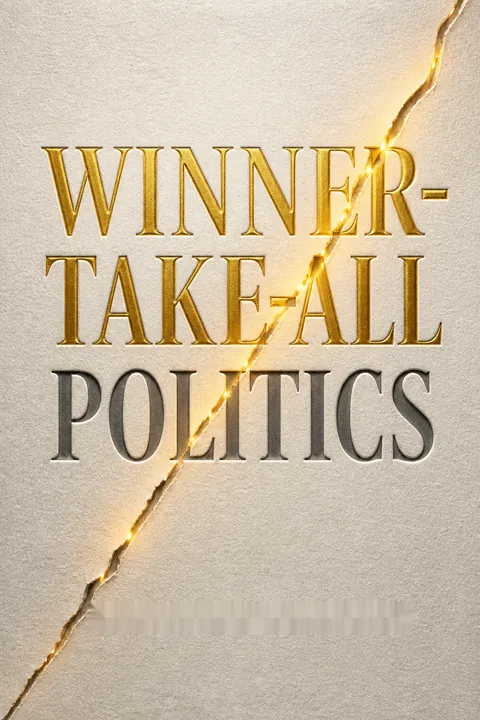

Key Takeaways
1. The American Economy's Winner-Take-All Shift is a Political Choice, Not an Economic Inevitability.
The good news reported by Hacker and Pierson is that American wealth disparities—almost exactly as wide as in 1928—are not the residue of globalization or technology or anything else beyond our control.
A stark divergence. Since the late 1970s, the American economy has undergone a profound transformation, shifting from a period of broadly shared prosperity to one where the rewards of growth are hyperconcentrated at the very top. This "winner-take-all" phenomenon is not an unavoidable consequence of modern economic forces but rather the direct result of specific political decisions and policy choices made over decades. The authors argue that this shift represents a "thirty-year war" where the rules of the game were systematically rewritten to benefit a select few.
Unprecedented concentration. The statistics are astonishing, revealing a dramatic pulling away of the rich and superrich from the rest of America.
- From 1979 until the eve of the Great Recession, the top 1% received 36% of all gains in household income.
- Between 2001 and 2006, this share rose to over 53% of income gains for the top 1%.
- The top 0.1% (one in a thousand households) received over 20% of all after-tax income gains between 1979 and 2005, a slice half again as large as that enjoyed by the bottom 60% of households.
- The average income of the top 1% more than tripled from 1979 to 2006, while the top 0.01% saw their average income quintuple.
Trickle-up, not trickle-down. This extreme concentration means that economic growth has largely bypassed the majority of Americans. If income growth had been shared equally across all groups (a hypothetical "Broadland" scenario), the average income of the middle fifth of households would be over $12,000 higher today, and the bottom fifth would be more than $5,800 richer. Instead, the top 1% gained nearly $700,000 more than they would have in such a scenario, demonstrating a clear "trickle-up" effect where the rich get fabulously richer while others stagnate.
2. The "Usual Suspects" of Globalization and Technology Don't Explain Hyperconcentration of Wealth.
If there were a gold medal for inequality, the United States would win hands down… [S]tandard measures show that the United States more closely resembles a developing country than an advanced country on this measure of economic performance.
Challenging conventional wisdom. Many economists and commentators attribute rising inequality to "skill-biased technological change" (SBTC), arguing that technology and globalization increasingly reward highly educated and skilled workers. However, the evidence presented in the book strongly refutes this dominant narrative. The problem isn't simply a widening gap between college graduates and others; it's the hyperconcentration of wealth at the very, very top, even among highly skilled individuals.
SBTC's weak alibi. The "superstar" effect, where a few individuals in entertainment or sports earn billions, accounts for only a tiny fraction of the top 0.1% of earners. The vast majority are executives, managers, and financial professionals. Furthermore, the US's experience with inequality is exceptional compared to other advanced industrial nations:
- International Comparison: While other rich nations have similar levels of technology and exposure to globalization, most have seen little or no increase in the income share of the top 1%. The US stands out as having the highest and most rapidly increasing inequality.
- Skill Gaps: Inequality in the US is not due to larger skill gaps or greater returns to education compared to other affluent nations; in fact, skill gaps are often smaller in the US.
- Within-Group Inequality: A major part of rising inequality in the US is "within-group inequality"—differences in income among people with similar education or skills—which SBTC cannot explain.
Growth without shared prosperity. The US economy did not grow consistently faster than other rich democracies during this period of skyrocketing inequality. From 1979 to 2006, economic growth per capita was essentially the same in the US as in the 15 core nations of Europe. When adjusted for the significant increase in American families' work hours, the US economic pie actually grew slightly slower than in Europe. This suggests that the outsized gains of the rich came at the expense of others, rather than being a byproduct of superior overall economic performance.
3. Government Actively Created the Winner-Take-All Economy Through Policy and Deliberate Inaction.
Government has had a huge hand in nurturing America’s winner-take-all economy.
The prime suspect. Contrary to the widespread belief that government is merely a bystander or a clumsy redistributor, the book argues that American government and politics are the primary architects of the winner-take-all economy. This influence extends far beyond traditional taxation and benefits, fundamentally shaping the "market income" that individuals earn. The skeptics' view, which assumes government cannot influence pre-tax earnings, is fundamentally flawed.
Three elemental mistakes of the skeptics:
- Ignoring top-end tax changes: Government has done much less to reduce inequality at the very top through taxes and benefits.
- Overlooking "drift": Deliberate, prolonged failures to update policies in a dynamic economy have systematically favored the wealthy.
- Misunderstanding market creation: Government rules make the market, powerfully shaping how it operates and for whom, affecting everything from union power to executive pay and financial regulation.
Rewriting the rules of the market:
- Union Collapse: The precipitous decline of private-sector union membership (from nearly a quarter in the early 1970s to just over 7% today) was not inevitable but a result of aggressive employer tactics and government's failure to protect organizing rights. This removed a crucial counterweight to corporate power.
- Executive Pay Explosion: CEO pay skyrocketed due to a distorted market shaped by public policy. Government policies, or the deliberate failure to update regulations, allowed for camouflaged, performance-disconnected pay packages (e.g., stock options not expensed, massive deferred compensation).
- Financial Deregulation: The shredding of post-New Deal financial regulations (e.g., repeal of Glass-Steagall, Commodity Futures Modernization Act) created "rents"—government-created rewards—for financial professionals, leading to privatized gains and socialized losses.
4. The 1970s Marked an "Unseen Revolution" Where Business Launched a Sweeping Organizational Counterattack.
The danger had suddenly escalated… We had to prevent business from being rolled up and put in the trash can by that Congress.
Beyond the 1960s narrative. The conventional story of modern American politics often points to the 1960s as the crucible of change, with liberalism unraveling and conservatism rising. However, the book argues that the true turning point was the 1970s, a decade often overlooked, where a profound "unseen revolution" in organized combat reshaped Washington. Despite Republican electoral victories in the late 60s and early 70s, government activism actually accelerated under Nixon, expanding domestic spending and regulation.
Business's "Shock and Awe" mobilization: Alarmed by a series of legislative defeats and the expansion of government regulation, the business community launched a swift and sweeping organizational counterattack.
- Lobbying Boom: The number of corporations with public affairs offices and registered lobbyists in Washington skyrocketed.
- PAC Proliferation: Corporate PACs increased dramatically, outspending labor PACs and shifting contributions to conservative challengers.
- Collective Action: Organizations like the Chamber of Commerce, National Federation of Independent Business (NFIB), and the Business Roundtable expanded rapidly, fostering unprecedented unity and proactive lobbying for shared business interests.
The "Carterland" paradox. This business mobilization began to bear fruit even under unified Democratic control in the late 1970s. Despite a Democratic president (Jimmy Carter) and large Democratic majorities in Congress, liberal initiatives were defeated (e.g., consumer protection agency, labor law reform), and conservative policies advanced (e.g., capital gains tax cut). This demonstrated that organized business could now effectively block unwanted legislation and push its own agenda, regardless of electoral outcomes.
5. The Decline of Middle-Class Organizations Left Ordinary Voters Unmoored and Unheard.
Citizens with lower or moderate incomes speak with a whisper that is lost on the ears of inattentive government officials, while the advantaged roar with a clarity and consistency that policymakers readily hear and routinely follow.
Erosion of civic power. While business was building its formidable organizational machine, the institutions that traditionally amplified the voices of middle- and working-class Americans were in decline. This created a profound imbalance in "organized combat," leaving ordinary citizens increasingly unmoored and unheard in Washington. The successful passage of the GI Bill in the 1940s, driven by the mass-membership American Legion, stands as a stark contrast to later decades.
Labor's fall and its political vacuum:
- Loss of Muscle: Organized labor, once a powerful champion for the middle class and a key ally in social reforms like Medicare and civil rights, saw its private-sector membership plummet.
- Political Disengagement: This decline reduced unions' capacity to mobilize voters, educate members on policy, and advocate for broad economic concerns, leaving a significant void in progressive politics.
From membership to management: Old-line, broad-based membership organizations (like fraternal groups) also saw steep declines. They were replaced by professional advocacy groups, often "bodiless heads" funded by foundations and wealthy donors, or "Astroturf" organizations masquerading as grassroots movements. Many new liberal groups focused on "postmaterialist" issues (e.g., environmentalism, women's rights) rather than the pocketbook concerns of the working class.
Unrepresentative democracy. Research confirms that politicians are significantly more responsive to the preferences of wealthy constituents. The opinions of poor and middle-income Americans often have little to no apparent influence on policy outcomes. This disconnect is exacerbated by:
- Voter Ignorance: Most citizens pay little attention to politics, lack basic policy knowledge, and struggle to link their economic concerns to specific legislative actions.
- Media's Erosion: The media's "watchdog" role has been weakened by fragmentation (cable, internet), a focus on "horse race" politics, and reduced investigative journalism, leaving voters with fewer reliable cues.
6. The Republican Party Radicalized, Prioritizing Wealthy Interests and Mastering Obstruction.
The new GOP bore little resemblance to the go-slow fiscal conservatism of its predecessor. Everywhere and always, the modern GOP called for the retreat of government from regulation and the provision of public goods.
Beyond Reagan's "halfway house." While Ronald Reagan is often seen as the architect of modern conservatism, his presidency was a "halfway house" between the moderate Republicanism of Nixon and the radicalized GOP that emerged in the 1990s. After 1990, the Republican Party underwent a profound transformation, becoming astonishingly conservative on economic issues and relentlessly focused on advancing the interests of the wealthy.
Key drivers of GOP radicalization:
- Dixie Rising: The gradual shift of the South from a Democratic to a Republican stronghold (especially after 1994) brought a new generation of fiercely conservative Southern Republicans into leadership positions, pushing the party's economic agenda further right.
- Religious Reinforcements: The growing alignment of conservative evangelicals with the GOP, mobilized on "moral values" issues, provided a large, organized voting bloc that often supported the party's wealthy-friendly economic platform without demanding economic concessions for themselves.
- Market Mania, Inc.: Small business groups like the NFIB, energized by opposition to regulation (e.g., Clinton's health plan), became powerful allies, reinforcing the party's anti-government stance. Tom DeLay's "K Street Project" further cemented ties between the GOP leadership and corporate lobbyists.
- RINO Hunters: New organizations like Americans for Tax Reform (ATR) and the Club for Growth (CFG), heavily funded by affluent conservatives, focused on recruiting and monitoring politicians, ensuring unwavering commitment to radical tax cuts and punishing "Republicans in Name Only" (RINOs).
"Reaganism at warp speed." Under George W. Bush, the new GOP's agenda became clear: massive, unfunded tax cuts for the rich, deregulation, and lax oversight.
- Tax Cuts: The 2001 and 2003 tax cuts disproportionately benefited the wealthiest Americans, often using "phase-ins" and "sunsets" to camouflage their true cost and distributional effects. The elimination of the estate tax and the exacerbation of the Alternative Minimum Tax (AMT) further demonstrated a clear prioritization of the super-rich.
- Corporate Oversight: The GOP was relentlessly hostile to corporate oversight, limiting shareholder lawsuits (PSLRA) and resisting efforts to increase board independence, even in the face of major corporate scandals like Enron.
7. Democrats Accommodated the Winner-Take-All Economy, Becoming "Chronic Enablers" of Drift.
Democrats, by contrast, were more likely to be implicated in the part of winner-take-all politics that we have termed drift.
The "horse-and-rabbit stew" paradox. While Republicans zealously championed the winner-take-all economy, Democrats, facing Republican strength and growing financial pressures, increasingly accommodated it. Their populist tradition often became a campaign costume rather than a governing principle, leading to a "horse-and-rabbit stew" of policy—a small amount of social investment mixed with a large dose of Wall Street's economic agenda.
Key aspects of Democratic accommodation:
- "Positively Wall Street": Figures like Senator Charles Schumer (D-NY) cultivated strong ties with the financial industry, becoming top recipients of finance donations and supporting deregulation (e.g., Gramm-Leach-Bliley repeal) and tax loopholes (e.g., "carried interest").
- Chronic Enablers of Drift: Democrats often contributed to winner-take-all politics through "drift"—the deliberate failure to update policies as economic realities shifted. This was politically safer than confronting powerful interests and was often the only path to action in a gridlocked system.
- The Clinton Solution ("Rubinomics"): Bill Clinton, especially after the 1994 midterm losses, prioritized deficit reduction and embraced austerity, limiting social investments. This rebranded Democrats as fiscally responsible but constrained their ability to help the middle class and allowed Republicans to play "Santa Claus" with tax cuts.
- Moderate Morass: In the Senate, moderate Democrats (e.g., Max Baucus, John Breaux) gained outsized influence due to the chamber's structure and the filibuster. They attracted significant lobbying money and often sided with business interests, making ambitious reforms difficult.
- "Republicans for a Day": Democrats from states with powerful local economic interests (e.g., Silicon Valley, Wal-Mart) would defect on specific issues, providing crucial votes for business-friendly policies, further eroding the party's populist stance.
Lost economic message. These shifts diminished the Democrats' capacity to articulate a clear, coherent economic message for the middle class. Internal conflicts and the need to appeal to wealthy donors often muted populist appeals, leaving voters confused and disillusioned. Despite better economic performance under Democratic presidents, Republicans often maintained a stronger reputation for economic management due to their consistent, simple message.
8. The Senate's "Rule of Sixty" and Polarization Created Unprecedented Gridlock, Freezing Reform.
What was once a high jump is now a pole vault—though it often seems that majorities are attempting it without the aid of a pole.
The "frozen coffee" Senate. The US Senate, designed to be a deliberative body, has become a primary engine of legislative paralysis, particularly since the 1990s. The combination of intense partisan polarization and the prolific, routine use of the filibuster has created a de facto "rule of sixty," requiring supermajorities for most legislation. This is a relatively new development, not enshrined in the Constitution, and it has dramatically raised the bar for any significant policy change.
The rise of the filibuster:
- Historical Anomaly: For most of American history, filibusters were rare, reserved for vital issues or to run out the clock. Even highly controversial bills could pass with a simple majority.
- 1970s Shift: Rule changes in the mid-1970s (reducing cloture from 67 to 60 votes, streamlining the process) ironically made filibusters less costly to wage, leading to their increased use.
- 1990s Acceleration: As parties became more intensely divided, the minority party's incentive to obstruct grew. Republicans, under leaders like Bob Dole and Newt Gingrich, weaponized the filibuster, realizing that blocking legislation made the majority look ineffectual and fueled public disdain for politics, which benefited the minority.
Consequences of the "rule of sixty":
- Minority Power: Senators representing even small slices of the population or distinctly minority opinions can now tie the institution up in knots, effectively giving a minority veto power over the majority.
- Compromise or Stasis: This forces the majority to make extensive concessions to secure the necessary 60 votes, often watering down reforms or leading to complete legislative paralysis.
- Asymmetric Impact: This dynamic disproportionately harms the party seeking to enact significant reforms (typically Democrats), as they need to build broad consensus, while the party seeking to block change (typically Republicans) only needs to hold together 41 votes.
A warning from California. The state of California, with its supermajority budget and revenue rules, offers a stark preview of a national future if winner-take-all politics persists. Beset by economic disaster and political paralysis, California demonstrates how entrenched interests and polarization, combined with supermajority requirements, can create virtually insurmountable hurdles to consistent, sensible policy.
9. Money's Ascendance in Politics Fueled a Financial Arms Race, Benefiting the Well-Organized.
There are two things that matter in politics. The first is money. I can’t remember the second.
The new currency of politics. Mark Hanna's century-old quip about money's primacy in politics became profoundly true in the post-1970s era. The rise of television, modern polling, and political consultants dramatically increased campaign costs, transforming fund-raising into a relentless, central feature of American politics. This created a "financial arms race" that disproportionately benefited the well-organized and well-heeled.
Republican mastery of the money game:
- Organizational Edge: Under William Brock in the late 1970s, the Republican National Committee (RNC) became a formidable fund-raising and party-building machine, pioneering direct mail and outspending Democrats by huge margins (3-1 to 5-1).
- Electoral Impact: This financial advantage translated into tangible electoral gains, helping Republicans win closely contested races and survive challenging midterms (e.g., 1982).
- Policy Influence: The ability to channel vast sums to candidates and party-building efforts gave Republicans immense leverage to push their agenda of tax cuts and deregulation.
Democrats' struggle to compete:
- "Binge and Purge": Democrats struggled to match GOP spending, often incurring debt in election years and lacking resources for long-term party-building.
- Incumbency Card: Tony Coelho (DCCC head) leveraged Democratic control of the House to attract corporate PAC money, but this often went to individual incumbents rather than strengthening the party organization.
- Wall Street's Embrace: Democrats increasingly turned to affluent activists and, crucially, the financial industry for campaign funds. Figures like Charles Schumer became "magnets" for Wall Street donations, leading to a significant shift in the party's donor base and policy priorities.
The "money, money, money" ethos. By the 1990s and 2000s, the need for campaign cash became paramount for both parties. Rahm Emanuel, as DCCC head, epitomized this ethos, prioritizing a candidate's fund-raising ability above almost all else. This reliance on money meant that organized interests, with their deep pockets and strategic giving, gained unparalleled influence over policy outcomes, often at the expense of broader public concerns.
10. The Financial Crisis Exposed the Costs of Winner-Take-All Politics, Yet Reform Remains a Battle.
The American economy does not stand still and neither should the rules that govern it… Unfortunately, instead of establishing a twenty-first century regulatory framework, we simply dismantled the old one, aided by a legal but corrupt bargain in which campaign money all too often shaped policy and watered down oversight.
A crisis of political making. The 2008 financial crisis, rooted in the winner-take-all economy, laid bare the devastating costs of decades of deregulation and lax oversight. It discredited the ideology of market infallibility and exposed how political decisions had fostered a system where financial manipulation was rewarded, and risks were privatized for the few while losses were socialized for the many.
Obama's reform mandate. The crisis, combined with public anger and a strong Democratic electoral wave, created a rare opportunity for political renewal. President Obama, articulating a clear critique of winner-take-all politics, launched an ambitious agenda:
- A massive economic stimulus package.
- Near-universal health care reform.
- A comprehensive overhaul of financial regulation.
- Ambitious climate change legislation.
Entrenched resistance. Despite the crisis and Democratic majorities, the politics of renewal immediately ran into the formidable obstacles of winner-take-all politics.
- GOP Obstruction: Republicans adopted a near-monolithic "Party of No" strategy, blocking initiatives and using the filibuster relentlessly, often with the explicit goal of making the majority look ineffectual.
- Lobbying Power: K Street's influence remained immense, with financial and health-care industries spending billions to shape legislation, often playing a "double game" of public populism and private influence.
- Concessions and Dilution: Reforms, even when passed, required enormous concessions to organized interests, watering down key provisions (e.g., public option in health care, strong financial consumer protections).
The "buzz saw" of gridlock. The administration's first year was marked by a "buzz saw" of obstruction and delay, leading to a prolonged stalemate that eroded public support and highlighted the deep structural challenges to reform. The financial crisis made reform possible, but the battle to prevent a replay of 2008 remains fiercely contested, with powerful interests still largely dictating the terms.
11. Reclaiming Democratic Governance Requires Sustained, Organized Action to Rebalance Power.
Political equality is an abstraction, but the threat it faces from the concentration of economic and political power is not.
The core challenge: political power. The winner-take-all economy is a political construct, and its reversal requires political solutions. The fundamental obstacle is the immense imbalance in organizational resources between the beneficiaries of the status quo and those seeking to strengthen middle-class democracy. This imbalance allows entrenched elites to block needed reforms and ensures that even hard-won victories can erode over time.
Lessons from history. American history offers a blueprint for renewal, showing that periods of "drift" can be overcome by sustained, organized action. The Progressive Era and the New Deal demonstrated that democracy can "lift itself up by its own bootstraps" to counterbalance dynamic capitalism.
Three pillars of reform:
- Reduce Elite Obstruction: Address institutional hurdles like the Senate filibuster (which could be reformed by a determined majority) and campaign finance rules (like Citizens United) that amplify the power of money.
- Facilitate Broader Participation: Implement reforms to increase voter turnout and engagement, ensuring that the voices of ordinary citizens are heard and heeded.
- Encourage Middle-Class Organizations: Foster the development of groups that can provide a sustained, organized capacity to mobilize middle-class voters and monitor government on their behalf. This is the most crucial and difficult task, as traditional middle-class organizations have declined.
The path forward. While the Obama administration achieved impressive, though often compromised, victories (stimulus, health care, student loans), these largely "nibbled at the edges" of the winner-take-all economy. The budget deficit, a product of this era, now looms as both a genuine challenge and a convenient excuse for powerful interests to halt further renewal. The future of American democracy and shared prosperity depends on a long-term, sustained effort to rebalance political power, recognizing that:
- Technology's Promise: The internet offers new tools for organizing and fund-raising, potentially lowering the costs of citizen engagement.
- Beyond Elections: True reform requires sustained organizational combat in Washington, not just electoral victories.
- Leadership and Grassroots: Elite leadership must be complemented by mass engagement to create lasting change.
People Also Read








Download PDF
Download EPUB
.epub digital book format is ideal for reading ebooks on phones, tablets, and e-readers.








































