
Plot Summary
Broken Glass, Broken Fate
Ainsley, Scarlet's father, walks by the lake at night, reflecting on his recent cancer survival and the fragility of life. The serenity is shattered when he witnesses a supernatural event: a naked, golden-haired man emerges from the lake, radiating otherworldly power. The stranger is hostile, seeking "The Spark," and when Ainsley cannot help, he is killed in a horrifying, supernatural manner. This opening sets the tone of unease and hints at the intrusion of cosmic forces into ordinary life, foreshadowing the collision between the mundane and the magical that will soon engulf Scarlet's world.
The Lake's Naked Stranger
Scarlet, a sixteen-year-old girl isolated in a new town, works at a quirky antique shop. Her life is uneventful until she discovers a naked, amnesiac man—later named Sorrow—by the lake. Compassionate, she helps him, lending her cardigan and taking him home. Sorrow's confusion and odd speech hint at his inhuman origins. Their meeting is charged with destiny, and Scarlet's act of kindness forges a bond that will define her fate. The encounter is both awkward and intimate, marking the end of Scarlet's normalcy and the beginning of her entanglement with supernatural forces.
Prophecies and Portents
At work, Scarlet handles a mysterious tome, The Prophecies of Noy, filled with cryptic predictions and illustrations that eerily resemble her and catastrophic events. The book's presence unsettles her, especially as she recognizes herself in its pages. Her boss, Mr. Chester, is secretive about its significance. The prophecies foreshadow Scarlet's central role in an impending magical upheaval. This chapter deepens the sense of foreboding and positions Scarlet as a figure of destiny, while also highlighting her skepticism and longing for a normal life.
Sorrow's Arrival
Scarlet brings Sorrow home, but he vanishes before her father returns. She is left questioning her sanity and the reality of what she experienced. Sorrow's presence lingers in her thoughts, and she feels both drawn to and unsettled by him. The next day, her routine is shattered when she is attacked by the Saint, a supernatural assassin who calls her "The Spark" and tries to kill her. Sorrow intervenes, saving her but suffering grave injuries. The violence and terror force Scarlet to confront the reality of her new, dangerous world.
The Spark Ignites
Scarlet, Sorrow, and Mr. Chester regroup at the shop. Chester reveals the truth: Scarlet is "The Spark," a prophesied being whose coming will restore magic to the world, unleashing ancient evils. Sorrow is a demon, once called Manah, sent to protect her until her powers mature. The Saint, an agent of cosmic order, seeks to kill her to prevent the apocalypse. Scarlet is horrified to learn her mother was a witch and that her own existence is a weapon in a cosmic war. The revelation shatters her sense of self and plunges her into existential crisis.
Attack by the Saint
Scarlet's home is attacked by the Saint, who ransacks the house and steals her mother's necklace—a magical artifact tied to Scarlet's soul. The police are powerless, and Scarlet's father is bewildered by the escalating danger. Sorrow reappears, vowing to protect Scarlet, and she gives him half of a friendship pendant, symbolizing their growing bond. The theft of the necklace raises the stakes, as it is revealed to be a key to Scarlet's fate and the world's survival.
Demons, Guardians, and Truths
Scarlet, Sorrow, and Chester seek answers. Chester confesses his role as a Guardian, a member of the White Order, sworn to prevent magical catastrophe. He admits he was sent to kill Scarlet if necessary but now wants to help her. Sorrow's memories return, revealing his past as a demon of despair, but Scarlet's compassion inspires him to reject his old nature. The trio forms an uneasy alliance, determined to resist both the Saint and the White Order's ruthless logic.
The Necklace and the Past
Scarlet confronts her father about her mother's past. He reveals that Nesta, Scarlet's mother, was passionate, secretive, and possibly dangerous—a witch who performed blood rituals on Scarlet as a child. Scarlet learns she was born after an unnaturally short pregnancy, further confirming her supernatural origins. The loss of her mother's necklace is deeply personal, symbolizing both her connection to her mother and the threat to her own soul. Scarlet's sense of identity is further destabilized, but she resolves to face her fate.
The Saint's Vengeance
Scarlet's friend Indy is brutally attacked by the Saint, who uses him as bait to lure Scarlet out. The Saint's methods become increasingly cruel, targeting Scarlet's loved ones to break her will. Scarlet is forced to witness Indy's suffering and death, a devastating loss that hardens her resolve. The violence underscores the Saint's fanaticism and the high cost of Scarlet's existence. The emotional toll is immense, pushing Scarlet toward a breaking point.
Blood, Magic, and Betrayal
The White Order arrives, led by the cold and ruthless Margaret. They propose a ritual to strip Scarlet of her powers, promising safety but intending to kill her. The ritual is agonizing, and Scarlet's father intervenes, breaking the circle and saving her, but not before her life force is fatally drained. The betrayal by supposed allies leaves Scarlet dying, her fate sealed by those who claim to protect humanity. The chapter is a crucible of pain, sacrifice, and the collapse of trust.
The White Order's Spell
Margaret reveals her true intentions: the White Order never meant to save Scarlet, only to neutralize the threat she poses. Scarlet is left with less than a year to live. In a moment of rage and despair, she attacks Margaret, asserting her agency even as her life slips away. The White Order's moral ambiguity is laid bare, and Scarlet's isolation deepens. The cost of being "The Spark" is not just her life, but the loss of innocence and trust.
Indy's Sacrifice
Indy, manipulated by the Saint, is killed in front of Scarlet as a final act of vengeance. The Saint's cruelty is absolute, and Scarlet is left traumatized by the loss of her only friend. The White Order is powerless to stop the Saint, and Scarlet's sense of helplessness is overwhelming. The chapter is a nadir of grief and rage, cementing the Saint as a relentless force and Scarlet as a tragic figure caught in a war she never chose.
Sorrow's Wings Unfurled
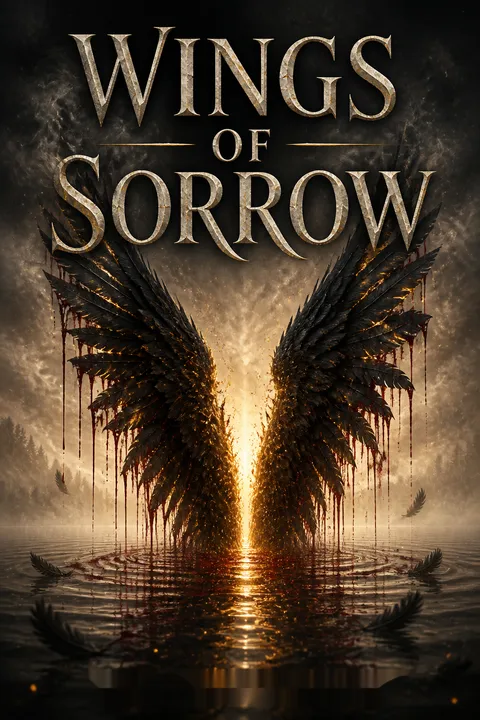
In the final confrontation at the lake, Sorrow, empowered by Scarlet's blood, regains his wings and supernatural strength. He battles the Saint, buying time for Chester to perform a ritual to banish the assassin. Scarlet, wounded and desperate, discovers her blood is toxic to the Saint, a weapon born of her cursed nature. The battle is brutal and cathartic, with Sorrow's sacrifice and Scarlet's courage turning the tide. The emotional bond between Scarlet and Sorrow deepens, offering a glimmer of hope amid chaos.
The Final Confrontation
Scarlet, channeling her latent magic, uses her blood and willpower to banish the Saint, parting the lake and entombing him in its depths. The act is both triumphant and terrifying, as Scarlet feels the corrupting influence of her powers. The victory is bittersweet: the threat is ended, but Scarlet's life is still forfeit, and the cost has been immense. The chapter is a crescendo of action, emotion, and the assertion of agency in the face of destiny.
The Lake's Judgment
In the aftermath, Scarlet, her father, Chester, and Sorrow regroup, battered but alive. The police and townsfolk are kept in the dark by the White Order's influence. Margaret, confronted by Scarlet's father, admits there is no way to reverse the spell that is killing Scarlet. Scarlet requests that Margaret erase her father's memories of the supernatural ordeal, choosing to spare him further pain. The group's bonds are tested and affirmed, and Scarlet's acceptance of her fate is both tragic and mature.
Aftermath and Choices
Margaret fulfills Scarlet's request, erasing her father's memories of the magical events. Scarlet and Sorrow, now more human than demon, find solace in each other's company. Chester, cast out from the White Order, pledges to help Scarlet in any way he can. The group, scarred but united, faces an uncertain future. Scarlet's acceptance of her mortality and her choice to protect her father's happiness are acts of profound love and selflessness.
A Mother's Shadow Returns
In a final twist, Scarlet's mother Nesta watches from the shadows, determined to restore her daughter's power and fulfill the original prophecy. Armed with the stolen necklace, Nesta plots to undo the White Order's work and bring about the magical apocalypse. The story ends with the promise of further conflict, as Scarlet's fate remains entangled with forces beyond her control, and her mother's love becomes the next looming threat.
Analysis
"Wings of Sorrow" is a dark, emotionally charged coming-of-age tale that uses supernatural horror to explore themes of destiny, agency, and the cost of power. At its core, the novel interrogates the meaning of good and evil, refusing to offer easy answers or clear heroes. Scarlet's journey is a meditation on the burdens of inheritance—familial, magical, and societal—and the struggle to assert one's will against overwhelming odds. The story critiques institutions that sacrifice individuals for the "greater good," highlighting the dangers of dehumanizing logic and the necessity of compassion. Through Scarlet and Sorrow, the novel suggests that redemption and change are possible, even for the most broken or damned. The ending, with Nesta's return, leaves the narrative open, emphasizing the cyclical nature of conflict and the enduring power of love and sacrifice. In a modern context, "Wings of Sorrow" resonates as a parable about resisting fatalism, embracing agency, and finding hope in connection, even when the world seems determined to break you.
Review Summary
People Also Read
Characters
Scarlet Thomas
Scarlet is a sixteen-year-old girl marked by loneliness, resilience, and a yearning for normalcy. Her mother's abandonment and her father's emotional distance have left her self-reliant but vulnerable. Scarlet's journey is one of forced transformation: from ordinary teenager to the prophesied "Spark" whose existence threatens the world. She is compassionate, as seen in her care for Sorrow, and courageous, facing supernatural threats with grit. Scarlet's psychological arc is defined by her struggle with identity, agency, and sacrifice. She resists being a pawn, ultimately asserting her will in the face of cosmic determinism. Her relationships—with Sorrow, her father, and her lost mother—are fraught with longing, anger, and love, making her a deeply human anchor in a world of monsters and magic.
Sorrow (Manah)
Sorrow, once the demon Manah, is a being of despair and manipulation, infamous for inciting human atrocities. Amnesiac and vulnerable upon arrival, he is transformed by Scarlet's kindness and the forging of a genuine bond. Sorrow's arc is one of redemption: he rejects his demonic nature, choosing to protect rather than corrupt. His relationship with Scarlet is both protective and intimate, evolving from guardian to friend, and possibly more. Sorrow's struggle is internal as much as external—he grapples with guilt, identity, and the possibility of change. His transformation, symbolized by the return of his wings, is catalyzed by Scarlet's blood and compassion, suggesting that even the darkest beings can find light through connection and choice.
The Saint
The Saint is a supernatural enforcer, embodying the ruthless logic of cosmic order. He is relentless, powerful, and devoid of empathy, viewing Scarlet as a threat to be extinguished at any cost. His methods are brutal, targeting Scarlet's friends and family to achieve his mission. Psychologically, the Saint is a zealot, incapable of doubt or mercy, and his fanaticism makes him both terrifying and tragic. He is the embodiment of "good" taken to an inhuman extreme, raising questions about the morality of ends-justifying-means. His defeat is not just a physical victory but a moral one, as Scarlet's humanity triumphs over his dogmatic violence.
Mr. Chester
Mr. Chester is Scarlet's employer and a member of the White Order, tasked with monitoring and, if necessary, eliminating the Spark. Initially secretive and conflicted, he becomes an unlikely ally, choosing compassion over doctrine. Chester's arc is one of moral awakening: he recognizes the cost of blind obedience and chooses to protect Scarlet, even at the expense of his standing in the Order. His relationship with Scarlet is paternal, offering guidance and support. Chester's struggle reflects the broader theme of institutional failure versus individual conscience.
Margaret Kindersley
Margaret is a high-ranking shaman of the White Order, cold, efficient, and unwavering in her mission to protect humanity at any cost. She orchestrates the ritual that dooms Scarlet, justifying her actions as necessary sacrifices. Margaret's psychological rigidity and lack of empathy make her a formidable antagonist, but also a tragic figure, blinded by her own certainty. Her interactions with Scarlet and Chester expose the dangers of dehumanizing logic and the moral ambiguity of "greater good" thinking.
Indy
Indy is Scarlet's quirky coworker and only friend in Redlake. His humor and awkwardness provide levity, but his loyalty is unwavering. Indy's fate—manipulated and killed by the Saint—serves as a devastating emotional blow to Scarlet, underscoring the collateral damage of cosmic conflict. Indy's death is a catalyst for Scarlet's resolve and a stark reminder of the human cost of supernatural wars.
Scarlet's Father (Ainsley)
Ainsley is a single father, emotionally distant but deeply caring. His battle with cancer and efforts to provide for Scarlet are tinged with guilt and inadequacy. He is bewildered by the supernatural events but ultimately stands by Scarlet, risking everything to protect her. His relationship with Scarlet is fraught but loving, and his willingness to fight for her, even against incomprehensible odds, is a testament to parental devotion. His memory is later erased at Scarlet's request, a bittersweet act of love.
Nesta (Scarlet's Mother)
Nesta is a witch and Scarlet's mother, whose abandonment and mysterious past haunt Scarlet's life. Her actions—infusing Scarlet with magic, leaving the necklace—set the entire plot in motion. Nesta's return at the end, intent on restoring Scarlet's power, positions her as a new antagonist and complicates the narrative of maternal love. She is both a victim of her own choices and a manipulator, embodying the ambiguous legacy of family and destiny.
The White Order
The White Order is an ancient organization dedicated to preventing magical catastrophe. Its members, including Chester and Margaret, are divided between compassion and ruthless pragmatism. The Order's actions—sanctioning Scarlet's death, manipulating events—reflect the dangers of institutional power and the ethical dilemmas of sacrificing individuals for the greater good. The Order is both protector and oppressor, a force of order that often perpetuates suffering.
The Oil
The Oil is a primordial being that inspired Aldorix and the Aldorian witches, including Nesta. It represents the seductive allure of power and the ancient hunger for magic's return. Though largely unseen, its influence pervades the narrative, driving the conflict between the forces of order and chaos. The Oil's legacy is one of manipulation, ambition, and the cyclical nature of destruction and rebirth.
Plot Devices
Prophecy and Predestination
The story is structured around the fulfillment of ancient prophecies, particularly those in the Book of Noy. Scarlet's life is shaped by forces beyond her control, and the tension between destiny and free will is a central theme. The prophecies create a sense of inevitability, but the characters' choices—especially Scarlet's acts of compassion and defiance—challenge the rigidity of fate. The narrative uses prophecy both as a source of suspense and as a critique of determinism, ultimately suggesting that agency and love can disrupt even the most ironclad destinies.
Duality of Good and Evil
The novel subverts traditional binaries of good and evil. The Saint, nominally an agent of "good," is a merciless killer, while Sorrow, a demon, becomes a selfless protector. The White Order, tasked with safeguarding humanity, is willing to commit atrocities for the greater good. These reversals force the reader to question the nature of morality, the cost of righteousness, and the possibility of redemption. The shifting alliances and betrayals keep the narrative unpredictable and emotionally charged.
Blood Magic and Sacrifice
Blood is both a literal and symbolic motif, representing the cost of magic, the bonds of family, and the price of agency. Rituals require blood sacrifice, and Scarlet's own blood becomes a weapon and a curse. The use of blood magic underscores the theme that power is never free and that every act of agency or resistance comes with pain and loss. The motif also ties together the personal and cosmic stakes, as Scarlet's suffering is both intimate and world-altering.
Foreshadowing and Symbolism
The narrative is rich with foreshadowing: the broken glass at the lake, the prophetic illustrations, the recurring motif of wings and flight. These symbols reinforce the themes of brokenness, transformation, and the longing for escape. The friendship pendant, split in two, embodies the possibility of connection and the pain of separation. The lake itself is a liminal space, a threshold between worlds, and the site of both trauma and redemption.
Narrative Structure
The story unfolds in a series of escalating confrontations, each raising the stakes and deepening the emotional complexity. The structure alternates between moments of horror, revelation, and intimacy, allowing the reader to experience both the cosmic scale of the conflict and the personal struggles of the characters. The pacing is relentless, but moments of quiet—Scarlet's conversations with Sorrow, her father, and herself—provide necessary respite and depth.
Download PDF
Download EPUB
.epub digital book format is ideal for reading ebooks on phones, tablets, and e-readers.








































