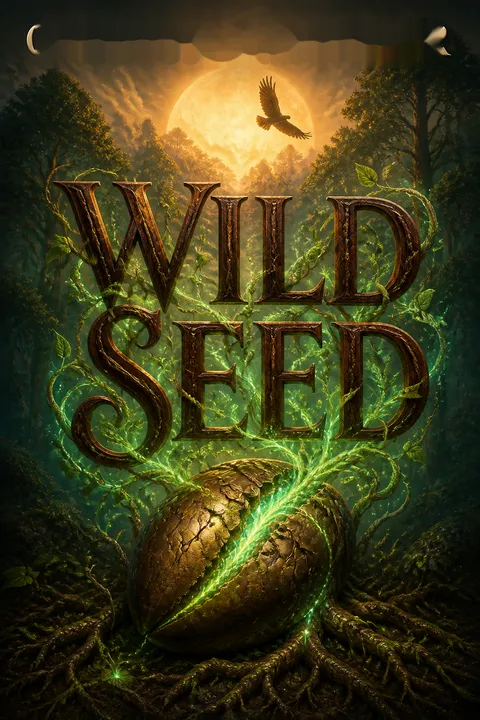

Plot Summary
Ruins and Wild Encounters
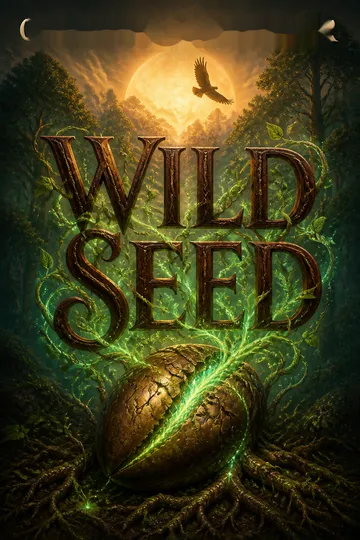
Doro, an immortal being who survives by transferring his consciousness into new bodies, arrives at the ruins of one of his seed villages, destroyed by slavers. His sense of loss and failure is profound, but a mysterious pull leads him deeper into the African forest. There, he encounters Anyanwu, a woman of extraordinary abilities—she can heal, shape-shift, and has lived for centuries. Their meeting is tense and wary, each recognizing the other as something more than human. Doro, used to dominance, is intrigued and challenged by Anyanwu's independence and power. Their initial conversation is a dance of suspicion and revelation, setting the stage for a relationship that will test both their limits and desires for control, belonging, and survival.
The Sun and the East
Doro and Anyanwu probe each other's origins and abilities, discovering a strange kinship in their names—Sun and East—and their supernatural gifts. Doro reveals his method of survival: he kills and inhabits new bodies, a truth that horrifies Anyanwu. In turn, she demonstrates her shape-shifting, transforming from an old woman to a young beauty, then to a man, and even to animals. Doro is both fascinated and calculating, seeing her as valuable "wild seed" for his breeding projects. Anyanwu, torn between fear and curiosity, is drawn to the possibility of companionship with someone like herself, yet recoils from Doro's predatory nature. Their mutual recognition as outcasts and potential kin forges a fragile, uneasy alliance.
Bargains of Power
Doro persuades Anyanwu to leave her people and join him, promising her a place among her own kind and the possibility of children who will not die. Anyanwu, motivated by the hope of finding lasting kin and the threat Doro poses to her descendants, agrees. Their journey is fraught with tension—Doro's dominance and Anyanwu's independence clash repeatedly. Anyanwu's healing abilities save Doro from infection, deepening his appreciation of her uniqueness. Yet, the power dynamic is clear: Doro's threats are ever-present, and Anyanwu's submission is always conditional, rooted in her desire to protect her children and herself from his wrath.
Crossing and Captivity
Doro and Anyanwu travel through dangerous lands, evading slavers and hostile tribes. Anyanwu's skills in foraging, healing, and survival prove invaluable. When they reach the coast, Doro's connections with slavers become apparent, and Anyanwu is confronted with the horrors of the slave trade. She is forced to adapt to new languages, customs, and the presence of Europeans. On the slave ship, she finds her grandson among the captives and reveals her true identity to him, offering comfort and continuity in a world turned upside down. The crossing to the New World is a crucible, testing Anyanwu's resilience and Doro's control.
The Ship of Strangers
Onboard the ship, Doro's "cargo" is a collection of people with latent or budding supernatural abilities, destined for his breeding colonies. Anyanwu becomes a healer and protector among them, forging bonds with her kin and other captives. The ship is both a prison and a laboratory, where Doro's ambitions and Anyanwu's compassion intersect. A violent storm threatens everyone, and Isaac, Doro's favorite son with telekinetic powers, saves the ship, revealing the extent of Doro's breeding successes. Anyanwu's relationship with Isaac deepens, hinting at future alliances and conflicts. The ship becomes a microcosm of the world Doro is building—diverse, dangerous, and full of potential.
New World, New Bonds
Arriving in New York, Doro's people are dispersed into his colony of Wheatley, a community of "witches" and outcasts. Anyanwu must learn new customs, languages, and ways of living. She is forced to marry Isaac, Doro's son, as part of Doro's breeding plans. The marriage is both a punishment and a gift—Isaac is kind and powerful, and their bond grows into genuine love. Anyanwu's healing and leadership make her central to the community, but Doro's control is ever-present. The tension between individual freedom and collective survival, between love and obedience, defines life in the New World.
Isaac's Storm
A violent storm at sea tests the limits of Isaac's abilities and Anyanwu's resilience. Isaac's telekinesis saves the ship, but the effort nearly kills him. Anyanwu's healing powers are pushed to their limits as she cares for Isaac and others. The storm is both literal and metaphorical—a crucible that forges deeper bonds among Doro's people and exposes the dangers of their powers. The aftermath brings new challenges: jealousy, rivalry, and the ever-present threat of Doro's wrath. Anyanwu's role as healer and mediator becomes more vital, but also more precarious.
The Healer's Dilemma
As Doro's breeding projects bear fruit, new generations with extraordinary abilities emerge. Anyanwu's daughter Nweke undergoes a painful transition, developing powers that combine healing and mind-reading. The process is agonizing and dangerous, threatening to destroy her mind and body. Anyanwu's unique abilities make her the only one capable of guiding Nweke through the ordeal. The experience is harrowing, revealing the high cost of Doro's ambitions and the fragility of his creations. The line between healing and harm, between gift and curse, becomes increasingly blurred.
Breeding and Betrayal
Doro's relentless pursuit of his breeding goals leads to tragedy and betrayal. Anyanwu is forced to bear children by men not of her choosing, and her autonomy is repeatedly violated. The community is shaken by violence, madness, and death as the consequences of Doro's experiments unfold. Anyanwu's resistance grows, culminating in a confrontation that tests the limits of Doro's power and her own capacity for survival. The cost of obedience becomes unbearable, and the seeds of rebellion are sown.
The Price of Obedience
The deaths of loved ones—Isaac, Nweke, and others—push Anyanwu to the brink of despair. She contemplates suicide as the only escape from Doro's control and the endless cycle of loss. Doro, confronted with the possibility of losing his only true equal, is forced to confront his own loneliness and the emptiness of his immortality. Their relationship reaches a crisis point, and both must choose between destruction and a new kind of partnership. The price of obedience is revealed to be not just personal, but existential.
Flight and Freedom
Anyanwu flees Doro, using her animal forms to evade his tracking. She finds temporary freedom among dolphins, embracing a life outside human society. Her flight is both a rejection of Doro's world and a search for a new way of being. Doro, unable to let her go, is forced to reconsider his methods and his need for connection. The pursuit becomes a meditation on the nature of freedom, the limits of power, and the possibility of coexistence between predator and prey.
Reunion in the South
Decades later, Doro tracks Anyanwu to Louisiana, where she has built a new community of outcasts and misfits. Their reunion is fraught with old wounds and new possibilities. Anyanwu has created a haven for those like herself, offering healing and belonging without Doro's coercion. Doro, recognizing her value and the limits of his own power, proposes a new bargain: partnership instead of domination. Together, they negotiate the terms of coexistence, balancing autonomy and connection, survival and compassion.
The Last Bargain
Anyanwu and Doro forge a new relationship, based on mutual respect and shared purpose. They agree to protect each other's people, to limit the violence and exploitation that have defined Doro's rule. Anyanwu's influence softens Doro's methods, and together they envision a future where their kind can thrive without fear. The community they build is a testament to the possibility of change, even for the oldest and most powerful among them. The last bargain is not just between two individuals, but between past and future, power and mercy.
The Promise of Canaan
In the final chapter, Anyanwu and Doro move their people west, seeking a new beginning in California as the Civil War looms. Anyanwu takes a new name, Emma, embracing her role as ancestress and guide. Doro, changed by their long struggle, becomes less a tyrant and more a partner. Their community endures, shaped by the lessons of pain, love, and survival. The promise of Canaan—a land of freedom and belonging—remains elusive, but the journey continues. The story ends with the hope that even the wildest seed can take root and flourish, given time, care, and the willingness to change.
Analysis
Octavia E. Butler's Wild Seed is a profound meditation on power, survival, and the possibility of change. Through the intertwined lives of Doro and Anyanwu, Butler explores the ethics of control, the costs of immortality, and the resilience of the human spirit. The novel interrogates the legacy of slavery, eugenics, and patriarchy, using supernatural abilities as metaphors for difference, adaptation, and the struggle for autonomy. Anyanwu's journey from submission to negotiation, and Doro's slow transformation from tyrant to partner, reflect the broader human quest for connection, justice, and meaning. The story's cyclical structure—marked by loss, renewal, and the forging of new bargains—underscores the difficulty and necessity of change. Butler's vision is both cautionary and hopeful: she warns of the dangers of unchecked power and the dehumanization of others, but also affirms the possibility of healing, community, and mutual respect. In a world where the wildest seeds can take root and flourish, Wild Seed offers a powerful lesson in the enduring struggle for freedom, dignity, and belonging.
Review Summary
Wild Seed by Octavia E. Butler follows two immortal African beings: Anyanwu, a shape-shifting healer, and Doro, a body-snatching predator who breeds humans with psychic abilities. Their centuries-long power struggle spans from 1600s Africa through American slavery, exploring themes of control, autonomy, eugenics, and colonialism. Reviewers praise Butler's complex characterization and compelling prose, though some find Doro's cruelty difficult to read. Most celebrate Anyanwu as a resilient protagonist and appreciate Butler's unflinching examination of power dynamics, gender, race, and humanity through speculative fiction.
People Also Read
Characters
Doro
Doro is an ancient being, over 3,700 years old, who survives by transferring his consciousness into new bodies, killing each host in the process. He is both godlike and monstrous, driven by a compulsion to breed people with supernatural abilities, creating communities of "witches" and outcasts. Doro's relationships are defined by dominance, manipulation, and a deep loneliness—he is both creator and destroyer, unable to form lasting bonds because everyone is temporary to him. His psychoanalysis reveals a being shaped by trauma, loss, and the burden of immortality. Over the course of the story, Doro is challenged by Anyanwu's independence and compassion, forcing him to confront his own emptiness and the limits of his power. His development is a slow, painful journey from absolute control to a grudging acceptance of partnership and vulnerability.
Anyanwu
Anyanwu is a centuries-old African woman with the power to heal, shape-shift, and control her own biology. She is fiercely independent, compassionate, and deeply connected to her descendants and community. Anyanwu's role is both as Doro's equal and his opposite—where he destroys, she heals; where he dominates, she nurtures. Her psychoanalysis reveals a woman shaped by loss, survival, and the longing for kinship. She is both a mother and a rebel, resisting Doro's control while seeking connection with others like herself. Her development is marked by cycles of submission, rebellion, and ultimately, negotiation—she learns to balance her need for autonomy with the realities of power and survival in Doro's world.
Isaac
Isaac is Doro's favorite son, gifted with telekinetic powers and a rare emotional stability. He serves as a bridge between Doro and Anyanwu, embodying the potential of Doro's breeding projects and the possibility of genuine love and partnership. Isaac's psychoanalysis reveals a man caught between duty and desire, loyalty and independence. He is both a victim and a beneficiary of Doro's ambitions, and his relationship with Anyanwu is one of mutual respect and affection. Isaac's death is a turning point, exposing the costs of Doro's power and the fragility of the world he has built.
Nweke
Nweke is the daughter of Anyanwu and a product of Doro's breeding plans, combining healing and mind-reading abilities. Her transition is agonizing and ultimately fatal, symbolizing the dangers and failures of Doro's experiments. Nweke's psychoanalysis reveals the vulnerability of those caught between worlds, gifted but unprepared for the burdens placed upon them. Her death is a catalyst for change, forcing both Doro and Anyanwu to confront the limits of their ambitions and the costs of their choices.
Stephen
Stephen is Anyanwu's son, inheriting her healing abilities and some of his father's sensitivity. He represents the possibility of a new kind of power—one that is controlled, compassionate, and sustainable. Stephen's psychoanalysis reveals the challenges of growing up in a world defined by Doro's ambitions and Anyanwu's expectations. His death is a profound loss, underscoring the fragility of hope and the dangers of unchecked power.
Margaret
Margaret is Anyanwu's daughter, caught in the crossfire of Doro's breeding projects and the violence of those with uncontrolled abilities. Her marriage to Joseph, a man who undergoes a late and dangerous transition, ends in tragedy. Margaret's psychoanalysis reveals the costs of living in a world where autonomy is limited and survival is uncertain. Her suicide is a testament to the emotional toll of Doro's world and the limits of Anyanwu's ability to protect her children.
Joseph
Joseph is a descendant of Anyanwu and Isaac, brought to the plantation by Doro as a potential mate for Margaret. His late transition unleashes dangerous powers, leading to violence and death. Joseph's psychoanalysis reveals the unpredictability and danger of Doro's experiments, as well as the consequences of treating people as means to an end. His story is a warning about the limits of control and the dangers of unchecked ambition.
Helen
Helen is Anyanwu's youngest daughter, sensitive and perceptive beyond her years. She survives violence and manipulation, embodying both the vulnerability and resilience of Doro's people. Helen's psychoanalysis reveals the challenges of growing up in a world defined by power, danger, and loss. She represents the hope that the next generation may find a way to survive and thrive, even in the shadow of Doro and Anyanwu.
Luisa
Luisa is an old white woman with a latent sensitivity, serving as a grandmother and stabilizing force in Anyanwu's community. Her psychoanalysis reveals the importance of empathy, connection, and acceptance in a world of outcasts. Luisa's death is a reminder of the inevitability of loss and the need for community and continuity.
Susan
Susan is a woman brought to the plantation by Doro, unable to care for her children due to her sensitivity. Her death at Doro's hands is a turning point, forcing Anyanwu to confront the limits of her influence and the costs of Doro's power. Susan's psychoanalysis reveals the dangers of being different in a world that values utility over humanity.
Plot Devices
Immortality and Power
The narrative is structured around the contrast between Doro's predatory immortality and Anyanwu's healing longevity. Immortality is both a gift and a curse, isolating its bearers and shaping their relationships with others. Doro's power is absolute but empty, while Anyanwu's is nurturing but vulnerable. The interplay between these forms of power drives the plot, creating cycles of dominance, resistance, and negotiation.
Breeding and Control
Doro's obsession with breeding people with supernatural abilities is both a plot engine and a metaphor for control, exploitation, and the dangers of eugenics. The narrative structure follows the rise and fall of Doro's breeding projects, exposing the costs—personal, communal, and existential—of treating people as means to an end. The failures and tragedies that result from these experiments serve as foreshadowing and critique.
Transformation and Identity
Anyanwu's ability to change her form is both a literal power and a metaphor for adaptation, resilience, and the search for identity. Her transformations allow her to survive, resist, and escape, but also raise questions about the nature of self and the limits of change. The narrative uses transformation to explore themes of gender, race, and belonging, as well as the tension between autonomy and community.
Foreshadowing and Cycles
The story is structured around cycles of birth, death, and renewal, with foreshadowing used to build tension and highlight the inevitability of loss. The deaths of loved ones, the recurrence of violence, and the repetition of bargains and betrayals create a sense of tragic inevitability, while also offering the possibility of change and growth.
Negotiation and Partnership
The central plot device is the evolving relationship between Doro and Anyanwu, moving from domination and resistance to negotiation and partnership. The narrative structure mirrors this evolution, with each confrontation and reconciliation marking a new stage in their journey. The final bargain is both a resolution and a new beginning, suggesting that even the most entrenched patterns can be transformed.
Patternist Series Series
About the Author

Download PDF
Download EPUB
.epub digital book format is ideal for reading ebooks on phones, tablets, and e-readers.








































