
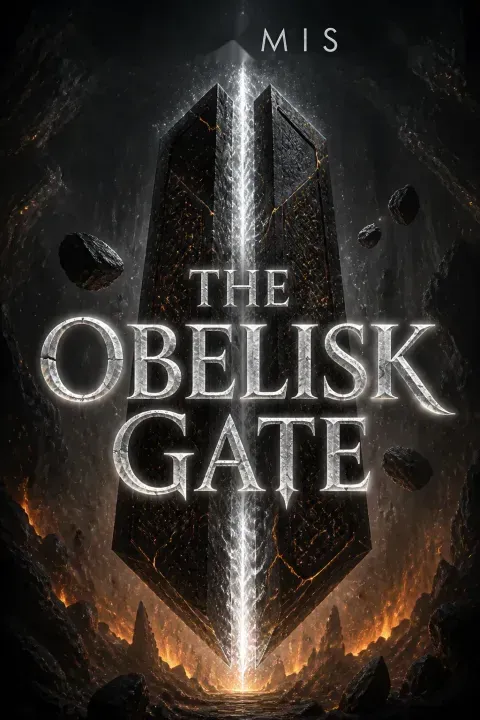


Plot Summary
Uche's Body on the Floor
Nassun2 comes home from creche to find her little brother Uche dead on the den floor, her father Jija6 standing over him breathing hard. He asks if she is an orogene too. She says yes, too stunned to lie. He cannot kill her: she is his firstborn, his favorite, the one with his face. He tells her to pack for a trip. She asks if Mama1 is coming. No.
Within an hour they are in the wagon heading south. The catalyst was a diamond Nassun2 found using her orogeny and gave to a visiting lorist. When the lorist returned it to Jija,6 Uche sensed the shiny stone in Jija's6 pocket with his own powerful orogenic perception. That innocent awareness confirmed everything Jija6 had long suspected and denied. He beat his son to death.
This sequence establishes the book's central domestic tragedy: a father so poisoned by societal hatred of orogenes that he murders his own child. The diamond functions as a grim MacGuffin, transforming Nassun's innocent gift into a death sentence. Jija's selective blindness, his ability to love Nassun while killing Uche, reveals how prejudice operates through compartmentalization rather than consistency. The opening also mirrors Essun's journey: both mother and daughter lose a child/sibling to the same man, then must navigate a shattered world alone.
Alabaster Alive, Turning to Stone
Essun1 arrives in Castrima, a comm hidden inside a giant glowing geode. In the infirmary she finds Alabaster,3 the most powerful orogene alive, reclining on cushions while a stone eater named Antimony12 slowly consumes his limbs. His first question: can she call the obelisks? She has not tried since Meov, ten years and another self ago.
They argue like the old days, sharp and familiar, until she agrees to try. He will not explain why yet because the knowledge might kill her. Their reunion is layered with old love, old resentment, and the weight of everything lost between them: their son Corundum, their lover Innon, the lives they built and abandoned.
Alabaster's condition literalizes the book's central metaphor: orogenes are consumed by the systems that use them. His body turning to stone while his mind remains sharp mirrors how oppression petrifies identity. The reunion with Essun establishes their dynamic: he is the visionary burdened with terrible knowledge, she is the pragmatic survivor who resists being made into a weapon. His demand that she learn to control obelisks, while refusing to explain the stakes, replicates the Fulcrum's pattern of withholding information from orogenes for their own good.
The Rifting's Shockwave
Days into their flight south, moments after Jija6 has knocked Nassun2 off the wagon in a rage, the shockwave from Alabaster's3 Rifting arrives. The strata heave; trees splinter; pond water leaps into the air. Nassun,2 half-addled and injured, drives invisible pylons into the lithosphere and spins a torus to protect them from flying debris, creating a circle of safety amid widespread destruction.
Jija6 stares at the aftermath and asks if she did this. She says she only protected them. His murderous expression flickers and fades when she calls him Daddy. Something in her calcifies in that moment: her childhood dies, replaced by the cold calculus of survival. She learns to manipulate him with affection.
This scene crystallizes Nassun's traumatic education in performative love. She discovers that calling Jija 'Daddy' and performing neediness can override his homicidal impulses, teaching her that love is a tool for controlling dangerous men. Her instinctive mastery of orogeny under pressure, saving them both while concealing her true capability, reveals her as her mother's daughter: brilliant, self-protective, and forced to hide her full self. The Rifting becomes the shared catastrophe linking all characters: Alabaster caused it, Essun survived it, and Nassun witnessed it.
Schaffa's Drowning Rebirth
After Syenite's1 attack destroys the pirate ship at Meov, Schaffa4 nearly drowns. In his panic, a cold presence at the back of his skull awakens: the Earth itself, offering survival for a price. He accepts, and his broken bones knit, his lungs find oxygen in seawater. But the price is his memories.
He washes ashore with fragments of identity, meets a frightened orogene boy named Eitz,14 and instinctively drains a measure of the boy's vital essence to stabilize himself. Driven by dim purpose, he kills Eitz's14 family and takes the boy. Over ten years he gathers other orogene children, establishing Found Moon near the Antarctic town of Jekity, a refuge without Fulcrum cruelty.
Schaffa's transformation from controlled Guardian to memory-eaten servant of the Earth illustrates how systems of oppression consume even their enforcers. The corestone in his brain stem, once a tool of control, now makes him a puppet of planetary vengeance. Yet his choice to build Found Moon rather than continue the Fulcrum's work suggests resistance is possible even from within. His relationship with Eitz, founded on a murdered family, foreshadows the toxic paternalism he will bring to Nassun: love inextricably bound to violence.
Calling the Onyx Obelisk
Essun1 goes topside into the ashfall night with Ykka7 and armed guards. Alabaster3 wanted her to call the nearby topaz, but a darker, heavier presence tugs at her awareness: the onyx, far across the Western Ocean. It hears her and ponderously turns, shaking the sea for miles as it begins its journey.
She also calls the topaz, which feels of Alabaster's3 preparation. Ykka7 frowns; she sensed some of what happened. Essun1 warns her never to reach for an obelisk: the power would kill someone without Fulcrum training. Later, Ykka7 inducts Essun1 into her advisory council alongside Hjarka,10 Cutter,13 and Lerna.8 The comm runs on glasnost and grit.
Calling the onyx against Alabaster's instructions reveals Essun's characteristic refusal to be managed, even by those she loves. The obelisks respond to her not just as a trained orogene but as someone whose grief and rage resonate with their ancient power. This moment also establishes the book's political subplot: Castrima as an experiment in still-orogene coexistence, fragile and unprecedented. Essun's warning to Ykka mirrors how the Fulcrum controlled knowledge, perpetuating the very secrecy that stifled her own growth.
Eitz Turns to Stone
Nassun2 has a nightmare. Eitz,14 the eldest Found Moon child, tries to wake her. In her terrified, disoriented flailing, she reaches not for heat or pressure but for the silver threads beneath reality. Her slap transmutes him: his chest hardens to tigereye, his heart becomes garnet and quartz and white agate. He dies instantly, a beautiful failure.
Simultaneously, a sapphire obelisk shimmers into solidity a hundred miles away and begins drifting toward Jekity. Nassun2 falls upward through its watery blue light, barely escaping with her consciousness. When she recovers, Schaffa4 holds her, blocking her view of Eitz's14 corpse. She weeps that she is a monster. He tells her, 'You are my monster.'
Eitz's death marks Nassun's irreversible crossing into a different order of power. Where Fulcrum training emphasizes control through restraint, her accidental act reveals that the deepest orogeny is not about controlling heat and motion but about reorganizing matter itself. Schaffa's response, claiming her as 'my monster,' offers unconditional acceptance at the cost of normalizing her self-perception as something terrifying. This is the moment Nassun internalizes that love and monstrousness can coexist, a lesson that will shape her choices about the Moon.
The Moon Was Lost
During a lesson, Alabaster3 teaches Essun1 to perceive the silver threads between his cells: the substance the ancient civilization called 'magic.' Then he tells her the truth. The Moon was once an object in the sky, much closer than stars. Its loss caused the Shattering and every Season since.
He found Corepoint, a deadciv city on the world's other side where stone eaters showed him a hole to the planet's core. He jumped in. The Earth is alive and hates humanity. Three factions vie: one wants humans dead, one wants them neutralized into stone eaters, and one hopes to end the war by returning the Moon. Alabaster's3 Rifting was the first step. Essun1 must finish it.
This revelation transforms the entire trilogy's cosmology from natural disaster narrative to family tragedy writ planetary. The Earth's hatred is parental grief weaponized across geological time; the obelisks become tools of attempted reconciliation. Alabaster's choice to create the Rifting, killing millions to save the species, forces Essun to confront the trolley problem at a continental scale. His methodology, withholding information until she is 'ready,' perpetuates the Fulcrum's paternalism even as he claims to reject it. Knowledge is dangerous; ignorance is more so.
The Antarctic Fulcrum Falls
Schaffa,4 Umber, and Nassun2 travel to the Antarctic Fulcrum, where orogene seniors killed their Guardians and now run the facility independently. The seniors are polite, evasive, terrified. Then a girl named Ajae casually asks Nassun2 if the Guardians broke her hand yet: it is what they do to every grit. Nassun2 understands. The Fulcrum is why her mother1 broke her hand with a rock.
The Fulcrum is why Essun1 was cold and cruel and never loved her. This place made her mother1 wrong. White-hot clarity crystallizes into action. Nassun2 reaches for the sapphire obelisk and turns every orogene in the compound to stone: the seniors, the grits, the gardeners. Schaffa4 finds her afterward and tells her she was right.
Nassun's destruction of the Antarctic Fulcrum is an act of filial love disguised as genocide. She is not merely killing orogenes; she is eradicating the institutional machinery that she believes poisoned her mother and, by extension, her own childhood. Schaffa's validation is dangerously enabling, but it also grants her something Essun never received: permission to be angry. The scene reframes the Fulcrum not as a protectorate but as an abuser that reproduces its violence across generations, making victims into victimizers. Nassun's solution is characteristically absolute: burn it all down.
Gray Man's Offer
A gray stone eater11 appears on the Flat Top carrying Hoa's5 severed arm. He delivers Rennanis's message: join their Equatorial comm and survive, but they have no use for orogenes. Essun1 slices off his hand with magic. That night, Hoa5 crawls back to her apartment, limbs torn off, jaw missing, skull bitten open.
She feeds him his cache of stones from Tirimo, and he erupts in silver light, emerging from a chrysalis of chalcedony as his true form: a black-marble stone eater, adult and ancient. He tells her the Gray Man11 wants her dead because she could open the Obelisk Gate. He will protect her. He loves her. She does not know whether to trust him.
Hoa's transformation literalizes the book's theme of hidden identities and the cost of revelation. His child-form was a deliberate vulnerability, a way to make Essun trust him; his adult form is terrifying but truthful. The Gray Man's ultimatum weaponizes comm democracy against itself, forcing Castrima to choose between survival and solidarity. Essun's immediate violence in response, severing the stone eater's hand, demonstrates that she has learned Alabaster's lesson: with these beings, only overwhelming force earns respect. Her emotional whiplash from fury at Hoa's deception to tenderness at his devotion mirrors the book's larger ambivalence about love across difference.
Ykka Executes Cutter
Cutter,13 the secret orogene, is attacked in the baths by a still man who strikes him on the back of the neck. Cutter13 ices the man in self-defense. Ykka7 knows the comm is at a breaking point. She touches Cutter's13 chest and stills his heart: a mercy execution to prevent a lynch mob. Hours later, a drunk woman named Waineen attacks Penty, an orogene child, punching her.
Essun1 sees Jija6 in the woman's raised fist. She connects to the topaz obelisk and turns Waineen to glittering stone, then nearly destroys all of Castrima. Alabaster3 fights her through the magic network, stopping her but fully turning to stone himself. He dies saving the comm from her.
This sequence forms the book's emotional nadir. Ykka's execution of Cutter is a brutal calculus: sacrifice one orogene to save twenty. It 'works' in the short term but proves Essun's cynicism correct: no amount of loyalty will protect orogenes when stills feel threatened. Essun's subsequent rampage, triggered by a child being beaten, channels all her accumulated trauma, from Uche's death to her own childhood at the Fulcrum. Alabaster's sacrifice, dying to stop her from becoming what he became, is the book's most profound act of love: he refuses to let her carry the same damnation he bore.
No Vote
Grief-stricken over Alabaster's3 death, Essun1 takes the spinel obelisk, now forged into a pink longknife that floats behind her head, and walks to the Flat Top where the comm is voting on expelling the orogenes. She swings the blade. The ballot box disintegrates into microscopic particles.
Her voice carries across the silent geode: there will be no vote. This is a community. They will stand unified or she will kill every last one of them. No one doubts her. Ykka7 is livid at being undercut but later concedes in private that it was necessary. Castrima stops tearing itself apart and begins preparing to fight Rennanis instead.
Essun's coup is the book's most explicit argument against liberal democracy as a framework for minority rights. The vote was never going to protect orogenes; it was going to legitimize their expulsion. By destroying the process, Essun forces a different outcome: solidarity at gunpoint. This is authoritarianism born of desperation, and the book does not present it as heroic so much as tragically necessary. Ykka's reluctant acceptance suggests that even the most hopeful leader of an integrated community recognizes that sometimes, when the mob is at the door, the only response is a bigger threat.
I Like Being an Orogene
Nassun2 visits Jija6 in his Jekity home after months of avoidance. He asks why she has not cured herself yet. She says she might be able to soon. He does not believe her. He accuses her of lying, of not trying, of being like all the other monsters at Found Moon. She finally tells him the truth: she likes being an orogene.
She likes making things move with her mind, doing the silver, falling into obelisks. His backhand knocks her out of her chair. She ices the entire house, precise and intentional, a warning. She tells him goodbye and walks out while he moans on the frozen floor. He never replies. Her father6 is dead to her now. Only Jija6 remains.
This confrontation completes Nassun's separation from the illusion of paternal love. Her declaration that she likes being an orogene is a radical act of self-acceptance in a world that demands she loathe her very nature. Jija's violence is predictable but clarifying: he cannot love what she actually is, only what he wishes she were. The scene echoes and inverts Essun's own history of hiding; where Essun chose camouflage in Tirimo, Nassun chooses transparent rejection. Her use of orogeny as a warning, not a killing blow, shows restraint her mother never demonstrated at the same age.
Ykka's Meshing Technique
With Rennanis's army approaching, Ykka7 reveals her desperate plan: use controlled orogeny to drive the boilbugs into a swarm that will overwhelm the invaders. She will yoke together all of Castrima's orogenes, a technique she developed herself that Fulcrum training never covered. Essun1 studies Ykka's7 method and has an epiphany.
Meshing with Ykka,7 she finally perceives the silver threads everywhere, interlacing rock and magma and fossilized seas and living forests. Magic derives from life itself. Alabaster3 failed to teach her this because he, like her, was Fulcrum-limited; Ykka,7 with nothing to unlearn, held the key all along. 'First a network, then the Gate': now Essun1 understands.
Ykka's technique solves the book's central puzzle, but more importantly it validates non-institutional knowledge. The Fulcrum's methodology, designed to control orogenes by constraining their imagination, could never have arrived at this solution because it systematically prevented lateral thinking. Ykka represents an alternative epistemology: learning through community, experimentation, and necessity rather than hierarchy and ring-based ranking. Essun's humility in learning from a 'feral' she initially dismissed as weaker completes her arc from institutionalized weapon to collaborative leader.
The Obelisk Gate Opens
Essun1 calls the onyx, which fills the sky above Castrima-over. Connected to the spinel, the orogene network, and Hoa's5 stabilizing presence, she opens the Obelisk Gate. Every obelisk on the continent activates at once. She drives millions of boilbugs through Rennanis's occupying army, seals enemy stone eaters inside Castrima's crystals like insects in amber, and then reaches north to Rennanis itself and turns every citizen to stone with a thought.
But before the Gate disengages, she reaches south and catches the sapphire obelisk's resonance. Nassun2 is there, alive, connected to it. Essun1 knows her daughter's2 signature as she knows her own soul. The Gate releases her. Her right arm has turned to stone.
Opening the Gate represents both apotheosis and damnation. Essun becomes the most powerful orogene alive, capable of planetary-scale destruction, but the magic consumes her flesh exactly as it consumed Alabaster. Her discovery that Nassun lives, interwoven with the sapphire obelisk, transforms the climax from tragedy to hope: the search that drove the entire plot has found its answer. Yet the stone arm is a ticking clock, and Nassun is in the hands of forces Essun cannot control: Schaffa, Steel, and her own radicalized daughter.
Steel's Promise
In the predawn dark, Jija6 comes to Found Moon with a red opal knife to kill his daughter.2 Nassun2 is not surprised. Steel11 the gray stone eater stands beside her, watching. She tells her father6 she understands why he hates orogenes, but she cannot stop being one. When he lunges, she brings the sapphire obelisk down from the sky, reshaping it into a blade longer than her body.
He impales himself on it. She turns him to stone, purposefully this time, and he shatters into fragments at her feet. Steel11 tells her the Moon is coming back; with the Gate, she could bring it home, end the Seasons, and make sure no one ever suffers as she has. She says yes.
Nassun's patricide completes her transformation from victim to agent of apocalypse. Where Essun's power is reactive and protective, Nassun's is decisive and absolute. Steel's manipulation is transparent but effective: he offers her not just power but meaning, a way to transform her monstrousness into salvation. Her choice to end the Seasons by bringing the Moon home, whatever the cost, mirrors Alabaster's logic at Yumenes: create a catastrophe to prevent a greater one. The book ends with mother and daughter on collision courses, each believing she acts to save the world.
Epilogue
Hoa5 carries Essun's1 comatose body to Lerna's8 apartment in the dying geode. Her right arm is brown stone now, shaped into a fist with a crack across the back where she fought the transformation. Castrima crumbles around them, the crystals flickering and dying. Hoa5 tells Lerna8 that Rennanis is empty, every citizen turned to stone; its storecaches and walls are intact.
The comm could move there, survive there. Lerna8 stares at the stone eater5 who loves his patient.1 Hoa5 admits it plainly: he stays with Essun1 because he loves her. When she wakes, she will want to find Nassun.2 He will be at her side. Death is a choice, and he will not allow that choice for her.
Hoa's vigil over Essun's stone-claimed body closes the book on a note of suspended tension. The geode's death literalizes the cost of survival: Castrima sacrificed itself to save its people, just as Alabaster sacrificed himself to save Essun, just as Essun sacrificed her arm to save the comm. Hoa's confession of love, delivered without sentimentality, reframes his entire narration: every 'you' addressed to Essun across two books has been a love letter from an immortal being who chose attachment over detachment. The empty city of Rennanis offers pragmatic hope, but the real cliffhanger is emotional: a mother turned to stone, a daughter choosing apocalypse, and between them, a stone eater who will not let go.
Analysis
The Obelisk Gate transforms its predecessor's themes of systemic oppression and climate catastrophe into a multi-generational family tragedy played out across continental scales. Where The Fifth Season introduced a world that kills orogenes, this volume explores what happens when orogenes kill back, and whether the cycle can ever be broken.
The book's most radical structural choice is its dual-protagonist design: Essun,1 the mother who lost everything, and Nassun,2 the daughter who chose to lose her father. They never meet, yet their arcs mirror each other with devastating precision. Both are trained in violence by damaged mentors (Alabaster3 and Schaffa4 ). Both commit atrocities they consider justified. Both are offered the power to end the world. The difference is that Essun1 acts from exhausted love, protecting a community she never wanted, while Nassun2 acts from purified rage, rejecting the world that rejected her.
N.K. Jemisin's magic system deepens here from metaphor to mechanism. The revelation that orogeny is 'magic,' derived from life itself rather than mere energy manipulation, reframes the entire trilogy: orogenes are not just seismically sensitive humans but heirs to an ancient civilization that once wielded godlike power. The Fulcrum's training, which constrained orogenes to think only of heat and motion, was never about safety; it was about control, preventing them from accessing the full scope of their inheritance.
The book's treatment of community is notably unsentimental. Castrima is not a utopia of still-orogene harmony; it is a fragile experiment held together by Ykka's7 pragmatism, Essun's1 terror, and the stark reality that the alternatives are worse. When the vote comes, democracy fails; only authoritarian force preserves the orogene minority. Jemisin refuses to offer easy solutions to the problem of coexistence between oppressor and oppressed classes. Sometimes the only thing that works is a bigger threat.
The Obelisk Gate asks whether love can survive when it is bound to systems of control. Schaffa4 loves Nassun2 but his corestone demands he kill her. Jija6 loves his daughter2 but cannot love an orogene. Alabaster3 loves Essun1 but manipulates her into becoming his replacement. Even Hoa's5 love is predatory in its intensity. The book's deepest insight is that love, under conditions of oppression, is always compromised; the question is not how to purify it but how to act rightly within its contradictions.
Review Summary
The Obelisk Gate receives mostly positive reviews, with praise for its complex characters, worldbuilding, and themes of oppression and survival. Many readers find it a strong sequel, though some feel it suffers from middle-book syndrome with slower pacing and information dumps. The writing style, particularly the second-person narration, continues to impress. Readers appreciate the expanded perspectives, especially Nassun's storyline. While some find the book less engaging than its predecessor, most are eager to continue the trilogy and see how the intricate plot unfolds.
People Also Read
Characters
Essun
Grieving mother turned apocalyptic weaponOnce Syenite of the Fulcrum, now Essun of Tirimo, she has buried three children and two identities. Her search for her surviving daughter Nassun2 drives her across the Stillness to Castrima, where she reunites with Alabaster3 and reluctantly becomes the most powerful orogene alive. She is pragmatic, ferociously protective, and scarred by the belief that love is a prelude to loss. Her arc moves from lone survivor to reluctant community leader, forced to care about more than her own blood. She killed one son to spare him slavery; she will reshape the world to save her daughter2 from a father's6 hatred.
Nassun
Daughter radicalized by betrayalTen years old when her father6 kills her brother and drags her south. Nassun inherits Essun's1 orogenic power and Jija's6 capacity for self-deception. At Found Moon, under Schaffa's4 damaged guardianship, she learns that orogeny is not a curse but an identity worth claiming. Her emotional journey from daddy's girl to patricide tracks the death of innocence: each person who should have loved her unconditionally demanded she become something else. By the end, she embraces her own monstrousness as the only honest path. Her decision to bring the Moon home, whatever the cost, is a child's solution to an adult's impossible problem: make the pain stop forever.
Alabaster
Ten-ringer martyr consumed by powerThe man who broke the continent returns as a dying mentor. His body is being slowly transmuted into stone by Antimony12, the price of opening the Obelisk Gate to create the Rifting. He is brilliant, acerbic, and terrible at teaching; his love for Essun1 is real but expressed through withholding and provocation. He carries the knowledge that orogeny's true nature is magic, not physics, and that the Seasons are punishment for an ancient crime: the loss of the Moon. His sacrifice to stop Essun1 from destroying Castrima in her rage completes his arc from destroyer to protector, dying so she might live to finish his work.
Schaffa
Guardian seeking redemption through a childOnce Essun's1 Guardian at the Fulcrum, now a damaged man with an iron corestone eating his memories from within. The Earth saved his life after Meov but claimed his identity as payment. He built Found Moon as an alternative to the Fulcrum's cruelty, gathering orogene children and protecting them from a world that would kill them. In Nassun2 he recognizes the daughter of the woman1 he once loved and tormented. His refusal to let her remove his corestone, even though it tortures him, is both self-sacrifice and selfishness: he would rather suffer than become too weak to protect her.
Hoa
Ancient stone eater bound by loveThe narrator of the entire trilogy, revealing himself in this volume as an immortal stone eater who once was human. He attached himself to Essun1 after she freed him from millennia trapped in the garnet obelisk. He took the form of a strange, racially ambiguous child to earn her trust; his true body is black marble veined with silver. He has slaughtered other stone eaters to protect her and will continue doing so. His love is genuine but complicated by his age, his alien nature, and his role in the ancient war that shattered the world. He was there when the Moon was lost.
Jija
Father who murders what he cannot acceptEssun's1 husband of ten years, a stoneknapper of Tirimo who loved his family until he discovered the truth about them. His childhood trauma, watching a friend's orogene cousin accidentally freeze another boy to death, crystallized into lifelong hatred. He killed his toddler son Uche when he realized the boy was an orogene. His relationship with Nassun2 is defined by impossible conditions: he can love her only if she stops being what she is. His journey across the Stillness to 'cure' her reveals that his love was always contingent on denial.
Ykka
Headwoman of an impossible communityThe orogene leader of Castrima, a comm where stills and roggas coexist through practical necessity and stubborn hope. She outed herself at fifteen by stopping a forest fire and, miraculously, her people chose to keep her. She is pragmatic to the point of coldness: she executes her friend Cutter13 to prevent a mob, and would sacrifice anyone for the comm's survival. Yet her vision of an integrated community, however fragile, represents the book's only functional alternative to genocide or isolation. Her feral-developed networking technique proves that institutional knowledge is not the only path to mastery.
Lerna
Healer who chose the monstersThe doctor from Tirimo who fled with Essun1 after she destroyed half the town. He grew up alongside Jija6 and knows exactly what Essun1 lost. His relationship with her is complicated: he has seen her at her most destructive and still chooses to stay, offering her human connection when she feels least human. His anger at her for destroying their home coexists with his understanding of why she did it. He represents the still who can see orogenes as people, but his love for Essun1 is also a form of dependency.
Tonkee
Obsessive geomest uncovering dead truthsFormerly Binof Leadership Yumenes, disowned by her family for being too curious and too queer. She infiltrated the Fulcrum years ago to find the obelisk socket and has been deciphering deadciv technology ever since. In Castrima she discovers the control room and nearly kills herself touching an ancient iron shard. Her relationship with Hjarka10 surprises everyone, including herself. She represents the value of pure research in a world that only values survival skills; her knowledge of the obelisks and their builders proves essential to understanding what Essun1 must do.
Hjarka
Reluctant heir who chose freedomCastrima's Leadership caste member who fled her home comm to avoid the burden of rule. She files her teeth to points in the old Sanzed tradition, a deliberate rejection of respectability. She courted Tonkee9 with dead animals and difficult books, apparently finding the geomest's complete lack of social skills irresistible. Her loyalty to Ykka7 is grudging but absolute; she serves as the council's pragmatic cynic, always questioning plans but never undermining the headwoman's authority. Her choice to stay in Castrima rather than accept Rennanis's offer is quiet heroism.
Steel
Stone eater who wants humanity endedThe gray stone eater whom Nassun2 names Steel. He serves Rennanis and manipulates the Equatorial army against Castrima with the goal of killing any orogene who could open the Gate. When he discovers Nassun's2 power, he pivots to recruitment, offering her the knowledge to save Schaffa4 from pain and eventually to bring the Moon home on his terms. His true goal is to crash the Moon into the Earth, ending all human life and leaving the planet to the stone eaters. He is patient, persuasive, and utterly committed to genocide as an act of mercy.
Antimony
Stone eater consuming her chosen orogeneAlabaster's3 stone eater, slowly transmuting his flesh into stone as the price for opening the Gate. She saved him from Meov, carried him through the Earth to Corepoint, and now tends him as he dies. She sings to him in harmonies Essun1 cannot parse. Her relationship with Essun1 is antagonistic but honest: she is Alabaster's3 ally, not Essun's1. She represents the stone eaters who still align with the original plan, using orogenes as tools to return the Moon. After Alabaster's3 death, she takes his stone remains and vanishes.
Cutter
Secret orogene broken by revelationA native Castriman who concealed his orogeny his entire life. His use-name is Strongback, not Orogene; he refused Ykka's7 offers to formally acknowledge what he is. His secrecy made him bitter and oppositional, always arguing against council decisions. When a still attacked him in the baths, he killed his attacker in self-defense. Ykka7 executed him with a strange orogenic technique that stopped his heart, sacrificing him to preserve the fragile peace between stills and roggas in the comm.
Eitz
First Found Moon child, first victimThe eldest orogene at Found Moon, a Coaster boy with a sad smile whom Schaffa4 took from his Coastal home ten years earlier. He was eighteen when Nassun2 arrived and quickly became her friend and crush. When he tried to wake her from a nightmare, her startled reflexive use of the silver threads turned him instantly to stone: a multicolored statue of quartz, garnet, and sapphire. His death was accidental but irrevocable, and it taught Nassun2 exactly how dangerous she truly is.
Plot Devices
Obelisks
Ancient amplifiers of orogenic powerMassive floating crystals that exist partially in a state of unreality, flickering between solid and translucent. There are two hundred and sixteen of them scattered across the continent. Each is color-coded by mineral type: the garnet, the amethyst, the topaz, the onyx, the sapphire, the spinel. They were built by an ancient orogene civilization to channel the Earth's magic. An orogene can connect to an obelisk by aligning their perception with its resonance, gaining enormous power at the risk of being consumed. The obelisks are conduits, not weapons, though they can be used destructively. Together they form the Obelisk Gate.
The Obelisk Gate
Planetary-scale magic networkWhen all obelisks are activated in concert through a controlling cabochon (the onyx), they form a network capable of channeling the Earth's own magic on a planetary scale. Opening the Gate requires two things: a network of orogenes yoked together as a buffer, and a purpose powerful enough to direct the energy. Alabaster3 used it to create the Rifting. Essun1 uses it to destroy Rennanis and seal stone eaters in crystal. The Gate's true purpose is to catch the returning Moon and restore it to orbit, ending the Seasons. Using it without a clear focus is fatal; the power consumes the user, turning them to stone.
Silver Threads (Magic)
Underlying fabric of orogeny and lifeThe true nature of orogenic power, distinct from the heat-and-motion manipulation taught by the Fulcrum. Magic appears as silvery threads connecting all living things, present in cells, fossilized remains, and the deep Earth. The ancient civilization called it 'magic' and built the obelisks to harness it. The Fulcrum deliberately trained orogenes to perceive only energy redistribution, preventing them from discovering magic, because those who did either died or became uncontrollable. Magic derives from life itself: the more that has lived in a place, the more magic suffuses it. Stone eaters are entirely composed of concentrated magic.
Guardian Corestones
Iron shards that link Guardians to the EarthTiny iron fragments implanted into the brain stems of children at Warrant, repurposing their sessapinae to detect orogeny rather than seismic activity. The corestone grants Guardians their superhuman strength, speed, and the ability to negate orogeny. But it also contains a fragment of the Earth's consciousness, which uses Guardians as puppets. Over centuries, the Earth's influence grows, eventually overriding the Guardian's will. Schaffa's4 corestone torments him with pain whenever he resists its commands to kill Nassun2. Removal of the corestone causes rapid aging and death, as the centuries the Guardian has lived catch up all at once.
The Moon
Lost satellite whose return could end the SeasonsOnce an object in the sky much closer than the stars, the Moon was flung away from Earth in the ancient past when the obelisks misfired during the Shattering. Its loss broke the Earth's equilibrium, triggering millennia of Seasons as Father Earth's grief and rage manifested in seismic catastrophe. The Moon is now returning on a long elliptical orbit. Alabaster's3 Rifting was the first course correction to slow it. The second correction, using the full Obelisk Gate, could bring it back into stable orbit, ending the Seasons forever. But crashing it into the Earth, as Steel11 proposes, would end all human life.
FAQ
Synopsis & Basic Details
What is The Obelisk Gate about?
- A World Shattered: The story continues in a world ravaged by a cataclysmic event, where orogenes, people with the power to manipulate the earth, are both feared and needed.
- Mother and Daughter: It follows two parallel journeys: Essun, a mother seeking her lost daughter, and Nassun, a young orogene grappling with her powers and her father's fear.
- Ancient Power: The narrative explores the mysteries of the obelisks, ancient structures that hold immense power and may be the key to ending the world's suffering.
Why should I read The Obelisk Gate?
- Complex Characters: The novel features deeply flawed and compelling characters, each with their own motivations and struggles, making their journeys emotionally resonant.
- Intricate Worldbuilding: Jemisin crafts a richly detailed world with a unique magic system, exploring themes of power, oppression, and the consequences of unchecked ambition.
- Thought-Provoking Themes: The story delves into complex questions about identity, prejudice, and the nature of good and evil, prompting readers to reflect on their own world.
What is the background of The Obelisk Gate?
- Post-Apocalyptic Setting: The story takes place in a world called the Stillness, which is frequently ravaged by cataclysmic events known as Seasons, creating a harsh and unforgiving environment.
- Orogenes and Stills: The society is divided between orogenes, who can manipulate the earth, and stills, who lack this ability, leading to deep-seated prejudice and fear.
- Ancient Civilizations: The narrative hints at the existence of advanced ancient civilizations that created the obelisks and other powerful technologies, adding layers of mystery and intrigue.
What are the most memorable quotes in The Obelisk Gate?
- "A person is herself, and others. Relationships chisel the final shape of one's being.": This quote highlights the importance of connections and how they shape identity, a central theme in the book.
- "We all do what we have to do.": This phrase, repeated by multiple characters, underscores the moral ambiguity and difficult choices faced by individuals in a world of constant crisis.
- "It's good to see you.": This simple line, spoken by Alabaster to Essun, carries a weight of history and unspoken emotions, highlighting the complex relationship between the two characters.
What writing style, narrative choices, and literary techniques does N.K. Jemisin use?
- Second-Person Narration: Jemisin employs a unique second-person perspective in some chapters, drawing the reader directly into Essun's experiences and emotions.
- Non-Linear Storytelling: The narrative weaves together multiple timelines and perspectives, creating a complex and layered story that gradually reveals its secrets.
- Rich Metaphorical Language: Jemisin uses vivid and evocative language, often employing metaphors and similes to describe the characters' inner states and the world around them.
Hidden Details & Subtle Connections
What are some minor details that add significant meaning?
- The Color Burgundy: Schaffa's uniform is described as burgundy, a color that Jija reacts to negatively, hinting at Schaffa's past and the source of Jija's fear of orogenes.
- The Shape of the Diamond: Nassun's diamond is described as "almost cubical," foreshadowing the obelisks' geometric shapes and her connection to them.
- The Use of "Still": The word "still" is used by a still to describe themselves, a subtle hint at the stone eaters' influence and the blurring lines between different groups.
What are some subtle foreshadowing and callbacks?
- The Lorist's Tale: The lorist tale about giving the lastborn to the sea foreshadows the themes of sacrifice and the desperate measures people take during a Season.
- Alabaster's Question: Alabaster's question to Essun, "Can you do it yet?" foreshadows her ability to connect with the obelisks and the immense power she will eventually wield.
- The Scar on Schaffa's Neck: The scar on Schaffa's neck, described as "thick and stitched," hints at his past as a Guardian and the brutal procedures he underwent.
What are some unexpected character connections?
- Schaffa and Damaya: The connection between Schaffa and Damaya, revealed through his fragmented memories, adds a layer of tragedy and complexity to his character.
- Hoa and Essun: The bond between Hoa and Essun, despite their different natures, highlights the theme of connection and the search for belonging in a fractured world.
- Ykka and Alabaster: The subtle connection between Ykka and Alabaster, both powerful orogenes who have been rejected by the Fulcrum, hints at a shared understanding and potential for collaboration.
Who are the most significant supporting characters?
- Lerna: As a still and a doctor, Lerna provides a grounded perspective and a sense of humanity amid the chaos, and his evolving relationship with Essun is a key emotional thread.
- Tonkee: As a geomest, Tonkee's knowledge of the obelisks and her unique perspective on the world make her a valuable ally to Essun, despite her social awkwardness.
- Hjarka: As a leader and a strongback, Hjarka represents the resilience and practicality of the people of Castrima, and her complex relationship with Ykka adds depth to the comm's internal dynamics.
Psychological, Emotional, & Relational Analysis
What are some unspoken motivations of the characters?
- Jija's Fear: Jija's unspoken fear of orogenes, rooted in a past trauma, drives his actions and his desire to "cure" Nassun, ultimately leading to tragedy.
- Essun's Guilt: Essun's unspoken guilt over the death of her son and her role in the destruction of Tirimo fuels her determination to save the world and find her daughter.
- Alabaster's Self-Loathing: Alabaster's unspoken self-loathing for his role in the Rifting drives his desire to teach Essun and find a way to atone for his actions.
What psychological complexities do the characters exhibit?
- Schaffa's Internal Conflict: Schaffa's internal struggle between his Guardian programming and his growing compassion for orogenes highlights the psychological toll of his past and his desire for redemption.
- Nassun's Trauma: Nassun's trauma from witnessing her brother's death and her father's violence leads to a complex mix of fear, anger, and a desire for control.
- Ykka's Burden: Ykka's burden of leadership and her struggle to balance the needs of her comm with her own personal beliefs reveal the psychological toll of responsibility during a crisis.
What are the major emotional turning points?
- Jija's Betrayal: Jija's betrayal of Nassun, when he knocks her off the wagon, marks a turning point in their relationship, shattering her trust and forcing her to confront his true nature.
- Essun's Loss: Essun's realization that Alabaster is dying and that she is the only one who can stop the Seasons is a major emotional turning point, forcing her to accept her destiny.
- Nassun's Choice: Nassun's decision to use the sapphire obelisk to turn her father to stone is a major emotional turning point, marking her transformation and her acceptance of her power.
How do relationship dynamics evolve?
- Essun and Alabaster: The relationship between Essun and Alabaster evolves from mentor-student to a complex mix of love, resentment, and shared responsibility, highlighting the burden of their shared history.
- Nassun and Schaffa: The relationship between Nassun and Schaffa evolves from a mentor-student dynamic to a deep bond of trust and affection, as he becomes a surrogate father figure for her.
- Ykka and Essun: The relationship between Ykka and Essun evolves from suspicion and distrust to a grudging respect and a shared understanding of the challenges they face, highlighting the complexities of leadership during a crisis.
Interpretation & Debate
Which parts of the story remain ambiguous or open-ended?
- The Nature of the Earth: The true nature of the Earth and its motivations remain ambiguous, leaving the reader to question whether it is a sentient being or simply a force of nature.
- The Stone Eaters' Agenda: The stone eaters' true motives and their role in the conflict remain unclear, leaving the reader to wonder whether they are allies or enemies.
- The Future of the Stillness: The ultimate fate of the Stillness and the long-term consequences of Essun's actions remain open-ended, leaving the reader to ponder the possibility of a new world.
What are some debatable, controversial scenes or moments in The Obelisk Gate?
- Essun's Actions in Tirimo: Essun's destruction of Tirimo, while understandable in the context of her grief and anger, is a controversial act that raises questions about the morality of her actions.
- Jija's Murder of Uche: Jija's murder of his son, Uche, is a horrific act that sparks debate about the nature of evil and the consequences of fear and prejudice.
- Ykka's Decision to Kill Cutter: Ykka's decision to kill Cutter, while presented as a necessary act to maintain order, raises questions about the ethics of leadership and the use of power.
The Obelisk Gate Ending Explained: How It Ends & What It Means
- Essun's Transformation: Essun's transformation into stone and her connection to the obelisks mark a turning point in her journey, as she becomes a conduit for immense power.
- Nassun's Choice: Nassun's decision to bring the Moon back to Earth represents a rejection of her father's fear and a commitment to forging her own path, even if it means embracing her orogenic nature.
- The Uncertain Future: The ending leaves the future of the Stillness uncertain, with the possibility of a new world but also the potential for further conflict and destruction, highlighting the cyclical nature of history and the ongoing struggle for survival.
The Broken Earth Series
About the Author
Other books by N.K. Jemisin
Download PDF
Download EPUB
.epub digital book format is ideal for reading ebooks on phones, tablets, and e-readers.








































