
Key Takeaways
1. Global Power: The United States as First Among Unequals
Among states, since the end of World War II the United States has been by far the first among unequals, and remains so.
Unmatched global influence. Since 1945, the United States has held an unprecedented position of power, largely setting the terms for global discourse on critical issues from international economic organization to the ultimate survival of civilization. This dominance, however, has been in a state of gradual decline since its post-World War II peak, when it commanded half the world's wealth. Despite this decline, no single competitor has emerged to challenge its hegemonic status.
Grand Area strategy. Wartime U.S. planners envisioned a "Grand Area" of global dominance, encompassing the Western Hemisphere, the Far East, the former British Empire (including Middle East energy), and Western Europe. This strategy aimed to maintain "unquestioned power" and "military and economic supremacy," limiting the sovereignty of states that might interfere. This framework, though its reach has diminished, continues to guide U.S. foreign policy, adapting to new challenges like the rise of China and the independence movements in the Global South.
Decline and diversification. The U.S. share of global wealth decreased to about 25% by the 1970s, leading to a tripolar industrial world (North America, Europe, East Asia). The collapse of the Soviet Union in 1989 did not fundamentally alter U.S. ambitions, but rather shifted pretexts for maintaining a vast military and intervention forces, now targeting "radical nationalism" instead of the "Russian threat." This ongoing decline is partly self-inflicted, exacerbated by domestic policies that concentrate wealth and undermine democratic functions.
2. Elite Control: The "Masters of Mankind" and Their Self-Serving Agenda
Adam Smith condemned the “masters of mankind” of his day, the “merchants and manufacturers” of England, who were “by far the principal architects” of policy, and who made sure their own interests were “most peculiarly attended to” no matter how “grievous” the effect on others.
The vile maxim. Chomsky frequently invokes Adam Smith's observation about the "masters of mankind" and their "vile maxim": "All for ourselves and nothing for other people." This principle, Smith noted, drives policy decisions, ensuring that the interests of a powerful elite—today, multinational conglomerates, financial institutions, and retail empires—are prioritized, often at the expense of the general population and global well-being. This dynamic constitutes a relentless, often one-sided, class war.
Undermining democracy. Research consistently shows that in the United States, economic elites and business interests have substantial independent impacts on government policy, while average citizens have little to no influence. This leads to "class-skewed abstention rates" and a political system where policy options supported by the general population but opposed by elites are downplayed. The Trilateral Commission, for instance, expressed alarm at the "excess of democracy" in the 1960s, advocating for "more moderation" and a return to public passivity.
Concentration of wealth and power. The neoliberal era has intensified this concentration, with wealth accumulating dramatically in the top fraction of one percent. This economic power translates into political influence through campaign funding and lobbying, shaping state policies like fiscal measures, corporate governance rules, and deregulation. The result is a vicious cycle where wealth begets political power, which in turn enacts policies that further concentrate wealth, leaving the majority with stagnating incomes and increasing debt.
3. Intellectuals' Choice: Serving Power or Pursuing Justice
The pattern of praise and punishment is a familiar one throughout history: those who line up in the service of the state are typically praised by the general intellectual community, and those who refuse to line up in service of the state are punished.
Two categories of intellectuals. Chomsky distinguishes between "technocratic and policy-oriented intellectuals," who serve leadership and established institutions, and "value-oriented intellectuals," who challenge authority and advocate for justice. The former are typically praised and privileged, while the latter are often dismissed, denigrated, or punished, much like the Dreyfusards in France or the "prophets" in ancient Hebrew scriptures who condemned the powerful.
Selective application of "dissident." The term "dissident" is selectively applied, with favorable connotations reserved for those who challenge official enemies (e.g., Soviet dissidents, Iranian critics). However, value-oriented intellectuals at home or those combating U.S.-supported tyranny abroad are rarely honored. For example, Nelson Mandela was on the U.S. terrorist list until 2008, and Latin American intellectuals murdered by U.S.-backed forces are not commemorated as honored dissidents, unlike their counterparts in enemy states.
Moral responsibility. Intellectuals, being privileged, have a moral responsibility to use their status to advance freedom, justice, and peace. This includes speaking out not just against the abuses of enemies, but, more significantly, against crimes in which their own states are implicated and which they can influence. The prevailing practice, however, often dictates the opposite, with a focus on external transgressions while ignoring or rationalizing domestic and allied misdeeds.
4. "Humanitarian Intervention": A Veil for Imperial Ambition
As has commonly been the case since, “humanitarian intervention” led to catastrophe for the alleged beneficiaries.
Historical precedent. The concept of "humanitarian intervention" has a long and often cynical history, dating back to the "Great Seal" of the Massachusetts Bay Colony depicting an Indian pleading "Come over and help us." This benevolent image masked the "utter extirpation of all the Indians" and other atrocities. Similarly, the U.S. intervention in Cuba in 1898, framed as liberation, prevented Cuba's independence and turned it into a virtual U.S. colony.
Strategic interests over altruism. U.S. interventions, despite rhetoric of "altruism" or "principles and values," are consistently driven by strategic and economic objectives. The Clinton administration explicitly stated the right to use military force to ensure "uninhibited access to key markets, energy supplies, and strategic resources." The invasion of Iraq, for instance, was marketed on false pretexts of WMDs, but its true goals included maintaining U.S. military bases and control over oil resources.
Devastating consequences. These interventions frequently lead to catastrophic outcomes for the target populations.
- The Indochina wars devastated four countries and killed millions.
- The 1965 U.S.-backed coup in Indonesia led to mass slaughter.
- The 2011 NATO intervention in Libya undercut peaceful settlement, increased casualties, and left the country in ruins, becoming a base for ISIS.
Such actions, often ignored or reframed in official history, highlight the consistent pattern of imperial domination masked by humanitarian claims.
5. State Terrorism and Torture: A Consistent U.S. Policy
More importantly, torture has been routinely practiced from the early days of the conquest of the national territory, and continued to be used as the imperial ventures of the “infant empire”—as George Washington called the new republic—extended to the Philippines, Haiti, and elsewhere.
Routine practice. Torture and state-sponsored terrorism are not aberrations but have been routine practices throughout U.S. history, from the conquest of indigenous lands to imperial ventures in the Philippines and Haiti. The surprise expressed at the release of the "torture memos" in 2008-2009 reflects a "slanted version of American history" that ignores this consistent pattern.
Outsourcing and justification. While the Bush administration authorized direct torture by Americans, the norm has often been to outsource it, paying, arming, and training foreign forces to carry it out. This "torture paradigm," developed by the CIA, often focused on mental torture and was carefully exempted from U.S. interpretations of international conventions. Justifications for torture, such as eliciting information, are often disingenuous, as evidenced by the fact that torture has been shown to be counterproductive and to create terrorists.
Defiance of international law. The U.S. has consistently defied international law regarding torture and due process.
- Guantánamo Bay was chosen to place prisoners beyond legal reach.
- The Obama administration argued that prisoners in Bagram (Afghanistan) could be held indefinitely without rights, effectively reinstating extremist Bush policies.
- The drone assassination campaign redefines due process as internal executive deliberation and presumes military-age males in strike zones are combatants unless posthumously proven innocent.
These actions demonstrate a profound disregard for fundamental legal and moral principles, often justified by the "war on terror" or the notion of "American exceptionalism."
6. Democracy's Limits: Suppressing Popular Will Abroad
The United States and its Western allies are sure to do whatever they can to prevent authentic democracy in the Arab world.
Controlling the "virus." The U.S. and its allies consistently support democracy only when its outcomes align with their strategic and economic objectives. When popular will threatens these interests, democracy is suppressed. This was evident in the "campaign of hatred" against the U.S. in the Arab world, which Eisenhower's National Security Council recognized was due to U.S. support for dictatorships and obstruction of democracy and development to maintain control over resources.
Blocking self-determination. The "virus" of independent nationalism, as Henry Kissinger termed it, is a persistent threat.
- The overthrow of Salvador Allende's democratic government in Chile (the "first 9/11") was to prevent the spread of socialist democracy.
- The U.S. supported France's reconquest of Indochina to prevent independent Vietnamese nationalism from inspiring other resource-rich nations like Indonesia.
- In the Arab Spring, the U.S. and its allies supported favored dictators until they could no longer maintain control, then sought to restore the old regimes as much as possible.
These actions demonstrate a clear preference for stability (conformity to U.S. demands) over genuine democratic aspirations.
Disregard for public opinion. The WikiLeaks exposures revealed that U.S. officials prioritized the opinions of Arab dictators over their populations, who overwhelmingly view the U.S. and Israel as major threats. Similarly, in Turkey, the government was condemned for following the will of 95% of its population in opposing the Iraq invasion. This consistent dismissal of public opinion, both foreign and domestic, underscores the elite's contempt for authentic democracy and their commitment to maintaining control.
7. Existential Threats: Nuclear War and Environmental Catastrophe Ignored
For the first time in the history of the human species, we have clearly developed the capacity to destroy ourselves.
Unprecedented dangers. Humanity now faces two existential threats: nuclear war and environmental destruction, both capable of ending decent human existence. Despite this, world leaders, particularly in the most powerful nations, have largely failed to act with the necessary speed or scale. The Bulletin of the Atomic Scientists' Doomsday Clock, at three minutes to midnight, reflects this dire reality.
Exacerbating the threats. State policies, often driven by short-term elite interests, actively exacerbate these dangers.
- Nuclear weapons: From the early Cold War, opportunities for disarmament were ignored, and the U.S. pursued military expansion despite its lead. Incidents like the Cuban Missile Crisis, the 1973 nuclear alert, and the 1983 war scare brought the world perilously close to destruction, often due to reckless actions or system failures. Current plans for a $1 trillion nuclear arsenal modernization and the doctrine of "strategic primacy" continue to heighten risks.
- Environmental destruction: The U.S. and Canada are "racing full speed ahead to destroy the environment," maximizing fossil fuel extraction. The U.S. lacks a national policy for restricting fossil fuels or setting renewable energy targets, largely due to powerful business interests.
This "moral calculus" prioritizes immediate profit over the fate of future generations.
Dismissal of public concern. Despite significant public concern about global warming in the U.S., policy is dictated by corporate lobbies and a Republican Party that largely denies climate change. The media often contributes to confusion through a false "fair and balanced" doctrine. This profound disconnect between public will and policy, particularly in the most powerful nation, poses a grave threat to global survival.
8. Israel-Palestine: U.S. Rejectionism and Its Consequences
For forty years the United States has blocked the international consensus, and it still does, diplomatic pleasantries aside.
Blocking a just settlement. The U.S. has consistently led the "rejectionist camp" on Israel-Palestine for forty years, blocking an international consensus for a two-state settlement along the Green Line with mutual security guarantees. This stance, often masked by calls for "negotiations without preconditions," is in reality based on U.S. and Israeli preconditions designed to ensure Palestinian capitulation or diplomatic deadlock.
The "third option": Greater Israel. While commentators often present a binary choice between two states or one binational state, Israel, with unwavering U.S. support, is actively pursuing a "third option": a Greater Israel. This involves:
- Systematic expansion of illegal settlements and infrastructure in the West Bank.
- Annexation of Greater Jerusalem and the Jordan Valley.
- Cantonization of remaining Palestinian areas, effectively imprisoning them.
- Separation of Gaza from the West Bank, denying Palestinians external access.
This strategy aims to incorporate valuable West Bank territory while minimizing the Palestinian population, thus avoiding a "demographic problem" and any genuine civil rights struggle.
Strategic alliance and domestic factors. U.S. policy is driven by Israel's role as a highly valued military and strategic ally, particularly since 1967, and by powerful domestic factors. Christian Zionism and evangelical support for Israel are significant, especially within the Republican Party, which has mobilized these social tendencies. These factors, combined with the marginalization of Palestinian rights (as Palestinians lack wealth or power to benefit U.S. policy), ensure continued U.S. support for Israeli expansionism, despite international condemnation and the devastating impact on Palestinians.
9. The "Iranian Threat": A Western Obsession Serving Strategic Interests
An authoritative answer is given by U.S. intelligence and the Pentagon in their regular reviews of global security. They conclude that Iran is not a military threat.
Fabricated threat. The notion of Iran as "the gravest threat to world peace" is primarily a Western obsession, not shared by most of the world, including non-aligned nations who support Iran's right to enrich uranium under the NPT. U.S. intelligence and the Pentagon consistently report that Iran poses no military threat, has low military expenditures, and its strategic doctrine is defensive, with any nuclear program serving as a deterrent.
Protecting rogue states. The real "Iranian threat" is its potential to develop a deterrent that would limit the ability of regional rogue states—primarily the U.S. and Israel, with Saudi Arabia aspiring to join—to rely on aggression and violence. These states, which themselves engage in significant destabilizing actions and human rights abuses, fear any impediment to their unilateral control of the region.
Undermining diplomatic solutions. Washington has repeatedly sabotaged opportunities for diplomatic solutions to the alleged Iranian threat.
- Blocking efforts to establish a nuclear weapons-free zone in the Middle East, primarily to protect Israel's undeclared nuclear arsenal.
- Undermining the 2005 agreement with North Korea, which led to its renewed nuclear program.
- The U.S. has a long history of harming Iranians, from the 1953 coup to supporting Saddam Hussein's war against Iran, and imposing harsh sanctions and cyberwarfare.
These actions suggest that the U.S. is less concerned with Iran's nuclear program itself and more with maintaining its own and its allies' regional dominance.
10. Historical Amnesia: Erasing U.S. Crimes from "Living Memory"
The reason has to do with the concept “living memory,” a category carefully constructed to include their crimes against us while scrupulously excluding our crimes against them—the latter not crimes but a noble defense of the highest values, sometimes inadvertently flawed.
Selective outrage. There is a consistent pattern of selective outrage in Western political culture: crimes committed by enemies elicit strong condemnation, while comparable or even greater crimes committed by the U.S. or its allies are downplayed, ignored, or justified. This "living memory" is carefully constructed to maintain a preferred self-image and to avoid accountability.
Examples of erasure.
- The 1999 NATO bombing of Serbian state television, killing 16 journalists, was lauded as a "positive development," unlike the outrage over the Charlie Hebdo attack.
- The U.S. occupation of Fallujah General Hospital in 2004, where patients were tied up, was deemed meritorious for shutting down a "propaganda weapon."
- The assassination of dozens of journalists in Honduras, a U.S.-backed state, goes largely unmentioned.
- The U.S. invasion of Iraq, leading to hundreds of thousands of deaths and regional chaos, is blandly called "the liberation of Iraq."
This systematic erasure of U.S. crimes from public consciousness is crucial for maintaining the narrative of the U.S. as a benevolent global actor.
Propaganda and self-delusion. The media and intellectual class often play a role in this process, manufacturing consent and promoting doctrines like "American exceptionalism"—the belief that the U.S. advances universal principles while others pursue national interests. This self-delusion, however, is dangerous, as it undermines moral and intellectual integrity and lays the groundwork for future crimes. It prevents an honest assessment of how policy decisions are made and what can be done to alter them before it is too late.
Review Summary
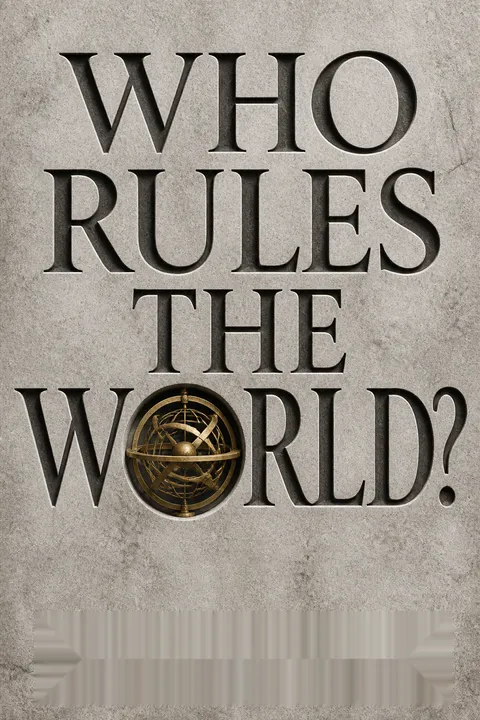
Who Rules the World? by Noam Chomsky receives largely positive reviews (4.05/5 stars) for its critical analysis of US foreign policy and global power structures. Readers appreciate Chomsky's detailed documentation of American interventions, hypocrisy, and support for dictatorships. Many find it an accessible introduction to his work, though some note repetitiveness across essays. The book examines nuclear threats, climate change, and the Israeli-Palestinian conflict. Critics value his media analysis and exposé of double standards, though a few find his perspective overly one-sided or lacking practical solutions. Most recommend it for understanding imperialism and questioning mainstream narratives.
People Also Read



About the Author
Other books by Noam Chomsky




Download PDF
Download EPUB
.epub digital book format is ideal for reading ebooks on phones, tablets, and e-readers.








































