
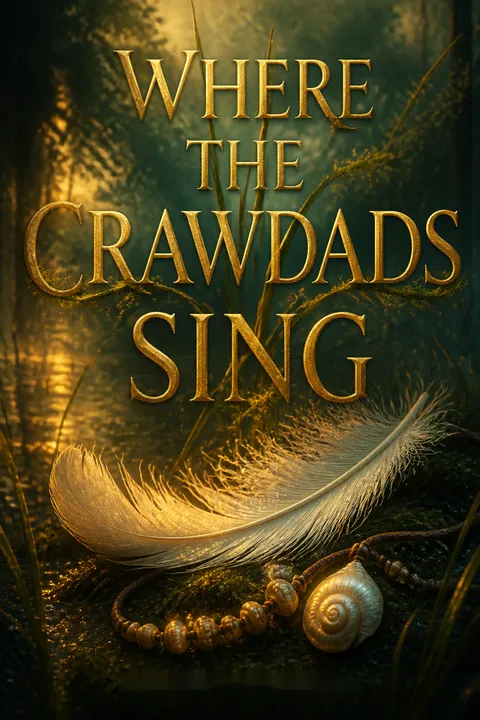


Plot Summary
Prologue
On the morning of October 30, 1969, two boys cycling to the abandoned fire tower near Barkley Cove, North Carolina, spotted a denim jacket in the mud below. Chase Andrews3 — former star quarterback, the town's golden son — lay dead, his neck broken, his leg twisted grotesquely. He had fallen through an open grate sixty feet above.
The sheriff arrived to find something profoundly wrong: not a single footprint in the mud around the body. Not Chase's,3 not anyone's. As if someone had carefully erased every trace of what happened that night. The investigation that followed would consume the town — and upend the life of a woman who had never belonged to it.
Ma's Alligator Shoes
In the August heat of 1952, six-year-old Kya Clark1 watched from the porch as her mother8 walked down the sandy lane in fake alligator heels, carrying a blue train case. A white scarf trailed behind her through the trees.
The edges of a fresh bruise spilled from beneath it, purple and yellow. Ma8 had never carried a case before, never worn the going-out shoes just to fetch groceries. Kya1 willed her to turn around at the bend where she always waved, but the blue case flickered through the leaves and vanished.
Her brother Jodie,6 seven years older, stood behind her and promised mothers don't leave their children. But Ma8 did not come back that day, or the next, or ever. Her absence cleaved Kya's1 childhood in two — before the blue case, and after.
This Little Piggy Stayed Home
Her older siblings lasted only weeks after Ma8 — Missy, Murph, Mandy — each fleeing Pa's7 rages until only Jodie6 remained. He cooked Kya1 grits and scrambled eggs, tried to shield her from the worst. But Pa's7 violence spared no one.
Jodie6 told Kya1 he had to go — taught her to cover her tracks in the marsh, to never let anyone trap her indoors. She couldn't beg him to stay; the words jammed. He walked away across the beach. She watched him go, then whispered a nursery rhyme Ma8 used to sing.
Pa7 hung on longer than the rest, burning Ma's8 paintings in a bonfire, disappearing on benders for days. By the time Kya1 was ten, he stopped coming home altogether. She was left with the boat, the shack, and the gulls — alone in the marsh at the edge of the world.
Mussels for Grits
With Pa7 gone, the Monday disability money stopped. Kya1 collected mussels before dawn and hauled croker sacks to Jumpin's4 Gas and Bait, a weathered wharf run by a tall, smiling black man who became her lifeline. He bought her mussels for fifty cents a bag and a full tank of gas.
His wife, Mabel5 — nearly two hundred pounds of warmth and common sense — arranged clothes and shoes from their church, traded as if they were payment for smoked fish.
Mabel5 taught Kya1 to garden, traced her feet on brown paper for shoe sizing, and later rocked the girl against her bosom when Kya's1 body began changing into a woman's. Between them, Jumpin'4 and Mabel5 gave Kya1 what no one else would — dignity, sustenance, and the closest thing to parental love she'd known since Ma8 walked away.
Feathers on the Stump
At fourteen, Kya1 found a rare heron eyebrow feather stuck upright in a mossy stump in the oak clearing near her shack. Only someone who knew birds intimately could have placed it there. The next day, a tropicbird tail feather appeared — a species blown in only by hurricanes.
Then a wild turkey feather. Each gift more astonishing than the last. Kya1 left feathers of her own in return, and for weeks this secret exchange continued without either party revealing themselves.
Then one morning, she arrived with a tow bag of mussels and found the feather boy leaning against the stump. It was Tate Walker2 — the same golden-haired boy who had guided her home through the marsh when she was seven. He was eighteen now, calm and steady. He offered to teach her to read.
Words Full as the Marsh
Sitting on an oak knee by the lagoon, Tate2 wrote letters in the sand and Kya1 sounded them out, tongue between her lips. He used his father's11 copy of Aldo Leopold's nature almanac as her first reader, and the opening sentence — about those who can live without wild things and those who cannot — struck her silent.
She told him she hadn't known a sentence could hold so much. He brought her biology textbooks, math lessons, poetry. At night by kerosene lamp, she practiced until she could label every specimen in her collection.
One evening she opened the family Bible and, for the first time, read her parents' real names, her siblings' birthdates — Jeremy, Amanda, Napier, Mary Helen. The family she'd lost became real again on the thin pages, a registry of everyone who'd left her.
Catching Gold in the Air
Tate2 leapt from their reading log one afternoon and dared Kya1 to catch as many falling leaves as she could before they hit the ground. They ran and reached and dove through curtains of gold, laughing like children who'd forgotten they weren't, until she spun into him and they stood face to face, suddenly still. He kissed her as the leaves rained silently around them.
She held her head stiff, knowing nothing about kissing, but he tilted her chin gently and her lips softened. She asked if she was his girlfriend now. He said she might be too young. She countered that she knew feathers — the other girls surely didn't. He kissed her again, and for the first time since Ma8 left, something inside Kya1 stopped aching. Her heart was full.
July Fourth, Empty Shore
Tate2 left for the University of North Carolina at Chapel Hill, promising to return July Fourth. On that sweltering day, Kya1 dressed in the peach chiffon and waited on the lagoon shore from dawn through dusk, into the dark, then through two more scorching days — each hour swelling with heat and draining of hope.
He never came. What Kya1 didn't know was that Tate2 had accepted a birding expedition with his professor, dazzled by the chance to be singled out. When he later returned and secretly watched her in the marsh — saw her duck and hide from a passing fisherman, wild-eyed and terrified — he convinced himself she could never fit his academic world. He motored away without a word. Kya1 screamed his name at the empty water and vowed never to trust or love anyone again.
Chase's Shell Necklace
Four years of isolation later, nineteen-year-old Kya1 caught Chase Andrews3 staring at her on the beach. He was the town's star — dark-haired, blue-eyed, the son of the Western Auto owners. He sought her out at Jumpin's4 wharf and asked her on a picnic. Their first date ended when he pushed her onto the blanket too aggressively, but he apologized and courted her slowly — harmonica tunes at campfires, quiet nights on the sand.
He took her to the fire tower, where she gave him a shell necklace she'd strung on rawhide. He put it on. He spoke of building her a two-story house, saving money for their future. She dared to imagine marriage, belonging, a family. But he refused to introduce her to his parents or bring her to any gathering in town.
Engagement in Black and White
At the Piggly Wiggly one spring morning, Kya1 bought supplies for Chase's3 birthday cake — her first attempt at caramel frosting, candles on a kitchen table. Earlier at the wharf, she'd seen his arm draped around a slim blonde among his friends.
At home, she opened the local newspaper and found a large photograph: Chase3 and Pearl Stone, announcing their engagement. He never told her. She drove her boat straight into the dangerous ocean rips and currents, nearly capsizing in grief.
She washed up on a sandbar covered in rare shells — beauty deposited by the same forces that almost killed her. Drifting home, she recited a verse by Amanda Hamilton, a local poet whose words about loneliness always mirrored her own. Love, she decided, was best left as a fallow field.
The Marsh Girl in Print
Tate2 had taken samples of Kya's1 watercolors and specimen notes to a publisher. Her first book — The Sea Shells of the Eastern Seaboard — arrived in her mailbox in 1968, and the royalties let her install running water, electricity, and a bathroom in the shack.
She kept the old woodstove. Then a red pickup rumbled down her lane, and a soldier with a jagged scar across his face stepped out. It was Jodie6 — back from two tours in Vietnam. He brought wrenching news: Ma8 had died two years earlier in New Orleans, having suffered a breakdown after fleeing Pa.7
She'd spent her final years painting portraits of her children, unable to return because Pa7 had threatened to beat the kids if she did. Jodie6 hung Ma's8 paintings on the shack walls and urged Kya1 to forgive Tate.2
Cypress Cove Assault
In August 1969, Chase3 found Kya1 alone at Cypress Cove, collecting mushrooms. Whiskey on his breath, he grabbed her arm and kissed her. When she resisted, he slugged her face with his fist — the sick pop of bone against knuckle. He pinned her to the ground, ripped at her clothes. She reared up, elbowed his jaw, kicked him square in the groin, then hammered his kidneys as he writhed.
She fled to her boat, hands shaking, zipping her shorts as she roared away. Two fishermen in a nearby rig witnessed the final moments — heard her scream that if he ever bothered her again, she would kill him. The bruise on her face lasted weeks. She hid at the old reading cabin, terrified Chase3 would come for revenge. She told no one except Jumpin'.4
Gray Sharks Close In
Chase Andrews3 died the night of October 29, falling through an open grate atop the fire tower. The shell necklace was gone from his neck. Red wool fibers clung to his jacket. A shrimper reported seeing a boat resembling Kya's1 heading toward the tower at 1:45 AM.
The sheriff10 searched her shack under warrant and found a red wool cap with her hair in it — fibers matching those on Chase's3 denim. Kya1 had been in Greenville meeting her editor,13 but the prosecution argued she could have bused back, committed the act, and returned before dawn.
On a foggy December morning, the sheriff's10 boats cornered her at Jumpin's4 wharf. She tried to outrun them into a squall, but they closed around her. She was charged with first-degree murder; the state sought the death penalty.
Sunday Justice's Verdict
Tom Milton,9 a seventy-one-year-old retired attorney, took Kya's1 case pro bono, winning her fragile trust with a coffee-table book of rare shells. For two months before trial, she sat in a cell where the courthouse cat, Sunday Justice, became her only companion — slipping between the bars each night to sleep beside her.
At trial, the prosecution paraded the fishermen from Cypress Cove, the coroner's red fiber evidence, Chase's mother12 identifying the missing necklace and Kya's1 painted journal.
Tom9 dismantled each point: tides could erase footprints, fibers could be years old, the sheriff10 himself had warned the Forest Service about the tower's dangerous grates. No evidence placed Kya1 there that night. The jury returned: not guilty. She touched the cat's tail on her way out and felt the sea on her face.
The Night Heron Feather
Free but gutted, Kya1 retreated to her shack and pushed everyone away — even Jodie.6 Then she spotted the sheriff pulling Tate2 from his research boat in the marsh. Panicked, she raced to Jumpin'4 and learned that Scupper,11 Tate's2 father, had died.
The man she'd hidden from for years was simply grieving. The equation was finally stark: she had always loved Tate,2 had followed him through the waterways since she was seven, watching from behind reeds. She left the breast feather of a night heron on his boat seat — a final message in their lifelong language.
He found it and raced to her lagoon. She told him she had loved him from a time she couldn't remember. He said he would never leave again. She believed him. They walked together to the oak grove where the feathers had begun.
Epilogue
Tate2 moved in, and they lived as married geese — no ceremony, just permanence. Kya1 published seven more books, earned an honorary doctorate she never collected in person, and never set foot in Barkley Cove again. Jodie6 brought his children to visit.
At sixty-four, Kya's1 heart stopped quietly in her boat, drifting in a lagoon surrounded by sycamores. Tate2 found her at dusk. After the funeral, he discovered a trapdoor beneath her woodstove. Inside: dozens of envelopes of poetry by Amanda Hamilton — the local poet Kya1 had quoted for years.
The handwriting was Kya's.1 Among the verses, a poem called "The Firefly" described luring a man to his death. And nestled in cotton at the bottom of a small box lay Chase Andrews's shell necklace. Tate2 burned every poem and dropped the shell into the tide.
Analysis
Where the Crawdads Sing operates as a narrative disguise as elegant as anything in the marsh ecology it describes. Like the female firefly who alters her signals — first to attract a mate, then to lure prey — the novel presents one truth to recruit sympathy while concealing another beneath it. Kya's1 lifelong study of biology provides the philosophical architecture: in nature, abandonment is survival strategy, deception is adaptation, and killing serves the continuation of species. The book dares readers to apply this framework to human morality and discover where their principles buckle.
The novel's deepest provocation is its treatment of justice. Kya1 is genuinely victimized — by her father,7 by Chase,3 by a town that called her marsh trash and denied her education, community, and basic dignity. The legal system that tries her is the same system that never intervened when she was a starving, uneducated child. Yet the book refuses to let victimhood serve as blanket absolution. Kya's1 final secret collapses the distance between the naturalist who observes predator-prey dynamics and the predator who enacts them.
Owens constructs this moral complexity through her dual timeline. The investigation chapters train readers to search for evidence of innocence, while the coming-of-age chapters build an emotional case so overwhelming that by the trial's end, acquittal feels not just legally correct but morally necessary. The reader becomes the thirteenth juror — one who, like the twelve in court, lacks the evidence hidden under a woodstove. The novel ultimately asks whether knowing the full truth would change your verdict, and if not, what that reveals about the boundary between justice and mercy, between law and the older codes written in genes and swamp water. The final revelation is not a twist for its own sake but a mirror: the reader must reckon with having loved a character so completely that even her most extreme act feels like the marsh reclaiming what was always its own.
Review Summary
Where the Crawdads Sing received polarizing reviews. Many praised its atmospheric writing, compelling protagonist Kya, and blending of coming-of-age story with murder mystery. Readers appreciated the vivid depictions of marsh life and Kya's resilience. However, some criticized the implausible plot, overuse of dialect, and underdeveloped characters. The courtroom drama and romantic elements garnered mixed reactions. Despite divided opinions, the novel's exploration of isolation, prejudice, and human connection resonated with many readers, making it a popular book club choice and bestseller.
People Also Read



Characters
Kya Clark
Abandoned marsh girl survivorCatherine Danielle Clark, called Kya, is abandoned by her entire family in a North Carolina marsh before age ten and raises herself in radical isolation. Her psychology orbits a paradox: desperate craving for connection armored by terror of rejection. Every person who loved her walked away, and each departure calcified her defenses. Yet her intellectual hunger is boundless—she teaches herself biology and art, eventually becoming a published naturalist. She relates to the marsh as both mother and mirror, understanding its creatures with a scientist's precision and a poet's intimacy. Her romantic choices reflect her core wound: she seeks belonging but reads tenderness as a precursor to abandonment. What drives Kya is not mere survival but the ache to be chosen by someone who stays.
Tate Walker
First love and feather boyTate is the golden-haired son of a Barkley Cove shrimper, carrying his own grief—his mother and sister died in a car accident he believes was caused by his birthday wish. This survivor's guilt makes him uniquely attuned to Kya's1 pain. He is gentle, patient, and intellectually brilliant, guiding her home through the marsh as a child and later teaching her to read. His fatal flaw is cowardice at the critical moment: when college opens a wider world, he abandons Kya1 without explanation, too ashamed to face what he's doing. He spends years regretting this, returning again and again to be refused. Tate embodies the tension between ambition and devotion—a man who must learn that love worth having requires courage, not convenience.
Chase Andrews
Charming quarterback, dark pursuerChase is the former star quarterback of Barkley Cove, the town's strutting golden boy with ice-blue eyes. Son of the Western Auto owners, he inhabits the center of social life effortlessly. His pursuit of Kya1 is driven by genuine attraction mixed with entitled conquest—he sees her wildness as something to claim rather than honor. He whispers promises of marriage and houses, but these are lures, not commitments. His behavior mirrors what Kya1 studies in biology: the sneaky fucker strategy—males who use dishonest signals to secure mates. Chase's relationships with women are possessive and disposable. Beneath the charm lies a man who cannot tolerate being denied what he considers his, escalating from manipulation to violence when his control is challenged.
Jumpin'
Kya's surrogate fatherJumpin' is the tall, gentle black man who runs Gas and Bait from a weathered wharf, becoming Kya's1 de facto father. He buys her mussels, slips candy into her bag, and shields her from authorities. His quiet dignity in the face of racial abuse never breaks. He and Mabel5 provide the only consistent adult care Kya1 receives, crossing racial boundaries in 1950s North Carolina to sustain a white girl the white community abandoned.
Mabel
Maternal protector and guideJumpin's4 large, warm-hearted wife who organizes clothes, shoes, and supplies from their church for Kya1, framing charity as trade to preserve the girl's pride. She teaches Kya1 about gardening, menstruation, and womanhood—maternal guidance delivered with frank tenderness. She rocks Kya1 against her bosom when the girl is frightened, providing physical comfort no one else dares offer. Mabel represents the unconditional mothering Kya1 was denied.
Jodie Clark
Lost brother who returnsKya's1 closest brother, seven years older, who taught her birdsongs and star names before being forced to flee Pa's7 violence. He carries a jagged scar across his face from Pa's7 fireplace poker. His return from Vietnam decades later brings Kya1 news of Ma's8 death and Ma's8 paintings of her children—reconnecting her to the family she lost. He urges her toward forgiveness and love.
Pa
Violent, broken patriarchJake Clark is a war-damaged alcoholic whose violence drives every family member away. A former dreamer whose family lost their Asheville land, he was shattered by cowardice in a foxhole—decorated as a hero for a wound sustained while cowering. His brief fishing season with Kya1 reveals a man capable of tenderness but enslaved to shame and bourbon. He disappears when Kya1 is ten, leaving only the boat.
Ma
The mother who vanishedBorn Julienne Maria Jacques in New Orleans, Ma is a woman of culture and beauty destroyed by her husband's7 violence. She painted watercolors of the marsh, taught her children nursery rhymes, and wore fake alligator heels as armor against poverty. Her departure when Kya1 is six is the wound that shapes the entire story—an abandonment driven by breakdown rather than indifference, revealed decades later through family contacts.
Tom Milton
Retired attorney, Kya's defenderA seventy-one-year-old retired attorney who takes Kya's1 murder case pro bono. White-haired and gentle in rumpled linen suits, he earns her trust through patience—bringing a shell book, drawing stick-figure courtroom maps. His closing argument names the town's prejudice directly, asking jurors to judge evidence rather than decades of rumors about the Marsh Girl.
Sheriff Ed Jackson
Lead investigator of Chase's deathThe red-haired, freckled lawman who investigates Chase's3 death. Generally competent but prone to theory over evidence, he pursues Kya1 based on circumstantial connections—the missing necklace, red fibers, a shrimper's sighting. His own letter warning the Forest Service about the tower's dangerous grates becomes the defense's most potent exhibit at trial.
Scupper Walker
Tate's shrimper fatherTate's2 father, a red-bearded shrimper who plays opera on his boat and defines real manhood as crying freely and defending women. He raised Tate2 alone after losing his wife and daughter in a car wreck.
Patti Love Andrews
Chase's status-conscious motherChase's3 mother, a status-conscious woman who denied her son's involvement with the Marsh Girl until his death. She reports the missing shell necklace to the sheriff10, directing the investigation toward Kya1.
Robert Foster
Kya's book editorKya's1 editor at a Boston publishing house whose years of correspondence become a bond. He invites her to Greenville and testifies at trial about her schedule the night Chase3 died.
Mrs. Singletary
Piggly Wiggly clerk, quiet allyPurple-haired grocery clerk who teaches young Kya1 to count coins and secretly gives her extra change. She testifies seeing Kya1 board the Greenville bus, confirming her travel alibi.
Deputy Joe Purdue
Sheriff's investigative partnerThe sheriff's10 small, thick-sideburned deputy who assists the investigation. He provides a practical counterpoint to the sheriff's10 theories and helps build the circumstantial case against Kya1.
Plot Devices
The Shell Necklace
Links love to criminal evidenceKya1 strings a rare ornate scallop shell—one Chase3 found on their first date—onto rawhide and presents it to him atop the fire tower. He wears it daily for four years. When his body is discovered, the necklace is gone. His mother12 identifies it as Kya's1 handiwork, turning its absence into the prosecution's most suggestive evidence: whoever removed it knew its significance. At trial, the necklace becomes a ghost—never found, never explained. The defense argues its disappearance proves nothing; the prosecution insists only the woman who made it would want it back. This small ornament carries the entire weight of the case, transforming a token of intimacy into a cipher of motive that neither side can definitively decode.
The Feather Stump
Silent language of loveA mossy stump in an oak clearing near Kya's1 shack becomes an altar of wordless communication. Tate2 begins leaving rare feathers—a great blue heron's eyebrow, a tropicbird's tail—and Kya1 leaves her own in return. This exchange evolves into their foundational language: gifts that say what neither can speak aloud. When Tate2 offers to teach Kya1 to read, the game bridges into something larger—shared knowledge, shared world. Years later, he leaves a World War I compass there. The stump outlasts their separations, betrayals, and the trial itself. It represents their purest form of connection—one that predates literacy, requires no audience, and carries no risk of the rejection Kya1 fears most. Every feather placed is both offering and question; every one retrieved, an answer.
The Fire Tower
Site of romance and deathThe abandoned fire tower rises above the swamp on rotting legs, its platform accessible by switching stairs and iron grates. Chase3 first takes Kya1 there on a date—the only time she sees her beloved marsh from above—and she gives him the shell necklace at the top. This same tower becomes the site of his death: he falls through an open grate sixty feet to the mud below. The grate's mechanism is central to the investigation—the sheriff10 himself had written to the Forest Service months earlier warning that the dangerous grates would cause a serious injury or death. At trial, this letter becomes the defense's most potent exhibit: the tower was a known hazard, making accident as plausible as murder.
Amanda Hamilton Poems
Kya's hidden emotional voiceThroughout the novel, poems by a local poet named Amanda Hamilton appear in newspaper clippings and are recited by Kya1. The verses address loneliness, abandonment, love, and wildness—themes that mirror Kya's1 experience with uncanny precision. She reads them on her beach, finds solace in their words, and collects them. The poems serve as emotional punctuation for the narrative, articulating feelings Kya1 cannot express to any person. They function as a literary device granting access to her interior life through a seemingly external voice—a correspondence between the poet's sensibility and Kya's1 that feels too precise to be coincidence. The true relationship between Kya1 and Amanda Hamilton carries profound implications for the story's central mystery.
The Red Wool Cap
Ordinary object turned evidenceDuring a playful encounter on Tate's2 research boat in 1969, he tosses Kya1 a red ski cap. They throw it back and forth, laughing—an innocent game of flirtation. Kya1 keeps the cap and hangs it on a hook in her shack. When the sheriff10 searches her home with a warrant, he finds the cap in plain sight. Lab analysis confirms its fibers match those found on Chase's3 denim jacket the night he died. At trial, the cap becomes pivotal: the prosecution argues it places Kya1 in physical contact with Chase3 that night; the defense counters that fibers could have transferred at any point during their four-year relationship. This ordinary object—kept openly, not hidden—embodies the ambiguity of the entire case.
FAQ
Synopsis & Basic Details
What is Where the Crawdads Sing about?
- A Marsh Girl's Life: The story follows Kya, a young girl abandoned by her family, as she grows up in the marshes of North Carolina. She learns to survive on her own, becoming deeply connected to nature.
- Mystery and Prejudice: When a local man is found dead, Kya becomes the prime suspect, facing prejudice and judgment from the townspeople. The narrative explores themes of isolation, survival, and the power of nature.
- Love and Betrayal: Kya experiences both love and betrayal, shaping her understanding of human relationships. The story weaves together elements of mystery, romance, and coming-of-age.
Why should I read Where the Crawdads Sing?
- Unique Protagonist: Kya is a compelling and unforgettable character, a resilient young woman who defies societal expectations and finds solace in the natural world. Her journey is both heartbreaking and inspiring.
- Atmospheric Setting: The vivid descriptions of the marsh create a rich and immersive reading experience. The setting becomes a character in itself, influencing the plot and the characters' lives.
- Intriguing Mystery: The mystery surrounding Chase Andrews's death keeps readers engaged, while the exploration of themes like prejudice and isolation adds depth and complexity to the narrative.
What is the background of Where the Crawdads Sing?
- 1950s-1960s South: The story is set in the coastal marshes of North Carolina during the mid-20th century, a time of social change and racial tensions. The setting reflects the isolation and prejudice faced by those living on the fringes of society.
- Natural World: The marsh is a significant backdrop, influencing the characters' lives and the plot. The author's background as a wildlife scientist is evident in the detailed descriptions of the flora and fauna.
- Cultural Context: The story explores the cultural dynamics of a small Southern town, highlighting the prejudices and social hierarchies that shape the characters' interactions.
What are the most memorable quotes in Where the Crawdads Sing?
- "Marsh is not swamp.": This opening line establishes the unique setting and its significance to the story, highlighting the beauty and life within the marsh. It also sets the tone for Kya's deep connection to her environment.
- "She knew the years of isolation had altered her behavior until she was different from others, but it wasn't her fault she'd been alone.": This quote captures Kya's understanding of her own isolation and the impact it has had on her, emphasizing her resilience and self-awareness.
- "Time ensures children never know their parents young.": This quote reflects on the complexities of family relationships and the way time shapes our understanding of those who came before us, highlighting the theme of loss and abandonment.
What writing style, narrative choices, and literary techniques does Delia Owens use?
- Dual Timeline: Owens employs a dual timeline, alternating between Kya's childhood and the investigation into Chase's death. This structure builds suspense and reveals the connections between past and present.
- Nature as Character: The marsh is not just a setting but a character in itself, with vivid descriptions that evoke its beauty and danger. Owens uses sensory language to immerse the reader in Kya's world.
- Foreshadowing and Symbolism: Owens uses subtle foreshadowing and recurring symbols, such as feathers and shells, to hint at future events and deepen the story's themes. This adds layers of meaning and encourages readers to look for hidden connections.
Hidden Details & Subtle Connections
What are some minor details that add significant meaning?
- Ma's Alligator Shoes: The description of Ma's "gator shoes" as her "only going-out pair" highlights her desire for a better life and the significance of her departure, foreshadowing her permanent absence.
- The Blue Train Case: The blue train case Ma carries is described as "the color so wrong for the woods," emphasizing the unnaturalness of her leaving and the disruption it causes in Kya's life.
- The Frigidaire as Cupboard: The use of the Frigidaire as a cupboard, with its door propped open by a flyswatter, reveals the lack of resources and the makeshift nature of Kya's life, highlighting her resourcefulness.
What are some subtle foreshadowing and callbacks?
- Jodie's Fox Story: Jodie's story about the vixen leaving her kits foreshadows Ma's departure, highlighting the theme of abandonment and the difficult choices parents sometimes make.
- "This little piggy stayed home": Kya's repeated use of this nursery rhyme, especially after Jodie leaves, emphasizes her feelings of being left behind and her longing for family.
- The Red Fibers: The mention of red fibers on Chase's jacket early in the investigation foreshadows the later discovery of the red hat, creating a sense of unease and suspicion.
What are some unexpected character connections?
- Tate and Jodie's Friendship: The revelation that Tate and Jodie were fishing buddies before Jodie left adds a layer of connection between Kya and Tate, suggesting a shared history and understanding of the marsh.
- Mabel and Kya's Bond: The unexpected friendship between Mabel and Kya, a black woman and a white marsh girl, highlights the theme of human connection that transcends racial and social barriers.
- Pa's Past: The revelation of Pa's past in Asheville, his family's land, and his mother's bonnets adds depth to his character, showing that he was once part of a different world, highlighting the theme of loss and change.
Who are the most significant supporting characters?
- Jumpin': Jumpin' serves as a father figure to Kya, providing her with supplies, support, and a sense of community. His kindness and acceptance are crucial to her survival and well-being.
- Mabel: Mabel offers Kya maternal support and guidance, helping her navigate the challenges of womanhood. Her generosity and understanding provide Kya with a sense of belonging.
- Tom Milton: Tom Milton, Kya's lawyer, is a crucial ally, fighting against the town's prejudice and providing her with a voice in the courtroom. His dedication to her case highlights the importance of empathy and justice.
Psychological, Emotional, & Relational Analysis
What are some unspoken motivations of the characters?
- Ma's Departure: Ma's unspoken motivation for leaving is a combination of fear, abuse, and a desire to protect her children, even if it means abandoning them. Her actions are driven by a complex mix of love and desperation.
- Pa's Rage: Pa's unspoken motivation for his violence and drinking is rooted in his trauma from the war and his inability to cope with his failures. His actions are driven by a deep-seated pain and self-loathing.
- Chase's Pursuit: Chase's unspoken motivation for pursuing Kya is a combination of attraction, desire, and a need to conquer. His actions are driven by a sense of entitlement and a lack of respect for her boundaries.
What psychological complexities do the characters exhibit?
- Kya's Fear of Abandonment: Kya's deep-seated fear of abandonment shapes her relationships and her interactions with others. This fear drives her to isolate herself and makes it difficult for her to trust.
- Tate's Guilt and Loyalty: Tate's guilt over leaving Kya and his unwavering loyalty to her reveal his internal conflict and his deep sense of responsibility. He struggles to reconcile his past actions with his present feelings.
- Chase's Entitlement and Deceit: Chase's entitlement and deceitful behavior reveal a complex character who is both charming and manipulative. His actions are driven by a desire for control and a lack of empathy.
What are the major emotional turning points?
- Ma's Departure: Ma's departure is a major emotional turning point for Kya, marking the beginning of her isolation and her struggle for survival. This event shapes her worldview and her relationships with others.
- Tate's Departure: Tate's departure for college is another emotional turning point, reinforcing Kya's fear of abandonment and her belief that she cannot rely on others. This event deepens her isolation and her reliance on the marsh.
- The Trial Verdict: The trial verdict, whether guilty or not guilty, is a major emotional turning point for Kya, as it determines her future and her relationship with the community. The verdict highlights the power of prejudice and the importance of justice.
How do relationship dynamics evolve?
- Kya and Jodie: The relationship between Kya and Jodie evolves from a close sibling bond to a distant connection, highlighting the impact of separation and the enduring power of family ties.
- Kya and Tate: The relationship between Kya and Tate evolves from a childhood friendship to a deep romantic connection, marked by both love and betrayal. Their relationship highlights the complexities of trust and forgiveness.
- Kya and Chase: The relationship between Kya and Chase evolves from a brief connection to a painful betrayal, highlighting the dangers of manipulation and the importance of self-preservation.
Interpretation & Debate
Which parts of the story remain ambiguous or open-ended?
- Kya's True Feelings for Chase: The extent of Kya's feelings for Chase remains ambiguous, leaving readers to question whether she truly loved him or was simply seeking connection. This ambiguity adds complexity to her character and her motivations.
- The Nature of Justice: The ending leaves the question of justice open-ended, as Kya is acquitted but may have been involved in Chase's death. This ambiguity challenges readers to consider the complexities of morality and the limitations of the legal system.
- The Meaning of Isolation: The story leaves the meaning of isolation open to interpretation, as Kya finds both solace and pain in her solitude. This ambiguity encourages readers to consider the different ways people cope with loneliness and the importance of human connection.
What are some debatable, controversial scenes or moments in Where the Crawdads Sing?
- Kya's Relationship with Chase: The nature of Kya's relationship with Chase is controversial, as it involves elements of both attraction and exploitation. This relationship raises questions about consent, power dynamics, and the complexities of human desire.
- Kya's Actions at the Fire Tower: The ambiguity surrounding Kya's actions at the fire tower leaves room for debate about her guilt or innocence. This ambiguity challenges readers to consider the complexities of morality and the limitations of the legal system.
- The Ending: The ending, with its revelation of Kya's hidden past and the destruction of evidence, is controversial, as it leaves the question of justice unresolved. This ambiguity challenges readers to consider the complexities of morality and the limitations of the legal system.
Where the Crawdads Sing Ending Explained: How It Ends & What It Means
- Kya's Death and Legacy: Kya dies peacefully in her boat, surrounded by the marsh she loved. Her legacy lives on through her published works and the impact she had on those who knew her.
- Tate's Discovery: Tate discovers Kya's hidden poems and the shell necklace, revealing her secret life and her possible involvement in Chase's death. He chooses to protect her memory by destroying the evidence.
- Ambiguous Justice: The ending leaves the question of justice open-ended, as Kya is acquitted but may have been involved in Chase's death. This ambiguity challenges readers to consider the complexities of morality and the limitations of the legal system.
Download PDF
Download EPUB
.epub digital book format is ideal for reading ebooks on phones, tablets, and e-readers.








































