
Plot Summary
Rain, Chocolate, and Pursuit
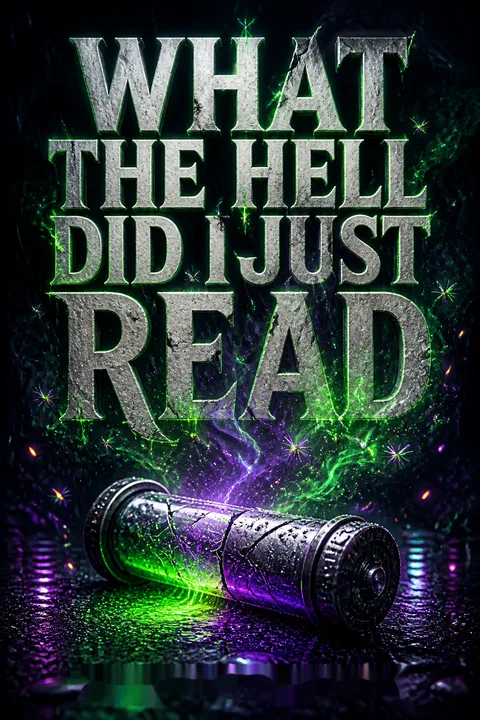
The story opens in a downpour, with Dave, John, and Amy fleeing from inhuman pursuers after a bizarre home invasion. The trio, drunk and wounded, are chased for a mysterious steel vial that Amy ultimately throws into a raging river, hoping to keep it from their attackers. The rain is relentless, the world feels off-kilter, and the group's banter is laced with gallows humor. Their pursuers vanish as suddenly as they appeared, leaving the friends to wonder if any of it was real. The night ends with a sick dog, a sense of unease, and the knowledge that the vial's contents may not be so easily lost. The tone is both absurd and ominous, setting the stage for a reality where the supernatural and the mundane are inseparable.
The Missing Girl's Game
Dave is awoken by a call from John: a little girl, Maggie, has disappeared under impossible circumstances. The police, jaded by the town's history of weirdness, quickly hand the case to Dave and John. The girl's father, Ted, is a hard-edged veteran who believes something unnatural is at play. The abduction is a "locked room" mystery, with no sign of entry or exit. Ted recounts a visit from a strange man named Nymph, who threatened to take Maggie. The investigation is laced with dark humor and skepticism, but beneath it is a growing dread: the rules of reality are being rewritten, and the protagonists are being drawn into a game they don't understand.
Joy Park and False Memories
Maggie calls her father, describing a surreal amusement park called Joy Park, but the call is a dead end—her voice is heard in a place she cannot be. The group is taunted with clues that lead them to an abandoned ice factory, a supposed portal to Hell. There, they find only a buried phone and more confusion. The investigation is a wild goose chase, orchestrated by an unseen intelligence. The boundaries between memory, hallucination, and manipulation blur. The protagonists realize they are being played, their actions anticipated and guided by something that delights in their confusion and fear.
Monsters, Grief, and Sex
Dave and John split up to follow leads. Dave finds disturbing, possibly fake photos of the missing girl's fate, while John interviews Maggie's mother, Loretta, uncovering strange drawings and memories that don't add up. The emotional toll is heavy: grief, guilt, and the sense of being outmatched by forces beyond comprehension. John's encounter with Loretta turns sexual, a moment of desperate human connection in the face of cosmic indifference. The chapter explores the ways trauma and the supernatural intertwine, and how the monsters outside mirror the monsters within.
Doppelgangers at Breakfast
Amy's perspective reveals the insidiousness of the threat: doppelgangers that can perfectly mimic loved ones, fooling even those who know them best. Amy's breakfast with a fake David is unsettlingly normal, highlighting how easily reality can be hijacked. The group grapples with the impossibility of distinguishing real from fake, and the horror of not being able to trust their own senses or memories. The theme of imposters—both literal and metaphorical—runs deep, as the protagonists realize that the enemy's greatest weapon is its ability to rewrite the past and present.
Deaths, Doubts, and Duplicates
The investigation spirals into tragedy: John is apparently killed by Ted in a fit of rage, only to reappear alive, exposing the unreliability of perception. Dave finds John's "corpse" in his living room, but it's a doppelganger, leading to a violent confrontation with the shape-shifting entity Nymph. The group is forced to question not only what is real, but who they are. The emotional stakes are raised as the cost of their knowledge becomes clear: isolation, despair, and the ever-present threat of annihilation by forces that can wear any face.
The Fuckroach Revelation
The protagonists capture a wounded "fuckroach," a shape-shifting insect that forms the basis of the doppelgangers. With Amy's help, they deduce that these creatures are part of a hive, serving a greater intelligence—the "Master" or "Millibutt"—that feeds on human attention, love, and fear. The fuckroaches can implant false memories, create fake children, and manipulate entire communities. The horror is not just physical but existential: reality itself is malleable, and the enemy's power lies in its ability to make people believe in things that never were.
The Hive's Children Multiply
The crisis escalates as more children go missing, each case following the same pattern: a child appears in a family's life, complete with years of false memories, only to be "abducted" by the hive. The protagonists realize that the town is being seeded with larvae—monster children disguised as humans—each one a potential apocalypse. The investigation becomes a race against time to prevent the hatching of these creatures, but the enemy's camouflage is nearly perfect. The line between victim and monster blurs, and the protagonists are forced to confront the possibility that they, too, could be deceived.
The Batmantis and the Bomb
A new threat emerges: the Batmantis, a grotesque, flying predator that terrorizes the town and distracts from the true danger. The protagonists, aided by the enigmatic Joy Park, devise a plan to destroy the hive's nest with a sulfur bomb, hoping to prevent the larvae from hatching. The plan is complicated by the presence of armed bikers, government agents, and the ever-present risk of being manipulated by the hive. The Batmantis becomes both a literal and symbolic distraction, a monster that draws attention away from the deeper, more insidious threat.
Surgery, Sacrifice, and Survival
In a chaotic climax, the protagonists attempt to save Maggie, now revealed as a larva, from a fatal wound caused by the very weapons meant to destroy her. A desperate surgery in a moving RV becomes a metaphor for the entire struggle: trying to save what may not be worth saving, making impossible choices with incomplete information. Ted sacrifices himself to destroy the Batmantis, and the town is left to pick up the pieces. The survivors are haunted by the knowledge that their actions may have only delayed the inevitable, and that the true enemy is still at large.
The Aftermath and Unanswered Questions
The immediate threat is over, but the consequences linger. The town is flooded, families are shattered, and the protagonists are left with more questions than answers. The government covers up the events, the hive's children are left in the care of their unwitting parents, and the protagonists are forced to live with the knowledge that the itch—the threat—remains. The story ends not with triumph, but with exhaustion, uncertainty, and the realization that some battles can only be survived, not won.
Monsters Among Us
In the days that follow, the protagonists struggle to return to normalcy, but the scars remain. The hive's influence lingers in the form of false memories, unresolved trauma, and the ever-present possibility of relapse. The town's history of weirdness continues, and the protagonists are left to wonder if they are truly free, or if the monsters have simply changed shape. The line between human and monster is thinner than ever, and the story suggests that the real horror is not what lurks in the shadows, but what hides in plain sight.
The Unending Itch
The final chapter is a meditation on the nature of horror, memory, and the human condition. The itch—the need to scratch, to know, to fight—is both a curse and a blessing. The protagonists are left with the knowledge that the battle is never truly over, that the monsters will always return in new forms, and that the only victory is to keep fighting, to keep loving, and to keep hoping, even in the face of cosmic indifference. The story ends with a sense of weary resilience, a recognition that the only way to survive is to accept the itch, and to keep scratching.
Analysis
What the Hell Did I Just Read is a cosmic horror novel that uses absurdity, dark humor, and metafiction to explore the fragility of reality and the persistence of trauma. At its core, the book is about the ways in which memory, love, and fear can be weaponized—by monsters, by institutions, and by our own minds. The hive's power to create false children and rewrite history is a metaphor for the ways in which grief and guilt can reshape our lives, making us complicit in our own suffering. The protagonists' struggle to distinguish real from fake, to trust each other and themselves, is both a literal battle against monsters and a psychological journey through depression, addiction, and loss. The novel satirizes the institutional response to horror, showing how bureaucracy and denial can be as dangerous as the supernatural. Ultimately, the story offers no easy answers: the itch—the need to fight, to know, to love—never goes away, and the monsters are never truly defeated. The only victory is to keep scratching, to keep hoping, and to keep telling stories, even when the universe refuses to make sense.
Review Summary
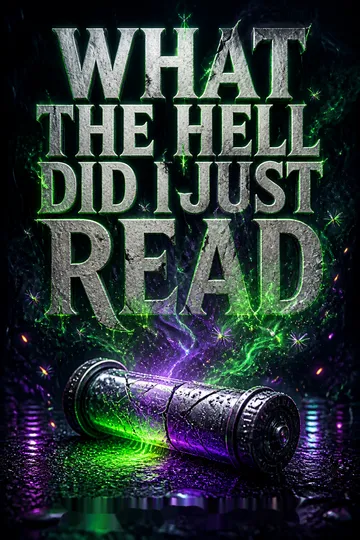
What the Hell Did I Just Read receives strong praise from most readers, earning 4.18/5 stars. Reviewers highlight the book's wild blend of Lovecraftian horror and crude comedy, featuring weapons like dildo cannons and creatures called "fuckroaches." Many appreciate the philosophical depth beneath the absurdity and consider it the best-paced entry in the series. Characters David, John, and Amy face a missing child case involving reality-bending monsters. Some readers found political commentary intrusive and the ending too vague, but most loved the imaginative plot twists and balanced humor-horror mix.
People Also Read

Characters
David Wong
David is the narrator and emotional core of the story, a man whose cynicism and self-loathing mask a deep sense of responsibility. He is both a skeptic and a believer, constantly questioning the nature of reality and his own sanity. His relationship with Amy is his anchor, but also a source of guilt and fear—he worries that his depression and failures will drag her down. David's journey is one of reluctant heroism: he is forced to confront horrors both cosmic and personal, and his greatest enemy is often his own despair. His dry wit and self-deprecation are both a shield and a weapon, allowing him to face the unfaceable, but also keeping him at arm's length from those who care about him.
John
John is David's best friend and partner in the supernatural, a man whose bravado and recklessness hide a surprising depth of insight. He is the comic relief, the wildcard, and the one most willing to charge into danger without a plan. John's relationship with David is complex: they enable each other's worst habits, but also provide the support and understanding that no one else can. John's drug use and self-destructive tendencies are both a symptom and a cause of his instability, but his loyalty is unwavering. He is the embodiment of chaos, but also the first to step up when things get truly dire.
Amy Sullivan
Amy is David's girlfriend and the story's moral compass. Intelligent, resourceful, and fiercely compassionate, she is often the only one who can see through the fog of horror and absurdity to what really matters. Amy's disability—she lost a hand in a car accident—serves as both a literal and metaphorical reminder of the cost of survival. She is the most "normal" of the trio, but her normalcy is hard-won, the result of years of trauma and resilience. Amy's relationship with David is both nurturing and challenging; she pushes him to be better, but also struggles with the burden of his depression. Her empathy is her greatest strength, but also her greatest vulnerability.
Ted Knoll
Ted is the father of the missing girl, Maggie, and a veteran scarred by war and loss. His approach to the supernatural is pragmatic and ruthless: he believes in results, not explanations. Ted's trauma manifests as both rage and a desperate need for control; he is willing to do whatever it takes to save his daughter, even if it means violence or self-sacrifice. His relationship with Loretta is strained by his inability to return to civilian life, and his interactions with the protagonists are marked by suspicion and grudging respect. Ted's arc is one of tragic heroism: he is both a victim and a perpetrator, a man who cannot escape the war inside and outside his head.
Loretta Knoll
Loretta is Maggie's mother, separated from Ted and struggling to make sense of her daughter's disappearance and return. She is a portrait of grief and denial, clinging to the illusion of normalcy even as the world unravels around her. Loretta's memories are manipulated by the hive, and her love for Maggie becomes both her salvation and her undoing. She represents the collateral damage of the supernatural: the ordinary person caught in the crossfire, forced to choose between impossible truths and comforting lies. Her relationship with Ted is marked by loss and resentment, and her arc is one of endurance rather than triumph.
Nymph
Nymph is the primary antagonist, a being (or collective) that can assume any form, implant memories, and orchestrate elaborate deceptions. Nymph's true nature is that of a hive mind, a swarm of "fuckroaches" serving the will of the Millibutt. Nymph delights in psychological games, using fear, love, and guilt as weapons. The character is both a literal monster and a metaphor for the ways trauma and manipulation can rewrite reality. Nymph's interactions with the protagonists are a series of tests, forcing them to confront their own weaknesses and the limits of their perception.
The Millibutt (The Master)
The Millibutt is the unseen intelligence behind the hive, a being that feeds on human attention, love, and suffering. It is both a literal monster—an entity that spawns larvae disguised as children—and a symbol of the universe's indifference and appetite. The Millibutt's power lies in its ability to make people believe in things that never were, to rewrite history and identity. It is the ultimate antagonist: unknowable, unstoppable, and utterly alien. Its presence is felt in every manipulation, every false memory, every itch that cannot be scratched.
Dr. Albert Marconi
Marconi is a recurring figure in the series, an academic and media personality who straddles the line between genuine expertise and self-serving showmanship. He provides the protagonists with crucial information, but is often more interested in the story than the truth. Marconi's role is that of the wise mentor, but his advice is always tinged with ambiguity and self-interest. He represents the limits of knowledge in the face of the unknown, and the ways in which even the most learned can be outmatched by the supernatural.
Agent Tasker (NON)
Tasker is the face of the shadowy government agency NON, tasked with containing and erasing supernatural threats. She is efficient, ruthless, and ultimately pragmatic, willing to sacrifice innocents for the greater good. Tasker's interactions with the protagonists are marked by mutual distrust and reluctant cooperation. She embodies the institutional response to horror: denial, cover-up, and the prioritization of order over truth. Her arc is one of gradual disillusionment, as she realizes that some threats cannot be managed, only survived.
Joy Park
Joy Park is both a real person (a Korean adult film star) and a construct created by the hive's powers, serving as a guide, distraction, and possible double agent. Her presence is a constant reminder of the story's central theme: the unreliability of perception and the ease with which reality can be rewritten. Joy is both helpful and suspicious, her motives never entirely clear. She represents the seductive power of illusion, and the danger of trusting what you want to believe.
Plot Devices
Unreliable Reality and False Memory
The novel's central device is the manipulation of reality and memory by the hive mind. The fuckroaches can implant entire histories, create false children, and rewrite the past for entire communities. This device is used to create both horror and humor, as the protagonists struggle to distinguish real from fake, and to trust their own senses. The story is structured as a series of nested mysteries, each one revealing a deeper layer of deception. Foreshadowing is used extensively: early events and clues only make sense in retrospect, as the true nature of the threat is revealed. The narrative is nonlinear, with flashbacks, hallucinations, and unreliable narration blurring the line between truth and fiction.
Doppelgangers and Shape-Shifting
The enemy's ability to perfectly mimic people and objects creates a pervasive sense of paranoia. The protagonists are forced to develop passwords, tests, and rituals to verify each other's identities, but these are ultimately shown to be futile. The doppelganger device is used to explore themes of identity, trust, and the fear of being replaced or misunderstood. It also allows for moments of dark comedy, as the characters confront increasingly absurd and horrifying imposters.
Cosmic Horror and the Unknowable
The Millibutt and its hive are embodiments of cosmic horror: entities that exist beyond human understanding, whose motives and methods are alien. The protagonists' attempts to fight or contain the threat are often shown to be futile or even counterproductive, as their actions are anticipated and manipulated by the enemy. The story uses this device to explore themes of futility, resilience, and the limits of human agency.
Satirical Bureaucracy and Institutional Response
The presence of NON and its agents introduces a satirical element, highlighting the absurdity of bureaucratic responses to the supernatural. The agency's attempts to contain, cover up, or weaponize the threat are shown to be both necessary and deeply flawed. The device is used to critique the ways institutions prioritize order over truth, and the moral compromises that result.
Metafiction and Self-Awareness
The narrative is laced with self-referential humor, commentary on horror tropes, and direct addresses to the reader. The protagonists are aware of the conventions of their genre, and often use this knowledge to anticipate or subvert events. This device creates a sense of distance and irony, but also deepens the emotional impact by highlighting the absurdity and tragedy of their situation.
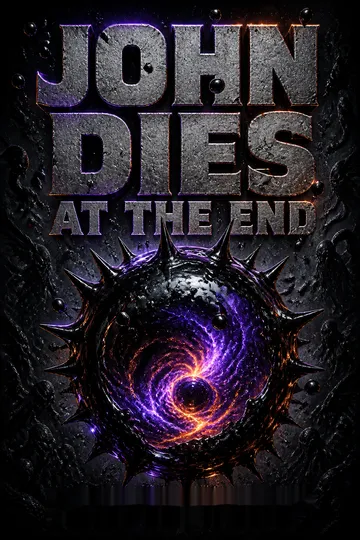
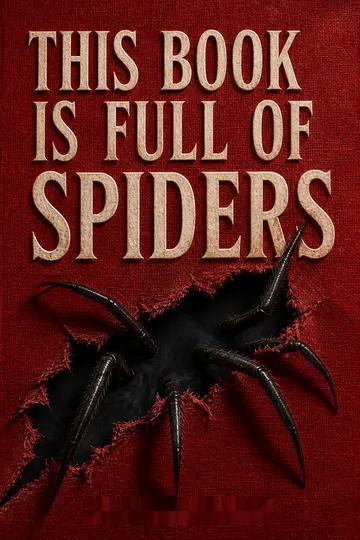
John Dies at the End Series
About the Author
Other books by David Wong
Download PDF
Download EPUB
.epub digital book format is ideal for reading ebooks on phones, tablets, and e-readers.








































