
Key Takeaways
1. Your Art is Essential: It's not frivolous, it's vital for you and the world.
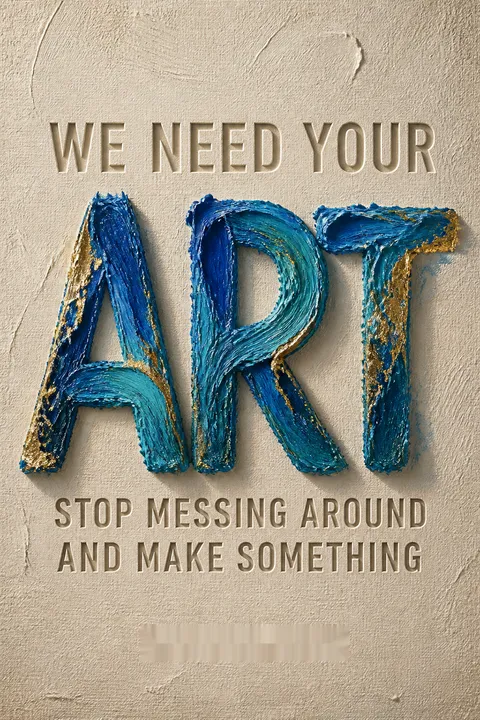
We need your art.
Art's true value. Society often dismisses creativity as childish or irresponsible, valuing only what contributes to GDP. This narrative is a lie. Art is not frivolous; it's a profound act of self-development and a crucial pillar of well-being, often overlooked in favor of "acceptable" hobbies like sports or meditation. Your commitment to art is as legitimate and beneficial as any other pursuit.
Science of creativity. Research overwhelmingly demonstrates art's positive impact on individuals and communities. Creating art consistently:
- Reduces stress hormone cortisol, regardless of skill level.
- Increases life satisfaction.
- Aids in treating PTSD by releasing frozen fear.
- Improves physical health, including respiratory and immune functions.
Art is a powerful vehicle for neuroplasticity, changing your brain and body for the better, making it an essential tool for healing and well-being.
Community and connection. Beyond personal benefits, art heals and enhances communities. Enjoying art with others positively impacts mental health, fostering connection and meaning. Art is a form of social activism, re-anchoring marginalized communities to their culture and each other. Your art doesn't just decorate the world; it changes it, making it a generous act that benefits everyone.
2. Coronate Yourself: Claim your artist identity without external permission.
Artist, stop waiting to be chosen. Choose yourself.
Permission is internal. Many creatives wait for external validation—a publisher, a gallery, a casting agent—to grant them permission to be an artist. This impulse is ingrained in our culture, but it keeps us small and unfulfilled. True creative freedom comes from anointing yourself as Artist, taking up space, and valuing your work before anyone else does.
The illusion of external validation. Even traditional success doesn't guarantee internal validation. Artists who achieve fame or wealth without first choosing themselves often remain creatively blocked, unhappy, and dependent on external approval. This constant need for more validation leads to a loss of power and a feeling of never being enough.
How to coronate. The most powerful way to claim your title is simply to create. Make stuff. Beyond that, share your art on your own terms, whether with a select few or publicly. Use "permission slips" in your journal to affirm your right to create. Embrace impostor syndrome as a sign of growth, knowing that choosing yourself makes you magnetic, attracting opportunities and collaborators.
3. Embrace Small Magic: Consistent, tiny steps build an abundant creative practice.
There are no big steps to take, only baby steps.
Art is mundane miracles. We often romanticize creativity as a grand, spontaneous act, demanding perfect conditions and huge bursts of inspiration. This idealistic view, however, hampers creative abundance. Instead, art is built through a million tiny, mundane miracles—small, consistent actions performed regularly, without waiting for a muse or perfect setting.
Rejecting big goals. The obsession with massive creative goals (e.g., "write 3,000 words a day," "paint for 10 hours") is often perfectionism and self-sabotage disguised as ambition. It creates immense pressure, leading to overwhelm and stagnation. High-quality creative work thrives on small, achievable goals, or "bare minimums," that are easy to commit to daily.
Building identity and avoiding burnout. Small, consistent steps protect against burnout, foster a long-term artistic identity, and ultimately lead to greater quantity and quality of work. By setting goals so beautifully doable they feel almost embarrassing, you build self-trust and make creativity an effortless, joyful part of your life, rebelling against hustle culture.
4. Navigate Blocks as Growth: Procrastination, perfectionism, jealousy, and burnout are signposts, not dead ends.
Resistance is the sign that magic awaits you.
Blocks are inevitable. Every artist encounters creative blocks like procrastination, perfectionism, jealousy, and burnout. These aren't signs of inadequacy but rather invitations to creative evolution, revealing the tension between your current self and who you are becoming. They force you to confront your ego, thoughts, and past, making art a profound process of self-discovery.
Interpreting procrastination. Procrastination isn't laziness; it's fear. Instead of self-criticism, ask: "What am I running from?" Understanding the underlying fear—be it discomfort with imperfection or uncertainty—allows for self-care and reduces resistance. Chronic procrastination, however, destroys self-trust, making small, consistent actions vital to rebuild that relationship.
Dismantling perfectionism and jealousy. Perfectionism, a defense mechanism, paralyzes creativity, prevents finishing, and ultimately harms art quality and artist well-being. Embrace "shitty art" as a mandatory stepping stone to mastery. Jealousy, while uncomfortable, can be a roadmap to your desires, while comparison can be disorienting. Cultivate a growth mindset to transform these feelings into fuel for improvement.
Preventing and recovering from burnout. Creatives are highly vulnerable to burnout due to societal pressures, the emotional demands of art, and treating creativity like a corporate grind. Prevent it by setting "bare maximums," honoring your "holy pace," and embracing your unique, non-conforming artist identity. Recovery requires radical rest, self-compassion, and returning to play, understanding that art is work and rest is discipline.
5. Unleash Your Authentic Voice: Vulnerability, not innovation, makes art connect.
Instead of creating viral art, create vulnerable art.
Voice is unique essence. Your creative voice is your distinct style, flair, and essence—your individuality seeping into your art. It's your unique way of seeing the world, your emotions, pain, joy, and truth, expressed in art form. While artists often obsess over innovation, true connection comes from vulnerability, not from trying to create something entirely new.
Beyond innovation. The pursuit of absolute originality is a near-impossible and counterproductive task. Your ideas will likely have been explored before, but your unique lens makes your art effortlessly distinct. Vulnerable art, deeply linked to your personal truth, resonates because people see their own truths reflected in it. It's about making something you, not something new.
Developing your voice. Your voice develops through conscious and unconscious influences. Study art you love, imitate it, and observe the quirks that emerge. This isn't plagiarism but a learning process. Be wary of copying others to avoid vulnerability or chasing trends for external validation; these dilute your authentic expression. Embrace your multifaceted interests, as creativity is symbiotic—your diverse experiences inform and enrich your unique artistic style.
6. Defy Self-Censorship: Create unapologetically, even if it's "cringe" or divisive.
Nothing truly wonderful is made without first being a little bit cringe.
The cost of people-pleasing. Self-censorship, driven by fear of judgment or a desire to fit in, squashes creativity. Artists often betray their vision by making apologetic, universally palatable art, hoping to please everyone. This striving for broad appeal guarantees mediocrity and prevents genuine connection. Art is meant to divide, to provoke, and to be true to your vision, not everyone's taste.
Embracing "cringe." Fear of looking silly or "cringe" stops many artists from developing. Experimentation, essential for growth, often involves silliness. Social conditioning, especially for male and marginalized artists, can lead to self-censorship to avoid being judged or ostracized. However, embracing your strange side and risking discomfort is how you test boundaries, grow, and give others permission to do the same.
Navigating online risks. The digital age brings fears of backlash, trolling, and cancellation. While these are valid concerns, they shouldn't lead to hoarding your art. Share with intention, asking: "Is this generous? Is this vulnerable? Am I proud of this?" Accept that misinterpretation is inherent in communication and that you cannot control reception. Set firm boundaries—like using pseudonyms, blocking, or disabling comments—to protect your peace and ensure you create the art you were meant to make, uncensored and unapologetic.
7. Master the Art of Finishing: Imperfection is the key to completing and sharing your work.
Finishing is the point in the journey where so many creatives absolutely, totally screw themselves.
The vulnerability of completion. Finishing a project means declaring it "good enough," confronting perfectionist demons that insist on endless tweaking. It's easier to abandon a project than to risk it being imperfect or ruined in the final stages. However, accepting imperfection is mandatory in art; perfection is a myth in a subjective field. You, the artist, are the sole authority to declare your work complete.
Overcoming creative inertia. Boredom, apathy, and "shiny new object syndrome" are common culprits for unfinished projects. Long-form art requires enduring tedious phases, relying on habits rather than constant inspiration. Chasing new ideas every time a project gets challenging prevents ever seeing anything through, robbing the world of your magnificence and you of the satisfaction of completion.
Strategies for finishing. Adopt the "80 percent rule": aim to get your work 80% as good as you can make it, then stop. Beyond this point, you're too close to objectively judge improvements. Learn to "get lazy" in the final stages, letting go with relief rather than tension. If you genuinely dislike a piece, finish it anyway; it's a crucial skill-building exercise. For those struggling, use a "shrink ray" to create tiny, completable versions of big projects, building confidence in your ability to follow through.
8. Embrace Failure as Fuel: It's mandatory for growth, learning, and creative longevity.
The path to creative mastery is littered with failure. It’s how we get good.
Failure is inevitable, not terminal. Failure is a non-negotiable part of the creative journey—art won't always turn out as planned, rejections will happen, and projects may not break even. These are failures, but you are not a failure. Embracing failure, rather than avoiding it, transforms it into a launching pad for future success, fostering daring and bravery.
Growth mindset over thick skin. Instead of developing "thick skin" to numb the pain of failure, allow yourself to feel it. Pain, as Jerry Seinfeld notes, is knowledge. Your sensitivity as an artist is a strength, not a weakness. Suppressing disappointment hardens you, cutting off access to creative resources. Process failure healthily by feeling the sting, seeking validation, and then using it as a catalyst for more art.
Failure as a creative tool. Failure forces iteration, rethinking, and reimagining, pushing you outside the box where truly good art is made. It fosters a growth mindset, turning obstacles into opportunities for improvement. The more you fail and learn, the more chances you have to succeed. This resilience builds creative longevity, ensuring you stay in the game and continue to evolve as an artist.
9. Prepare for Your Own Success: Define it on your terms and set boundaries.
I find that most creatives, upon further inspection, are far more afraid of success than they are of failure.
Define your success. Many artists fear success more than failure, often due to conditioning that expects struggle and scarcity. This leads to self-sabotage and spirals of shame. It's crucial to define success on your own terms, beyond societal metrics of fame or money, to ensure you're climbing the right ladder and protecting your creative fulfillment.
Embrace "delusional" dreams. To be a successful artist, you must be "unrealistic" and "delusional." Artists are not meant to be practical; your job is to build worlds better than reality. Don't water down your creative vision in the name of practicality. This isn't about reckless risk-taking, but about daring to dream big and affirming your potential, knowing that your potential is safe.
Confronting fears of success. Common fears include:
- Triggering others: Fear of jealousy or social ostracism (tall poppy syndrome).
- Corrupting art: Worry that success will ruin joy, tarnish purity, or force stagnation (audience capture).
- Overexposure: Fear of losing privacy, criticism, or being "canceled."
- Your own potential: Fear of no longer playing small, letting go of limiting beliefs, or facing true unhappiness.
Address these fears by setting clear boundaries and terms for your success before it happens, protecting your art and process from external pressures.
10. Cultivate Radical Patience: Trust the process, the ebbs, and your unique pace.
If you want to create something exceptional, be patient.
Patience is the artist's curse and cure. The creative journey rarely moves as fast as we desire. Impatience, fueled by insecurity and societal pressure, can make us feel broken or untalented when progress isn't immediate. However, consistent small actions, over time, do the artist's work. Patience is not passive; it's an active trust that things are unfolding as they should, even when unseen.
Navigating the beginner phase and ebbs. The "sucking phase" is mandatory for growth, yet society is intolerant of beginners. Talent is overrated; a growth mindset and curiosity are far more crucial for enduring challenges. Artistry involves constant ebbs and flows—in output, income, skill, and audience engagement. Trusting this non-linear rhythm, rather than panicking during troughs, is vital for creative longevity.
Patience in practice. Cultivate patience by:
- Trusting the process: Believe that your consistent efforts will lead somewhere beautiful.
- Respecting breaks: Understand that time away from art is for gathering materials and refilling the well.
- Growing an audience: True fans are built through consistent presence and relationship, not shortcuts.
- Dealing with gatekeepers: Endure rejections and silences with tenacity, knowing luck favors the patient.
- Accepting misunderstanding: Your art will be interpreted uniquely by others; it's not your job to force comprehension.
Patience, intertwined with trust, allows you to exhale, focus on the art, and enjoy the ride.
11. Celebrate Every Creative Win: Acknowledge your journey and demand joy.
Artists, celebrate your wins like you celebrate job promotions or pregnancy announcements.
Demand celebration. Society lacks built-in customs for celebrating artistic milestones, leaving many creatives to forgo recognition. This is unhealthy and disrespectful to your process. You must create your own milestones and demand celebration, basking in your own brilliance, as an act of self-coronation and power.
Don't postpone joy. Waiting for a "big break" (e.g., bestseller list, Grammy) to celebrate postpones joy and ignores the hard work of your creative ascendence. It's crucial to acknowledge every step, from finishing a writing session to completing a small project. This practice is vital for the longevity and sustainability of your art, preventing burnout and fostering a positive relationship with your creative journey.
How to celebrate. Celebration doesn't have to be grand. It can be:
- Acknowledging the end of every creative session.
- Making your own "finish" dates for projects.
- Relishing small achievements, like overcoming procrastination for three months.
- Throwing parties, dressing up, or simply indulging in something delightful.
Actors, with their wrap parties and post-show drinks, offer a model for collective celebration. For solitary artists, it's about consciously creating these moments for yourself, reinforcing your worth and commitment to your art.
Review Summary
We Need Your Art receives overwhelmingly positive reviews (4.41/5) for its empowering approach to creativity. Readers praise McNee's motivational yet tender guidance on overcoming perfectionism, procrastination, and self-doubt. Many highlight the practical two-week reset challenge and journaling prompts that helped restart their creative practices. The audiobook narrated by the author is particularly beloved. Critics note some repetition and that it's most valuable for those struggling with permission to create. Reviewers consistently describe feeling seen, understood, and inspired to reclaim their identity as artists regardless of commercial success.
People Also Read
Download PDF
Download EPUB
.epub digital book format is ideal for reading ebooks on phones, tablets, and e-readers.








































