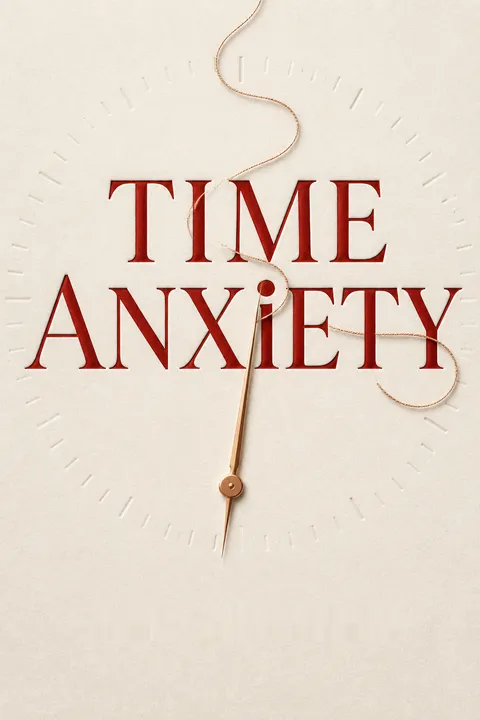

Key Takeaways
1. Time Anxiety is a Pervasive, Underestimated Struggle
This is a book for people who worry about time running out.
Unseen burden. Time anxiety is a deeply felt, unnamed sense of frustration, a constant undercurrent that tells you something isn't right. It manifests as a fear of running out of time, feeling perpetually behind, or sensing you should be doing something important but aren't sure what. This pervasive feeling affects people of all ages and backgrounds, often intensifying after periods of global disruption.
Dual manifestations. This anxiety typically presents in two interconnected forms: existential and daily routine. Existential time anxiety involves ruminating on past "wasted" time, fearing you'll miss your true calling, or dreading life's finite nature. Daily routine time anxiety, conversely, focuses on intense pressure to complete tasks, feeling constantly "on," struggling to focus, and rarely experiencing satisfaction after completion.
Indecisiveness and "too late." A common symptom is indecisiveness, leading to analysis paralysis over both major life choices and minor daily tasks. Many also grapple with a profound sense of being "too late" for career changes, relationships, or deferred dreams, a fear that often isn't correlated with actual timelines but deeply impacts well-being.
2. Traditional Productivity Hacks Mask Deeper Problems
Simply adopting new habits or routines, or signing up for more apps and services provided a misleading sense of progress.
False promises. The world of productivity advice, with its endless "hacks" and systems, makes an appealing but impossible promise: order in chaos. It encourages a relentless pursuit of efficiency, leading to an addiction to the dopamine hit of checking off lists, but ultimately leaves individuals feeling more overwhelmed and ashamed when the "beast" of endless tasks remains unconquered.
Unhelpful advice. Many common suggestions, though well-meaning, are counterproductive for those with time anxiety. They often promote unsustainable practices or ignore the root causes of distress. Examples include:
- "Get up one hour earlier and work harder."
- "Fully schedule your life, down to fifteen-minute increments."
- "Hire a virtual assistant and start outsourcing your unwanted tasks."
- "Stop being lazy."
Doing the wrong things better. The core issue is that these methods often lead to becoming "better and better at doing the wrong things." They focus on managing an unmanageable resource (time) rather than addressing the underlying psychological patterns. This creates a cycle of frustration, as more work or goals accomplished only reveal more tasks waiting to replace them.
3. Challenge Cognitive Distortions and Time Blindness
When you’re experiencing a distortion, you believe something that isn’t real even though this belief often makes the situation worse and then keeps making it worse, becoming a self-destructive loop.
Irrational thoughts. Cognitive distortions are exaggerated or irrational thought patterns that perpetuate time anxiety, making situations seem worse than they are. These include overgeneralization (one bad outcome equals never-ending failure), black-and-white thinking (either/or extremes), filtering (focusing only on negatives), personalization (everything bad is your fault), and catastrophizing (expecting the worst possible outcome).
Time's elusive nature. Time blindness refers to chronically misjudging the time you have, leading to lateness, procrastination, or anxiety. It means your brain processes time differently, making it tricky to plan or gauge task duration. This isn't carelessness, but a cognitive difference, often amplified by conditions like ADHD or trauma.
Strategies for clarity. To mitigate these issues, make time more visible by placing clocks everywhere and using timers and calendars as external memory aids. Challenge distorted thoughts by labeling them and creating counterstatements, reminding yourself of past successes or reframing negative experiences. For time blindness, consciously allow more time than you think you need for tasks and appointments, and identify "time sucks" that consistently take longer than expected.
4. Rewrite Your Time Rules and Embrace Radical Acceptance
Time rules exist to serve you (You Don’t Exist to Serve Time Rules).
Unwritten mandates. We all live by a series of "time rules," both societal and personal, that dictate how we spend our time. These unwritten rules, like "I must wake up at 6:00 a.m. to be productive" or "I reply to every email the same day," can become overly rigid, causing stress and anxiety when not perfectly followed.
Reframing for well-being. The key is to identify these rules and ask if they truly serve your well-being and align with your values. If not, they should be reframed or discarded. New, flexible time rules should prioritize self-care, realistic expectations, mindfulness, and regular reassessment of commitments, allowing for grace and self-compassion.
Radical acceptance. This powerful concept states that "pain + resistance = suffering." While pain is an unavoidable part of life, suffering comes from resisting that pain. Applying this to time anxiety means accepting the uncontrollable passage of time, letting go of the fight to "manage" it, and understanding that time will pass with or without your control. This surrender paradoxically frees up mental energy and improves decision-making.
5. Prioritize "Enough" and Practice "Doing Things Poorly"
Decide on a logical finish line for projects and daily work.
The endless cycle. Many jobs and projects present an unlimited number of tasks, creating a never-ending cycle that prevents a sense of accomplishment. This constant "tower-defense game" against an ever-growing horde of demands leads to exhaustion and anxiety, as focus remains on what's undone rather than what's achieved.
Defining completion. To combat this, consciously define "what is enough" for any given day or project. Set clear, logical finish lines, not endless to-do lists, to create milestones and allow for celebration or satisfaction. This doesn't mean abandoning ambition, but rather preventing the trap of infinite work without a concept of completion.
Embrace imperfection. Overwrite the belief that everything must be done with excellence. Sometimes, "doing things poorly" or "good enough" is a crucial strategy for harm reduction and moving forward. This means:
- Lowering standards for non-critical tasks.
- Abandoning the pressure to recycle everything when decluttering.
- Deleting all unread emails to start fresh.
- Accepting that not every phone call needs to be returned.
This approach conserves energy and allows focus on what truly matters, reducing the anxiety of impossible standards.
6. Confront Avoidance and Cultivate Quick Decision-Making
Avoiding hard things is an evolutionary defense mechanism. It can feel good temporarily, but it comes with a lingering psychological cost.
The cost of deferral. Avoidance, rooted in our evolutionary "fight or flight" response, offers temporary relief but exacts a high psychological toll. Whether it's ghosting friends, pretending to be in a coma to avoid court, or simply "staying busy" to defer important tasks, avoidance consumes immense energy and prevents presence and clear future planning.
Face more, avoid less. The antidote is to consciously "face more, avoid less." This doesn't mean perfection, but a commitment to tackling difficult situations head-on, even in small steps. Examples include:
- Speaking to one new person a day to overcome social anxiety.
- Taking a small action towards a dreaded task.
- Actively looking for a third option when faced with binary thinking.
This practice builds confidence and provides lasting relief, replacing the psychological expense of avoidance.
Break friction loops. Indecision and constant cognitive reshuffling create "friction loops," where you get stuck going back and forth without making real progress. This wastes time and energy, contributing to anxiety. To move towards "ease loops," practice making quick decisions and "touching things once." For instance, process emails one by one, decide on lunch quickly, or book travel without endless research.
7. Balance Hyperfocus with Deliberate Rest and Recovery
Used sparingly, hyperfocus can be a powerful tool. Just don’t expect to work in hyperfocus mode all the time, because it will lead to burnout and more time anxiety.
The energy paradox. Many individuals experience a "hyperfocus-burnout cycle," where intense, prolonged attention leads to remarkable short-term achievements but ultimately results in physical and mental exhaustion. While hyperfocus can be productive and even enjoyable, the mistake is assuming it's sustainable without planned recovery.
The traffic light strategy. Visualize your energy levels with a traffic light system:
- Green: Flow or hyperfocus state, highly efficient and engaged. Lean into it, but be mindful of distractions.
- Yellow: Approaching fatigue, a warning to slow down, take breaks, and reassess workload. Lower output goals or switch to different tasks.
- Red: Hit your limit, productivity declines due to exhaustion. Stop, rest, and recover. Trying to push through is counterproductive.
Longer time horizon. Stop judging yourself on a day-to-day basis, as energy levels fluctuate due to biological and external factors. Instead, evaluate your productivity and well-being over longer periods (weekly, monthly, yearly). This perspective allows for self-compassion on "red" or "yellow" days, recognizing that overall progress will balance out.
8. Cultivate Joy and "Aliveness" Through Intentional Leisure
Find something you really like to do, even if it seems strange or uncommon.
Beyond utility. For many, the belief that everything must serve a clear goal or relationship prevents them from pursuing pure joy. To combat time anxiety, prioritize activities that make you feel "alive," even if they seem strange or unconventional to others. This means actively noticing moments where the world comes into sharper focus, whether big or small.
Granny hobbies. Engage in "hands-on, thumbs-down" activities that are tactile, repetitive, low-intensity, and low-stakes. These "granny hobbies" like knitting, gardening, or puzzling, offer a sense of control and mastery, reduce anxiety, and increase attention span. They can be done alone or socially, providing a fulfilling break from digital demands.
Memory bank of aliveness. Create a list of experiences where you've felt most alive, identifying common elements like joy, challenge, or boldness. Use these insights to intentionally incorporate more such moments into your life. This isn't about passive consumption (like endless TV), but active engagement that recharges your spirit and provides a powerful antidote to feeling overwhelmed.
9. Embrace Mortality to Live a More Purposeful Life
The real problem is we’re going to die.
The ultimate countdown. The deepest root of time anxiety is the subconscious awareness of our own mortality. While we intellectually know we won't live forever, truly internalizing "someday, I will die" can be terrifying. However, this awareness can also be a profound source of freedom and purpose, shifting focus from trivial worries to what truly matters.
Profound freedom. This knowledge grants a sense of profound freedom: whatever troubles you have, whatever recurring worries weigh on your mind—all of it will eventually end. It also provides a powerful "excuse" for anything you don't want to do, allowing you to prioritize your limited time. For example, "No thank you, I'm going to die one day" can be a liberating response to unwanted obligations.
Unresolved questions. To harness this perspective, ask yourself: "What is unresolved in my life?" This question, though potentially scary, can reveal critical areas for action or acceptance. You can choose to:
- Take action to resolve it.
- Accept that some things remain unresolved.
- Use the insight to inform future decisions.
This introspection helps filter decisions through a "closer or further" lens, guiding you toward what truly aligns with your values.
10. Plan for a Year, Not Just a Day, to Achieve More
We overestimate what we can accomplish in a day, but we underestimate what we can accomplish in a year.
The long view. The common saying "the days are long, but the years are short" highlights a crucial truth: we often cram too much into a single day, leading to frustration and a sense of failure. Conversely, we underestimate the cumulative power of consistent, small efforts over a year. Shifting to a longer planning cycle reduces daily stress and enables significant long-term progress.
Dreamers and do-ers. To live a fulfilled life, you need to balance dreaming (generating ideas) with doing (executing them). Dreamers often have brilliant ideas but struggle with execution, while do-ers excel at execution but risk doing the "wrong things." The goal is to integrate both, applying the dreamer's vision to the do-er's discipline.
Yearlong projects. Embrace yearlong projects or habit projects that build up over time. These provide a comforting sense of progress without the daily pressure of immediate completion. Examples include:
- Reading a long novel one chapter a day.
- Running or walking a mile every day.
- Writing a page in a journal daily.
- Learning a new language a few words at a time.
This approach leverages the power of consistency and the longer time horizon to achieve meaningful goals.
11. Pay Yourself First with Time, Not Just Money
Instead of deferring your favorite activities until everything else is handled, flip the normal structure and look after yourself first.
Leisure as priority. Just as "pay yourself first" in personal finance prioritizes savings, apply this model to your time by prioritizing leisure and self-care. Instead of treating fun as a reward for work, integrate it as a fundamental part of your schedule. This requires overcoming the ingrained belief that leisure must be justified by productivity.
Intentional scheduling. Schedule your responsibilities around your interests, not the other way around. This might feel strange or even "naughty" at first, but it's crucial for reclaiming your time. Combine planned activities (concerts, trips booked in advance) with spontaneous fun, ensuring a balance that caters to both anticipation and immediate enjoyment.
The two-adventure weekend. To make leisure a habit, aim for "two adventures" each weekend: one planned and one spontaneous. An adventure is an exciting or unusual experience associated with novelty, challenge, and exploration. This intentional approach ensures you actively engage with life, rather than passively letting free time slip away, ultimately reducing time anxiety and increasing overall fulfillment.
Review Summary
Time Anxiety by Chris Guillebeau receives mixed reviews averaging 3.64/5 stars. Many readers appreciate its practical, empathetic approach to managing time-related stress, praising its accessible writing, helpful tips on reframing urgency, and validation of common struggles. Readers particularly value advice on time blindness, email management, and letting go of guilt. However, critics find the content basic, repetitive, or lacking depth, with some noting it offers common-sense advice without new research. The book resonates most with those experiencing genuine time anxiety, while others found it less relevant to their situations.
People Also Read





About the Author
Other books by Chris Guillebeau





Download PDF
Download EPUB
.epub digital book format is ideal for reading ebooks on phones, tablets, and e-readers.








































