


Plot Summary
The Witch's Silver Letter
After a hunt, Zafira1 finds a silver parchment in her satchel, left by a woman in a crimson-and-silver cloak6 who had materialized at the Arz's edge. At Yasmine's10 wedding, she breaks the seal and reads: an invitation to sail to Sharr and retrieve the lost Jawarat, a book that can restore magic and halt the encroaching darkness.
The promise of ending the Arz, which stole her father's sanity, ignites a fierce hope. Deen9 pleads with her to refuse, but Zafira1 feels she has been waiting for this. She accepts with a mix of dread and elation, telling herself she goes for her people, but the hum of the letter matches the pulse that has always called her into the forest.
The invitation functions as the inciting incident that externalizes Zafira's inner desire to transcend her hidden identity. The Silver Witch targets her precisely because of her connection to the Arz, exploiting her need to matter. The letter's allure mirrors the seductive pull of darkness, foreshadowing the dangerous bargain she is making. Her decision marks the moment she steps beyond the role of provider into the realm of legend, driven as much by a craving for purpose as by altruism.
Nasir's Kill Order Arrives
In Sultan's Keep, Nasir2 kneels before his father, Sultan Ghameq,7 who reveals the Silver Witch's6 scheme. The Hunter,1 a da'ira capable of navigating the Arz, has been invited to Sharr. The Sultan7 orders Nasir2 to follow, use the Hunter1 to locate the Jawarat, then kill him and anyone else sent. Ghameq7 also discloses a plan to massacre Demenhur villages to eliminate its caliph.
Nasir2 accepts with hollow obedience, knowing his father7 holds hostages like Kulsum's12 life over him. Later, the Sultan7 adds that Altair3 must accompany Nasir,2 one more person to be murdered. The weight of another slaughter settles on Nasir's2 scarred shoulders, but his face remains a mask of ice.
Nasir's obedience is a survival mechanism; his internal numbness is a slow suicide of the soul. The Sultan's order forces him to confront the full extent of his father's evil and his own complicity. The knowledge of the massacre demonstrates the Sultan's reach and disregard for life. Nasir is a tragic figure, a boy whose capacity for compassion has been systematically crushed, yet the ember remains, waiting for a catalyst.
The Huntress Unveiled
At the shore where the Arz had vanished, Zafira1 faces Caliph Ayman. Deen9 volunteers to join the quest, citing his loyalty to the Hunter.1 As their ship departs, Zafira1 lifts trembling hands and drops her hood, her dark hair tumbling free. She unclasps her cloak, and it falls away, exposing her figure.
The caliph's expression shifts from benevolence to outrage; he sees the Hunter1 is a woman. Zafira1 meets his fury with a lifted chin, silently declaring that she will no longer hide. Behind her, the Arz erupts back into existence, a wall of darkness sealing her past. She has burned her disguise and with it the safety it provided.
This public unmasking is a moment of radical courage. Zafira reclaims her identity, rejecting the patriarchal system that forced her into concealment. The caliph's anger validates her fear but also her defiance: she is proving that a woman's worth is not bound by custom. The regrowth of the Arz symbolizes the irreversible step she has taken. She is no longer the anonymous Hunter; she is Zafira, and she will be judged as such.
Deen's Fatal Sacrifice
On Sharr, as Zafira1 and Deen9 explore the ruins, three arrows fly. Deen9 shoves Zafira1 aside and takes an arrow beneath his heart. He falls, gasping a last pledge and a plea for her to trust. Zafira1 watches him die, his blood soaking the sand. Nasir2 and Altair3 emerge from the shadows, their arrows nocked.
An ifrit had also attacked, and Nasir2 had slain it, but Deen's9 death stands between them. Nasir,2 stunned that the Hunter1 is a woman, proposes an uneasy alliance: they all need the Jawarat. Broken and seething, Zafira1 nods. She buries her grief beneath a chilling calm and follows the murderers deeper into the desert.
Deen's death is the irrevocable price of Zafira's quest. It shatters her innocence and replaces it with a cold fury. The alliance with Nasir and Altair is a pragmatic necessity born from trauma, creating a volatile dynamic where trust is impossible. The event also illustrates the randomness of violence on Sharr; Deen's idealism is no match for the island's chaos. His sacrifice anchors Zafira's mission in personal loss, making the retrieval of magic a memorial act.
The Da'ira's Compass Heart
At an oasis, after the group has been joined by Kifah5 and Benyamin,4 the safi gathers them and unveils the truth about magic. It did not disappear when the Sisters fell; it was trapped on Sharr, bleeding into the land and birthing the Arz. He then turns to Zafira1 and exposes her secret: her uncanny ability to navigate the Arz is a dormant affinity called da'ira, a compass.
She has been unconsciously wielding magic for years. The revelation stuns Zafira,1 recasting her entire life. She runs into the palms, her sense of self crumbling. She has always been more than a skilled hunter, and that truth both empowers and terrifies her.
The da'ira revelation transforms Zafira's self-perception. Her talent was never mere skill but a supernatural gift, linking her to the magic she sought. This reframes her isolation: she was always different, always marked. The knowledge also makes her hyperaware that the others value her primarily as a tool, not a person, intensifying her loneliness even within the group. Benyamin's deliberate disclosure is a test of trust, forcing her to confront her destiny.
Blade to the Hashashin's Throat
Frustrated by Nasir's2 coldness and the memory of Deen,9 Zafira1 snatches Altair's3 scimitar and challenges the prince.2 They clash, and with a wild maneuver, she sweeps his legs, sending him crashing onto the sand with her astride him, the blade pressed to his throat.
Instead of killing him, she meets his startled gray eyes and issues three commands: don't touch her, don't look at her, don't even think about her. She releases him and walks away, her heart hammering. Nasir2 lies there, the phantom of the metal still kissing his skin, more undone by her mercy than any wound. The power dynamic between them has irrevocably shifted.
This scene subverts expectations: the fearful female hunter besting the legendary assassin. Zafira's choice to spare Nasir demonstrates that her identity is not defined by revenge, but by a deeper code. Her commands are a defense mechanism against the undeniable pull she feels, a desperate attempt to re-establish distance. For Nasir, being bested and then shown mercy cracks his armor, forcing him to recognize her as an equal, and perhaps something more.
Scars Beneath the River Moon
Seeking a midnight bath, Zafira1 stumbles upon Nasir2 performing a solitary sword drill by a river, shirtless. Her breath catches at the sight of his back: rows of black, puckered scars like a constellation of burns. He finishes and wades into the water. When he emerges, he catches her watching.
In a flash, he pins her against a tree, his damp body close, his eyes dangerous. He murmurs his own three rules: never sneak up on an assassin, never wander near a murderer, and never watch a man undress. Then he releases her, calling her a fair gazelle, and disappears. Zafira1 stands trembling, her fear entwined with a shocking thrill.
The scene lays bare the physical evidence of Nasir's trauma, transforming him from a monster into a victim. Zafira's voyeurism is an act of unconscious care, seeing the man beneath the killer. Nasir's reaction, both predatory and protective, reveals his own conflicted feelings: he is drawn to her lack of fear, yet terrified of the vulnerability that comes with it. The encounter is a turning point in their emotional arc, a moment of intense recognition that neither can acknowledge.
Altair's Blood Betrayed
The zumra crosses paths with kaftar, hyena-like shape-shifters who can smell the blood of the ancient ones. When Benyamin4 forces them into human form, the kaftar leader sniffs Altair3 and remarks on the sweetness in his blood, a sign of powerful lineage. Altair3 deflects, but Nasir2 is suspicious.
Later, when Benyamin4 again withholds the full truth about the Lion,8 Nasir2 explodes, slamming the safi4 against a wall. Altair3 intervenes, protecting Nasir2 with a fierceness that shocks everyone. The tension over hidden identities and divided loyalties threatens to fracture the group, even as the darkness of Sharr deepens around them.
The kaftar's scent-based revelation plants the seed of Altair's secret, while Nasir's outburst exposes his deep-seated need for control and his feeling of being manipulated. Altair's defense of Nasir is a pivotal moment, revealing that beneath the taunts lies a complicated brotherly bond. The group's dynamic mirrors the fractured caliphates, united by a common enemy but wracked by internal mistrust and unspoken histories.
Benyamin's Grief Laid Bare
Benyamin4 pulls Zafira1 into a dreamwalk, showing her a magnificent Alderamin untouched by the Arz. As they stand on a balcony, a woman sings a lament for a dead child. He confesses he once had a son, who died small. Then he reveals the core betrayal: the Silver Witch, once a pure-hearted Sister named Anadil,6 was seduced by the Lion of the Night.8
He preyed on her loneliness, convinced her the other Sisters feared her, and orchestrated the trap that drained their magic. Benyamin's4 own guilt for aiding the Lion8 in his youth fuels this quest. Zafira1 sees his tattoo, 'truth', and understands the weight he carries.
Benyamin's dreamwalk transforms the quest from a simple retrieval into a complex web of grief and atonement. The revelation about the Silver Witch's fall humanizes her and complicates Zafira's black-and-white morality. The parallels between Benyamin and the witch, both seeking redemption for past mistakes, suggest that the line between villain and savior is thin. The dreamwalk also bonds Zafira to Benyamin, making his eventual sacrifice all the more devastating.
The Sultan's Flaming Chain
Alone at night, Nasir2 uses blood magic strips to summon his father.7 Sultan Ghameq7 appears in the flames, his voice dripping with contempt. He berates Nasir2 for failing to kill the group, then orders him to murder the Huntress1 and the others immediately, threatening Kulsum's12 life. Nasir,2 shrinking before the fire, replies with a meek 'Yes, Sultani.'
Zafira1 and Altair3 spy from the shadows. She watches the feared Prince of Death2 bow to a tyrant,7 and her stomach turns. When the fire dies, Nasir2 stumbles through the camp, his mask gone, revealing red-rimmed eyes and shattered pride. Any nascent trust Zafira1 had in him evaporates.
This scene unveils the grotesque engine of Nasir's obedience: a father's psychological and physical torture, compounded by emotional blackmail. Nasir's submission is not weakness but the conditioned response of an abused child. Zafira's horror is layered: she is disgusted by his cowardice yet pitying of his brokenness. The spectacle shatters the romanticized image of the rebel prince and confronts Zafira with the ugly reality of his imprisonment.
Chained in the Lion's Den
Lost and severed from her affinity, Zafira1 is drawn into a dark palace where she meets the Shadow,8 a man with amber eyes and a voice like velvet. He offers qahwa and sympathy, then chains her to a wall and summons an ifrit wearing Deen's9 face. As the false Deen9 is brutally tortured, she screams and bargains.
The Shadow8 reveals that he has been the darkness she embraced, the whisper in the Arz, shaping her into a weapon. He wants the Jawarat, and he has been waiting decades for a vessel like her. He calls her 'azizi' and promises her love if she yields. Zafira1 refuses, even as her spirit begins to crack.
The Lion's psychological manipulation is chillingly intimate, targeting Zafira's deepest insecurities: her need for love and her guilt over Deen. By weaponizing her memories, he attempts to break her will and reframe her entire life as his design. Her ultimate refusal, despite the torment, demonstrates that her core self is not defined by him. The scene is a dark baptism, forcing her to confront that the darkness she thought was her ally is actually her enemy.
Benyamin's Death and the Brothers' Truth
Nasir2 locates Zafira1 and storms the chamber, but the Lion8 overpowers him and chains him beside her. The Lion8 presses a glowing poker to Nasir's2 chest, adding a fresh scar, as Zafira1 screams. Altair3 bursts in with Kifah,5 his elongated ears now visible.
The Lion8 casually announces that Altair3 is his son, and that the Silver Witch6 is Nasir's2 mother, making them half-brothers. In the chaos, the Lion8 hurls a shadow stave at Nasir.2 Benyamin4 lunges, taking the fatal blow through his heart. He dies with a soft smile, telling Altair3 he seized his strength. The group retreats, carrying his body, shattered but united in grief.
Benyamin's sacrifice completes his redemptive arc, dying to protect the very prince who distrusted him. The unveiling of the family connections adds a Greek tragedy dimension: Nasir's mother is the witch, his brother is the general he was sent to kill, his father is a puppet. The web of lies unravels, leaving the characters to rebuild their identities from the wreckage. Benyamin's death cements the zumra's bond through shared loss, transforming their quest into a war for his memory.
The Sultana's Hidden Face
While the zumra rests, the Silver Witch6 appears to Nasir2 alone. She shifts her form, becoming the dark-haired, golden-eyed sultana6 he mourned. She explains that she faked her death to escape the Lion's8 reach and that she had her son2 trained as a hashashin so he could one day kill the Lion,8 the one enemy darkness could blind.
She shows Nasir2 the burn scar on her arm from the first time she stepped between him and the poker. She admits she molded him into a weapon, but swears her love was real. Nasir2 reels, caught between fury and a desperate need to believe. He now understands his torment was part of a larger scheme, but the betrayal cuts deeper than any blade.
This revelation fundamentally reframes Nasir's suffering. His mother's 'love' is revealed as a cold, strategic instrument, complicating the narrative of parental abuse. The revelation that he was forged for a purpose gives his identity a new, if painful, meaning. The emotional whiplash he experiences, from believing his mother was a victim of his weakness to learning she orchestrated much of it, shatters him, but also plants the seed for him to reclaim his agency and decide what kind of son, and man, he will be.
Blood Binds the Jawarat
Zafira1 follows whispering voices to an enclosure formed by five ancient trees, their roots cradling the Jawarat. The book, bound in green calfskin with a lion emblem, pulses with a heartbeat. When she reaches for it, the trees slice her palm. Her blood drips onto the pages, binding the Jawarat to her soul.
Memories and knowledge flood her mind: the Sisters' fall, the Lion's8 rage, the witch's6 sorrow. As the Lion8 arrives, Kifah5 acts quickly, using her illusion magic to swap the real book with a decoy. The Lion8 snatches the fake, believing he has won. Zafira1 staggers, now inextricably linked to the artifact, her mind echoing with ancient whispers.
The blood binding is an irreversible covenant. Zafira becomes more than the Jawarat's seeker; she becomes its living vessel, bearing the weight of centuries. The mingling of the Sisters' purity and the Lion's darkness within the book mirrors Zafira's own internal duality. Kifah's swift illusion underscores the importance of the zumra's diverse skills, where brute force alone would have failed. The scene sets the final stage, with both sides believing they hold the upper hand.
Hearts Torn from Ancient Roots
The final battle erupts at the tree enclosure. Nasir2 unleashes his own darkness, even as the Silver Witch6 joins the fight, her power returning as Sharr's grip weakens. Kifah,5 Altair,3 and Nasir2 dig into the roots of the five trees, pulling out four still-beating, ruby-red hearts.
But the Lion8 seizes the fifth heart and ensnares Altair3 in shadow chains. With the Arz already crumbling across Arawiya, the zumra is forced to retreat to their ship, leaving Altair3 at the Lion's8 mercy. The victory is bittersweet: magic can be restored, but the enemy has a hostage and a heart, ensuring the war is far from over.
The partial retrieval of the hearts is a narrative masterstroke, denying a facile triumph while providing concrete hope. The loss of Altair mirrors the earlier loss of Deen and Benyamin, reinforcing the steep cost of the quest. Yet each sacrifice has propelled the group forward. The crumbling Arz symbolizes the end of an era of passive suffering, replaced by an active, costly fight for renewal. The siblings' separation sets up a powerful future rescue arc.
A Course for Sultan's Keep
Aboard Benyamin's4 ship, Nasir2 and Zafira1 stand together at the rail, the weight of their losses heavy on their shoulders. Zafira1 admits she is no longer merely the Hunter,1 but something more, a Huntress1 part of a zumra. Nasir,2 still processing his mother's6 revelation, looks toward Sultan's Keep, where his father7 awaits under the Lion's8 influence.
He knows he must confront the sultan7 and reclaim his kingdom. Zafira1 reaches for his hand, briefly, and they share a moment of unspoken understanding. Kifah,5 grieving Benyamin,4 steadies her spear. They set course for home, carrying the hearts and the Jawarat, their own hearts beating with the promise of return, reckoning, and rescue.
The conclusion is an emotional exhale after chaos. The zumra, forged in fire and blood, is now a family of choice. The romantic tension between Zafira and Nasir is acknowledged but deferred, respecting their individual brokenness. The promise to rescue Altair and restore the hearts to the minarets gives clear direction for the sequel, but the tone is one of somber hope. The once-isolated characters now share purpose, a collective identity that transcends their origins.
Epilogue
Yasmine10 survives the sultan's7 gas attack on the western villages, which suffocated countless children she had tutored. Haunted by a vision in the Arz that showed her brother Deen's9 death at the hands of a golden-haired man, she vows to kill him. Her husband Misk draws her close and reveals that the man she seeks, Altair al-Badawi,3 is actually a trusted ally.
Meanwhile, Altair3 lies chained aboard the Lion's8 ship, forced to salvage the wreckage with ifrit. The Lion8 approaches, amber eyes glowing, and Altair3 calls him 'Father,' his voice rough but unafraid, setting the stage for a reckoning between son and sire.
The epilogue widens the cost of the quest beyond the main zumra. Yasmine's grief and thirst for vengeance against Altair, whom she doesn't know is an ally, introduces a poignant dramatic irony that will inevitably lead to conflict. Her vision in the Arz also suggests a lingering connection to the dark forest's magic. Altair's capture and his defiant acknowledgment of his father underscore his complex heritage and set up a power struggle within the antagonist's camp. The parallel between Yasmine's and the zumra's vows of return creates a unified emotional throughline, promising that the story's true conclusion lies ahead.
Analysis
Hafsah Faizal's debut weaves a rich tapestry of identity, love, and the seductive nature of darkness. At its core, the novel interrogates the masks people wear: Zafira's1 male persona, Nasir's2 cold indifference, Altair's3 buffoonery, even the Silver Witch's6 multiple faces. Each character's arc is a stripping away of these false selves, often through searing pain. The book argues that authenticity is not a gift but a battle won through suffering and sacrifice. The metaphor of the da'ira, a compass that finds its way in absolute darkness, speaks to the human capacity to navigate trauma and confusion by trusting one's inner light. Yet that light is frequently indistinguishable from darkness, as seen in Zafira's1 embrace of the very shadows that nearly consume her. The novel also ruthlessly deconstructs the notion of love as a purely benevolent force. Love here is a weapon: the Lion8 uses it to manipulate Anadil,6 the Sultan7 exploits Nasir's2 love for his mother6 to create a killer, and Zafira's1 fear of love isolates her as much as any enemy. But the zumra also demonstrates that love, when chosen freely and mutually, becomes an unbreakable bond that defies bloodlines and caliphate borders. The partial victory at Sharr, with magic freed but the Lion8 and Altair3 still unredeemed, reflects a mature understanding that liberation is never complete; it is a series of ongoing battles. Faizal ultimately suggests that hope lies not in eradicating darkness, but in learning to coexist with it, to wield it, and to find one's direction within it.
Review Summary
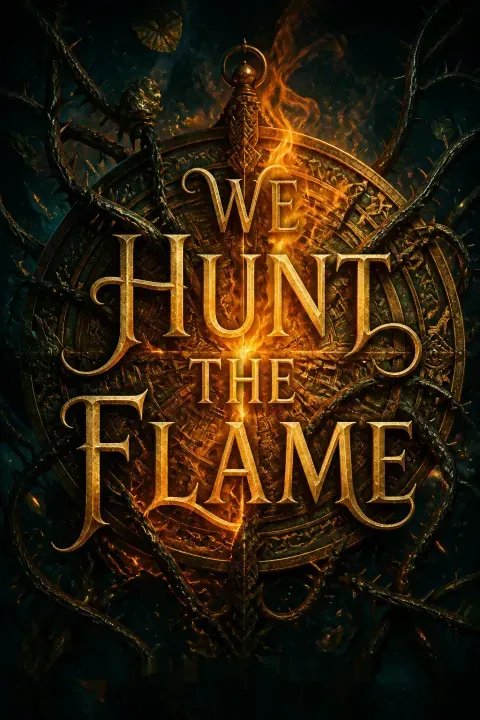
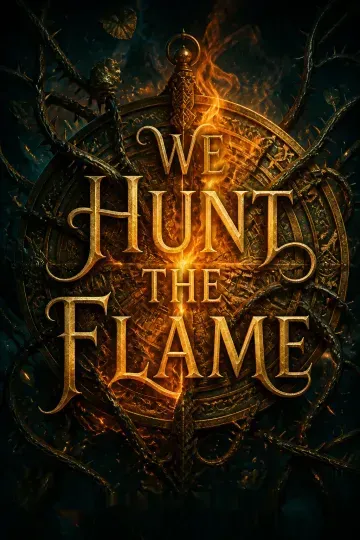
We Hunt the Flame received mixed reviews. Many praised its rich Arabian-inspired world-building, lyrical prose, and character development. Readers enjoyed the slow-burn romance and found the story captivating. However, some felt the plot was slow-paced and predictable, with familiar YA fantasy tropes. Critics noted issues with pacing and character depth. Despite divided opinions, many appreciated the cultural representation and looked forward to the sequel. The book's stunning cover and inclusion of Arabic terms were frequently mentioned as positive aspects.
People Also Read


Characters
Zafira bint Iskandar
The Huntress UnveiledA seventeen-year-old from the snowbound caliphate of Demenhur who disguises herself as a man known as the Hunter to brave the cursed Arz and feed her village. She is hardened by her father's death and her mother's madness, carrying a deep guilt and a fear of love. Beneath her stoic exterior beats a heart that craves purpose and recognition. She is a da'ira, an affinity-wielder who can always find her way, a power she unconsciously used to survive the forest. Over the course of the quest, she sheds her cloak, both literal and metaphorical, embracing her identity as a woman and a leader, and slowly opens herself to the possibility of love.
Nasir Ghameq
The Prince of DeathThe crown prince of Arawiya, a hashashin assassin known for his cold efficiency and countless kills. His body bears rows of burn scars inflicted by his father, the Sultan7, as punishment for his compassionate nature. Nasir has suppressed all emotion to survive, existing as a weapon wielded by his tyrannical father7. He is haunted by the loss of his mother6 and the mutilation of the servant he loved12. On Sharr, Zafira's1 fearlessness and glimpses of his humanity begin to crack his mask. He is torn between his ingrained obedience and a burgeoning sense of self, fighting to become more than the monster he was made into.
Altair al-Badawi
The Silver-Tongued GeneralThe Sultan's7 charismatic general, known for his jesting, flirtation, and prowess with twin scimitars. He conceals a secret lineage: he is half safin, with the ability to wield light, and is the biological son of the Lion of the Night8. Orphaned and hidden, he was raised alongside Nasir2 as a brother, though their rivalry masks a deep bond. He operates a spy network across Arawiya, secretly working against the Sultan's7 corruption. His accidental killing of Deen9 haunts him. He loves fiercely, sacrificing himself to allow the zumra to escape, and is ultimately captured by his father8.
Benyamin Haadi
The Dreamwalking SafiAn immortal safi from Alderamin, son of the calipha. He is a dreamwalker who can enter and shape memories, and a scholar burdened by a tragic past: his son died young, and he feels responsible for nurturing the Lion of the Night's8 thirst for knowledge. His tattoo, 'truth,' reflects his core value, though he struggles to fully disclose what he knows. He assembled the zumra to atone for his sins and restore magic. He is vain, verbose, and deeply caring beneath his affected elegance. His sacrifice to save Nasir2 completes his redemptive arc.
Kifah Darwish
The Spear of VengeanceA Pelusian warrior of the Nine Elite, a miragi who can create illusions. She shaved her head and took up arms after her brother Tamim was murdered by their father for defending her. She joined Benyamin's4 quest to bring back magic and spite the father who loathes it. She is blunt, restless, and fiercely loyal, carrying a profound grief beneath her sardonic wit. Her illusions prove crucial in deceiving the Lion8. She forms a deep bond with Zafira1, seeing in her the hope her brother represented.
The Silver Witch
The Fallen SisterOne of the Six Sisters of Old, the former warden of Sharr who was seduced and betrayed by the Lion of the Night8, leading to the fall of magic. She now seeks redemption by guiding the zumra to retrieve the Jawarat. She cannot lie but can manipulate truths. She is ancient, powerful, and deeply scarred, having lost her sisters and her sons to the Lion's8 machinations. She appears alternately as a silver-cloaked witch and as the deceased Sultana of Arawiya.
Sultan Ghameq
The Puppet KingNasir's2 father and the ruler of Arawiya. Once a good man, he was corrupted by the Lion of the Night8 through a medallion that opened his mind to possession. Now he is a tyrant who uses blood magic and commands his son2 to commit atrocities. He keeps hostages to control those around him, and his cruelty has left Nasir2 physically and psychologically scarred. Flickers of his former self occasionally surface, but he is largely a vessel for the Lion's8 will.
The Lion of the Night
The Shadow KingA half-ifrit, half-safin ancient being imprisoned on Sharr. He commands the darkness and can shift into shadow. He manipulated the Silver Witch6 into betraying her Sisters, and now seeks the Jawarat and the Sisters' hearts to claim ultimate power. He has whispered to Zafira1 in the Arz for years, grooming her as his tool. He is Altair's3 biological father. His voice is seductive velvet, his cruelty absolute, yet a flicker of ancient loneliness persists.
Deen Ra'ad
The Loyal HeartZafira's1 childhood friend, Yasmine's10 brother, who loves Zafira1 deeply and proposes marriage. He is gentle, inventive, and utterly devoted. He follows Zafira1 to Sharr to protect her, and dies taking an arrow meant for her. His death becomes Zafira's1 driving grief and a symbol of the quest's cost.
Yasmine Ra'ad
The Fierce SisterZafira's1 sharp-tongued best friend, newly married to Misk. She knows Zafira's1 secret and pushes her to embrace her true identity. After Deen's9 death, she is consumed by grief and a vow to kill his murderer3, whom she saw in a vision as a golden-haired man, setting her on a collision course with Altair3.
Lana bint Iskandar
The Healer SisterZafira's1 fourteen-year-old sister, who cares for their mentally shattered mother. She is gentle, wise beyond her years, and idolizes Zafira1. She represents the home and innocence Zafira1 left behind.
Kulsum
The Mute ServantA servant who became Nasir's2 lover. After they were caught, the Sultan7 cut out her tongue. She later spied for Altair3, her affection for Nasir2 a complex mix of care and duty. She represents Nasir's2 deepest wound and the cost of his father's7 tyranny.
Plot Devices
The Jawarat
Sentient book of power and memoryAn ancient tome created by the dying Six Sisters, bound in green calfskin with a lion emblem. It contains their memories and the knowledge of the Lion of the Night8, having absorbed his dark wisdom during its years on Sharr. It can restore magic to Arawiya. When Zafira's1 blood touches it, the book binds to her soul, whispering directly into her mind and granting her its vast knowledge, but also threatening to consume her with its darkness.
The Sisters' Hearts
Vessels of dormant magicThe literal, still-beating hearts of the five Sisters who died on Sharr, encased in the roots of the five ancient trees. They contain the magic that once lit the royal minarets across Arawiya. Retrieving them breaks Sharr's hold on magic, causing the Arz to recede. The Lion8 seizes one, preventing a complete restoration, but four are taken by the zumra to rekindle the caliphates' minarets.
The Silver Compass
Tracker for the Jawarat and ZafiraA crimson-and-silver disc given to Nasir2 by the Silver Witch6. It is enchanted to point toward the Jawarat, but it also consistently directs Nasir2 to Zafira1, the da'ira, allowing him to follow and later locate her. It never fails, serving as a reliable guide through Sharr's deception.
Dum Sihr
Forbidden blood magicA dark form of magic that bypasses a person's innate affinity by using blood as a price. The Sultan7 uses it, aided by the Silver Witch's6 blood, to communicate across distances and to issue threats. Benyamin4 uses it to open the sealed door to the Jawarat, knowing the cost may be his life. It symbolizes the corruption of magic and the moral compromises necessary in the fight against evil.
The Sultan's Medallion
Conduit for the Lion's controlAn ancient inscribed disc that Sultan Ghameq7 wears constantly, through which the Lion of the Night8 gradually possessed and corrupted him. When Nasir2 touched it once, he heard the same whispers that pervade Sharr, linking the island's darkness to his father's7 tyranny. It represents the insidious nature of evil, turning a once-good man into a monster.
FAQ
Synopsis & Basic Details
What is We Hunt the Flame about?
- Arawiya's Cursed Realm: We Hunt the Flame introduces Arawiya, a land stripped of magic and plagued by unique blights across its five caliphates, most notably the encroaching, malevolent Arz forest. The story follows Zafira, a legendary huntress disguised as a man, who braves the Arz daily to feed her starving village in Demenhur, a caliphate cursed with endless snow.
- A Quest for Lost Magic: Zafira is thrust into a perilous quest by a mysterious Silver Witch to retrieve the Jawarat, an ancient book rumored to restore magic to Arawiya from the cursed island of Sharr. Simultaneously, Nasir, the feared Prince of Death and son of the tyrannical Sultan Ghameq, is dispatched to Sharr by his father to retrieve the same artifact and eliminate anyone who stands in his way, including the fabled Hunter.
- Collision of Destinies: Their individual journeys of survival and duty converge on Sharr, forcing them into an uneasy alliance with other unlikely companions. As they navigate the island's illusions, monsters, and hidden truths, they uncover ancient betrayals, confront their deepest fears, and discover the true cost of magic and redemption, ultimately shaping the fate of their fractured world.
Why should I read We Hunt the Flame?
- Rich World-Building: Readers are immersed in a vividly imagined world inspired by ancient Arabia, featuring diverse caliphates, unique cultures, and a magical system rooted in elemental affinities. The sensory details, from the scent of spices to the feel of sand and snow, create a truly transportive experience, making We Hunt the Flame a captivating read.
- Complex Character Arcs: The novel excels in its psychological depth, presenting protagonists like Zafira and Nasir who are burdened by their pasts and societal expectations. Their journeys of self-discovery, vulnerability, and the slow burn of their evolving relationship offer compelling emotional resonance, exploring themes of identity, duty, and the search for belonging.
- Intriguing Mystery & Magic: Beyond the surface quest, the story weaves a complex tapestry of ancient secrets, hidden magic, and moral ambiguities. The nature of the Arz, the true history of the Sisters, and the enigmatic motives of characters like the Silver Witch and the Lion of the Night provide layers of mystery that keep readers engaged and eager for answers.
What is the background of We Hunt the Flame?
- A Land Stripped of Magic: Arawiya was once a vibrant realm infused with magic, sustained by the Six Sisters of Old who imbued their power into royal minarets across the caliphates. This era ended abruptly with the Sisters' disappearance and the rise of the Arz, a malevolent forest that consumes land and magic, leaving each caliphate with a unique blight (e.g., Demenhur's endless snow, Sarasin's desolation).
- Political Instability & Tyranny: The disappearance of magic led to a power vacuum, with human caliphs ruling the fragmented lands. The current Sultan Ghameq, a Sarasin by birth, has seized control of Arawiya, ruling with an iron fist and employing forbidden blood magic (dum sihr) to consolidate power, as evidenced by his assassination of the Sarasin caliph and his machinations against Demenhur.
- Mythological & Cultural Underpinnings: The world is steeped in Arabic-inspired mythology, featuring creatures like ifrits (fire beings), kaftars (hyena-men), dandan (sea monsters), and rukh (giant birds). The narrative frequently references ancient Safaitic language, cultural practices like henna, and architectural styles, grounding the fantasy in a rich, evocative cultural context.
What are the most memorable quotes in We Hunt the Flame?
- "Love is for children, the girl said. Death is for fools, the shadow said. Darkness is my destiny, the boy said. Loyalty is my ruin, the eagle said. Suffering is our fate, the beauty said. And they were terribly wrong." (Epigraph): This opening sets a profound thematic stage, immediately challenging conventional notions of love, death, darkness, loyalty, and suffering. It foreshadows the characters' journeys of defying these perceived destinies and finding unexpected truths.
- "You are the compass in the storm, the guide in the dark. You will always find your way, Zafira bint Iskandar." (Benyamin, Chapter 44): This quote is pivotal in Zafira's self-discovery, revealing her true affinity as a da'ira (compass). It recontextualizes her years of navigating the Arz, transforming her perceived skill into an innate magical ability, and solidifies her role as a beacon of hope and direction in a lost world.
- "A life without purpose may not be life, but a life without love is nothing more than an existence." (Nasir, Chapter 74): Spoken by Nasir, the Prince of Death, this quote marks a profound shift in his character. It encapsulates his journey from emotional numbness and duty-bound existence to a realization of the vital importance of love and connection, directly challenging his father's cruel teachings and his own self-imposed isolation.
What writing style, narrative choices, and literary techniques does Hafsah Faizal use?
- Sensory and Evocative Prose: Faizal employs rich, descriptive language that appeals strongly to the senses, immersing the reader in Arawiya's landscapes, scents, and sounds. Phrases like "the air crippled her nose," "odor of musk from hot sands," and "the scent of oud, saffron, and sandalwood" create a deeply atmospheric experience, enhancing the world-building.
- Dual Protagonists and Alternating POV: The alternating first-person perspectives of Zafira and Nasir allow for deep dives into their psychological states, motivations, and internal conflicts. This narrative choice highlights their parallel journeys of self-discovery and the gradual convergence of their emotional landscapes, often revealing their unspoken thoughts and vulnerabilities.
- Symbolism and Metaphor: The novel is rich with symbolism, from the Arz representing encroaching darkness and fear, to the Jawarat as a vessel of memory and truth, and the characters' names (Zafira meaning "victorious," Nasir meaning "victorious," Ghameq meaning "dark"). Magic itself serves as a metaphor for agency, hope, and the reclamation of identity, adding layers of meaning to the narrative.
Hidden Details & Subtle Connections
What are some minor details that add significant meaning?
- The Arz's Sentience and Connection to Zafira: Beyond being a cursed forest, the Arz is subtly portrayed as a living entity with a strange connection to Zafira. Early descriptions like "the Arz looked back, as if it were breathing hard" (Chapter 1) and Zafira feeling "a deep pulse within her that savored those visits" (Chapter 1) foreshadow her da'ira affinity and the Arz's true nature as an extension of Sharr's magic.
- Nasir's Scars and Their Origin: The "carbonized and blackened" scars on Nasir's back (Chapter 53) are initially presented as a sign of his father's cruelty. The later revelation that each scar corresponds to a time the poker touched his skin, inflicted by Ghameq (or the Lion through Ghameq), and that his mother intervened once, leaving a "black tear" (Chapter 72), subtly reveals the depth of his trauma and his mother's hidden sacrifice.
- The Significance of Names: The shared meaning of Zafira and Nasir's names ("victorious") is a subtle foreshadowing of their intertwined destinies and eventual triumph. Altair's surname, al-Badawi ("nomad"), hints at his hidden origins and his eventual revelation as the Lion's son, a figure without a fixed lineage in the traditional sense.
What are some subtle foreshadowing and callbacks?
- The Silver Witch's Enigmatic Words: The Silver Witch's early pronouncements to Zafira, "Lost you should have stayed, cursed child" (Chapter 1) and "You always find your way, Zafira bint Iskandar" (Chapter 1), subtly hint at Zafira's da'ira affinity long before it's revealed. Her statement "Ninguém pode ser tão puro" (Chapter 1) also foreshadows the later revelation about Anadil's own fall from purity.
- Deen's Dream of Sharr: Deen's dream of being "trapped inside a massive tree. Darkness like smoke. Whispers" (Chapter 3) is a direct foreshadowing of the true nature of Sharr and the Sisters' hearts being trapped within the trees. It also hints at the island's malevolent sentience and the whispers Zafira later hears.
- Altair's Knowledge and Hidden Heritage: Altair's seemingly casual knowledge of various caliphates, his surprising clarity despite his "debauchery," and his ability to "make friends with enough spiders" (Chapter 41) subtly hint at his true identity as the Sultana's son and his role as a hidden informant, working against Ghameq's direct orders. His comment "Fidelity is my ruin" (Epigraph) also foreshadows his complex loyalties.
Who are the most significant supporting characters?
- Haytham, Demenhur's Wazir: Haytham, the wazir of Demenhur, is more than just a plot device for the Lion's manipulation. His desperate love for his son and his reluctant betrayal of Caliph Ayman highlight the immense pressure and impossible choices faced by those under Ghameq's tyranny. His subtle acknowledgment of Zafira's true identity ("You are younger than I thought," Chapter 17) and his desire for a female heir to the throne ("I always wished someone would take matters into their own hands," Chapter 17) reveal a progressive mindset rare in Demenhur, making him a quiet ally.
- Kulsum, Nasir's Former Confidante: Kulsum, Nasir's mother's servant, serves as a tragic symbol of the sultan's cruelty and Nasir's past failures. Her lost tongue, a direct result of Ghameq's punishment for her relationship with Nasir, is a constant reminder of the price of love and defiance in the palace. Her later appearance as an ifrit illusion (Chapter 67) underscores Nasir's deep-seated guilt and the Lion's manipulative power.
- Jinan, the Zaramese Captain: Jinan, the young Zaramese captain of Benyamin's ship, represents the resilience and resourcefulness of the Zaramese people, who, despite their caliphate being "isolated from the sea," still maintain their seafaring traditions. Her pragmatic acceptance of the zumra's chaotic presence and her unwavering loyalty to Benyamin's mission highlight the strength of chosen bonds and the enduring spirit of Arawiya's diverse cultures.
Psychological, Emotional, & Relational Analysis
What are some unspoken motivations of the characters?
- Zafira's Pursuit of Purpose Beyond Survival: While Zafira claims to hunt "for her people" (Chapter 1), her internal monologues reveal a deeper, unspoken motivation: a craving for purpose and a desire to escape the mundane, restrictive life of a woman in Demenhur. Her "deep pulse within her that savored those visits" to the Arz (Chapter 1) and her later realization that "a life without purpose is not life" (Chapter 74) suggest a personal yearning for significance that transcends mere sustenance.
- Nasir's Subconscious Search for Redemption: Nasir's actions, though outwardly cruel and obedient to his father, are subtly driven by a subconscious desire for redemption and a longing for the love he lost. His internal struggle with compassion, his self-loathing, and his unexpected protective instincts towards Zafira and the zumra hint at a buried humanity that seeks to atone for the blood on his hands, even if he cannot articulate it.
- Altair's Calculated Loyalty and Hidden Pain: Altair's constant joviality and teasing mask a profound pain and a calculated loyalty. His seemingly flippant remarks often carry deeper truths, and his willingness to risk his life for Nasir and the zumra, despite his "orders" to be killed, reveals a complex allegiance rooted in a shared past and a desire to protect those he cares for, even if he cannot openly express it.
What psychological complexities do the characters exhibit?
- Zafira's Identity Dissociation: Zafira struggles with a profound dissociation from her true self, viewing "Zafira bint Iskandar" as distinct from "the Hunter." This psychological split is a coping mechanism for the societal pressures and misogyny she faces, but it also prevents her from fully embracing her power and vulnerability. Her journey is about integrating these two identities, as Benyamin states, "This is your chance for the Hunter and Zafira to become one" (Chapter 58).
- Nasir's Emotional Numbness and Self-Loathing: Nasir exhibits severe emotional numbness, a psychological defense mechanism developed from years of trauma and forced cruelty. He actively suppresses feelings, believing "compassion kills" (Chapter 20). His self-loathing is evident in his acceptance of his father's insults and his belief that he is a "monster." The narrative explores the psychological toll of being a weapon, and his gradual re-awakening to emotion is a central complexity.
- Benyamin's Burden of Knowledge and Guilt: As an immortal safin, Benyamin carries the immense psychological burden of centuries of knowledge and the guilt of his past actions, particularly his role in the Lion's rise. His "dreamwalking" ability, which allows him to relive memories, is both a gift and a curse, as it forces him to constantly confront his regrets. His "truth" (Haqq) tattoo symbolizes his commitment to honesty, yet he withholds crucial information, highlighting the complexity of his moral compass.
What are the major emotional turning points?
- Deen's Death and Zafira's Hardening: Deen's tragic death on Sharr is a brutal emotional turning point for Zafira. It shatters her innocence, fuels her rage, and pushes her further into the "darkness" she once only visited. His dying words and the ring he gives her become a constant reminder of loss and a catalyst for her resolve to avenge him and complete the quest, even if it means embracing a colder, more ruthless side of herself.
- Nasir's Confrontation with His Mother's Truth: The revelation that the Silver Witch is his mother, the Sultana, and that she orchestrated his harsh upbringing to prepare him to fight the Lion, is a devastating emotional turning point for Nasir. It recontextualizes his entire life, forcing him to confront the "fabricated" nature of his father's cruelty and the profound, albeit painful, love of his mother, leading to a breakdown of his emotional armor.
- Benyamin's Sacrifice: Benyamin's selfless act of taking the Lion's attack for Nasir is a powerful emotional climax. His death, particularly his final words about "sacrifice" and "truth," profoundly impacts Nasir, Altair, and Kifah, solidifying their bond as a zumra and reinforcing the theme that true strength lies in selflessness and chosen family, even in the face of overwhelming odds.
How do relationship dynamics evolve?
- Zafira and Nasir: From Adversaries to Allies to Lovers: Their relationship begins with mutual suspicion and a clear intention for Nasir to kill Zafira. Through shared trials on Sharr, their dynamic slowly shifts to reluctant alliance, then to a grudging respect, and finally to a deep, unexpected emotional and romantic connection. This evolution is marked by moments of vulnerability, such as Zafira tending to Nasir's wounds and Nasir revealing his scars, culminating in their first kiss and a bond forged in shared trauma and understanding.
- Nasir and Altair: From Rivalry to Brotherhood: Initially, Nasir views Altair with disdain and suspicion, seeing him as a frivolous general and a potential target. Altair, in turn, constantly provokes Nasir. The revelation that they are half-brothers, and Altair's unwavering loyalty and protective instincts towards Nasir, transform their dynamic into a complex but undeniable brotherhood. Altair's willingness to sacrifice himself for Nasir, and Nasir's subsequent grief, solidify this bond.
- The Zumra: From Disparate Individuals to Found Family: The group (Zafira, Nasir, Altair, Kifah, Benyamin) starts as a collection of individuals with conflicting agendas. Through shared dangers, losses (especially Deen and Benyamin), and revelations, they gradually forge a deep bond, becoming a "found family" (zumra). This evolution is characterized by growing trust, mutual support, and a collective purpose that transcends their initial, selfish motivations, embodying the novel's theme of unity.
Interpretation & Debate
Which parts of the story remain ambiguous or open-ended?
- The Full Extent of the Lion's Power and Influence: While the Lion is revealed as the master of Sharr and the corruptor of Sultan Ghameq, the precise limits of his power and the full scope of his influence across Arawiya remain somewhat ambiguous. His ability to manipulate shadows and minds, and his long-term plans beyond simply reclaiming the Jawarat, are hinted at but not fully detailed, leaving room for future conflicts.
- The Future of Arawiya's Magic and Society: The ending confirms the release of magic from Sharr and the potential for its return to the minarets, but the immediate impact on Arawiya's blighted caliphates is not shown. The question of how a society that has blamed women for the loss of magic will react to a female Hunter restoring it, and how the caliphates will rebuild and re-establish balance, remains open-ended.
- The Nature of the Jawarat's Binding to Zafira: The Jawarat binds itself to Zafira through her blood, granting her access to its memories and knowledge. However, the full implications of this bond—whether it grants her new powers, how it will affect her long-term, and if it can be severed—are not fully explored, suggesting a deeper connection that will unfold in subsequent books.
What are some debatable, controversial scenes or moments in We Hunt the Flame?
- The Silver Witch's Manipulation of Zafira and Nasir: The Silver Witch (Anadil/Sultana) orchestrates Zafira's quest and Nasir's involvement, manipulating both with half-truths and hidden agendas. Her decision to allow Nasir's brutal upbringing to prepare him to fight the Lion, and her calculated use of Zafira's da'ira affinity, raises ethical questions about whether her "good intentions" justify her manipulative and often cruel methods.
- **[
Sands of Arawiya Series

Download PDF
Download EPUB
.epub digital book format is ideal for reading ebooks on phones, tablets, and e-readers.








































