
Plot Summary
Burnt Sparrow Ablaze
Burnt Sparrow, New Hampshire, is a town steeped in misfortune, its history marked by inexplicable violence and supernatural unease. The novel opens with a house fire that claims the lives of two residents, Torch Darling and Ruskin Cave, under mysterious circumstances. The fire leaves behind a strange bird-shaped imprint, hinting at the town's long-standing connection to the uncanny. The community is left reeling, and the event sets the tone for a narrative where the boundaries between the living and the dead, the natural and the supernatural, are blurred. The town's collective trauma is palpable, and the sense of dread is woven into the fabric of daily life, foreshadowing the horrors to come.
Father's Backwards Miracle
Rupert Cromwell, a seventeen-year-old boy, is awakened by his father two days after Christmas with news of a "backwards miracle." Their relationship is strained, haunted by the loss of Rupert's mother and the emotional distance that has grown between them. Rupert's father is desperate for connection, but Rupert resists, fearing that any bond will only make his eventual departure from Burnt Sparrow more painful. The absence of his mother's warmth and the oppressive atmosphere of the town leave Rupert feeling isolated and misunderstood. This chapter establishes the emotional core of the novel: the longing for tenderness in a world that seems to reward only cruelty and detachment.
The Scent of Sulfur
The ever-present stench of sulfur from the abandoned paper mill is a constant reminder of Burnt Sparrow's decline. Rupert reflects on the town's history, its economic collapse, and the way its misfortunes seem to mirror his own sense of stagnation. The sulfur's sudden disappearance is unsettling, suggesting a shift in the town's supernatural balance. Rupert's memories of his mother's stories and his own failed attempts at writing highlight his struggle to find meaning and identity in a place that feels cursed. The motif of thresholds—both literal and metaphorical—emerges, symbolizing Rupert's inability to move forward in life.
Parade of Corpses
On Christmas Day, a family of faceless strangers opens fire during the town parade, leaving Main Street littered with bodies. Rupert and his father are recruited as "Preservers," tasked with guarding the corpses and maintaining the scene for the town elders. The horror of the massacre is compounded by the community's ritualized response: the dead are left exposed, their suffering preserved as a form of collective penance. Rupert is both repulsed and numbed by the carnage, struggling to process the scale of loss and the town's morbid fascination with its own suffering. The event cements Burnt Sparrow's reputation as a place where tragedy is both spectacle and sacrament.
Preservers of the Dead
Rupert and his father settle into their grim duties, patrolling the corpse-strewn streets each morning. The work is both surreal and mundane, blurring the line between the living and the dead. The town elders, dressed in purple, oversee the preservation with a mix of bureaucratic detachment and sadistic glee. Rupert's father becomes increasingly withdrawn, while Rupert himself is bullied at school for his association with the dead. The community's refusal to bury its victims reflects a deeper unwillingness to confront or move past its trauma. The dead become both a burden and a perverse source of meaning for those left behind.
The Faceless Family
The perpetrators of the massacre—a mother, father, and teenage son—are captured and revealed to be faceless, their features erased except for tiny pinholes for mouths. Their inhuman appearance both horrifies and fascinates the townspeople, who project their rage and grief onto these blank slates. The faceless family becomes the focus of the town's need for retribution, and a public forum is held to decide their fate. The community's desire for punishment is insatiable, and the family is ultimately handed over to Cyril Esherwood, the town's most powerful and sadistic elder, for perpetual torture at his estate, End House.
End House's New Prisoners
At End House, the faceless family is chained in the cellar and subjected to endless violence by Cyril and the townspeople. Their wounds heal instantly, rendering them immortal victims. The cellar becomes a theater of cruelty, where the townspeople's grief is transformed into sadistic ritual. Gladys Esherwood, Cyril's wife, is both complicit and trapped, her own suffering mirrored in the prisoners below. The faceless family's silence and resilience unsettle their captors, raising questions about the nature of evil and the limits of vengeance. The house itself becomes a microcosm of Burnt Sparrow's pathology: a place where pain is both inflicted and endured without end.
Gladys and Veronica
Gladys finds solace in her relationship with Veronica, her maid and lover. Their intimacy is a rare source of tenderness in a world defined by violence and repression. Gladys's marriage to Cyril is a prison, marked by abuse and humiliation. The contrast between her gentle moments with Veronica and the brutality of her husband's actions highlights the novel's central tension: the struggle to preserve softness and connection in the face of overwhelming darkness. Gladys's longing for escape is tempered by fear and guilt, and her inability to leave End House reflects the broader paralysis that afflicts the town.
The Bird with a Human Face
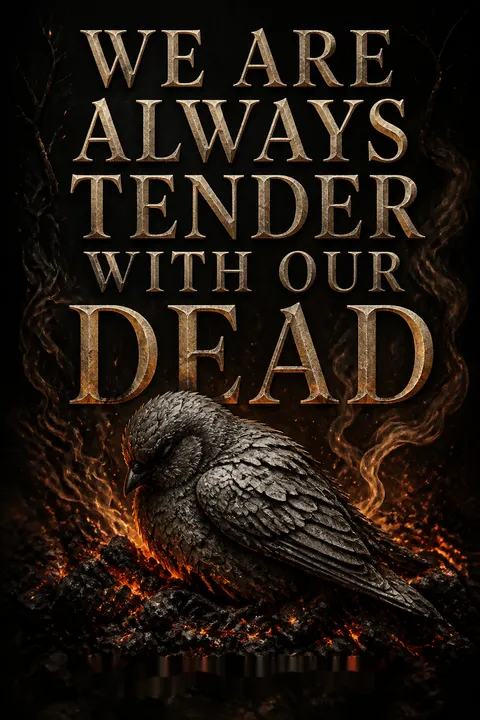
Rupert discovers a black bird with a human infant's face in the woods—a monstrous byproduct of his own secret shame and the town's supernatural blight. He attempts to care for the creature, but it ultimately dies, crumbling to ash. The bird symbolizes the consequences of suppressed desire, guilt, and the unnatural cycles of violence that define Burnt Sparrow. Rupert's failure to nurture the creature mirrors his inability to heal himself or his relationships. The motif of unnatural birth and failed caretaking recurs throughout the novel, underscoring the theme of generational trauma.
Rituals and Thresholds
The town's history is marked by rituals—both sacred and profane—that attempt to ward off evil or make sense of suffering. The motif of the threshold recurs: doors, boundaries, and the act of crossing from one state to another. Whistling when passing through doorways becomes a talisman against supernatural harm, a practice rooted in folk tales and personal tragedy. The inability to cross thresholds—literal and figurative—traps characters in cycles of pain and prevents them from achieving transformation or escape. The novel interrogates the power and futility of ritual in the face of overwhelming horror.
The Town's Dark History
Interspersed throughout the narrative are accounts of Burnt Sparrow's past: faceless infants found in the mill, unexplained disappearances, and ritual sacrifices. The town's founding is linked to a supernatural bird, and its history is a litany of unexplained deaths and collective amnesia. These stories reinforce the sense that Burnt Sparrow is cursed, its suffering both inherited and self-perpetuating. The community's refusal to acknowledge or break from its past ensures that each generation is doomed to repeat the same patterns of violence and repression.
Necrophilia and Betrayal
Rupert's father, driven by grief and longing, steals the corpse of a young woman from Main Street and engages in necrophilic acts. Rupert discovers the truth and is forced to choose between protecting his father and exposing his crime. The town elders respond with swift and brutal justice, executing Rupert's father by drowning and exiling Rupert to End House. The episode exposes the depths of human depravity and the community's capacity for both cruelty and hypocrisy. Rupert's complicity and subsequent orphaning mark a turning point in his descent into isolation and despair.
Executions and Exile
With his father dead, Rupert is taken in by the Esherwoods, becoming both a guest and a prisoner. End House is a labyrinth of secrets, its cellar a site of ongoing torture and its inhabitants bound by invisible chains of guilt and obligation. Rupert's sense of self erodes as he is drawn into the rituals of violence and control that define his new home. Gladys, too, is trapped—by her marriage, her love for Veronica, and her inability to act. The house becomes a crucible where the characters' traumas are both magnified and contained.
Orphaned and Collected
At End House, Rupert is both cared for and objectified, another addition to Cyril's collection of broken things. He is excused from school and conscripted into the ongoing torment of the faceless family. His interactions with the faceless teenage boy are fraught with pity, desire, and confusion. The boundaries between victim and perpetrator blur, and Rupert's identity becomes increasingly unstable. The house's rituals of violence and caretaking mirror the town's larger dynamics, trapping Rupert in a cycle of complicity and longing.
Cellar of Suffering
Rupert is forced to participate in the torture of the faceless family, slicing their flesh and witnessing their miraculous healing. He develops a strange bond with the faceless teenager, oscillating between attraction and revulsion. The cellar becomes a space where the limits of empathy and cruelty are tested, and where the possibility of redemption flickers and fades. Rupert's inability to hate the faceless boy, despite his crimes, reflects the novel's ambivalence about the nature of evil and the possibility of forgiveness.
Pity for Monsters
When a grieving father is given the chance to exact revenge on the faceless family, he finds himself unable to inflict further harm, recognizing the pointlessness of endless suffering. The town elders, frustrated by the failure of torture to provide closure, decide to abandon the family in the cellar to die. Rupert, moved by pity and a sense of kinship, frees the prisoners, only to discover that he himself is now bound to End House by a supernatural curse. The act of mercy becomes another form of imprisonment, and the cycle of suffering continues.
The Failed Escape
Rupert's attempt to liberate the faceless family results in their disappearance and his own entrapment. When Cyril Esherwood tries to pursue them, he is destroyed by the same supernatural force that binds the house, his body disintegrating into ash. Rupert and Gladys are left alone, unable to cross the threshold or escape the legacy of violence that defines their existence. The house becomes a tomb, and the possibility of transformation or redemption is foreclosed.
Stories in the Dark
In the aftermath, Rupert and Gladys sit together at the threshold, sharing stories as darkness falls. Rupert tells a tale of love, violence, and the longing to be understood—a reflection of his own journey and the novel's central themes. The act of storytelling becomes both a comfort and a curse, a way to make sense of suffering but also a reminder of the thresholds that can never be crossed. The novel ends with the characters suspended in liminality, haunted by the past and unable to move forward, as darkness settles over Burnt Sparrow once more.
Analysis
A meditation on trauma, complicity, and the impossibility of escapeWe Are Always Tender With Our Dead is a harrowing exploration of the ways in which violence, grief, and repression become woven into the fabric of a community. Through its depiction of Burnt Sparrow—a town haunted by supernatural and psychological afflictions—the novel interrogates the cycles of trauma that bind individuals and collectives alike. The preservation of the dead, the torture of the faceless family, and the rituals that govern daily life all serve as metaphors for the ways in which suffering is both inherited and perpetuated. The characters' struggles to connect, to escape, or to transform are continually thwarted by fear, guilt, and the weight of history. The novel's refusal to offer easy redemption or closure is both its horror and its power: it insists that the costs of survival are borne in silence, complicity, and the endless repetition of pain. In the end, storytelling itself becomes both a comfort and a curse—a way to make sense of suffering, but also a reminder of the thresholds that can never be crossed. The lesson is bleak but resonant: in a world defined by violence and loss, tenderness is both a necessity and an impossibility, and the dead—literal and figurative—are always with us, demanding our attention, our care, and our complicity.
Review Summary
We Are Always Tender With Our Dead receives mixed reactions (3.35/5). Readers praise LaRocca's unique, brutal writing style and disturbing atmosphere in this first Burnt Sparrow trilogy installment. The story follows a Christmas massacre in small-town New Hampshire by faceless killers, exploring themes of gun violence, trauma, and American horror. Many found the extreme content (incest, necrophilia, violence) gratuitous rather than purposeful. The disjointed narrative and lack of resolution frustrated some, though others appreciated the ambiguity and compelling mysteries. Character development, particularly protagonist Rupert, divided readers. Fans eagerly await book two despite confusion.
People Also Read
Characters
Rupert Cromwell
Rupert is the novel's protagonist, a seventeen-year-old boy marked by grief, alienation, and a profound sense of liminality. His mother's death has left him emotionally closed off, and his relationship with his father is fraught with misunderstanding and unspoken longing. Rupert's queerness and sensitivity set him apart in a town that punishes difference. He is both a victim and a reluctant participant in the town's rituals of violence, forced to become a "Preserver" and later a torturer at End House. Rupert's psychological journey is one of failed thresholds: he yearns for escape, connection, and meaning, but is continually thwarted by fear, guilt, and the supernatural forces that bind Burnt Sparrow. His compassion for the faceless boy and his inability to hate even those who have harmed him reflect the novel's ambivalence about the nature of evil and the possibility of redemption.
Rupert's Father (Edmond Cromwell)
Once a diligent worker and loving husband, Rupert's father is undone by his wife's death and the town's relentless misfortune. His attempts to connect with Rupert are clumsy and often misguided, and his descent into necrophilia is both a symptom of his grief and a manifestation of the town's pervasive rot. He becomes obsessed with a dead woman's body, seeking solace and meaning in her lifelessness. His eventual execution by the town elders is both a punishment for his transgressions and a reflection of the community's own hypocrisy and cruelty. His relationship with Rupert is defined by missed opportunities, unspoken love, and the tragic impossibility of true understanding.
Gladys Esherwood
Gladys is Cyril Esherwood's wife, a woman suffocated by her marriage and the expectations of her community. Her affair with Veronica is a rare source of tenderness and agency, but she is ultimately unable to escape the gravitational pull of End House and her own fears. Gladys's complicity in the house's rituals of violence is tempered by moments of pity and resistance, particularly in her interactions with Rupert and the faceless family. Her longing to be understood and her inability to act decisively reflect the novel's central themes of paralysis and the costs of survival in a world that punishes vulnerability.
Cyril Esherwood
Cyril is the patriarch of End House and the embodiment of Burnt Sparrow's pathology. His obsession with power, collection, and the infliction of pain is rooted in his own history of abuse and forbidden desire, as revealed in his childhood journal. Cyril's need to dominate others—whether through torture, sexual violence, or emotional manipulation—is both a defense against his own vulnerability and a perpetuation of the cycles of trauma that define the town. His eventual destruction by the supernatural forces he sought to control is both poetic justice and a warning about the dangers of unchecked cruelty.
Veronica
Veronica is Gladys's maid and lover, a young woman who offers Gladys a glimpse of a different life. Her devotion is both a source of strength and a potential trap, as she struggles with the limits of her own agency and the risks of defying Cyril. Veronica's decision to leave End House is an act of self-preservation, but it is also a painful acknowledgment of the impossibility of true freedom in Burnt Sparrow. Her relationship with Gladys is one of mutual need, tenderness, and the bittersweet knowledge that love alone cannot overcome the forces that bind them.
The Faceless Family
The mother, father, and teenage son who perpetrate the Christmas Day massacre are both monstrous and pitiable. Their facelessness renders them objects of projection, rage, and fascination for the townspeople. Their silence and resilience in the face of endless torture unsettle their captors, raising questions about the nature of evil, suffering, and the limits of vengeance. The teenage boy, in particular, becomes a focus of Rupert's empathy and desire, complicating the boundaries between victim and perpetrator. The family's ultimate fate—disappearing into the night, leaving a curse behind—reinforces the novel's themes of contagion, inheritance, and the impossibility of closure.
Mr. Patefield
Mr. Patefield is one of the town's elders, a figure of authority who oversees the rituals of preservation, punishment, and control. He is both a functionary and a sadist, enforcing the community's rules with a mix of detachment and relish. His interactions with Rupert and the other characters reveal the ways in which power is maintained through ritual, secrecy, and the manipulation of collective trauma. Patefield embodies the town's refusal to confront its own complicity in the cycles of violence that define Burnt Sparrow.
Mr. Carmichael
Another elder, Mr. Carmichael is instrumental in the punishment of Rupert's father and the enforcement of the town's codes. He is both a guardian of tradition and a participant in the very transgressions he claims to abhor. His role in the execution of Rupert's father and the management of the faceless family's captivity highlights the ways in which authority is both arbitrary and absolute in Burnt Sparrow.
The Bird with a Human Face
The grotesque bird discovered by Rupert is both a literal and metaphorical offspring of trauma, shame, and supernatural blight. Its brief, miserable existence and ultimate disintegration mirror the failures of caretaking, the consequences of suppressed desire, and the town's inability to nurture or transform its suffering. The bird's presence haunts Rupert, serving as a reminder of the costs of complicity and the impossibility of innocence in Burnt Sparrow.
The Town Elders
The collective body of elders—dressed in purple, presiding over rituals, and enforcing punishment—embody the town's refusal to change or confront its own darkness. They are both the architects and the prisoners of Burnt Sparrow's cycles of suffering, maintaining order through cruelty, secrecy, and the manipulation of collective memory. Their actions reveal the ways in which communities can become complicit in their own destruction, sacrificing individuals for the illusion of safety and meaning.
Plot Devices
Ritualized Violence and Preservation
The novel's structure is built around the repetition of ritualized violence: the preservation of corpses, the torture of the faceless family, the execution of transgressors, and the maintenance of supernatural boundaries through folk practices like whistling at thresholds. These rituals serve both to contain and perpetuate trauma, transforming individual suffering into collective spectacle. The preservation of the dead becomes a way for the community to avoid confronting its own complicity, while the endless torture of the faceless family is both a catharsis and a curse. The motif of the threshold—literal doorways, moments of transition, and the inability to cross from one state to another—structures the narrative, symbolizing the characters' paralysis and the town's entrapment in cycles of pain.
Supernatural Contagion and Curses
The supernatural elements of the novel—facelessness, miraculous healing, the bird with a human face, and the curse that binds characters to End House—function as metaphors for the transmission of trauma, guilt, and violence across generations. The town's history is marked by unexplained disappearances, faceless infants, and ritual sacrifices, suggesting that suffering is both inherited and self-perpetuating. The inability to escape or transform one's fate is reinforced by the supernatural consequences of transgression: those who attempt to leave or break the cycle are destroyed or trapped, ensuring that the legacy of pain continues.
Fragmented Narrative and Embedded Stories
The novel employs a fragmented structure, interweaving diary entries, historical accounts, and embedded stories within the main narrative. This multiplicity of voices and perspectives creates a sense of disorientation and ambiguity, reflecting the characters' fractured identities and the town's collective amnesia. The act of storytelling becomes both a means of survival and a source of further entrapment, as characters struggle to make sense of their experiences and find meaning in suffering. The use of embedded stories—such as the tale of whistling at thresholds—serves to reinforce the novel's themes and provide moments of reflection and respite amid the horror.
Foreshadowing and Liminality
The novel is suffused with a sense of impending catastrophe, achieved through foreshadowing, recurring motifs, and the constant invocation of thresholds and boundaries. Characters are repeatedly placed at the edge of transformation or escape, only to be thwarted by fear, guilt, or supernatural intervention. The motif of the threshold—both as a place of potential and a site of paralysis—structures the narrative, reinforcing the sense that true change is impossible in Burnt Sparrow. The ending, with Rupert and Gladys suspended at the threshold as darkness falls, encapsulates the novel's central preoccupation with liminality and the costs of survival.
Download PDF
Download EPUB
.epub digital book format is ideal for reading ebooks on phones, tablets, and e-readers.








































