
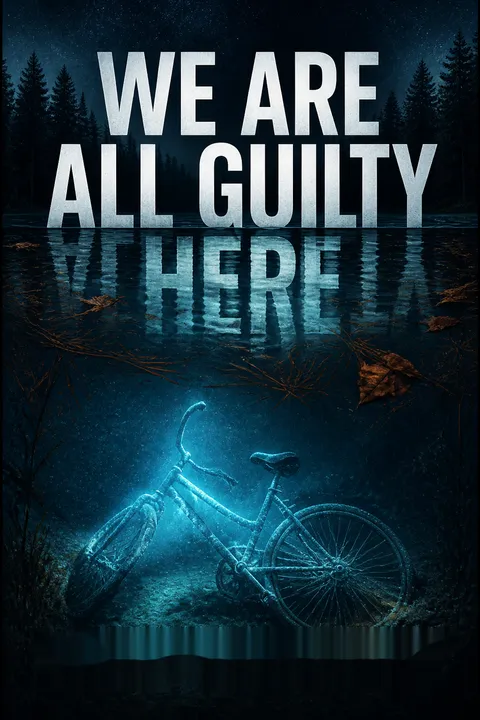


Plot Summary
Fireworks Mask a Scream
On her fifteenth birthday, Madison Dalrymple7 waits under an oak tree at North Falls' Fourth of July celebration for Cheyenne Baker,8 her best friend, who is dangerously late. They've spent months planning a joyride in Cheyenne's8 father's car — a small rebellion before their bigger scheme to escape this Georgia town in September.
Emmy Clifton,1 a sheriff's deputy and close to Madison's7 stepmother Hannah,4 approaches with a well-meaning lecture. Madison7 brushes her off. As fireworks split the sky, a car rolls onto the darkened soccer field.
Madison7 spots Cheyenne's8 blue bicycle jammed in the trunk and sprints toward it — only to discover Cheyenne8 bound, gagged, beaten, and screaming behind duct tape. When the next explosion illuminates the field, Madison7 sees the face of the man standing behind her.
Two Bikes, No Riders
After the fireworks, Emmy1 and her father Gerald2 — the seventy-four-year-old sheriff of Clifton County — share an instinct they call the tickle: something terrible has happened. On the freshly sodded soccer pitch, they find Madison's7 bicycle crushed under an SUV's tire and, hidden among the trees, Cheyenne's8 bike thrown with enough force to chip bark from a pine.
Beside it lies Madison's7 iPhone, shattered to pieces, and a saturating pool of blood that indicates a gunshot wound. Tire impressions from a sedan trace across the new turf, confirming a second vehicle broke through the caution tape during the display.
Gerald2 declares what Emmy1 already knows: this is a kidnapping. The clock begins its merciless countdown. In predatory abductions of children, forty-four percent of victims are killed within the first hour.
The Closet Above the Closet
Inside Cheyenne's8 bedroom, Emmy1 finds a lockbox behind shoes in the closet containing five thousand dollars in crisp fifty-dollar bills, bags of weed, and a strip of photo-booth pictures showing Cheyenne8 kissing Madison7 somewhere between the cheek and the lips.
But it's Cheyenne's8 ten-year-old sister Pamela who leads Emmy1 to the real stash. She points upward. Behind the attic access panel, Emmy1 pulls down a freezer bag holding another eleven thousand in cash, birth control pills, cocaine, and Molly.
When Emmy1 asks if Cheyenne8 has a boyfriend, Pamela whispers a name: Jack. The revelation shatters every assumption. This is not a random abduction. Cheyenne8 was entangled in drugs, sex, and money that no fifteen-year-old should have touched — and someone powerful was orchestrating it.
Hannah Shuts the Door
Emmy1 has been dreading this moment. She tells Hannah4 the truth: when Madison7 stood waiting at the top of the hill, clearly desperate to talk, Emmy1 had brushed her off — too upset about a public fight with her husband Jonah22 to listen. She'd hidden in a portable toilet while Madison7 went looking for Cheyenne8 alone. Hannah's4 rage is nuclear.
She catalogs every time Emmy1 chose Jonah22 over their friendship — the missed conversations, the blown budgets, the lies, the car he totaled, the pregnancy he cheated through, the stairs he pushed her down. The cruelest observation cuts deepest: she and Paul21 had laughed at Emmy1 for being a badass cop who rolled over the moment she got home. Hannah4 orders Emmy1 out of her house and out of her life forever.
The Chorus Teacher's Secret
Emmy1 discovers suggestive photos of both girls taped inside Cheyenne's8 school locker — matching lingerie, posed on a bare mattress — alongside a fully nude image of Cheyenne.8
When chorus teacher Dale Loudermilk11 stops at the open locker, Emmy1 watches on the security monitor as he stares at the nude photo for nearly thirty seconds without a trace of emotion. He heads to the auditorium. Emmy1 follows. In the stage manager's office, Dale11 pulls a laptop from behind a filing cabinet and begins copying files onto a thumb drive.
The folder labeled Sacred Concertos contains 968 photographs of exploited girls aged nine to eleven, indexed alphabetically by name. Dale11 is arrested, but during hours of FBI interrogation, he insists the laptop isn't his and never confesses to the kidnapping.
The Perv Has a Name
Emmy's1 great-aunt Millie20 has been calling all day. When Emmy1 finally rings back, the old woman is furious. She hired a man named Adam Huntsinger9 to repair her retaining wall, and she saw him that very morning sitting by her pond with Madison7 — both smoking, feet in the water.
But it was a girl who'd knocked on Millie's20 door weeks earlier, asking for someone called the Perv, that brands the connection. Adam9 is forty-nine, a small-time pot dealer who hangs around high schoolers. Emmy1 and Gerald2 race to his parents' house in the countryside.
In the driveway, Emmy1 examines the black Jetta belonging to Adam's9 father Walton,10 a town dentist. The left bumper bears a scuff consistent with striking a bicycle tire. Outside Adam's9 basement apartment, Cheyenne's8 gold necklace lies in the grass.
Two Broken Angels
Gerald2 sends Emmy1 to the hospital for injuries sustained smashing through Walton's10 equipment shed in a frantic search for Madison.7 She defies him. Driving the backroads alone, she realizes what's been in front of her all along: Millie's pond is isolated, accessible, the perfect place to submerge a body.
At the water's edge, something floats at the center — light blue cotton, the same shade as Madison's7 T-shirt. Emmy1 dives in fully clothed, swims to the middle, and turns Madison's7 bloated face from the water.
Beneath the surface, Cheyenne8 is chained to a concrete block, a bullet hole centered in her forehead. Emmy1 drags both girls to the shallows and collapses. Her great-aunt appears on the retaining wall. They look like two broken angels, Millie20 whispers.
Adam Returns, Paisley Vanishes
Adam Huntsinger9 served a decade on death row until a true-crime podcast and an untested rape kit gave him an alibi and a pardon. Emmy1 divorced Jonah,22 raised Cole5 into a sheriff's deputy, and nursed her parents through parallel declines — Myrna12 lost to late-stage Alzheimer's, Gerald2 quietly dying of metastatic liver cancer.
Gerald2 had been pressuring Emmy1 to succeed him as sheriff. Then one morning, everything collapses: Gerald2 arranges for Myrna's12 transfer to a care facility. Minutes later, a call comes in.
A fourteen-year-old named Paisley Walker14 left for school on her bicycle and never arrived. Her bike was found on the same backroads where Cheyenne8 was taken twelve years earlier — rear tire bent, chain broken, blood at the scene. The pattern is unmistakable.
The Bullet Meant for Emmy
A mob has gathered outside the Huntsinger house, screaming for Adam's9 blood. Gerald2 enters alone to speak with Adam,9 then emerges, frail and winded. As he leans against the mailbox, Hannah4 suddenly screams her husband's name. Emmy1 turns and sees Paul Dalrymple21 aiming a Smith & Wesson revolver at her chest. Hannah4 lunges for the weapon. The gun fires.
The bullet misses Emmy1 and tears into Gerald.2 Emmy1 drops to her knees, presses her hands over the wound, begs him to hold on. His blood pulses through her fingers. With his last breaths, Gerald2 whispers for Emmy1 to call the FBI, then asks her to tell her mother he's sorry. Cole5 arrives running down the street, his duty vest unstrapped — exactly as Emmy1 had warned him not to wear it.
Martha Rises from the Dead
In San Francisco, retired FBI Special Agent Jude Archer3 — formerly Martha Judean Clifton — sees the Paisley Walker14 alert and the photograph of Emmy1 leaning over Gerald's2 body.
Jude3 spent twenty-seven years hunting missing children, most notably breaking serial killer Freddy Henley and recovering all twelve of his victims from the California wilderness. Gerald2 had told Emmy1 and Tommy15 a year earlier that Martha was alive; he'd faked her death four decades ago after she nearly killed a man in a drunk driving crash.
Jude3 boards a red-eye to Georgia. At three in the morning, she appears at the funeral home where Gerald's2 body lies. Tommy15 recognizes his long-lost sister immediately. Emmy1 sees them together, registers who Jude3 is, and walks out without a word.
Jude Breaks Elijah Walker
Jude3 walks into her first North Falls interrogation with the swagger of a career agent and the precision of a scalpel. Paisley's14 father Elijah23 has been hiding an affair — his unlocked phone contains explicit photos of body parts that aren't his.
Jude3 confronts him with the images, threatens a press conference, and within minutes Elijah23 admits to paying a woman for sex at a seedy motel in Clayville. His affair doesn't connect to Paisley's14 disappearance, but it exposes his controlling nature: his obsession with how Paisley14 dresses, his belief that girls invite their own harm.
Emmy1 watches Jude3 work and grudgingly concedes her sister's skill. Their investigation clears Paisley's14 parents and her uncle, leaving only the worst possibility: a predatory stranger took this child.
Emmy Returns to Hannah
Emmy1 badges herself into the women's isolation block and sits on the cold concrete floor across from Hannah's4 cell. They haven't spoken since the night Hannah4 threw her out. The reunion is cautious — a crack about maid service, a shared memory of Madison's7 defiant sunburn, a confession that Hannah4 filed for separation from Paul21 two months ago.
Emmy1 admits she cannot bring herself to read the letter Gerald2 was writing the morning he died. What goes unspoken is equally important: Emmy1 knows the jail cameras are recording.
By joking and laughing with a suspected cop killer on camera, she deliberately taints herself as a prosecution witness — making it impossible for the district attorney to use her testimony against Hannah.4 It is the quietest, most deliberate act of love Emmy1 has ever performed.
The Rapist and the Agent
Jude3 cakes on eyeliner and dark lipstick, transforming herself into the washed-up version of Martha that Adam9 would expect. She enters the bar where he raped her when she was fifteen — the same bar now owned by Emmy's1 ex-husband Jonah.22
Over a triple of Jack Daniel's that Jude3 pushes across the counter but never touches, Adam9 gets drunk enough to admit the truth: he traded weed for oral sex with Cheyenne,8 never touched Madison,7 and served as a convenient scapegoat.
When Jude3 tells him she's the girl he raped in this very room, his denial is reflexive but hollow. The whiskey strips away his defenses. He insists he never killed anyone — and for the first time, Emmy's1 sister believes him. He's a rapist and a dealer. But perhaps not the murderer.
The Odometer Doesn't Lie
While reviewing old evidence in the conference room, Cole5 spots a detail everyone missed: an oil change sticker on Dale Loudermilk's11 wife's Audi shows a mileage discrepancy of 690 miles — far too many for the two days between the service and the abduction.
Emmy1 calculates the distance: 345 miles each way matches a drive to the Northwest Alabama Airport in Muscle Shoals, which offers daily flights to Bridgeport, West Virginia — exactly where Walton10 claimed to be volunteering with his dental charity.
The theory crystallizes: Walton10 drove the Audi to Alabama, flew to West Virginia using Adam's9 driver's license, snapped a selfie to fabricate his alibi, flew back, then drove home in time to help abduct the girls. Adam's9 own father engineered his son's conviction.
The Red Bulldogs Wallet
Emmy1 enters Walton's10 kitchen where a drunk Adam9 sits with a bloody hammer, a shotgun, and a bottle of Jack Daniel's. Adam9 called 911 claiming someone planted the hammer — caked with old blood and new — in his truck.
After Adam9 is arrested and his pockets emptied, Emmy1 interviews Walton,10 who performs his bumbling-grandfather routine while steering blame toward his son. Then she spots it among Adam's9 belongings on the counter: a red Georgia Bulldogs wallet. The same wallet she saw sticking out of Walton's10 suitcase twelve years ago.
Inside is Adam's9 expired driver's license, the photo close enough to his father's face that no airport clerk would question it. Walton10 has been traveling under his son's name for years, committing crimes traced back to Adam's9 identity.
The Mentor Behind the Murders
At Virgil Ingram's6 house to retrieve old case files, Emmy1 opens a box of phone records and finds something wrong. None of the pages bear the department's required evidence stamps. White-Out covers phone numbers throughout, with new digits inked over them.
She scratches the correction fluid and recognizes the original number: it belongs to Virgil6 himself. He'd been calling Walton Huntsinger10 constantly around the Fourth of July and altered the records to hide the connection.
Inside a rusted first aid kit on the wall, Emmy1 discovers sixteen small bags containing girls' jewelry — trophies spanning years — and Cheyenne Baker's8 Nokia flip phone with its miniSD card intact. The man who taught Emmy1 to be chief deputy, who stood beside Gerald2 for decades, was the architect of everything.
Sixteen Rounds, One Pulse
Virgil6 appears in the doorway holding the .22 Ruger pistol that killed Cheyenne.8 He confesses with the casualness of a man recounting a fishing trip — how he groomed Cheyenne8 at the outlet mall, how he wanted Emmy1 too. He aims the gun at her head. Emmy1 kicks the box behind her. In the split second his eyes drop, she draws her Glock and fires until the magazine empties, sixteen rounds shredding through his body from foot to chest.
His single shot punches her armored vest. Then she runs to his barn, tears through hay bales stacked four deep as soundproofing, and finds Paisley Walker14 in the hidden space behind them — unconscious, hands and feet shattered, but with a pulse still beating against Emmy's1 fingertips. The girl is alive.
Walton's Seven-Hour Confession
Jude3 interrogates Walton10 for seven hours with the same impassive calm she perfected over two decades sitting across from serial killer Freddy Henley. Walton10 crumbles. He describes the mechanics: Virgil6 selected victims, Walton10 provided logistics and participated, Dale Loudermilk11 supplied his wife's car and stayed home.
On the night of the Fourth, Virgil6 beat Cheyenne8 for hours in Walton's10 shed trying to recover the miniSD video card that could have exposed them all. When she finally gave up Madison's7 location, they drove to the park together.
Walton10 describes the torture of Madison7 with the hammer — the vibration of bones breaking through the wooden handle — with a detachment that makes the confession more horrifying than rage ever could. Emerging evidence links the pair to additional victims across multiple states.
Epilogue
Twelve days after Gerald's2 death, Jude3 visits Myrna12 at the care facility. Her mother is awake but looks through her with the polite blankness of someone meeting a stranger. Millie20 confronts Jude3 privately about the deepest Clifton secret: Jude3 is not Emmy's1 sister.
She is Emmy's1 birth mother — a teenage addict who left her newborn with Gerald2 and Myrna12 four decades ago under a pact that she would never return while they were alive. Jude3 decides the truth would serve no one but herself. When Emmy1 arrives, she shares Gerald's unfinished letter: three words after the salutation.
Emmy1 believes the missing word is sorry — an apology to Jude.3 Jude3 believes it's proud — a message to Emmy.1 Neither will ever know. Taybee17 texts about a family potluck. Emmy1 asks if Jude3 can handle deviled eggs. They agree to use Myrna's12 recipes.
Analysis
We Are All Guilty Here interrogates who we trust and why. Slaughter constructs a world where every institutional pillar — law enforcement, the church, medicine, education — harbors a predator who hides precisely because the community needs to believe its institutions are sound. The title is not metaphorical. Every character participates in the ecosystem that enables abuse: parents who police their daughters' bodies rather than the men who threaten them, a town that tolerates a man called the Perv, a sheriff's department that trusts its own so completely that evidence tampered in plain sight goes unexamined for over a decade.
Emmy's1 central wound — dismissing Madison7 to cry about Jonah22 in a portable toilet — is the novel's thesis in miniature. A woman trained by her abuser to prioritize his emotions over everything becomes complicit in harm done to the next generation. Hannah4 diagnoses this with surgical precision: Emmy1 is addicted to Jonah's22 brokenness because she cannot repair her own family. When Emmy1 finally divorces Jonah,22 she replicates the same avoidant pattern with Dylan,13 with Hannah,4 with her dying parents. The famed Clifton composure is not stoicism — it is generational trauma costumed as competence.
The dual-timeline structure mirrors Emmy's1 psychological evolution. The first investigation follows a young deputy who defers to her father and mentor; the second follows a bereaved woman who must lead alone and discovers that both men were never who she believed. Jude's3 arrival introduces the radical possibility that transformation is real — that the family's most damaged member could become its most accomplished. But Slaughter refuses sentimentality. Jude3 withholds her deepest secret. Gerald's letter remains unfinished. The damage inflicted on Madison,7 Cheyenne,8 and Paisley14 cannot be reversed. What the novel offers instead is harder: that knowing who is guilty does not make anyone innocent, and that healing begins not with answers but with the willingness to sit beside someone in silence and begin again.
Review Summary
We Are All Guilty Here receives high praise from readers, with many calling it a gripping, emotional thriller. Set in a small town, it follows Officer Emmy Clifton investigating the disappearance of two teenage girls. Readers appreciate the well-developed characters, intricate plot, and Slaughter's ability to create tension. Some found the pacing slow at times, but most were captivated by the twists and revelations. The book deals with dark themes, earning trigger warnings. As the start of a new series, it has left readers eager for the next installment.
People Also Read

Characters
Emmy Clifton
Sheriff's daughter turned sheriffDeputy, then chief deputy, then acting sheriff of Clifton County, Georgia, and daughter of the longtime sheriff, Gerald2. Emmy carries the composure of Clifton lineage but beneath it runs a current of guilt that shapes every relationship. She married her high school sweetheart Jonah22—a failing musician who eroded her sense of self through years of emotional abuse—before finally divorcing him. Her best friend since kindergarten is Hannah4, whose stepdaughter Madison7 becomes a focal point of their bond. Emmy is a deeply capable investigator with sharp instincts, but her tendency to defer to the men around her masks a fierce independence that surfaces only under extreme duress. She mothers her son Cole5 with the protective ferocity of someone who understands what the world does to the vulnerable. Her deepest fear is not danger—it is failing the people who need her.
Gerald Clifton
The stoic sheriff patriarchSheriff of Clifton County for over five decades, Gerald is a man of few words and penetrating silences. A reformed alcoholic who got sober when Emmy1 was a baby, he rebuilt himself into the patient, principled father his older children never knew. He teaches Emmy1 to be a cop not through lectures but through guided discovery—asking questions until she finds the answer herself. His stoic exterior conceals profound regrets about mistakes made in his younger years, when rigidity and alcohol cost him relationships he could never repair. Gerald's instinct for danger, which he calls the tickle, is legendary among his officers. He loves his wife Myrna12 with a devotion that has survived decades of her sharp tongue, and he loves Emmy1 as the redemption of his life.
Jude Archer
FBI agent and lost sisterAn FBI special agent who spent twenty-seven years specializing in missing and kidnapped children, most notably breaking serial killer Freddy Henley and recovering all twelve of his victims from the California wilderness. Born Martha Judean Clifton, she was presumed dead for over four decades after a drunk driving crash and family crisis forced her to flee North Falls as a teenager. Beneath the leather jacket and smoky eyeliner lies one of the sharpest criminal minds in federal law enforcement—a woman who can sit across from psychopaths without flinching because she learned to mirror their detachment as a survival mechanism. Sober for nearly forty years, Jude is driven by a private grief she channels into bringing lost children home. Her return to Clifton County carries the weight of secrets that could reshape every relationship she touches.
Hannah Dalrymple
Emmy's estranged best friendEmmy's1 best friend since kindergarten and a schoolteacher who became stepmother to Madison7 when she fell in love with the girl's widowed father, Paul21. Hannah poured herself into mothering Madison7 with the fierce devotion of someone who needed no biological claim to feel a parent's love. She is darkly funny, brutally honest, and the only person in Emmy's1 life willing to name the dysfunction in her marriage. Hannah's capacity for love is matched by her capacity for rage—when she feels betrayed, the wound is absolute. Her relationship with Emmy1 is the emotional spine of the novel: built on decades of shared secrets, tested by catastrophe, and fractured by the kind of truth that only people who truly know each other can deliver.
Cole Clifton
Emmy's deputy sonEmmy's1 twenty-three-year-old son and a newly minted sheriff's deputy. Cole inherited his father Jonah's22 easy charm without the selfishness, and his grandfather Gerald's2 investigative instincts without the emotional armor. He changed his surname to Clifton to honor Gerald2—a choice that enraged Jonah22. Sharp-eyed and eager to prove himself, Cole struggles with the weight of family legacy while navigating his own identity.
Virgil Ingram
Gerald's trusted chief deputyGerald's2 chief deputy and Emmy's1 mentor in law enforcement. A meticulous career lawman who prizes procedure and record-keeping, Virgil served beside Gerald2 for decades and helped train Emmy1 after she joined the force. Married to Peggy, a horseman and churchgoer, he presents as the model of small-town reliability—the steady hand that keeps the department running behind the scenes.
Madison Dalrymple
Kidnapped stepdaughter of HannahA fifteen-year-old North Falls girl whose nerdy, introverted nature was transformed by her friendship with Cheyenne Baker8. Madison is Paul21 and Hannah's4 stepdaughter, motherless since age seven. Beneath her sullen defiance lies a frightened child desperate for connection—clever enough to keep secrets, prickly enough to push away people trying to help, and brave enough to follow her friend into danger.
Cheyenne Baker
Madison's bold best friendMadison's7 best friend, a flashy transplant from Iowa whose arrival in Clifton County changed Madison's7 trajectory. Cheyenne is the dominant personality—the one who teaches Madison7 to flirt, rebel, and dream of escape. Behind her confident façade, she navigates strict, controlling parents and manages a dangerous double life involving drugs and older men that she cannot control.
Adam Huntsinger
The town's suspected predatorA forty-nine-year-old small-time pot dealer known to local teenagers as the Perv for his habit of hanging around high schoolers. Adam lives in his parents' basement, drifts between odd jobs, and has a rap sheet filled with petty offenses. Convicted and sentenced to death for the murders of Cheyenne8 and Madison7, he maintains his innocence with a fury that few people take seriously.
Walton Huntsinger
The beloved town dentistAdam's9 father, a dentist beloved in Clifton County for his volunteer dental charity work in underserved communities across the country. Walton projects warmth, helpfulness, and civic virtue. His wife Alma's progressive blindness has made him her sole caretaker—a role that elicits universal sympathy and shields him from scrutiny. His bumbling, earnest demeanor conceals a mind that calculates every word.
Dale Loudermilk
Chorus teacher and pedophileNorth Falls High School's chorus teacher, a condescending man who ran his classroom like a drill sergeant. Dale had both Madison7 and Cheyenne8 in his choral program and regularly drove students home from practice. Arrested for possessing nearly a thousand images of child pornography on a hidden school laptop, he maintains the images were planted and refuses to cooperate with investigators.
Myrna Clifton
Sharp-tongued matriarch fading awayEmmy's1 mother, a retired English teacher whose sharp intellect and sharper tongue defined the Clifton household for decades. Diagnosed with Alzheimer's, Myrna spent six years declining from a woman who corrected grammar mid-argument to one who cannot recognize her own children. Her rare flashes of lucidity—a pun, a correction—are devastating reminders of the formidable mind that once kept everyone on their toes.
Dylan Alvarez
Emmy's patient love interestA former school resource officer turned family law attorney who becomes Emmy's1 love interest after her divorce from Jonah22. Dylan is patient, perceptive, and unflinchingly kind—qualities that both draw Emmy1 to him and make her feel unworthy. He understands her avoidance better than she does, and his willingness to wait creates a stability she has never known and does not entirely trust.
Paisley Walker
The second missing girlA fourteen-year-old North Falls girl who loves chemistry, Taylor Swift, and reading. Paisley's disappearance from the backroads twelve years after Cheyenne8 and Madison7 echoes the original case with chilling precision. Raised by a controlling father and a submissive mother, she is bright and cheerful but increasingly constrained by a household where daughters dress to please fathers and questions are unwelcome.
Tommy Clifton
Emmy's gentle older brotherEmmy's1 older brother, a high school history teacher. Gentle and conflict-averse, Tommy bridges the gap between Clifton generations with quiet loyalty and a lifelong refusal to confront uncomfortable truths about his family.
Celia Clifton
Blunt vice principal truth-tellerTommy's15 wife and a high school vice principal. Blunt, opinionated, and fiercely protective of Emmy1 and Cole5. Celia is the family's truth-teller and Jude's3 childhood best friend—the one person willing to call out dysfunction directly.
Taybee Clifton-Clifton
Wealthy cousin crisis managerEmmy's1 wealthy cousin, a powerhouse attorney with OCD who manages family crises with spreadsheets and military precision. She quietly solves problems others cannot see, particularly around Emmy's1 childcare and logistics.
Jack Whitlock
Podcaster and provocateurDr. Carl Whitlock's son, a formerly unpopular teenager who created the Misguided Angel podcast. Jack leverages his proximity to the case for fame and uses personal relationships as transactional instruments.
Brett Temple
Ambitious but limited deputyA deputy in the sheriff's department with ambitions to replace Gerald2. Brett is reliable in small doses but lacks the instinct and leadership required for the position he covets.
Millie Clifton
The oldest living CliftonA ninety-two-year-old matriarch whose sharp tongue and photographic memory for grudges make her both infuriating and indispensable. Millie holds family secrets that others have long forgotten.
Paul Dalrymple
Madison's grief-destroyed fatherMadison's7 father and Hannah's4 husband. Once sweet and nerdy, Paul disintegrated into alcoholism after losing his daughter. His grief metastasized into rage directed at Emmy1 and her family.
Jonah Lang
Emmy's manipulative ex-husbandEmmy's1 ex-husband, a failed musician who weaponized charm and emotional manipulation throughout their marriage. Jonah's treatment of Emmy1 established the pattern of self-erasure that haunts her adult life.
Elijah Walker
Paisley's controlling fatherPaisley's14 father, an insurance broker whose controlling nature and secret affairs reveal a man who polices his daughter's body while failing to protect her from actual danger.
Plot Devices
The Nokia N93i Flip Phone
Evidence carrier and blackmail toolCheyenne's8 flip phone, inherited from her father, conceals a built-in video camera that she uses to secretly record her encounters with her abusers. The phone becomes the instrument of a dangerous blackmail scheme—and the motive for the killers to silence both girls permanently. Its confiscation at school triggers a chain reaction: the SIM card theft, the replacement burner, and the missing miniSD card that Cheyenne8 withholds as leverage. The killers spend hours trying to recover the card before murdering the girls. In the aftermath, the phone is kept as a trophy, and its eventual discovery becomes the key that unlocks the true conspiracy. Throughout the investigation, the Nokia remains the most sought-after and elusive piece of evidence.
The Backroads
Geographic thread linking victimsA network of unnamed dirt tracks crisscrossing between several farms in Clifton County, the backroads serve as the physical connector between every abduction in the novel. Cheyenne8 is struck by a car here. Twelve years later, Paisley Walker's14 bicycle is found on the same stretch. The roads are used by locals as shortcuts and by teenagers as paths to freedom—to Millie's pond, to the waterfall, to anywhere but here. Their isolation makes them both a liberation and a trap: wide open enough for a girl on a bicycle to feel free, narrow enough for a predator in a car to run her down. The backroads embody the novel's central irony that the places which feel safest are where the greatest danger hides.
Millie's Pond
Body disposal and recovery siteA spring-fed pond on Millie Clifton's20 seventy-acre property, deep enough at the center to submerge bodies and exposed enough that anything floating on the surface would eventually be seen. The killer chose it not for concealment but for display. Emmy1 intuits the location through deductive reasoning, driving along the same roads she and Hannah4 once biked as children. The pond becomes the novel's most devastating setting: Emmy1 dives in fully clothed, finds Madison7 floating face-down, discovers Cheyenne8 chained beneath her. The act of pulling both girls from the water defines Emmy's1 character and haunts her dreams for twelve years. The pond functions as both a grave and a taunt—a message that the killer was operating in plain sight all along.
Gerald's Unfinished Letter
Emotional resolution via ambiguityOn the morning of his death, Gerald2 was writing a letter on lined notebook paper. The entire text reads: Dear Daughter, I'm so— and then nothing. Emmy1 discovers it in his desk weeks later and shares it with Jude3. Emmy1 believes the missing word is sorry, an apology to Jude3 for banishing her decades ago. Jude3 believes the word is proud, Gerald's2 final message to Emmy1 about the woman she became. The letter's deliberate incompleteness creates an emotional resolution that refuses to be tidy. Neither sister will ever know the answer, and the ambiguity becomes its own form of grace—a father's love expressed not in the word he chose, but in the fact that he was writing at all.
The Perv Nickname
Misdirection toward AdamThe nickname given to Adam Huntsinger9 by local teenagers who knew him as a middle-aged man selling pot and hanging around high school parties. The Perv becomes the investigation's earliest lead when a student names him and Aunt Millie20 confirms his identity. The nickname functions as a self-fulfilling prophecy: because Adam9 looks like a predator, talks like a predator, and operates in the same spaces as predators, every piece of circumstantial evidence gravitates toward him. Meanwhile, the actual killers—men with professional titles and decades of community respect—remain invisible precisely because no one would ever think to call them that. The nickname crystallizes the novel's argument that society catches the obvious monsters while the real ones shelter behind respectability.
FAQ
Synopsis & Basic Details
What is We Are All Guilty Here about?
- Small Town's Dark Underbelly: We Are All Guilty Here plunges into the seemingly idyllic town of North Falls, Georgia, where the disappearance of two teenage girls, Madison Dalrymple and Cheyenne Baker, shatters its veneer of normalcy. The narrative follows Deputy Emmy Clifton as she unearths layers of secrets, exploitation, and complicity hidden within the tight-knit community.
- Generational Trauma's Echo: The story intricately weaves a dual timeline, contrasting the initial investigation of Madison and Cheyenne's abduction with a new disappearance twelve years later. This structure highlights how unresolved grief, hidden family histories, and collective guilt continue to haunt the present, impacting Emmy's own fractured family and her estranged relationship with her biological mother, Jude Archer.
- Justice's Elusive Nature: As Emmy and Jude, an FBI profiler, delve deeper, they confront false leads, public outrage, and the shocking truth that the real predators are not the obvious outcasts but trusted figures within the community. The novel explores the complex, often painful, pursuit of justice, challenging assumptions about good and evil, and revealing the devastating cost of silence and betrayal.
Why should I read We Are All Guilty Here?
- Masterful Psychological Depth: Karin Slaughter excels at crafting characters burdened by complex psychological landscapes, particularly Emmy Clifton's struggle with guilt and trauma. Readers will be drawn into the raw emotional journeys of characters grappling with unimaginable loss and the difficult path to self-forgiveness.
- Intricate, Twisting Plot: The novel is a masterclass in suspense, employing red herrings and misdirection that keep readers guessing until the very end. The layered mysteries, from the girls' initial disappearance to the shocking identity of the true perpetrators, offer a deeply satisfying and unpredictable reading experience.
- Profound Thematic Exploration: Beyond the crime, the book delves into powerful themes of complicity, the corrosive nature of secrets, and the possibility of redemption. It forces readers to confront uncomfortable truths about community responsibility and the insidious ways evil can hide in plain sight, making it a thought-provoking and resonant read.
What is the background of We Are All Guilty Here?
- Southern Small-Town Insularity: The novel is set in North Falls, a fictional small town in southwestern Georgia, deeply rooted in its history and family legacies, particularly the pervasive influence of the Clifton family. This insular setting fosters a culture of secrets, gossip, and a strong distrust of outsiders, which complicates the police investigation and allows hidden depravities to fester.
- Generational Cycles of Trauma: The narrative is steeped in the concept of generational trauma, exploring how past losses, addictions, and unspoken truths within families (like the Cliftons and Dalrymples) continue to affect the present. This background provides a rich emotional tapestry, explaining characters' motivations and the deep-seated issues within the community.
- Exploitation in Plain Sight: The story highlights the vulnerability of teenagers in seemingly safe environments, exposing how predators can operate undetected within trusted community roles. The backdrop of teenage rebellion, social media influence, and the allure of quick money (drugs, sex work) creates a chillingly realistic portrayal of exploitation.
What are the most memorable quotes in We Are All Guilty Here?
- "If you want a happy ending, that depends, of course, on where you stop your story.": This epigraph by Orson Welles sets a poignant and ambiguous tone for the entire novel, foreshadowing that true resolution is often elusive and that happiness is a matter of perspective, especially in the face of profound trauma and loss. It hints that not all endings are neatly tied up.
- "Don't miss the forest for the trees.": Emmy's seemingly throwaway advice to Madison early in the book becomes a haunting motif, symbolizing the characters' (and the town's) tendency to focus on superficial details or personal grievances while missing the larger, more sinister truths unfolding around them. It underscores the theme of collective blindness and complicity.
- "We are all guilty here.": The novel's title, uttered by Emmy to Cole, encapsulates the pervasive theme of shared responsibility and complicity. It suggests that guilt extends beyond the direct perpetrators to those who, through silence, denial, or inaction, allowed harm to occur or justice to be miscarried, making it a powerful statement on collective accountability.
What writing style, narrative choices, and literary techniques does Karin Slaughter use?
- Gritty Realism & Unflinching Detail: Slaughter employs a stark, unvarnished prose style that doesn't shy away from the brutal realities of violence and trauma. Her descriptions of crime scenes, autopsies, and emotional distress are visceral and unflinching, immersing the reader in the harshness of the events.
- Dual Perspective & Shifting POVs: The narrative frequently shifts between characters' perspectives, offering a multi-faceted view of events and motivations. This technique, combined with the dual timeline, creates dramatic irony and allows for a deeper exploration of individual psychological states and the ripple effects of past actions.
- Symbolism & Foreshadowing: Subtle symbolic elements, such as water (representing cleansing, burial, and hidden truths), trees (for perspective and hidden dangers), and recurring objects like phones and specific vehicles, are woven throughout the narrative. Foreshadowing is expertly deployed through character instincts (Emmy's "tickle") and seemingly minor details that gain immense significance later.
Hidden Details & Subtle Connections
What are some minor details that add significant meaning?
- Cheyenne's Bike Details: The specific description of Cheyenne's neon blue bicycle with "hot pink sparklers" and "snap-glows on the spokes" (Chapter 1) initially paints a picture of youthful exuberance. Its later discovery, wedged into a car trunk and then thrown against a tree, violently contrasts this image, symbolizing the brutal shattering of her innocence and freedom.
- The "Pocket Pussy": Jack Whitlock's hidden "POCKET PUSSY" flashlight (Chapter 4) is a seemingly crude detail that subtly foreshadows the pervasive sexual exploitation and objectification of young girls in the town. It hints at the dark, hidden desires that fuel the predators and the casual misogyny that allows such behavior to thrive.
- Walton's Wallet: The recurring detail of Walton Huntsinger's "red nylon man's wallet with the Georgia Bulldogs logo" (Chapter 18) found in Adam's pocket is a crucial, overlooked clue. Its consistent appearance, despite Adam's imprisonment, subtly reveals Walton's long-standing manipulation and his use of Adam's identity to cover his own crimes, a detail Emmy finally pieces together.
What are some subtle foreshadowing and callbacks?
- Emmy's "Not Now": Emmy's repeated dismissal of Madison with "Not now" (Chapter 1, 4) is a devastating piece of foreshadowing. Her guilt over this seemingly minor interaction becomes a central emotional burden, highlighting how small moments of inattention can have catastrophic consequences in a thriller where every second counts.
- The Miata on the Curb: The red Miata stuck on the concrete curb (Chapter 2) serves as a clever red herring, initially drawing Emmy's attention away from the white Chevy Equinox and the real crime scene. It subtly misdirects both Emmy and the reader, emphasizing how easily crucial details can be overlooked amidst apparent chaos.
- Virgil's Scratched Arm: Virgil Ingram's deep scratches on his arm (Chapter 3), initially attributed to a "wild rose bush," are a chilling callback to his true nature. This seemingly innocuous injury later becomes a key piece of evidence, revealing the struggle he had with Cheyenne as he abducted her, a detail Emmy only fully understands after his confession.
What are some unexpected character connections?
- Jude Archer as Emmy's Mother: The most profound unexpected connection is the revelation that Jude Archer, the renowned FBI profiler, is Emmy's biological mother, Martha Clifton. This hidden family secret, kept for decades, recontextualizes their entire relationship and Emmy's upbringing, adding immense emotional weight to their collaboration.
- Virgil Ingram and Walton Huntsinger's Partnership: The shocking truth that Virgil, Emmy's trusted mentor, and Walton Huntsinger, a respected dentist, were long-term accomplices in the abductions and murders is a devastating twist. Their shared history of grooming and exploiting young girls, and their mutual manipulation, reveals a deeply disturbing network of hidden evil.
- Jack Whitlock and Elijah Walker's Transactional Relationship: The discovery that Jack Whitlock, the podcaster, was having a sexual relationship with Elijah Walker, Paisley's father, for money (Chapter 14) is an unexpected connection. It exposes the hypocrisy and hidden lives of seemingly respectable town figures, linking the past and present cases through a shared undercurrent of sexual exploitation.
Who are the most significant supporting characters?
- Millie Clifton: Emmy's eccentric great-aunt, Millie, initially appears as a source of comic relief and local gossip, but she proves crucial to the investigation. Her seemingly random phone calls and observations about "Adam" and "the Perv" (Chapter 5, 7) provide vital, overlooked clues that directly lead Emmy to the true killer's identity and location.
- Celia Clifton: Tommy's wife and Emmy's sister-in-law, Celia, serves as a grounded, no-nonsense figure. As a high school principal, she provides critical insights into the girls' school lives and the systemic cover-ups of drug issues (Chapter 4). Her unwavering support for Emmy and her sharp wit offer moments of levity and clarity amidst the darkness.
- Dylan Alvarez: Emmy's ex-boyfriend and a fellow deputy, Dylan provides emotional support and professional assistance, particularly after Gerald's death. His role as a school resource officer offers a different perspective on the teenage victims, and his personal connection to Emmy highlights her struggle to balance her professional duties with her emotional needs.
Psychological, Emotional, & Relational Analysis
What are some unspoken motivations of the characters?
- Walton Huntsinger's Self-Preservation: Walton's primary unspoken motivation is to protect his respectable image and avoid prison at all costs. He meticulously frames his own son, Adam, for the murders, and later attempts to frame Adam for Paisley's abduction, demonstrating a chilling willingness to sacrifice his family to maintain his facade and freedom.
- Virgil Ingram's Need for Control: Beyond sexual gratification, Virgil is driven by a profound need for control and intellectual superiority. He meticulously plans his crimes, manipulates evidence, and enjoys the deception of hiding in plain sight, relishing the "rush knowing you're smarter than everybody else" (Chapter 19). His mentorship of Emmy is a perverse extension of this control.
- Hannah Dalrymple's Protective Instinct: Hannah's intense grief and anger, particularly towards Emmy, are fueled by a deep-seated protective instinct for her children. Her initial estrangement from Emmy stems from a desperate need to shield herself and Davey from further pain, and her eventual reconciliation is driven by a shared desire to protect Paisley and find justice.
What psychological complexities do the characters exhibit?
- Emmy's Trauma Response: Emmy exhibits complex trauma responses, particularly "fight, flight, or freeze." Her initial "not now" to Madison is a freeze response to her marital stress. Later, her hyper-focus on the case and her ability to kill Virgil without immediate emotional reaction (a "stillness") are fight responses, followed by delayed, overwhelming grief and physical symptoms like vomiting and tremors.
- Myrna's Alzheimer's as Metaphor: Myrna's Alzheimer's disease serves as a powerful metaphor for the town's collective amnesia and denial regarding its dark secrets. Her inability to recognize her own children or remember past events mirrors the community's willful blindness to the predators in their midst, highlighting the psychological cost of suppressing uncomfortable truths.
- Adam Huntsinger's Victim-Perpetrator Cycle: Adam is a complex figure who is both a perpetrator (drug dealer, rapist of Jude) and a victim (framed for murder, spent years on death row). His psychological state is marked by a distorted sense of injustice and a desperate need for validation, leading him to lash out and make self-sabotaging choices, even as he claims innocence for the murders.
What are the major emotional turning points?
- Emmy Finding the Bodies: The moment Emmy pulls Madison and Cheyenne's bodies from Millie's pond (Chapter 7) is a profound emotional turning point. It shatters her remaining hope, solidifies her guilt, and marks the beginning of her deep-seated trauma, forever altering her perception of justice and her own capabilities.
- Hannah's Confrontation with Emmy: Hannah's furious confrontation with Emmy (Chapter 4), where she blames Emmy for Madison's death due to her preoccupation with Jonah, is a brutal emotional climax. It severs their friendship and forces Emmy to confront the devastating consequences of her choices and the depth of Hannah's grief.
- Emmy Killing Virgil: The act of Emmy shooting and killing Virgil Ingram (Chapter 18) is a pivotal, gut-wrenching moment. It represents her ultimate sacrifice and a violent break from
North Falls Series
About the Author
Other books by Karin Slaughter



Download PDF
Download EPUB
.epub digital book format is ideal for reading ebooks on phones, tablets, and e-readers.








































