
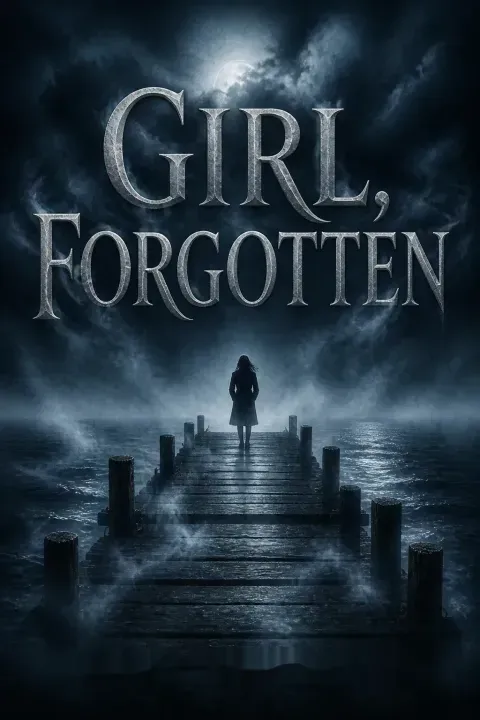


Plot Summary
Prologue
Emily Vaughn,2 seventeen and heavily pregnant, defies her abusive father to attend the prom. Her turquoise satin dress strains against her belly as she walks barefoot past the sneering faces of former friends. On the road, her teacher Dean Wexler4 stops his car and grabs her wrist when she mentions the night he drove her home from a party.
At the gymnasium, her old clique greets her with contempt; Clay Morrow12 snarls that she will get herself killed. Defeated, Emily leaves, but in the alley between the candy shop and hot dog stand, she sees black shoes, black pants, the hem of a black tuxedo. A bat swings. Emily curls her body around her unborn daughter,9 whispering promises she now knows are lies. Someone always planned to hurt them.
The prologue functions as a sacrificial ritual, stripping Emily of every protection before the blow falls. Her bare feet, the too-tight dress, the swollen body: all signal vulnerability in a world that punishes female visibility. The row of men who threaten her (father, teacher, ex-friends) demonstrates how patriarchal violence operates not as isolated incidents but as a cascading system. Emily's final gesture of wrapping around her belly is the novel's moral center, an act of maternal love that transcends her powerlessness and becomes the catalyst for the story's quest for justice.
A Marshal's Secret Mission
After a grueling twenty weeks at the Federal Law Enforcement Training Center, Andrea Oliver1 becomes a Deputy US Marshal. Her parents watch, uneasy. Mike Vargas,13 her former lover and WitSec handler, reappears, but it is her estranged uncle, Senator Jasper Queller, who hijacks her future. He reveals that her biological father, Clayton Morrow12 (known to her as Nick Harp), faces a credible chance of parole.
To keep him imprisoned, Jasper needs Andrea to solve the forty-year-old murder of Emily Vaughn,2 a pregnant teenager found beaten inside a dumpster behind a Longbill Beach fast-food joint. Andrea is assigned to protect Emily's mother, federal judge Esther Vaughn,8 placing her exactly where she needs to be to dig up the past.
Andrea's entry into the Marshals is a self-rescue masquerading as a career. The revelation that she can still be used as a pawn by Jasper shows how her family's legacy of manipulation persists. Her acceptance of the assignment is not fully a choice but a gravitational pull toward the truth about her father. The theme of daughters trying to escape or solve their mothers' histories is launched here.
The Town's Unhealed Wound
In Longbill Beach, Andrea1 is paired with Deputy Leonard 'Catfish' Bible,3 a scarred survivor of a cartel kidnapping who masks his sharp mind with folksy patter. They visit Chief Jack Stilton,7 a rumpled alcoholic who resents the Marshals' intrusion. At RJ's Diner, Andrea accidentally meets Judith,9 Emily's2 daughter, a forty-year-old artist whose icy blue eyes and sharp cheekbones mirror Andrea's own father.12
Judith invites her to her studio, where a teenage collage incorporates Emily's2 mixtape and photographs. She tells Andrea that the man who murdered her mother was also her father. Andrea studies the mixtape's liner notes, realizing they were written by a friend, not a lover, a first clue that the official story is incomplete.
The town is introduced as a closed ecosystem where everyone knows everyone's secrets. The uncanny resemblance between Judith and Clay Morrow is a physical manifestation of how violence binds generations. Andrea's increasing immersion in the case parallels her personal excavation of her father's true nature. The collage is a metaphor for the fragmented evidence she must piece together.
Emily's Body Betrayed
October 1981. Emily Vaughn,2 a straight-A senior, has been feeling nauseous and missing periods. She visits Dr. Schroeder, who performs a brutal pelvic exam without consent, then announces she is six weeks pregnant and 'not intact.' He threatens to call her father. At home, her mother Esther,8 a state judge awaiting a federal nomination, screams that Emily has ruined her life.
Her father Franklin, a cold economics professor, wants her to name the boy so they can force a marriage. When Emily admits she remembers nothing of the night in question because she was drugged at a party, they accuse her of lying. The decision is made: Emily will be hidden away until the baby is born, her education and future erased.
This section is a clinical dissection of how female trauma is absorbed by misogynistic systems. The doctor's hostility, the parents' careerism, the erasure of consent: all prefigure the violence to come. Emily's amnesia, induced by a spiked acid trip, makes her the ultimate unreliable victim, denied even the right to name her attacker. Her body becomes a crime scene she cannot decode, setting up the central mystery.
The Columbo Investigation Notebook
Emily,2 drawing on a friend's advice, starts her 'Columbo Investigation,' recording everything in a notebook. She confronts Dean Wexler4 about the October party; he admits picking her up but claims sterility, then chokes her when she asks why her dress was inside out. Her best friend Ricky Blakely6 screams that Emily is trying to trap one of the boys, especially Clay.12
Blake14 proposes a transactional marriage to advance his political future, then gropes her. Nardo5 dismisses her with sneers and insinuates Jack 'Cheese' Stilton7 sold them the LSD. Only Melody Brickel,10 a bandmate, sends secret letters and mixtapes, urging her to keep searching for the truth. Emily realizes the clique has rehearsed their stories.
Emily's investigation is a heroic act of cognitive resistance. The systematic gaslighting by her friends illustrates how group loyalty often trumps justice, particularly when protecting charismatic male figures like Clay. Each interview betrays a different form of selfishness: Ricky's jealousy, Blake's ambition, Nardo's sadism. Emily's notebook becomes a surrogate confidante, the only place where her version of events is preserved.
The Shed's Violent Secret
On Thanksgiving 1981, Emily2 finds Clay12 and Jack7 having sex in her family's shed. Clay flies into a homophobic rage and savagely beats Jack, threatening to kill him. Emily pulls him off. After Clay leaves, a weeping Jack confesses that he too has been trying to find out who raped Emily because he loves her as a friend.
He reveals that Nardo5 once saw him and Clay together, giving Nardo leverage. This explains why Nardo has not spread rumors about Clay: they are holding mutually assured destruction over each other. Jack promises Emily he will track down her attacker, a vow that will haunt him for forty years. Emily finally sees the clique as a web of coercion, not friendship.
This scene reconfigures the novel's understanding of power within the group. Clay's violence is not just psychological but lethal, and his secret sexuality makes him vulnerable to exposure. The revelation that Jack truly cared for Emily adds a tragic layer to his lifelong failure to solve the case. The shed, a liminal space for the town's outcasts, becomes the site where the truth begins to crack open.
A Farm of Living Dead
Andrea1 and Bible3 are called to Dean's Magic Beans, an organic fava bean farm, where a teenage volunteer named Alice Poulsen has been found dead in a field. Her emaciated body is naked except for a welded silver band around her ankle inscribed with her name. In the farmhouse, Wexler4 and Nardo Fontaine5 are evasive and hostile.
Andrea notices other women in identical yellow dresses, equally skeletal, with matching ankle bracelets. One woman, Star Bonaire,11 is baking bread in Wexler's kitchen. Andrea deliberately leaves her phone unlocked on the counter; Star uses the camera to photograph the word 'Help' drawn in flour, a silent, desperate plea.
The farm is the novel's heart of darkness, a contemporary manifestation of the same predation that destroyed Emily. The ankle bands are a grotesque parody of belonging, turning women into property. Star's cry for help, captured through a clever act of defiance, illustrates how victims resist even under extreme control. The connection between Alice and Emily (both young women destroyed by men in the same town) makes the cold case urgently contemporary.
The Drummer's Testimony
Andrea1 and Bible3 visit Melody Brickel,10 a session drummer and Star's11 mother, who has bankrupted herself trying to free her daughter. She identifies the mixtape in Judith's9 collage as one she made for Emily.2 She explains that the farm's starvation practices render women passive and semi-conscious, allowing men like Wexler4 to have sex with them in a state akin to necrophilia.
Melody connects this directly to Emily's rape at the party: Emily was drugged into senselessness, and the same kind of predator took advantage. She also reveals that Emily called her notes the 'Columbo Investigation' and was methodically tracking her suspects before she was killed.
Melody provides the thematic and evidentiary keystone. Her phrase 'women who can't say no' collapses the distance between 1982 and the present. Her fierce maternal love, thwarted by legal restraints, mirrors Esther Vaughn's helplessness. The mixtape, a tender gift of music, becomes a piece of evidence that helps Andrea see Emily not as a victim but as a full person with friendships and passions.
Ricky's Warped Shrine
At Ricky Fontaine's6 house, Andrea1 finds a curated display of clique photographs with Emily2 cropped out. Ricky, popping pills, reveals that a court ruling by Judge Esther Vaughn8 allowed her grandfather to drain a trust fund meant for her education, tying her economic ruin directly to Emily's family.
She then contradicts her original witness statement, placing herself near the prom on the night of the murder. Bible3 later confirms that Ricky has attempted suicide multiple times and likely wrote the vulgar death threats to the judge, her lifelong tormentor. Andrea notices a vintage address book in a drawer, but Ricky becomes manic and ushers her out.
Ricky emerges as a far more complicated figure than the simple ex-friend. Her erasure of Emily from the photos parallels her erasure of her own guilt. The trust fund ruling adds a socioeconomic dimension to the grievance: Esther Vaughn's judicial power directly harmed Ricky's life. Bible's theory about the death threats, and his profiling of suicidal individuals as potential killers, plants the seed that Ricky may be far more than a grieving friend.
Esther's Desperate Bargain
A fire, caused by faulty wiring, consumes part of the Vaughn estate. Andrea1 pulls Judith9 from the burning studio and saves explosive chemicals from igniting. At the hospital, with her abusive husband Franklin dying, Esther8 confesses to Andrea: she wrote the threatening letters to herself, manipulating Judicial Security to assign Bible,3 the only Marshal she trusted, as her protector.
She needed him because Dean Wexler4 has blackmailed her for decades, claiming to be Judith's9 biological father and threatening to harm the family. She hands Andrea a briefcase containing decades of secret recordings made by Franklin that prove Wexler4 and Nardo5 committed fraud, conspiracy, and tax evasion.
Esther's confession transforms her from a cold, intimidating judge into a woman who spent forty years negotiating with the devil to protect her granddaughter. Her manipulation of the Marshals mirrors her manipulation of the truth about Emily's death. The briefcase is a late-in-life attempt at redemption, but it also exposes how the Vaughns' privilege allowed them to contain the threat rather than destroy it, leaving Wexler free to victimize others.
The Diner Bloodbath
While the Marshals prepare raids, Nardo5 drives Star11 to RJ's Diner to taunt his ex-wife Ricky6 one final time. Andrea1 follows them alone. A drunken, off-duty Chief Jack Stilton7 stumbles in. When Stilton, haunted by his promise to Emily,2 demands the truth about the rape, Nardo mocks him and brags viciously about assaulting Emily, describing every detail.
Enraged, Stilton draws his revolver and shoots Nardo in the neck. Nardo removes his hand from the wound with a theatrical flourish and bleeds to death. Ricky screams. Star sits motionless. Andrea prevents Stilton from taking a second shot. Nardo dies having confessed only to rape, not murder.
This scene is the novel's emotional and physical catharsis, but it leaves justice incomplete. Stilton's act is both a fulfillment and a failure: he avenges Emily but eliminates the chance for full legal accountability. Nardo's theatrical death, controlling his own narrative to the end, mirrors his life of manipulation. Star's catatonic response underscores how deeply the victims have been conditioned not to react, even to extreme violence.
The Address Book Speaks
After Ricky6 attempts suicide by swallowing pills and Andrea1 saves her, Andrea searches the console drawer she noticed earlier. Inside a vintage pocket address book, she finds Emily's2 'Columbo Investigation,' disguised as an ordinary directory.
Emily's meticulous cursive chronicles the clique's escalating cruelty: how Ricky6 harassed her at school, smeared feces on her flute case, and threatened to beat her to death if she went near Nardo5 at prom. A rental receipt for a boys' tuxedo proves Ricky was at Maggie's Formal Wear that day, contradicting her alibi. Andrea now knows: Ricky Fontaine,6 not Nardo or Clay12 or Wexler,4 wielded the board that crushed Emily's skull.
The address book is a time capsule of female rage and resilience. Emily's decision to hide her investigation in plain sight was her final act of agency. The discovery that a woman, her best friend, committed the murder subverts the expected narrative while remaining true to the novel's thesis: violence against women is often committed by those closest to them, driven by internalized misogyny and male-centered rivalries.
Forty Years of Guilt
Andrea1 confronts Ricky6 in the kitchen. Ricky, broken and sobbing, admits she killed Emily.2 She had seen Emily talking to Nardo5 outside the prom and followed her into the alley, possessed by a lifetime of jealousy. She picked up a broken pallet slat and beat Emily until her face was unrecognizable, then stripped off her dress.
Her brother Blake14 helped drag the body to his car and dumped it behind Skeeter's Grill. They burned Emily's clothes. Ricky has tried to kill herself multiple times since, haunted by what she did. Andrea refuses to let her find peace in death, announcing she will live with her guilt in prison.
The confession reveals the murder as a crime of intimate betrayal, fueled by years of competitive triangulation around Nardo. Blake's role as accomplice and strategist mirrors how men have consistently enabled or cleaned up violence against women in this story. Andrea's refusal to let Ricky die is a moral assertion that justice requires living accountability, not escape. Ricky's suicide attempts show that guilt without confession is a private hell.
Epilogue
One month later, Andrea Oliver1 has moved into a basement apartment in Baltimore. Bible3 updates her: the farm women are slowly getting help, though Star11 refuses to leave; Wexler4 pleaded to fraud charges and will die in medium-security prison; Ricky6 is serving life.
Andrea has reconciled with her mother and resumed her relationship with Mike.13 As she unpacks with her family, her phone rings. It is her father, Clayton Morrow,12 calling from prison on a smuggled cell, having spoofed Bible3's number.
He invites her to visit, hinting at secrets about Senator Queller. Andrea listens, then hangs up. She walks back up the stairs to her apartment where her mother and Mike are laughing. She knows she has finally learned to jump away from cliffs instead of falling.
Andrea's act of hanging up represents her hard-won autonomy. The entire novel has been about daughters trapped by their fathers' or mothers' legacies; Andrea breaks the pattern by refusing engagement. The call is a test of her growth: she can now hold the simultaneous truths that her father is a monster and that she does not have to fight him on his terms. The epilogue resists total resolution (Star is still captive in her mind) but offers equilibrium: life continues, messy and full of small joys.
Analysis
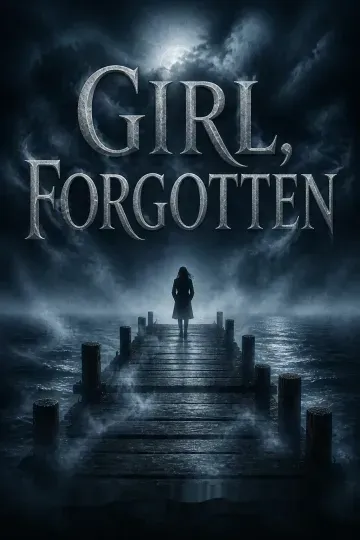
Girl, Forgotten is a labyrinthine exploration of how violence against women is not a series of isolated incidents but an ecosystem. The novel braids three generations of trauma (Emily,2 Judith,9 Guinevere) and two parallel systems of predation (the 1982 clique and the contemporary farm) to demonstrate that patriarchal abuse adapts but never disappears without resistance. The most devastating revelation is not that a man raped Emily, but that her best friend killed her. Ricky's6 jealousy, nurtured by a society that taught her to compete for male approval, was as lethal as any man's fist. This shift from a male perpetrator to a female one forces readers to examine how women themselves can become enforcers of patriarchal violence.
The novel also interrogates the cost of institutional failure. The Vaughns' decision to pay off Wexler4 rather than prosecute him allowed a cult to thrive for forty years. Esther's8 complicity, born from her own abuse and her terror for her granddaughter, cannot be exonerated. The novel argues that silence and settlement, no matter how pragmatic, exact a moral debt that accumulates interest over decades.
Andrea Oliver's1 arc mirrors this. She enters the Marshals because she cannot forgive her mother for lying and cannot escape her father's12 shadow. By the novel's end, she has learned that strength is not flinging herself off cliffs but standing still and choosing her jumps. Her refusal to engage with her father's call is the culmination of that growth: she does not need to confront him because she has already built a life he cannot touch. The novel leaves several wounds unhealed (Star11 remains in the cult's mental grip; Wexler's4 sentence feels insufficient), but it insists that imperfect, incremental justice is still worth pursuing.
Review Summary
Girl, Forgotten is a gripping sequel that follows US Marshal Andrea Oliver as she investigates a decades-old murder case while protecting a federal judge. The story alternates between present-day and 1982, unraveling dark secrets and lies. Readers praise Slaughter's compelling characters, intricate plot, and unexpected twists. While some found the pacing slow at times, many appreciated the book's depth and complexity. The novel explores themes of rape, cults, and small-town secrets, delivering an intense and suspenseful read that keeps readers engaged until the end.
People Also Read


Characters
Andrea Oliver
New US Marshal; investigatorAndrea is 33, recently graduated from Marshal school, and driven by a need to master the chaos that once nearly killed her. The daughter of a former cult member and a psychopathic terrorist12, she spent two years transforming herself from a passive victim into a capable law enforcement officer. She is intelligent, observant, and slowly learning to trust her instincts. Her artistic background (dropped out of SCAD) gives her a unique visual vocabulary for noticing details others miss. Haunted by her mother's deceptions and her father's12 violence, she seeks both justice for victims and a stable identity of her own. Over the course of the novel, she learns to balance her protective impulses with the patience required for real investigation, and finally stops running from intimacy with Mike13.
Emily Vaughn
Murdered pregnant teen; victimIn 1981-1982, Emily is a bright, kind seventeen-year-old who loves art, music, and playing the flute. She is the daughter of a cold economist father and an ambitious judge mother8, raised mostly by her dementia-stricken grandmother. Emily's defining traits are her loyalty (even to undeserving friends) and her gentle acceptance of outcasts. After being drugged and raped at a party, she refuses to become bitter, instead launching her 'Columbo Investigation' to find the truth. Her pregnancy, initially a source of shame, becomes the catalyst for her deepest love when she feels her child move and vows to protect her. She is beaten to death by her jealous best friend Ricky6 on prom night, but her meticulous notes survive to expose her killer.
Catfish Bible
Andrea's seasoned partnerDeputy US Marshal Leonard 'Catfish' Bible is a veteran agent with thin scars crisscrossing his face from a cartel torture ordeal six years prior. He hides his sharp intellect behind a folksy, loquacious Texas accent and a habit of spouting silly rhymes. Bible is a legend in the service, a master of psychological tactics who teaches Andrea1 how to read people without letting her own emotions sabotage the work. He owes his life to Judge Vaughn8, who visited him in the hospital and demanded he return to duty. His marriage to Deputy Chief Cecelia Compton (his boss) is an open secret, and his devotion to his wife and his work are the two poles of his existence. He is the mentor Andrea needs: patient, crafty, and unshakably moral.
Dean Wexler
Cult leader; blackmailerA former high school teacher who preyed on vulnerable girls, Wexler left education after Emily's2 death and used blackmail money from the Vaughn family to start a fava bean farm. He runs the farm as a sadistic cult, starving young female volunteers into submission and branding them with welded silver ankle bands. He claims sterility from childhood mumps but later threatens to sue for paternity of Judith9 to control the Vaughns. Wexler is a misogynist who despises women who challenge him, reacting with physical violence when provoked. He studied at the altar of Clay Morrow12, mimicking his manipulative charisma but lacking any subtlety. His need for control is absolute, making him predictable when his authority is threatened.
Bernard 'Nardo' Fontaine
Emily's rapist; farm managerA loathsome bully from a wealthy family, Nardo took pleasure in cruelty from childhood. He raped Emily2 at a drug-fueled party while she was insensible, later bragging about it. As an adult, he manages Wexler's4 farm and personally screens the vulnerable young women who become victims. He is a nihilist who understands he is evil and revels in it. Nardo's only lasting relationship is with Ricky6, whom he married, tortured psychologically, and later divorced, yet still torments weekly by bringing farm girls to her diner. His death, shot by Jack Stilton7 in a rage, is both a cathartic release and an incomplete justice.
Ricky Fontaine
Emily's killer; jealous ex-friendErica 'Ricky' Blakely was Emily's2 best friend since kindergarten, but her obsession with Nardo5 poisoned their relationship. When Emily became pregnant, Ricky turned vicious, defacing her locker, spreading rumors, and threatening violence. On prom night, seeing Emily speak to Nardo, Ricky followed her down an alley and beat her skull in with a wooden pallet slat. Her twin brother Blake14 helped dispose of the body. For forty years, she has lived with crushing guilt, attempting suicide multiple times, while running the family diner and curating a shrine to the clique with Emily's image carefully cropped out. She is both a perpetrator of horrific violence and a victim of her own twisted love.
Jack Stilton
Police chief; Emily's secret friendAs a teenager, Jack Stilton was a shy, closeted gay boy mercilessly bullied by the clique. Emily2 was his only genuine friend, and he loved her enough to propose marriage after her pregnancy. He discovered his sexuality through a secret, abusive relationship with Clay Morrow12. His father, the original Police Chief, failed to solve Emily's murder. Jack became a cop to fulfill his promise to find her rapist, but the case consumed him. He is an alcoholic, a misogynist in his language, and a deeply compromised officer. Yet his forty-year obsession finally pays off when he shoots Nardo5 dead after extracting a confession. He is the novel's most tragic figure: a good man corroded by secrets and failure.
Judge Esther Vaughn
Federal judge; Emily's motherEsther Vaughn is a Reagan-appointed federal judge who built her career on an image of imperious, indomitable strength. In private, she was a battered wife who made a devil's bargain: she let her husband pay off Dean Wexler4 to protect their granddaughter Judith9 from his paternity claims, and she used her judicial power to cover up the crimes. After Emily's2 death, she poured her ambition into her career while raising Judith, but her terminal cancer diagnosis forces a reckoning. She engineered the death threats to bring Bible3 into her orbit, then gave evidence to destroy Wexler. She is a study in moral compromise, a woman who sacrificed everything for legacy and then, at the end, tried to atone.
Judith
Emily's surviving daughterBorn via emergency C-section while Emily2 was in a coma, Judith was raised by the Vaughns. She is a successful collage artist who works under her mother's middle name, Rose. She bears the physical resemblance to her father (Dean Wexler4, possibly, or Nardo5). Judith has a teenage daughter, Guinevere, and has made peace with her traumatic origins, though her artwork processes the violence her mother2 endured. She is warm, open, and artistically passionate, representing the life Emily fought to protect.
Melody Brickel
Star's mother; Emily's friendA touring drummer for thirty years, Melody was one of Emily's2 few genuine friends in high school. She secretly sent Emily mixtapes and encouraging letters. Decades later, her daughter Star11 joined Wexler's4 cult, and Melody has spent her life savings trying to free her. She is fierce, direct, and refuses to be silenced, despite a restraining order. Her drumming career gave her a toughness that Emily lacked, and she channels that strength into exposing Wexler's abuses.
Star Bonaire
Cult victim; Melody's daughterOnce a vibrant girl, Star fell into Wexler's4 farm after her grandmother's death and a period of drug use. She is now emaciated, conditioned to obey, and wears the silver ankle band that marks her as Wexler's property. Despite her brainwashing, she has repeatedly tried to signal for help: notes to delivery drivers, a midnight phone call to her mother10, and finally the photograph on Andrea's1 phone. She represents the ongoing tragedy of women trapped in systems of abuse, unable to leave even when help is offered.
Clay Morrow / Nick Harp
Andrea's father; imprisoned cult leaderA breathtakingly handsome sociopath, Clay manipulated his high school clique into a cult of personality. He used Nardo's5 cruelty, Blake's14 calculation, and Ricky's6 devotion to maintain control. He fled Longbill Beach after Emily's2 attack, changed his name to Nick Harp, and later led a domestic terrorism cult that Laura Oliver infiltrated and helped bring down. He is Andrea's1 biological father, and his impending parole hearing drives the plot. He remains a master manipulator, reaching out to Andrea in the epilogue to reassert his psychological hold.
Mike Vargas
Andrea's handler and loverA US Marshal in Witness Security, Mike was Andrea's1 protector and lover until she ghosted him after a traumatic incident. He is handsome, cocky, and deeply caring, but his savior complex often clashes with Andrea's need for independence. He spreads a rumor that they are engaged to protect her, which both infuriates and touches her. By the novel's end, Andrea has grown enough to accept his love without feeling it diminishes her strength.
Blake Blakely
Ricky's twin brother; accompliceEric 'Blake' Blakely was the transactional mind of the clique. He proposed marrying pregnant Emily2 to launch his political career, then groped her. He helped Ricky6 dispose of Emily's body, then left town with Clay12, only to drown in a suspicious accident in New Mexico weeks later.
Plot Devices
Emily's Columbo Investigation
Hidden evidence identifying the killerDisguised as a vintage pocket address book with alphabetical tabs, Emily's2 investigation notes contain her interviews with every member of the clique, including details of Ricky's6 escalating threats. Ricky kept the book in her console drawer for forty years, unable to destroy it. The device slides open when a silver pointer is aligned to a letter, hiding Emily's loopy cursive and detailed accusations. Andrea1 discovers it after Ricky's suicide attempt, using her thumbnail to trigger the mechanism. It is the single piece of physical evidence that proves Ricky's guilt, a time capsule of a teenage girl's determination to name her rapist.
The Mixtape
Clue linking Emily to her true friendsA cassette tape liner notes sheet, found in Judith's9 collage, lists songs from April 1982 albums written in disguised calligraphic script. Andrea1 initially assumes it was made by a lover, but Melody Brickel10 identifies it as her anonymous gift to Emily2. The handwriting comparison reveals it doesn't match any suspect's known script, disproving the theory that the father made it. The mixtape symbolizes the authentic friendship Melody offered Emily, as opposed to the possessive clique, and provides a timeline that the songs were released just days before the murder.
The Ankle Bands
Cult branding and dehumanizationSilver metal bands, welded permanently around the left ankles of the women at Dean's4 Magic Beans farm, each inscribed with a name and set with aquamarine and sapphire gemstones matching the farm's logo colors. The bands are so tight they rub the skin raw. They function as a mark of ownership and a psychological tool of control, mirroring the way the clique branded its members through shared secrets and mutual blackmail. Alice Poulsen's band serves as her only identification when her body is found.
Esther's Briefcase
Evidence of decades of fraud and blackmailKept by Judge Vaughn8 in her home and rescued from the fire, the briefcase contains a laptop with video and audio recordings of Franklin Vaughn's meetings with Dean Wexler4 and Nardo Fontaine5, along with documents proving tax fraud, conservation easement scams, and blackmail payments. The judge prepared a summation of charges and handed the case to Andrea1, effectively confessing her own complicity. It is the legal instrument that allows the Marshals to arrest Wexler and Nardo for crimes unrelated to the murder.
The Self-Written Death Threats
False flag to manipulate Marshal protectionA series of typed, non-sexual threatening letters mailed to the courthouse and a dead rat left at Esther's8 home were actually written by the judge herself. She crafted them to contain private details (her cancer, her husband's condition) that would make the threats credible and trigger Judicial Security involvement. Her goal was to get Leonard Bible3, the only Marshal she trusted, assigned to her detail so she could give him the evidence against Wexler4 without alerting the blackmailers. The letters reveal her desperate cunning.
FAQ
Synopsis & Basic Details
What is Girl, Forgotten about?
- A Cold Case Reopened: The story follows Andrea Oliver, a newly appointed U.S. Marshal, as she investigates the decades-old murder of Emily Vaughn, a pregnant teenager from a small beach town.
- Family Secrets Unveiled: Andrea's investigation is complicated by her own family's hidden past, including her connection to a notorious criminal, and the secrets of the powerful Vaughn family.
- A Web of Deceit: The narrative explores themes of betrayal, manipulation, and the long-lasting impact of violence, as Andrea uncovers a web of deceit that spans generations.
Why should I read Girl, Forgotten?
- Intricate Plot Twists: The novel offers a complex and suspenseful plot with unexpected twists and turns, keeping readers engaged and guessing until the very end.
- Compelling Characters: The characters are well-developed and flawed, with complex motivations and hidden agendas, making them both relatable and intriguing.
- Exploration of Dark Themes: The story delves into dark themes of power, control, and the long-lasting effects of trauma, providing a thought-provoking and emotionally resonant reading experience.
What is the background of Girl, Forgotten?
- Small-Town Secrets: The story is set in the fictional town of Longbill Beach, Delaware, a place with a seemingly idyllic surface that hides a dark underbelly of secrets and long-held resentments.
- 1980s Setting: The past timeline is set in 1982, capturing the cultural and social atmosphere of the time, including the music, fashion, and attitudes towards women and pregnancy.
- Political Undertones: The novel touches on political themes, particularly through the character of Judge Esther Vaughn, whose career and ambitions are intertwined with the events of the story.
What are the most memorable quotes in Girl, Forgotten?
- "You'll get away. You'll go to college. You'll meet a boy who loves you. You'll have children who adore you. You'll live in a beautiful house.": This quote, spoken by Emily's grandmother, highlights the dreams and aspirations that are tragically cut short by Emily's fate.
- "Wherever you go, there you are.": This recurring phrase, initially spoken by Laura Oliver's mother, underscores the idea that running away from one's problems is futile, as the past always catches up.
- "I will protect you. No one will ever hurt you. You will always be safe.": This mantra, repeated by Emily to her unborn child, reveals her fierce determination to be a better parent than her own, despite the odds.
What writing style, narrative choices, and literary techniques does Karin Slaughter use?
- Dual Timelines: Slaughter masterfully weaves together two timelines, creating suspense and revealing information gradually, enhancing the mystery and emotional impact.
- Gritty Realism: The novel is characterized by a gritty and realistic portrayal of violence, trauma, and the darker aspects of human nature, avoiding romanticization.
- Character-Driven Narrative: The story is driven by the complex and flawed characters, whose motivations and actions shape the plot and themes, creating a compelling and emotionally resonant reading experience.
Hidden Details & Subtle Connections
What are some minor details that add significant meaning?
- The Recurring Color Turquoise: Emily's prom dress is a vibrant turquoise, a color that reappears throughout the story, symbolizing her lost dreams and the tragic circumstances of her life.
- The Use of Music: References to specific songs and artists, like the Bay City Rollers and Rick Springfield, ground the story in its 1980s setting and foreshadow the emotional states of the characters.
- The Description of the House: The Vaughn family home is described as both grand and decaying, reflecting the family's hidden secrets and the crumbling facade of their public image.
What are some subtle foreshadowing and callbacks?
- Gram's Dementia: Gram's dementia, which causes her to confuse Emily with other family members, foreshadows the confusion and misdirection that will plague the investigation into Emily's death.
- The Broken Mirror: Emily's reflection in the mirror, which she avoids, foreshadows her internal struggle with her changing identity and the shame she feels about her pregnancy.
- The Recurring Phrase "You'll Get Away": Gram's repeated assurance that Emily will "get away" becomes a tragic irony, as Emily is ultimately unable to escape her fate.
What are some unexpected character connections?
- Andrea and Emily: The connection between Andrea and Emily as possible half-sisters adds a personal dimension to Andrea's investigation, driving her to seek justice for a woman she never knew.
- Mike and Laura: The revelation that Mike was Laura's handler in Witness Security adds a layer of complexity to their relationship and highlights the interconnectedness of their pasts.
- Jasper and Laura: The fact that Jasper Queller is Laura's brother and Andrea's uncle creates a complex family dynamic and adds a layer of political intrigue to the story.
Who are the most significant supporting characters?
- Melody Brickel: As a former friend of Emily, Melody provides crucial insights into Emily's life and the events leading up to her death, and her connection to Star Bonaire adds another layer of complexity.
- Jack Stilton: As the son of the original investigating officer, Jack's personal connection to the case and his own struggles with addiction and guilt make him a compelling and tragic figure.
- Judith Vaughn: As Emily's daughter, Judith's artistic talent and her own struggles with her family's past provide a unique perspective on the events of the story and the long-lasting impact of trauma.
Psychological, Emotional, & Relational Analysis
What are some unspoken motivations of the characters?
- Esther's Fear of Scandal: Esther's primary motivation is to protect her reputation and political ambitions, leading her to prioritize her career over her daughter's well-being.
- Clay's Need for Control: Clay's actions are driven by a need for control and a desire to maintain his position of power within the group, leading him to manipulate and betray those around him.
- Ricky's Jealousy and Resentment: Ricky's actions are fueled by jealousy and resentment towards Emily, stemming from her own insecurities and her unrequited feelings for Nardo.
What psychological complexities do the characters exhibit?
- Emily's Internal Conflict: Emily struggles with her changing identity, torn between her desire for independence and her fear of disappointing her family, leading to a sense of isolation and despair.
- Andrea's Identity Crisis: Andrea grapples with her own identity, torn between her desire to be a good Marshal and her need to understand her family's past, leading to a sense of internal conflict and self-doubt.
- Wexler's Narcissism: Wexler exhibits a narcissistic personality, characterized by a grandiose sense of self-importance, a lack of empathy, and a need for control, making him a dangerous and manipulative figure.
What are the major emotional turning points?
- Emily's Realization of Betrayal: Emily's realization that her friends have turned against her and that she is alone in her struggle is a major emotional turning point, leading to a sense of despair and resignation.
- Andrea's Confrontation with Her Past: Andrea's discovery of her connection to Emily and her father forces her to confront her own past and the lies she has been told, leading to a sense of anger and determination.
- Ricky's Confession and Breakdown: Ricky's confession to Emily's murder and her subsequent breakdown reveal the depth of her guilt and the emotional toll of her actions, highlighting the long-lasting impact of trauma.
How do relationship dynamics evolve?
- The Clique's Dissolution: The once-close relationships within the clique are shattered by betrayal and violence, revealing the fragility of their bonds and the hidden resentments that simmered beneath the surface.
- Andrea and Mike's Complicated Relationship: Andrea and Mike's relationship evolves from a casual fling to a complex connection marked by shared history and mutual respect, but also by Andrea's need for independence.
- Esther and Emily's Fractured Bond: The relationship between Esther and Emily is marked by a lack of understanding and communication, highlighting the generational divide and the impact of societal expectations on women.
Interpretation & Debate
Which parts of the story remain ambiguous or open-ended?
- The True Nature of Clay's Feelings: The novel leaves open the question of whether Clay had any genuine feelings for Emily or if he was simply using her for his own purposes, adding to the complexity of his character.
- The Extent of Wexler's Influence: The novel hints at the possibility that Wexler's influence extends beyond the farm, leaving readers to wonder about the full scope of his power and manipulation.
- The Future of Star Bonaire: The novel leaves Star's future uncertain, raising questions about whether she will ever be able to escape the cycle of abuse and control that has defined her life.
What are some debatable, controversial scenes or moments in Girl, Forgotten?
- Emily's Portrayal as a Victim: Some readers may find Emily's portrayal as a victim of her circumstances to be controversial, arguing that she should have taken more responsibility for her actions.
- The Graphic Violence: The novel's graphic depiction of violence and abuse may be disturbing to some readers, raising questions about the author's use of such imagery.
- The Portrayal of Female Characters: Some readers may find the portrayal of female characters, particularly Esther and Ricky, to be problematic, arguing that they are either too cold or too emotional.
Girl, Forgotten Ending Explained: How It Ends & What It Means
- Justice Served, But Not for All: While the novel provides a sense of closure by bringing Wexler and Ricky to justice, it also highlights the limitations of the legal system and the fact that some crimes go unpunished.
- The Cycle of Violence Continues: The ending suggests that the cycle of violence and abuse may continue, as the underlying issues that led to Emily's death and the exploitation at the farm remain unresolved.
- Hope for the Future: Despite the darkness, the ending offers a glimmer of hope for the future, as Andrea embraces her new role and seeks to make a difference in the lives of others, suggesting that even in the face of tragedy, there is always the possibility of change and redemption.
Andrea Oliver Series
About the Author
Other books by Karin Slaughter



Download PDF
Download EPUB
.epub digital book format is ideal for reading ebooks on phones, tablets, and e-readers.








































