
Key Takeaways
1. The American Roots of Eugenics: A "Science" of Social Control
"I may say that the principles of heredity are the same in man and hogs and sun-flowers."
Early influences. The eugenics movement, though coined by Francis Galton in England, found fertile ground in America, where existing social anxieties and racial prejudices were rampant. Ideas from Thomas Malthus (population control), Herbert Spencer ("survival of the fittest"), and Charles Darwin (natural selection) converged, creating a pseudoscientific rationale for social engineering. This intellectual framework justified the belief that society would improve by eliminating the "unfit" and promoting the "fittest."
Mendel's rediscovery. The rediscovery of Gregor Mendel's laws of heredity in 1900 provided the perceived scientific legitimacy that American eugenicists craved. They distorted Mendelian principles, originally applied to plants like peas, to human traits, claiming that qualities like poverty, criminality, and intelligence were immutable genetic defects. This allowed them to cloak their prejudices in the mantle of "race science," arguing that human beings could be bred and culled like livestock.
Negative eugenics. While Galton initially envisioned "positive eugenics" through selective marriages, American eugenicists quickly embraced "negative eugenics." This radical approach advocated for coercive measures to prevent reproduction by those deemed inferior, including:
- Segregation
- Deportation
- Castration
- Marriage prohibition
- Compulsory sterilization
- Passive euthanasia
This shift transformed eugenics from a theoretical concept into a ruthless campaign to reshape humanity in their own image, specifically a "superior Nordic race."
2. Wealth and Academia Fuel a Campaign Against the "Unfit"
"Eugenics was nothing less than an alliance between biological racism and mighty American power, position and wealth against the most vulnerable, the most marginal and the least empowered in the nation."
Carnegie's endowment. The movement gained immense power and legitimacy through the financial backing of America's wealthiest philanthropists. Andrew Carnegie, in 1902, endowed the Carnegie Institution with millions, which then established the Station for Experimental Evolution at Cold Spring Harbor. This facility, led by zoologist Charles Davenport, became the epicenter of American eugenics, dedicated to "race change" and the "cutting off defective germ-plasm."
Harriman and Rockefeller. Mary Harriman, widow of railroad magnate E.H. Harriman, further funded the Eugenics Record Office (ERO) in 1910, providing over half a million dollars and land. John D. Rockefeller's fortune also contributed, with initial grants for field worker expenses. This corporate philanthropy provided the means and connections to transform eugenic theory into administrative reality, mobilizing powerful figures against the nation's most vulnerable.
ERO's mission. The ERO, under Davenport and superintendent Harry Laughlin, systematically identified "defective" Americans, estimated at 10% of the population. Field workers scoured prisons, mental institutions, and poor communities, collecting "pedigrees" on families deemed "socially inadequate." This data, often based on guesswork and prejudice, was used to justify draconian measures and to advocate for the elimination of undesirable bloodlines, from "feebleminded" urban dwellers to "white trash" from rural areas.
3. Eugenics Weaponizes Intelligence Tests and Immigration Policy
"The decline of American intelligence will be more rapid than the decline of the intelligence of European national groups, owing to the presence here of the negro."
IQ tests' flawed origins. The eugenics movement sought scientific tools to identify the "unfit." Psychologist Henry Goddard translated Alfred Binet's intelligence test into English, coining the term "moron." His 1913 book, The Kallikak Family, used doctored photos and dubious genealogy to "prove" hereditary feeblemindedness. Goddard's tests, applied to immigrants at Ellis Island, predictably labeled large percentages of non-Nordic groups as "morons," fueling anti-immigrant sentiment.
Army intelligence tests. During World War I, Harvard psychologist Robert Yerkes developed the Army Alpha and Beta tests, administered to millions of soldiers. These culturally biased tests, designed by eugenicists, concluded that:
- 47% of whites and 89% of Negroes had a mental capacity below a 13-year-old.
- Nordic groups showed minuscule rates of feeblemindedness.
- This "scientific" data was used to justify racial hierarchies.
Immigration restrictions. Carl Brigham, a Princeton psychologist, further analyzed Yerkes' data in A Study of American Intelligence, asserting Nordic intellectual superiority. This work, despite later recantations by its authors, became a cornerstone for the Immigration Act of 1924. Harry Laughlin, as "Expert Eugenics Agent" for Congress, used this "science" to advocate for quotas based on 1890 demographics, drastically reducing immigration from Southern and Eastern Europe and establishing an overseas genetic surveillance network.
4. The Birth Control Movement's Troubling Alliance with Eugenics
"The most merciful thing that the large family does to one of its infant members is to kill it."
Sanger's mission. Margaret Sanger, a pioneering feminist and founder of the birth control movement, passionately advocated for women's reproductive rights. Witnessing the devastating effects of unwanted pregnancies and poverty in New York City slums, she sought to empower women with control over their bodies and family size. Her efforts led to the establishment of organizations that would eventually become Planned Parenthood.
Eugenic embrace. Despite her noble goals, Sanger was an ardent eugenicist, believing birth control was a "truly eugenic method." She saw population control as essential for racial health and frequently aligned her movement with prominent eugenicists. Her writings, such as Pivot of Civilization, condemned charity as a "malignant social disease" that perpetuated "human waste" and advocated for:
- Mass sterilization of "defectives"
- Segregation of the "feebleminded"
- Draconian immigration restrictions
Controversial alliances. Sanger collaborated with notorious racists and white supremacists like Lothrop Stoddard and Henry Pratt Fairchild, who served on her organizations' boards. Her publications, like Birth Control Review, often echoed eugenic vitriol, comparing lower classes to "dangerous human pests" and advocating for their "extermination." While Sanger herself may not have been a racist, her embrace of eugenics provided legitimacy to a movement that sought Nordic racial superiority and ethnic cleansing, ultimately alienating her from some mainstream eugenicists who opposed her universal birth control stance.
5. Virginia's "Racial Integrity" Laws: A Blueprint for Discrimination
"'One drop of negro blood makes the negro' is no longer a theory based on race pride or color prejudice, but a logically induced, scientific fact."
Plecker's crusade. Walter Ashby Plecker, Virginia's registrar of vital statistics, became a fervent raceologist and eugenicist, obsessed with preserving white racial purity. He believed that racial mixing, or "mongrelization," was a grave threat to Virginia's white population. Plecker's mission was to codify the existence of only two races: white and "everything else," using bureaucratic registration to prevent mixed-race marriages and social integration.
Racial Integrity Act. In 1924, Plecker, alongside white supremacist groups like the Anglo-Saxon Clubs, successfully lobbied for Virginia's "Racial Integrity Act." This law mandated that anyone with "one drop" of non-Caucasian blood could not be registered as white, effectively reclassifying thousands of mixed-race individuals as "colored." The act criminalized false racial registration and prohibited marriages between certified whites and non-whites, even those with minimal non-white ancestry.
Targeting Native Americans. Plecker aggressively used his office to enforce these laws, often acting on rumor and suspicion. He systematically reclassified American Indians, particularly the Monacan tribe, as "colored" or "mongrel," denying their indigenous identity. His efforts were bolstered by the Carnegie Institution's publication, Mongrel Virginians, which falsely claimed that all Virginia Indians were mixed-race "Win Tribes" and intellectually inferior. Plecker's campaign, though based on intimidation and pseudo-science, created a real-world "eugenical database" that dictated who could marry, attend school, and even be buried in white cemeteries.
6. Buck v. Bell: The Supreme Court Sanctions Eugenic Sterilization
"It is better for all the world, if instead of waiting to execute degenerate off-spring for crime, or to let them starve for their imbecility, society can prevent those who are manifestly unfit from continuing their kind. Three generations of imbeciles are enough."
Carrie Buck's plight. Carrie Buck, a young woman from Charlottesville, Virginia, became the unwitting test case for eugenic sterilization. Declared "feebleminded" by local authorities, a classification often applied to the poor and "morally unsuitable," Carrie was committed to the Colony for Epileptics and Feebleminded. Her mother, Emma, was already institutionalized, and her infant daughter, Vivian, was also deemed "defective" by biased social workers, creating the "three generations of imbeciles" narrative.
A collusive legal challenge. Virginia's 1924 sterilization law, drafted with input from Harry Laughlin's "model sterilization law," was designed to withstand constitutional challenge. Carrie's legal guardian and appointed attorney were both staunch eugenicists, ensuring a collusive defense. The case, Buck v. Bell, reached the U.S. Supreme Court, where Justice Oliver Wendell Holmes Jr., a proponent of social Darwinism, delivered the infamous majority opinion.
Holmes's ruling. In 1927, Holmes's ruling upheld Virginia's compulsory sterilization law, legitimizing eugenic practices nationwide. His chilling words, "Three generations of imbeciles are enough," became a rallying cry for eugenicists. This decision opened the floodgates for thousands of forced sterilizations across the United States, with California leading the nation. The ruling, based on flawed science and prejudice, allowed states to permanently deny reproductive rights to individuals deemed "unfit," leaving a devastating legacy of human rights abuses.
7. American Eugenics Inspires Hitler's "Master Race" Ideology
"You will be interested to know that your work has played a powerful part in shaping the opinions of the group of intellectuals who are behind Hitler in this epoch-making program."
German-American partnership. German eugenicists, like Alfred Ploetz and Eugen Fischer, were deeply influenced by American eugenic theory and practice from the early 20th century. They closely followed US sterilization laws, IQ testing, and racial classifications, viewing America as the global leader in "race hygiene." Despite initial post-WWI tensions, American institutions like the Carnegie Institution and the Rockefeller Foundation generously funded German race biology, fostering a strong scientific partnership.
Hitler's "Mein Kampf." Adolf Hitler, while imprisoned in 1924, voraciously read eugenic texts, including the German Foundation of Human Heredity and Race Hygiene, which heavily cited American eugenicists like Davenport and Popenoe. Hitler's Mein Kampf codified his fanatical eugenic views, advocating for the prevention of "defective people" from propagating and praising US immigration policies as a model for racial purity. He saw "National Socialism" as "applied biology," aiming to create an "Aryan master race."
American admiration. American eugenicists openly admired Hitler's regime for its swift and decisive implementation of eugenic policies. Publications like Eugenical News lauded Germany's mass sterilization program, calling it "epochal in racial history" and a "milepost in statesmanship." Figures like California's C.M. Goethe proudly noted that American work, particularly from the Human Betterment Foundation, had "jolted into action a great government of 60 million people," directly linking US eugenics to the Nazi agenda.
8. Nazi Germany's Eugenic Atrocities: From Sterilization to Genocide
"National Socialism is nothing but applied biology."
The Law for the Prevention of Defective Progeny. Upon seizing power in 1933, Hitler's regime rapidly implemented its eugenic vision. The "Law for the Prevention of Defective Progeny," enacted in July 1933, mandated the compulsory sterilization of 400,000 Germans across nine categories, including the "feebleminded," schizophrenics, epileptics, and those with hereditary blindness. This massive program, overseen by eugenic courts and doctors like Ernst Rüdin, was explicitly modeled on American sterilization laws.
Racial hygiene and persecution. Nazi eugenicists, including Otmar von Verschuer and Eugen Fischer, became architects of Hitler's systematic medical repression. They established institutes for "Hereditary Biology and Racial Hygiene," training SS members and public health officials in scientific anti-Semitism. Jews were defined as a "race" by the 1935 Nuremberg Laws, based on complex eugenic mathematics, and subjected to increasing disenfranchisement and persecution.
Euthanasia and "life unworthy of life." The Nazi regime escalated from sterilization to organized euthanasia. Beginning in 1940, thousands of mentally handicapped adults were systematically gassed under the T-4 program, with doctors selecting victims and supervising exterminations. This concept of "life unworthy of life" justified the murder of those deemed unproductive or genetically inferior, laying the groundwork for the Holocaust.
9. The Horrors of Auschwitz: Mengele's Twin Experiments
"The moment a pair of twins arrived in the barrack, they were asked to complete a detailed questionnaire from the Kaiser-Wilhelm Institute in Berlin."
The quest for twins. From Galton onward, twins were considered invaluable for eugenic research, offering a "perfect control group" to study heredity versus environment. American eugenicists, including Davenport, extensively documented twin births and sought to understand the mechanisms of multiple births to potentially "outmaneuver nature" for a superior race. This fascination with twins was a consistent theme in global eugenics.
Mengele's sadistic science. Dr. Josef Mengele, Otmar von Verschuer's research assistant, brought this obsession to its horrific conclusion at Auschwitz. Upon arrival, Mengele would personally select twins from the train ramps, sparing them from immediate gassing for his experiments. These children were subjected to brutal medical procedures, blood extractions, eye injections, and other torturous tests, often culminating in their simultaneous murder for comparative autopsies.
Institutional complicity. Mengele's "twin camp" at Auschwitz was not an isolated act of madness but a direct extension of mainstream eugenic research. His meticulous reports, blood samples, and even skeletons were sent to Verschuer's Kaiser Wilhelm Institute for Anthropology, Human Heredity and Eugenics in Berlin-Dahlem. This direct collaboration between Mengele's atrocities and a leading scientific institution, funded in part by the Rockefeller Foundation, highlights the deep institutional complicity in Nazi eugenicide.
10. Eugenics' Post-War Rebranding: From "Race Hygiene" to "Genetics"
"The term medical genetics has taken the place of the term negative eugenics."
Davenport's demise. The defeat of Nazi Germany and the revelation of the Holocaust's horrors forced a reckoning for the eugenics movement. Charles Davenport, the architect of American eugenics, died in 1944, still clinging to his racial theories. The Carnegie Institution, embarrassed by its long-standing support for a discredited pseudoscience, systematically dismantled the Eugenics Record Office (ERO) in 1939, destroying some records and dispersing others, effectively erasing its direct ties to eugenics.
A reluctant transformation. The transition from "eugenics" to "human genetics" was slow and deliberate. Many geneticists had already distanced themselves from eugenics due to its scientific shoddiness and political biases. After the war, the American Eugenics Society, under leaders like Frederick Osborn, acknowledged the "racial and social class bias" of early eugenics and its "misuse" by Hitler. They strategically rebranded, focusing on "genetics plus control of physical and social environment" to make their goals "socially acceptable."
New institutions, old ideals. While the overt language of eugenics faded, many of its underlying ideals persisted under new names. Institutions like the Institute for Human Genetics in Copenhagen, led by Rockefeller-funded eugenicist Tage Kemp, continued to advance human heredity research. In America, the American Eugenics Society quietly advised on genetic research grants and helped establish medical genetics departments, ensuring that the quest for a "genetically better qualified" generation continued, albeit without the explicit "eugenics" label.
11. The Enduring Legacy of Eugenic Practices in America
"For three—perhaps four—decades after the Treaty Against Genocide was adopted, the United States continued to sterilize targeted groups because of their eugenic or racial character, real or supposed..."
Post-war sterilizations. Despite the Nuremberg Trials condemning eugenic practices as crimes against humanity, forced sterilizations continued in the United States for decades. An estimated 70,000 Americans were eugenically sterilized in the first seven decades of the 20th century, with California leading the nation. These procedures, often targeting poor urban dwellers, Puerto Rican women, and Native Americans, were carried out under existing state laws or special federal provisions, long after the ERO closed.
Racial integrity laws persist. Walter Plecker's Virginia Racial Integrity Act, which criminalized interracial marriage based on the "one drop rule," remained in force. In 1958, Mildred Jeter (black) and Richard Loving (white) were arrested for marrying in Virginia. Their case, Loving v. Virginia, reached the Supreme Court in 1967, which finally struck down anti-miscegenation laws, declaring them a violation of the Equal Protection Clause. Alabama was the last state to repeal its law in 2000.
Unacknowledged harm. The legacy of eugenics in America extends beyond legal statutes. Many victims, unaware of the true nature of their sterilizations, suffered profound personal loss and trauma. The slow process of apologies from state governors in the early 21st century highlights the long-unacknowledged harm. The persistence of these laws and practices, even after the horrors of the Holocaust, underscores how deeply ingrained eugenic ideology became in American society.
12. "Newgenics": The Looming Threat of Genetic Discrimination
"If that happens, science-based discrimination and the desire for a master race may resurrect. This time it would be different. In the twenty-first century it will not be race, religion or nationality, but economics that determines which among us will dominate and thrive."
The new genetic age. The 21st century has ushered in a "newgenics" era, where rapid advancements in genetic engineering and biotechnology redefine human capabilities. From in vitro fertilization to human cloning, the ability to manipulate life is accelerating. While offering immense potential for eradicating diseases and enhancing human life, this era also carries the risk of new forms of discrimination based on genetic identity.
DNA databases and discrimination. DNA identification databanks are proliferating globally, initially for criminal justice but expanding to military and civilian uses. This raises concerns about:
- Lack of global standards for data collection and dissemination.
- The potential for genetic information to be used for "genelining" in insurance and employment.
- The creation of a "genetic underclass" based on predispositions to certain conditions.
The insurance industry, for instance, is actively seeking genetic data to assess risk, potentially leading to higher premiums or denial of coverage for those deemed "genetically undesirable."
Designer babies and genetic divide. The concept of "designer babies" and elective genetic enhancements, though controversial, is becoming increasingly feasible for the affluent. This could lead to a "genetic divide," where economic class determines access to genetic improvements, creating a biologically superior elite ("GenRich") and an inferior underclass. Without robust ethical frameworks and protective legislation, the dream of 20th-century eugenics—a master race—could re-emerge, driven by market forces and corporate interests, rather than overt racial ideology.
Review Summary
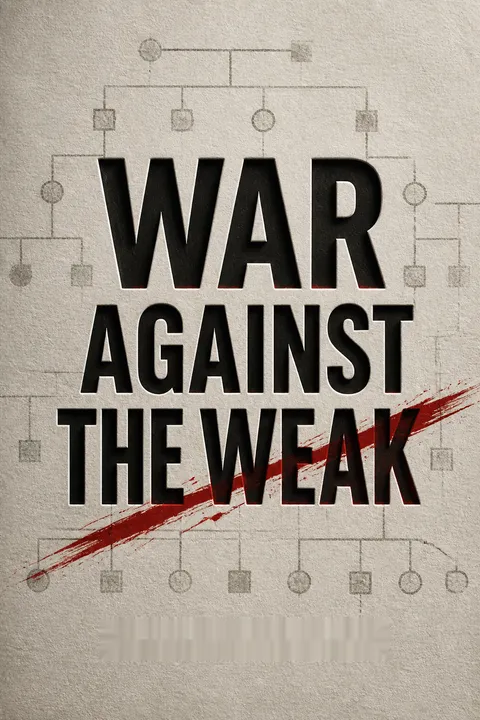
War Against the Weak exposes America's eugenics movement from the early 1900s, revealing how institutions like the Carnegie and Rockefeller foundations funded pseudoscientific efforts to sterilize "unfit" populations. The book documents how American eugenics legislation and ideology directly influenced Nazi Germany's racial policies and Holocaust. Reviewers praise Black's extensive research and documentation, though some criticize repetitiveness and poor editing. The work traces eugenics' evolution into modern genetics, warning about potential future abuses. Most find it an important, eye-opening account of a shameful chapter in American history that deserves wider recognition.
People Also Read








Download PDF
Download EPUB
.epub digital book format is ideal for reading ebooks on phones, tablets, and e-readers.








































