
Key Takeaways
1. The War's End: A Foundation of Myth and Division
“The very fact that the war began in brilliant summer weather and the revolution in cold, wet November fog was a severe handicap for the latter.”
Sudden defeat. Germany's defeat in World War I came as a sudden shock to most citizens, who had been fed a steady diet of victory news. This abrupt end, coupled with the fact that no enemy troops occupied German soil, made the "stab in the back" myth—that the army was betrayed by "November criminals" (socialists and democrats) at home—a powerful and emotionally resonant narrative for millions. This myth, alongside the idealized "spirit of 1914" (a false memory of national unity at the war's outbreak), created a deep, unbridgeable chasm in German society between those who accepted the democratic republic and those who saw it as a betrayal.
Revolutionary birth. The Weimar Republic was born out of the chaos of revolution in November 1918, with moderate Social Democrats taking power and quickly suppressing more radical leftist uprisings with the help of the army and paramilitary Free Corps. The new constitution, while state-of-the-art in its democratic principles (including proportional representation and individual rights), contained a critical flaw in Article 48, allowing the president emergency powers. This provision, intended as a defense of democracy, would later become a trapdoor to dictatorship, especially as the political culture struggled with a deep-seated prejudice against compromise.
Unjust peace. The Treaty of Versailles, signed in 1919, further fueled national resentment, particularly its "War Guilt Clause" and the imposition of reparations. While not excessively harsh by historical standards, most Germans perceived it as profoundly unjust. This perception, combined with the "stab in the back" myth, created a pervasive sense of humiliation and a desire to overturn the postwar order, setting the stage for a struggle between those seeking accommodation with the international community and those advocating rebellion.
2. Hitler's Rise: From Obscurity to Master Propagandist
“The most impudent lie always leaves something lingering behind it, a fact which is known only too well to all great expert liars in this world.”
Opportunistic beginnings. Adolf Hitler, a decorated but unpromoted WWI private, initially showed socialist leanings after the war, even serving on a Soldiers' Council. However, sensing the shift in Bavaria's political winds after the suppression of the Munich Soviet, he quickly pivoted to the far-right, joining the German Workers' Party (later the Nazis). His early political career was marked by opportunism and a remarkable ability to tap into public anger and frustration, particularly regarding the war's outcome and the perceived "betrayal" of the "November criminals."
The power of the "big lie." Hitler's political philosophy, articulated in Mein Kampf, embraced deliberate dishonesty and contempt for the German people, whom he viewed as "lazy and cowardly." He advocated the "big lie"—a colossal untruth that, due to its sheer audacity, would be more readily believed by the masses than smaller, easily refutable falsehoods. This cynical approach to propaganda, combined with his uncanny intuition for crowds' emotions and his histrionic speaking style, allowed him to captivate audiences and build a movement based on emotional appeals rather than rational arguments.
Underestimated genius. Despite his humble origins and lack of formal education, Hitler possessed unusual talents for political strategy and self-promotion. He meticulously practiced his gestures and expressions, and his ability to project an aura of authenticity, even when lying, was formidable. Constantly mocked and underestimated by the political establishment as "the Bohemian private," Hitler learned from the failed Beer Hall Putsch that he could only seize power with the army and the establishment, not against them, setting the stage for a more "legal" path to dictatorship.
3. Weimar's Fragile Stability: Stresemann's Efforts and Deep Societal Rifts
“The new Germany and its recovery can only be based on peace.”
Stresemann's statesmanship. From 1923 to 1929, Gustav Stresemann, serving as Chancellor and then Foreign Minister, led Germany through a period of stabilization and international reconciliation. He ended hyperinflation, renegotiated reparations (Dawes and Young Plans), secured the French withdrawal from the Ruhr, and brought Germany back into the European community through the Locarno Treaties and entry into the League of Nations. His efforts, alongside French Foreign Minister Aristide Briand, aimed at a durable Franco-German peace and European integration, demonstrating that Weimar was not inherently doomed.
Persistent divisions. Despite Stresemann's successes, German society remained deeply fractured along lines of class, religion, region, and occupation. "Political confessionalization" meant voters largely stayed within socialist, Catholic, or Protestant middle-class camps, making compromise difficult. Rural Protestants, in particular, resented the secular, urban, and "too Catholic, too Jewish" Weimar Republic, yearning for a return to traditional values and national unity. This deep-seated cultural prejudice against compromise, even among democrats, hindered the Republic's ability to forge a broad consensus.
Antisemitism as a code. Antisemitism served as a "cultural code" for the nationalist right, linking hostility to Jews with opposition to democracy, liberalism, socialism, and urban modernity. While not the sole cause of Weimar's downfall, it provided a powerful language for antidemocrats to criticize the democratic global order. The influx of "Eastern Jews" after WWI further exacerbated these sentiments, making antisemitism a pervasive, if often coded, element in the political landscape that the Nazis expertly exploited.
4. Globalization's Backlash: Economic Vulnerability Fuels Radicalism
“The German people have no interest in a German financial group or a German shipyard establishing a so-called subsidiary shipyard in Shanghai to build ships for China with Chinese workers and foreign steel.”
"Invisible occupation." Germany's post-WWI economy was deeply vulnerable, reliant on foreign loans (especially short-term) to meet reparations and maintain consumer spending. The international gold standard, while promoting stability, also constrained Germany's fiscal policy and limited military spending, effectively acting as an "invisible occupation" that fueled nationalist resentment. This dependence on a world economic system perceived as hostile triggered widespread anger and frustration, particularly among farmers suffering from falling food prices and industrialists chafing under wage arbitration.
The allure of autarky. The Nazis capitalized on this economic vulnerability by advocating autarky—economic self-sufficiency achieved by cutting off from the world economy. Hitler, in his unpublished Second Book, explicitly linked foreign trade and financial dependence to national weakness, arguing that Germany needed "greater living space" (Lebensraum) in the East to secure its resources. This vision of economic independence, combined with promises of social welfare and national unity (Volksgemeinschaft), resonated deeply with disaffected Protestant middle-class voters who felt abandoned by traditional parties.
International influences. Paradoxically, Nazism, while a protest against globalization, was also shaped by global trends. Hitler admired Mustafa Kemal Atatürk's success in overturning the Treaty of Sèvres and his methods of ethnic cleansing. White Russian émigrés in Munich influenced Hitler's belief in an international Jewish conspiracy, and he emulated Mussolini's cult of the leader and paramilitary style. These international influences highlight that Nazism was not a uniquely German flaw but a savage response to a broader interwar crisis affecting countries defeated in war or threatened by communism.
5. The Erosion of Democracy: Presidential Cabinets and Elite Intrigue
“You can’t rule with bayonets.”
Schleicher's machinations. General Kurt von Schleicher, a master manipulator and Hindenburg's influential advisor, sought to move Germany towards a more authoritarian, military-backed regime. He aimed to exclude Social Democrats from power and limit the Reichstag's influence, using Article 48's emergency powers to govern through "presidential cabinets." Schleicher believed the Nazis could be "tamed" and integrated into the state as a mass base for his authoritarian vision, underestimating Hitler's ambition and the movement's inherent radicalism.
Brüning's "toleration." Chancellor Heinrich Brüning, a conservative Catholic, governed from 1930-1932 using Hindenburg's executive orders, relying on the Social Democrats' "toleration" to prevent no-confidence votes. While Brüning's deflationary policies exacerbated the Great Depression, his primary goal was to end reparations, which he achieved with the Hoover Moratorium. However, his dependence on the left and his nationalist foreign policy (like the proposed customs union with Austria) alienated Schleicher and Hindenburg, who increasingly sought a more right-wing solution.
Hindenburg's shifting loyalties. President Hindenburg, a revered but politically conservative figure, consistently sought a unified right-wing government. He grew frustrated with Brüning's reliance on the Social Democrats and his own shared responsibility for unpopular austerity measures. Influenced by Schleicher and his own inner circle, Hindenburg's desire to avoid civil war and preserve his reputation led him to increasingly consider alternatives, including a deal with the Nazis, despite his personal contempt for Hitler as "the Bohemian private."
6. The Final Betrayal: Papen's Gambit and Hindenburg's Capitulation
“My conscience compels me to break with you.”
Papen's rise and coup. Franz von Papen, an aristocratic former army officer and Schleicher's chosen puppet, replaced Brüning as Chancellor in June 1932. Papen's "cabinet of barons" marked a decisive shift away from democratic constitutionality. Under Schleicher's orchestration, Papen executed the "Prussian coup" in July 1932, using Article 48 to remove the democratic Prussian government, a major blow to Weimar. This act, ostensibly to restore order after "Bloody Sunday," effectively eliminated a key democratic bulwark and paved the way for further authoritarian measures.
Nazi electoral surge and violence. The July 1932 Reichstag election saw the Nazis win 37.3% of the vote, becoming Germany's largest party. This victory was followed by a wave of SA violence, including the brutal Potempa murders, which shocked many but also demonstrated the Nazis' capacity for terror. Hitler, emboldened by electoral success, demanded the chancellorship, but Hindenburg, still wary of the "Bohemian private," refused, leading to a political deadlock and a series of inconclusive elections.
Hindenburg's fear of impeachment. The critical turning point came in January 1933. Papen, seeking revenge against Schleicher, secretly allied with Hitler. Democratic politicians, fearing a state of emergency and civil war, warned Hindenburg of potential impeachment or prosecution for constitutional breaches if he continued to rule without a parliamentary majority. This threat, combined with the Lippe-Detmold election results (which boosted Nazi morale) and Schleicher's miscalculations, finally swayed the aging president. On January 30, 1933, Hindenburg, against his personal inclinations, appointed Hitler as Chancellor, believing Papen and other conservatives could "tame" him.
7. Consolidating Dictatorship: Fire, Fear, and the Enabling Act
“The first stage! Keep fighting. These are blemishes. Must be rubbed out.”
The Reichstag Fire. The Reichstag fire on February 27, 1933, just days before a crucial election, provided Hitler with the pretext he needed. The Nazis immediately blamed the Communists, portraying the fire as the opening act of a communist uprising. The subsequent "Reichstag Fire Decree," signed by Hindenburg, suspended civil liberties and allowed the central government to seize control of state administrations, effectively dismantling the Weimar Constitution and laying the legal foundation for Hitler's dictatorship. While the exact perpetrators remain debated, the fire served the Nazis' strategic goal of creating an alibi for their own escalating violence and suppression of opposition.
"Coordination" and the Enabling Act. Following the March 1933 election, where the Nazi-Nationalist coalition secured a bare majority, Hitler pushed for the "Enabling Act." This constitutional amendment, passed with the support of all parties except the Social Democrats (who bravely voted against it amidst intimidation), delegated all lawmaking powers to Hitler's government for four years. This act, combined with the "coordination" (Gleichschaltung) of all professional organizations, federal states, and media under Nazi control, systematically eliminated all institutional checks on Hitler's power.
Suppression and terror. The early months of Hitler's regime were marked by a rapid and ruthless consolidation of power. Opposition newspapers were shut down, political meetings banned, and "Patriotic Associations" (SA, SS, Steel Helmet) were enrolled as auxiliary police, unleashing a wave of violence against opponents. The first concentration camps, like Dachau, were established for political prisoners, where torture and beatings became routine. The boycott of Jewish businesses, though initially a public relations flop, signaled the regime's intent to systematically exclude "non-Aryans" from public life, demonstrating the regime's barbarity from its earliest days.
8. The Purge: Hitler Eliminates Rivals and Critics
“The swine has been taken care of.”
Conservative resistance. Despite Hitler's consolidation of power, a small but determined conservative resistance emerged within Papen's Vice-Chancellery, led by figures like Edgar Julius Jung and Herbert von Bose. These men, disillusioned with Nazism's brutality and anti-intellectualism, sought to undermine Hitler from within. They aimed to expose the regime's flaws, influence Hindenburg, and even planned for a coup d'état, envisioning a post-Hitler Germany based on federalism and European integration.
The Marburg Speech. The resistance group's most audacious act was the "Marburg Speech" delivered by Vice-Chancellor Papen in June 1934, secretly written by Jung. The speech offered a scathing critique of the regime's lawlessness, anti-intellectualism, and suppression of freedom, cleverly framed within conservative rhetoric. While Papen himself was a reluctant and unreliable messenger, the speech resonated widely and infuriated Hitler, who immediately suppressed its dissemination and saw it as a direct challenge.
The Night of the Long Knives. Hitler's response was swift and brutal. On June 30, 1934, in what became known as "the Night of the Long Knives," he purged the SA leadership, eliminating perceived rivals like Ernst Röhm. Crucially, he also used the opportunity to settle scores with conservative critics and former allies, including Kurt von Schleicher, Ferdinand von Bredow, Herbert von Bose, and Edgar Julius Jung, all of whom were murdered. Hindenburg, reassured by Hitler's action against the SA and his fabricated narrative of a coup, praised Hitler's "decisive intervention," effectively sanctioning the murders.
9. The Enduring Lesson: Underestimating the Unthinkable
“Few Germans in 1933 could imagine Treblinka or Auschwitz, the mass shootings of Babi Yar or the death marches of the last months of the Second World War. It is hard to blame them for not foreseeing the unthinkable. Yet their innocence failed them, and they were catastrophically wrong about their future.”
The illusion of control. The conservative establishment, from Hugenberg to Brüning, Schleicher, and Papen, consistently underestimated Hitler, believing they could "tame" him and use his mass appeal for their own ends. Their self-interest, coupled with Hindenburg's desire for a unified right-wing government and his fear of impeachment, led them to make a series of miscalculations that ultimately handed Hitler absolute power. The Night of the Long Knives shattered any remaining institutional checks, leaving the army as the sole potential source of resistance, which Hitler quickly neutralized by expanding its forces and tearing up the Treaty of Versailles.
The power of irrationality. Weimar's downfall was not merely a political failure but a cultural one, rooted in a society increasingly prone to aggressive mythmaking and a rejection of Enlightenment rationality. Hitler's propaganda, with its deliberate dishonesty and appeal to gut-level hatreds, thrived in this environment. As journalist Peter Drucker observed, Nazism succeeded not because people believed its messages, but because it offered an irrational "miracle" solution to bewildering problems, appealing to a "contempt for truth" that had become a chronic ailment of democracy.
A cautionary tale. The story of Weimar's collapse and Hitler's rise is a complex interplay of a large protest movement, elite self-interest, and a culture susceptible to aggressive mythmaking. It serves as a stark reminder that democracy's survival depends on a willingness to compromise, a commitment to truth, and the courage to confront the unthinkable. The "incongruous innocence" of many Germans, who could not imagine the horrors that lay ahead, ultimately failed them, leaving a catastrophic example for future generations.
Review Summary
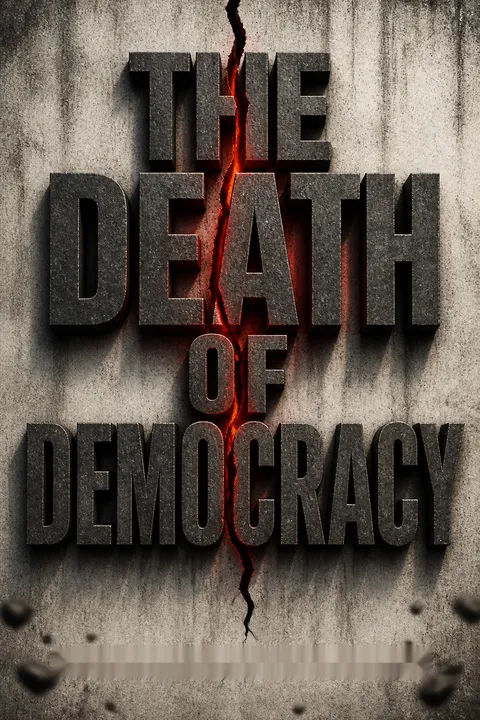
The Death of Democracy examines how the Weimar Republic collapsed and Hitler rose to power. Reviewers praise Hett's detailed analysis of political maneuvering, particularly conservative elites who believed they could control Hitler. The book explores key factors: resentment over WWI's outcome, the "stab in the back" myth, political instability, and the embrace of irrationality over facts. Many reviewers note chilling parallels to contemporary politics, especially regarding populism, misinformation, and threats to democracy. While some found the detail overwhelming, most consider it essential reading for understanding democratic fragility and authoritarian rise.
People Also Read


Download PDF
Download EPUB
.epub digital book format is ideal for reading ebooks on phones, tablets, and e-readers.








































