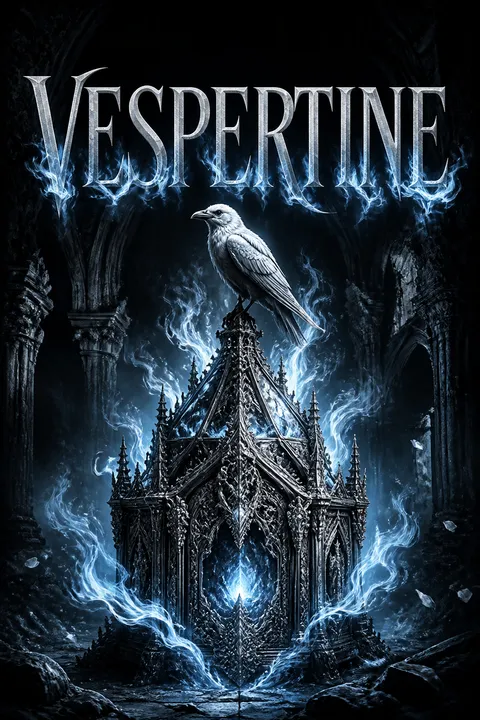

Plot Summary
Ashes and Silver Flames
Artemisia, a withdrawn novice with burned hands and a troubled past, lives in a convent where the dead threaten the living. She prefers the company of spirits and animals to people, haunted by memories of possession as a child. When a young girl goes missing in the crypt, Artemisia braves the darkness, facing spirits and her own trauma. She discovers a relic of immense power—a revenant bound to the bones of a saint—hinting at a destiny she never wanted. The convent's safety is fragile, and Artemisia's affinity for the dead marks her as both outcast and potential savior.
The Dead Walk Naimes
The convent's peace shatters when possessed soldiers attack, breaching sacred defenses. Artemisia, forced to act, draws on forbidden power to protect her sisters. The dead rise in unnatural numbers, and the rituals meant to keep them at bay begin to fail. In the chaos, Artemisia is chosen to wield Saint Eugenia's relic, binding herself to the ancient, dangerous revenant within. The act is both salvation and curse, as the spirit's hunger and voice invade her mind, and the convent's fate now rests on her ability to control the monster she has awakened.
Relic and Revenant Bound
Artemisia's bond with the revenant is fraught with terror and necessity. The spirit is ancient, cunning, and resentful, but it needs her as much as she needs it. Together, they repel the possessed invaders, but the cost is high—Artemisia teeters on the edge of losing herself to the revenant's will. The sisters view her with suspicion and awe, and she is forced to hide the true nature of her power. The revenant's voice is a constant presence, mocking, advising, and threatening, as Artemisia struggles to maintain her humanity and protect those she loves.
The Confessor's Test
A confessor from the Clerisy arrives to test the novices, seeking those with the Sight. Artemisia's past possession makes her a target, and the confessor's relic compels truth and guilt. In a battle of wills, Artemisia resists his power, refusing to be manipulated or taken from the only home she knows. The confessor, Leander, is both fascinated and frustrated by her defiance. Their confrontation reveals the depth of Artemisia's strength—and the danger she poses if she cannot control the revenant. The test becomes a duel of minds, with the fate of the relic and the convent hanging in the balance.
Shadows in the Crypt
Artemisia's connection to the dead deepens as she explores the crypt's secrets. She learns the history of the revenants—spirits of unimaginable power, bound by saints in acts of sacrifice. The convent's relic is both weapon and prison, and Artemisia's affinity for spirits is revealed to be a scar left by her childhood possession. The revenant's memories bleed into her own, and she glimpses the cost of sainthood: pain, isolation, and the burden of impossible choices. The crypt becomes a place of both revelation and dread, as Artemisia realizes she is not the first to walk this path.
Siege of the Convent
The convent is besieged by possessed soldiers and spirits, their numbers overwhelming. Artemisia, with the revenant's reluctant aid, unleashes the relic's full power, driving back the dead in a storm of silver fire. The act is both triumph and horror—she nearly loses herself to the revenant's hunger, and the sisters witness a miracle that terrifies as much as it saves. The cost is high: lives lost, innocence shattered, and Artemisia's soul further entwined with the monster she wields. The siege marks her as a living saint—or a heretic—depending on who survives to tell the tale.
Bargains with Monsters
Artemisia and the revenant strike a fragile bargain: she will not destroy its relic if it helps her save the living. Their relationship is fraught with mistrust, banter, and moments of unexpected understanding. The revenant is both tormentor and teacher, guiding Artemisia through the dangers of spirit combat and the politics of the Clerisy. Together, they navigate threats from within and without, including the confessor's relentless pursuit and the growing unrest in the land. The bargain is a dance on a knife's edge, with both sides risking annihilation if trust fails.
Chains and Choices
Captured and shackled in a harrow—a prison for the possessed—Artemisia is transported across a land in chaos. The revenant's power is suppressed, and she is forced to rely on her wits and the help of unlikely allies. The confessor, Leander, seeks to control her and the relic, believing he alone can wield such power safely. Artemisia faces impossible choices: escape and risk unleashing the revenant, or submit and lose her agency. The journey is a crucible, forging her resolve and deepening her understanding of the revenant's nature—and her own.
The Harrow's Journey
Artemisia escapes the harrow with the revenant's help, aided by a sacred raven and the chaos of a spirit attack. On the run, she witnesses the devastation wrought by the dead: villages emptied, refugees fleeing, the land blighted. The revenant reveals secrets of Old Magic, the forbidden art that shattered the world and created the revenants. Artemisia learns that the current crisis is no accident—someone is manipulating the dead, using Old Magic for their own ends. The journey is both physical and spiritual, as Artemisia confronts the legacy of the Sorrow and her place in the struggle to come.
City of Forgotten Saints
Artemisia arrives in Bonsaint, a city built on the bones of the past and haunted by the failures of saints and mortals alike. She navigates a world of relics, rituals, and political intrigue, hiding her identity among refugees and healers. The revenant's presence is both shield and threat, as she seeks answers in the city's catacombs and sacred halls. Old friends and new enemies cross her path, including Marguerite, a runaway novice whose courage and loyalty become vital. Bonsaint is a city of miracles and lies, where faith is both weapon and refuge.
The Cathedral's Secret
In the heart of the cathedral, Artemisia uncovers the truth behind the spirit attacks: a hidden ritual, a revenant not destroyed but imprisoned, and a Divine who has made a terrible bargain. The lines between saint and monster blur, as Artemisia confronts the cost of power and the nature of sacrifice. The revenant's past is revealed—its role in the creation of relics, its betrayal by those it loved, and its longing for freedom. The cathedral becomes a battleground of wills, with Artemisia caught between duty, compassion, and the hunger of the dead.
Old Magic Awakens
The ritual in the cathedral awakens Sarathiel, a revenant thought destroyed, whose power threatens to consume the city. The Divine, seduced by promises of salvation, becomes Sarathiel's vessel, and Leander is possessed in turn. Artemisia, shackled and powerless, must rely on her friends and the revenant's cunning to survive. Old Magic, once a tool of saints, is revealed as a double-edged sword—capable of both salvation and damnation. The city teeters on the brink, as faith, love, and ambition collide in a struggle that will decide the fate of the living and the dead.
The White Vicar Rises
As Sarathiel's influence spreads, a white vicar—a spirit of a slain cleric—rises to lead an army of the dead. The city is plunged into chaos, and the people turn to Artemisia as their last hope. She faces the limits of her power and the consequences of her choices, as the revenant's hunger threatens to consume all. The battle is not just against spirits, but against despair, betrayal, and the temptation to become the very monster she fights. The white vicar's rise is a crucible, forging Artemisia's resolve and forcing her to redefine what it means to be a saint.
Betrayal and Sacrifice
In the aftermath of battle, Artemisia is betrayed by those she trusted and forced to confront the true nature of sacrifice. The Divine's death at Sarathiel's hands is both tragedy and warning, and Leander's struggle for control becomes a mirror of Artemisia's own battle with the revenant. Marguerite's courage and loyalty are tested, and the bonds of friendship and faith are strained to breaking. Sacrifice is revealed as both necessary and cruel, and Artemisia must decide what she is willing to lose to save others—even if it means her own soul.
The Ritual of Blood
With the city on the brink of destruction, Artemisia and the revenant devise a desperate plan: to use Old Magic, drawing runes in her own blood to create a ritual that will destroy Sarathiel. The act is both heresy and miracle, a defiance of the Lady and an embrace of the power that once shattered the world. The people of Bonsaint rally around her, their faith a shield against despair. The ritual is a test of will, trust, and love, as Artemisia and the revenant risk everything for a chance at redemption.
The Battle for Bonsaint
The ritual unleashes a storm of power, pitting Artemisia and the revenant against Sarathiel in a battle that spans the city and the soul. The dead rise, the living fight, and the boundaries between saint and monster dissolve. Artemisia's friends and allies stand with her, their courage and sacrifice turning the tide. The revenant's true nature is revealed—not just a monster, but a being capable of love, regret, and hope. The battle is both physical and spiritual, a reckoning with the past and a forging of a new future.
The Price of Power
Victory comes at a terrible cost. The revenant is nearly destroyed, and Artemisia is left scarred in body and soul. The city mourns its dead, and the survivors struggle to rebuild. Artemisia is hailed as a saint, but she knows the truth of what she has done—and what she has lost. The revenant's survival is a miracle, but their bond is forever changed. The price of power is revealed to be both necessary and unbearable, and Artemisia must find a way to live with the choices she has made.
The Lady's Will
In the quiet aftermath, Artemisia finds solace in unexpected places: the kindness of friends, the forgiveness of those she has saved, and the enduring presence of the revenant. She learns that sainthood is not perfection, but the willingness to bear the burdens of others—and to accept her own flaws. The Lady's will is mysterious, but Artemisia chooses to trust in the grace found in small acts of love and courage. The story ends not with triumph, but with hope: a scarred girl and a haunted spirit, riding into the unknown together, ready to face whatever comes next.
Analysis
Vespertine is a dark, emotionally resonant exploration of trauma, power, and the meaning of sainthood in a world haunted by the dead. At its heart, the novel asks what it means to be good when every choice carries the risk of becoming a monster. Through Artemisia's journey—from outcast novice to reluctant saint—the story interrogates the cost of sacrifice, the danger of unchecked faith, and the necessity of forging one's own path in the face of tradition and fear. The revenant, both monster and mentor, embodies the shadow self: the parts of us shaped by pain, anger, and longing for connection. The novel's use of relics, possession, and Old Magic as plot devices externalizes psychological struggles, making the battle for the soul literal and urgent. Ultimately, Vespertine suggests that sainthood is not about perfection or purity, but about the willingness to bear the burdens of others, to forgive oneself and one's monsters, and to find grace in small acts of love and courage. The story's modern relevance lies in its nuanced portrayal of trauma, the complexity of moral choices, and the hope that even the most broken can become healers and heroes.
Review Summary
Vespertine by Margaret Rogerson receives an overall 4.09/5 rating. Readers praise the unique medieval fantasy premise featuring nun-in-training Artemisia who becomes possessed by a snarky ancient revenant. Many highlight the compelling character development, atmospheric worldbuilding, and witty banter between Artemisia and her spirit companion. The lack of romance is noted positively by some, negatively by others. Common criticisms include slow pacing in the middle, repetitive prose, and confusing magic systems. Reviewers appreciate the Joan of Arc parallels and respectful handling of PTSD, anxiety, and religious themes. Most recommend it despite minor flaws.
People Also Read








Characters
Artemisia
Artemisia is a withdrawn, traumatized novice marked by childhood possession and physical scars. Her affinity for spirits is both a gift and a curse, isolating her from others but making her uniquely suited to wield Saint Eugenia's relic. She is fiercely independent, uncomfortable with attention, and struggles with self-worth. Her journey is one of reluctant heroism: forced to confront her own darkness, she forges an uneasy alliance with the revenant, learning to trust, love, and sacrifice. Artemisia's psychological arc is about accepting her brokenness, finding strength in vulnerability, and redefining sainthood as the courage to bear impossible burdens for others.
The Revenant (Rathanael)
The revenant is a Fifth Order spirit—once a force of destruction, now bound to a relic and forced into uneasy partnership with Artemisia. Its voice is sardonic, cruel, and clever, but beneath the surface lies deep loneliness, regret, and a capacity for care it cannot admit. The revenant's history is one of betrayal and loss, having been used by saints and feared by mortals. Its relationship with Artemisia evolves from antagonism to genuine affection, as both learn to trust and forgive. Psychologically, the revenant embodies the shadow self: the parts of us we fear, deny, and must ultimately accept to become whole.
Leander (The Confessor)
Leander is a young, ambitious confessor whose mastery of relics and truth is matched only by his inner turmoil. Haunted by guilt, loss, and the burden of power, he is both antagonist and ally to Artemisia. His pursuit of control—over spirits, over others, over himself—leads him into moral grayness and ultimately to possession by Sarathiel. Leander's arc is one of self-realization: forced to confront his own limitations, he chooses humility and atonement, seeking redemption in a quieter life. His relationship with Artemisia is fraught with rivalry, respect, and a shared understanding of sacrifice.
Marguerite
Marguerite begins as a timid, gossipy novice, often the butt of jokes and the object of Artemisia's frustration. Beneath her surface lies resilience, resourcefulness, and a fierce loyalty that emerges under pressure. Marguerite's journey is one of self-discovery: running away from the convent, she becomes a healer, a conspirator, and a vital ally. Her friendship with Artemisia is hard-won, built on mutual forgiveness and the recognition of each other's pain. Marguerite represents the ordinary person's capacity for extraordinary courage and the healing power of compassion.
Mother Dolours
Mother Dolours is a towering presence—physically and spiritually—whose authority is matched by her compassion. She is a master of healing relics and a leader who balances tradition with pragmatism. Her role is that of protector and guide, offering Artemisia both tough love and the freedom to make her own choices. Psychologically, she embodies the archetype of the wise mentor, but with a subversive edge: she questions the Lady, challenges the Clerisy, and ultimately becomes Divine herself. Her faith is not blind, but forged in the crucible of suffering and doubt.
Sarathiel
Sarathiel is a Fifth Order spirit, once thought destroyed, now awakened and seeking freedom. It is cunning, patient, and deeply wounded by centuries of imprisonment. Sarathiel's manipulation of the Divine and Leander reveals its understanding of human weakness and longing. Its psychological complexity lies in its capacity for both love and cruelty, its fear of betrayal, and its ultimate self-destruction. Sarathiel is the shadow of sainthood: the cost of power, the danger of unchecked faith, and the tragedy of love twisted by fear.
The Divine (Gabrielle)
The Divine is a young, idealistic ruler burdened by expectation and isolation. Her longing for connection leads her to trust Sarathiel, mistaking its manipulation for divine guidance. Her arc is one of tragic faith: she seeks salvation for her people but becomes an instrument of destruction. Psychologically, she represents the dangers of unchecked authority, the vulnerability of loneliness, and the human need for love—even from monsters.
Charles
Charles is a city guard whose loyalty, humor, and decency ground the story's chaos. He is a bridge between the world of saints and the ordinary people who suffer the consequences of power. His friendship with Artemisia and Marguerite is marked by kindness and humility. Charles's psychological strength lies in his acceptance of his limitations and his willingness to act bravely despite fear.
Jean
Jean is a soldier possessed and traumatized by the dead, left mute and haunted. His physical strength contrasts with his emotional fragility. Through the care of friends and the healing of time, Jean regains agency and becomes a symbol of hope for those broken by the war with the dead. Psychologically, he represents the cost of violence and the possibility of healing.
Trouble (The White Raven)
Trouble is more than a raven—he is a symbol of the Lady's will, a messenger, and a companion to the lost. His presence marks moments of danger, hope, and transformation. Psychologically, Trouble represents the unpredictable, mysterious forces that guide the characters toward their destinies.
Plot Devices
Relics and Spirit Orders
The world's magic is built on relics—objects binding spirits of the dead, wielded by those with the Sight. The five orders of spirits mirror the spectrum of human suffering: innocence, nature, disease, violence, and the ultimate horror of the revenants. Relics are both salvation and curse, granting power at the cost of constant danger of possession. The narrative uses relics to explore themes of control, sacrifice, and the blurred line between saint and monster.
Possession and Duality
Artemisia's bond with the revenant is the story's core device: a constant battle for control, trust, and identity. The revenant's voice is both external and internal, blurring the line between self and other. This duality allows for unreliable narration, psychological depth, and moments of dark humor. The device also externalizes Artemisia's trauma, making her internal struggles literal battles for her soul.
Old Magic and Ritual
Old Magic is the forbidden art that caused the Sorrow, shattered death, and created the revenants. Its resurgence signals the return of ancient dangers and the failure of institutional faith. Rituals—both sacred and heretical—are used to bind, destroy, and control spirits, forcing characters to confront the cost of power and the limits of tradition. The narrative structure mirrors a ritual: cycles of sacrifice, revelation, and transformation.
Foreshadowing and Mirroring
The story is rich in foreshadowing: the history of the saints, the fate of previous vessels, and the warnings of the revenant all point toward the climax. Characters mirror each other—Artemisia and the Divine, Leander and Sarathiel, Marguerite and Artemisia—highlighting the choices that define heroism and monstrosity. The use of mirrors, reflections, and doubled scenes reinforces the theme of duality and the danger of self-deception.
Found Family and Friendship
Against the backdrop of horror and sacrifice, the story uses friendship and found family as a counterpoint to trauma. Marguerite, Charles, Jean, and even the revenant become Artemisia's family, offering support, forgiveness, and hope. These relationships are the true miracles of the story, providing the strength to face the darkness and the possibility of redemption.
About the Author
Other books by Margaret Rogerson
Download PDF
Download EPUB
.epub digital book format is ideal for reading ebooks on phones, tablets, and e-readers.








































