
Plot Summary
Shadows Over Thornwood
Elowen, once a gardener's daughter, lives in hiding with her adopted brother Leo and two bards, Hugo and Godric, deep in the Thornwood. She is cursed with a deadly touch—her skin brings death to any living thing. In a world where witches are hunted, she must keep her secret, relying on gloves and isolation. The Order, a fanatical cult, has marked Leo as a future witch, and Elowen's life is a constant struggle to protect him. The forest offers a fragile peace, but the threat of discovery looms, and the memory of her father's murder haunts her. The tension of survival, secrecy, and the burden of her curse shape her every moment.
The Deadly Touch Revealed
Elowen's life unravels when her curse is discovered and weaponized by the cruel Baron, who forces her into servitude as an assassin. Her relationships fracture—her engagement to Anselm ends, and her friendship with Lydia is poisoned by jealousy and betrayal. The Order's witch-hunters close in, and Elowen's world narrows to survival and obedience. She is forced to kill at the Baron's command, her curse now a tool of power and fear. The cost is her humanity, as each death chips away at her soul. The threat to Leo intensifies, and Elowen's isolation deepens, setting the stage for desperate choices.
Betrayal at the Manor
Ten years after her father's death, the Order invades the manor, accusing the Baron of witchcraft. In a moment of panic, Lydia betrays Elowen to save herself, exposing both their secrets. The chaos allows Leo to escape, but Elowen and Lydia are captured and taken to Ruefield Castle for trial. The betrayal cuts deep, shattering the last remnants of trust and safety. Elowen's world contracts to the cold stone of the castle, where survival depends on alliances with fellow captives and the careful concealment of her true power. The emotional wounds of betrayal and loss drive her toward a new, uncertain future.
Captives of the Order
In Ruefield Castle, Elowen faces brutal trials designed to expose and destroy witches. She forms fragile alliances with other prisoners, including the enigmatic Maelor, the Raven Lord, and the cruelly beautiful Sion, Magister Solaris. The Order's strength lies in isolation and fear, but Elowen learns that unity is their greatest weapon. The trials test her limits, forcing her to use her deadly magic to protect others. Each act of defiance brings her closer to the truth about the Order's power and the nature of her own curse. The castle becomes a crucible, forging new bonds and awakening dormant strengths.
The Raven Lord's Bargain
Maelor, the Raven Lord, reveals himself as a vampire and offers Elowen a bargain: her cooperation in exchange for protection. Sion, too, is a vampire, and both men are entangled in a secret resistance against the Pater, the immortal leader of the Order. Elowen's trust is hard-won, especially after learning Sion killed her father. The vampires' motives are murky—are they allies or predators? Elowen's power is coveted, and she is drawn into their schemes, torn between the need to protect Leo and the lure of vengeance against the Order. The lines between enemy and friend blur in the shadows.
Vampire Kingdom Beckons
Letters from Lydia, now living among vampires in Gwethel, urge Elowen to join them, promising safety and purpose. Sion's messengers arrive with threats and promises, making it clear that Elowen's power is needed to defeat the Pater. The vampires' world is seductive—luxury, power, and the promise of belonging—but Elowen resists, haunted by the violence she has witnessed. When the Order's threat becomes imminent, Maelor intervenes, forcing Elowen and her companions to flee to Gwethel. The journey is fraught with danger, and the choice to trust the vampires is a leap into the unknown.
The Oracle's Prophecy
In Gwethel, Elowen is brought before the Keeper of Relics, a fae oracle who confirms her as the prophesied Underworld Queen—the only one who can defeat the Pater. The prophecy is both a burden and a weapon, shaping the expectations of all around her. Elowen's power is to be honed, not hidden, and the vampires see her as their salvation. The fae's visions are cryptic, hinting at sacrifice and the cost of wielding death. Elowen is forced to confront the possibility that her curse is not just a blight, but the key to freedom for all oppressed by the Order.
Death and Desire
Life in the vampire castle is a heady mix of danger and decadence. Elowen is both guest and prisoner, her every move watched. Sion's seductive power and Maelor's haunted intensity pull her in conflicting directions. Training begins—Elowen must learn to control her magic, to kill without losing herself. The castle's politics are treacherous, with thralls, rival vampires, and old grudges simmering beneath the surface. Desire and death are intertwined, and Elowen's struggle is as much internal as external. The boundaries between love, loyalty, and survival blur in the moonlit halls.
The Keeper of Relics
The fae oracle's tests force Elowen to confront her willingness to sacrifice herself for others. Visions of death, both literal and symbolic, haunt her. The prophecy's weight grows heavier—Elowen is destined to give herself for the cause, but the cost to her sanity and soul is unclear. The Keeper's cottage, built of human teeth, is a grotesque reminder of the price of truth. Elowen's journey becomes one of self-discovery, as she grapples with the meaning of power, the inevitability of loss, and the possibility of redemption through sacrifice.
Training in the Temple
Sion and Maelor guide Elowen in harnessing her deadly magic, pushing her to the brink of madness and back. The ancient temple beneath the castle, dedicated to the vanquished gods, becomes the crucible for her transformation. Elowen learns to channel her power, to let it flow and return, rather than consume her. The process is painful, both physically and emotionally, as she confronts her fears of becoming a monster. The training is not just about magic, but about reclaiming agency, forging identity, and preparing for the war to come.
The Underworld Queen's Power
Elowen's mastery grows, and with it, her sense of self. She is no longer merely a victim of her curse, but its wielder. The vampires and witches rally around her, forging alliances and preparing for battle. The Order's threat is ever-present, and the need for unity is paramount. Elowen's relationships deepen—trust, love, and rivalry intertwine. The cost of power is isolation, but also the possibility of changing the world. The Underworld Queen is no longer a figure of fear, but of hope and resistance.
Infiltrating Ruefield Castle
To defeat the Pater, Elowen and Sion undertake a dangerous mission to infiltrate Ruefield Castle, using glamour and deception. The goal is to uncover the secret of the Pater's immortality. The castle is a labyrinth of danger, with guards, traps, and the ever-present threat of exposure. Elowen's skills are tested to the limit, as is her ability to trust Sion. The mission reveals not only the Pater's secret—his power is stolen from witches—but also the depths of corruption and cruelty at the heart of the Order. The escape is harrowing, and the cost is high.
The Pater's Secret
The truth is revealed: the Pater's immortality is sustained by siphoning magic from witches, through the very trials designed to destroy them. The Order's cruelty is systemic, its power built on the suffering of the innocent. Elowen's mission becomes clear—destroy the Pater, and the Order will fall. The knowledge is both a weapon and a burden, as the path to victory is paved with death. The stakes are higher than ever, and the lines between justice and vengeance blur.
Escape and Pursuit
The escape from Ruefield is a desperate race against time and enemies. Elowen and Sion, wounded and hunted, must rely on each other and their allies to survive. The journey is marked by sacrifice—physical, emotional, and moral. The pursuit is relentless, and the cost of failure is annihilation. Along the way, truths are revealed, bonds are tested, and the meaning of loyalty is redefined. The struggle is not just against the Order, but against the darkness within.
The Island Divided
Back in Gwethel, the fragile peace is shattered by betrayal from within. Epona, Maelor's lost wife, driven mad by her transformation, becomes a deadly threat. Her obsession with Sion and her hatred for Elowen ignite a crisis that threatens to destroy the resistance from within. Secrets are exposed—who killed Elowen's father, the true nature of past betrayals, and the cost of immortality. The struggle is as much for the soul of the island as for its survival.
Epona's Madness Unleashed
Epona's madness culminates in violence—she imprisons Sion, frames Elowen, and unleashes chaos. The truth of her suffering, and the consequences of choices made centuries ago, come to the fore. Elowen, imprisoned and betrayed, must rely on her own strength and the loyalty of unexpected allies to survive. The confrontation with Epona is both a battle and an exorcism, laying to rest the ghosts of love, loss, and guilt that have haunted them all.
The Truth of Blood
The aftermath of Epona's death brings painful truths to light—Maelor's role in Elowen's father's death, Sion's erased memories, and the tangled web of love and betrayal that binds them. Forgiveness is hard-won, and the path to healing is fraught with pain. Elowen and Sion, united by shared suffering and desire, find solace in each other. The past cannot be changed, but the future is theirs to shape. The stage is set for the final confrontation.
The Battle for Gwethel
The Order's army descends on Gwethel, and the final battle begins. Elowen, Sion, Maelor, and their allies unleash their full power—magic, shadow, fire, and death. The cost is immense—blood, pain, and the risk of losing oneself to darkness. The Pater is captured, his immortality ended, and the Order is broken. Freedom is won not just through violence, but through the reclamation of agency, the forging of new bonds, and the willingness to embrace both life and death. In the aftermath, Elowen, Sion, and Leo find a new home, and the promise of peace at last.
Analysis
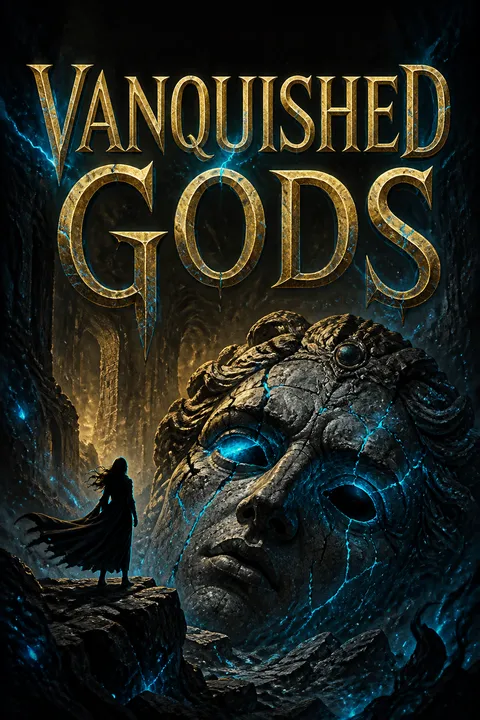
A tale of power, trauma, and reclamationVanquished Gods is a dark, lush fantasy that explores the intersection of personal trauma and systemic oppression. At its core, the novel is about reclaiming agency in a world designed to strip it away—whether through curses, violence, or the machinery of religious fanaticism. Elowen's journey from victim to queen is both literal and metaphorical, a testament to the possibility of transformation even in the face of overwhelming darkness. The story interrogates the nature of power—how it corrupts, how it can be wielded for good or ill, and how it is always entwined with loss. The relationships are complex, marked by betrayal, forgiveness, and the longing for connection. The vampires, witches, and mortals are all haunted by the past, but the novel insists that healing is possible—not through denial, but through confrontation, acceptance, and the forging of new bonds. The final victory is not just over the Order, but over the internalized fear and shame that keep people isolated. The lesson is clear: true power lies not in domination, but in the courage to love, to trust, and to hope, even when the gods themselves have been vanquished.
Review Summary
Vanquished Gods receives mixed reviews with a 3.73 rating. Many readers found the sequel disjointed from book one, criticizing rushed pacing and abrupt character changes, particularly the unexplained love interest switch from Maelor to Sion. Several felt the duology needed a third book for proper development. However, fans praised Sion's character depth, the fast-paced action, unexpected plot twists, and Crawford's writing style. Common complaints include rushed endings, inconsistent character motivations, and unresolved plot holes. Positive reviews highlighted the enemies-to-lovers romance, morally gray characters, and satisfying conclusion despite wishing for more content.
People Also Read

Characters
Elowen
Elowen is the heart of the story—a woman marked by trauma, loss, and a deadly curse. Her journey is one of transformation: from a frightened girl hiding her power, to an assassin, to the prophesied Underworld Queen. Her relationships are complex—her love for Leo is fierce and protective, her friendship with Lydia is fractured by betrayal, and her entanglement with Sion and Maelor is fraught with desire, mistrust, and shared pain. Psychologically, Elowen is driven by guilt, fear of her own darkness, and a desperate need for connection. Her development is a struggle to reclaim agency, to wield her power without losing herself, and to find hope in a world built on suffering.
Sion (Magister Solaris)
Sion is both seducer and monster—a vampire king whose charm masks centuries of violence and regret. His relationship with Elowen is electric, oscillating between attraction, rivalry, and mutual salvation. Sion's psyche is shaped by childhood trauma, the loss of his humanity, and the burden of leadership. He is haunted by guilt, especially over Epona and his role in Elowen's past, but he hides vulnerability behind sarcasm and bravado. His development is a journey toward honesty, self-acceptance, and the willingness to love and be loved, even at great cost.
Maelor (Raven Lord)
Maelor is a study in contrasts—noble and monstrous, protector and destroyer. As a vampire, he is tormented by guilt over his past, especially the death of Elowen's father and the fate of his wife, Epona. His relationship with Elowen is one of mentorship, shared pain, and unspoken longing. Maelor's psychological struggle is with self-loathing and the fear of losing control. His arc is one of seeking redemption, learning to forgive himself, and finding purpose in the fight against the Order.
Leo
Leo is the child at the center of Elowen's world—a boy marked by the Order as a future witch, and the embodiment of innocence in a brutal world. His presence grounds Elowen, giving her a reason to fight and a hope for the future. Psychologically, Leo is resilient, curious, and adaptable, but also vulnerable to the traumas around him. His development is a testament to the possibility of survival and joy, even in the darkest times.
Lydia
Lydia is Elowen's childhood friend, gifted with healing magic. Her jealousy and longing for Anselm lead to betrayal, but her arc is one of regret, growth, and eventual reconciliation. Lydia's psyche is shaped by insecurity, the desire for love, and the burden of guilt. Her healing power is both literal and symbolic—a counterpoint to Elowen's deadly touch, and a reminder that wounds can be mended, if not forgotten.
Epona (Rowena)
Epona, Maelor's wife, is a tragic figure—driven mad by her transformation into a vampire, obsessed with Sion, and consumed by jealousy. Her actions are both villainous and pitiable, a manifestation of the story's themes of loss, identity, and the cost of immortality. Psychologically, Epona is fractured, her sense of self lost to trauma and unrequited love. Her death is both a release and a warning of what unchecked pain can become.
The Pater
The Pater is the central antagonist—a leader whose power is built on the suffering of witches, sustained by stolen magic. He is both a symbol and a personification of systemic cruelty, religious fanaticism, and the corruption of power. Psychologically, the Pater is driven by fear of death, a need for control, and a willingness to sacrifice others for his own survival. His defeat is the necessary precondition for liberation.
Hugo and Godric
The two bards provide levity, loyalty, and a sense of normalcy amidst chaos. Their friendship with Elowen and Leo is a reminder of the importance of community and joy, even in darkness. Psychologically, they are survivors—adaptable, resourceful, and resilient. Their development is less about transformation and more about endurance and the quiet heroism of everyday kindness.
Bran Velenus
Bran is Sion's oldest friend, whose death at Elowen's hands sets off a chain of betrayal and retribution. He is both victim and threat, a reminder of the cost of survival and the complexity of loyalty. Psychologically, Bran is a hedonist, loyal to Sion but ultimately undone by his own choices. His death forces the characters to confront the consequences of violence and the limits of forgiveness.
The Keeper of Relics
The Keeper is the story's mystical guide, her prophecies shaping the destinies of all. She is both grotesque and wise, her visions a source of both hope and dread. Psychologically, she is detached, her perspective shaped by immortality and the knowledge of fate's inexorable pull. Her role is to force the characters to confront their own natures and the inevitability of sacrifice.
Plot Devices
Prophecy and Destiny
The prophecy of the Underworld Queen is the central plot device, driving the actions of both allies and enemies. It creates a sense of inevitability, shaping choices and justifying sacrifices. The tension between fate and free will is explored through Elowen's resistance to her role and her eventual acceptance of it. The prophecy is both a source of hope and a tool of manipulation, reflecting the story's themes of agency, identity, and the cost of power.
Duality of Power
The story's magic system is built on dualities—life and death, healing and harm, pleasure and pain. Elowen's deadly touch is both a curse and a weapon; Lydia's healing is both gift and burden. The vampires' immortality is both strength and torment. The plot hinges on the characters' ability to reconcile these opposites, to wield power without being consumed by it. The duality is mirrored in the narrative structure, with alternating moments of horror and tenderness, violence and intimacy.
Betrayal and Forgiveness
Betrayal is a recurring plot device—Lydia's treachery, Sion's secrets, Maelor's guilt, Epona's madness. Each betrayal forces the characters to confront their own darkness and the possibility of forgiveness. The narrative structure uses these moments to deepen character development, to test alliances, and to explore the limits of love and loyalty. Forgiveness is hard-won, and the process of rebuilding trust is central to the story's emotional arc.
Foreshadowing and Memory
The story is rich in foreshadowing—visions, dreams, and prophecies hint at future events, while memories (both real and erased) shape the present. The use of memory as a plot device allows for revelations, reversals, and the gradual unfolding of truth. The narrative structure is non-linear, with flashbacks and recovered memories providing context and depth. The interplay of past and present underscores the themes of trauma, healing, and the possibility of change.
The Siege and Final Battle
The final battle for Gwethel is the story's climactic set piece, bringing together all the plot threads—prophecy, power, betrayal, and redemption. The siege structure allows for moments of heroism, sacrifice, and transformation. The use of magic, strategy, and personal stakes heightens the tension, while the resolution provides catharsis and the promise of a new beginning. The battle is both literal and symbolic—a fight for survival, identity, and the right to shape one's own destiny.
Hallowed Games Series Series
About the Author
Other books by C.N. Crawford


Download PDF
Download EPUB
.epub digital book format is ideal for reading ebooks on phones, tablets, and e-readers.








































