
Key Takeaways
1. The Earth's Unfathomable Wonders
It’s only that the real world is so startling that our capacity for wonder, huge as it is, can barely skim the edges of the truth.
Startling realities. The natural world is replete with phenomena that defy belief, often surpassing the wildest fables. From swifts that fly for ten months straight, sleeping on the wing, to wood frogs that freeze solid and spontaneously restart their hearts in spring, life exhibits astonishing adaptations. These biological marvels highlight a reality far more imaginative than human fiction.
Unique adaptations. Creatures possess an array of specialized traits that enable their survival and define their existence.
- Dolphins whistle to their young in the womb, teaching them signature calls.
- Wombats have backward-facing pouches to prevent mud intrusion while digging.
- Greenland sharks, the oldest vertebrates, can live for over 500 years, navigating deep, cold waters.
- Pangolins furl their impossibly long tongues into hip pouches and curl into impenetrable balls when threatened.
Beyond human comprehension. Many aspects of animal life remain a mystery, challenging our understanding and revealing the limits of our knowledge. The precise mechanism by which a frog's heart restarts, or the full purpose of a narwhal's tusk, are still subjects of scientific inquiry. This vast unknown underscores the immense complexity and inherent wonder of the living world, much of which we are only beginning to grasp.
2. Our Entangled History with the Wild
This book is made in part of moments where we have collided with living things, in joy and destruction, grandeur and folly.
A history of collision. Human interaction with the animal kingdom is a tapestry woven with both profound reverence and startling absurdity. From St. Cuthbert enlisting sea otters to warm his feet to Alexandre Dumas being offered a romantic liaison for a mongoose and an anteater, our encounters reveal us at our most enthralled and unhinged. These stories are not just about animals; they are histories that reveal us to ourselves.
Fantastical errors. Our early attempts to understand animals were often wildly inaccurate, yet deeply revealing of human hopes and anxieties.
- Medieval texts claimed beavers would castrate themselves to escape hunters, leading to illustrations of self-mutilating beavers.
- Ostriches were believed to digest iron and hatch eggs by intense glaring.
- John Donne theorized bear cubs were born as formless lumps, licked into shape by their mothers.
These vivid mistakes highlight our quest for magical solutions and greater prowess, reflecting our terrors and desires.
Cultural significance. Animals have long served as powerful symbols, shaping our folklore, language, and even our fashion. The giraffe, once cherished as a qilin, inspired Parisian hairstyles and clothing. The raccoon, while admired for its intelligence, became tragically linked to a vicious racist slur, demonstrating how our perceptions of animals can reflect and perpetuate societal prejudices.
3. The Accelerating Loss of Life
In the last fifty years, the world’s wildlife has declined by an average of almost seventy percent.
A global catastrophe. The planet is experiencing an unprecedented and alarming decline in wildlife populations, with nearly 70% of wild things lost in just five decades. This rapid destruction, largely driven by the global West, threatens every creature on Earth. The pace of this loss makes acquiescence impossible, demanding an urgent and tenacious fight for survival.
Human-driven threats. Our activities are systematically eroding the habitats and populations of countless species.
- Overgrazing and habitat destruction have decimated wombat numbers, with the northern hairy-nosed wombat critically endangered.
- Industrialized pesticide use and global warming are reducing insect populations, starving swifts and hedgehogs.
- Deforestation for palm oil plantations threatens Borneo elephants, leading to increased human-elephant conflict.
- Trawling nets, meant for other fish, indiscriminately catch and kill seahorses, devastating ocean floors.
The cost of convenience. Our modern lifestyles and economic demands often come at the direct expense of the natural world. The sealing up of old buildings removes nesting sites for swifts, while the destruction of hedgerows eliminates cover for hares. These seemingly small encroachments accumulate into vast, irreversible damage, pushing species closer to the brink of vanishing.
4. Nature's Ingenious Adaptations
They are a species of large and capacious astonishments.
Mastery of environment. Animals possess an incredible array of specialized adaptations that allow them to thrive in diverse and challenging environments. Swifts are perfectly "sky-suited," capable of unihemispheric sleep on the wing, while Greenland sharks endure centuries in the deep, cold ocean thanks to high urea concentrations. These creatures demonstrate nature's boundless ingenuity in the face of environmental pressures.
Sensory marvels. Many species exhibit sensory capabilities far beyond human comprehension, enabling unique interactions with their world.
- Elephants communicate using infrasounds, felt through the ground by herds miles away, an evolved telegraph system.
- Golden moles, though blind, possess hypertrophied middle ear bones, allowing them to detect the footsteps of insects underground.
- Bats navigate and hunt in complete darkness using echolocation, screaming at frequencies that would deafen humans, forming precise sound-pictures of their surroundings.
Complex social structures. Beyond individual adaptations, many animals display sophisticated social behaviors and communal strategies for survival and bonding. Hermit crabs form intricate "chorus lines" to efficiently swap shells, while lemurs gather in "lemur balls" for warmth and connection. Wolves, often demonized, exhibit complex hierarchical social lives and communicate through nuanced facial expressions, challenging our simplistic views of their nature.
5. Myths, Markets, and Misguided Desires
In this faith, as with tiger claws and rhino horn, there is evidence of great human vulnerability, and enough stupidity to destroy entire ecosystems.
The aphrodisiac fallacy. A persistent human belief in the aphrodisiacal powers of rare animal parts drives immense destruction, despite scientific evidence proving such claims false. The coconut crab, tiger claws, and rhino horn are relentlessly hunted based on this "stupidity," devastating populations and entire ecosystems. Historically, we've haphazardly assigned sexual potency to everything from potatoes to badger flesh.
Traditional medicine's toll. The demand for animal products in traditional medicine, often for unproven benefits, fuels illegal wildlife trafficking on a massive scale.
- Pangolin scales, believed to stimulate lactation and improve blood circulation, make them the most trafficked animals globally.
- Bear bile, used for gallstones and fever, sustains a $2 billion trade, keeping thousands of bears in cruel captivity.
- Bird's nest soup, thought to rejuvenate, leads to the harvesting of endangered swiftlets' nests.
These practices prioritize perceived human benefit over the survival of species.
Destructive consumption. Our insatiable appetite for exotic goods and luxury items directly contributes to the endangerment and extinction of animals. The US market for giraffe parts, including coats and Bible covers, persists despite declining wild populations. The historical hunting of storks for game pie and the modern demand for bluefin tuna as a delicacy exemplify how human consumption, often driven by status or novelty, can decimate species.
6. The Irreversible Silence of Extinction
The possibility that the majority of species could, by 2050, be in fact mythic is very real.
The finality of loss. Extinction represents an irreversible discarding of unique life forms from the universe, a silence that grows louder with each vanishing species. The Barbados raccoon, a delicate subspecies, was declared extinct in 1996, leaving behind only taxidermied skins. The Hawaiian crow, the 'alalā, once a vibrant voice in the forests, was declared extinct in the wild in 2002, taking with it a piece of Hawaiian folklore.
Extinction speculation. A uniquely vile phenomenon, "extinction speculation," sees corporations and collectors hoarding endangered animal products, anticipating skyrocketing prices once the species disappears from the wild.
- Mitsubishi controls 40% of the bluefin tuna market, freezing vast stocks in anticipation of future scarcity.
- Collectors build piles of tiger pelts and vats of tiger bone wine, betting on the species' obliteration.
- Poachers are paid to kill rhinos, even those without marketable horns, to hasten the collapse of wild stocks.
This perverse incentive actively drives species towards their end, transforming living wonders into speculative assets.
Unseen vanishings. Many species disappear before we even fully understand them, or before we can accurately assess their numbers. The Somali golden mole, known only from a single jawbone found in a barn owl pellet, is listed as "data deficient," a category for 14% of all mammals. This lack of knowledge means we may be losing creatures of unimaginable splendor without ever knowing their full story or their place in the world's intricate web of life.
7. Humanity's Dual Nature: Destroyer and Creator of Wonder
The human being, too, is a shining thing. We are infinitesimally bioluminescent—chemical reactions within the human body cast up photons, the elementary particle of light.
A paradox of being. Humans possess a profound capacity for both immense destruction and the creation of wonder, a duality reflected in our interactions with the natural world. We are capable of driving species to extinction through our greed and carelessness, yet we also exhibit deep empathy, scientific curiosity, and a desire to protect and cherish life. This paradox defines our place in the ecosystem.
Invisible radiance. Like the golden mole, which glows with iridescence it cannot see, humans too possess an "invisible radiance." We are infinitesimally bioluminescent, emitting light from chemical reactions within our bodies, particularly around the face. This inherent, unseen glow serves as a metaphor for our potential for good, a reminder that even in our destructive tendencies, there is an underlying capacity for beauty and light.
The treasure of attention. Among all the world's marvels, human attention is perhaps one of the rarest and finest. The author's "wooing" of the reader is an appeal to this precious resource, urging us to direct our focus, wonder, and love towards the imperiled astonishments around us. Our capacity to observe, learn, and care is a powerful force, capable of galvanizing the action needed to protect the planet.
8. An Urgent Call for Active Hope
Hope—active, purposeful, informed hope—is what we owe the world.
The Sibylline lesson. The ancient story of the Sibylline books serves as a powerful metaphor for the escalating cost of inaction and the irreversible loss of what is burned. Each refusal to value the books at their initial price led to fewer books at a higher cost, until only a fraction remained, purchased at an exorbitant sum. This tale warns us that delaying action on environmental destruction will only lead to greater loss and a steeper price for what little remains.
A recalibration of values. To avert catastrophe, humanity needs a dramatic recalibration of its values, moving away from the "disgusting morbidity" of money as a sole possession. We must decouple desire from conspicuous consumption and invent new ways to relish the world that do not involve relentless purchasing. This shift requires challenging "pseudo-moral principles" that have exalted distasteful human qualities into virtues.
Pathways to preservation. The fight for the living world demands active, purposeful, and informed hope, translated into concrete actions.
- Vote: Engage politically, clamoring for legislation that mandates a swift transition from fossil fuels to renewable energy.
- Invest Ethically: Ensure no investments support fossil fuels or industries contributing to environmental destruction.
- Educate and Protest: Continuously learn, share knowledge, and protest both when success seems likely and when it does not, preserving integrity.
- Reimagine Consumption: Reduce meat consumption, buy less, waste less, and avoid environmentally damaging travel.
This collective effort is what we owe the world, a body of unimaginable splendor calling us to its aid.
Review Summary
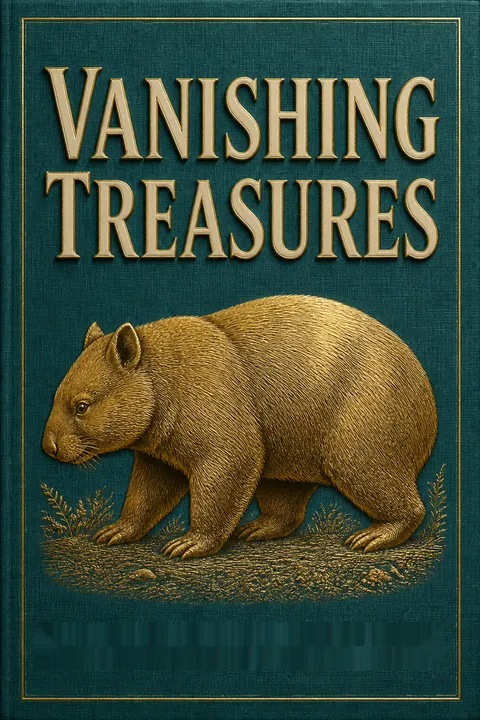
Vanishing Treasures by Katherine Rundell presents 23 essays on endangered species, earning an overall 4.16 rating. Readers praised Rundell's passionate, poetic writing that blends fascinating facts with urgency, making creatures feel intimately precious. The beautiful illustrations and audiobook narration enhanced the experience. Many appreciated the book's balance of wonder and warning, though some criticized the brevity of chapters, occasional factual errors, and limited scientific depth. While chapters focus heavily on human-related stories rather than animal details, most found it inspiring, educational, and a compelling call to conservation action.
People Also Read

About the Author
Other books by Katherine Rundell

Download PDF
Download EPUB
.epub digital book format is ideal for reading ebooks on phones, tablets, and e-readers.








































