


Plot Summary
The Dress Shop Standoff
On Founder's Day, Clay Collins1 finishes a parade buzzed on vodka hidden in a water bottle, then sweeps into Lavinia's boutique where Olivia Jaeger2 works after hours. Clay1 orders her to pin a debutante gown she privately despises, calling Liv2 swamp trash while Liv fires back a taunt about faking pleasure with a boy.
The barbs vibrate with something closer to hunger than hate. Afterward Clay1 slips into Wind House, the town funeral home, to help prepare a suicide victim's body, a ritual she hides since her ten-year-old brother Henry died of leukemia.
Two girls split by St. Carmen's train tracks emerge: Clay1 the polished Saint whose family is quietly disintegrating, Liv2 the scholarship Swamp girl counting months until she escapes to Dartmouth.
Douglas establishes intimacy disguised as cruelty, the enemies-to-lovers engine where proximity is the only permitted form of contact. Clay's alcohol, her funeral-home habit, and her performance of perfection all signal a girl anesthetizing grief, while Liv's counterpunches reveal a survivor who weaponizes wit. The dress shop functions as a class arena: one girl paying, one girl serving, both electrified. The mortuary introduces the book's governing preoccupation, mortality as clarifier. Beneath the sniping runs the story's central irony, that hatred is the acceptable mask for longing in a community policed by appearances. The scar of Henry's death already shapes Clay's compulsions before she can name them.
A Key and a Bargain
Liv2 learns she was cast as the Nurse while talentless, wealthy Callum Ames3 landed Mercutio, the reimagined role she has hungered for across four unpaid years backstage. Cornering the theater director accomplishes nothing.
Callum3 then offers a corrupt deal: he will hand her the part if she performs a live sex show with a stranger for his college friends at Fox Hill, pressing a copper key into her palm. Repulsed but calculating, Liv2 keeps the key.
Meanwhile her oldest brother Macon4 shows her a newspaper: developers led by Garrett Ames and lawyer Jefferson Collins,10 Clay1's father, are seizing land through eminent domain, and their swamp community of Sanoa Bay is next. Liv2 realizes the same key might be a weapon against the families squeezing her home.
The chapter fuses two exploitations, sexual and economic, into one machinery of privilege. Callum embodies entitlement that cannot conceive of no, treating consent as a negotiation and Liv's ambition as collateral. Douglas draws a straight line from casting couch to land grab, showing how the powerful convert others' desperation into leverage. Yet Liv refuses pure victimhood, pocketing the key and reversing its intended direction. The land plot grounds the romance in material stakes, reminding readers that identity and dignity are inseparable from economics. The theater, a place of transformation and disguise, becomes the very stage where Liv's public performance of self and her private survival collide.
Rain, Sharpie, and Revenge
A downpour turns an empty lacrosse field into a private duel; Clay1 and Liv2 wrestle in the mud until Clay pins her and demands she surrender. Later, in the school theater, Clay1 escalates viciously, stripping Liv,2 scrawling insulting critiques across her body with a marker, and pocketing her underwear as a trophy. Alone afterward, Clay1 privately unravels, ashamed and aroused, tormented that she found nothing to mock.
Liv2 answers not with fists but with craft: she reworks Clay1's despised debutante dress into a gaudy monstrosity, risking her job. To Lavinia's horror, Clay1 declares she adores it and demands it be paid for in full, secretly thrilled that Liv2 cared enough to strike back. The war has become a courtship neither will confess.
Cruelty here is displaced eros, and Douglas makes the psychology explicit: Clay degrades Liv precisely because she cannot possess her, projecting self-loathing onto the girl who exposes her. The Sharpie scene weaponizes intimacy, marking a body as both violation and confession of attention. Liv's retaliation is characteristically creative rather than brutal, asserting agency through skill instead of violence. Clay's insistence on keeping the sabotaged dress inverts the humiliation into flirtation, revealing that being noticed by Liv matters more than winning. The mud, the rain, the stolen underwear all render desire as something animal and shameful in a world that forbids it, turning aggression into the only available language of touch.
Night Tide Across the Tracks
Liv2 provokes a senior-tradition scavenger hunt, luring Clay1's crew, the Saints, into Sanoa Bay to compete against the Jaegers and their Swamp allies.
At Macon4's body shop the older brother terrifies Clay1 against a spinning motorcycle wheel, then teaches her the family's real currency: secrets, reciting her grandmother9's affair, Garrett Ames's crimes, and Gigi8's abortion. The hunt for a Seminole flag scatters everyone; Clay1 breaks into the Jaeger house, where Callum3 and Milo12 trash it and Clay dumps garbage on Megan Martelle,7 the coach's assistant.
Fleeing through the dark swamp, Clay1 and Liv2 are cornered by an alligator, and Liv drags her to safety. Shaken and undone, Clay1 begs Liv2 not to leave her and asks to be touched, before Liv walks away.
Douglas stages class warfare as ritual play, letting the swamp reclaim the terms of engagement on its own ground. Macon articulates the novel's thesis, that money is power but secrets are deadlier, arming the poor with knowledge. The alligator functions as a threshold guardian, forcing the antagonists into interdependence, and Clay's rescue by Liv reverses their social hierarchy in a single primal instant. Clay's plea to be touched marks her first crack, vulnerability escaping her armor. Liv's refusal to exploit that opening even after years of abuse reveals a moral core, an unwillingness to become cruel. The venom motif crystallizes: survival, not domination, is the truest bite.
The Video Goes Live
Enraged by watching Liv2 with Megan,7 Clay1 films the two women together and posts the video online overnight, then deletes it too late; thousands have already seen it. She rationalizes it as proof she controls Megan7's fate, but privately regrets the cruelty. Liv,2 aware she is still a minor and could destroy Clay1 legally, refuses to play victim.
Instead she reposts the video herself from her own account, stripping Clay1 of the power to weaponize it, then withdraws from Marymount to finish senior year at home. Her absence guts Clay,1 who spirals at practice and cannot eat, discovering that tormenting Liv2 was the only thing keeping her tethered. The captain has won the war and lost the only person who made her feel alive.
This is the betrayal that reframes everything, exposing how digital shame replicates the noose culture that killed Alli Carpenter earlier. Clay's impulse to publish is addiction logic, an attempt to reassert dominance over feelings she cannot govern. Liv's counterintuitive move, reposting the video herself, is a masterstroke of dignity, refusing to let humiliation be done to her. Her withdrawal weaponizes absence, and Clay's collapse reveals the parasitic nature of her cruelty: she needed the conflict to feel connection. Douglas dramatizes the paradox that the bully is often more dependent than the bullied, and that removing oneself can be the most powerful counterstrike available.
Cafeteria Slap, Locker Kiss
Liv2 storms back to confront Clay,1 slapping her in the cafeteria; they brawl until teachers pull them apart. Sent to change in the empty locker room, their argument reignites, Liv2 pinning Clay1 and demanding to know why she wants to be hurt.
The tension snaps into a first devouring kiss against the lockers, both admitting what years of aggression concealed. They grind together, frantic and confessional, until classmates enter and Clay1 panics, shoving Liv2 away and pretending nothing happened.
Liv,2 humiliated by the concealment, rescinds her Night Tide invitation and warns Clay1 not to cross the tracks. What began as hatred has combusted into desire, but Clay1's terror of exposure immediately curdles the moment, planting the seed of the recurring wound between them.
The transition from violence to eros is literalized: the same bodies that fought now cling. Douglas makes the kiss a release valve for repressed truth, the physical honesty neither girl can speak aloud. Crucially, the moment is poisoned instantly by Clay's reflexive denial, establishing the relationship's central conflict, her cowardice versus Liv's need to be chosen openly. The locker room, a site of earlier surveillance and shame, becomes the birthplace of intimacy, converting a space of policing into one of transgression. The scene diagnoses closeting as a wound inflicted on the beloved, where private passion and public erasure coexist, and where being wanted secretly is experienced as being devalued.
Roommates by Punishment
Krisjen,5 desperate to beat a rival team, drives to Sanoa Bay and coaxes Liv2 back for one away game. After Clay1 and Liv2 brawl on the field and get the game forfeited, the coach locks them in a hotel room together to sort it out. Liv2 threatens to leave for good, and Clay1 physically breaks down, vomiting and sobbing that Liv was never supposed to give up on her.
They eat pizza, trade the stories of their dead loved ones, and Clay1 reveals why she haunts the funeral home. That night, while Krisjen5 and Amy6 sleep in the next bed, the two make love for the first time, tender and terrified, Clay1 losing her virginity to Liv2 in whispered secrecy.
Enforced proximity strips away performance, and the shared confessions transform combatants into confidants. Clay's physical collapse externalizes years of suppressed grief, her body finally refusing the mask. The exchange of loss, Henry against Liv's suicided mother, builds the emotional foundation the romance needed to feel earned rather than merely combustible. The hushed lovemaking beside sleeping friends captures the erotics and the tragedy of the closet at once, ecstasy braided with the fear of discovery. Douglas frames first intimacy as mutual vulnerability, not conquest, insisting that sex here is confession, that being truly known is the actual threshold crossed. Mortality, the funeral-home theme, reframes desire as urgent, finite, precious.
Left in the Downpour
After a night promising a whole weekend together, Callum3 and the friends ambush Clay1 in the parking lot before she can collect Liv,2 who waits under trees in the rain as arranged. Cornered by her crew and afraid to be seen, Clay1 lets Callum3 take her keys and drives away, passing Liv2 soaked and abandoned on the sidewalk. The failure detonates everything Liv2 feared about being a secret.
She stops answering calls and texts, cutting Clay1 off. In class Liv2 burns Clay1's forensics test with a Bunsen burner, coldly informing her that no commitment is required but reliability is, and that she was left behind in the rain. The betrayal reasserts the central wound: Clay1 will always choose appearances over the girl she loves.
Rain, recurring throughout as a marker of exposure and truth, becomes the medium of abandonment. Clay's inability to stop the car dramatizes the closet's cruelty, how self-protection reads as rejection to the person left standing. Liv's burned test is precise theater, a controlled fire answering an uncontrolled cowardice, asserting that she can accept casual terms but not humiliation. Douglas sharpens the asymmetry of their positions: Clay risks social standing, Liv risks her heart, and only one of those losses is survivable to the wounded party. The scene reframes the romance's obstacle as internal rather than external, locating the true antagonist inside Clay's fear.
Secrets Kept, Bodies Shared
Clay1 pursues Liv2 relentlessly and they reconcile into a covert relationship, stealing time in showers, empty classrooms, and Liv2's bed while brothers roam the house. Clay1's grandmother, Mimi,9 unwittingly supplies the philosophy that sustains the arrangement, teaching Clay1 that women in their family may have anything they want as long as it stays hidden, an inch of freedom carved from a life of duty.
Clay1 discovers Mimi9 conducted a thirty-four-year affair, and that her own parents are cracking, her mother8 having ended a pregnancy while her father10 keeps a mistress in Miami. Clay1 and Liv2 trade the deepest pieces of themselves, Liv2 the story of her first love's betrayal, Clay1 her tattoo meaning within this inch I am free.
Douglas exposes the generational machinery of concealment, how privileged women inherit permission to desire only in shadow. Mimi is both liberator and jailer, offering Clay a template that is really a life sentence of secrecy dressed as sophistication. The inch tattoo, drawn from V for Vendetta, becomes the book's emblem of the sovereign private self that oppression cannot reach. Yet the parallel to her disintegrating parents warns that hidden lives corrode. The intimacy deepens through storytelling rather than sex alone, and Liv's confession of past betrayal foreshadows her fear of being disposable. The chapter interrogates whether an inch of stolen freedom can ever be enough.
Telling Gigi the Truth
Clay1's father10 finally leaves, and after a wrenching confrontation she screams at him over the phone, tears the family photos from the walls, and flees to the funeral home to prepare a drowned boy's body, where Mrs. Gates11 offers to sponsor her mortuary-science education. Returning home, she finds her mother8 collapsed among gowns in her closet, undone by the divorce.
In that raw hour Clay1 reveals the tattoo's meaning, exposes Mimi9's affair, and finally confesses she is in love with Olivia Jaeger.2 Braced for devastation, she instead learns her mother8 had long suspected and quietly accepts her, even admitting she once changed the school showers because Clay1 pitied Liv2 freshman year. Mother and daughter reconcile over popcorn and a movie.
This is Clay's true turning point, the private courage that must precede public courage. Douglas subverts the expected rejection, letting maternal love outpace fear and rewriting the closet narrative toward grace. Mrs. Gates's offer reframes Clay's morbid coping as vocation, giving her grief a productive shape and a future outside her family's script. The revelation about the showers retroactively recasts years of cruelty as displaced tenderness. By coming out to her mother before the world, Clay begins dismantling the inch-of-freedom bargain her grandmother modeled. The scene argues that authenticity is survivable, that naming a truth aloud can loosen inherited shame rather than detonate a life.
Callum Collects His Debt
Callum,3 backed by his friends, corners Liv2 alone at the boutique to enforce their bargain, insisting she still owes him the Fox Hill sex show since she accepted the Mercutio role. He dangles a new lure and a new blade: fucking him could win a meeting to petition the lighthouse as a historical landmark, protecting Sanoa Bay from demolition, which he claims will begin by year's end.
Liv2 refuses and cuts him down, diagnosing him as a man who hurts others because he will never possess what he wants. Unbeknownst to Clay,1 Liv2 also gives the Fox Hill key to her brothers, who break in and burn the founder's portrait, planting the seeds of the family's countermove against St. Carmen's untouchable men.
Callum's escalation reveals the full ugliness of transactional power, where a boy conflates coercion with seduction and cannot register refusal. Douglas ties his sexual predation to civic destruction, making him the human face of the land grab threatening Liv's home. Liv's verbal dismantling exposes his hollowness, hinting that his cruelty is rooted in a self-hatred he cannot name. The covert Fox Hill infiltration converts Macon's earlier lesson, secrets as weapons, into concrete strategy, positioning the Jaegers to fight asymmetric power with intelligence. The lighthouse becomes the story's contested symbol, a century-old structure whose survival mirrors the community's, endangered by the same men who would use Liv's body.
Tuxedo at the Ball
On the night of the debutante ball, Clay1's estranged parents reconcile in a comic, hopeful reversal, and Liv2 sends Clay1 two boxes: a stunning gown and a tuxedo, offering her a choice. Krisjen5 and the brothers conspire to bring Liv,2 dressed in the very gown, backstage. Clay,1 refusing to wear white or walk with an escort, dons the tux and top hat instead.
The two exchange trembling declarations of love before the ceremony. Then Clay1 walks the stage escorted only by her father,10 and Liv2 steps forward to take her hand as her official escort, announced aloud to a stunned banquet hall. Ignoring her grandmother9's fury and the whispers, Clay1 claims Liv2 publicly, ending the era of secrets and stolen inches.
The ball, the ultimate ritual of feminine tradition and conformity, becomes the stage for Clay's defiance, inverting a rite designed to present a marriageable daughter into a declaration of queer love. The tux is costume as truth, the theater motif made literal, Liv's craftsmanship dressing Clay's courage. Douglas stages the coming-out as spectacle rather than confession, a reversal of shame into pageantry. Choosing visibility before her grandmother's gaze, Clay repudiates Mimi's inch-of-freedom doctrine and the generational bargain of concealment. The public hand-taking answers every rain-soaked abandonment, converting the wound of being a secret into the triumph of being chosen. Love here is finally performed, not hidden.
Snatched from the Limo
Fleeing the ball toward the swamp, Clay1 and Liv2 are run off the road; Callum3 and his crew smash the limo window and drag a half-dressed Liv2 to Fox Hill to force the promised sex show. Refusing sedation and fighting like a cornered animal, Liv2 taunts and provokes her captors, works her bound hands free, and escapes into the sprinklers just as Clay1 arrives, having summoned the Jaeger brothers rather than the police.
In the confrontation on the green, Clay1 takes Iron13's hunting knife and slices Milo12's cheek, warning him never to touch Liv2 again. Dallas14 drags Callum3 inside for a private reckoning. No one is arrested, and Liv,2 bruised but unbroken, is finally safe in Clay1's and her family's arms.
The kidnapping is the climax where every thread converges, the land conflict, the sexual coercion, the class war, exploding into physical danger. Liv's refusal to be drugged is an insistence on witness and agency, choosing lucid resistance over merciful oblivion. Clay's calling the brothers instead of police acknowledges that institutional power protects predators like the Ameses, so justice must come sideways. Her marking of Milo mirrors and redeems the earlier Sharpie violation, turning the language of cruelty into protection of the beloved. Douglas insists that the poor survive not by playing fair but by biting back with precision. The rescue completes Clay's transformation from tormentor to armor.
Cameras, Cuts, and Leverage
On the golf course Clay1 confronts Callum3 with a recording of him offering the corrupt lighthouse bargain, and Liv2 reveals the brothers had planted hidden cameras throughout Fox Hill, banking secrets to keep St. Carmen off their backs.
Callum,3 cornered and bleeding, orders everyone gone; the Jaegers walk away with their leverage intact and their land protected. Afterward Liv2 discloses the deeper motive behind Callum3's vendetta: he and her brother Dallas14 had a secret relationship the previous summer, and Callum3's rejection curdled into targeting Liv.2
Rather than destroy him, Clay1 and Liv2 choose to hold the footage as insurance, wielding secrets as Macon4 always preached. Clay1's mother8 later helps petition the lighthouse into protected landmark status, saving Sanoa Bay.
The resolution vindicates the novel's central axiom, that in a rigged system secrets outmatch money, and the oppressed win by seeing rather than being seen. The Dallas revelation reframes Callum as a tragic self-hater, complicating villainy into wounded closeting, the shadow version of Clay's own arc. Douglas resists simple vengeance; leverage held is more durable than punishment spent. The landmark victory fuses the personal and political, love's triumph inseparable from the community's survival. Clay's mother's intervention completes the reconciliation of Saint power turned toward protection rather than exploitation. The story argues that transformation, not annihilation, is the mature use of hard-won power.
Epilogue
In the closing chapters, Clay1 chooses not to leave for Wake Forest, staying in St. Carmen to intern with Mrs. Gates11 and study mortuary science online while rebuilding her relationship with her parents. She insists Liv2 still chase her dream, and Liv goes to Dartmouth and thrives on stage.
Four years later the two buy the crumbling Saber Point lighthouse and begin renovating the keeper's cottage into their home. Clay1 nervously asks the prickly Macon4 for his blessing to marry Liv,2 earning his gruff approval and a threat about alligators. On the beach that night, Liv2 slides a ring onto Clay1's finger, and Clay, ready to propose herself, is beaten to it. They choose each other, out loud, forever.
The epilogue resolves the leaving-versus-staying tension that framed both girls' longings, granting each the freedom the other feared to take. Clay's mortuary vocation completes her arc from a girl haunting the dead to a woman guiding the grieving, transmuting Henry's loss into purpose. Buying the lighthouse literalizes preservation as legacy, a queer couple inheriting a structure once rumored to shelter secret lovers, continuing that hidden history now in the open. Macon's blessing subverts patriarchal ritual with tenderness beneath gruffness. The mutual, near-simultaneous proposal embodies the novel's ideal of equal claiming rather than possession. Douglas closes on permanence earned through survival, insisting that the inch of stolen freedom has finally become a whole life.
Analysis
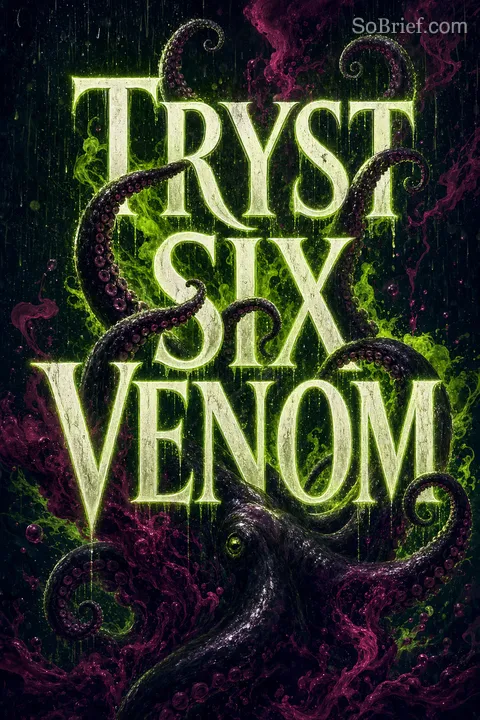
Tryst Six Venom reworks the enemies-to-lovers template into an interrogation of concealment, class, and inherited shame. Douglas locates the true antagonist not in Callum3 but inside Clay,1 whose cruelty is displaced desire and whose growth requires trading the safety of appearances for the risk of visibility. The dual first-person structure lets readers inhabit both the bully's self-loathing and the target's guarded longing, refusing to let hatred be simple. The recurring rain, the funeral home, the octopus and the inch tattoo all cohere around a single thesis: that a self policed into secrecy dies by inches, and that survival, the venom of the title, means biting back by staying alive and, eventually, being seen. The class war between polished Saints and swamp-dwelling Jaegers is inseparable from the love story; dignity and desire both cost money in St. Carmen, and the powerful convert others' desperation into leverage, whether through casting couches or eminent domain. Macon4's creed, that secrets outmatch money, gives the powerless a usable weapon, and the resolution vindicates it, the oppressed winning by surveillance and knowledge rather than fair fights that are never available to them. Douglas complicates her villain late with the revelation of Callum3's own closeting, framing him as the shadow version of Clay,1 cruelty as unmetabolized self-hatred. Mimi9's generational bargain, have anything you want but keep it hidden, is the trap Clay1 must reject, choosing the ball's public declaration over her grandmother's inch of stolen freedom. The book's most subversive move is its gentleness: the mother's acceptance, the brother's blessing, the mutual proposal. It argues that authenticity is survivable, that transformation beats annihilation, and that love claimed aloud, not hoarded in shadow, is the only version worth the sacrifice.
Review Summary
Tryst Six Venom is a polarizing FF bully romance set in high school. Many readers praise the intense chemistry between Clay and Olivia, the well-developed characters, and the authentic portrayal of sexuality. The book is noted for its sexual tension, angst, and character growth. Some criticize its length and repetitive scenes. Readers particularly enjoy the side characters, especially Olivia's brothers. While some found the bullying aspect uncomfortable, others appreciated the nuanced approach. Overall, it's considered a compelling, emotional read that successfully explores complex themes.
People Also Read









Characters
Clay Collins
Saint queen, secret mournerThe golden daughter of St. Carmen's elite, lacrosse captain and debutante whose polished surface hides corrosive grief. Since her younger brother Henry died of leukemia, Clay medicates with vodka, Valium, and clandestine visits to a funeral home where preparing the dead soothes her. She bullies Olivia Jaeger2 relentlessly, mistaking obsession for hatred and cruelty for control, because being noticed by Liv2 feels safer than admitting she wants her. Beneath the mean-girl armor lies a lonely, perceptive young woman starved for love from absent parents and a ruthless grandmother. Clay's arc traces the slow, terrifying journey from concealment to courage, from a girl who values appearances to one willing to be seen. Impulsive, funny, and fiercely protective once loyal.
Olivia (Liv) Jaeger
Swamp girl, aspiring actressA scholarship student from impoverished Sanoa Bay, one of six Jaeger siblings orphaned young when their father died and their mother took her own life. Liv is tattoo-cool, quick-tongued, and openly gay in a hostile town, enduring Clay1's abuse while dreaming of Dartmouth and the stage, especially the role of Mercutio. Patient rather than violent, she prefers craft and wit to fists, believing survival is the sharpest revenge. She carries the venom motif consciously, poison as counter-poison. Torn between loyalty to her family and hunger for a bigger life, Liv guards her heart because a first love once used her. Her deepest fear is being someone's secret, disposable and unchosen, which makes Clay1 both irresistible and dangerous.
Callum Ames
Entitled predatory heirClay1's on-and-off escort and the developer's son, handsome, ambitious, and rotten beneath the polish. Callum treats consent as negotiation and people as instruments, blackmailing Liv2 with a coveted role and later escalating toward outright coercion. He envies power he cannot fully own and hurts others to fill a hollow he refuses to examine. His cruelty, it emerges, springs from a self-hatred rooted in desires he cannot admit. He embodies the union of sexual and economic exploitation that endangers Sanoa Bay, a villain whose menace is inseparable from his class privilege and untouchability.
Macon Jaeger
Eldest brother, reluctant patriarchThe oldest Jaeger, a former Marine who abandoned his own future to raise five siblings after their parents died. Gruff, exhausted, and endlessly responsible, Macon runs the family's businesses and holds Sanoa Bay together, believing secrets, not money, are the poor's real power. He pushes Liv2 to escape to Dartmouth even as he needs her, torn between wanting her free and wanting her home. Beneath his hard exterior lies fierce, protective love. He distrusts Clay1, fearing she will treat Liv2 as disposable, and his approval must be hard won.
Krisjen Conroy
Loyal friend turned allyClay1's teammate and friend, a follower shaped by low self-esteem and a broken home where she parents younger siblings. Sleeping with Trace Jaeger15, she quietly bridges the two worlds and proves the most honest of Clay1's circle, refusing to gossip and eventually championing Clay1 and Liv2. Her nerve in crossing the tracks and pushing Liv2 back toward love reveals unexpected courage and warmth.
Amy Chandler
Homophobic mean girlClay1's status-obsessed friend, quick with a black card and cruelty. Amy's hypocrisy and homophobia surface when she discovers Clay1 and Liv2, threatening exposure, though her own family hides scandals. Prideful and lonely, she embodies the peer pressure and appearance-worship Clay1 must break from, and her arc dangles the question of whether she can grow.
Megan Martelle
Coach's flirtatious assistantA recent Marymount graduate assisting the PE department, only slightly older than the students. Drawn to Liv2, she becomes an object of Clay1's jealousy and the subject of the leaked video. Kind but weak, she represents the ordinary temptation and available intimacy Liv2 could choose instead of the far riskier love for Clay1.
Gigi (Regina) Collins
Brittle socialite motherClay1's mother, a school-board president and image-perfect socialite hollowed out by Henry's death and a failing marriage. Frozen behind skincare and control, she seems an icicle until grief and divorce crack her open, revealing a woman relearning how to live. Her response to Clay1's truth becomes a surprising well of grace and reconciliation.
Mimi
Ruthless grandmother matriarchClay1's grandmother, the most dangerous person she knows, a socialite who rules St. Carmen through tradition and secrets. Mimi preaches that women may have anything they want provided it stays hidden, having lived a decades-long secret affair herself. She is both seductive mentor and jailer, embodying the generational bargain of concealment Clay1 must ultimately reject.
Jefferson Collins
Absent lawyer fatherClay1's father, the lawyer behind the land-development scheme, largely absent in Miami with a mistress. Broken by Henry's death and estranged from Gigi8, he drifts from the family until a late reckoning. Beneath the guilt lives a man who still loves his wife and daughter and slowly tries to find his way back.
Mrs. Gates
Funeral director mentorThe compassionate owner of Wind House funeral home who quietly lets Clay1 grieve and learn beside her after Henry's death. She teaches Clay1 to restore the dead so families can say goodbye, and eventually offers to sponsor her mortuary-science education, giving Clay1's morbid solace a purpose and a future.
Milo Price
Cruel abusive boyfriendKrisjen5's volatile boyfriend, a drunk, entitled Saint who films and posts her privately, hits her, and joins Callum3's schemes. His violence toward women makes him a target of both the Jaegers and Clay1, and his cowardice marks him as Callum3's disposable henchman.
Iron Jaeger
Hot-tempered middle brotherA Jaeger brother with too many arrests and a short fuse, quick to fight but devoted to family. He drops Liv2 at school and looks out for her, his violence always aimed outward, never at kin.
Dallas Jaeger
Guarded, restless brotherA Jaeger brother eager to leave the swamp, bitter about the Saints, and privately bisexual, guarding a secret that connects him to the story's antagonist3. Watchful and hard, he keeps his business to himself.
Trace Jaeger
Playful, warm brotherThe teasing, good-natured Jaeger brother who lands lawn-service jobs and a fling with Krisjen5. He is protective of Liv2 and unusually willing to talk with Clay1 about love, urging her toward honesty.
Army Jaeger
Irresponsible young fatherA Jaeger brother raising infant son Dex alone after a bad relationship, forgetful and dependent but loving. He leans on Liv2 for childcare and represents the endless obligations chaining Macon4 to Sanoa Bay.
Chloe Harper
New girl, potential rivalA confident transfer from Austin who befriends Liv2 quickly and openly flirts with her, becoming a source of Clay1's jealousy and a reminder of the easier love Liv2 could choose elsewhere.
Aracely
Brothers' fiery exAn on-and-off partner to several Jaeger brothers who helps with baby Dex and functions as an honorary, needling sister to Liv2, still pining for Army16 and quick to clash in a fight.
Plot Devices
The Fox Hill key
Coercion turned into weaponA copper key Callum3 presses on Liv2 to enter his country-club clubhouse, the physical token of his blackmail: perform a sex show for his friends in exchange for the Mercutio role. It embodies transactional privilege, the assumption that money and status can purchase a poor girl's body and ambition. Liv2 keeps it rather than obeying, and the Jaegers use it to infiltrate Fox Hill and plant surveillance, converting the instrument of her exploitation into leverage against St. Carmen's untouchable men. The key threads through the plot from the theater to the climax, tying the sexual-coercion and land-grab storylines together and paying off in the final reckoning that protects both Liv2 and Sanoa Bay.
The leaked video
Weaponized intimacy and controlFootage Clay1 films of Liv2 kissing Megan7 and posts online in a jealous rage becomes the story's cruelest betrayal, echoing the noose-and-bullying culture that drove classmate Alli to suicide. It illustrates how digital shame reproduces small-town homophobia. Liv2 reclaims her dignity by reposting it herself, stripping Clay1 of power over her humiliation, then withdraws from school. The video crystallizes the book's central wound, the terror of exposure versus the need to be seen, and forces both girls to confront who they become when cornered. Its aftermath drives Liv2's absence, Clay1's collapse, and the eventual pivot from war to love.
The inch tattoo
Emblem of secret selfhoodClay1 wears tiny ruler-like lines inked inside her finger meaning within this inch I am free, a paraphrase of a favorite film, marking the private sliver of self that no duty or shame can claim. Paired with Liv2's octopus imagery, creatures of secrets, camouflage, and detachable survival, it externalizes both girls' hidden interior lives. The motif expresses the novel's meditation on concealment: an inch of stolen freedom carved from a policed existence. Its meaning is revealed in intimate confession, and the tattoo evolves from a symbol of hiding into a promise of belonging as the lovers move from secrecy toward an openly shared whole life.
Wind House funeral home
Grief refuge and mortality lensThe town's funeral home, where Clay1 secretly helps prepare bodies since her brother Henry's death, functions as her sanctuary and the story's memento mori. Restoring the dead so families can say goodbye gives her grief a shape and repeatedly reminds her that life is short, that there is no tomorrow, urging her toward risk and honesty. It recurs at emotional crossroads, grounding the romance in mortality's urgency and eventually transforming into her vocation. The device links private loss to the book's insistence that authenticity matters because time runs out, converting morbid compulsion into meaning and, finally, a future career.
The debutante gown and tux
Costume as identity choiceThe heirloom debutante gown Clay1 despises becomes a battleground of class and conformity, first sabotaged then reworked by Liv2's hands, so that Clay wears something her rival made. At the ball, Liv2 offers Clay1 both a gown and a tuxedo, a literal choice between the expected role and her true self. Clay1's decision to wear the tux and be escorted by Liv2 weaponizes tradition against itself, turning a rite designed to present a marriageable daughter into a public declaration of queer love. The garments dramatize the theater motif made real, clothing as truth, and mark the exact moment concealment ends.
FAQ
Synopsis & Basic Details
What is Tryst Six Venom about?
- Worlds Collide in St. Carmen: The novel centers on the intense, volatile rivalry between Clay Collins, a privileged "Saint" from the wealthy side of St. Carmen, Florida, and Olivia "Liv" Jaeger, a tough, scholarship student from the working-class "Swamp" community of Sanoa Bay. Their animosity, fueled by class prejudice and personal trauma, plays out within the confines of their elite Catholic high school.
- Hate-Fueled Fascination: What begins as bullying and defiance evolves into a complex, sexually charged dynamic as Clay and Liv find themselves inexplicably drawn to each other. Their confrontations, both public and private, blur the lines between loathing and desire, forcing them to confront hidden truths about themselves and their desires.
- Survival and Identity: Against a backdrop of family secrets, societal expectations, and the looming threat to Liv's ancestral land, the two girls navigate a path toward self-acceptance and love. Their journey is one of breaking down defenses, challenging the status quo, and ultimately choosing authenticity over the suffocating pressures of their respective worlds.
Why should I read Tryst Six Venom?
- Intense Emotional Depth: The novel delves deep into the psychological complexities and emotional turmoil of its protagonists, exploring themes of trauma, grief, and the struggle for identity with raw honesty. Readers seeking character-driven stories with powerful internal conflicts will find it compelling.
- Compelling Enemies-to-Lovers: The central relationship is a masterclass in the enemies-to-lovers trope, building palpable tension and exploring the thin line between hate and desire. The push-and-pull dynamic between Clay and Liv is captivating and emotionally resonant.
- Sharp Social Commentary: Beyond the romance, the book offers a biting critique of classism, privilege, and societal hypocrisy, particularly within the seemingly perfect facade of the wealthy community. It highlights the resilience of those marginalized and the cost of conformity.
What is the background of Tryst Six Venom?
- Florida's Divided Landscape: The story is set in St. Carmen, Florida, a town sharply divided by class, represented by the affluent "Saints" and the working-class "Swamp" community of Sanoa Bay. This geographical and social divide is central to the conflict and characters' identities.
- Entrenched Social Hierarchy: The narrative explores a rigid social structure where wealth and family name dictate status, particularly within the private Catholic high school, Marymount. This environment fosters prejudice and power dynamics that heavily influence the characters' interactions and opportunities.
- Legacies of Loss and Survival: Both protagonists carry the weight of family trauma – Clay's grief over her brother's death and her parents' crumbling marriage, and Liv's experience as an orphan and her family's ongoing fight for their land. These personal histories deeply inform their motivations and resilience.
What are the most memorable quotes in Tryst Six Venom?
- "Within this inch…I'm free.": This phrase, referenced by Liv and later revealed to be connected to Clay's hidden tattoo (five lines resembling an inch mark), symbolizes the small, fiercely guarded piece of self where one can be truly free from external pressures and expectations. It encapsulates their shared struggle for internal liberation despite external constraints.
- "Everyone is our type when they're naked!": This seemingly crude Jaeger family motto, particularly associated with Iron and later echoed by Army, represents the family's raw, unpretentious view of desire and survival. It contrasts sharply with the repressed, performative sexuality of the Saints and highlights the Jaegers' unapologetic embrace of their physical needs and desires, free from societal judgment.
- "You're never getting away from me, Jaeger.": Uttered by Clay during moments of intense intimacy and conflict, this line encapsulates her deep-seated obsession and possessiveness over Liv. It reveals her fear of abandonment and her desperate need to hold onto the one person who makes her feel truly alive, even if it means resorting to control or manipulation.
What writing style, narrative choices, and literary techniques does Penelope Douglas use?
- Dual POV and Mirrored Structure: The story is told through the alternating perspectives of Clay and Liv, providing intimate access to their thoughts, feelings, and motivations. This dual narrative highlights their contrasting internal worlds and the misunderstandings that fuel their conflict, allowing readers to empathize with both characters.
- Sensory and Visceral Language: Douglas employs vivid, often raw and visceral descriptions, particularly during moments of physical confrontation or sexual tension. This intense sensory detail immerses the reader in the characters' emotional and physical experiences, making the high-stakes interactions feel immediate and impactful.
- Symbolism and Motif: Recurring symbols like the lighthouse, the Sharpie, the key, and the Jaeger family's snake and hourglass motif are woven throughout the narrative. These elements deepen thematic exploration, representing concepts like hope, control, vulnerability, time, and survival, often mirroring the characters' internal states and relationship dynamics.
Hidden Details & Subtle Connections
What are some minor details that add significant meaning?
- Clay's Octopus Obsession: Clay's fascination with octopuses, seeing them as "aliens" with the "ability to do what no other creature can" and the "allure of its secrets," subtly reflects her own feelings of being different and misunderstood. It hints at her hidden depths and desire for a unique identity beyond her prescribed role as a "Saint."
- The Leaky Ceiling at Mariette's: The persistent leak in the ceiling at Mariette's, the Jaeger family's restaurant, is a small detail that symbolizes the constant struggle and decay within their world, despite their resilience. It's a physical manifestation of the external pressures and lack of resources that contrast with the polished, seemingly flawless world of the Saints.
- The Missing Photos in the Jaeger House: Liv notices missing pictures on the walls of her family home, particularly those of her parents and fewer of herself from her younger years. This detail quietly underscores the disruption and loss caused by her parents' deaths and her subsequent role in holding the family together, suggesting a period where documenting life wasn't a priority amidst survival.
What are some subtle foreshadowing and callbacks?
- The Debutante Dress as a "Cupcake": Clay's initial description of her debutante dress as a "cupcake" and her desire to look like anything but foreshadows her eventual rejection of the traditional, saccharine image of a debutante. It sets up her later choice to subvert expectations at the ball by wearing a tuxedo.
- Liv's "Within This Inch" Tattoo: The brief mention of Clay's hidden tattoo early in the book, described as lines resembling an inch mark, is a subtle detail that becomes a significant callback when Liv later recognizes it and connects it to the quote "Within this inch... I'm free." This shared understanding of a deeply personal symbol highlights their growing intimacy and shared desire for freedom.
- The Lighthouse's Deterioration: Early descriptions of the Saber Point Lighthouse as obsolete and eroding foreshadow its later significance as a symbol of the Jaeger family's precarious hold on their land and their eventual efforts to preserve it, turning a decaying structure into a beacon of hope and a future home.
What are some unexpected character connections?
- Mimi Collins's Affair: The revelation that Clay's seemingly perfect grandmother, Mimi, had a decades-long affair with the old sheriff is a surprising detail that shatters the illusion of the Collins family's moral superiority. It reveals a hidden history of rebellion and secret desires within the "Saint" world, mirroring Clay's own hidden life and providing context for her mother's struggles and Mimi's views on keeping secrets.
- Callum Ames and Dallas Jaeger's Past: The unexpected connection between Callum and Dallas, revealed to have had a brief sexual relationship the previous summer, adds a layer of complexity to Callum's targeting of Liv. It suggests his actions are partly motivated by unresolved feelings or resentment related to Dallas, making his cruelty more personal than just class warfare.
- Mrs. Gates's Mentorship of Clay: The funeral director, Mrs. Gates, offering Clay a place to process her grief and learn embalming is a surprising and significant connection. It provides Clay with a unique coping mechanism and a hidden world away from her superficial life, hinting at a potential future path and highlighting the unexpected sources of support available to her.
Who are the most significant supporting characters?
- Macon Jaeger: As Liv's oldest brother and the de facto patriarch, Macon embodies the weight of family responsibility and the struggle to protect their way of life. His tough love and skepticism challenge Liv, but his ultimate support is crucial to her journey, highlighting the complex dynamics of family loyalty and sacrifice.
- Krisjen Conroy: Initially presented as Clay's loyal follower, Krisjen evolves into a bridge between the two worlds and a symbol of potential change within the "Saint" clique. Her growing friendship with Liv and willingness to defy expectations demonstrate that not everyone is trapped by their social standing, offering moments of genuine connection and support.
- Mrs. Gates: The funeral director serves as a quiet but profound mentor figure for both girls. For Clay, she offers a space to confront death and find purpose; for Liv, she represents a potential path for her future and a source of unconditional support, embodying compassion and resilience outside the main social circles.
Psychological, Emotional, & Relational Analysis
What are some unspoken motivations of the characters?
- Clay's Need for Control: Beyond simple meanness, Clay's relentless bullying of Liv is driven by a deep-seated need for control in a life where she feels increasingly powerless, particularly concerning her brother's death and her parents' failing marriage. Targeting Liv, who is unapologetically herself, is an attempt to assert dominance over something she can influence.
- Liv's Desire to Be Seen: Liv's pursuit of the Mercutio role and her willingness to take risks, even accepting Callum's degrading offer, stems from a profound desire to be seen and valued for her talent and hard work, not just her background. It's an unspoken yearning for recognition in a world that constantly tries to diminish her.
- Callum's Insecurity: Callum's manipulative behavior and need to control others, particularly women and those he perceives as weaker, is rooted in deep insecurity, possibly exacerbated by his father's actions and his past relationship with Dallas. His power plays are a desperate attempt to feel dominant and in control in a world where he may feel fundamentally inadequate.
What psychological complexities do the characters exhibit?
- Trauma and Coping Mechanisms: Clay exhibits complex grief and trauma responses following her brother Henry's death, including emotional numbness, a need for control, and seeking out morbid experiences at the funeral home as a coping mechanism. Liv, dealing with the loss of both parents and the burden of family responsibility, displays resilience but also a deep fear of abandonment and a tendency to push people away.
- Internalized Prejudice: Both characters grapple with internalized societal prejudices. Clay, despite her privilege, is trapped by the rigid expectations of her world and fears disappointing her family. Liv, while outwardly defiant, carries the weight of being labeled "swamp trash" and struggles with feelings of not being "good enough" for certain opportunities or relationships.
- The Interplay of Hate and Desire: The central psychological complexity lies in how Clay and Liv's intense hatred for each other becomes intertwined with powerful sexual desire. Their animosity provides a safe outlet for emotions they can't express elsewhere, and the forbidden nature of their attraction amplifies its intensity, creating a volatile mix of pain and pleasure.
What are the major emotional turning points?
- The Sharpie Incident's Aftermath: While seemingly cruel, the Sharpie incident is a twisted emotional turning point. Clay's violation of Liv's body, and Liv's subsequent reaction, shatters their established dynamic and exposes a raw vulnerability that neither can ignore, paving the way for their relationship to move beyond simple antagonism.
- The Shower Scene Confession: The intimate shower scene after the lacrosse game is a pivotal emotional turning point where Clay's carefully constructed facade crumbles. Her breakdown and confession of loneliness and fear reveal the depth of her pain to Liv, shifting Liv's perception of her from simply a bully to a complex, hurting individual, and solidifying their emotional connection.
- Liv's "I Love You" Confession: Liv's declaration of love to Clay in the truck after the brawl at Fox Hill is a major emotional turning point. Despite her fear of being hurt and her belief that Clay is a "wimp," Liv chooses vulnerability and honesty, forcing Clay to confront the reality of their feelings and setting the stage for Clay's own eventual acceptance and public declaration.
How do relationship dynamics evolve?
- From Bully/Victim to Obsession/Defiance: The initial dynamic of Clay as the dominant bully and Liv as the defiant victim gradually shifts into a mutual obsession. Clay becomes fixated on provoking Liv, while Liv finds a twisted validation and fascination in Clay's attention, creating a push-and-pull where both are actively engaged.
- From Secret Encounters to Open Love: Their relationship evolves from clandestine, often volatile sexual encounters fueled by anger and curiosity to a more tender, emotionally connected bond. The transition is marked by moments of vulnerability and shared secrets, culminating in their decision to defy societal expectations and be openly together, transforming their dynamic from hidden shame to public pride.
- From Isolation to Chosen Family: Both characters, feeling isolated within their own families and social circles, find a sense of belonging and acceptance in each other. Their relationship becomes a form of chosen family, providing the emotional support and understanding they lack elsewhere, and eventually expanding to include allies who accept them for who they are.
Interpretation & Debate
Which parts of the story remain ambiguous or open-ended?
- The Full Extent of Callum's Actions: While Callum's manipulative and abusive tendencies are clear, the precise nature and frequency of his actions with other girls, particularly his stepdaughter, remain somewhat ambiguous. The story hints at darker behavior without explicitly detailing it, leaving the reader to infer the full extent of his depravity.
- The Future of the Collins Marriage: The ending suggests a potential reconciliation or at least a new dynamic for Clay's parents, but their long-term future remains open-ended. Whether they can truly heal from their grief and infidelity, or if their renewed connection is temporary, is left for the reader to ponder.
- The Long-Term Impact on St. Carmen: While Clay and Liv's public relationship and the exposure of some "Saint" secrets cause a stir and inspire some change, the lasting impact on St. Carmen's deeply entrenched social hierarchy and prejudices is not fully resolved. The ending focuses on the characters' personal happiness, leaving the broader societal shift as a hopeful possibility rather than a certainty.
What are some debatable, controversial scenes or moments in Tryst Six Venom?
- The Sharpie Incident: Clay marking Liv's body with a Sharpie is highly controversial due to its non-consensual nature and the power imbalance involved. Readers may debate whether this act, rooted in humiliation and control, can be reconciled within the context of their later relationship or if it represents an unforgivable boundary violation.
- The Use of Violence and Aggression: The novel features numerous instances of physical aggression and violence, particularly between Clay and Liv and during the Night Tide brawl. The portrayal of these acts, sometimes intertwined with sexual tension or presented as expressions of passion, can be debated regarding its role in the narrative and its potential normalization of harmful dynamics.
- The Transactional Nature of Relationships: The story presents relationships, particularly within the "Saint" world, as often transactional (e.g., Callum's offer to Liv, Mimi's views on marriage). The debate lies in whether the protagonists fully escape this mindset or if elements of it persist in their own interactions, even as they strive for genuine connection.
Tryst Six Venom Ending Explained: How It Ends & What It Means
- Choosing Love and Authenticity: The novel concludes four years after high school, with Clay and Liv living together in the renovated lighthouse in Sanoa Bay. They have navigated college separation (Liv at Dartmouth, Clay initially planning Wake Forest but choosing to stay closer, taking online classes and interning at Wind House) and personal growth, ultimately choosing to build a life together openly in the community that once rejected them. This signifies their triumph over societal pressure and their commitment to their authentic selves and each other.
- Healing and Reconciliation: Clay's parents have divorced but are attempting reconciliation, and Clay has found a path toward healing her grief and connecting with her mother. Liv's family, while still chaotic, remains a source of support, and the threat to their land has been mitigated, partly through the leverage gained from the Fox Hill footage and Clay's family's influence. This suggests that while past wounds leave scars, healing and new forms of family connection are possible.
- Building a Future on Their Own Terms: The final scenes show Clay proposing to Liv (or rather, Liv proposing to Clay first, then Clay proposing back), solidifying their commitment. Their plan to renovate the lighthouse and live there symbolizes their creation of a safe, visible space for themselves, transforming a decaying structure into a beacon of their enduring love and resilience, proving that they can thrive outside the confines of St. Carmen's old rules.
About the Author
Other books by Penelope Douglas



Download PDF
Download EPUB
.epub digital book format is ideal for reading ebooks on phones, tablets, and e-readers.








































