
Key Takeaways
1. Media Actively Distorts Trans Realities, Fostering Harmful Ignorance
It is not just the absence of knowledge that keeps a truth from being widely known and accepted; it is also the active production of ignorance that suppresses that truth.
Manufacturing misinformation. The media frequently misrepresents trans lives, actively creating ignorance rather than simply lacking information. This "production of ignorance" distorts public perception, leading to widespread confusion and prejudice. Examples include:
- Sensationalist headlines: "Uncle Sam’s Insane Push for TransGender Rights in School Locker Rooms"
- Dehumanizing language: "Monster Chef and the She Male," "The Gender Bender"
- Focus on "sex changes" and genitalia, reducing trans identity to a single, often violent, medical act.
Real-world consequences. This distorted media portrayal has devastating real-world impacts. The tragic suicide of primary schoolteacher Lucy Meadows, following a transphobic media campaign, highlights how public ridicule can lead to fatal outcomes. The coroner explicitly blamed the press, stating, "Her only crime was to be different."
Unlearning prejudice. To truly understand trans people, society must first unlearn the falsehoods perpetuated by the media. This involves recognizing that trans people are complex individuals with diverse lives, not just punchlines or warnings. The constant cycle of anti-trans opinion pieces, reports of hurt, and pro-trans rebuttals, while generating clicks, ultimately serves to maintain this harmful ignorance.
2. Mainstream Narratives Prioritize Glamour Over Systemic Trans Issues
The same people who paid money to gawk at Jorgensen, who might even call her 'brave,' were all too often complicit in making and maintaining a world savage in its punishment of her trans siblings.
The "Cinderella moment." Mainstream media often favors a simplified, glamorous narrative of trans identity, focusing on "overnight sex changes" and personal fulfillment rather than the complex realities of trans communities. This pattern, seen with figures like Christine Jorgensen in the 1950s and Caitlyn Jenner today, prioritizes:
- Dramatic shifts from hyper-masculine to hyper-feminine.
- "Before" and "after" photos that reinforce stereotypes.
- Stories of individual success that downplay systemic transphobia.
Ignoring the marginalized. While celebrity trans figures gain attention, the most vulnerable members of the trans community—often trans women of color, sex workers, and those experiencing poverty—are ignored or sensationalized as victims or jokes. Shows like CSI and The X-Files have historically depicted marginalized trans women as:
- Psychotic murderers or dead bodies.
- Sex workers or drug addicts.
- Objects of ridicule, with genitalia jokes.
A double-edged sword. This selective visibility creates a "trans chimera" where a narrow, privileged image becomes the public face of trans identity. While some trans celebrities use their platforms for advocacy, the broader effect can be to obscure the urgent issues of violence, discrimination, and lack of resources faced by the majority of trans people, perpetuating a cycle of ignorance and harm.
3. Language is Essential for Trans Self-Discovery and Challenging Norms
What can be described can be communicated and made real, becomes a shield against that invisibility and dissolution.
Finding a voice. For many trans individuals, the journey of self-discovery is deeply intertwined with finding the language to articulate their inner truth. Before words like "genderqueer" or "transgender" were accessible, feelings of gender variance remained "murky, childish fantasies," making it difficult to solidify a stable self-narrative.
Beyond binary labels. Terms like "transgender," "genderqueer," and "gender-fluid" serve a dual purpose: they provide personal language for individual identity and contribute to a broader cultural language of gender plurality. This isn't about creating more rigid categories, but about expanding the lexicon to accurately reflect diverse selfhoods.
- "Trans" as a broad, flexible umbrella term.
- "Cis" as its necessary antonym.
- The singular "they" as a gender-neutral pronoun, historically present in English, now vital for non-binary individuals.
Resisting erasure. The deliberate dismissal of trans-related language as "made up" or "too PC" is a tactic to invalidate trans identities. Correct pronoun usage, for instance, is not merely politeness but a fundamental affirmation of a person's existence. When others refuse to use appropriate language, it can feel like a fundamental part of one's self is "spoken away," leading to invisibility and dissolution.
4. Biological Sex and Gender are Complex, Fluid, and Beyond Simple Binaries
Whether we are born with bodies that defy conventional male/female classification, or adapt those bodies later in life, we are better served by an idea of a sexual continuum than by the prison of two separate and opposite categories.
Challenging the "sex binary." The common understanding of sex as a simple, unalterable male/female binary is a distortion of biological reality. Pioneering biologist Anne Fausto-Sterling argued for "at least five sexes—and perhaps even more," highlighting the spectrum of human sexed development.
- Intersex variations: Up to 1 in 150 people are intersex, with diverse sex development (e.g., clitoromegaly, micropenis, chromosomal variations).
- Shared biological foundations: All humans begin with similar fetal structures, and sexed characteristics are far more similar than different.
Beyond chromosomes. Relying solely on chromosomes (XX/XY) as the "truth" of sex is scientifically flawed. Chromosomes are just one of six broad categories of sexed characteristics, alongside hormones, internal/external sex organs, secondary sexual characteristics, and general morphology. None of these are simple either/or, and they can combine in diverse ways.
- Proprioceptive sex: Many trans people experience a "subconscious sex" or "proprioceptive sex"—an intrinsic sense of what their body should be, which can be at odds with their assigned sex. This is a profound, physical experience, not merely a mental one.
Sex changes are natural. The idea that trans bodies are "unnatural" ignores that all bodies undergo "sex changes" throughout life: puberty, pregnancy, menopause, and even microchimerism (migration of cells between parent and child). Dismissing trans-related changes as "mutilation" while accepting other medical interventions reveals a prejudice against trans existence, not a scientific truth.
5. Affirming Care for Trans Youth Significantly Improves Well-being
Being trans is not a fate anyone needs saving from. But everyone, every child, needs to be loved for who they truly are, without conditions.
Misconceptions vs. reality. Public discourse often sensationalizes the idea of "trans children" and "sex changes for toddlers." In reality, care for prepubescent gender non-conforming children is primarily social and reversible: allowing changes in pronouns, hairstyles, clothes, and names. No mainstream medical practice performs surgery or provides hormones to prepubescent children.
Early awareness, late language. Most trans adults report knowing they were trans since childhood, often around age eight, but felt shame and isolation due to lack of language and societal disapproval. This isolation can lead to severe mental health issues, including high rates of suicide attempts among unsupported trans youth.
The power of affirmation. Gender-affirming therapy, which supports identity exploration without a predetermined outcome, is proven to be highly effective.
- Puberty blockers: These reversible medications delay puberty, giving trans teenagers time to explore their identity without the distress of developing unwanted secondary sex characteristics.
- Positive outcomes: Longitudinal studies show that trans youth who receive gender-affirming care, including puberty blockers and later hormones, experience mental health outcomes on par with their cis peers and express no regret.
Rejecting conversion therapy. Conversion therapy, which attempts to change a child's gendered behavior, is unethical and harmful, often serving as the "final straw" for suicidal youth like Leelah Alcorn. It is a gross betrayal of the Hippocratic oath, forcing conformity through shame and conditional love.
6. The Myth of Trans Insanity Undermines Acceptance and Mental Health
There is such a strong belief that believing oneself to be any gender other than that you were assigned at birth is itself a sign of psychosis, that trans people have to prove themselves to be saner than sane in order to be believed.
Double stigma. Trans people face a dual challenge: being labeled "insane" for their gender identity, and having genuine mental health issues dismissed or used to invalidate their transness. This forces a terrible choice: hide mental health struggles to access trans care, or risk losing both.
Historical roots. The myth of trans insanity has deep historical roots, dating back to ancient descriptions of "Scythians' madness" for cross-gendered behavior. Later, early psychologists and psychiatrists pathologized gender variance, linking it to "criminal types" and "moral insanity."
- Pop culture villains: This myth is perpetuated in media, where trans characters are often depicted as serial killers or disturbed individuals (e.g., Psycho, The Silence of the Lambs).
- Conversion therapy rationale: The belief that being trans is a delusion was the rationale behind brutal conversion therapies like electroshock and forced institutionalization.
Personal experience. The author's own experience with severe OCD and depression highlights the distinction between mental illness and gender identity. While transphobia and dysphoria exacerbate mental health struggles, they are distinct from the fundamental awareness of one's gender. Being trans is not a "sickness to be cured," but a basic aspect of selfhood.
Proving sanity. Trans people are often forced to be "saner than sane" to be believed, facing denial of transition-related care if any mental health issues are present. This systemic invalidation prevents trans individuals from receiving holistic care and perpetuates the harmful stereotype that their identities are a product of a "disturbed mind."
7. Unconditional Support and Community are Vital for Trans Resilience
It is a very powerful thing, when you feel at your lowest point, to know that someone else depends upon you.
The power of affirmation. Genuine support from friends and family is the single biggest positive factor for trans people's mental health and well-being. Studies show that trans youth with supportive parents have significantly lower suicide rates (4% vs. 57%). This unconditional love provides a crucial buffer against societal hostility.
Community as an anchor. Beyond individual relationships, a sense of purpose and mutual care within broader trans communities is vital. This collective support combats the depression and anxiety stemming from prejudice. The author's personal story with their brother, Jonathan, illustrates this:
- Sibling bond: Jonathan provided an "anchor" during intense bullying and mental health struggles, offering laughter, a space to vent, and a constant reminder of the author's value.
- Mutual dependence: Knowing someone depended on them, even in small ways (homework, screenplays), provided a powerful reason to keep fighting to stay alive.
Healing through connection. The author's return to their old school, where they had been bullied, and the unexpected support from current students and staff, brought profound healing. This experience demonstrated that it's "never too late for those around us—those who aren’t trans—to reach out and offer their support."
Beyond individual struggle. While trans people endure immense pain, the ability to connect, share, and support each other transforms individual suffering into collective strength. This mutual exchange of care fosters resilience and a belief in a better future, proving that "your life makes my life better—thank you for being here."
8. The Denial of Trans "Realness" Fuels Systemic Violence and Discrimination
The idea that trans women are fake women, that trans men are fake men, is one that is currently playing out in schools, prisons, the legal system, public life, the political circus that inflames every other arena.
The "fake" vs. "real" dichotomy. Trans people are constantly held up as "fakes" in contrast to a "cis original," leading to dehumanizing labels like "parody" or "pantomime." This denial of "realness" is not a mere difference of opinion; it has life-or-death consequences for the most vulnerable.
Bathroom bills and public life. The battle over public bathrooms exemplifies this fight for "realness." Laws forcing trans people to use facilities matching their birth certificates are:
- Logistically absurd: How are they enforced? By ID checks? Physical inspections?
- Based on myth: There is no evidence of trans people attacking cis people in bathrooms; instead, public toilets are sites of transphobic violence.
- Exclusionary: Denying access to bathrooms effectively cuts off access to public life, work, and education.
Prison atrocities. The denial of trans women's "realness" leads to their placement in men's prisons, where they face horrific abuse, sexual assault, and denial of medical care. The deaths of Vicky Thompson and the experiences of Passion Star highlight the systemic violence and lack of protection.
- "Trans panic" defense: This legal defense excuses violence against trans people by claiming the perpetrator experienced extreme disgust or rage upon discovering the victim's trans status, effectively blaming the victim for their own death.
Legal limbo. Many trans people exist in a legal gray area, struggling to update documents to reflect their true gender. Countries often demand sterilization, divorce, or conformity to rigid stereotypes to grant legal recognition, reinforcing the idea that trans identity must be "earned" rather than self-declared.
9. Intersectional Feminism is Crucial for Collective Trans Liberation
If feminism is to help everyone, it has to learn from everyone.
Feminism for all. Trans people, regardless of their specific gender identity, require feminism because they are subject to gender-based abuses rooted in a hierarchical, coercive gender system. Whether seen as "gender non-conforming women" or "gender non-conforming men," trans individuals face unique forms of misogyny and gendered violence.
Challenging trans-exclusionary arguments. Some feminist factions, often labeled "trans-exclusionary radical feminists" (TERFs), argue against trans inclusion based on:
- Reinforcing the binary: Claiming trans people uphold a sexist binary, ignoring the diversity of trans identities and the coercive medical gatekeeping trans people face.
- "Biology is destiny": Asserting that sex is binary and contains inherent spiritual/moral differences, echoing outdated Freudian and early suffrage arguments.
- Flawed socialization: Arguing trans women cannot be "real" women because they were "socialized as men," ignoring the complexity of socialization, childhood gender awareness, and brain plasticity.
The power of intersectionality. Kimberlé Crenshaw's concept of intersectionality is vital for understanding how multiple oppressions (race, gender, class, sexuality) intersect and compound harm. Denying intersectionality, often dismissed as "identity politics gone mad," ignores the lived realities of marginalized individuals.
- Beyond single-issue movements: True liberation requires addressing all forms of oppression simultaneously, rather than prioritizing one group's needs over another's.
- Learning from diverse experiences: Intersectional feminism enriches understanding by incorporating the unique insights of trans women, trans men, and non-binary individuals, providing a more comprehensive toolkit to dismantle gendered oppression.
A call for unity. Feminism must be pluralistic and inclusive, embracing the "messier and more complicated" narratives of all who seek freedom from gendered coercion. To exclude trans people is to repeat historical mistakes of marginalization and to weaken the collective fight against injustice.
10. The Path to Trans Liberation is Precarious, Demanding Sustained Action
The problem with our trans tipping point is that we think we know which direction it will take us. We assume that our future is already written, and that it must inevitably get better; that the wheels are already in motion, and no longer need fuel to run.
A double-edged "tipping point." While there's undeniable progress in trans visibility and rights—from legal recognition in some countries to trans politicians and celebrities—this "trans tipping point" is a precarious state. Increased visibility can also make trans people, especially those already marginalized, targets for backlash and violence.
Global disparities and setbacks. Progress is not universal or inevitable.
- Colonial laws: Many countries still enforce colonial-era anti-LGBT laws, criminalizing private same-sex relationships and targeting trans people.
- Rising violence: Anti-LGBT legislative changes (e.g., Russia) and austerity politics (e.g., UK, US) lead to increased violence, scapegoating, and the closure of vital support services for trans people.
- Targeted persecution: The rise of the Alt Right and white supremacy under certain political leaderships explicitly targets minority groups, including trans people.
Technology as a tool. The internet has been a lifeline for trans liberation, enabling:
- Self-discovery and community: Access to information, forums, and support networks.
- Advocacy and organizing: Real-time communication, crowdfunding, and bypassing traditional media gatekeepers.
- Challenging assumptions: Virtual reality and AI advancements push the boundaries of empathy and understanding of selfhood.
Beyond complacency. The belief that "the arc of history will bend toward justice" can lead to complacency. True progress requires active, ongoing agitation and a refusal to leave anyone behind. The question is not "What one thing do trans people need?" but a recognition of the multifaceted needs of a diverse community, from legal protection to decriminalization of sex work and accessible healthcare.
Imagining a better future. The ultimate goal is a future where gender diversity is unremarkable, where every child is loved unconditionally, and where gendered injustices are obsolete. This requires collective courage, empathy, and a willingness to continuously challenge existing systems, rather than assuming progress is a foregone conclusion.
Review Summary
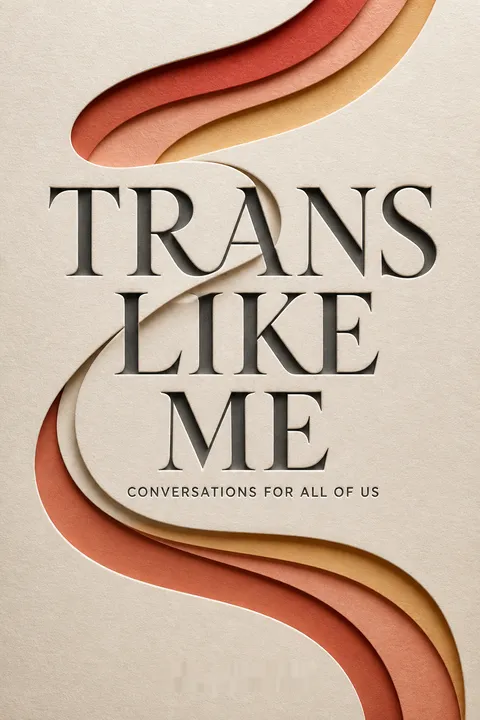
Trans Like Me receives widespread praise as an accessible, well-researched introduction to trans and non-binary experiences, blending memoir, history, and social commentary. Most readers appreciate Lester's thoughtful, compassionate writing style, recommending it especially for cisgender readers seeking education. Common criticisms include occasional density and an academic tone that may limit accessibility for some. Several reviewers note the book covers media, medicine, feminism, and trans history comprehensively, while trans and non-binary readers find it personally affirming. Overall, it is considered an important, urgent read.
People Also Read



Download PDF
Download EPUB
.epub digital book format is ideal for reading ebooks on phones, tablets, and e-readers.








































