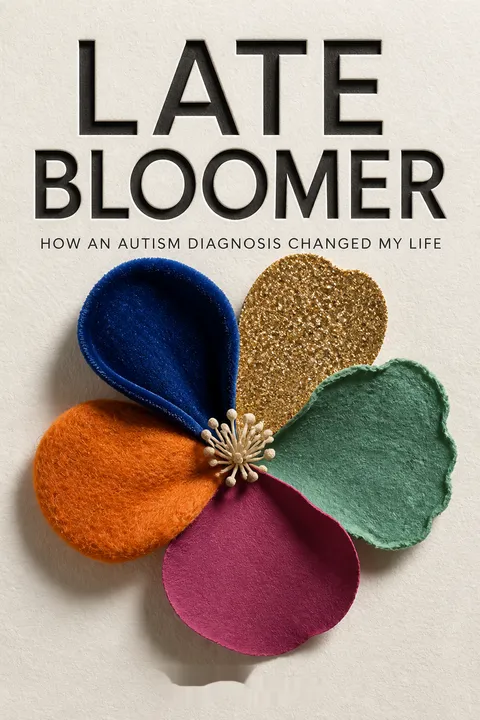

Key Takeaways
1. Late Diagnosis Unlocks a Lifetime of Understanding
It’s hard to qualify just how life-changing it is to receive an Autism diagnosis well into adulthood.
Profound clarity. Receiving an Autism diagnosis at 36 transformed the author's understanding of her entire life, providing a "road map, translator and code-breaker" for past experiences. What once seemed like personal failings—social awkwardness, emotional confusion, sensory sensitivities—were suddenly rooted in a concrete neurotype. This realization was both thrilling and bittersweet, offering vindication for a lifetime of feeling "alien."
Reframing the past. The diagnosis allowed the author to re-evaluate her childhood and early adulthood, recognizing previously unacknowledged Autistic traits. Moments like her protagonist's "opaque" emotional motivation in a screenplay, or her own literal thinking as a child, suddenly made perfect sense. This retrospective understanding highlighted how many challenges were not due to personal defect but to an undiagnosed neurological difference.
Initial incredulity. The journey to diagnosis was met with some surprise, but also relief from friends and family who had "always suspected as much." The author's initial reaction was to frame her Autism positively, partly as a "pre-emptive show of confidence" against potential incredulity from others. This early embrace of her Autistic identity was a crucial step in her self-acceptance.
2. Autism is a Spectrum, Not a Straight Line
The idea of a monolithic ‘Autism’, with neatly defined traits and behaviours and a discrete diagnostic presentation, is far easier to comprehend than the notion that there is another multifaceted world of people whose existence is completely unlike that of non-Autistic people, living alongside them at this very moment.
Challenging stereotypes. The author critiques the narrow, often male-skewed, and pathologizing historical understanding of Autism, which frequently overlooks diverse presentations, especially in girls and women. The common misconception of Autism as a linear spectrum, from "low functioning" to "high functioning," fails to capture the multifaceted reality of Autistic experiences, which are better represented by an infinity symbol.
Gendered presentation. Autistic girls and women often present differently, frequently camouflaging or "masking" their Autistic behaviors to fit in, leading to misdiagnosis or missed diagnosis. Their special interests might be dismissed as "ordinary girl stuff," and their shyness seen as "well-behaved," allowing them to hide in plain sight. This masking comes at a significant emotional and psychological cost, often leading to identity crises and burnout in adolescence and adulthood.
"Not all a little bit Autistic." The author firmly refutes the notion that "everyone's a bit Autistic," explaining that while neurotypical people might experience isolated traits like social anxiety or sensory sensitivity, Autistic individuals experience a constellation of these traits that profoundly impact their daily existence. This distinction is crucial for acknowledging the unique challenges and experiences of Autistic people.
3. Sensory Experiences Shape the Autistic World
My hearing is like having a sound amplifier set on maximum loudness.
Atypical processing. Sensory processing differences are a core aspect of the Autistic experience, affecting 69-95% of Autistic people. This can manifest as:
- Sensory-seeking: Unusual curiosity or desire to engage with certain sensory information (e.g., staring at glitter, loud sounds).
- Sensory under-responsivity: Slower reaction to sensory input (e.g., muted pain response).
- Sensory over-responsivity: Heightened sensitivity to input, leading to negative emotional responses (e.g., specific fabric textures, chewing sounds).
Meltdowns vs. tantrums. The author clarifies that Autistic meltdowns are an involuntary, overwhelming reaction to sensory overload or anxiety, distinct from willful tantrums. Meltdowns involve three stages—build-up, explosion, and recovery—and can manifest as crying, yelling, thrashing, or shutting down. Misunderstanding meltdowns can have severe, even deadly, consequences, highlighting the need for approaches like the Low Arousal Approach.
Insidious tormentors. For the author, sensory challenges were often subtle but pervasive, like the itch of a woollen spencer, the hum of electricity, or the feeling of light touch on her skin. These seemingly minor irritations could trigger intense distress. She also found comfort in sensory-seeking behaviors, like swirling a magic baton or crumbling mandarin skins, to "tune out the rest of the 'noise'."
4. Special Interests are More Than Obsessions
Circumscribed or ‘special’ interests are a cornerstone of Autism.
Deep dives. Special interests, often referred to clinically as "circumscribed interests," are a defining feature of Autism, characterized by intense focus and dedication to a particular topic. These interests can range from trains and obscure languages to natural history and pop culture, and can be lifelong or evolve over time. The author's childhood obsession with dinosaurs, including reading "The Dinosaur Heresies" at age seven, exemplifies this depth.
Generosity and connection. The author reframes "monologuing" or "info-dumping" about special interests not as a social deficit, but as an "act of generosity" and solidarity among Autistic people. This shared enthusiasm, or "getting on the wavelengths," fosters intimacy and connection within the Autistic community. However, in neurotypical contexts, these passionate discussions are often misunderstood as obsessive or socially inappropriate.
Beyond "deficit." While clinical literature often views special interests through a "deficit model," focusing on their potential to distract, the author highlights their benefits. They provide comfort, routine, and a sense of flow state—a complete absorption in an activity. The author also notes how gendered perceptions of special interests (e.g., horses for girls vs. public transport for boys) can contribute to missed diagnoses in Autistic girls.
5. Masking: The Cost of Appearing "Normal"
Between 9 am and 3.30 pm, all my energy went into appearing as normal as possible.
Exhausting performance. Masking, or camouflaging Autistic behaviors to appear neurotypical, was a constant and exhausting effort for the author throughout her schooling and adult life. This performance was driven by a desire to avoid social ostracization and bullying, and to navigate a world not designed for her neurotype. The author describes it as a "high-wire act" that required immense energy and preparation.
Hidden self. While at home, the author felt safe to express her Autistic self—lining up toys, engaging in echolalia, and indulging special interests. However, in public, she meticulously suppressed these behaviors, leading to a profound disconnect between her internal experience and external presentation. This constant suppression contributed to a "gnawing void beneath my public persona."
Profound impact. The long-term cost of masking was significant, leading to:
- Identity confusion: "Who was I, if not for my snippy music reviews?"
- Burnout: Periods of profound physical and emotional exhaustion.
- Mental health struggles: Exacerbated anxiety and depression.
- Delayed diagnosis: Masking made her Autistic traits less obvious to others, contributing to her late diagnosis.
The author emphasizes that masking is not a trivial choice, but a "matter of safety, psychic if not physical," for many Autistic individuals.
6. Echolalia and Palilalia as Communication and Comfort
Echolalia – the repeating of words, sounds and phrases – is my most treasured.
Beyond "parroting." Echolalia, the repetition of words or phrases, and palilalia, the involuntary repetition of syllables, words, or phrases, are often misunderstood as meaningless. The author explains that for her, these behaviors serve multiple purposes:
- Contextual communication: Using borrowed phrases (e.g., from Ghostbusters) to convey specific meanings.
- Emotional regulation: A form of stimming to calm or express emotions.
- Enjoyment: The pleasure of mimicking intonation and rhythm.
Lifelong companion. The author's echolalia became a prominent feature of her communication, particularly after discovering Ghostbusters. She found comfort and a sense of identity in quoting Dr. Peter Venkman, even using it as a "defence mechanism" to hide her stimming in plain sight. This highlights how Autistic individuals adapt and integrate their traits into their daily lives.
Misunderstood meaning. Clinicians often view echolalia as a "problem to be conquered," failing to recognize its functional and pleasurable aspects for Autistic individuals. The author's experience of whispering what she was about to say, or repeating what others said, was a way to "test it out" and process information, a behavior she later discovered was common among other Autistic people.
7. Food Habits Reflect a Need for Predictability
Predictability is, culturally speaking, a scourge.
Complex relationship. Autistic people often have unique and rigid food habits, driven by sensory issues, a need for routine, and comfort. This can manifest as:
- Texture aversions/preferences: Dry and slimy were the author's "two food genders."
- Limited diet: Eating the same foods repeatedly (e.g., chicken nuggets, processed foods).
- Specific rituals: Using particular cutlery, avoiding intermingling foods.
Comfort in sameness. For the author, processed foods like McDonald's cheeseburgers provided immense comfort due to their absolute predictability. In a world often chaotic and unpredictable, knowing "exactly what I am about to experience" in food was profoundly soothing. This contrasts sharply with neurotypical cultural values that often celebrate novelty and variety in eating.
Beyond nutritional concerns. While parents naturally worry about nutrition, the author argues that the societal obsession with "broad grazing" and "trying new things" often overlooks the underlying reasons for Autistic food preferences. She critiques the "food-shaming" and the rise of "wellness" trends that push restrictive diets, emphasizing empathy for Autistic individuals' need for familiarity and sensory comfort in their eating habits.
8. Navigating a Neurotypical World: School and Work
It is a rare Autistic person who manages to make it through their schooling with any affection for the experience.
School as a war zone. School presented immense challenges for the author, from social difficulties and bullying to sensory issues and changes in routine. The "Apple Worm Bank Disaster" shattered her illusion of school as a safe space, and later, her palilalia and social awkwardness made her a target for tormentors. This often led to "school refusal," a common experience for Autistic students facing overwhelming environments.
Academic paradox. Despite being in "gifted" programs for writing and arts, the author struggled profoundly with maths, leading to feelings of assumed stupidity and impacting her career aspirations. This "twice-exceptional" profile (giftedness coexisting with Autism) often goes unrecognized, as educators may not look deeper into the contradictions in a student's performance.
Workplace challenges. Traditional office environments, especially open-plan ones, are often sensory and social nightmares for Autistic people, leading to burnout and unemployment. The author's experience of working at The Age highlights issues like fluctuating temperatures, itchy clothing, overwhelming smells, and lack of privacy. She found freelancing from home to be a protective measure, allowing her to control her environment and thrive creatively.
9. Relationships and Identity: A Queer Autistic Journey
Relationships with other people is where we are most out of our element, so we may not realise it when someone is treating us badly.
Vulnerability to predators. Autistic females are at a significantly higher risk of sexual victimisation and coercion due to factors like compliance training and difficulties in understanding social cues. The author's experiences with manipulative and abusive partners, often referred to by friends with code names, illustrate this vulnerability, as she often mistook emotional withholding for "mysteriousness" or believed apologies were genuine.
Delayed self-discovery. The author's journey to understanding her sexuality was long and complex, initially driven by societal expectations to "Talk To Boys" and find a boyfriend. She used relationships as a "facade of normalcy," believing it made her "loveable" and less "weird." It took decades to acknowledge her innate queerness, realizing she had "no sexual attraction to straight cis men" and that her "low sex drive" was a misinterpretation of her true desires.
Gender fluidity. The author's gender identity has always been fluid, expressed through various "years" of masculine, feminine, or neutral presentation, often feeling like "drag." This fluidity, amplified by her Autism, meant she resented being "boxed in" by gendered expectations. Cosplay became a safe space to explore gender expression, leading to a deeper understanding of her "gender chaotic" self.
10. Finding Neurokin: The Power of Autistic Community
The experience of spending time with other Autistic people – their ‘neurokin’ – as ‘like coming home after being in another country for a long time’.
A sense of belonging. After a lifetime of feeling like an outsider, connecting with other Autistic people, or "neurokin," provided the author with a profound sense of belonging and relief. This community, found both online (e.g., #actuallyautistic) and in person, offered a space where she could "simply be" Autistic beyond the confines of her private life, and be celebrated for it.
Shared understanding. The author's relationship with her Autistic girlfriend, Catherine, exemplifies the utopian potential of queer Autistic love. They navigate meltdowns and shutdowns together, fostering their own "echolalic idiolect" and shared jokes that affirm their Autistic natures. This mutual understanding allows for a level of acceptance and ease not found in neurotypical relationships.
Affirming spaces. Autistic-specific spaces, like pop culture conventions with chill-out rooms and accommodations, provide a sense of peace and acceptance. The author highlights the importance of "shared autistic spaces" where Autistic people are in charge of defining and meeting their own needs, contrasting them with places merely "provided for" Autistic people. This community has been instrumental in her journey of self-acceptance and celebration.
11. Beyond a "Cure": Celebrating Autistic Existence
The desire to cure Autism is nothing new – after all, it’s difficult not to detect some aspect of the curative in Applied Behaviour Analysis, what with its ‘extincting’ of Autistic behaviours – but while it has, perhaps, become less explicit, it is no less sinister.
Challenging the "cure" narrative. The author critically examines the pervasive desire to "cure" Autism, from historical interventions like Applied Behaviour Analysis (ABA) that aimed to "extinguish" Autistic behaviors, to modern genetic screening. She argues that while ABA has evolved, its core goal of making Autistic kids "seem less Autistic" remains problematic, often causing trauma and undermining Autistic selfhood.
Velvet eugenics. The book delves into the ethical implications of prenatal testing and donor screening that aim to eliminate the possibility of a child with Autism. The author questions who makes these choices and their broader societal implications, highlighting the demand for Autism screening even when the science is not fully developed. This "velvet eugenics" reflects a societal fear of Autism rather than a desire to support Autistic lives.
"Don't mourn for us." Drawing on Jim Sinclair's seminal address, the author emphasizes that the "tragedy is not that we’re here, but that your world has no place for us to be." She advocates for acceptance and accommodation over eradication, stressing that Autism is not a burden to be mourned but a fundamental aspect of identity. The author's own journey reflects a growing comfort in existing as "obviously" Autistic, embracing her innate traits rather than suppressing them.
Download PDF
Download EPUB
.epub digital book format is ideal for reading ebooks on phones, tablets, and e-readers.








































