
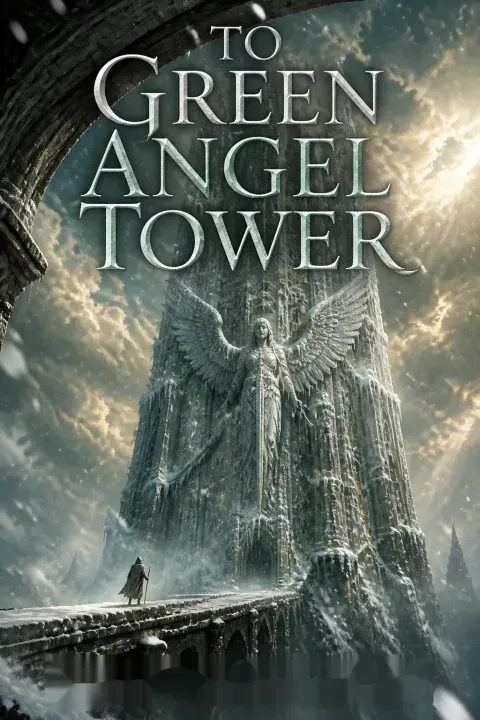


Plot Summary
Geloe's Final Stand
Tiamak,7 wandering near the Stefflod, sees Aditu9 sprinting in terror and follows her to Camaris's4 tent. Inside, he finds the old knight4 fending off pale-skinned Norns with a piece of firewood. Aditu9 and Geloe21 struggle with other attackers. The air is thick with Kei-vishaa, a poison that steals the voice.
Tiamak7 overturns a brazier of coals, setting the tent ablaze and driving the Norns back. Geloe,21 stabbed repeatedly, refuses aid, transforms into an owl, and flies off into the night to die in her forest. The camp erupts in chaos, but Josua's3 sentries find no other infiltrators. Geloe's21 dying words, spoken through the comatose child Leieth, warn of a false messenger.
The attack demonstrates that Camaris, and specifically his sword Thorn, is a primary target of the Storm King's servants. Geloe's transformation into an owl at death links her wisdom to the natural order, which the Norns' sorcery violates. The false messenger warning, delivered from beyond, seeds the central doubt that will unravel the heroes' entire quest: whose voice can be trusted when the enemy speaks in dreams and prophecies?
Fugitives Under Moonlight
Seizing the confusion after Geloe's21 death, Miriamele2 and Simon1 flee south into the Aldheorte forest. She reveals her true goal is not merely to retrieve Bright-Nail but to confront her father, King Elias,14 and try to turn him from his madness. They practice swordsmanship and archery, share childhood stories, and grow closer.
In an abandoned shed, Miriamele2 weeps from loneliness and allows Simon1 to hold her. They share a kiss, but she abruptly pushes him away. Later, she confesses that she is no maiden, having willingly gone to bed with Aspitis Preves during her captivity. Simon,1 hurt and confused, storms into the rain but returns to sleep nearby.
Miriamele's confession is an act of preemptive self-destruction, punishing herself with Simon's anticipated disgust before he can deliver it. Her honesty, however brutal, strips away the princess myth and forces Simon to see her as a flawed, scarred equal. His return to the shed after his outburst signals that his loyalty is rooted in something sturdier than romantic idealization, laying the groundwork for a partnership based on mutual brokenness rather than courtly fantasy.
Naglimund's Broken Jaw
Count Eolair17 of Nad Mullach rides with Jiriki10 and Likimeya's host to Naglimund, only to discover the castle's outer wall shattered and its windows glowing with corpse-light. A Norn named Akhenabi appears atop the wall, animates the bodies of dead prisoners, and makes them dance before killing them.
The Sithi sing a siege-song while m'yon rashi strike the wall with crystal-tipped rods until it crumbles. In the ensuing battle, Norns release orange dust that drives Eolair's17 Hernystiri into homicidal madness. Isorn20 and Eolair17 survive by scrubbing each other with snow. The Norns eventually seal the inner keep with a Word of Changing, leaving the mortals and Sithi unable to press further.
Naglimund's desecration mirrors Elias's spiritual ruin: a once-noble place hollowed out and repurposed for cruelty. The Sithi's siege magic is simultaneously beautiful and terrifying, a reminder that the immortals wield forces humans can only gawk at. Maegwin's quiet madness, observing all as a 'dead woman in heaven,' adds a layer of tragicomic perspective. The costly stalemate establishes that the real battle will be elsewhere, at Hayholt, and that the Norns' purpose in Naglimund remains ominously obscure.
Camaris Unmasked in Metessa
Josua3 and Isgrimnur6 attend a wary feast with Baron Seriddan of Metessa, who threatens to imprison them for treason against Duke Benigaris. Josua3 unveils Camaris,4 and Seriddan demands proof. An aged kitchen servant named Eneppa, who once labored in the Benidrivine palace, is summoned; upon seeing Camaris,4 she weeps and collapses, calling him by his childhood name.
The baron's young nephew Pasevalles, a boy burning with knightly ambition, presents Camaris4 with an antique sea-dragon helm. The gesture dissolves all doubt. Seriddan pledges his forces to Josua,3 and other Nabbanai barons soon follow. Camaris,4 hollow-eyed and reluctant, accepts the role of war-leader.
Legitimacy here is conferred not by nobles but by the powerless: a cook and a child. Their recognition bypasses political calculation and touches something pre-rational, the enduring memory of a golden age. Pasevalles's gift of the helm is a poignant passing of torches from one generation of hero-worshippers to the next, but it also saddles Camaris with a burden he never wanted. The scene foreshadows the brutal reality that legends are heavy armor for broken men.
A Blade in Falshire
Arriving in Falshire, Simon1 enters the Tarbox Inn to buy supplies while Miriamele2 waits outside. Three Fire Dancers in white robes corner a middle-aged couple who tried to leave the cult. When their leader, Maefwaru, threatens the pair, Simon1 draws his sword and demands they be released.
The Dancers attack; Simon1 kills one and wounds another. Miriamele2 smashes an ale jug on a third's head. They escape into the rainy night, but the rescued couple, Roelstan and Gullaighn, have been marked. The encounter brands Simon1 as an enemy of the Storm King's15 mortal servants and foreshadows a more dangerous confrontation.
Simon's intervention is instinctual, not strategic: a scullion's sense of fairness erupting into a knight's violence. The scene illustrates how totalitarian cults like the Fire Dancers operate through intimidation, and how easily communities become paralyzed bystanders. Simon's victory is hollow, because the couple's gratitude will soon be weaponized against him. Heroism in this world is rarely clean; it often merely relocates suffering.
The Wailing Stone Reawakened
In Hasu Vale, Simon1 and Miriamele2 are lured to a Fire Dancer enclave by Roelstan and Gullaighn, who have been forced back into the cult. They are bound and dragged to a hilltop where a massive white stone juts from the ground. Three Norns and the Fire Dancers' leader Maefwaru prepare a ritual.
A spectral white bull materializes, carrying one of the Red Hand. Roelstan is slaughtered atop the stone, his blood pooling into the mist. Simon,1 using a shard of Jiriki's10 broken mirror, saws through his bonds just as Binabik5 and Qantaqa23 attack. The troll kills Maefwaru and they flee into a hidden cave.
The Red Hand's appearance confirms that the Storm King's reach extends through mortal worshipers as much as through Norns. The 'Third House' ritual is part of a larger pattern of dark sacred sites being activated across Osten Ard. Simon's decision to break Jiriki's mirror, a treasured gift, to free himself demonstrates pragmatic sacrifice. Binabik's return reknits the narrative's emotional core: even in the bleakest moments, friendship can still arrive on four paws.
John's Barrow Plundered
Simon,1 Miriamele,2 and Binabik5 climb Swertclif and break into Prester John's cairn. Inside the buried ship Sea-Arrow, they find the High King's body uncorrupted, but the sheathed sword Bright-Nail is gone. Simon1 notices a tunnel dug from the outside, the same path Guthwulf12 used to steal the blade.
While reaching for a glinting object in the hole, the floor collapses and Simon1 tumbles into an abyss of loose earth. Diggers swarm the barrow; Binabik5 and Qantaqa23 fight them off while Miriamele2 drags the troll to safety. They are forced to retreat, leaving Simon1 for dead. The sword they sought has been absent all along.
The empty grave is the ultimate anticlimax, a mockery of heroic quests that assume the prize will be waiting. Simon's fall literalizes the narrative's descent: from this moment, the story moves underground, both physically and psychologically. The barrow, meant to house a king's glory, becomes a maw that devours hope. The diggers, blind and industrious, are apt symbols for the unknowing mortals who prepare the way for darkness.
The Onestrine Pass Routed
Josua's3 army, bolstered by Seriddan's Metessans and other Nabbanai rebels, faces Varellan of Nabban in the Onestrine Pass. Camaris,4 wearing the sea-dragon helm and wielding Thorn, leads a cavalry charge that breaks the Nabbanai line. His horn Cellian sends enemy soldiers fleeing.
Varellan, wounded and overwhelmed, surrenders his war baton to Josua,3 but the prince insists he yield to Camaris4 as the true head of the Benidrivine House. Camaris4 accepts, though his face is grey with sorrow. Varellan's troops join Josua,3 swelling the army that will march on the capital. Tiamak7 arrives with news that Vorzheva is giving birth.
Camaris's battlefield prowess is described with religious awe, a force of nature that seems almost post-human. Josua's political savvy in redirecting the surrender to Camaris legitimizes the old knight's claim and binds the Nabbanai rebels through bloodline rather than convenience. The juxtaposition of slaughter and childbirth (Tiamak's message) underscores the book's central tension: even as the world dies, new lives insist on beginning.
Ghosts of Asu'a
After his fall, Simon1 crawls through the tunnels beneath Swertclif and into the ruins of Asu'a. Dehydrated and hallucinating, he hears phantom voices and sees fleeting visions of Sithi life. He finds the Pool of Three Depths, drinks, and inadvertently makes contact with the Storm King's15 brooding presence.
A bronze angel (who is Leieth's spirit) appears and shows him visions: the fair-haired Eahlstan Fiskerne discovering the dragon Shurakai's corpse and taking a sword. Simon1 climbs the Tan'ja Stairs and emerges through a storeroom into Green Angel Tower. He explores the silent, haunted Hayholt, spots Pryrates13 riding out with soldiers, and resolves to search Hjeldin's Tower for Bright-Nail.
Simon's underground journey is a night-sea crossing, stripping away his identity until only the essentials remain. The Pool is a Master Witness, a conduit of immense power, and his accidental communion with Ineluki's sorrow foreshadows the climax: understanding the enemy's pain may be the only true weapon. The Leieth-angel's visions embed his personal story within the larger tapestry of Eahlstan's sacrifice, preparing him for the revelation of his own heritage.
Benigaris's Final Gambit
As Josua's3 forces surround Nabban city, Duke Benigaris, poisoned by his mother's death and his own failing authority, proposes single combat against Camaris.4 He knows he cannot win but seeks a clean death to escape humiliation. On a windy hillside, the two knights clash.
Benigaris fights with desperate fury, even wounding Camaris,4 but the old knight's4 skill is transcendent. Thorn pierces Benigaris's side. Bleeding on the ground, the dying duke reveals that ghants are swarming from the southern swamps and kilpa have maddened the seas. The world is collapsing beyond human wars. Nabban opens its gates to Josua.3
Benigaris's end is a study in the tragic dignity of a villain. He chooses agency over passivity, style over substance, in a world that offers neither redemption nor meaning. Camaris's victory is joyless, another kinslaying on a resume of sorrows. The ecological horrors Benigaris reveals recontextualize the political plot as a sideshow: Ineluki's chaos is not merely dynastic but planetary, a total assault on the living world.
The Forge of Doctor Inch
After leaving Hjeldin's Tower, Simon1 is seized by Norns and thrown into a vast underground forge where prisoners labor under the brutal overseer Inch.22 The huge, scarred man recognizes Simon1 as Morgenes's former kitchen boy and delights in tormenting him. Simon1 works alongside broken men, learning to sort scrap metal.
When he defends an injured worker, Inch22 beats him and binds him to the great waterwheel. For days Simon1 rotates, upside down and starving, his body a continuous scream. The blind madman Guthwulf,12 drawn by Simon's1 cries, begins bringing him water and speaks to him in the darkness.
The forge is a vision of industrial hell, its ceaseless wheel a parody of time and fate. Inch's cruelty is rooted in petty grievance, making him a banal rather than cosmic evil. Guthwulf's kindness, delivered from a place of complete sensory deprivation and madness, suggests that compassion can persist even in the most broken vessels. Simon's survival on the wheel is a test of endurance that strips him to animal endurance, the necessary prelude to transcendence.
The Dwarrows' Hidden Fastness
After Binabik5 kills the undead monk Hengfisk, dwarrows snatch Miriamele2 from the stairs and carry her to a pink-lit cavern. Their leader, Yis-fidri, explains they are the Tinukeda'ya, ancient servants of the Sithi who fled north. They have sensed the Three Swords approaching each other and believe any mortal interference could upset a delicate balance of forces.
Miriamele2 argues fiercely, shaming them for their passivity. Yis-hadra, the leader's wife, sides with her. Cadrach11 suddenly appears at the sealed door, having exhausted his failing Art to force it open. He collapses, pursued by Norns. The dwarrows, terrified, prepare for a last stand.
The dwarrows embody the ethical paralysis of the powerless: having been enslaved and nearly exterminated, they have retreated into a philosophy of non-interference that amounts to complicity. Miriamele's shaming speech is a rhetorical turning point, forcing a long-oppressed people to reclaim agency even at the cost of their remaining lives. Cadrach's arrival, driving through stone with his dying Art, is a desperate act of contrition that will force the final truths into the open.
The False Messenger Unmasked
In the dwarrow cavern, Cadrach11 confesses his full betrayal. Captured years ago by Pryrates,13 he was tortured and forced to spy on the Scrollbearers. In a desperate bid to save his life, he told the red priest13 that Minneyar and Bright-Nail were the same sword, buried with King John. Pryrates13 only laughed: he already knew the truth and declared the swords would come when the time was right.
Binabik5 abruptly understands. The dreams that led Jarnauga and Simon1 to the Nisses rhyme were false messengers, sent by Ineluki15 to trick the League into gathering the Great Swords. Their combined power, unleashed with Words of Unmaking, could turn Time itself and allow the Storm King15 to return.
This revelation inverts the entire narrative. The heroes have been the unwitting agents of their enemy, their quest a carefully baited trap. Binabik's intellectual horror is matched by Miriamele's personal devastation: her entire journey has been manipulated. Cadrach's confession, though late, is an act of truth-telling that costs him everything, the first honest thing he has done in decades. The chapter redefines heroism not as victory but as the courage to recognize one's own complicity in catastrophe.
The Gate That Swallowed Knights
Duke Isgrimnur6 commands the siege of the Hayholt. The Nearulagh Gate splinters under the battering ram, and Isorn,20 wearing Camaris's4 armor to sustain morale, leads a charge through the breach. But as his men pour inside, a second gate of iron plates rises from the ground, sealing them in the castle. Norns pour into Erchester from hidden tunnels, striking the army from behind.
Isgrimnur,6 frantic, cannot reach his son. Inside, Pryrates13 effortlessly slaughters Isorn20 and the other trapped soldiers. Camaris,4 driven mad by Thorn's insistent song, vanishes into the caves beneath the cliff. Josua,3 desperate to save his friend, follows him, abandoning his army at the worst possible moment.
Isorn's death is the book's most devastating loss, an innocent sacrificed on the altar of heroism. The iron gate is a perfect visual metaphor for the trap: the heroes have been lured inside, and the jaws have closed. Josua's choice to pursue Camaris rather than stay with his army is an act of love that is also a failure of leadership, a human contradiction that the narrative neither condemns nor excuses. The battle becomes a chaos of individual griefs against an implacable enemy.
The Pool of Three Depths
Josua3 and Tiamak,7 guided by Jiriki's10 family, track Camaris4 through the ruins of Asu'a to the Pool of Three Depths. There, the Norn Queen Utuk'ku16 manifests as a hovering silver-masked form above the water. Likimeya and the other Sithi link hands and sing, summoning the ghost of the great tree to counter Utuk'ku's16 freezing power.
Kuroyi is deformed and killed by the Norn Queen's16 rage. Aditu9 gasps that Utuk'ku16 is drawing on the Pool to power the final House. Josua3 and Tiamak7 are told to follow Camaris,4 who is climbing the great staircase toward Green Angel Tower. The Sithi remain, locked in a losing battle to delay the Eldest.16
This is the sacrificial rear-guard of the immortals, a battle of spiritual archetypes rather than physical combat. The tree ghost versus the ice queen dramatizes the conflict between nurturing, cyclical time and sterile, eternal stasis. Kuroyi's grotesque death underscores the mortal stakes for the undying. Josua and Tiamak, the one-armed prince and the lame scholar, are sent onward as the last, least-likely hope, a paradox that defines the entire climactic sequence.
The Arrow Through Pryrates
Miriamele,2 Binabik,5 and Cadrach11 enter Green Angel Tower through the chapel. In the antechamber, they find Pryrates13 standing over the bodies of Isorn20 and other knights. Miriamele2 draws her bow and puts a black arrow through the priest's13 throat. He falls but rises again, pulling the shaft free as the wound steams shut.
Unharmed, he ascends the stairs to the bellchamber. Miriamele2 and Binabik5 follow, finding Josua3 pinned against a window, Tiamak7 crumpled, and Camaris4 kneeling with Thorn. Elias14 sits on a stool with Sorrow. The king14 and Camaris4 are unable to resist the swords' pull. Simon1 arrives, drawn by the same compulsion, and lays Bright-Nail alongside the other two blades.
Miriamele's archery is a reclaiming of agency after chapters of helpless pursuit. That Pryrates survives the kill shot confirms his transformation into something more than human, a vessel so hollow that death cannot find purchase. The convergence of the three sword-bearers is choreographed like a dark wedding, each participant a reluctant bridegroom to apocalypse. Simon's arrival completes the pattern and seals the trap.
Ineluki Wears Elias's Skin
Pryrates13 chants the Words of Unmaking, invoking the Five Houses: Thisterborg, Wentmouth, Hasu Vale, Naglimund, and the Pool beneath them. The swords release their pent forces, and a void of absolute blackness opens where they meet. Time ripples; the tower flickers between present-day Hayholt and burning Asu'a of five centuries past.
Elias14 shrieks as Ineluki15 forces himself into the High King's14 body, antlers crowning his head. Pryrates,13 believing he can control the Storm King15 with Words of Changing, attempts to bind the entity. Ineluki15 laughs and incinerates the priest13 with a touch. Elias's14 body, now a vessel for undying rage, turns toward the mortals.
The Five Houses ritual reveals the plot's true scale: a continent-spanning network of desecrated holy sites, each one a wound in the world's flesh, channeling fear and suffering to punch a hole through time. Pryrates's death is the ultimate hubris narrative: the schemer who thought himself the master discovers he is merely the key, to be discarded once the door is opened. Elias's possession is the nightmare of every parent and ruler: losing oneself entirely to a force that promises power but delivers only annihilation.
The White Arrow's Mercy
Through the swords' connection, Simon1 feels Ineluki's15 five centuries of burning, frozen hatred and loneliness. He refuses to hate back, whispering that he is sorry for the Storm King's15 suffering. This empathy pulses through the blades, weakening the dark link. Camaris,4 too, finds a moment of clarity and murmurs, 'Forgiven.'
Elias14 surfaces briefly within the monster, begs his daughter's forgiveness, and tells her he cannot hold the demon back. Miriamele,2 weeping, nocks the White Arrow of the Sithi and shoots her father through the heart. The Storm King's15 form unravels with an earsplitting shriek, the void collapses, and the tower begins to break apart.
The climax subverts the standard fantasy duel. Victory comes not from martial skill but from the renunciation of hatred and the acceptance of sorrow as a bridge between enemies. Simon's empathy, echoing Binabik's earlier words about the Storm King's loss, dilutes the very hatred that sustains the undead spirit. Miriamele's shot is a mercy killing, the deepest act of love: freeing her father from a possession worse than death. The White Arrow, a gift of friendship from Jiriki, becomes the instrument of sacrifice, completing multiple symbolic arcs.
The Bridge of Shadow
As the tower groans and crumbles, Simon,1 Miriamele,2 Binabik,5 and the wounded Tiamak7 drag themselves down the stairs. A gap yawns where the steps have fallen away. Cadrach,11 gray-faced and trembling, spreads his hands and summons an invisible bridge, a memory of stone drawn from the tower's past.
He tells Miriamele2 that stars shone at midday, as she once demanded before she would trust him again. They cross, but Cadrach11 remains, his strength spent. Miriamele2 screams curses at him, but he only smiles. The tower implodes moments after they leap to a wall. Cadrach11 is buried in the rubble.
Cadrach's final act is the redemption he sought for a thousand pages. A coward, a traitor, a drunkard, he becomes a literal bridge, his body and will the conduit for others' survival. The starlight reference closes a long argument between him and Miriamele: having seen the impossible, he offers trust and receives it. His quiet death, alone and smiling, is the most Christian image in the book: a lost sheep found at the very last instant, laying down his life for his friends.
The King Who Walked Away
In the night after the tower's fall, Josua3 visits Simon1 and Miriamele2 in their tent. He reveals that Camaris4 carried him down through the tunnels and that the iron manacle from Elias's14 dungeon absorbed the fatal blow to his neck. He will not reclaim the throne.
Instead, he will slip away to reunite with Vorzheva and their twin children, and perhaps one day open an inn in Kwanitupul. He tells Simon1 that his ancestry from Eahlstan Fiskerne, the true dragon-slayer, makes him a fitting king alongside Miriamele.2 The young couple accept the burden, their love now openly declared. Isgrimnur,6 though shattered by Isorn's20 death, pledges his support.
Josua's abdication is a radical act of anti-monarchy: having seen the throne's corruption, he chooses a private life of love and learning. His secret survival adds a layer of bittersweet irony: the man who most deserved peace finally attains it, but must wear the mask of death to do so. Simon's lineage is less a deus ex machina than a symbolic merging: the dragon-slayer's blood and the last dragon-throne's daughter together forge a new legitimacy not based on conquest but on reconciliation.
Epilogue
Years later, Tiamak7 visits the rebuilt Hayholt, where Strangyeard8 now presides over a new library and scriptorium, staffed by writing-priests. Rachel the Dragon,19 long hidden in the castle depths, emerges to discover that the Snowlock1 of legend is her lost Simon.1
He embraces her, names her General of the Hayholt, and promises an army of servants to command. Isgrimnur6 and Gutrun kneel at Isorn's20 tomb, then depart for Elvritshalla. Eolair17 arrives from Hernystir, carrying greetings from Queen Inahwen.
Binabik5 and Sisqi send word of their child's birth. The Sithi have withdrawn to their forests, but Jiriki10 promises to return. Simon1 and Miriamele2 sit together, their crowns resting lightly, looking toward a future that is no longer frozen but still deeply shadowed.
The epilogue is a series of reunions and resolutions, each one a quiet echo of the great upheavals that preceded them. Rachel's rediscovery of Simon is the most emotionally resonant: the mother-surrogate finds her mooncalf boy transformed into a king, and domestic care (mending a castle, ordering a household) becomes the work of healing a traumatized world. The note of tempered hope is paramount: the Sithi remain aloof, the scars remain visible, Josua hides in exile, but the seasons have resumed their natural course. The final image of Simon and Miriamele together, no longer running, is a promise of stability born from chaos, not despite it but because of it.
Analysis
To Green Angel Tower completes one of the genre's most ambitious trilogies by upending its own foundational premise. The three volumes of Memory, Sorrow, and Thorn build toward a confrontation that the heroes believe they understand: collect the magical swords, defeat the dark lord. Williams then reveals this assumption as a lie planted by the enemy. The false messenger twist is not merely clever plotting but a profound thematic statement: in a world of compromised information, haunted dreams, and manipulated prophecies, even the most earnest quest can be weaponized against the quester. The heroes' virtue (their determination to fight evil) becomes the very tool of that evil's fulfillment.
The climax rejects the standard fantasy resolution. Simon1 does not defeat Ineluki15 through superior swordsmanship or magical superiority. He does so by refusing to hate, by feeling sorrow for a five-century-old tragedy that curdled into monstrosity. This is the book's moral core: the recognition that the enemy's suffering, however monstrous its expression, is real. Simon's1 empathy dilutes the hatred that sustains Ineluki's15 undead existence, a moment of radical grace that echoes the Christian theology woven throughout the narrative. Miriamele's2 killing of her father is the necessary corollary to that grace: love expressed as the willingness to end suffering, not prolong it.
The structure mirrors the content. The book is vast and digressive, following dozens of characters through political machinations, siege warfare, and subterranean ordeal. This sprawl is not bloat but a deliberate representation of how history unfolds: not in clean heroic arcs but in mud, confusion, and the accumulation of small, desperate acts. The Nabban campaign, Isorn's20 charge, the dwarrows' paralysis, each subplot interrogates a different facet of responsibility and sacrifice. The result is a fantasy novel that earns its length by respecting the complexity of its world and the weight of its moral stakes.
The epilogue, famously domestic, is the final act of subversion. After the tower falls and the Storm King15 dissolves, the story settles not into triumphalist glory but into the quiet work of rebuilding, grieving, and remembering. Simon1 and Miriamele's2 rule begins not with a coronation but with a reunion between an old chambermaid19 and the kitchen boy1 she raised. The world is saved not for epics but for libraries, marriages, and the slow mending of broken things.
Review Summary
To Green Angel Tower is a monumental conclusion to the Memory, Sorrow, and Thorn trilogy. Readers praise its epic scope, intricate world-building, and satisfying ending. Many consider it a masterpiece of classic fantasy, bridging Tolkien and modern fantasy. The book's length and slow pacing are divisive, with some finding it bloated while others appreciate its immersive storytelling. Characters like Simon and Miriamele receive particular praise for their development. Despite some criticisms, most reviewers regard it as a powerful and influential work in the fantasy genre.
People Also Read



Characters
Simon (Seoman Snowlock)
Kitchen scullion turned knight-kingSimon is a tall, red-haired young man with a white streak left by dragon's blood and a facial scar. Orphaned at birth and raised as a castle servant, he yearns for adventure but is continually thrust into dangers far beyond his training. He carries deep insecurity about his worthiness, constantly measuring himself against the legendary figures around him. His defining trait is stubborn endurance: he survives the dragon, the tunnels, the wheel, and the void between death and life through sheer refusal to let go of himself. His empathy, learned through suffering, becomes the unexpected key to undoing the Storm King15. He wrestles with rage and a desire for revenge, but ultimately chooses connection over hatred. His late discovery of his royal lineage (descended from Eahlstan Fiskerne) forces him to reconcile his humble origins with a heritage he never wanted.
Miriamele
Princess of Erkynland, heir to the throneKing Elias's14 only daughter, golden-haired and sharp-chinned, Miriamele is fiercely independent and tormented by guilt. She fled her father's court disguised as a servant girl, blaming herself for not preventing his corruption. Her journey is driven by a desperate hope that she can reach her father before his humanity is entirely consumed. She carries the secret shame of having willingly given herself to the manipulative Aspitis Preves, which she weaponizes against herself, believing she is unworthy of love or loyalty. Her arc moves from solitary, self-punishing obsession to a willingness to accept help and love from Simon1. Her act of killing Elias14 with the White Arrow is simultaneously the bravest and most terrible thing she does: a daughter executing mercy on a father already dead.
Prince Josua
Reluctant rebel prince with one handElias's14 younger brother, a thoughtful, scholarly man who lost his hand defending his brother's wife Hylissa. He wears a manacle from his imprisonment as a reminder. Josua is a capable but unwilling leader, constantly doubting his own fitness for the throne. His deepest secret, revealed late, is that he is not King John's son but Camaris's4, the product of a forbidden love between the greatest knight and the king's young wife. This revelation reframes his entire life: his father's madness, his own exile, the burden of a crown he never truly inherited. At the end, he chooses to walk away from power entirely, seeking a quiet life of scholarship and family, an act of profound wisdom in a world that equates masculinity with rule.
Sir Camaris
Legendary ancient knight, bearer of ThornThe greatest warrior of the age, now old and silver-haired, Camaris spent forty years in a fugue state, his mind shattered by guilt over his affair with King John's wife Ebekah (Josua's3 mother). He was fished from the sea and lived as a wandering beggar until Isgrimnur6 recognized him. Even restored, he is haunted, barely functional, and wishes only for death. He wields the black sword Thorn, which sings to him and compels his movements, reducing him to a puppet in the final act. His profound Catholic guilt infuses every action: he sees himself as eternally damned, yet fights on because he believes God demands it. His final whispered 'Forgiven' in the tower is the most hard-won grace in the book.
Binabik
Troll sage and Simon's dearest friendA Qanuc troll from the mountain Yiqanuc, small in stature but immense in wisdom and loyalty. Binabik studied under Ookequk, a master of lore, and inherited a debt of protection to Simon1 from Doctor Morgenes. He speaks a fractured but precise Westerling, rides a wolf named Qantaqa23, and uses a walking stick that conceals a blowpipe and knife. His intellectual courage is his defining trait: it is Binabik who pieces together the false messenger deception, realizing that the dream-sent prophecy was a trap. Despite his gentle demeanor, he is ferocious in defense of his friends. His separation from his betrothed Sisqi to pursue Simon1 and Miriamele2 is one of the book's many quiet sacrifices.
Duke Isgrimnur
Stout Rimmersman duke and royal advisorA grizzled, bearded warrior from Rimmersgard, blunt and loyal to a fault. He served King John and has known Josua3 and Camaris4 for decades. Isgrimnur's arc in this volume is one of loss: his son Isorn20 dies in the siege, and his own body, battered by war and age, begins to fail him. He provides the emotional anchor for the grieving, gruffly holding the army together after Josua's3 disappearance. His marriage to Gutrun is a portrait of enduring, pragmatic love. By the end, he must bury his child and then return to rebuild a dukedom shattered by war.
Tiamak
Wrannaman scholar and ScrollbearerA small, dark-skinned marsh man with a lame leg (bitten by a crocodile), Tiamak is a scholar of drylander lore and the author of a treatise on swamp remedies. He is timid, frequently frightened, and acutely aware of his outsider status among the tall northern folk. Yet his courage is of the intellectual and moral variety: he volunteers to descend into the tunnels with Camaris4 and the Sithi, and later pieces together crucial clues about the swords. His friendship with the similarly bookish Father Strangyeard8 provides moments of warmth and comic relief.
Father Strangyeard
Archive master and reluctant priestA thin, balding, one-eyed priest who served as Josua's3 librarian at Naglimund. He is socially awkward, terrified of conflict, and more comfortable with dusty manuscripts than battlefields. Yet his knowledge of history and scripture proves vital. He takes Camaris's4 confession, becoming the keeper of the old knight's terrible secret. His arc is one of growing confidence: by the epilogue, he is designing a new library and ordering writing-priests about with quiet authority. His friendship with Tiamak7 is one of the book's gentlest relationships.
Aditu
Sitha noblewoman, Jiriki's sisterGolden-skinned and amber-eyed, Aditu is one of the immortal Dawn Children. She is curious about mortals in a way many of her kind are not, and forms a genuine bond with Simon1 during his stay in Jao e-Tinukai'i. She possesses the Sithi gift of 'witnessing' (seeing across distances and into dreams). In this volume, she serves as midwife to Vorzheva and as a warrior at the Pool of Three Depths. Her prophecy over Josua's3 twins is one of the book's lingering mysteries. She represents the Sithi at their most approachable: ancient and strange, but genuinely invested in mortal survival.
Jiriki
Sitha prince, Simon's immortal allyAditu's9 brother, with white hair and sharp features. He carries the witchwood sword Indreju and the mirror that once allowed Simon1 to call for aid. Jiriki is more reserved than his sister, carrying the weight of his people's long decline. His friendship with Simon1 is one of the saga's core bonds, crossing the immortal-mortal divide. He fights at Naglimund alongside Eolair17 and later leads the Sithi contingent into the tunnels beneath the Hayholt. His final farewell to Simon1 is a promise that their story is not finished.
Cadrach (Padreic)
Tormented monk, former Scrollbearer and spyA thick-set, balding monk from Hernystir with a drinker's nose and a liar's tongue. Once a brilliant scholar of the Art, he was captured by Pryrates13 and tortured into betraying the League of the Scroll. His life since has been a desperate crawl through guilt, alcoholism, and self-loathing. He attaches himself to Miriamele's2 journey, protecting her in his own cowardly way. His final confession in the dwarrow cavern, revealing that the sword prophecy was a trap, is his first honest act in years. His death, holding open an invisible bridge for the others to escape the collapsing tower, is the ultimate redemption: the traitor who becomes the bridge.
Guthwulf
Blind earl, once Elias's right handThe Earl of Utanyeat was King Elias's14 most trusted general until he was struck blind and driven mad by the sword Sorrow's song. He fled into the tunnels beneath the Hayholt and has lived there like a burrowing animal, guided only by touch and the constant pull of the Great Swords. He stole Bright-Nail from John's barrow and kept it in his nest. When he encounters Simon1 on the wheel, some remnant of humanity stirs, and he frees the young man at the cost of his own life. His final gift is the sword and the direction to the tower.
Pryrates
Red-robed alchemist, Elias's master whispererBald, black-eyed, and utterly without conscience, Pryrates is the architect of Elias's14 damnation. He studied under Morgenes but chose power over wisdom, eventually becoming the conduit between the High King14 and the Storm King15. His ambition is boundless: he believes he can use the Words of Changing to enslave Ineluki15 himself. His laboratory in Hjeldin's Tower is a charnel house of bone furniture and bubbling vats. He survives Miriamele's2 arrow through the throat through sheer sorcerous will, but is annihilated in the moment of his apparent triumph, a victim of the very forces he thought to command.
King Elias
High King of Osten Ard, possessed by SorrowMiriamele's2 father, a strong man broken by the death of his beloved wife Hylissa. Desperate to speak to her beyond the grave, he accepted Pryrates's13 help and the gray sword Sorrow, which has slowly consumed his humanity. By this volume, he is a skeletal, sleepless wraith, his body soaked in cold sweat, his eyes burning with an inner red light. He is both victim and villain, his original grief twisted into parricidal madness. In his final moments, he surfaces long enough to beg his daughter's forgiveness and to plead for release, making Miriamele's2 killing shot an act of love rather than vengeance.
Ineluki (The Storm King)
Undead Sithi prince, the apocalyptic antagonistOnce the brightest spirit of the Dawn Children, Ineluki led the defense of Asu'a against Fingil's Rimmersmen five centuries ago. Refusing to die, he spoke a terrible Word of Unmaking that slew thousands of mortals and cast him beyond death into a state of frozen, burning hatred. He exists now only as a consciousness of rage, communicating through the Breathing Harp and seeking to return to the living world by possessing Elias's14 body. Simon's1 vision of him by the Pool reveals not a monster but a being of infinite sorrow, whose love for his people curdled into an eternal vendetta against the mortal vermin who destroyed his home.
Utuk'ku Seyt-Hamakha
The Norn Queen, Eldest of the GardenbornRuling from the frozen mountain Stormspike, Utuk'ku is the ancient matriarch of the Hikeda'ya. She wears a silver mask to hide features decrepit beyond imagining. Her vanity and hatred of mortals and the Zida'ya alike have fueled a millennia-long scheme to restore Ineluki15. At the Pool of Three Depths, she battles the Sithi with a cold so absolute it can kill immortals. When Ineluki's15 return fails, she is left shattered, her mask broken, her power gone, alone in her dark halls.
Count Eolair
Hernystir diplomat and spymasterThe Count of Nad Mullach is a slender, dark-haired man of middle years, a skilled courtier who would rather be in his ancestral hall than on a battlefield. He has served King Lluth of Hernystir and later his daughter Maegwin18, for whom he harbors a deep, unspoken love. At Naglimund, he leads the Hernystiri contingent alongside the Sithi and watches Maegwin18 slide further into madness. Her death leaves him hollow, and he returns home to bury her. Simon1 later tells him that Maegwin18 loved him and that her final act helped save the world.
Maegwin
Mad princess of Hernystir, Eolair's belovedThe daughter of King Lluth, Maegwin lost her father and brother in the war against Skali. Her mind broke, and she became convinced she was dead and living in the gods' heaven. In this state, she accompanied Eolair17 to Naglimund, where her madness granted her an unexpected perception of the supernatural. She wandered onto the battlefield, drawn to the 'Hole in Heaven' (Naglimund's keep), and was struck down. In the space between death and life, she encountered Simon's1 wandering spirit and gave him the strength to return to his body, her final gift enabling the world's salvation.
Rachel the Dragon
Mistress of Chambermaids, Simon's surrogate motherAn old, sharp-tongued woman with aching joints and an unshakable sense of duty. She raised the orphan Simon1 in the Hayholt's servant quarters, pinching his ears and scolding his laziness, but loving him fiercely. When Pryrates13 came to power, she hid in a secret room beneath the castle and began leaving food for the blind Guthwulf12. She survives the apocalypse by sheer stubbornness and emerges to find the boy she thought dead is now Snowlock1 the king. Her reunion with Simon1 is the emotional capstone of the epilogue.
Isorn Isgrimnurson
Brave young Rimmersman, Isgrimnur's sonTall and yellow-bearded like his father, Isorn fought alongside Josua3 from Naglimund onward. At the siege of the Hayholt, he volunteered to wear Camaris's4 armor and helm to deceive Elias's14 forces. His impulsive charge through the shattered gate led to his death at Pryrates's13 hands, trapped behind an iron portcullis. His loss is the personal tragedy that defines his father's end, a young life spent for a tactic that bought only minutes.
Geloe
Valada Geloe, the wise woman of the forestAn ancient, powerful healer who lived in a lake house in Aldheorte. She was a friend to the Sithi and a guide to Josua's3 company. Her piercing eyes and blunt manner made her both respected and feared. She died fighting Norns to protect Camaris4, transforming into an owl as she fled to die in her woods. Her spirit spoke through the child Leieth to deliver a final warning about false messengers.
Inch
Brutish forge overseer under PryratesA huge, one-eyed, scarred man who runs the underground forge where prisoners melt down scrap metal. He nursed a grudge against Simon1 from their time together in the Hayholt, and delighted in tormenting him. He strapped Simon1 to the waterwheel to die slowly. Simon1 dropped the wheel on him, crushing him to death in the gears.
Qantaqa
Binabik's loyal wolf companionA large gray wolf from the northern mountains, bonded to Binabik5 since both were young. She is intelligent, fierce in battle, and capable of tracking scents across vast distances. She fights diggers, Norns, and Fire Dancers alike, and her presence comforts the company through many dark hours.
Plot Devices
The Three Great Swords
Living weapons of world-altering powerSorrow, Thorn, and Bright-Nail (Minneyar) are three blades forged over the centuries from materials not of Osten Ard: star-stone, witchwood, and iron from the lost West. The dwarrows used Words of Making to bind their contradictory substances, granting each a form of life. The swords sing to one another and to those they choose as bearers, compelling them toward convergence. When joined and released by Words of Unmaking, their combined force can rip through Time itself, erasing the centuries and restoring the moment of Ineluki's15 death-spell. The heroes were tricked into bringing them together, believing the swords would defeat the Storm King15 rather than resurrect him.
The False Messenger Prophecy
Dream-planted rhyme that deceives the heroesA cryptic verse purported to be from Nisses's lost book, describing omens and declaring 'Three Swords must come again' to turn fate. It was delivered to Simon1, Jarnauga, and others through the compromised Dream Road. The heroes spent two volumes believing the swords were their only hope. Binabik5 eventually realizes the rhyme was a false messenger sent by the Storm King15, designed to make the mortals do the work of gathering the blades. The prophecy is a masterclass in narrative manipulation: the enemy gave the heroes a quest, and they followed it perfectly.
The Pool of Three Depths
Master Witness beneath the HayholtA vast underground lake in the ruined Sithi castle Asu'a, one of the most powerful Master Witnesses in Osten Ard. Its waters shimmer with blue-green light and can connect to the Dream Road, reveal visions, and channel immense magical force. Utuk'ku16 seizes control of it to power the Fifth House, the final anchor of the ritual that brings Ineluki15 across. The Sithi battle her there, sacrificing several of their number. Simon1 drinks from it during his underground ordeal and later feels its power drawn up through the tower floor during the climactic ritual.
The White Arrow
Sithi gift that becomes the killing mercyA perfectly crafted arrow with a blue-gray stone head, a piece of a Master Witness, given to Simon1 by Jiriki10 as a token of debt. Simon1 intended to give it to Miriamele2 but lost it; Binabik5 recovered it. Miriamele2 carries it through the tunnels and shoots it into her father's14 breast at the climax. The arrow, made by Vindaomeyo the Sithi craftsman, is charged with enough otherworldly essence to pierce Ineluki's15 possession. It is a gift of friendship that becomes an instrument of sacrifice, completing the arc of debts owed and repaid between mortals and immortals.
The Conqueror Star
Ominous red star heralding Ineluki's returnA baleful scarlet point with a fiery tail that appears in the northern sky as the winter deepens. The Sithi name it the omen of the Conqueror. The mortal armies feel its oppressive weight; the priest Strangyeard8 cites old texts claiming such stars 'spout bad air.' Its pulsing light washes the battlefields and the tower alike. It serves as a countdown, growing brighter and larger as the ritual approaches, an inescapable reminder that the world is running out of time.
FAQ
Synopsis & Basic Details
What is To Green Angel Tower about?
- Final confrontation looms: As the Storm King's power grows, Prince Josua and his allies prepare for a final confrontation, seeking to understand and wield the power of the Great Swords.
- Alliances tested, secrets revealed: The story explores the complexities of alliances between mortals and immortals, the burden of past actions, and the sacrifices required for victory.
- Journey to the Hayholt: Characters journey toward the Hayholt, the seat of power, where they hope to confront the Storm King and restore balance to Osten Ard.
Why should I read To Green Angel Tower?
- Epic fantasy conclusion: It provides a satisfying conclusion to a sprawling epic fantasy series, resolving long-standing conflicts and character arcs.
- Complex characters and themes: The book delves into complex themes of power, sacrifice, and the nature of good and evil, offering a rich and thought-provoking reading experience.
- High-stakes battles and magic: Readers who enjoy high-stakes battles, intricate magic systems, and a blend of political intrigue and personal drama will find much to appreciate.
What is the background of To Green Angel Tower?
- Political turmoil in Osten Ard: The story takes place amidst a backdrop of political turmoil, with kingdoms fractured and alliances shifting as the Storm King's influence spreads.
- Ancient Sithi lore and magic: The narrative draws heavily on ancient Sithi lore and magic, exploring the history and power of the Gardenborn and their connection to Osten Ard.
- Echoes of historical conflicts: The book contains echoes of historical conflicts and power struggles, reflecting the complexities of human nature and the cyclical nature of history.
What are the most memorable quotes in To Green Angel Tower?
- "We have enough to last three lifetimes. What we need are answers.": Highlights the characters' desperation for knowledge and understanding amidst chaos.
- "If you do not come back, may you never have a moment's peace until Time is gone.": Shows the depth of love and the pain of separation between Binabik and Sisqi.
- "The enemy of my enemy is my friend ... for a little while.": Captures the pragmatic and often uneasy alliances formed in times of war.
What writing style, narrative choices, and literary techniques does Tad Williams use?
- Multiple perspectives: Williams employs multiple points of view, allowing readers to experience the story through the eyes of various characters and gain a broader understanding of the events.
- Detailed world-building: The author creates a richly detailed world with its own history, cultures, and languages, immersing readers in the setting and enhancing the sense of realism.
- Foreshadowing and symbolism: Williams uses foreshadowing and symbolism to create suspense and add layers of meaning to the narrative, rewarding attentive readers with deeper insights.
Hidden Details & Subtle Connections
What are some minor details that add significant meaning?
- The Clavean Bell's silence: The recurring mention of the Clavean Bell's silence foreshadows the disruption of order and the growing influence of the Storm King, as the bell is a symbol of Aedonite power.
- The state of the Hayholt's gardens: The neglected state of the Hayholt's gardens reflects the decay and corruption within the kingdom, mirroring Elias's declining mental state and the encroaching darkness.
- The color of the Conqueror Star: The Conqueror Star's red color symbolizes blood, war, and the impending doom, serving as a constant reminder of the looming threat.
What are some subtle foreshadowing and callbacks?
- Simon's recurring dreams: Simon's dreams, particularly those involving the sea and the towers, foreshadow future events and reveal his connection to the Sithi and the Great Swords.
- The "false messenger" prophecy: The recurring mention of the "false messenger" prophecy foreshadows Cadrach's betrayal and the manipulation of information by the Storm King's forces.
- The significance of names: The emphasis on the meaning and history of names, such as "Homefinder" and "Bright-Nail," adds layers of meaning and foreshadows the characters' destinies.
What are some unexpected character connections?
- Camaris and Josua's shared bloodline: The revelation that Camaris is Josua's father adds a layer of complexity to their relationship and highlights the themes of family and legacy.
- The connection between the Niskies and the dwarrows: The revelation that the Niskies and the dwarrows are related adds depth to the world-building and suggests a shared history and destiny.
- The link between Utuk'ku and Amerasu: The connection between Utuk'ku and Amerasu as opposing forces highlights the ancient conflict between the Sithi and the Norns and its impact on the present.
Who are the most significant supporting characters?
- Strangyeard: As a Scrollbearer and scholar, Strangyeard provides crucial knowledge and guidance, helping to decipher ancient texts and understand the lore surrounding the Great Swords.
- Isgrimnur: As a loyal friend and skilled warrior, Isgrimnur offers unwavering support and practical advice, serving as a grounding force amidst the chaos and uncertainty.
- Aditu: As a Sitha and friend to Simon and Miriamele, Aditu provides insights into the world of the Gardenborn and helps to navigate the complexities of magic and prophecy.
Psychological, Emotional, & Relational Analysis
What are some unspoken motivations of the characters?
- Elias's desire for validation: Elias's actions are driven by a deep-seated need for validation and recognition, stemming from his troubled relationship with his father and his own insecurities.
- Miriamele's need for independence: Miriamele's decision to leave Josua's camp is motivated by a desire for independence and a need to define her own path, free from the expectations and constraints of her royal heritage.
- Camaris's yearning for redemption: Camaris's actions are driven by a yearning for redemption and a desire to atone for his past sins, seeking to find meaning and purpose in his final days.
What psychological complexities do the characters exhibit?
- Elias's descent into madness: Elias exhibits a complex psychological decline, marked by paranoia, delusions, and a growing dependence on Pryrates, reflecting the corrupting influence of power and the Storm King.
- Miriamele's internal conflict: Miriamele grapples with internal conflict, torn between her duty to her kingdom and her desire for personal freedom, reflecting the challenges of leadership and the burden of responsibility.
- Camaris's struggle with guilt: Camaris exhibits psychological complexities stemming from his past actions and his struggle with guilt, leading to a sense of self-loathing and a desire for atonement.
What are the major emotional turning points?
- Miriamele's confession to Simon: Miriamele's confession to Simon about her past relationship with Aspitis marks a major emotional turning point, revealing her vulnerability and testing the strength of their bond.
- Josua's grief over Geloe's death: Josua's grief over Geloe's death highlights the emotional toll of the war and the loss of wisdom and guidance.
- Simon's realization of Miriamele's feelings: Simon's realization that Miriamele reciprocates his feelings marks a turning point in their relationship, offering hope amidst the chaos and uncertainty.
How do relationship dynamics evolve?
- Simon and Miriamele's relationship: Simon and Miriamele's relationship evolves from friendship to love, marked by vulnerability, trust, and a shared commitment to each other and their cause.
- Josua and Isgrimnur's bond: Josua and Isgrimnur's bond deepens through shared experiences and mutual respect, highlighting the importance of loyalty and friendship in times of adversity.
- The strained relationship between Elias and Miriamele: The strained relationship between Elias and Miriamele reflects the corrupting influence of power and the tragic consequences of ambition and betrayal.
Interpretation & Debate
Which parts of the story remain ambiguous or open-ended?
- The nature of the Sithi and their motivations: The true nature and motivations of the Sithi remain somewhat ambiguous, leaving room for interpretation and debate about their role in the conflict.
- The extent of the Storm King's influence: The full extent of the Storm King's influence on the world and its inhabitants remains open to interpretation, raising questions about the nature of evil and its power to corrupt.
- The fate of certain characters: The fate of certain characters, such as Leieth, remains ambiguous, leaving room for speculation and debate about their ultimate destiny.
What are some debatable, controversial scenes or moments in To Green Angel Tower?
- Miriamele's relationship with Aspitis: Miriamele's past relationship with Aspitis is a controversial topic, raising questions about consent, power dynamics, and the complexities of human relationships.
- The use of violence and sacrifice: The story's use of violence and sacrifice, particularly in the context of war and religious ritual, raises ethical questions and challenges readers to consider the moral implications of their actions.
- The portrayal of the Norns: The portrayal of the Norns as inherently evil and monstrous has been debated, raising questions about prejudice and the dangers of demonizing entire groups of people.
To Green Angel Tower Ending Explained: How It Ends & What It Means
- The Storm King is defeated: The Storm King is defeated, but at a great cost, with many lives lost and the world forever changed.
- A new era begins: A new era begins, marked by hope, renewal, and the promise of peace and prosperity under the leadership of Simon and Miriamele.
- The cycle of history continues: The ending suggests that the cycle of history will continue, with new challenges and conflicts arising in the future, but also with the enduring power of love, memory, and hope to guide the way.
About the Author
Other books by Tad Williams


Download PDF
Download EPUB
.epub digital book format is ideal for reading ebooks on phones, tablets, and e-readers.








































