
Plot Summary
Cricket and Cloud Battleships
Aubrey Fitzwilliam, son of Albion's Prime Minister, is thrust from the ordinary into the extraordinary during a college cricket match. As he faces a menacing bowler, his magical senses tingle, warning him of something amiss. Suddenly, a fleet of cloud-shaped battleships, conjured by powerful magic, descends upon the festivities, trapping the crowd in a magical storm. Aubrey's quick thinking and magical awareness are tested as chaos erupts, and he realizes that this is no mere spectacle but a calculated attack. The event marks the beginning of a new trial for Aubrey, setting the tone for a world on the brink of magical and political upheaval.
Depth Charge and Beccaria Cage
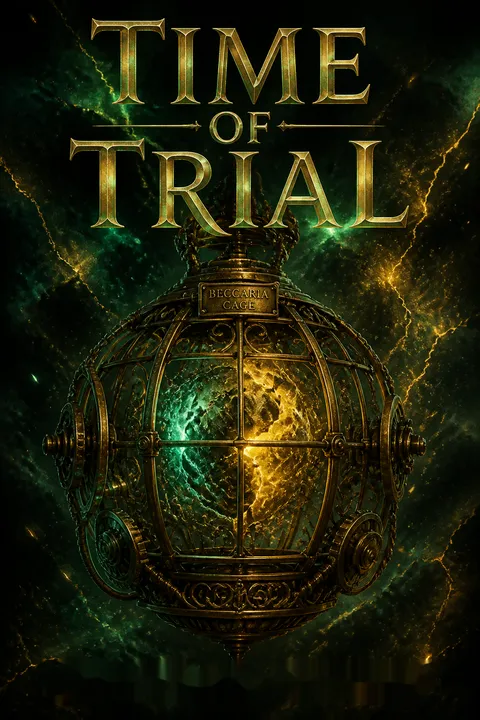
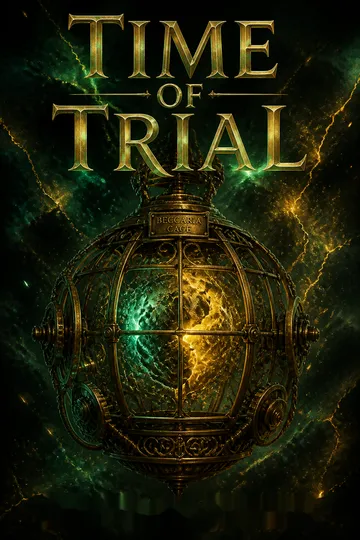
In the aftermath of the stormfleet's assault, Aubrey is nearly killed by a magical depth charge, only to be saved by Otto Kiefer, a Holmland student. Kiefer presents Aubrey with the Beccaria Cage, a device meant to stabilize the bond between his body and soul—a lingering consequence of a past magical accident. The device's origins are shrouded in mystery, but it offers hope for Aubrey's precarious condition. As he recovers, the group learns that Dr. Tremaine, the ex-Sorcerer Royal and their nemesis, orchestrated the attack. Kiefer's own vendetta against Tremaine is revealed, binding their fates together in a quest for justice and survival.
Trigger Words and Treachery
Aubrey's life takes a dark turn when he receives a cryptic message via carrier pigeon—trigger words that activate a hidden spell within the Beccaria Cage. Unbeknownst to his friends, Aubrey is compelled into a trance-like state, his will overridden by Tremaine's magic. He arms himself and sets out to assassinate Prince Albert, the heir to the throne. Only the intervention of George and Caroline, who recognize his altered behavior, prevents disaster. They forcibly remove the Beccaria Cage, breaking the spell and saving both Aubrey and the Prince, but leaving Aubrey shaken and vulnerable.
Possession and Peril
Aubrey is wracked with guilt over his near-assassination of the Prince, struggling with the realization that he can be manipulated so completely. His friends rally around him, and together they deduce that the Beccaria Cage was booby-trapped by Tremaine, designed to both heal and control. Aubrey's magical investigation reveals the device's dual nature, and with Caroline's help, he disables its malicious component. The experience steels their resolve to confront Tremaine directly, knowing that his reach is long and his methods insidious.
Kiefer's Plea for Revenge
Otto Kiefer, driven by the loss of his father to Tremaine's machinations, pleads with Aubrey and his friends to help him destroy the rogue magician. The group debates the morality and feasibility of such a quest, recognizing the global stakes. Kiefer's knowledge of industrial magic and his connection to the Beccaria Cage make him both an asset and a liability. The alliance is uneasy, but necessity binds them together. Meanwhile, political tensions between Albion and Holmland escalate, and the specter of war looms ever closer.
Holmland Intrigue Unveiled
The group's investigation leads them into the heart of Holmland's expatriate community, where they encounter Hugo von Stralick, a former Holmland spy now working with the Albion embassy. Through a web of contacts, they uncover Tremaine's growing influence in Holmland's government and military. The lines between friend and foe blur as old enemies become reluctant allies. The discovery of a golem—an artificial being animated by magic—used as a proxy for a Holmland professor, signals that Tremaine's experiments are reaching new heights of sophistication and danger.
The Golem's Deception
Aubrey's attempt to use the Tremaine pearl—a magical artifact once belonging to Tremaine's sister—as a lure backfires. A probing spell triggers a powerful enchantment, trapping Aubrey, Caroline, George, and von Stralick inside a surreal prison within the pearl. There, they encounter Sylvia, Tremaine's sister, whose soul has been shattered and scattered. The prison is a labyrinth of dreams and nightmares, each tailored to ensnare its victims. The group must navigate this psychological and magical maze, confronting their own desires and fears, to escape and piece together the truth of Sylvia's fate.
The Pearl's Prison
Trapped within the pearl, the group experiences a series of shifting realities—dungeons, libraries, kitchens—each reflecting the inner world of its captives. Sylvia, the largest fragment of her own soul, is both jailer and prisoner, her consciousness fractured by Tremaine's failed attempt to cure her illness through magic. The group's efforts to escape are complicated by the presence of other soul fragments, each with their own incomplete existence. Through ingenuity and cooperation, Aubrey and his friends manage to break the spell, but not before learning that a crucial piece of Sylvia's soul is still missing, lost somewhere in Holmland.
Sylvia's Fractured Soul
Freed from the pearl, the group resolves to find the missing fragment of Sylvia's soul, believing that reuniting her will provide the leverage needed to draw Tremaine out. Their search leads them through the underbelly of Fisherberg, encountering ghost hunters who track soul fragments for profit. The journey forces them to confront the ethics of using Sylvia as bait, weighing the needs of the many against the suffering of the few. As they close in on the final piece, the boundaries between justice and vengeance blur, and the cost of their quest becomes painfully clear.
Ghost Hunters and Residue
The group discovers that Tremaine's reckless magic has left dangerous residue in Fisherberg, causing souls to shatter and creating a proliferation of "ghosts." With the help of Madame Zelinka, a member of a secret order dedicated to cleaning up magical disasters, Aubrey descends into the ruins of Tremaine's family home to confront the source of the disruption. In a harrowing magical battle, he manages to quell the chaotic magic, inadvertently curing his own soul's disunity. The act reunites Sylvia's soul fragments, awakening her from a years-long coma, but also sets the stage for Tremaine's next move.
The Symposium's Shadow
As Fisherberg hosts an international symposium, tensions between Albion and Holmland reach a fever pitch. Prince Albert, Lady Rose, and the rest of the group are drawn into a web of diplomacy, espionage, and subterfuge. Tremaine's influence is felt everywhere, and the threat of war hangs over every conversation. Meanwhile, Otto Kiefer, now a prize-winning magician, prepares to deliver a paper that could change the balance of power in Europe. The group races to uncover Tremaine's true plan, suspecting that the symposium is the stage for a world-altering revelation.
Golem Makers and Guano
The discovery of a golem-making machine, capable of creating perfect magical doubles, signals a new era in magical warfare. Aubrey and Caroline, posing as arms dealers, outmaneuver rival suppliers to secure the device for Albion. At the same time, the Chancellor of Holmland announces a breakthrough in ammonia synthesis, freeing Holmland from dependence on imported guano for explosives. The arms race accelerates, and the prospect of a devastating war becomes all but certain. The group realizes that Tremaine's machinations extend beyond personal vendetta—he is reshaping the very fabric of international conflict.
The Prince's Double
In a chilling revelation, the group uncovers Tremaine's plan to kidnap Prince Albert and replace him with a golem double, ensuring Holmland's control over Albion's throne. A desperate rescue mission in the Elektor's laboratory leads to a confrontation with a golem-making machine and its artificial operator. Through quick thinking and magical prowess, Aubrey and his friends save the Prince and destroy the machine, but not before realizing that Tremaine's mastery of golem magic makes him nearly unstoppable. The lines between human and construct, reality and illusion, grow ever more tenuous.
The Trap and the Escape
The group finally confronts Tremaine in a hospital room, where Sylvia has been restored to life. In a chaotic struggle, Aubrey uses the pearl to trap Tremaine and his sister, layering it with protective magic to prevent their escape. The victory is bittersweet—Tremaine's defeat comes at the cost of moral compromise, and the group is left to ponder the ethics of their actions. The sense of triumph is tempered by the knowledge that Tremaine's influence lingers, and that the forces he has set in motion cannot be easily undone.
The Unraveling Plot
As the group celebrates their apparent victory, they discover that Tremaine has once again outmaneuvered them. The being trapped in the pearl was a golem, and the real Tremaine remains at large, manipulating events from the shadows. Kiefer's research, guided by Tremaine's agent Manfred, leads to a bombshell revelation at the symposium: Prince Albert is the rightful heir to the Gallian throne. The announcement sends shockwaves through Europe, destabilizing alliances and pushing the continent closer to war. Aubrey is left reeling, forced to confront the limits of his own power and the depth of Tremaine's cunning.
The Bombshell Speech
In a moment of high drama, Kiefer delivers his prize-winning paper, exposing Prince Albert's claim to the Gallian throne. The revelation is the culmination of Tremaine's intricate plot, designed to sow discord and accelerate the march to war. The audience is stunned, and the political landscape is irrevocably altered. Aubrey, Caroline, and George realize that they have been pawns in a larger game, their victories rendered hollow by the scale of Tremaine's manipulation. The future of Albion, Holmland, and all of Europe hangs in the balance.
War's Inevitable Dawn
As the dust settles, the group returns to Albion aboard the HMS Invulnerable, carrying with them the spoils and scars of their adventure. The world stands on the brink of war, with Holmland's newfound industrial might and Tremaine's legacy threatening to engulf Europe in chaos. Aubrey, now cured of his soul's disunity, reflects on the cost of their actions and the nature of heroism. The bonds between the friends are tested but endure, and the possibility of love and redemption glimmers amid the gathering storm. The time of trial has ended, but the moment of truth is yet to come.
Analysis
Time of Trial is a masterful blend of magical adventure, political intrigue, and psychological depth, set in a world teetering on the edge of war. Michael Pryor uses the conventions of fantasy and alternate history not merely for spectacle, but as a lens through which to examine the costs of power, the fragility of identity, and the moral ambiguities of leadership. The novel's central motif—the lingering residue of magic—serves as a potent metaphor for the unintended consequences of action, both personal and political. Aubrey's journey from haunted survivor to proactive agent mirrors the story's broader arc, as individuals struggle to assert agency in the face of overwhelming historical forces. The use of golems and magical doubles interrogates the nature of authenticity and the dangers of substitution, while the recurring theme of fractured souls underscores the importance of wholeness, both literal and figurative. The novel's resolution is deliberately uneasy: victories are partial, and the specter of war remains. Pryor's message is clear—heroism is not the absence of doubt or failure, but the willingness to act, reflect, and try again, even when the outcome is uncertain. In a world where the lines between good and evil, friend and foe, are constantly shifting, the true test is not triumph, but endurance, compassion, and the courage to face the next trial.
Review Summary
Time of Trial receives an overall rating of 4.17 out of 5 stars. Readers appreciate the engaging action sequences, witty writing, and intricate plots involving protagonist Aubrey Fitzwilliam's adventures in Holmland. Common criticisms include repetitive plot structures, editing issues, inconsistent character development (particularly George and Caroline), and reliance on coincidences. Several reviewers note the series' charm and Wodehousian humor, while others express frustration with slow overall progression. Most agree the book offers entertaining espionage elements and magical worldbuilding, though some find the pacing uneven and character motivations unclear.
People Also Read



Characters
Aubrey Fitzwilliam
Aubrey is the son of Albion's Prime Minister, a brilliant student of magic, and a young man burdened by the consequences of a magical experiment gone wrong. His body and soul are tenuously bound, making him both vulnerable and uniquely sensitive to magical disturbances. Aubrey's intellect is matched by his sense of duty and his deep loyalty to friends and family. He is introspective, often wracked with self-doubt, and struggles with the moral complexities of leadership and power. Over the course of the story, Aubrey evolves from a reactive survivor to a proactive agent, willing to make hard choices for the greater good. His relationship with Caroline is a source of both strength and torment, embodying the tension between personal desire and public responsibility.
Caroline Hepworth
Caroline is Aubrey's closest confidante and intellectual equal, a woman of sharp wit and formidable will. The daughter of a renowned artist and a murdered academic, she is haunted by her father's death at Tremaine's hands. Caroline's emotional restraint masks a deep well of feeling, particularly for Aubrey, with whom she shares a complicated, often unspoken bond. She is pragmatic, resourceful, and unafraid to confront danger head-on. Caroline's journey is one of balancing her quest for justice with the need for compassion, and her willingness to challenge Aubrey's assumptions is crucial to the group's survival and growth.
George Doyle
George is Aubrey's steadfast companion, providing grounding and levity amid chaos. Less magically gifted but highly resourceful, George excels at improvisation and logistics, often saving the day through sheer common sense. His affable nature and unflagging optimism mask a deep loyalty and courage. George's unrequited affection for Lady Rose and his easy rapport with Caroline add layers to his character, making him more than just comic relief. He is the glue that holds the group together, reminding them of the value of friendship and the importance of small joys in dark times.
Dr. Mordecai Tremaine
Tremaine is the story's central antagonist, a former Sorcerer Royal whose quest for immortality and power has left a trail of destruction. Brilliant, charismatic, and utterly ruthless, he is both a visionary and a monster, capable of genuine love for his sister but indifferent to the suffering of others. Tremaine's psychological complexity lies in his ability to justify any means for his ends, and his capacity for both cruelty and tenderness. His schemes are labyrinthine, and his mastery of golem magic and mind control make him a nearly unstoppable force. Tremaine's presence haunts every page, shaping events even in his absence.
Otto Kiefer
Kiefer is a Holmland student whose life is defined by loss and longing for recognition. His father's death at Tremaine's hands fuels a desire for revenge, but his ambition and naivety make him susceptible to manipulation. Kiefer's expertise in industrial magic and his discovery of ammonia synthesis are pivotal, inadvertently enabling Holmland's war machine. His psychological fragility and shifting loyalties make him both a victim and a threat, embodying the dangers of unchecked ambition and the ease with which good intentions can be twisted to evil ends.
Hugo von Stralick
Von Stralick is a former Holmland intelligence officer whose shifting allegiances reflect the murky world of espionage. Witty, urbane, and self-serving, he is nonetheless capable of genuine loyalty, particularly to his cousin Kiefer. Von Stralick's pragmatism and survival instincts often put him at odds with the group's idealism, but his insider knowledge is invaluable. He is a mirror to Aubrey, showing what one might become when principles are sacrificed for expediency. His development is marked by moments of unexpected courage and self-awareness.
Sylvia Tremaine
Sylvia is both victim and catalyst, her shattered soul the result of Tremaine's desperate attempt to save her from illness. Trapped between life and death, she exists as a series of fragments—some imprisoned in a magical pearl, others haunting the world as "ghosts." Her eventual reintegration is both a triumph and a tragedy, raising questions about identity, agency, and the cost of love. Sylvia's presence humanizes Tremaine, revealing the pain that drives his monstrous actions, and her fate is a touchstone for the story's exploration of sacrifice and redemption.
Lady Rose Fitzwilliam
Lady Rose is Aubrey's mother, a renowned naturalist and a symbol of the new, independent woman. Her intellect and courage are matched by her warmth and humor, and she serves as both inspiration and anchor for Aubrey. Lady Rose's relationship with her husband is a rare example of genuine partnership, and her mentorship of Caroline provides a model of female empowerment. She is a voice of reason and compassion, reminding the group of the importance of perspective and the value of life beyond politics and magic.
Prince Albert ("Bertie")
Bertie is both a friend and a figurehead, caught between personal desire and the demands of state. His good humor and humility make him beloved, but his position renders him a target for manipulation. Bertie's claim to the Gallian throne is the linchpin of Tremaine's plot, and his survival is crucial to Albion's future. He is a study in the burdens of leadership, striving to do right amid forces beyond his control.
Madame Zelinka
Madame Zelinka is a member of a clandestine order dedicated to cleaning up magical disasters. Her expertise and pragmatism are invaluable, and her interactions with Aubrey and Caroline provide insight into the broader consequences of reckless magic. She is both ally and critic, challenging the group to consider the ethical dimensions of their actions. Her presence underscores the story's themes of responsibility and the unseen costs of power.
Plot Devices
Magical Residue and Soul Disunity
The story's central plot device is the lingering effect of magic—both as a literal residue that disrupts souls and as a metaphor for the unintended consequences of power. Aubrey's own condition, the shattering of Sylvia's soul, and the proliferation of "ghosts" in Fisherberg all stem from magic gone awry. This device allows for exploration of identity, agency, and the cost of intervention, while providing a mechanism for both peril and redemption. The Beccaria Cage, as both cure and trap, embodies the duality of magic as salvation and threat.
Golems and Magical Doubles
The use of golems—artificial beings animated by magic—serves as a recurring motif, blurring the line between human and construct. Tremaine's mastery of golem magic enables plots of substitution and deception, from the attempted replacement of Prince Albert to the fake Tremaine trapped in the pearl. This device raises questions about authenticity, control, and the limits of perception, while providing a means for Tremaine to evade capture and manipulate events from afar.
Espionage, Feints, and Misdirection
The narrative structure is built on a series of feints and misdirections, mirroring the world of espionage in which the characters operate. Tremaine's schemes are labyrinthine, with each apparent victory revealed as a diversion from his true aim. The use of trigger words, magical possession, and false clues keeps both characters and readers off-balance, heightening tension and underscoring the theme that truth is elusive and victory is never absolute.
Political Intrigue and the March to War
The story's events are set against the backdrop of rising international tensions, with the threat of war serving as both motivation and consequence. The revelation of Prince Albert's claim to the Gallian throne, the arms race fueled by magical innovation, and the manipulation of public opinion through staged attacks all reflect the interplay between individual agency and historical forces. The narrative's structure—moving from personal crisis to political catastrophe—emphasizes the interconnectedness of private and public spheres.
Psychological and Emotional Trials
The magical prison of the pearl, the fragmentation of souls, and the moral dilemmas faced by the characters all serve as plot devices that externalize psychological struggle. The story's emotional arc is one of trial and transformation, with each character forced to confront their own fears, desires, and limitations. The resolution of these inner conflicts is as crucial to the outcome as any magical or political victory.
The Laws of Magic Series


About the Author
Other books by Michael Pryor
Download PDF
Download EPUB
.epub digital book format is ideal for reading ebooks on phones, tablets, and e-readers.








































