
Plot Summary
Blood on the Doorstep
Alissa, a young noblewoman in the kingdom of Daradon, scrubs a blood-red Hunters' Mark from her friend Marge's door, risking exposure as a Wielder—one of the persecuted few with invisible, magical specters. The mark is a death sentence, a sign that Marge has been executed for her secret power. Alissa's act of defiance is both a tribute and a desperate attempt to preserve Marge's memory. But the kingdom is tense: Huntings are increasing, and fear is everywhere. Alissa's best friend Tari helps her, but the danger is real and immediate. The world is waking up to Rose Season, but for Alissa, the day begins with blood, guilt, and the knowledge that she, too, is a secret waiting to be discovered.
Secrets Beneath the Surface
Alissa's life is a careful dance of concealment. Her father, Lord Heron, is a noble with Hunter blood, but he protects her by keeping her secret and feeding information to the Hunters to keep suspicion away. The Capewell family, the king's Hunters, are both kin and threat. Alissa's relationship with Garret, a Capewell raised as a Hunter, is fraught with old affection and new betrayal. The kingdom's politics are a web of alliances and dangers, and Alissa's specter—her power—must remain hidden at all costs. But the past is never far: memories of her mother's execution, her father's compromises, and the ever-present threat of exposure haunt her every move.
The King's Dangerous Favor
At the Rose Season ball, Alissa is drawn into the orbit of King Erik, a young, charismatic ruler whose interest in her is both flattering and terrifying. The king's attention is a double-edged sword: it offers protection but also scrutiny. Erik's flirtations are laced with menace, and his intentions are unclear. The court is a stage, and Alissa must perform—charming, clever, and always on guard. But beneath the glittering surface, the kingdom is rotting. The king's Hunters are more active than ever, and the arrival of an Ansoran ambassador—a Wielder from a rival empire—signals a shift in the balance of power. Alissa senses that her world is about to change.
Hunters and Hunted
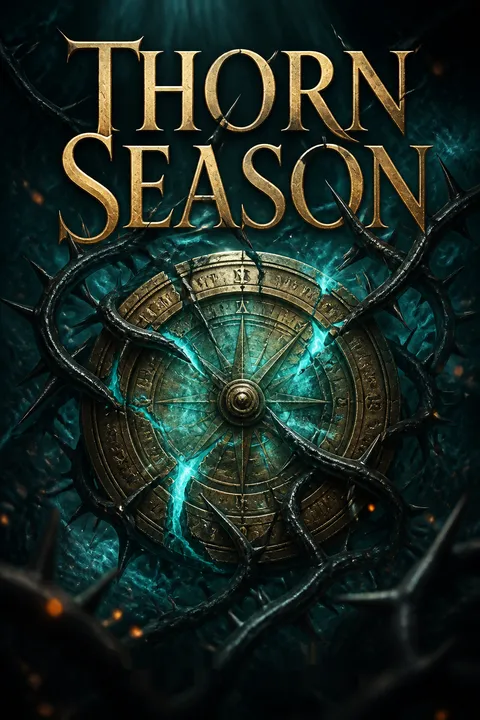
The Capewells, led by the ruthless Briar, are both family and executioners. Garret, once Alissa's confidant, is now a Hunter bound by oath and trauma. The Hunters' compass, a Spellmade artifact that points to Wielders, is missing, and suspicion festers. Alissa's father is forced to inform on other Wielders to protect her, a compromise that stains every act of kindness with guilt. The kingdom's fear of Wielders is weaponized, and the line between justice and cruelty vanishes. Alissa is caught between loyalty and survival, love and betrayal, as the Hunters close in on their prey—and she wonders if she is the next to fall.
Kidnapped by Shadows
Alissa is kidnapped—not by the Hunters, but by a group of Wielders led by the charismatic Keil, the Ansoran ambassador. Her captors are not the monsters she expected; they are desperate, wounded, and seeking justice for their own. Keil's sister has been imprisoned by the Capewells, and Alissa is a pawn in a larger game. The experience is both terrifying and illuminating: for the first time, Alissa meets others like herself, and the boundaries between enemy and ally blur. The ransom is not gold, but the release of Wielder prisoners. Alissa's world expands, and so does her sense of responsibility.
Wielder Among Wielders
In the tunnels beneath Vereen, Alissa encounters a community of Wielders living in hiding. Their powers are as varied as their personalities—some gentle, some fierce, all marked by loss. Keil, their leader, is both a potential friend and a rival. Alissa learns that her father's compromises have consequences far beyond her own safety. The Wielders' pain is raw, their hope fragile. Alissa's specter, once a source of fear, becomes a bridge to understanding. But the threat of the Hunters—and the copycat killers using their mark—looms ever larger. Alissa must decide where her loyalties lie.
Ransom and Revelations
The ransom exchange is tense and fraught with danger. Garret, battered and conflicted, delivers the Wielder prisoners in exchange for Alissa's freedom. But the cost is high: the Capewells are losing control, the copycats are growing bolder, and the kingdom teeters on the edge of chaos. Alissa's relationship with Garret fractures under the weight of betrayal and regret. Keil's motives are revealed to be both personal and political. The compass, the key to finding Wielders, is missing—and everyone wants it. Alissa realizes that her safety is an illusion, and that the real enemy may be closer than she thinks.
The Compass and the Crown
The Hunters' compass, lost for years, is the object of every faction's desire. Garret reveals that Alissa's father has been feeding information to the Hunters, a truth that shatters her trust. The king's interest in Alissa intensifies, and his proposal is both a promise and a threat. The Ansoran ambassador, Keil, is not just a diplomat but a prince in exile, seeking to save his people. The court is a battlefield, and the compass is the ultimate weapon. Alissa must navigate a maze of secrets, betrayals, and shifting alliances to survive.
Betrayals in the Ballroom
The Rose Season reaches its climax in a ballroom drenched in blood and secrets. Alissa's specter is revealed in a moment of desperation, and the king's wrath is unleashed. Keil sacrifices himself to protect her, taking the blame for her power. The court turns on itself, and Alissa is forced to flee. Friends become enemies, and enemies become unlikely saviors. The cost of survival is high, and Alissa is left to reckon with the consequences of her choices. The compass is within reach, but so is the king's vengeance.
The Opal's Last Mercy
Haunted by the memory of the Opal, where she once used her specter to grant mercy to a dying man, Alissa is forced to confront the darkness within herself. The kingdom's cruelty is systemic, and even acts of kindness are tainted by guilt and fear. The king's philosophy is revealed: power is everything, and mercy is a weakness. Alissa's struggle is not just for survival, but for her soul. She must decide what kind of person she wants to be—and what she is willing to sacrifice.
The Copycats' Mark
A new wave of Huntings sweeps the kingdom, marked by a copycat group using the Hunters' symbol. Their violence is indiscriminate, their motives unclear. Alissa investigates, uncovering a network of prisons, weapons, and betrayals. The copycats are not just enemies of the Wielders—they are enemies of order itself. The true keeper of the compass is unmasked, and the lines between friend and foe blur beyond recognition. Alissa realizes that the greatest threat may not be the Hunters, but the king himself.
Prisoners and Prisoners
Alissa is imprisoned by the king, her specter suppressed by dullroot. Erik's affection is a cage, his cruelty a test. He offers her a choice: submission or death. The court is complicit, the Hunters are desperate, and Alissa's allies are scattered. In the darkness, she confronts her own power—and her own capacity for violence. The chains are not just physical, but psychological. Alissa must find a way to break free, or be broken.
The King's Proposal
Erik proposes marriage, offering Alissa power, protection, and revenge. The engagement ring is both a gift and a shackle. Alissa is tempted by the promise of safety and the chance to change the kingdom from within. But the cost is her freedom, her identity, and her soul. The king's love is possessive, his mercy conditional. Alissa must choose between survival and selfhood, between vengeance and justice. The proposal is a turning point—a moment of decision that will shape the fate of the kingdom.
Chains and Choices
Imprisoned and starved, Alissa resists Erik's attempts to break her will. The king alternates between kindness and cruelty, offering her food, comfort, and the chance for revenge against Briar. Alissa's hunger becomes a weapon, her silence a shield. The struggle is not just against her captor, but against the part of herself that longs for release. The chains are both literal and metaphorical, and every choice is a test of strength.
The Escape Plan
Perla, the quiet noblewoman, reveals herself as a Wielder and orchestrates Alissa's escape. The plan is risky, the timing tight. Alissa must navigate a palace full of enemies, retrieve the compass, and reach the ship that will take her to safety. The journey is a gauntlet of obstacles—guards, Hunters, and the king himself. Alissa's power is returning, but so is her fear. The escape is a leap of faith, and the cost of failure is death.
The Keeper Unmasked
The true keeper of the compass is revealed: King Erik, who has orchestrated the Huntings, the copycats, and the rise in violence to consolidate his power. The compass is not just a tool for finding Wielders, but a device for harnessing their specters. Erik's philosophy is laid bare: power is to be seized, not shared. Alissa confronts him in a final, desperate battle, unleashing the full force of her specter. The struggle is brutal, the outcome uncertain. In the end, it is not just a fight for survival, but for the soul of the kingdom.
The Final Hunt
Wounded and hunted, Alissa flees the palace with the compass. Briar, Garret, and the king's forces are all in pursuit. The city is a maze of danger, and every ally is a potential traitor. Alissa's power is both a weapon and a burden. The journey to the ship is a test of endurance, cunning, and will. In the end, it is not victory that matters, but escape. Alissa boards the ship to Ansora, leaving behind a kingdom in turmoil and a future uncertain.
The Power Unleashed
On the ship to Ansora, Alissa reflects on all she has lost and all she has gained. The compass is in her hands, but its true power—and its true danger—are only beginning to be understood. The kingdom she leaves behind is wounded, but not defeated. The fight is not over; it has only changed shape. Alissa's journey is far from finished. She is no longer just a survivor—she is a keeper of power, a bearer of hope, and a harbinger of change.
Analysis
Thorn Season is a dark, emotionally charged fantasy that interrogates the nature of power, complicity, and survival in a world built on systemic violence. At its heart is the question: What does it mean to live—and to love—when your very existence is a crime? The novel explores the psychological toll of hiding, the corrosive effects of compromise, and the seductive allure of both vengeance and mercy. Alissa's journey is one of painful self-discovery, as she learns that survival is not enough; to truly live, she must claim her power, even at the risk of becoming what she fears. The story is a meditation on the cost of safety, the burden of inheritance, and the possibility of change. It refuses easy answers: every act of kindness is tainted by guilt, every act of violence by necessity. The king's philosophy—that power is to be seized, not shared—is both seductive and damning, and Alissa's ultimate rejection of it is an act of defiance and hope. The novel's lesson is clear: freedom is not given, but taken; justice is not found, but made. In a world of thorns, to survive is to bleed—but to fight is to bloom.
Review Summary
Thorn Season has received mixed reviews, with an overall rating of 4.04 out of 5. Many readers praise its engaging plot, political intrigue, and complex characters, particularly the protagonist Alissa. The book is noted for its unique magic system and unexpected twists. Some criticize the slow pacing in the first half and underdeveloped world-building. The romance subplot and love triangle garnered mixed reactions. Despite some flaws, many readers found the book captivating and are eagerly anticipating the sequel in this YA romantasy series.
People Also Read
Characters
Alissa Paine
Alissa is the daughter of a nobleman and a secret Wielder, living in constant fear of discovery in a kingdom that executes her kind. Her life is shaped by loss—her mother's execution, her father's compromises, the betrayal of friends. Alissa's specter is both a gift and a curse, a source of strength and pain. She is fiercely loyal, quick-witted, and deeply conflicted, torn between the desire for safety and the need for justice. Her relationships—with her father, with Garret, with Keil, with the king—are fraught with love, guilt, and betrayal. Over the course of the story, Alissa transforms from a girl hiding in the shadows to a woman who claims her power, even as it threatens to consume her. Her journey is one of self-discovery, sacrifice, and the search for a place where she can finally breathe.
King Erik Vard
Erik is the young king of Daradon, a man of beauty, charm, and ruthless ambition. He is both a seducer and a predator, offering Alissa protection and affection while orchestrating the Huntings and the rise of violence. Erik's philosophy is simple: power is everything, and mercy is weakness. He is fascinated by Alissa's strength, seeing in her both a prize and a partner. His love is possessive, his cruelty calculated. Erik is the true keeper of the compass, using it not just to find Wielders but to harness their power for his own ends. His relationship with Alissa is a dance of dominance and defiance, and his downfall is as much a result of his obsession as his ambition.
Garret Capewell
Garret is a Capewell by adoption, raised among the king's Hunters after his parents were killed by Wielders. Once Alissa's closest friend, he becomes both her betrayer and her savior. Bound by an oath band and haunted by guilt, Garret is torn between loyalty to his family and his love for Alissa. He is both victim and perpetrator, complicit in the kingdom's violence yet desperate to protect those he cares about. Garret's journey is one of self-loathing, regret, and the search for redemption. His relationship with Alissa is marked by longing, pain, and the hope for forgiveness.
Keil Arcus
Keil is the Ansoran ambassador, a Wielder prince in exile, and the leader of a group seeking justice for their people. Charismatic, clever, and deeply principled, Keil is both a rival and a kindred spirit to Alissa. Their relationship is a slow-burning connection, built on shared pain and mutual respect. Keil's motives are personal—his sister's imprisonment, his people's suffering—but also political. He is willing to risk everything for those he loves, and his willingness to trust Alissa is both his greatest strength and his greatest vulnerability. Keil's presence forces Alissa to confront her own power and her own capacity for love.
Lord Heron Paine
Alissa's father is a nobleman with Hunter blood, forced to inform on other Wielders to protect his daughter. His love is fierce but flawed, and his compromises haunt him. Heron's relationship with Alissa is marked by secrecy, guilt, and sacrifice. He is both protector and betrayer, doing what he believes is necessary to keep his child safe. His death is a turning point, shattering Alissa's last illusions and propelling her toward her destiny.
Briar Capewell
Briar is the head of the Capewell family, the king's Hunters. She is both executioner and enforcer, wielding power with cruelty and precision. Briar's hatred of Wielders is personal and political, and her relationship with Alissa is one of mutual loathing. She is a master manipulator, willing to sacrifice anyone for the sake of order. Briar's actions—her violence, her betrayals, her framing of Alissa's father—are the catalyst for much of the story's tragedy.
Tari Dehrin
Tari is Alissa's best friend, a Wholeborn from Bormia with a deep understanding of Wielders and a fierce loyalty to those she loves. She is clever, resourceful, and unafraid to challenge Alissa's choices. Tari's outsider perspective allows her to see the kingdom's rot with clarity, and her presence is a source of comfort and grounding for Alissa. Her journey is one of self-discovery, as she finds her own place and purpose in a world that often overlooks her.
Carmen Vard
Carmen is the king's cousin, a princess with her own ambitions and secrets. Outwardly charming and effervescent, she is a master of courtly games and hidden agendas. Carmen's alliance with the Ansorans and her role in smuggling Wielders to safety reveal a depth of courage and cunning. Her relationship with Alissa is complex—part friendship, part rivalry, part mutual recognition of the cost of survival in a brutal world.
Perla Byrd
Perla is a noblewoman who appears meek and overlooked, but beneath her quiet exterior lies a steely resolve and a secret identity as a Wielder. Her act of freeing Alissa from the dungeons is a turning point, revealing her as a true ally. Perla's journey is one of self-assertion, as she moves from the margins to the center of the story, using her skills and courage to save others.
Marge
Marge is Alissa's friend and the first Wielder to be executed in the story. Her death is the spark that ignites Alissa's rebellion and the symbol of all that is lost in the kingdom's cruelty. Marge's memory haunts Alissa, driving her to acts of defiance and ultimately to the realization that survival is not enough—justice must be claimed.
Plot Devices
The Specter and the Compass
The specter is the essence of Wielder magic—an invisible, living power that is both a source of strength and a mark of death. Its presence shapes every relationship, every choice, every act of violence and mercy. The compass, a Spellmade artifact, is the story's central plot device: it points to specters, not just Wielders, making it a tool of both discovery and destruction. The compass's true purpose is gradually revealed, shifting from a symbol of persecution to a weapon of conquest. Its theft, pursuit, and eventual recovery drive the narrative, intertwining the fates of all the main characters. The story's structure is built on secrets—hidden powers, hidden motives, hidden histories—and the gradual unmasking of these truths. Foreshadowing is woven throughout: the king's fascination with Alissa, the increasing violence, the copycats' mark, and the recurring motif of chains and freedom. The narrative is cyclical, with the past haunting the present and every act of mercy or cruelty echoing through generations.
Download PDF
Download EPUB
.epub digital book format is ideal for reading ebooks on phones, tablets, and e-readers.








































