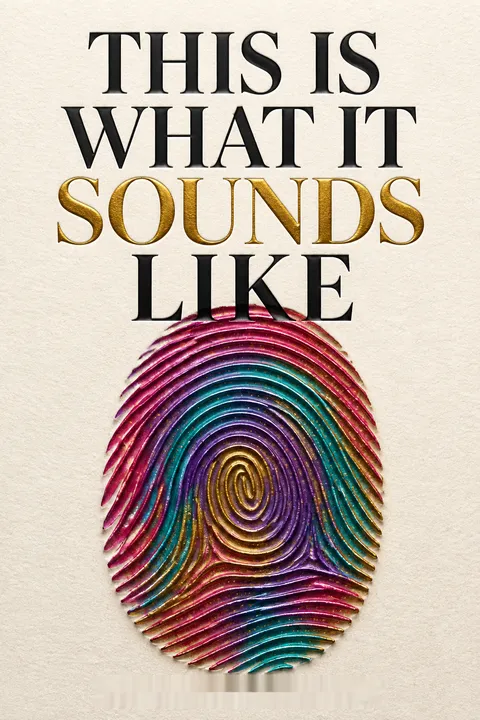

Key Takeaways
1. Music listening is a deeply personal journey that reveals your unique self.
Implicit in Miles Davis’s declaration was the conviction that when it comes to the creation of a musical experience, the act of listening can be every bit as vital as the act of performance.
A personal odyssey. Author Susan Rogers' journey into music began with an impossible vow at a Led Zeppelin concert: to one day mix sound at the Forum. This dream, born from a moment of personal desperation, propelled her from a biomedical assembly line to becoming Prince's sound engineer and later a renowned record producer. Her path highlights that a profound connection to music often stems from deeply personal experiences and aspirations, shaping one's life trajectory.
The listener profile. Rogers realized that her lifelong love for listening provided a rich mental framework for making musical decisions, a skill Miles Davis affirmed by telling her, "Some of the best musicians I know aren't musicians." This insight led her to develop the concept of a "listener profile," a unique combination of responses to seven musical dimensions: authenticity, realism, novelty, melody, lyrics, rhythm, and timbre. This profile, shaped by biology, experience, and happenstance, determines what music resonates most deeply with you.
Active engagement. Listening is not passive; it's an active process requiring curiosity, effort, and love. Understanding your listener profile helps you recognize your "sweet spots"—neural pathways where music delivers maximum gratification. This self-awareness deepens your connection to music, empowering you to live a more musical life and discover hidden aspects of your identity, even if you lack formal musical training.
2. Authenticity in music is subjective, ranging from raw emotion to polished craft.
Authenticity is the subjective conviction that the emotion expressed in a musical performance is genuine and uncontrived.
The Shaggs' raw truth. The story of The Shaggs, three sisters compelled by their father to form a band, exemplifies "naïve authenticity." Despite their technical incompetence, their music, like a child's first drawing, expressed a pure, uncorrupted desire for self-expression. Industry pros like Frank Zappa and Lester Bangs recognized this genuine feeling, proving that sincerity can transcend technical perfection and connect deeply with listeners.
Below-the-neck vs. above-the-neck. Authenticity exists on a continuum. "Naïve" or "below-the-neck" music, like The Shaggs', bypasses social restraints, sounding straight from the heart or gut. Conversely, "cerebral" or "above-the-neck" music, exemplified by Johann Sebastian Bach, expresses profound emotions through deliberate principles and honed craftsmanship. Both are authentic, but one is spontaneous, the other mindfully constructed.
Personal sweet spot. Your preference for naïve or cerebral authenticity reveals where you like expressivity to originate in your favorite records. Susan Rogers prefers the impulsive, blues-based sound of The Rolling Stones, akin to The Shaggs' raw feel, while her co-author Ogi Ogas gravitates towards Bach's precise intellectual craft. Neither is superior; it simply reflects how your unique neural wiring savors emotional expression.
3. Music evokes personal imagery, from realistic performances to abstract soundscapes.
Realistic art is about what is, while abstract art is about what’s left out—and what our minds are free to fill in.
Visualizing sound. When listening to music, our minds often conjure images: stories from lyrics, musicians performing, or imaginary worlds. This "realism" dimension of your listener profile reflects what your mind wants to see. Historically, all music was realistic, performed live by real people. Recording technology initially aimed for "high fidelity" to capture this realism, meticulously preserving every nuance of human performance.
The DAW revolution. The advent of Digital Audio Workstations (DAWs) in the mid-1990s mirrored photography's impact on painting. Just as cameras freed painters from literal representation, DAWs liberated music from the constraints of acoustic reality. Digital recording allowed for 100% fidelity and the creation of "abstract records" using synthetic sounds and manipulated performance gestures, leading to music that is often impossible to perform live.
Abstract engagement. Abstract records, like Daft Punk's "The Grid," invite listeners to create their own personal worlds and imagery, unbounded by consensual reality. This fosters a more personalized engagement, as the listener fills in the blanks, journeying into dreamlike reveries. Your preference for realistic (e.g., Creedence Clearwater Revival) or abstract music reveals whether your brain craves grounded human performance or imaginative, impossible fantasies.
4. Your "Goldilocks zone" for novelty dictates your preference for familiar or adventurous music.
Humans are born with the urge to explore new objects and situations, provided we stay within our personal “Goldilocks zone” for novelty: not too strange, not too boring.
The novelty-popularity curve. Music preferences are shaped by our appetite for novelty, which varies across individuals. The "novelty-popularity curve" illustrates this:
- Left side: Simple, familiar music (lullabies, classic genres like reggae, blues)
- Peak: Pop music, balancing familiarity and innovation (e.g., Billie Eilish, Kanye West)
- Right side: Art music (jazz, punk, electronica) and free jazz, pushing boundaries
The thrill of surprise. Our brains derive pleasure from music that both matches and violates our expectations. When music surprises us, it can trigger a greater release of psychic rewards, provided the surprise is "just right" for our individual Goldilocks zone. This explains why some listeners crave the predictable craftsmanship of classic genres, while others seek the provocative twists of avant-garde music.
Evolution of taste. The novelty-popularity curve constantly shifts as musical innovations become commonplace. What was groundbreaking decades ago (e.g., 1960s pop) may sound conventional today. Risk-taking artists play a vital role, pushing boundaries and inspiring new trends that eventually slide into the mainstream. Your personal sweet spot for novelty reflects your willingness to engage with new patterns and the cognitive effort you're willing to invest.
5. Melody, music's heart, evokes deep emotions and is processed distinctly from lyrics.
For all its simplicity, melody can rouse a sweeping range of emotions.
The power of pitch sequences. A melody is a sequence of musical pitches that our brains treat uniquely. Unlike random word sequences, melodies like "Three Blind Mice" are easily recognized and evoke emotion. Frank Sinatra's mastery of melody, inspired by violinist Jascha Heifetz, allowed him to control breath and timing to infuse every word with intense feeling, commanding audience attention and manipulating emotions.
Melodic contours and harmony. Melodic contours (the up-and-down shape of pitches) provide emotional hints: ascending melodies can excite, descending ones can feel poignant. Harmony, like a shadow to the main melody, can enrich it or provide counterpoint, expressing nuanced subtexts. John Coltrane's harmonic improvisations on "Nature Boy" offered an alternate, darker interpretation of the beloved tune, demonstrating how harmony can add depth.
Melody vs. speech. Our brains process melody independently of speech. Research by Diana Deutsch showed that a repeated spoken phrase can transform into a melody, highlighting separate neural pathways. This explains why we can focus on a song's intonation (melody) or its information (lyrics), and why melodic intonation therapy can help aphasic patients regain speech by leveraging the melody-processing network.
6. Lyrics, music's head, offer a direct path to identity and emotional connection.
This is the immense power of lyrics: to enable us to momentarily become someone else.
The human connection. Lyrics are a uniquely human source of musical reward, making us feel seen, heard, and understood. From Gene Vincent's "Be-bop-a-lula" to Sly & the Family Stone's "Stand!", lyrics provide a private code for identity exploration, allowing us to "try on" different personas. This deep connection is evident in fan mail, where listeners express profound identification with artists' words.
Identity and musical choice. Our personal identity is dynamically linked to our musical choices. Drastic shifts in musical taste often signal significant changes in self-identity. Lyrics, with their loose structure and often ambiguous details, resemble inner speech, allowing listeners to easily insert themselves into the "I" or "you" position of a song. This ambiguity, as seen in Don McLean's "American Pie," invites personal interpretation, making the song feel uniquely relevant.
Nonsense and subtext. Lyrics don't always need to be literal or grammatically perfect to resonate. Syllabic nonsense (e.g., "MMMbop") and propositional nonsense (e.g., Beach Boys' "Surf's Up") can still evoke strong feelings and create a sense of belonging for fans. Songwriters often craft fictional narratives or alter egos (e.g., Lana Del Rey, David Bowie) to explore lyrical themes, demonstrating that emotional truth in music isn't always tied to literal autobiography.
7. Rhythm, music's hips, is a subjective, body-driven experience that fosters connection.
The human affection for dancing has prompted many music scientists to declare that we cannot truly understand our relationship with music unless we consider how music makes us move.
The subjective beat. Rhythm is a psychological property, not just an objective beat. Your "tactus" is your personal interpretation of where you feel the beat, which can vary even for the same song (e.g., downbeat vs. backbeat in "Stoned and Starving"). This subjective experience is why dancing is so personal and pleasurable, reflecting the unique wiring between music and your body.
Beat induction and Snowball. Humans spontaneously synchronize to complex rhythms, a skill called "beat induction." This was famously demonstrated by Snowball, a cockatoo who could groove to music, adjusting his moves to tempo changes and even maintaining rhythm during breakdowns. This challenged the notion that beat induction was exclusive to humans, suggesting a neural loop linking auditory and motor systems that triggers reward circuits when movements synchronize with the groove.
Syncopation and communal movement. Rhythm rewards us by fulfilling or violating expectations. Syncopation, a "rhythm within a rhythm," tricks our brains into perceiving beats that aren't explicitly played, injecting energy into our movements. Beyond individual pleasure, rhythm is a powerful tool for tribal unity. Group dances and synchronized labor foster communal feeling, demonstrating how moving together to a beat strengthens social bonds and creates shared experiences.
8. Timbre, music's face, is the most enigmatic and personal dimension, shaping identity and memory.
Timbre is a potent catalyst for memories.
The unique voice of sound. Timbre, pronounced "TAM-ber," is the unique acoustic quality that distinguishes instruments and voices—the "face" of music. It's a continuous perceptual phenomenon, meaning even slight tweaks create new sounds. While Stradivarius violins are prized for their timbre, blind tests show experts often can't distinguish them from modern instruments, highlighting the subjective and biased nature of timbre perception.
Emotional and mnemonic power. Timbre profoundly influences a record's emotional weight and can trigger vivid memories. Johnny Cash's weathered vocal timbre on "Hurt" transformed Trent Reznor's original, adding layers of life experience and making the song more potent. Prince's decision to strip away heavy timbres from "When Doves Cry" allowed the lighter drum pattern to dominate, better matching the song's sorrowful lyrics and leading to a #1 hit.
Personal associations. Our brains build "timbre templates" from infancy, associating sounds with objects, contexts, and emotions. This leads to highly personal sweet spots, from the iconic 808 kick drum to the animalistic bawl of bagpipes. The human voice, in particular, holds concentrated power, with vocal timbres influencing perceptions of attractiveness and identity, often unconsciously.
9. Record producers balance artistic vision with audience function to create impactful music.
The producer’s job is not to apply a predetermined sound to a particular song like a coat of paint—you don’t copy an existing record just because it was a hit.
The producer's ear. Record producers, like Rick Hall of FAME Studios, listen for a "great record"—a gestalt where individual performances mesh into a wondrous whole. This requires "synthetic listening," a holistic appreciation of all sonic elements, distinct from a musician's "analytic listening" for intricate details. Producers leverage their deep mental musical libraries and listener profiles to make rapid aesthetic choices, aiming to create music that resonates with listeners' souls.
Form and function. A key producer question is: "What is this record's function?" The more unusual a record's form (like a beanbag chair), the more limited its function and commercial appeal. Producers consider the ideal audience, context, and listener response. This includes adapting to shifts from active (focused) to passive (background) listening, which dominates 21st-century music consumption, requiring records to be enjoyable even when only "half-listened" to.
Growing the seed. A producer's role is not dictatorial but collaborative: "Grow the seed, don't bring the seed." This means identifying the spark of creative intentionality in an artist's work and guiding it, rather than imposing a predetermined sound. The Barenaked Ladies' "One Week" exemplifies this, where producer Susan Rogers helped balance their hip-hop-influenced freestyle with a solid pop/rock foundation, targeting a broader, male audience and ultimately achieving a #1 hit.
10. Falling in love with music activates your deepest sense of self, making it a profound journey of self-discovery.
When you listen to music you love—music that aligns with your sweet spots—you activate the part of your mind that fuels the deepest currents of your identity.
Love at first listen. Like love at first sight, falling in love with a record is an instant, magnetic attraction that feels both intimately familiar and wholly unexplored. This "wanting" (distinct from mere "liking") arises from beneath conscious consideration, rooted in how a record's qualities map onto your unique listener profile and its sweet spots across the seven dimensions.
The mind-wandering network. Neuroscience reveals that listening to music you love activates your "mind-wandering network"—a brain system associated with daydreaming, fantasizing, and self-reflection. This connection means that music, more easily and fully than any other art form, taps into the deepest currents of your personal identity. When a record "moves" you, it resonates with your sense of self, delivering a profoundly rewarding experience.
Never be a music snob. Your listener profile, a unique combination of genetic predisposition, cultural influence, and life experiences, is singular. This diversity fuels the rich art form of music. Susan Rogers' "love at first listen" to James Brown's "Papa's Got a Brand New Bag" revealed her "Soul Street" identity, a path she didn't choose but recognized as home. Embracing your true musical nature, without judgment, is the first step to a fulfilling relationship with music and a deeper understanding of yourself.
Review Summary
This Is What It Sounds Like receives mixed reviews, averaging 3.82/5. Fans praise its accessible blend of neuroscience and music theory, alongside Rogers' captivating industry anecdotes. Critics argue the book misleads readers with its subtitle, as it fails to clearly explain what personal music taste reveals about individuals. Many note a heavy autobiographical slant, with Rogers' own preferences dominating examples. Positive reviewers highlight the companion playlist as an enriching interactive feature, while detractors feel the neuroscience is too shallow and the content reads more like a music producer's memoir.
People Also Read

Download PDF
Download EPUB
.epub digital book format is ideal for reading ebooks on phones, tablets, and e-readers.








































