
Key Takeaways
1. Music: A Universal Language Bridging Science and Emotion
Science seeks to find truth in the natural world; art seeks to find truth in the emotional world.
A unique bridge. Music uniquely connects the scientific and emotional realms, acting as both a precise biological phenomenon and a profound artistic expression. It influences our brains through specialized neural pathways, synchronizing firing patterns and modulating neurotransmitters and hormones. This dual nature allows music to impact our survival and well-being in fundamental ways.
Ancient healing. The belief in music's healing power dates back 20,000 years to Upper Paleolithic shamans, who used drumming for various maladies. Historical figures like King David, Hippocrates, and Plato recognized music's ability to soothe, energize, and heal. This ancient wisdom is now being validated by modern scientific advances, bridging speculation with evidence-based treatments.
Personalized medicine. Music's effects are deeply personal, influenced by individual tastes, context, and even biometric data. Future algorithms will curate custom playlists, adapting to our moods, health metrics, and daily activities. This personalized approach promises to revolutionize music therapy, making it as precise and effective as pharmaceutical interventions, but without the side effects.
2. The Brain's Symphony: How We Perceive and Process Music
Our subjective experience is that we simply hear the melody, we recognize it’s being played by a trumpet, and if the trumpet has a very distinctive, identifiable sound, we even know who’s playing it.
Complex processing. The brain, a marvel of biological complexity, orchestrates our musical experience by analyzing sound features separately before integrating them. Sound travels from the eardrums to the brain stem, cerebellum, and inferior colliculus, then to the auditory cortex. Here, specialized circuits process pitch, duration, and loudness, which are then combined to create higher-order features like melody, harmony, and timbre.
Multimodal integration. Music is far more than just an auditory experience; it activates numerous brain regions across multiple senses.
- Visual cortex: Engaged when reading music or recalling visual imagery associated with songs (e.g., Bugs Bunny tiptoeing).
- Memory centers: Activated for long-term recall of events linked to songs and short-term processing of new musical information.
- Motor systems: Involved in playing instruments, dancing, and even preparatory movements like foot-tapping.
This rich multimodal engagement explains music's powerful therapeutic effects.
Constructive perception. Our perception of music is a constructive process, not a passive recording. The brain actively interprets and unifies disparate sensory inputs into a coherent experience. This is why a violin doesn't "make" music; the musician's brain, guiding their actions, creates it. Our brains are sophisticated statistical machines, implicitly learning musical rules from birth, allowing us to detect patterns and anomalies even without explicit knowledge.
3. Musical Memory: A Resilient Pathway to Our Past Selves
The truth is that memory and forgetting are forever entwined.
Mastery and memory. Mastery, exemplified by Ella Fitzgerald improvising "Mack the Knife" after forgetting lyrics, relies on deep memory for one's craft. While Ella forgot words, her memory for melody, rhythm, and song structure remained intact. This highlights how memory is not an all-or-nothing entity, but a complex system with different components that can be selectively preserved or impaired.
Memory's multifaceted nature. Our memory system comprises various types, each with distinct functions:
- Sensory memory: Brief afterimages or echoes of sensory input.
- Procedural memory: "Muscle memory" for skills like tying shoes or playing an instrument.
- Episodic memory: Specific events tied to time and place.
- Semantic memory: Facts and general knowledge.
- Autobiographical memory: Our sense of self, combining personal history and self-knowledge.
These systems are interconnected, allowing one to cue another, but can also be individually affected by injury or disease.
Music's privileged position. Musical memory is remarkably robust, often surviving severe cognitive decline like advanced Alzheimer's. This resilience stems from music's highly structured nature, which provides redundancies across rhythm, melody, timbre, and lyrics. These components mutually reinforce each other, allowing the brain to reconstruct memories even from partial cues. The act of remembering music reactivates the same neural circuits as the original listening, making "re-membering" a literal re-formation of neural connections.
4. Beyond Attention: Music's Gateway to Flow and Self-Reflection
It is the taking possession by the mind in clear and vivid form, of one out of what seem several simultaneously possible objects or trains of thought.
Attention's dual nature. Attention, defined as the mechanism of selecting, enhancing, and integrating information, can be both voluntary (goal-driven) and involuntary (captured by salient stimuli). Our brains constantly filter massive sensory input, allowing us to focus on specific elements while pre-consciously monitoring others. This selective attention is crucial for navigating complex environments, like a crowded room.
The Default Mode Network. When not actively focused on external tasks, our brains "default" to an internally guided state of mind-wandering, self-reflection, and memory recall, known as the Default Mode Network (DMN). Music can facilitate entry into this DMN state, fostering introspection and connecting us to our autobiographical memories. The insula acts as a crucial switch, toggling between external focus and internal reflection.
Flow and meta-awareness. Music can induce a "flow state," characterized by total absorption, effortlessness, and a loss of meta-awareness (being aware that you are aware). This state, often experienced by improvising musicians, allows for deep creativity and a sense of unity with the music. While meta-awareness is vital for self-assessment, experiential fusion in music provides a mental "reset button," crucial for mental health and escaping the constant chatter of the central executive.
5. Music as Movement: Healing Neurological Disorders
Movement is the fundamental attribute that separates animals from rocks and minerals, and although plants move, they do so very slowly.
Embodied cognition. Our intelligence and cognitive capacities are profoundly shaped by movement and interaction with the physical world. Regular physical engagement strengthens brain circuits, including the amygdala-hippocampal circuit, bolstering memory and problem-solving skills. Movement disorders, therefore, impact not just physical abilities but also cognition, reasoning, and memory.
Stuttering's musical paradox. Stuttering, a neurological speech disorder, often disappears when individuals sing or act. This is because singing and rehearsed speech rely on overlearned, automatized motor action plans, which bypass the impaired spontaneous speech circuits. Music therapy, particularly rhythmic auditory stimulation (RAS) with steady beats, helps retrain language circuits by leveraging the brain's innate synchronization to rhythm.
Rhythm for movement disorders. Music therapy, especially RAS, is highly effective for various movement disorders:
- Tourette Syndrome: Tics often disappear during focused, repetitive activities like playing music, which restores normal neural oscillations.
- Multiple Sclerosis (MS): RAS improves gait, balance, and reduces fatigue. Keyboard training with auditory feedback enhances hand dexterity.
- Parkinson's Disease: Music helps patients overcome "freezing" episodes, improve gait, and enhance movement synchronization. Singing interventions improve speech clarity and mood.
These therapies leverage music's direct pathways to motor output, compensating for damaged internal timing mechanisms.
6. The Healing Chord: Music's Role in Mental Health and Trauma
Music helps us express and process emotions that we cannot express in words, to others or even to ourselves.
Trauma's biological imprint. Traumatic experiences, whether psychological or physical, profoundly alter brain neurobiology, affecting connectivity and stress responses. Music therapy offers a powerful non-pharmacological approach to healing trauma by modulating neurochemicals like dopamine, serotonin, and prolactin, and stimulating neurogenesis and neuroplasticity. It helps recontextualize traumatic memories, reducing fear and hypervigilance.
PTSD and music. Music therapy is a transformative treatment for PTSD, helping individuals process emotions aesthetically and gain insight into their psychological states.
- Collaborative songwriting: Improves avoidance, depression, hyperarousal, and coping skills in veterans by gently re-exposing them to artistic interpretations of their trauma.
- Group drumming: Bypasses language centers, fostering unity, creativity, and emotional release.
- Listening therapies: Allow deep emotional engagement without being overpowering, aiding resolution.
However, music can also trigger PTSD, underscoring the need for personalized and carefully curated interventions.
Music for mental well-being. Music offers significant benefits across a spectrum of mental health challenges:
- Schizophrenia: Music therapy improves mood, motivation, and can reduce the duration and intensity of hallucinations.
- Depression and Anxiety: Music activates reward pathways, releases "feel-good" neurotransmitters, and promotes relaxation by engaging the parasympathetic nervous system.
- Eating Disorders & Substance Misuse: While more research is needed, music therapy shows promise in reducing cravings, improving psychosocial well-being, and disrupting addictive memory patterns.
Many artists, like Neil Young, Quincy Jones, Bruce Springsteen, and Duff McKagan, use music as a personal "medicine" to manage their own mental health struggles.
7. Reawakening Minds: Music's Power in Dementia and Stroke Recovery
When nothing else gets through, a little snippet can shoehorn its way into consciousness, mood, and memory itself.
Dementia's paradox. Dementia, including Alzheimer's, profoundly impacts cognitive functions, memory, and communication. Yet, patients often retain remarkable musical abilities, singing along to familiar tunes or playing instruments even in advanced stages. This paradox highlights music's unique access to preserved neural pathways, offering a lifeline for connection and self-expression.
Music for agitation and anxiety. Disorientation and memory loss in dementia often lead to agitation and anxiety, major challenges in patient care. Music therapy is as potent as drugs in relieving these symptoms, without the sedative side effects. Personalized, self-chosen music is key, as it reduces cortisol, activates reward centers, and improves functional connectivity across the brain, linking cognition, perception, and movement.
Stroke rehabilitation. Music therapy plays a crucial role in post-stroke recovery, particularly for language and motor impairments.
- Melodic Intonation Therapy (MIT): Helps patients like Gabby Giffords regain speech by leveraging their unimpaired ability to sing words and phrases.
- Neuroplasticity: Music stimulates new neural connections and reroutes damaged pathways, especially in the right hemisphere, to drive language recovery.
- Motor therapy: Music-guided exercises make rehabilitation more engaging, improving swallowing difficulties and overall mobility.
The stories of Keith Jarrett, Sonny Rollins, Glen Campbell, and Tony Bennett illustrate the varied and profound impact of neurological conditions on musicians, and music's potential for recovery.
8. Music as Analgesic: Alleviating Pain and Boosting Well-being
Music can be, too, and was used long before we had propofol or easy access to opiates.
Music's pain relief mechanisms. Music offers a powerful, non-pharmacological approach to pain management, influencing brain regions involved in sensory regulation, like the anterior cingulate. It can reduce post-operative pain, lessen anesthesia requirements, and alleviate both acute and chronic pain. Music's effects are multifaceted, involving:
- Distraction: Diverting attention from pain signals.
- Mood elevation: Activating reward pathways and releasing endogenous opioids.
- Neurochemical modulation: Influencing dopamine, serotonin, prolactin, oxytocin, vasopressin, adrenaline, and cortisol.
- Placebo effect: Expectations of pain relief can activate top-down analgesic mechanisms.
Beyond distraction. While distraction is a factor, music's analgesic effects extend beyond the listening period, suggesting deeper physiological changes. Studies show music can reduce pain and increase functional mobility in conditions like fibromyalgia. The "saliency matrix" theory proposes that pain is a cognitive construction, and music can recontextualize the experience, altering its interpretation.
Immune system boost. Music therapy has measurable positive effects on the immune system:
- Immunoglobulin A (IgA): Levels rise, strengthening the first line of defense against infections.
- Melatonin and Cytokines: Increased production, regulating immune responses, inflammation, and sleep quality.
- T cells and NK cells: Production and activity increase, enhancing the body's ability to fight infections and potentially cancer.
- Arterial dilation: Joyful music can significantly increase arterial dilation, comparable to aerobic activity.
These findings underscore music's holistic impact on physical health.
9. Learning to Fly: The Lifelong Benefits of Making Music
The process of learning an instrument, then, exercises the very brain circuits we need to perform nearly every other task in life.
Cognitive enhancement. Learning a musical instrument offers numerous cognitive advantages across the lifespan. It engages nearly every area of the brain, fostering whole-brain activity. Musicians show enhanced:
- Preliteracy skills: Phonemic awareness and rhyming in young children.
- Memory: For words, verbal fluency, and episodic/working memory.
- Executive functions: Impulse control, planning, decision-making, and processing speed.
- Visuospatial abilities: Improved spatial reasoning.
These benefits are not merely correlations; randomized controlled studies demonstrate causal links, with improvements in non-musical domains.
Neuroplasticity and aging. Music training profoundly impacts brain structure and function, leading to significant neuroplastic changes. Professional musicians exhibit greater neuroplasticity and display "younger" brain ages. For older adults, re-engaging with music:
- Slows mental decline: Reduces age-related decreases in processing speed and strengthens auditory/verbal memory.
- Builds cognitive reserve: Lowers the risk of mild cognitive impairment and dementia, or masks symptoms.
- Improves motor control: Piano lessons enhance fine motor skills, even in non-piano tasks, and streamline neural connections.
The brain continuously remodels itself in response to musical engagement, optimizing performance and promoting overall brain health.
Amateur vs. professional. While music offers immense benefits, professional musicians face unique challenges. The grueling demands of touring, financial instability, and public scrutiny can lead to higher rates of anxiety, depression, and substance abuse. Amateur musicians, however, often reap the full psychological and physiological rewards without these pressures. The joy of "playing" an instrument, focusing on expression over technical perfection, and connecting with music for personal fulfillment, makes amateur musicianship a powerful and sustainable path to well-being.
10. Music in Our Lives: From Lullabies to Social Harmony
The most robust finding, the one finding that has been the most widely and rigorously replicated, is that self-selected music is far more effective than music selected by someone else for nearly every application of music as medicine.
Music at home. Our first musical encounter, the lullaby, fosters parent-infant bonding through oxytocin and prolactin release. Humming, a form of Bhramari yoga, reduces stress for both hummer and hummee. Background music in the home strengthens family relationships, increases intimacy, and promotes shared activities like cooking. Conversely, total silence can be alarming, as humans evolved to interpret it as a danger signal.
Music in the workplace. The role of music in the workplace is nuanced:
- Repetitive tasks: "Goldilocks music" (stimulating but not distracting) can maintain alertness and improve performance (e.g., truck drivers, neurosurgeons).
- Concentrated work: Background music is generally detrimental, dividing attention.
- Breaks: Listening to music during breaks effectively resets the brain from executive mode to default mode, combating decision fatigue.
- Classrooms: Music can create a nurturing learning environment, foster connection, and enhance memory and attention.
Physical health and stamina. Music is a powerful ergogenic aid, enhancing physical performance, stamina, and recovery.
- Exercise: Boosts mood, motivation, and adherence to workouts, allowing individuals to push harder and longer.
- Synchronization: Runners can match cadence to music, improving efficiency.
- Sexual health: Music can enhance sexual intercourse, prolong male orgasm, improve desire/arousal in women, and reduce anxiety during reproductive technologies.
- Cancer care: Reduces chemotherapy-induced nausea, a brain phenomenon, by engaging reward pathways.
Social meaning and connection. Music is a primary means of emotional communication and social bonding.
- Group listening: Synchronizes brain activity, fostering cohesion and well-being.
- Choirs: Improve quality of life, reduce depression, and increase social interaction, especially in intergenerational settings.
- Parasocial relationships: Listeners form deep, one-way bonds with artists, finding solace and understanding.
Music allows us to connect with others and ourselves on a profound emotional level, transcending words.
11. The Secret Chord: Unlocking Music's Profound Meaning
Your musical semantics and pragmatics are different than mine. Your relationship with music takes place in a secret language, known only to you and her.
Subjective meaning. Music's meaning is deeply subjective and personal, constantly evolving with context, mood, and experience. Unlike literal language, music thrives on ambiguity, inviting listeners to create their own interpretations. This openness is central to its enduring appeal and therapeutic power, allowing a piece to mean something different each time it's heard.
Linguistic analogies. While music lacks literal meaning, it shares structural parallels with language:
- Phonemes/Notes: Basic building blocks.
- Morphology/Scales: Lawful combinations of sounds.
- Syntax/Rhythm & Melody: Order of notes and rhythmic structure convey meaning (e.g., Beethoven's Fifth Symphony motif).
- Semantics/Chords & Timbre: Convey emotional color and push musical ideas forward (e.g., major/minor chords, blue notes).
However, music's true meaning lies in its pragmatics—the context-dependent, personal interpretation that transcends strict rules.
Universals and diversity. Despite vast cultural diversity in musical styles, some fundamental universals exist:
- Harmonic series: Primordial, physics-based relationships between notes (octave, fifth, major triad).
- Low-integer rhythms: Reflecting physiological processes like heartbeats and locomotion (1-2, 1-2-3).
- Beat perception: An innate human capacity, present even in newborns.
These universals provide a common neurobiological core, yet cultures elaborate on them in unique ways, demonstrating Montaigne's point that diversity is humankind's most universal quality.
12. Music: A Catalyst for Empathy and a Vision for Humanity
The fundamental purpose of the imagination in ordinary life is to produce, out of the society we live in, a vision of the society we want to live in.
Empathy through shared experience. Playing music together significantly increases empathy between individuals, fostering trust and connection. Studies show that even strangers playing a musical game can achieve empathy levels comparable to close friends. Listening to the same music also synchronizes brain waves across individuals, demonstrating music's unifying neurobiological power.
Sonic diplomacy. Music has the potential to resolve conflicts and bridge divides. Initiatives like The Resonance Project use live music during negotiations to lower defenses and increase a desire for compromise among leaders. Historical examples, such as Beethoven's performances at the Congress of Vienna, suggest music's capacity to foster peace by transcending rhetoric and entrenched positions.
Imagination and societal change. Art, including music, is crucial for developing imagination, which is essential for envisioning and building a better society. Music encourages tolerance, reduces prejudice, and cultivates empathy by exposing us to diverse emotional experiences. It allows us to engage with existential questions and develop the social, communicative, and ethical judgments valued in a healthy society.
The enduring mystery. Music's profound impact stems from its inherent ambiguity and ability to stimulate higher-dimensional thinking. It resists fixed interpretations, constantly prompting our brains to adjust and reinterpret, fostering neuroplasticity and healing. Music is both communal and intensely private, a "secret chord" that speaks to us in a language understood intuitively, constantly evolving with our lives.
Review Summary
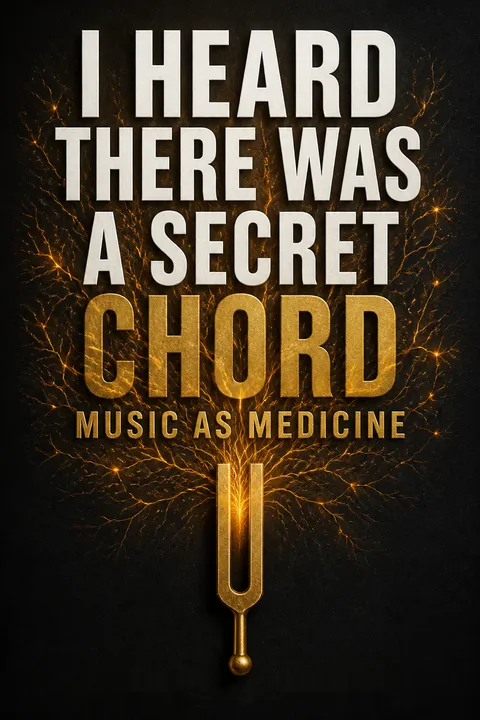
"I Heard There Was a Secret Chord" receives mixed reviews averaging 3.83/5 stars. Supporters praise Levitin's exploration of music's therapeutic power, particularly for conditions like Parkinson's and dementia, with many recommending the audiobook for its musical demonstrations. Critics find the book overly technical, dense with neuroscience jargon, poorly organized, and filled with name-dropping and tangential anecdotes. Common complaints include excessive length, lack of cohesion, and condescending treatment of non-Western music. Reviewers agree the content is scientifically rigorous but accessibility varies greatly depending on readers' backgrounds in music and neuroscience.
People Also Read








About the Author
Download PDF
Download EPUB
.epub digital book format is ideal for reading ebooks on phones, tablets, and e-readers.








































