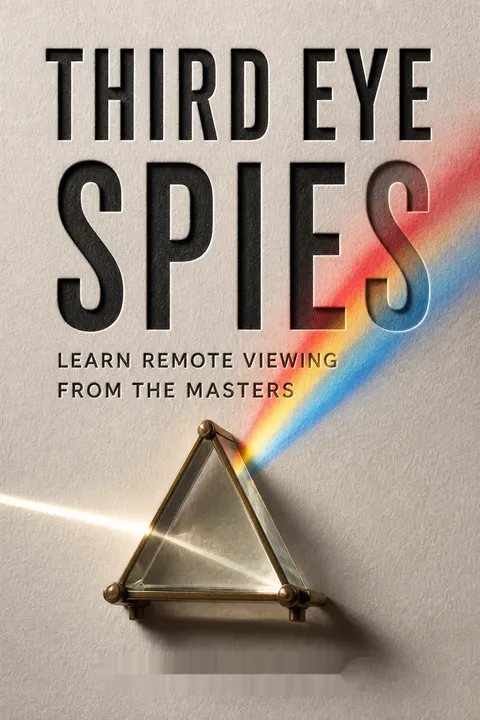

Key Takeaways
1. Remote Viewing: A Limitless Human Potential
The world around us may look finite, but fifty years of research into psychic abilities and verified out-of-body experiences have convinced me that our awareness is limitless in space and time, and therefore we are also limitless.
Unbounded awareness. Remote viewing is the innate human ability to mentally perceive and describe distant or unseen people, places, events, and objects, regardless of their location in space or time. Decades of research, including the author's work at Stanford Research Institute (SRI), consistently demonstrate that distance does not degrade the accuracy or reliability of this perception. This suggests a fundamental aspect of human consciousness that transcends conventional physical boundaries.
Beyond physical limits. The core finding from two decades of remote viewing research at SRI is that our awareness is not confined to our physical bodies. This "nonlocal" aspect of consciousness allows for experiences like:
- Describing a hidden Russian weapons factory in Siberia.
- Locating a downed Russian bomber in Africa.
- Identifying the ringleader of the Patty Hearst kidnapping.
- Forecasting commodity market changes with surprising accuracy.
These examples highlight that our perception can extend far beyond what our five senses can gather, challenging the notion of a finite self.
Innate human gift. Remote viewing is not a rare, mystical power but a latent capability within all of us, akin to a musical ability that can be developed with practice. The author has successfully taught thousands globally to access this psychic part of themselves, emphasizing that it's a natural, accessible gift. This ability reveals that who we are is indestructible, timeless awareness, rather than merely the physical body seen in a mirror, offering a path to freedom from unnecessary suffering.
2. Ingo Swann: The Visionary Architect of Remote Viewing
Ingo Swann was a life-long psychic practitioner and the father of remote viewing at Stanford Research Institute (SRI).
Pioneering techniques. Ingo Swann, a visionary artist and psychic, was instrumental in developing the methodology for remote viewing at SRI. He coined the term "remote viewing" and taught crucial techniques for distinguishing the psychic signal from "mental noise" or analytical overlay (AOL). His insights, such as the importance of the "psychic triad" (intellect, feeling/emotion sensing, and intuition), were foundational for training others, including military personnel in the Star Gate program.
Extraordinary demonstrations. Swann's abilities were consistently remarkable, often providing information that was impossible to obtain through conventional means. Key examples include:
- Accurately describing a previously unknown ring of ice crystals around Jupiter seven months before NASA's Pioneer spacecraft confirmed it.
- Remotely viewing a top-secret NSA listening post in Sugar Grove, West Virginia, and drawing its layout, which was later confirmed in every detail.
- Psychically observing a failed Chinese atomic bomb test three days before it occurred, describing a "pyrotechnic display" without a mushroom cloud.
These feats showcased his temporal freedom and ability to perceive complex, distant targets with precision.
Impact on intelligence. Swann's breach of the Sugar Grove facility, where he drew the secret NSA site instead of the intended log cabin, was pivotal. This incident, along with Pat Price's detailed descriptions of operational code words, led the CIA to fund the SRI program for over two decades. His work demonstrated that highly classified information, even when intentionally hidden, "shines like a beacon in psychic space," proving the practical utility of remote viewing for intelligence gathering.
3. Pat Price: The Psychic Policeman's Uncanny Operational Success
Pat Price was a remarkably psychic retired police commissioner from Burbank, California.
Unparalleled accuracy. Pat Price, a retired police commissioner, brought a unique blend of practical experience and extraordinary psychic ability to the SRI program. His initial remote viewing trials were statistically significant at odds of one in 100,000, demonstrating a consistent ability to accurately describe distant, hidden targets. His police background likely contributed to his focused, investigative approach to psychic perception.
High-stakes applications. Price's skills were applied to critical, real-world intelligence tasks with astonishing results:
- Hearst Kidnapping: He identified the ringleader, Donald DeFreeze, from a "mug book" and located the kidnap car, earning a commendation from the Berkeley Police Department.
- Soviet Weapons Factory: He described a secret Soviet weapons factory in Siberia, including a giant gantry crane, a steel sphere under construction from "orange peel slices," and welding problems, all later confirmed by intelligence.
- Hal Puthoff's Vacation: He tracked his colleague Hal Puthoff's vacation in South America, describing locations like a harbor, market, volcano, and church on successive days.
These operational successes highlighted the practical utility of remote viewing for intelligence agencies.
Mysterious demise. Price's remarkable abilities and the sensitive nature of his work led to his direct recruitment by the CIA. Tragically, he died mysteriously in 1975 at age fifty-six. The circumstances surrounding his death remain unclear, with speculation ranging from a heart attack to foul play by either the Russians or the CIA, the latter due to his alleged passing of secret material to his Scientology church. His story underscores the high stakes and potential dangers associated with such powerful psychic capabilities.
4. Hella Hammid: The Unexpected Oracle of Intuitive Perception
Hella Hammid was a distinguished professional photographer. She was an open-hearted, beautiful, artistic, and highly intelligent friend of my family for many years.
From control to star. Hella Hammid, initially brought into the SRI program as a "control" viewer due to her lack of prior ESP experience, quickly proved to be an exceptional remote viewer. Her series of nine trials achieved a statistical significance of almost one in a million, demonstrating that innate talent can emerge powerfully even without prior training. Her artistic background as a photographer likely contributed to her ability to translate psychic impressions into vivid drawings and descriptions.
Consistent and precise. Hammid's remote viewing sessions were characterized by increasing accuracy over time, defying the "decline effect" often seen in other ESP experiments. Her descriptions often revealed unexpected details, such as:
- Pedestrian Overpass: Her first drawing accurately depicted a "trough up in the air...full of holes" and "squares, within squares," matching the overpass.
- UC Berkeley Bevatron: Given binary coordinates, she described a "belly-button shaped energy expander" with "three rays coming out of it," even creating a clay model that remarkably resembled the circular particle accelerator and its beam tubes.
- Stanford Linear Accelerator: She perceived "polished metal tubes or cylinders...something to do with a trajectory," perfectly describing an electron accelerator.
These examples highlight her unique ability to grasp both the form and function of targets.
The oracle's insights. Hella often acted as an "oracle," providing words and images to which she attached no particular meaning, yet proved profoundly accurate. Her ability to describe Premier Brezhnev's Kremlin office—including red leather double doors, a glass-covered wooden desk, and a view of Red Square—was later confirmed by the author's personal visit. Her success underscored the importance of separating raw psychic perception from analytical interpretation, a key principle in remote viewing.
5. Precognition: Navigating the Illusion of Time and Causality
For us believing physicists, the distinction between past, present and future is only an illusion, even if a stubborn one.
Challenging causality. Precognition, or foreknowledge of future events, directly challenges our conventional understanding of time and causality, where effects always follow causes. The author, quoting Einstein, emphasizes that the linear progression of time is an illusion. Evidence suggests that future events can retroactively influence our present awareness, manifesting as dreams, gut feelings, or physiological responses, indicating a profound interconnectedness across time.
Empirical evidence. Decades of research provide compelling data for precognition:
- Plane/Train Crashes: Studies by W. E. Cox and observations of 9/11 flights showed unusually empty planes/trains on days of crashes, suggesting many people had unconscious premonitions.
- Precognitive Dreams: These dreams, often bizarre and unusually clear, are believed to be caused by future experiences, allowing individuals to alter their behavior (e.g., avoiding a flight).
- Presentiment Experiments: Dean Radin and others demonstrated that a person's physiology (heart rate, skin resistance) reacts a few seconds before seeing an emotionally charged image, indicating a body-level foreknowledge.
These findings suggest that our nervous system can anticipate future stimuli.
Daryl Bem's replicable studies. Psychology professor Daryl Bem conducted nine formal experimental series with hundreds of students, demonstrating how present feelings and choices are influenced by future events. His "Detect Erotic" experiment showed students were significantly better at locating erotic stimuli when the target was randomly chosen after their selection. His overall significance for these experiments was greater than one billion to one, providing robust evidence that the future can be known and felt, and that psi is not weak or elusive.
6. Learning Remote Viewing: Simple Steps to Unlock Innate Intuition
Your interviewer should have a collection of such interesting little objects and have put each of them into its own small brown-paper bag.
A two-person game. Remote viewing is best learned as a two-person activity, involving a viewer and an interviewer. The interviewer's role is to guide the viewer, help silence mental chatter ("monkey mind"), and act as an analytical control, while the viewer focuses on perceiving and describing mental impressions of a hidden target. This division of labor mirrors the brain's nonanalytical (psi) and analytical (reasoning) cognitive styles.
The viewing protocol:
- Initial Impressions: Viewers should write down any initial images, labeling them "initial images," as they may or may not relate to the target.
- Relax and Observe: Close eyes, relax, and describe all mental pictures, starting with fragmentary shapes. Make small sketches, even if they don't make sense.
- Breaks and Re-focus: Take short breaks between viewing phases to allow new images to emerge.
- Aesthetic Sensing: Imagine holding the object, asking questions about its color, texture, weight, movable parts, or odor.
- Avoid Naming/Guessing: This is crucial, as analysis and naming are the "principal enemies" of remote viewing, introducing mental noise.
The entire process should be kept brief, typically 10-15 minutes, to maintain focus.
Feedback and refinement. After the session, the interviewer reveals the target, providing feedback on accurate perceptions and missed details. This feedback is vital for learning to separate psychic signals from mental noise. The author emphasizes that remote viewing is a safe and exhilarating activity, accessible to anyone willing to follow simple instructions and trust their innate abilities. The goal is not to be perfectly right every time, but to be willing to be wrong in the process of discovery.
7. The Science of Psi: Separating Signal from Mental Noise
The important factor in detecting weak signals is finding a way to increase the ratio of the signal to the noise.
Signal-to-noise ratio. The success of remote viewing, much like detecting faint astronomical signals, hinges on maximizing the signal-to-noise ratio. While we don't know how to amplify the psychic signal, we have become adept at reducing "mental noise." This noise comes from analytical overlay (AOL), which includes naming, guessing, grasping, memory, analysis, and imagination, all of which interfere with pure psychic reception.
Reducing mental noise:
- Free-Response vs. Forced-Choice: Free-response experiments (like remote viewing) are far more effective than forced-choice tests (e.g., Zener cards) because they free the viewer from the mental noise of known alternatives and guessing.
- Unknown Targets: Working with interesting but unknown targets, rather than numbers or letters, helps reduce mental analysis and preconceived notions.
- Discernment and Vigilance: The viewer must remain discerning and vigilant to separate genuine psychic impressions from internal chatter, without over-analyzing.
The closer the viewer gets to raw, uninterpreted imagery, the better the results.
Patterns of distortion. Psychic perception often involves unique distortions, such as "lack of fusion" or "parallelism," where elements are correctly perceived but not connected to form a coherent whole. For example, an architect viewing the Parthenon might draw its columns laid out flat as dots within a rectangle. René Warcollier, a French engineer, extensively documented these phenomena, showing how geometric elements might rearrange themselves, highlighting that the mind receives angles and arcs rather than fully formed objects. Understanding these distortions helps viewers interpret their impressions more accurately.
8. Beyond Remote Viewing: Exploring Out-of-Body Experiences and Synchronicity
Basically, there is a continuum from remote viewing to a full out-of-body experience, with no discrete break between one and the other.
Continuum of consciousness. Remote viewing is part of a broader spectrum of nonlocal consciousness, extending into out-of-body experiences (OBEs) and lucid dreaming. While remote viewing focuses on describing distant targets from a mental screen, OBEs involve a more immersive, realistic, and emotionally engaging experience where one's consciousness feels separated from the physical body. This continuum suggests that our awareness is far more flexible and expansive than commonly understood.
OBEs and lucid dreams. OBEs are characterized by:
- Higher Data Rate: More detailed and involving perceptions than typical remote viewing.
- Emotional Interaction: Opportunity for significant emotional engagement with people at the target location.
- Changing Point of View: Ability to shift perspective within the distant environment.
Lucid dreams, where one is aware and can control the dream narrative, share a similar feeling but are distinct from OBEs as dream content doesn't necessarily exist in reality. These practices, particularly Dream Yoga, are seen as preparation for deeper spiritual journeys.
Synchronicity and acausal events. The author's life is punctuated by remarkable synchronicities, such as winning an art painting and his father winning the next, with odds of 40,000 to 1. Carl Jung and physicist Wolfgang Pauli explored these "acausal events" as meaningful coincidences that defy ordinary explanation. The eleven coincidences that led to the establishment of the SRI Star Gate program exemplify how seemingly unrelated events can align to facilitate significant outcomes, suggesting a deeper, interconnected fabric of reality.
9. Integrating Psychic Abilities: A Personal Journey and Practical Applications
So there I was, a fourteen-year-old who has learned that there is real magic. But I was still doing fake magic on the stage. It would be another twenty years before I got my hands on powerful real magic.
From illusion to reality. The author's journey began with childhood fascination for magic tricks, evolving into a lifelong pursuit of genuine psychic phenomena. His early experiences with "fake mind reading" and exposure to figures like Blackstone and the Theosophical Society laid the groundwork for his later scientific endeavors. This personal narrative highlights how curiosity and an open mind can lead from conventional understanding to profound discoveries about consciousness.
Early influences and experiments:
- Family Background: His father, a bookseller and publisher, fostered interests in science fiction, mysticism, and magic, and published biographies of psychics like Blavatsky and Eileen Garrett.
- High School Introduction: A classmate introduced him to J. B. Rhine's ESP cards, sparking his formal interest in parapsychology.
- Early Psi Experiments: At Sperry Gyroscope, he built an electron beam vacuum tube to demonstrate psychokinesis, showing an engineer could mentally deflect the beam, results published in Edgar Mitchell's Psychic Exploration.
These experiences solidified his belief in the naturalness of psychic abilities.
Practical applications and challenges. The author's work extended beyond the lab into practical applications, notably in financial forecasting. Delphi Associates, co-founded by Targ, successfully used Associative Remote Viewing (ARV) to forecast silver commodity prices, achieving nine correct predictions out of nine trials and earning significant profits. This success, featured on the front page of the Wall Street Journal, demonstrated the potential for psychic abilities in real-world scenarios, though challenges like maintaining focus and avoiding greed were also encountered.
10. Timeless Awareness: The Philosophical Core of Psychic Experience
Since your nature is timeless awareness, you are free in your meditation to move your awareness anywhere you wish through space and time without limitation.
The nature of mind. The philosophical underpinning of remote viewing and other psychic abilities lies in the concept of "timeless awareness," as taught by Dzogchen Buddhism and ancient Indian masters like Patanjali. This perspective posits that our true nature is not limited by the physical body or the linear progression of time, but is an indestructible, unconditioned, and spacious awareness. This understanding is crucial for a remote viewer, as it liberates perception from the constraints of cause and effect.
Dzogchen principles. Padmasambhava, the 8th-century dharma master, taught Dzogchen Buddhism, which emphasizes discovering oneself in the "condition of the mirror"—a state of pure, unconditioned awareness. This teaching encourages practitioners to:
- Reside in timeless awareness and spaciousness.
- Experience liberation and freedom as their true nature.
- Recognize that there is "nothing to correct or modify" in this primordial state.
This spiritual framework provides a natural home for remote viewing, where the mind is free to permeate everything without limitation.
Universal connection. The profound implication of timeless awareness is our universal connection to one another and our interdependent nature. Remote viewing, by demonstrating awareness unbounded by distance or time, allows us to experience this connection firsthand. The author believes that the meaning of life is to experience and teach this primordial timeless awareness, fostering a greater spiritual community and helping others expand their consciousness.
Review Summary
Reviews for Third Eye Spies are generally positive, averaging 4.07 out of 5. Readers appreciate its concise, accessible introduction to remote viewing and the Star Gate project, with many enjoying the historical anecdotes and firsthand accounts. Some find the psychic evidence unconvincing and note a lack of practical instruction. The book pairs well with its companion documentary. While enthusiasts embrace Targ's metaphysical views, skeptics remain unconvinced, though most agree it serves as an engaging primer on the subject.
People Also Read







Download PDF
Download EPUB
.epub digital book format is ideal for reading ebooks on phones, tablets, and e-readers.








































