
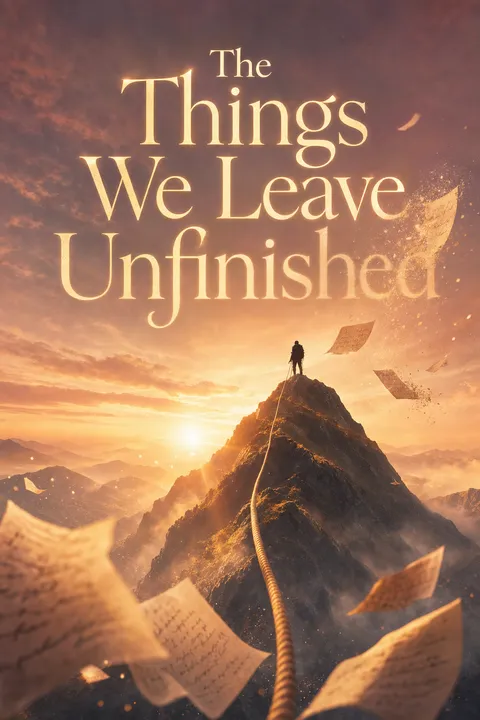


Plot Summary
Shedding a Borrowed Name
Georgia Stanton1 lands in Colorado after six bruising years married to film director Damian Ellsworth,8 whose affair detonated across every tabloid and earned her the nickname Ice Queen. Her first act is small and necessary: at the Poplar Grove DMV she strips his surname from her license before she even goes home.
Hollowed out, she drifts into the bookstore her great-grandmother6 co-founded, aching for the woman who raised her after her mother7 kept abandoning her on Gran's6 doorstep. Gran6 has been dead six months, and the loss still folds Georgia1 in half. She came home to recharge in Gran's6 old armchair and stop performing composure for cameras, but the quiet town offers no real refuge from the wreckage she carries.
Yarros opens on identity stripped to the studs. The name change is both literal divorce paperwork and a symbolic shedding of a self built to please others. Georgia's composure, weaponized by the press into the Ice Queen label, is revealed as armor over grief, not coldness. The motif of mothering recurs immediately: the woman who raised her is dead, the woman who bore her is absent. Place functions as psychology here, the small town and the bookstore standing in for a self Georgia abandoned. The chapter establishes the central wound, abandonment, and the central hunger, to feel safe enough to stop performing.
War in the Bookstore
Eavesdropping on a man ranting into his phone2 about two nearly identical book covers, Georgia1 volunteers her verdict: the novels of bestseller Noah Harrison2 all read the same, peddling beautiful misery dressed up as romance. The dark-eyed stranger2 bristles and defends the genre. She doubles down, even revealing that her famous great-grandmother6 once privately mocked Harrison's2 work.
He buys both books and walks off, smug, while she fumes at how a gorgeous man can be so irritating. The encounter unsettles her precisely because the attraction is instant and unwelcome. Only later, when this same man2 strolls into her family home for a business meeting, does the trap close: the stranger she eviscerated is Noah Harrison2 himself.
The meet-cute is built on dramatic irony and intellectual sparring, a romance staple that Yarros sharpens with genre self-awareness. Georgia's contempt for Harrison's tragic formula foreshadows the entire ideological conflict to come, art that wounds versus art that heals. Her honesty, blurted past a numbed filter, marks her as someone whose defenses have cracked. Noah's petty purchase of his own books signals an ego that will need humbling. The scene also stages the book's meta-argument about whether romance is escapism or truth, with Georgia, raised on the genre, ironically dismissing it. Attraction and antagonism arrive fused, the spark that the rest of the novel must either extinguish or transform.
The Manuscript Behind Her Back
At home Georgia1 finds her mother, Ava,7 dressed for company, having fired the housekeeper and lied to Gran's6 publishers by posing as Georgia1 herself. Ava7 engineered a deal to sell Scarlett Stanton's6 untitled final novel, the unfinished story of Gran's6 own wartime romance, hoping the advance would rescue her from another collapsing marriage.
As sole heir and executor of the literary trust, Georgia1 holds every card, yet old longing for her mother's7 approval pulls her into agreeing to at least listen. Then the hired ghostwriter arrives, and recognition curdles her stomach: it is Noah,2 the bookstore antagonist. He pitches himself as the only writer reverent enough to honor Scarlett's6 voice, even offering to publish without his own name.
The inciting machinery snaps into place: a coveted manuscript, a scheming mother, and an unwanted collaborator who is also a romantic interest. Ava's impersonation literalizes a lifelong theft, her habit of taking Georgia's identity, attention, and resources. Crucially, Georgia's power is legal and absolute, yet her emotional power over her mother is near zero, a tension that drives her self-defeating compliance. Noah's offer to surrender his byline reframes his arrogance as something more like devotion to craft. The scene fuses the two plots, professional and familial, around a single object, ensuring that every later negotiation over the book is also a negotiation over love, legacy, and worth.
A Lift Down a Dusty Road
Inside the manuscript, 1940 England unfolds. Scarlett Wright3 and her younger sister Constance,5 both WAAF officers who track enemy aircraft, are stranded when their ride forgets them. An American pilot flying with the RAF, Jameson Stanton,4 pulls over and offers a lift. Scarlett,3 who has sworn off pilots because they die young, is undone by his green eyes and relentless charm.
He asks her to dinner; she refuses on principle, then surrenders. Days later he flies her in a borrowed biplane to a private sunset picnic complete with a phonograph and dancing, beginning a love that races against air-raid sirens and casualty lists. Scarlett3 confesses she dreams of becoming a novelist; Jameson4 tells her, simply, that she should.
The historical strand introduces its own enemies-to-lovers rhythm, mirroring Georgia and Noah and quietly arguing that great love repeats across generations. Scarlett's no-pilots rule is rational self-protection in a world of disappearing men, making her capitulation an act of courage rather than weakness. Jameson's defining trait, choosing this war when he could have stayed safely home, marks him as a man who runs toward danger and devotion alike. The phonograph and the biplane picnic establish tokens and rituals the present timeline will inherit. Yarros frames creativity as intimacy: Jameson's belief in Scarlett's writing is the truest seduction, foreshadowing the manuscript that becomes her legacy.
No Happy Ending Allowed
Reading the manuscript through to dawn, Georgia1 weeps; it breaks off mid-story, just before Scarlett3 leaves England, at the darkest possible moment. She concludes Gran6 left it unfinished on purpose. When Noah2 returns to collect it, she signs the contract but seizes final manuscript approval, an unheard-of concession he grants.
Then she delivers her immovable rule: he may not give the lovers a happy ending. Noah,2 who built his fame on devastating conclusions, mistakes her demand for a creative challenge and vows to win her over to a joyful finale. From the start their wires cross: she wants painful truth, he wants love conquering all, and neither realizes how completely opposite their goals truly are.
The central misunderstanding is elegantly structural, two people agreeing to disagree about the very thing they each misread. Georgia's insistence on a tragic ending is psychological projection: a woman who believes love does not last cannot grant fictional lovers what she denies herself. Noah's reflexive vow to deliver joy is equally telling, the tragic writer who privately hungers for the redemption his books withhold. The contract, with its rare clause of authorial veto handed to a non-writer, dramatizes trust as the book's true currency. Their crossed purposes become a slow-burn engine, because resolving the ending will require resolving who each of them believes they are allowed to be.
Bombs Over the Airfield
A newspaper read aloud in the car shatters everything: Scarlett's3 bankrupt, title-clinging parents have announced her engagement to Henry Wadsworth,12 a known abuser, to repair the family finances. Jameson4 recoils, certain he was played, until Scarlett3 swears she will never marry the man.
Before they finish arguing on the airfield, German fighters tear through the clouds and bomb the base; Jameson4 throws himself over her as a hangar erupts. He survives the night's combat while she endures a twelve-hour watch plotting the very raids he flies. At dawn he kisses her beneath an oak, both confessing love. Soon after, Scarlett3 faces her parents and renounces the marriage and the title, choosing Jameson4 over her inheritance.
War compresses courtship into urgency, and Yarros stages the lovers' commitment amid literal explosions to argue that danger clarifies feeling. The engagement scandal exposes the era's commodification of daughters, with Scarlett's body and title treated as currency by her own family, sharpening her later refusal into a feminist act of self-ownership. The twelve-hour watch is quietly harrowing: she must professionally chart the skies where the man she loves might die. His instinct to shield her physically pairs with her instinct to endure, defining a partnership of mutual protection. By forfeiting her inheritance, Scarlett chooses love over the inherited identity her parents weaponized, an echo of Georgia reclaiming her own name.
The Neighbor Moves In
For weeks Georgia1 and Noah2 feud over the ending by phone, him pitching deliberately ridiculous tragedies, her hanging up. Meanwhile Ava,7 who swore she would stay through Christmas, disappears the instant the publisher's advance hits her account, off to reconcile with a gambling ex-husband. She admits Gran6 cut her from the will and that she only ever returns when she needs something.
Devastated, Georgia1 demands her house key back. Minutes later Noah2 appears on the porch, having rented Grantham Cottage on the property's edge for the duration of the project. Finding her hollowed out, he abandons his pitch and simply makes her tea, sensing she needs care rather than persuasion or another argument about Scarlett.3
Ava's exit confirms the pattern Georgia has spent a lifetime bracing against, and the returned key marks Georgia's first hard boundary with her mother. The timing is cruel and deliberate: abandonment, then arrival. Noah's pivot from combatant to caretaker is the hinge of the romance; he reads her wound correctly and answers it without agenda, the opposite of every transactional relationship Georgia has known. The tea is small and enormous, an act of attention from a man learning that winning her requires not cleverness but presence. Yarros contrasts the mother who takes with the man who gives, beginning the slow dismantling of Georgia's belief that everyone wants something from her.
The Bell at the Summit
Determined to earn her trust, Noah2 coaxes Georgia1 up a climbing wall, promising he will not let her fall; ringing the summit bell reawakens a strength she let die inside her marriage. He walks her to the aspen gazebo Gran6 built by the creek, where Scarlett3 supposedly waited for Jameson,4 and argues that the lovers deserve joy.
Georgia1 insists the gazebo is a shrine to longing, not reunion, and that the book must end with Scarlett3 waiting forever. They strike a bargain: he writes both endings, she chooses, but she must learn to trust him. Emboldened, Georgia1 buys the empty pet-shop building in town and reopens the glass-art studio she abandoned years ago.
The climbing wall externalizes the book's thesis that trust is a physical act of surrender, and Georgia's earlier refusal (the last man who promised safety dropped her) names her exact injury. Reclaiming her body's capability bleeds into reclaiming her art, the dormant glassblower whose creativity Damian extinguished. The gazebo argument is the philosophical crux: Georgia reads the structure as a monument to grief, Noah as a promise, and their dispute over fiction is really about whether endurance or reunion is love's truth. The dual-ending bargain converts an impasse into collaboration. By signing the studio lease, Georgia begins authoring her own life rather than guarding only her great-grandmother's, a quiet declaration of self-rescue.
A Sanctuary Between Sirens
In wartime England, Scarlett3 engineers her own transfer to Jameson's4 station, refusing to live apart, and when he proposes again she accepts. They marry in a small pub ceremony, her parents absent, and move into a modest rented house that becomes their refuge. She confesses she cannot cook; he laughs and promises they will burn dinners together.
Their wedding night is tender and consuming. For five stolen months they carve out a near-normal life between his patrols and her watches, racing for the shower, dancing in the living room to the phonograph. Scarlett,3 raised to be a decorative aristocrat, discovers she would trade every inheritance she renounced for this small, loud, uncertain domestic happiness.
Marriage in wartime is portrayed as defiance, a claim staked against an uncertain future. Scarlett actively pursues the transfer and the proposal, inverting the era's gender scripts and underscoring that she chooses Jameson repeatedly, not passively. The inability to cook becomes a charming emblem of a woman remade: stripped of class privilege, she finds identity in partnership rather than performance. Their domestic rituals, burned breakfasts and living-room dances, accrue poignancy because the reader senses their fragility. Yarros lets ordinary happiness register as extraordinary precisely because bombs frame it. This sanctuary chapter raises the emotional stakes, banking warmth the narrative will later spend, so that what threatens the home lands with maximum force.
Halloween Surrender
By autumn in Colorado the tension finally breaks. On Halloween, after Noah2 hands out full-size candy bars and overhears Damian8 trying to leverage the manuscript through Noah's2 own agent, Noah2 refuses to betray Georgia's1 wishes. Hearing him choose her dissolves her last defense, and she kisses him.
They become lovers, but Georgia1 insists on calling it a fling with an expiration date, ending when the book is done, because she is terrified of becoming her serially married mother7 by leaping from one man straight to the next. Noah,2 already in love, accepts her terms while privately resolving to win her heart. The deadline now counts down two things at once: the manuscript and, supposedly, them.
Georgia's defenses fall not to seduction but to loyalty, Noah refusing the very transaction her ex and mother always demanded. Her insistence on a fling is self-protection masquerading as self-knowledge; naming an expiration date lets her enjoy intimacy while pre-grieving its loss, a hedge against the abandonment she expects. The maternal fear is explicit: she will not repeat Ava's serial attachments. Noah's quiet decision to play the long game reframes the romance hero not as conqueror but as patient believer. Yarros ties the relationship's clock to the book's deadline, a structural device that makes every chapter of falling in love also a ticking toward an artificial ending neither truly wants.
Grief, a Cradle, and Pearl Harbor
The manuscript darkens. Constance's5 beloved fiancé Edward is killed in a raid, hollowing her out. To preserve the family land she ties to his memory, she agrees to marry the cruel Henry Wadsworth,12 taking Scarlett's3 discarded suitor in a loveless bargain that horrifies her sister.3 Soon after, Scarlett3 discovers she is pregnant and must resign her commission, mourning the uniformed purpose that defined her.
She gives birth to a son, William,15 with her blue eyes and Jameson's4 reckless grin. Days later, Japan attacks Pearl Harbor, dragging America into the war and leaving Jameson,4 who crossed an ocean to fight, agonizingly far from the new front and the homeland he can no longer protect.
This movement braids creation and loss: a fiancé dies, a sister sacrifices herself, a child is born, a nation enters war. Constance's bargain is the moral engine of the historical plot, love so devastated it chooses self-destruction to hold onto a place haunted by the dead. Scarlett's forced discharge dramatizes the era's erasure of women from meaningful work the moment they become mothers, a loss she grieves alongside her joy. William's birth raises the ultimate stakes, transforming abstract danger into a vulnerable infant. Pearl Harbor universalizes the threat, reminding readers that even the protected backyard is no longer safe, and seeding Jameson's escalating desperation to get his family out.
Down Over the Sea
With raids intensifying and over a thousand civilians dead in a single week, Jameson4 grows desperate to get Scarlett3 and William15 to safety in Colorado. His uncle Vernon,14 now ferrying bombers for the Air Transport Command, agrees to smuggle them out within a month. Scarlett,3 who surrendered her British citizenship to marry him, reluctantly promises to go for William's15 sake.
Then, escorting bombers over the Netherlands, Jameson's4 Spitfire takes a hit to the fuel tank and he goes down through thick cloud, radioing a final message that he loves her. His squadron cannot confirm a crash. He is declared missing, and Scarlett3 seizes ferociously onto hope, refusing to accept the death sentence everyone around her quietly fears.
The chapter pivots the historical romance toward tragedy while withholding certainty, weaponizing hope as both lifeline and torment. Jameson's evacuation plan is love expressed as relinquishment: he would rather lose his family to distance than to bombs. Scarlett's statelessness, neither British nor yet American, makes her dependent and precarious, the cost of choosing love over country made literal. The unconfirmed crash is structurally vital; ambiguity lets Scarlett, and later the reader, sustain a hope the facts do not warrant. Yarros studies how the mind refuses unbearable truth, the heart insisting it would feel a beloved's death, a denial that will echo across decades and shape the lie at the novel's core.
Caught in the Office
After a triumphant gallery opening where Noah2 surprises Georgia1 by flying in his sister11 and even her mother,7 the lovers wake to find Ava7 in Gran's6 office, secretly photographing the manuscript to deliver to Damian.8 Ava7 confesses her real motive was always the lucrative movie rights, then lets slip a worse truth: Noah2 finished the book six weeks earlier and hid it.
Confronted, Noah2 admits he stalled, editing two endings, simply to buy more time before their self-imposed deadline ended them. To Georgia,1 a concealment is a betrayal indistinguishable from Damian's.8 She throws him out. He leaves both endings in the desk, telling her to choose, insisting that the rare love story in this house is theirs.
The dark moment lands as a collision of two manipulators, Ava and Damian, and one well-intentioned liar, Noah, with Georgia unable to grade betrayals on a curve. Her trauma logic is sound: the man who once promised never to hurt her concealed the truth to engineer her feelings, the exact pattern she fled. Noah's defense, that he lied to protect love rather than to escape it, is real yet insufficient, because trust broken by good intentions still breaks. Yarros refuses an easy villain; Noah's flaw is his belief that he can author outcomes, controlling time the way he controls plot. The deadline he gamed becomes the weapon that detonates them.
The Street in Ipswich
The manuscript reaches its devastating heart. While Constance5 packs Scarlett3 and William15 for the evacuation flight, the sisters are caught in an air raid on the streets of Ipswich. A blast hurls them into a garden; the baby is unharmed, but shrapnel tears into Scarlett's3 back. Dying in her sister's5 arms, Scarlett3 extracts Constance's5 vow to protect William15 and carry him to Vernon14 and Colorado.
At the airfield, bloodied and dazed, Constance5 realizes the officers and Vernon14 mistake her for Scarlett,3 whose handbag, papers, and visa she carries. To keep her promise and shield the child from their grasping father, Constance5 boards the plane and claims her dead sister's name, becoming Scarlett Stanton.6
The historical climax fuses sacrifice and survival into a single irreversible choice. Scarlett's death, sudden and senseless, embodies the war's indifference to love stories, the brutal answer to Georgia's earlier demand for an unsentimental ending. Constance's assumption of her sister's identity is born of a vow and a threat, the abusive patriarchal family that would seize William, making the deception an act of fierce maternal protection rather than fraud. The twin motif pays off: their physical resemblance, established early, enables the substitution. Yarros builds the novel's deepest irony here, that the beloved author the modern world worships was never the woman everyone believed, and that her entire life grew from a single split-second lie.
Forgive Me the Lie
Heartbroken and alone, Georgia1 reads both endings and chooses Noah's2 grief-soaked one, instructing him to publish the finale where Scarlett3 never reunites with Jameson.4 Then a final posthumous package from Gran6 arrives with the original manuscript and three letters. The truth detonates: Gran6 was never Scarlett.3
She was Constance,5 who took her sister's name that day in Ipswich and lived seventy-eight years under it, raising William15 and writing seventy-three novels in a voice that was never truly hers. Scarlett3 died in 1942; Jameson,4 it seems, never came home either. Gran6 begs forgiveness for the lie and urges Georgia1 not to squander years, as she once did, living with one bitter foot stuck in the past.
The revelation recontextualizes the entire novel, transforming a beloved author's legacy into an act of sustained, loving deception. Gran's confession reframes grief as something one can carry without hardening, a counter-model to Georgia's own brittleness. The detail that Constance could never truly write, retyping and embellishing her dead sister's drafts, deepens the pathos: she ventriloquized Scarlett for decades to keep her alive. The letter functions as intergenerational therapy, the dead grandmother diagnosing the living granddaughter, naming the wasted seventeen years she herself spent before claiming happiness. Yarros argues that the lies we tell to protect love can themselves be a form of devotion, and that legacy is less about truth than about who we choose to keep breathing.
Restoring the Ending
Galvanized, Georgia1 phones Noah's2 editor10 and reverses her decision, restoring the happy ending Noah2 always believed the lovers deserved, the one where Jameson4 survives. Early reviews savage Noah2 for daring to give Scarlett Stanton6 a joyful finale, and he absorbs the public scorn for Georgia's1 sake.
Unknown to her, he spends six weeks and a fortune funding a deep-sea search off the Netherlands, recovering Jameson's4 downed Spitfire and his engraved wedding ring. He returns to Colorado, where Georgia1 confesses she loves him and was wrong about the ending. Having pieced together the Constance secret5 on his own, he presses the ring into her palm. They reconcile, agreeing to split their years between New York autumns and Colorado seasons.
Resolution arrives through reversal: the woman who demanded tragedy now grants joy, having learned from Gran's confession that love earned through hardship deserves its reward. Georgia's phone call is an act of authorship over her own beliefs, choosing hope as a discipline rather than a delusion. Noah's secret salvage operation is the grand gesture remade, not words but proof, the man who once gamed time now spending it and his fortune to honor the dead. The recovered ring, inscribed, closes the historical wound the manuscript could not. Their geographic compromise signals mature partnership, two whole lives merged rather than one subsumed, the antidote to the self-erasure that defined Georgia's first marriage.
Epilogue
In the published novel, Scarlett3 and Jameson4 finally receive the ending fate denied them: he survives a crash, the Dutch Resistance, and a broken leg, returning to find her dancing in the Colorado gazebo with their sleeping son15 nearby. Three years on, Georgia,1 pregnant and married to Noah,2 browses the bookstore where they first clashed, listening to a fan rave about their shared novel without realizing its co-author stands beside her.
The couple has buried Jameson's4 engraved ring beside Constance's5 true headstone in England, letting the family's tangled loves rest at last. Once the Ice Queen, Georgia1 now lives her own lightning-strike love story, the life her great-grandmother's lie6 made possible.
The epilogue performs a double reconciliation, fictional and real. The invented happy ending grants the dead the mercy history withheld, dramatizing the book's argument that fiction can repair what life shatters. Yet Yarros refuses pure escapism: the buried ring and the headstone bearing Constance's real name acknowledge the unembellished truth beneath the romance. The bookstore framing closes a perfect circle, returning Georgia to the site of her cynicism now transformed into faith. The unrecognized fan underscores how legacy lives in readers, not in fame. Pregnancy signals continuity, the lightning strike passing to a new generation, and Georgia's joy completes Gran's deathbed plea: do not waste years with one foot in the past.
Analysis
Yarros builds a dual-timeline meditation on whether love stories owe us truth or mercy, and answers that the finest ones provide both. The structural conceit, a contemporary romance unfolding alongside the wartime manuscript at its center, lets the book argue with itself: Georgia1 demands an unsentimental ending because she no longer believes in lasting love, while Noah,2 the tragedy specialist, secretly craves the redemption his novels withhold. Their disagreement over fiction is always a disagreement about whether they themselves are allowed to be happy. The genius of the design is that the manuscript's completion and the lovers' reconciliation become the same act, healing the past by choosing hope in the present. Trust operates as the book's true subject. Georgia,1 shaped by a mother who appears only to take7 and a husband who weaponized her devotion,8 withholds emotional access until safety is proven; Noah,2 who gives trust first, must learn that good intentions do not excuse concealment. The rock-climbing motif literalizes surrender, and the recurring image of love being slowly drowned rather than cleanly broken gives the novel its most original psychological texture. The historical strand interrogates the commodification of women, daughters sold for titles, mothers erased the moment they conceive, while celebrating the agency Scarlett3 and Constance5 seize anyway. The late revelation about Gran's identity6 reframes deception as devotion, suggesting legacy is less about factual truth than about who we keep alive through love. Yarros, writing from her own military-marriage experience, treats the lightning-strike love as both rare miracle and inherited inheritance, passing across generations. The book's lesson is finally Gran's:6 recognize your mistakes, refuse to live inside them, and do not waste years with one foot in the past when an unfinished life still waits to be written.
Review Summary
The Things We Leave Unfinished received mostly positive reviews, with many praising its emotional impact and dual-timeline love stories. Readers were particularly moved by Scarlett and Jameson's World War II romance. Some found Georgia and Noah's modern story less compelling in comparison. The book's writing style and plot twists garnered praise, though a few readers felt it was overhyped or clichéd. Many readers reported crying while reading and feeling deeply connected to the characters, especially Scarlett and Jameson.
People Also Read





Characters
Georgia Stanton
Grieving heir and artistLate-twenties glass artist, charity director, and sole heir to a legendary romance novelist's estate6, freshly divorced from a cheating film director8. Raised by her great-grandmother6 after her mother7 repeatedly abandoned her, Georgia learned that trust must be earned and love is conditional. Her composure, mocked by the press as Ice Queen behavior, is armor over deep abandonment wounds. She withholds emotional access until proof of safety arrives, a survival strategy that calcified inside a marriage that swallowed her creativity. Fiercely protective of her great-grandmother's6 legacy, she is far more generous to the dead than to herself. Her arc tracks a woman relearning to risk, to create, and to believe she is not doomed to repeat her mother's7 pattern of serial, self-erasing attachments.
Noah Morelli
Bestselling tragic-romance authorA wildly successful novelist who writes heartbreaking love stories under the pen name Noah Harrison and is hired to complete the unfinished manuscript. Charming, arrogant, and disciplined, he channels his intensity into rock climbing and prides himself on never breaking his word, a vow rooted in a teenage promise he failed to keep before his mother's accident. A self-confessed control freak, he sees every story's flaw and ending instantly, yet he gives trust first and waits for outcomes, the opposite of Georgia1. Beneath the ego lives genuine reverence for craft and an unexpected tenderness, evident in his weekly dinners with his mother. His growth lies in learning that real relationships, unlike plots, cannot be authored or controlled into the shape he wants.
Scarlett Wright
WWII heroine in the manuscriptThe elder Wright sister and a WAAF officer who plots enemy aircraft movements in 1940s England. Daughter of a financially ruined baron, she refuses an arranged marriage and renounces her family title to claim her own life. Witty, sharp-tongued, and fiercely protective of her sister5, she dreams of becoming a novelist and falls hard for an American pilot4. Beneath aristocratic polish lives a modern woman who discovers her worth in purpose and partnership rather than performance, and whose love defies parents, country, and war itself.
Jameson Stanton
American volunteer pilotA Colorado-raised American who crosses an ocean to fly Spitfires for the RAF before his country enters the war, risking his citizenship to fight. Charming, forthright, and recklessly brave in the cockpit, he is steady and devoted on the ground. He courts Scarlett3 relentlessly, marries her against her family's wishes, and adores their son15. His defining drive is protection: he would surrender anything, even her nearness, to keep his family safe from the bombs falling across England.
Constance Wright
Scarlett's devoted sisterThe younger Wright sister, an outwardly reserved but inwardly bold WAAF officer who shares Scarlett's3 striking blue eyes. Engaged to a childhood sweetheart, she is the romantic, loyal heart of the historical timeline. Her grief and her willingness to sacrifice herself for family and for those she loves shadow the entire story. Gentle yet steel-spined, she carries the manuscript's heaviest emotional burdens and proves capable of extraordinary devotion.
Gran
Beloved late novelistGeorgia's1 great-grandmother, the internationally adored romance author Scarlett Stanton, who raised Georgia1 and died six months before the story opens. Warm, witty, and unstoppable into her hundreds, a passionate gardener and baker, she left behind one unfinished novel about her own wartime love. Even after death she shapes the plot through carefully arranged posthumous gifts and letters, guiding Georgia1 toward a life worth living.
Ava
Georgia's absent motherGeorgia's1 serially married, emotionally unavailable mother, who became a parent in high school and never embraced the role. Charming when she needs something, she resurfaces in Georgia's1 life only to extract money or advantage, then vanishes. Cut from Gran's6 will, she nurses resentment and treats her daughter1 as a resource rather than a child, embodying the abandonment that defines Georgia's1 deepest fears.
Damian Ellsworth
Georgia's cheating ex-husbandAn acclaimed film director more than a decade older than Georgia1, who married her partly to access her great-grandmother's6 coveted movie rights and serially cheated throughout their union. Smooth, transactional, and self-serving, he annihilated her publicly and emotionally. He continues angling for the manuscript's film rights, a slick antagonist whose betrayals calcified Georgia1 into the guarded woman she became.
Hazel
Georgia's lifelong best friendGeorgia's1 best friend since kindergarten, now a married mother of two who runs a learning center. Warm, funny, and unflinchingly loyal, she roots loudly for Georgia's1 happiness and pushes her toward the risk of new love. She offers the grounded, affectionate honesty that Georgia's1 family never provided, serving as both comic relief and moral compass.
Adam Feinhold
Noah's editor and friendNoah's2 editor and closest friend, a level-headed New York publishing veteran and family man. He brokers the deal to finish the manuscript and repeatedly nudges Noah2 toward humility, insisting he actually listen to Georgia1. Pragmatic and wry, he becomes an unlikely accomplice in Noah's2 gamble to buy more time.
Adrienne
Noah's blunt sisterNoah's2 younger sister, married with children, who delivers unvarnished advice and refuses to flatter his ego. She pushes him to fight for Georgia1 and to check his arrogance, acting as his conscience and emotional translator.
Henry Wadsworth
Cruel wealthy suitorA wealthy, abusive heir to a shipping fortune who pursues marriage into the Wright family to buy his way toward a title. Gluttonous and violent, he embodies the era's commodification of women and casts a menacing shadow over both sisters' fates.
Howard Reed
Jameson's fellow pilotAn American pilot and Jameson's4 loyal squadron friend, often paired with him in the air. He carries grim news and stands witness to the war's losses, a steady presence in the historical timeline.
Uncle Vernon
Jameson's transport-pilot uncleJameson's4 uncle, who taught him to fly and later joins the Air Transport Command ferrying bombers across the Atlantic. He arranges the secret evacuation of Jameson's4 family to America and becomes a pivotal, well-meaning link in the chain of events.
William
Scarlett and Jameson's sonThe infant son of Scarlett3 and Jameson4, born during the war with his mother's blue eyes and his father's grin. His safety becomes the axis around which the family's most consequential sacrifices and choices turn.
Plot Devices
The Unfinished Manuscript
Central object binding two erasScarlett Stanton's6 only unfinished novel, a wartime love story she insisted was for family alone, anchors the entire narrative. Its sale, ghostwriting, and completion drive the modern plot, while its chapters constitute the historical timeline the reader experiences directly. Because Georgia1 controls it as literary executor and Noah2 is contracted to finish it, the manuscript becomes the battleground for their conflict over endings, the vessel for Gran's hidden truth6, and the bridge between generations. Its physical pages, aged unevenly and smudged with chocolate, even carry forensic clues to how and when it was written. Yarros uses it as both MacGuffin and mirror, the document that forces every character to decide what love stories owe to truth.
The Wartime Letters
Epigraphs voicing the dead loversEach chapter opens with a letter exchanged between Scarlett3 and Jameson4 during their long separations. These epigraphs deliver the lovers' raw, unmediated voices, charting devotion, longing, and the recurring promise to meet where the creek bends among the aspens. They provide emotional counterpoint to the modern scenes and foreshadow events in the historical timeline. Functioning as primary sources within the story, the letters lend authenticity that both Georgia1 and Noah2 treat as sacred, and they ultimately become evidence in unraveling the family's deepest secret. Yarros weaponizes the intimacy of correspondence so that lines written in one era detonate with new meaning in another, threading hope and grief through the book's architecture.
The Two Endings
Dual finales as thematic engineGeorgia1 forbids a happy ending; Noah2 believes the lovers deserve one. Their bargain that he write both versions, with her holding final approval, structures the entire romance as a debate about whether love should be portrayed as enduring grief or triumphant reunion. The competing finales externalize each character's psychology, Georgia1 projecting her cynicism, Noah2 projecting his buried hope. The choice between them carries enormous professional and emotional stakes, and the eventual decision becomes the climactic act of the modern arc. Yarros uses the device to interrogate the romance genre itself, asking what readers, and wounded people, are entitled to believe about how love stories end.
Gran's Posthumous Letters
Voice from beyond the graveBefore dying, Gran6 arranged a series of timed deliveries to Georgia1, monthly gifts and, finally, a sealed package of confessional letters. These reach Georgia1 at her lowest point and reframe everything the reader has understood about the manuscript and the family. Functioning as a literal message from the dead, they perform intergenerational counsel, diagnosing Georgia's1 defenses and urging her not to waste years living in the past. The device lets a deceased character drive the climax, delivering the novel's central revelation and its emotional thesis in a single stroke. Its contents recolor every earlier scene, transforming a beloved author's legacy6 into an act of sustained, protective love.
Phonograph and Ring
Tokens carrying love across decadesTwo objects recur as physical talismans of the historical romance: Jameson's4 portable phonograph, on which he first danced Scarlett3 into love, and his engraved wedding ring. The phonograph reappears in the present, hidden away for decades, its rediscovery dissolving Georgia's1 last emotional defenses. The ring, recovered far later from a sunken Spitfire, closes the historical wound the manuscript could not, serving as proof rather than promise. Yarros uses these tokens to make abstract devotion tangible, letting heirlooms migrate between timelines so that a gift given in wartime England detonates with meaning in modern Colorado, binding the generations and authenticating a love that outlasted the people who lived it.
FAQ
Synopsis & Basic Details
What is The Things We Leave Unfinished about?
- Dual Timelines, Love's Risks: The novel alternates between Georgia Stanton's present and her great-grandmother Scarlett's WWII-era romance, exploring how past love and loss impact the present.
- Unfinished Manuscript Catalyst: Georgia and author Noah Harrison collaborate to complete Scarlett's unfinished novel, uncovering secrets and confronting their own views on love.
- Healing and New Beginnings: The story follows Georgia's journey of healing from a divorce and finding the courage to embrace new relationships, mirroring Scarlett's past.
Why should I read The Things We Leave Unfinished?
- Intricate Dual Narrative: The alternating timelines create a compelling narrative that keeps readers engaged, revealing connections between past and present.
- Emotional Depth and Complexity: The novel explores themes of love, loss, and resilience with nuanced characters and relatable emotional struggles.
- Literary Mystery and Romance: The combination of a literary mystery surrounding the unfinished manuscript and a developing romance between Georgia and Noah offers a satisfying read.
What is the background of The Things We Leave Unfinished?
- World War II Setting: Scarlett's story is set against the backdrop of World War II, highlighting the sacrifices and uncertainties of love during wartime.
- Literary World Focus: The novel delves into the world of publishing and writing, with characters who are authors and the central plot revolving around a manuscript.
- Colorado Estate Setting: The story is set in a Colorado estate, which serves as a physical and emotional space for Georgia to confront her past and future.
What are the most memorable quotes in The Things We Leave Unfinished?
- "Love is a risk, always.": This quote encapsulates the central theme of the novel, highlighting the vulnerability and courage required for love, as seen in both timelines.
- "We don't get to choose the endings we want, but we do get to choose how we live with them.": This quote speaks to the acceptance of life's uncertainties and the power of personal agency in the face of loss.
- "Sometimes the things we leave unfinished are the things that define us.": This quote reflects the significance of the unfinished manuscript and how unresolved pasts shape the present.
What writing style, narrative choices, and literary techniques does Rebecca Yarros use?
- Alternating Timelines: Yarros employs dual timelines, switching between Georgia's present and Scarlett's past, creating a layered narrative and highlighting thematic parallels.
- First-Person Perspective: The story is primarily told from Georgia's first-person perspective, allowing readers to deeply connect with her emotional journey and internal conflicts.
- Descriptive Language and Imagery: Yarros uses vivid descriptions of settings and emotional states, enhancing the reader's immersion in both the present and historical timelines.
Hidden Details & Subtle Connections
What are some minor details that add significant meaning?
- Scarlett's Typewriter: The recurring presence of Scarlett's typewriter symbolizes her creative legacy and serves as a tangible link between the past and present.
- The Box of Letters: The box of letters is not just a collection of correspondence but a treasure trove of Scarlett's emotions and the key to understanding her unfinished novel.
- Specific Book Covers: Noah's book covers, always featuring people nearly kissing, subtly foreshadow the romantic tension and eventual relationship between him and Georgia.
What are some subtle foreshadowing and callbacks?
- Georgia's Skepticism: Georgia's initial cynicism about love foreshadows her internal struggle to accept her feelings for Noah, mirroring Scarlett's own fears.
- Scarlett's Unfinished Ending: The fact that Scarlett never finished her novel foreshadows the emotional complexities and unresolved issues that Georgia must confront.
- Recurring Phrases: Repeated phrases from Scarlett's letters echo in Georgia's thoughts, highlighting the influence of the past on her present decisions.
What are some unexpected character connections?
- Georgia and Scarlett's Parallels: The novel subtly reveals parallels between Georgia's divorce and Scarlett's wartime separation, highlighting the cyclical nature of love and loss.
- Noah's Connection to Scarlett: Noah's admiration for Scarlett goes beyond her literary work, suggesting a deeper understanding of her emotional struggles and creative process.
- Secondary Characters' Influence: Minor characters, like Georgia's friends, provide subtle insights into her emotional state and offer support that shapes her decisions.
Who are the most significant supporting characters?
- Georgia's Friends: Though not heavily featured, Georgia's friends provide a grounding presence and offer perspectives that help her navigate her emotional journey.
- The Publisher: The publisher's role in bringing Noah and Georgia together highlights the external forces that shape their relationship and the completion of the manuscript.
- The World War II Pilot: Though unnamed, the pilot's character is crucial as his relationship with Scarlett is the core of the unfinished manuscript and a catalyst for Georgia's growth.
Psychological, Emotional, & Relational Analysis
What are some unspoken motivations of the characters?
- Georgia's Fear of Vulnerability: Georgia's guarded behavior stems from a deep-seated fear of repeating past mistakes and being hurt again, driving her skepticism towards love.
- Noah's Need for Validation: Noah's desire to complete Scarlett's novel is fueled by a need to prove his literary worth and escape the "golden boy" label.
- Scarlett's Desire for Control: Scarlett's decision to leave her novel unfinished may stem from a desire to control her narrative and avoid a potentially painful ending.
What psychological complexities do the characters exhibit?
- Georgia's Trauma Response: Georgia's divorce has left her with a trauma response, manifesting as cynicism and a reluctance to trust, impacting her relationships.
- Noah's Imposter Syndrome: Despite his success, Noah grapples with imposter syndrome, questioning his abilities and seeking validation through Scarlett's work.
- Scarlett's Internal Conflict: Scarlett's letters reveal an internal conflict between her love for the pilot and her duty, highlighting the psychological toll of wartime romance.
What are the major emotional turning points?
- Reading Scarlett's Letters: The discovery of Scarlett's letters is a major turning point, forcing Georgia to confront her own beliefs about love and loss.
- Collaborating on the Manuscript: The process of working together on the manuscript brings Georgia and Noah closer, breaking down their initial barriers and fostering emotional intimacy.
- The Unfinished Ending: The realization that Scarlett's story has no happy ending forces Georgia to confront her fears and embrace the possibility of a different outcome.
How do relationship dynamics evolve?
- From Antagonism to Attraction: The relationship between Georgia and Noah evolves from initial antagonism to a deep romantic connection, driven by shared vulnerability.
- Mirroring Past Relationships: The dynamics between Georgia and Noah subtly mirror Scarlett's relationship with the pilot, highlighting the cyclical nature of love and loss.
- Mutual Growth and Healing: Through their interactions, both Georgia and Noah experience personal growth and healing, learning to trust and embrace vulnerability.
Interpretation & Debate
Which parts of the story remain ambiguous or open-ended?
- Scarlett's True Motivations: The exact reasons why Scarlett left her novel unfinished remain somewhat ambiguous, allowing for multiple interpretations of her emotional state.
- The Pilot's Fate: The pilot's ultimate fate is not explicitly stated, leaving room for readers to imagine the impact of war on his life and relationship with Scarlett.
- Future of Georgia and Noah: While the novel ends on a hopeful note, the long-term future of Georgia and Noah's relationship is left open, allowing for reader speculation.
What are some debatable, controversial scenes or moments in The Things We Leave Unfinished?
- Georgia's Initial Resistance: Georgia's initial resistance to Noah and her attempts to sabotage his work could be seen as overly harsh or justified given her past experiences.
- Noah's Romantic Idealism: Noah's romantic idealism, while charming, could be interpreted as unrealistic or naive, especially in contrast to Georgia's cynicism.
- The "Happy" Ending: The novel's ending, while hopeful, could be debated as either a satisfying resolution or a departure from the more realistic tone of the rest of the story.
The Things We Leave Unfinished Ending Explained: How It Ends & What It Means
- Collaborative Completion: Georgia and Noah complete Scarlett's novel together, symbolizing their shared journey and the power of collaboration in healing and creation.
- Embracing Vulnerability: The ending signifies Georgia's willingness to embrace vulnerability and open herself to love, breaking free from the patterns of her past.
- New Beginnings: The conclusion suggests that while the past shapes us, we have the power to write our own endings and create new beginnings, both in life and in love.
About the Author
Other books by Rebecca Yarros


Download PDF
Download EPUB
.epub digital book format is ideal for reading ebooks on phones, tablets, and e-readers.








































