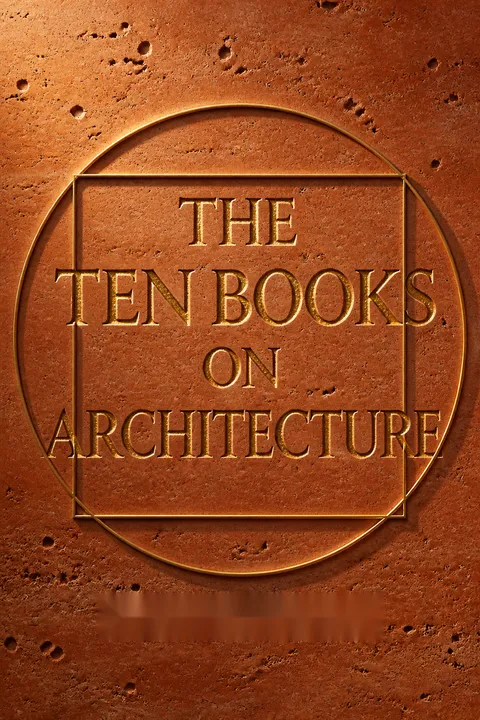

Key Takeaways
1. The Architect as a Polymath: A Master of Many Arts
The architect should be equipped with knowledge of many branches of study and varied kinds of learning, for it is by his judgement that all work done by the other arts is put to test.
Broad Education. Vitruvius asserts that a true architect must possess a vast and diverse education, combining both practical experience and theoretical understanding. This comprehensive knowledge allows them to critically evaluate and integrate various disciplines into their designs. Without this dual mastery, an architect risks either lacking authority (if only skilled manually) or substance (if only theoretical).
Essential Disciplines. The ideal architect's curriculum extends far beyond mere construction. It encompasses:
- Drawing & Geometry: For design and precise measurement.
- History: To explain ornamental choices and precedents.
- Philosophy: To foster high-mindedness, justice, and honesty.
- Music: For understanding harmony, acoustics, and tuning war machines.
- Medicine: To assess site health, climate, and water quality.
- Law: For contracts, property rights, and building regulations.
- Astronomy: For orientation, sundials, and understanding celestial mechanics.
Holistic Approach. This polymathic ideal ensures that an architect can address every aspect of a project, from its structural integrity and aesthetic appeal to its environmental impact and social function. Such a broad foundation prevents narrow-mindedness and enables the architect to create works that are not only functional but also deeply integrated with human well-being and cultural context.
2. Architecture's Six Pillars: Order, Arrangement, Eurythmy, Symmetry, Propriety, Economy
Architecture depends on Order (in Greek [Greek: taxis]), Arrangement (in Greek [Greek: diathesis]), Eurythmy, Symmetry, Propriety, and Economy (in Greek [Greek: oikonomia]).
Fundamental Principles. Vitruvius outlines six core principles that underpin all good architecture, serving as a framework for design and evaluation. These are not merely aesthetic guidelines but practical considerations that ensure a building is well-conceived, functional, and enduring. They represent a holistic approach to architectural excellence.
Defining the Pillars:
- Order: Gives due measure to individual parts and symmetrical agreement to the whole.
- Arrangement: Proper placement of elements, leading to elegant effects (groundplan, elevation, perspective).
- Eurythmy: Beauty and fitness in the adjustment of members, ensuring harmonious proportions.
- Symmetry: Proper agreement between parts and the whole, based on a standard module.
- Propriety: Perfection of style, ensuring suitability to purpose, usage, and nature (e.g., temple orders for specific gods).
- Economy: Prudent management of materials, site, cost, and common sense in construction.
Integrated Design. These principles are interconnected; neglecting one can compromise the others. For instance, a building might be symmetrical but lack propriety if its style is ill-suited to its function or deity. Similarly, economy must not sacrifice durability or convenience. The architect's skill lies in balancing these elements to achieve a harmonious and effective structure.
3. Building with Nature: Understanding Materials and Their Properties
For there is no kind of material, no body, and no thing that can be produced or conceived of, which is not made up of elementary particles; and nature does not admit of a truthful exploration in accordance with the doctrines of the physicists without an accurate demonstration of the primary causes of things, showing how and why they are as they are.
Elemental Composition. Vitruvius delves into the natural properties of building materials, emphasizing that their performance is dictated by their elemental composition (heat, moisture, earth, air). Understanding these intrinsic qualities is crucial for selecting the right material for the right application, ensuring durability and preventing structural failures. He stresses that materials are not uniform, and their suitability varies by location and intended use.
Material Insights:
- Brick: Best made from white, chalky, or red clay, dried for two years to prevent cracking. Different sizes for public vs. private use.
- Sand: Pitsand for quick-drying masonry, river/sea sand for stucco (with added brick dust). Quality tested by rubbing or shaking on cloth.
- Lime: Burned from white stone, slaked thoroughly. Proportions vary with sand type.
- Pozzolana: Volcanic ash from Vesuvius region, forms concrete that sets underwater due to its fiery origin.
- Stone: Soft stones for interiors, hard stones (like travertine) for exteriors, but vulnerable to fire. Anician stone (peperino-like) is highly durable against weather and fire.
- Timber: Felled in autumn/winter when sap is low. Oak for underground, fir for lightness, alder for underwater piles, cypress/pine for longevity due to bitter sap. Larch is fire-resistant.
Construction Methods. The book details various wall construction techniques, such as opus reticulatum (aesthetic but prone to cracks), opus incertum (stronger), isodomum (equal courses), pseudisodomum (unequal courses), and emplekton (Greek method with through-stones for strength). Vitruvius advocates for methods that ensure long-term stability, often criticizing Roman shortcuts that prioritize speed over durability.
4. The Human Body as the Blueprint for Divine Proportion
For the human body is so designed by nature that the face, from the chin to the top of the forehead and the lowest roots of the hair, is a tenth part of the whole height; the open hand from the wrist to the tip of the middle finger is just the same; the head from the chin to the crown is an eighth, and with the neck and shoulder from the top of the breast to the lowest roots of the hair is a sixth; from the middle of the breast to the summit of the crown is a fourth.
Anatomical Harmony. Vitruvius famously links the proportions of the human body to the ideal symmetry of temples. He posits that nature designed the human form with inherent harmonious ratios, which ancient artists and architects then emulated in their works. This concept suggests a divine order in both man and architecture, making buildings resonate with human perception of beauty.
Origin of Orders:
- Doric: Derived from the proportions of a man, emphasizing strength and unadorned beauty (six times its base thickness in height).
- Ionic: Modeled after the slenderness of women, with a more delicate appearance (eight times its base thickness in height), featuring volutes like curly hair and flutes like robes.
- Corinthian: Inspired by the graceful figure of a young maiden, known for its slender outlines and ornate, leaf-decorated capitals.
Mathematical Basis. The "perfect numbers" (ten from fingers, six from foot-to-height ratio) further underscore the mathematical underpinnings of these proportions. By applying these natural and mathematical principles, architects aimed to create buildings that were not only structurally sound but also aesthetically pleasing and spiritually resonant, reflecting the divine order of the cosmos.
5. Site-Specific Design: Adapting to Climate and Environment
If our designs for private houses are to be correct, we must at the outset take note of the countries and climates in which they are built.
Climate's Influence. Vitruvius stresses that architectural design must be fundamentally adapted to the local climate and geographical conditions. He argues that what works in one region (e.g., Egypt) will not work in another (e.g., Pontus or Rome) due to variations in sun exposure, wind patterns, and humidity. This adaptability is crucial for both the health of inhabitants and the durability of structures.
City Planning:
- Health: High, temperate sites, free from marshes, avoiding southern/western exposures for prevailing winds.
- Walls: Projected towers, indirect gate approaches, circular forms for better defense.
- Streets: Laid out to exclude disagreeable winds (cold, enervating, unhealthy) by aligning them with divisions between wind quarters.
Human Adaptation. He connects climate to human physiology, noting that northern peoples are taller, fairer, and more courageous in battle due to moisture and cool air, while southern peoples are shorter, darker, and more intellectually acute but less physically brave due to intense heat. This observation reinforces the need for houses to counteract or complement these natural influences, ensuring comfort and well-being.
6. Engineering for Public Utility: Water Systems and Acoustics
For it is the chief requisite for life, for happiness, and for everyday use.
The Primacy of Water. Vitruvius dedicates an entire book to water, emphasizing its indispensable role for life, happiness, and daily use. He provides detailed instructions for finding, testing, and conducting water, recognizing its critical importance for urban development and public health. His methods reflect a deep understanding of hydrology and engineering.
Water Management:
- Finding Water: Observing rising vapors, specific plant growth, and conducting ground tests (bronze bowls, unbaked clay, wool fleeces, lamps).
- Testing Water: Observing the health of local inhabitants, checking for spots on bronze, cooking vegetables quickly, and assessing clarity and lack of moss.
- Conducting Water:
- Conduits: Masonry channels with specific gradients, arched over to protect water.
- Pipes: Lead (with warnings about health risks) or clay (more wholesome, easier to repair).
- Reservoirs: With three compartments for public fountains, baths (income), and private houses (taxed).
- Wells & Cisterns: Digging wells with air shafts, building cisterns with "signinum work" for purification.
Theatre Acoustics. Vitruvius also provides a sophisticated analysis of theatre acoustics, explaining how voice travels in concentric circles and ascends vertically. He describes the use of bronze sounding vessels (echea) placed in niches under seats, tuned to musical intervals, to amplify and clarify actors' voices, especially in large stone theatres where natural resonance is lacking.
7. The Art of Machines: From Hoisting to Warfare
All machinery is derived from nature, and is founded on the teaching and instruction of the revolution of the firmament.
Nature as Inspiration. Vitruvius views machinery as an imitation of natural principles, particularly the celestial revolutions. He categorizes machines by their function—climbing, pneumatic, and hoisting—and distinguishes between "machines" (requiring more power/workmen) and "engines" (operated by a single skilled person). He highlights the fundamental elements of motion: the right line and the circle.
Diverse Applications:
- Hoisting: Trispasts, pentaspasts, and polyspasts for lifting heavy loads, with detailed descriptions of ropes, blocks, windlasses, and drums. He recounts Chersiphron's ingenious method for transporting temple shafts and architraves.
- Water-raising: Tympanum (low lift, high volume), wheels with cubical boxes (higher lift), chains with bronze buckets (highest lift), and the Archimedes' screw.
- Pumps: Ctesibius's bronze pump with cylinders, valves, and pistons for forcing water to height, also noting his other pneumatic inventions like water organs.
- Measurement: The hodometer, a device for carriages and ships to measure distance traveled using geared drums and falling stones.
- Warfare: Catapults (scorpiones) and ballistae (proportions based on arrow length or stone weight), siege engines like the battering ram and various "tortoises" for protection or excavation.
Ingenuity and Caution. Vitruvius celebrates human ingenuity in these inventions but also warns against impractical designs, citing Paconius's failed attempt to transport a colossal pedestal. He emphasizes that effective machinery requires careful calculation and adaptation to specific circumstances, often illustrating this with historical anecdotes of successful and failed siege tactics.
8. Crafting Durable and Beautiful Finishes: Floors, Stucco, and Color
Stucco that is properly made does not get rough as time goes on, nor lose its colours when it is wiped off, unless they have been laid on with little care and after it is dry.
Lasting Finishes. Vitruvius provides meticulous instructions for creating durable and aesthetically pleasing interior finishes, recognizing that these elements contribute significantly to a building's longevity and beauty. He emphasizes proper material preparation and application techniques to prevent common defects like cracking and fading.
Floor Construction:
- Ground Floors: Require solid foundations, careful ramming of earth, and specific layering of broken stone and pounded tile (nucleus).
- Wooden Floors: Use specific timbers (winter oak), double planking, and protection from lime.
- Outdoor Floors: Require double planking, thicker layers of broken stone and nucleus, and an inclination for drainage. Annual oil-dreg treatment prevents frost damage.
Stucco Work:
- Lime Slaking: Crucial for preventing blisters and ensuring uniform drying.
- Layers: Multiple coats of sand mortar followed by marble powder for strength, brilliance, and color retention.
- Damp Places: Special techniques like thin inner walls with air channels or hooked tiles coated with pitch to prevent moisture damage.
Color and Painting. He discusses natural colors (yellow ochre, red earths, whites, greens, orpiment, sandarach) and artificial ones (black from resin/wine lees, blue, burnt ochre, white lead, verdigris, purple from shellfish, and substitutes). Vitruvius critiques the "decadence of fresco painting," advocating for realistic representations over monstrous, impossible figures, citing the story of Apaturius of Alabanda as an example of correcting artistic impropriety.
9. Designing for the Dweller: Private Houses and Social Status
If, therefore, houses are planned on these principles to suit different classes of persons, as prescribed in my first book, under the subject of Propriety, there will be no room for criticism; for they will be arranged with convenience and perfection to suit every purpose.
Tailored Design. Vitruvius insists that private houses must be designed to suit the specific needs, climate, and social standing of their owners. This principle of "Propriety" ensures that a dwelling is not only convenient and beautiful but also reflects the dignity and lifestyle of its inhabitants.
Room Types and Proportions:
- Cavaedium Styles: Tuscan, Corinthian, tetrastyle, displuviate (for winter, outward-sloping roof), and testudinate (flat roof for upper stories).
- Atriums: Proportioned by length-to-width ratios (3:5, 2:3, or square diagonal).
- Alae & Tablinum: Sizes adjusted proportionally to the atrium's dimensions.
- Peristyles: Often longer than deep, with columns proportioned to colonnade width.
- Dining Rooms: Twice as long as wide, with specific exposures for different seasons.
- Oeci: Corinthian (single column tier), Egyptian (double tier with upper floor), Cyzicene (north-facing, garden views).
Social Considerations. Different social classes require distinct house features:
- Everyday Fortune: Simpler homes, less grand entrance courts.
- Country Producers: Stalls, shops, crypts for storage.
- Capitalists/Revenue Farmers: Comfortable, secure, showy apartments.
- Advocates/Statesmen: Lofty, regal entrance courts, spacious atriums/peristyles, libraries, picture galleries, basilicas for public meetings and legal affairs.
Greek vs. Roman. He contrasts Roman houses (with prominent atriums) with Greek houses (featuring a thyrôreion leading to a peristyle, gynaeconitis for women, and separate guest apartments called xenia).
10. The Enduring Value of Knowledge and Innovation
But although honours are not bestowed upon authors for excellence of character and teaching, yet as their minds, naturally looking up to the higher regions of the air, are raised to the sky on the steps of history, it must needs be, that not merely their doctrines, but even their appearance, should be known to posterity through time eternal.
Legacy of Learning. Vitruvius champions the enduring value of written knowledge and the intellectual contributions of scholars, contrasting their lasting impact with the fleeting fame of athletes. He argues that authors, through their treatises, provide continuous benefits to all nations and generations, shaping minds and advancing civilization.
Illustrious Predecessors:
- Plato: Demonstrated doubling the square geometrically.
- Pythagoras: Proved the right angle theorem (3-4-5 triangle).
- Archimedes: Solved Hiero's crown problem using specific gravity, and contributed to mechanics.
- Other Scholars: Democritus, Aristarchus, Eratosthenes, and numerous architects and engineers whose works he draws upon.
Critique of Plagiarism. Vitruvius strongly condemns those who steal others' writings, recounting the story of Aristophanes exposing plagiarists at Ptolemy's literary contests. He emphasizes that true authority comes from original thought and diligent study, not from deceit.
Vitruvius's Contribution. Despite acknowledging his own limitations and the lack of recognition for architects in his time, Vitruvius undertakes this comprehensive treatise to systematically document architectural principles. He aims to provide a complete and orderly presentation of the art, ensuring that future generations can build upon the accumulated wisdom, thereby securing his own place in the annals of knowledge.
Review Summary
The Ten Books on Architecture receives largely positive reviews (4.04/5) from readers who appreciate its historical significance as the first complete architectural treatise. Reviewers praise Vitruvius's comprehensive coverage of Roman building technology, city planning, materials, and proportions, noting his emphasis on health, natural environment, and the connection between architecture and human proportions. Many find the technical details fascinating though some admit to skimming dense sections. Critics note the prose can be dry and overly technical, comparing it to an instruction manual, though most agree it's essential reading for understanding classical architecture and its influence on Renaissance and modern design.
People Also Read

Download PDF
Download EPUB
.epub digital book format is ideal for reading ebooks on phones, tablets, and e-readers.








































