
Key Takeaways
1. The Hegemony of Vision Impoverishes Architecture
The dominance of vision over the other senses – and the consequent bias in cognition – has been observed by many philosophers.
Historical privileging. Western culture has historically elevated sight as the noblest sense, equating knowledge with clear vision and truth with light. From classical Greek thought to the Renaissance, a hierarchical system placed vision at the apex, influencing philosophy and the arts, including architecture. This ocularcentric paradigm has shaped our understanding of reality and knowledge.
Modern visual bias. The invention of perspectival representation further cemented the eye as the center of the perceptual world, a trend amplified by technological advancements and the proliferation of images. Modernist architects like Le Corbusier explicitly championed vision, leading to an architecture primarily conceived for the eye—a "retinal architecture" that often prioritizes striking visual images over deeper sensory engagement.
Consequences of reduction. This singular focus on vision, often at the expense of other senses, has led to a superficial and detached architectural experience. Modernist design, despite its intellectual rigor, frequently fails to resonate with popular taste because it houses the intellect and the eye but leaves the body, other senses, memories, and dreams feeling homeless, contributing to a sense of alienation.
2. Ocularcentrism Fosters Alienation and Detachment
The dominance of the eye and the suppression of the other senses tend to push us into detachment, isolation and exteriority.
Vision's will to power. Philosophers like David Michael Levin critique vision's inherent drive to grasp, fixate, and control, leading to a "hegemony of vision" that dominates cultural discourse. This ocularcentric tendency, reinforced by instrumental rationality and technology, fosters a detached, objectifying gaze that can be aggressive and reifying.
Narcissistic and nihilistic eye. In contemporary architecture, this hegemonic eye manifests as narcissism and nihilism, where buildings become self-expressive intellectual games or deliberately promote sensory detachment. This "cancerous growth of vision" turns architecture into image products, devoid of existential depth and sincerity, reducing the world to a hedonistic but ultimately meaningless visual journey.
Loss of empathy. The industrial mass production of visual imagery alienates vision from emotional involvement, creating a mesmerizing flow without focus or participation. This constant bombardment of images leads to a "contrived depthlessness" and a chilling de-sensualization, making us spectators of our own lives in a fabricated dream world, unable to confront our existential reality.
3. The Body as the Central Locus of All Perception
My body is truly the navel of my world, not in the sense of the viewing point of the central perspective, but as the very locus of reference, memory, imagination and integration.
Merleau-Ponty's embodiment. Maurice Merleau-Ponty's philosophy places the human body at the core of our experiential world, arguing that it is through our embodied intentionality that we engage with and define our surroundings. Our body is not merely an object but "that which sees and touches," forming an osmotic relationship with the "flesh of the world."
Multi-sensory integration. Sensory experiences are not isolated but integrated through the body, forming a continuous existential experience where the self and the world constantly inform each other. All senses, including vision, are extensions and specializations of the tactile sense, defining the interface between our opaque interiority and the world's exteriority.
Architecture's existential role. Architecture, as an extension of nature, provides the ground for perception and strengthens our sense of being in the world. It is not a self-sufficient artifact but directs our attention to wider horizons, giving conceptual and material structure to our lives and strengthening our self-image through a holistic, embodied experience.
4. Touch: The Primal Sense and Foundation of Reality
Touch is the parent of our eyes, ears, nose, and mouth. It is the sense which became differentiated into the others, a fact that seems to be recognized in the age-old evaluation of touch as ‘the mother of the senses’.
Primacy of the haptic. Anthropologist Ashley Montagu highlights the skin as our oldest and most sensitive organ, the "mother of the senses," from which all other sensory modalities differentiate. This underscores the fundamental role of touch in integrating our experiences of the world and ourselves, with even visual perceptions fused into a haptic continuum.
Vision as unconscious touch. The sense of touch is the unconscious of vision; our eyes unconsciously stroke distant surfaces, contours, and edges, with tactile sensations determining the agreeableness of the experience. Philosophers like George Berkeley and G.W.F. Hegel argued that visual apprehension of materiality, distance, and depth is impossible without the cooperation of haptic memory, as touch provides sensations of "solidity, resistance, and protrusion."
Ideated sensations. Art, including architecture, stimulates "ideated sensations" of touch, making us feel the warmth of water in a painting or the texture of a stone surface. This "tactile value" is life-enhancing, as exemplified by Le Corbusier's emphasis on "modénature" (contour and profile), revealing a tactile ingredient even in his visually-oriented understanding of architecture.
5. The Evocative Power of Shadow and Dim Light
Deep shadows and darkness are essential, because they dim the sharpness of vision, make depth and distance ambiguous, and invite unconscious peripheral vision and tactile fantasy.
Dimming the distancing sense. In heightened emotional states or deep thought, we often close our eyes, repressing the distancing sense of vision. Shadows and darkness are crucial because they soften visual sharpness, create ambiguity in depth, and invite peripheral vision and tactile imagination, fostering intimacy and mental withdrawal.
Stimulating imagination. The alternating light and shadow of an old town street are far more mysterious and inviting than uniformly lit modern spaces. Dim light, mist, and twilight awaken the imagination, making visual images ambiguous and evoking meditative states, as seen in Chinese landscape paintings or Zen gardens.
Chiaroscuro in architecture. The art of chiaroscuro, the interplay of light and shadow, is vital in great architectural spaces, creating a "deep breathing" that gives shape and life to objects. Luis Barragán criticized large plate windows for depriving buildings of intimacy and shadow, while Alvar Aalto's council chamber in Säynätsalo uses darkness to create a mystical sense of community and strengthen the spoken word.
6. Acoustic Intimacy and the Articulation of Space
Sight isolates, whereas sound incorporates; vision is directional, whereas sound is omni-directional.
Sound creates interiority. Unlike sight, which implies exteriority and isolation, sound incorporates us into space, creating an experience of interiority and connection. The eye reaches, but the ear receives, making us aware of our surroundings in an omni-directional way, and fostering a sense of solidarity and belonging.
Hearing structures space. Sound provides a temporal continuum for visual impressions, structuring and articulating our experience of space. Removing the soundtrack from a film, for instance, reveals how sound contributes to plasticity and continuity. Steen Eiler Rasmussen's "Hearing Architecture" highlights how acoustic qualities, like the echo in a tunnel, convey spatial dimensions.
Loss of urban echo. Every building and city possesses a characteristic sound, an echo that defines its intimacy or monumentality. However, modern cities, with their wide, open spaces and sound-absorbing interiors, have lost their distinctive echoes. Programmed music in public spaces further blinds our ears, eliminating the possibility of grasping the acoustic volume and the profound silence that architecture can offer.
7. Scent as a Potent Trigger for Memory and Imagination
The most persistent memory of any space is often its smell.
Olfactory power. The human nose is incredibly sensitive, capable of detecting over 10,000 different odors with just a few molecules. A particular smell can bypass retinal memory, instantly re-evoking a forgotten space and triggering vivid daydreams, making the nose a powerful catalyst for remembrance and imagination.
Geography of smells. Moving through the narrow streets of an old town offers a delightful journey through diverse scent spheres, from candy stores evoking childhood to shoemakers' workshops conjuring images of leather and horses. Fishing towns, with their fusion of sea and land smells, become profoundly memorable, transforming prosaic scenes into evocative images.
Sterile modern spaces. Rainer Maria Rilke's vivid descriptions of the lingering odors in a demolished house—sweat, urine, soot, aging grease, neglected infants—highlight the emotional and associative power of olfactory imagery. In contrast, the sterile, lifeless retinal images of contemporary architecture often lack this profound sensory depth, failing to construct full, life-filled images that a great writer or architect can evoke.
8. Materiality and Time for Authentic Architectural Experience
All matter exists in the continuum of time; the patina of wear adds the enriching experience of time to the materials of construction.
Weakened materiality. Modern construction often results in a flatness, characterized by machine-made, scaleless materials like glass, enamelled metals, and synthetic plastics. These materials present unyielding surfaces that fail to convey their essential nature or age, contrasting sharply with natural materials like stone, brick, and wood, which allow vision to penetrate their surfaces and reveal their veracity.
Fear of aging. Contemporary buildings frequently aim for an ageless perfection, deliberately excluding the dimension of time and the mentally significant processes of aging and wear. This fear of traces of age is linked to a deeper fear of death, contributing to a "contrived depthlessness" in our environments, as Fredric Jameson describes the contemporary cultural condition.
Domesticating time. The weakening of the experience of time in modern environments has devastating mental effects, as humans need to feel rooted in the continuity of time. Architecture's task is to domesticate endless time, allowing us to inhabit its continuum and participate in cycles that surpass individual life, connecting us with history and the dead, and providing a slow, healing flow of time.
9. Architecture as Embodied Action and Unconscious Mimesis
A meaningful architectural experience is not simply a series of retinal images. The ‘elements’ of architecture are not visual units or Gestalt; they are encounters, confrontations that interact with memory.
Implied action. Architectural images inherently suggest action: stepping stones invite footsteps, opening a door involves meeting its weight, and ascending a stairway engages the entire body. Henri Bergson notes that objects reflect our "possible action upon them," distinguishing architecture from other art forms through this implied bodily interaction.
Verb-essence of experience. Authentic architectural experiences are fundamentally verbs, not nouns. They are about the act of entering, looking through a window, or occupying a space of warmth, rather than merely the visual design of an object. Japanese concepts like "spacing" and "timing" emphasize this relational, dynamic understanding of architectural experience over static, geometric definitions.
Bodily identification. Understanding architectural scale involves unconsciously measuring a building with one's body and projecting one's body scheme into the space. We unconsciously mimic structures with our bones and muscles, feeling the tension of a vault or the gravity of a column. This mimesis allows architecture to communicate directly from the architect's body to the user's, creating a profound, embodied resonance.
10. Spaces of Memory and the Imagination's Inner City
We have an innate capacity for remembering and imagining places. Perception, memory and imagination are in constant interaction; the domain of presence fuses into images of memory and fantasy.
Constructing the mind's metropolis. Humans possess an innate capacity to remember and imagine places, constantly constructing an immense "city of evocation and remembrance" within the mind. All cities visited become precincts in this mental metropolis, and literature and cinema derive their power from our ability to enter these remembered or imagined realms.
Encountering self in art. A work of art, like Michelangelo's mourning architecture or Tintoretto's anguished sky, does not merely symbolize emotions but embodies them. In confronting art, a curious exchange occurs: we project our emotions onto the work, and the work lends us its authority, ultimately allowing us to encounter ourselves within it, a process Melanie Klein termed "projective identification."
Vivid remembered cities. Some cities remain distant visual images, while others are remembered with full vivacity—their sounds, smells, and variations of light and shade. Great writers and filmmakers, through their evocative power, transport us into cities as real as any we have visited, enriching our urban geography and allowing us to experience life within their imagined spaces.
11. Architecture's Task: Reconciling Self with the World
The timeless task of architecture is to create embodied and lived existential metaphors that concretise and structure our being in the world.
Structuring existence. Architecture's fundamental role is to materialize and eternalize ideas of ideal life, structuring our shapeless reality and helping us understand who we are. It enables us to perceive the dialectics of permanence and change, to settle ourselves in the world, and to place ourselves within the continuum of culture and time.
Embodied memory and identity. Memorable architectural experiences fuse space, matter, and time into a singular dimension, penetrating our consciousness and becoming ingredients of our existence. Our domicile integrates with our self-identity, becoming part of our body and being, as embodied memory forms the essential basis for remembering places.
Integrity and poetic calling. Frank Lloyd Wright emphasized "Integrity" as the deepest quality in a building, reflecting a reciprocal relationship with our moral nature. Architecture, as the art of reconciliation between ourselves and the world, mediates through the senses. Its poetic calling is to re-mythicize, re-sensualize, and re-eroticize our relationship with the world, strengthening our grasp of existence and fostering humility, pride, curiosity, and optimism.
People Also Read
FAQ
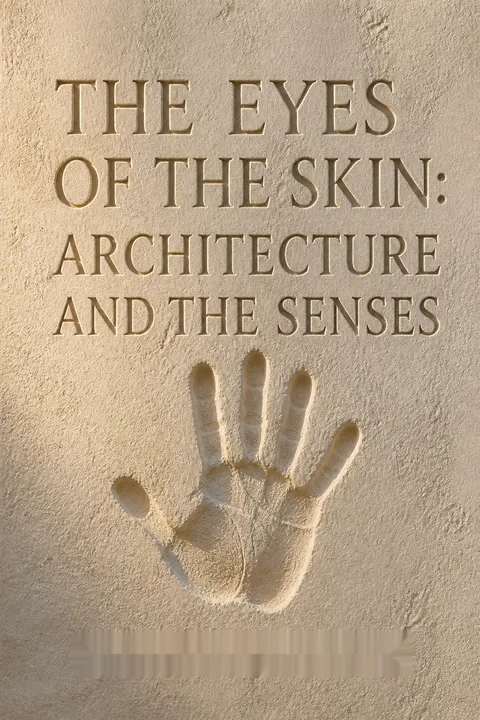
What is "The Eyes of the Skin: Architecture and the Senses" by Juhani Pallasmaa about?
- Central Thesis: The book critiques the dominance of vision in Western architecture and argues for a multi-sensory approach that engages all the senses in the experience and creation of architecture.
- Phenomenological Perspective: Pallasmaa draws on phenomenology, especially the works of Merleau-Ponty and Bachelard, to emphasize the embodied, lived experience of space.
- Sensory Integration: The book explores how architecture should address touch, sound, smell, and even taste, not just sight, to create meaningful, life-enhancing environments.
- Cultural and Historical Analysis: It traces the historical privileging of vision in Western thought and architecture, and contrasts it with traditions and practices that value other senses.
Why should I read "The Eyes of the Skin" by Juhani Pallasmaa?
- Broaden Architectural Understanding: The book challenges conventional, visually-dominated approaches to architecture, offering a richer, more holistic perspective.
- Influential in Theory and Practice: It is widely regarded as essential reading in architectural education and has influenced both theorists and practicing architects globally.
- Applicable Beyond Architecture: The insights into sensory experience, embodiment, and perception are relevant to artists, designers, and anyone interested in how environments shape human experience.
- Concise and Accessible: Despite its depth, the book is brief and accessible, making complex philosophical ideas understandable and practical.
What are the key takeaways from "The Eyes of the Skin" by Juhani Pallasmaa?
- Critique of Ocularcentrism: The dominance of vision (ocularcentrism) in architecture leads to alienation and detachment, neglecting the full spectrum of human sensory experience.
- Embodied Experience: Architecture should be designed for the whole body, engaging touch, hearing, smell, and even taste, not just the eyes.
- Memory and Imagination: Sensory-rich environments foster memory, imagination, and a deeper sense of self and place.
- Materiality and Time: Authentic architecture expresses materiality and the passage of time, connecting us to tradition, history, and the rhythms of life.
How does Juhani Pallasmaa define "ocularcentrism" in "The Eyes of the Skin"?
- Definition: Ocularcentrism is the privileging of sight over other senses in Western culture and architectural practice.
- Historical Roots: It originates from Greek philosophy and was reinforced by Renaissance perspectival representation and modern technological advances.
- Consequences: This bias leads to architecture that is visually impressive but often emotionally and sensorially impoverished, resulting in alienation and lack of engagement.
- Critique and Alternatives: Pallasmaa, drawing on philosophers and critics, calls for a rebalancing of the senses and a move towards multi-sensory, embodied design.
What is the significance of touch and the "haptic" sense in "The Eyes of the Skin" by Juhani Pallasmaa?
- Touch as Foundational Sense: Pallasmaa argues that touch is the "mother of the senses," integrating and grounding all sensory experience, including vision.
- Haptic Architecture: He advocates for "haptic" architecture—designs that invite tactile engagement and bodily identification, making spaces feel intimate and real.
- Materiality and Craft: The tactile qualities of materials, surfaces, and details (like door handles) are essential for creating meaningful, memorable architecture.
- Embodied Memory: Touch connects us to tradition, memory, and the passage of time, making architecture a lived, rather than merely observed, experience.
How does "The Eyes of the Skin" by Juhani Pallasmaa address the role of the other senses (hearing, smell, taste) in architecture?
- Hearing: Sound shapes our sense of space and intimacy; acoustics can create a sense of enclosure, community, or solitude.
- Smell: Scents evoke powerful memories and associations, often defining the character and identity of a place more than visual cues.
- Taste: While less direct, taste is linked to the oral and tactile origins of perception; certain materials and colors can evoke oral sensations.
- Multi-Sensory Integration: Pallasmaa insists that architecture should orchestrate all senses, creating environments that are immersive and life-enhancing.
What are the main criticisms of modern and contemporary architecture in "The Eyes of the Skin" by Juhani Pallasmaa?
- Visual Reductionism: Modern architecture often prioritizes striking visual images and photogenic forms at the expense of sensory richness and human experience.
- Loss of Materiality: The use of industrial, machine-made materials and reflective surfaces leads to a sense of unreality and detachment.
- Alienation and Detachment: Spaces designed primarily for the eye can feel cold, impersonal, and alienating, failing to support memory, imagination, or a sense of belonging.
- Neglect of Tradition and Craft: The focus on novelty and visual impact often disregards the wisdom of traditional, craft-based, and embodied approaches to building.
How does Juhani Pallasmaa use phenomenology in "The Eyes of the Skin" to inform his architectural philosophy?
- Embodied Perception: Drawing on Merleau-Ponty, Pallasmaa emphasizes that perception is always embodied—our bodies are the center of experience and meaning.
- Lived Space: Architecture is not just a collection of visual forms but a lived, existential reality that shapes and is shaped by our bodily presence.
- Memory and Imagination: Phenomenology highlights the interplay between perception, memory, and imagination, all of which are activated by multi-sensory environments.
- Existential Task of Architecture: The ultimate role of architecture is to mediate between self and world, enabling us to dwell meaningfully and authentically.
What practical advice or methods does "The Eyes of the Skin" by Juhani Pallasmaa offer to architects and designers?
- Design for All Senses: Consider how spaces will be touched, heard, smelled, and even tasted, not just seen.
- Engage Materiality: Use materials that age, carry patina, and invite touch, fostering a sense of time and tradition.
- Craft Details: Pay attention to details like door handles, textures, and transitions, as these are points of intimate contact and meaning.
- Encourage Participation: Create spaces that invite bodily movement, interaction, and identification, rather than passive observation.
How does "The Eyes of the Skin" by Juhani Pallasmaa connect architecture to memory, imagination, and self-identity?
- Memory Through Senses: Sensory experiences, especially touch and smell, are deeply tied to memory, making places memorable and meaningful.
- Imagination and Dream: Architecture can stimulate imagination and daydreaming by engaging the senses and creating atmospheres of ambiguity and possibility.
- Self-Identity: Our sense of self is shaped by the spaces we inhabit; architecture becomes part of our bodily and existential identity.
- Spaces of Belonging: Meaningful architecture helps us feel at home in the world, supporting both individual and collective memory.
What are the best quotes from "The Eyes of the Skin" by Juhani Pallasmaa and what do they mean?
- "The door handle is the handshake of the building." This highlights the importance of tactile details and the intimate, bodily relationship between people and architecture.
- "The body is the navel of my world." Pallasmaa emphasizes that our bodily presence is the center of perception and meaning in space.
- "Architecture is the art of reconciliation between ourselves and the world, and this mediation takes place through the senses." This encapsulates the book’s central thesis: architecture’s existential task is to connect us to the world through embodied, sensory experience.
- "We see the depth, the smoothness, the softness, the hardness of objects; Cézanne even claimed that we see their odor." This quote illustrates the interconnectedness of the senses and the richness of perception beyond mere vision.
What is the lasting impact and legacy of "The Eyes of the Skin" by Juhani Pallasmaa on architecture and design?
- Influence on Education: The book is required reading in many architecture schools and has shaped curricula to include sensory and phenomenological approaches.
- Shift in Practice: Many architects and designers now prioritize multi-sensory experience, materiality, and embodied engagement in their work.
- Broader Cultural Reach: The book’s ideas have influenced not only architecture but also art, design, and philosophy, encouraging a more holistic understanding of human experience.
- Ongoing Relevance: As digital technologies and visual media continue to dominate, Pallasmaa’s call for sensory balance and embodied presence remains urgent and widely cited.
Download PDF
Download EPUB
.epub digital book format is ideal for reading ebooks on phones, tablets, and e-readers.








































