
Key Takeaways
1. Sparta: A Paradoxical Utopia of Warrior-Heroes
Sparta was the original utopia (Thomas More, who coined the word Utopia in 1516, had Sparta very centrally in mind), but it was an authoritarian, hierarchical and repressive utopia, not a utopia of liberal creativity and free expression.
A unique society. Ancient Sparta, often admired for its political stability and order, presented a stark contrast to other Greek city-states. Its primary focus was on war for self-preservation and the domination of others, achieved by subjugating its Greek neighbors rather than colonizing new lands. This created a deeply xenophobic society, intriguing and alien to outsiders.
Warrior ideal. The positive image of Sparta centered on its uplifting warrior ideal of collective self-sacrifice, famously embodied at Thermopylae. However, this came at the cost of high cultural achievement, open government, and the brutal suppression of an enslaved Greek populace. Sparta's territory, Lacedaemon, was the largest in the Greek world, encompassing fertile plains and mineral wealth.
Origins and expansion. Sparta evolved from a group of villages on the Eurotas river, growing by subjugating Laconia and Messenia. The inhabitants became Helots ("Captives") and Perioeci ("Outdwellers"), providing the economic base for Sparta's unique lifestyle. This expansionist drive, particularly into Messenia, laid the groundwork for centuries of internal tension and external conflict.
2. The Helots: Sparta's Economic Engine and Existential Threat
These Helots are the single most important human fact about ancient Sparta.
Foundation of lifestyle. Divided into Messenian and Laconian groups, the Helots vastly outnumbered full Spartan citizens, known as Homoioi ("Similars"). They provided the economic basis for the Spartans' unique lifestyle, allowing citizens to dedicate themselves entirely to military training and warfare. This system, however, came at a considerable cost.
Constant threat. The threat of Helot revolt, especially from the Messenians, was almost constant, forcing Sparta to become a "Fortress Sparta." Male Spartan citizens were forbidden from any other profession than war, earning them a reputation as the Greek world's most professional fighting force. This internal threat shaped every aspect of Spartan society.
State-sanctioned terror. To maintain control, the Spartans employed brutal methods, including the Crypteia, a secret police force of promising teenage boys whose principal aim was to murder selected Helots and spread terror. Annually, the Ephors declared war on the Helots, absolving Spartans of blood-guilt for killing them. This unique system of mass enslavement of fellow Greeks was highly controversial.
3. Lycurgus: The Mythical Architect of Spartan Discipline
Lycurgus may have been a myth, in our sense, but it was for the laws that he had supposedly given them that the Spartans who perished at Thermopylae gave their lives so willingly.
Legendary lawgiver. Spartans attributed their extraordinary state and society to the reforms of Lycurgus, whose name means "Wolf-Worker." He was credited with introducing the Agoge, a comprehensive and compulsory educational cycle that transformed boys into disciplined, courageous, and skilled fighting men. His existence is debated, but his influence on Spartan identity was profound.
The Great Rhetra. The essence of Lycurgus's reforms is concentrated in the Great Rhetra, an archaic document outlining the political system. It established the Gerousia (Senate) of thirty members, including the kings, with powers of pre-deliberation and judicial authority. The damos (Assembly of adult male citizens) had limited power, subject to the Gerousia's oversight.
Psychological makeup. Beyond education and politics, Lycurgus was credited with decisively altering the citizens' psychological makeup, fostering absolute belief in their ideology, paranoia, and a preoccupation with secrecy. This system, though bizarre to outsiders, produced a uniquely cohesive and resilient warrior class, willing to die for their laws.
4. Spartan Women: Uniquely Empowered and Controversial
On being quizzed by an Athenian woman, ‘Why is it that you Spartan women are the only ones who rule your men?’, she replied ‘Because we are the only women too who give birth to (real) men.’
Distinct status. Spartan women enjoyed a status unparalleled in other Greek city-states, leading to claims of "gynecocracy" (rule by women) by outsiders like Aristotle. They received formal public education, including physical training, and were known for their vitality and vigor, often performing naked in public, much to the consternation of other Greeks.
Property and autonomy. Unlike Athenian women, Spartan women could own and manage property, including land, in their own right, without male guardians. They were also freed from domestic drudgery by Helot labor, allowing them to focus on motherhood and physical fitness. Adultery laws were absent, and wife-sharing for procreation was reportedly accepted.
Public influence. While lacking official political voice, Spartan women found other ways to exert influence, as evidenced by collections of their "Sayings." Figures like Gorgo, daughter and wife of kings, were portrayed as sharp-witted and influential. Their perceived emancipation, however, was often viewed negatively by other Greeks, who saw it as a sign of moral decay.
5. The Peloponnesian League: Sparta's Hegemonic Alliance
Technically, therefore, the Peloponnesian League - in ancient parlance ‘the Spartans and their allies’ or ‘the Peloponnesians’ — was a hegemonic symmachy of unequal type.
Formation and structure. Sparta's Peloponnesian League, formed around the mid-sixth century BC, was a multi-state military alliance designed to extend Spartan influence and control. It was not a league of equals; allies swore allegiance individually to Sparta, committing to share friends and enemies, and to aid Sparta in case of Helot revolt, without reciprocal commitments from Sparta.
Strategic expansion. Sparta's expansion into Arcadia, though initially met with defeat (Battle of the Fetters), eventually led to diplomatic success, bringing Tegea and Elis into the League. The recovery and reburial of mythical heroes' bones, like Orestes, served as propaganda to legitimize Spartan claims over the Peloponnese. Corinth, controlling the Isthmus, was a crucial early ally.
Evolving dynamics. By 500 BC, the League gained institutional solidity. While Sparta initially held unfettered command, allies eventually acquired the right to be consulted and vote on collective actions, though Sparta could not be compelled. This structure, despite its inequalities, provided the indispensable backbone for Greek resistance against the Persian invasion in 480-479 BC.
6. Thermopylae: The Defining Sacrifice of Leonidas
Go, tell the Spartans, stranger passing by, That here, obedient to their laws, we lie.
A suicide mission. In 480 BC, King Leonidas led a small force of 300 picked Spartans and a few thousand other Greeks to defend the narrow pass of Thermopylae against the massive Persian invasion. This was understood as a suicide mission, a deliberate act of self-sacrifice to delay the Persian advance and inspire broader Greek resistance.
Symbol of defiance. Despite being a tactical defeat, Thermopylae became a moral victory, embodying Spartan resolve and the ideal of freedom. Leonidas's laconic wit, such as "Come and get them yourself" and "Eat a hearty breakfast, as tonight we shall dine in Hades," cemented his legendary status. His men fought to the death, even for his corpse, which was reportedly mutilated by Xerxes.
Enduring legacy. The battle's impact was immense, providing a morale booster for the desperate loyalist Greeks. Leonidas's remains were brought back to Sparta forty years later, and a stone lion monument marked the site of his death, symbolizing martial prowess. This heroic stand became the single most formative element in the enduring Spartan myth.
7. The Athenian War: A Pyrrhic Victory Leading to Moral Decay
The Athenian empire, with its bold ideas of democracy, free commerce and rational progress, had been eclipsed, never to shine again quite so brightly or in quite the same ways.
Flawed strategy. Sparta initiated the Athenian War (431-404 BC) with a strategy of ravaging Attica, expecting Athens to engage in a decisive hoplite battle or starve. However, Athens, protected by its Long Walls and relying on sea-borne grain, proved resilient. This initial strategy was largely ineffectual, as King Archidamus II had predicted.
Pylos disaster. A major turning point occurred in 425 BC when Athenians established a base at Pylos in Messenia, within Sparta's home territory, attracting Helot escapees. The subsequent surrender of 120 elite Spartans on Sphacteria island shattered the myth of "Never Surrender" and deeply humiliated Sparta, leading them to sue for peace.
Lysander's triumph. The war's final phase saw Sparta, paradoxically, achieve naval supremacy with crucial financial aid from the Persian Empire. Lysander, a brilliant but ambitious commander, forged a personal alliance with Persian prince Cyrus, enabling him to build a fleet that decisively defeated Athens at Aegospotami in 405 BC. This victory led to Athens' unconditional surrender and the imposition of pro-Spartan oligarchies, but also introduced wealth and moral destabilization to Sparta.
8. Agesilaus and the Crippled Kingship: Sparta's Imperial Overstretch
Boasting Sparta, be careful not to sprout a crippled kingship... unexpected troubles will overtake you...
Contested succession. Agesilaus II, despite being born lame and facing an oracle warning against a "crippled kingship," ascended the Eurypontid throne around 400 BC, backed by Lysander. His reign marked a period of intense Spartan expansionism, but also exposed deep internal vulnerabilities and external overstretch.
Internal strife. Early in his reign, a conspiracy led by Cinadon, involving Perioeci, Neodamodeis, Helots, and "Inferiors," revealed the profound social divisions and hatred for full Spartan citizens. Agesilaus's conservative policies, though partly a reaction to such threats, ultimately proved counterproductive in addressing Sparta's underlying problems.
Persian entanglement. Sparta's empire, initially framed as a liberation of Greeks from Persia, was widely seen as hypocritical. Agesilaus's campaigns in Asia, though achieving some success, were costly and ultimately ineffective without a proper siege train. The "King's Peace" of Antalcidas (386 BC) saw Sparta abandon the Asiatic Greeks to Persia in exchange for a free hand to impose its will on mainland Greece, often through force and the dissolution of federal states.
9. Leuctra: The Catastrophic Defeat and Liberation of Messenia
The ensuing Battle of Leuctra was the decisive battle of the first half of the fourth century.
Theban ascendancy. Sparta's aggressive policies, particularly against Thebes, fostered the rise of brilliant Theban generals, Epaminondas and Pelopidas. They reformed the Theban military, creating the elite Sacred Band of 300 homosexual couples, a deliberate echo of Spartan military prowess but with innovative tactics.
Decisive defeat. In 371 BC, at the Battle of Leuctra in Boeotia, Epaminondas's tactical genius, including a deeper phalanx and a slanted attack, inflicted Sparta's first major defeat in pitched hoplite battle. This catastrophe, exacerbated by Sparta's severe manpower shortage (only about 1,000 adult male citizens remained), resulted in the death of King Cleombrotus and some 400 Spartans.
Messenian liberation. The most profound consequence of Leuctra was Epaminondas's invasion of Laconia and, crucially, Messenia in 370/69 BC. He oversaw the permanent liberation of the Messenian Helots and the construction of New Messene, a fortified capital that stood as a stark symbol of Sparta's humiliation and the end of its centuries-long control over Messenia.
10. Hellenistic Decline and Roman Reinvention: Sparta as a Theme Park
Roman Sparta may properly be said to have begun life here, and a very different Sparta it was too, another city altogether compared to its Hellenistic, Classical and Archaic forebears.
Post-Leuctra struggles. Following Leuctra, Sparta's power crumbled. The Peloponnesian League dissolved, and Sparta was forced into alliances with former enemies like Athens. Kings like Archidamus III struggled against the rising power of Macedon under Philip II and Alexander the Great, who contemptuously dismissed Spartan resistance.
Reformist kings. In the third century BC, reformist kings Agis IV and Cleomenes III attempted radical social and economic changes, including debt cancellation, land redistribution (even for poor Perioeci), and the liberation of Helots for cash. Cleomenes III even abolished the dual monarchy and reformed the Agoge, but his efforts were ultimately crushed by Macedon at Sellasia in 222 BC.
Roman subjugation. After a period of "tyrants" like Nabis, who further modernized Sparta's economy and built a city-wall, Rome decisively intervened. Sparta was forcibly incorporated into the Achaean League in 192 BC, losing its autonomy. By 146 BC, after Rome's final defeat of Achaea, Sparta became a Roman client state, transforming into an antiquarian "theme park" for cultural tourists, cultivating its glorious past.
11. Leonidas: An Enduring Symbol of Spartan Valor
Leonidas Lives! With him, Sparta does too.
Royal lineage and sacrifice. Leonidas I, born around 540 BC, was an Agiad king whose birth was marked by family complexities. He married Gorgo, a royal heiress, and fathered a son, Pleistarchus. His selection to lead the 300 Spartans at Thermopylae in 480 BC, a mission he knew was suicidal, cemented his place in history as the ultimate Spartan warrior.
Posthumous veneration. After his death, Leonidas's remains were brought back to Sparta for an elaborate royal funeral, and a stone lion marked the Thermopylae site. In the Hellenistic era, a permanent shrine (Leonidaeum) and an annual festival (Leonidaea) were established in his honor, later revived under Roman patronage, attracting merchants and showcasing a reinvented Sparta.
Modern myth. Leonidas's legend has transcended antiquity, inspiring figures from Renaissance humanists to Enlightenment philosophers like Fénelon, who depicted him as a true, austere king. In the 19th century, he became a rallying cry for philhellenism and a paradigm for the British public school system. Even today, Hollywood adaptations continue to re-imagine his heroic sacrifice, ensuring his enduring presence in Western culture.
Review Summary
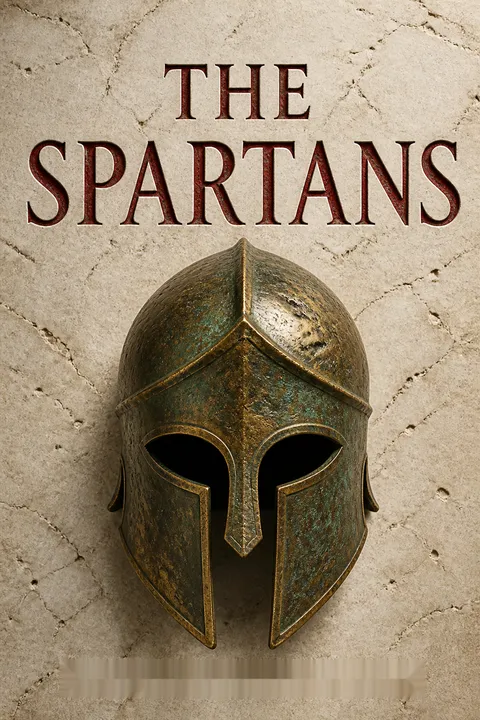
The Spartans by Paul Cartledge receives mixed reviews (3.78/5). Critics praise the factual content and Cartledge's expertise but consistently criticize the book's structure and accessibility. Major complaints include: poor organization with frequent chronological jumps, excessive repetition across chapters and biographical inserts, defensive academic tone inappropriate for general readers, and inadequate editing. Some readers appreciate the cultural insights and demystification of Spartan myths, while others find it too dense for casual readers yet too informal for academics. The book falls awkwardly between popularization and scholarship, disappointing both audiences despite containing valuable historical information.
People Also Read

About the Author
Other books by Paul Cartledge


Download PDF
Download EPUB
.epub digital book format is ideal for reading ebooks on phones, tablets, and e-readers.








































