
Key Takeaways
1. Early CIA: Women's Essential, Yet Unseen, Contributions
For the Allies, World War II was a moment, however brief, however imperfect, of what we now call inclusion, and that willingness to be inclusive was one reason the Allies won.
Wartime necessity. During World War II, the Office of Strategic Services (OSS), forerunner to the CIA, actively recruited women, recognizing their value in intelligence. Over 4,500 women, many highly educated, joined the OSS, filling critical roles that ranged from code-breaking to analysis and even on-the-ground espionage. Their contributions were vital to Allied victory, demonstrating that inclusion was a strategic advantage.
Diverse talents. These women brought a wide array of skills, from linguistic proficiency to logistical genius.
- Mary Bancroft, Allen Dulles's right-hand woman in Bern, skillfully handled a key German asset and provided crucial analysis, despite Dulles's personal and professional exploitation.
- Cora Du Bois, a renowned anthropologist, led the Southeast Asia research and analysis branch, creating "unexcelled map service" for Allied invasions.
- Virginia Hall, a tenacious spymaster, built agent networks in occupied France, leveraging her perceived insignificance as a woman.
Postwar regression. Despite their wartime successes, the postwar era saw a significant rollback of opportunities for women. Many were urged to return to domestic life, and those who remained in government service, like Ruth Weston Cable, faced immense pressure to resign upon marriage or pregnancy. This brain drain deprived the nation of valuable expertise, a consequence that would be felt for decades.
2. The "Female Channel": Systemic Discrimination and Underestimation
At the CIA, there were jobs for men and jobs for women. Lisa wanted the men’s job. The cost of that undertaking was something she would have to find out for herself.
Rigid segregation. From its inception, the CIA established a rigid division of labor: men were case officers (spies), and women were relegated to "female channels" as clerks, secretaries, and reports officers. This was despite women often possessing superior qualifications, as exemplified by Lisa Manfull, a Brown University graduate fluent in multiple languages, who was initially steered towards secretarial work.
Undervalued roles. These "indoor" jobs, though deemed less prestigious, were foundational to the agency's operations.
- Vault women, or "sneaker ladies," meticulously maintained vast archives of 3x5 cards, holding encyclopedic knowledge of adversaries and assets. Their work was the "brains and memory" of the CIA.
- Reports officers edited, vetted, and often rewrote intelligence reports, acting as a critical check against exaggeration or bias from case officers. Amy Tozzi, a reports officer, famously challenged a chief of station: "Do you want the facts? Or do you just want to pay for crap?"
Pervasive sexism. The workplace culture was rife with overt sexism, from sexual harassment to assumptions that women's careers were secondary to men's. Women were denied promotions, training, and overseas postings based on gender, with one career counselor telling Janine Brookner, "You're not going to be a case officer." This systemic bias created a "glass ceiling" that actively suppressed female talent and limited their advancement.
3. Wives as Cover: Unpaid Labor and Operational Assets
The beauty of housewife cover was that it relied upon women’s lower status. Whatever a housewife was doing—grocery shopping, strolling the baby, sunbathing by the pool in an embassy compound—it surely wasn’t important.
Unpaid partners. CIA wives were an unacknowledged, yet crucial, component of the agency's operations, especially in overseas postings. They were expected to host "developmental" dinners, cultivate social networks, and even assist in surveillance detection, all without pay, benefits, or formal recognition. Their perceived insignificance in patriarchal societies made them ideal for "housewife cover," allowing them to move unremarked in sensitive environments.
Operational support. Wives like Shirley Sulick, married to Moscow Station Chief Mike Sulick, actively participated in clandestine tradecraft.
- Shirley, a "patriotic Black wife of a white case officer," reveled in outracing the KGB in Moscow, using her driving skills to shake off surveillance.
- She assisted with "dead drops" and "brush passes," leveraging her large purse or a staged photo opportunity to exchange messages.
- Her presence made her husband less conspicuous, and her keen observation skills helped detect tails.
Career costs. For women like Lisa Harper, who was forced to resign and work under "housewife cover" in Copenhagen, this arrangement came at a significant personal and professional cost. She performed critical operational tasks, but without pay, benefits, or career progression, her contributions remained unrecorded. This exploitation highlighted the agency's double standard, where men were encouraged to marry for operational advantage, while women's careers were sacrificed for it.
4. Challenging the Status Quo: The "Petticoat Panel" and Early Suits
The agency fought the complaint for three years. In the hush-hush, need-to-know environment of Langley, almost nobody knew Thompson had filed it.
Early resistance. Despite the pervasive sexism, women within the CIA began to push back against discriminatory practices. As early as 1953, Director Allen Dulles convened the "petticoat panel" to address complaints, though its findings were largely suppressed. These early efforts, while often ineffective in the short term, laid the groundwork for future challenges.
Harritte Thompson's pioneering lawsuit. In 1977, Harritte "Tee" Thompson, a highly competent staff operations officer, filed the first Equal Employment Opportunity (EEO) complaint against the CIA, alleging she was denied promotions and training due to her gender. Her lawsuit, filed in 1979, charged the agency with violating the Equal Pay Act and highlighted "widespread bias" against women in operational roles. The agency settled, granting Thompson retroactive promotion and back pay, a quiet victory that forced the Directorate of Operations to revise its promotion criteria.
Individual acts of defiance. Beyond formal complaints, women engaged in personal acts of resistance. Lee Coyle, a manager in information management, successfully sued for discrimination after a junior male colleague was promoted over her, using her settlement to buy a mink coat. Sue McCloud, a formidable case officer, got a male recruiter fired for asking a female applicant about her plans for children, demonstrating a willingness to directly confront misogyny. These individual battles, though often isolated, chipped away at the entrenched culture.
5. The Sisterhood Rises: Class Action Lawsuits Force Change
All the women started talking, and talking to each other. By the end of that meeting, everybody was sitting here, and standing there and talking, and telling everybody else her experience, and a bunch of women signed up for the class action.
Collective action. The 1990s marked a turning point, as women, inspired by national conversations around sexism, began to organize. Janine Brookner, a case officer who faced retaliation and false accusations after reporting misconduct in her station, filed a federal sex discrimination lawsuit in 1994. Her case, widely publicized, exposed the "blatant discrimination" and "old-boys network" within the CIA, leading to a cash payout and her subsequent career as a lawyer specializing in discrimination cases against federal agencies.
The Category B lawsuit. Building on this momentum, a class-action lawsuit, led by "Marjorie Conway," was filed in 1992 by 200 female clandestine officers, alleging systemic discrimination in promotions. This suit brought together women from across the agency, fostering a sense of "camaraderie" and shared purpose. The lawsuit's public nature and the dramatic confrontation between Conway and the CIA's general counsel in a crowded meeting highlighted the depth of the problem.
Lasting impact. The Category B suit settled in 1995, forcing the CIA to provide back pay and retroactive promotions, a clear admission of systemic bias. While some leaders of the suit faced subtle retaliation, the settlement had a long-term positive impact, ensuring women received necessary training and opening pathways to advancement. Barbara Colby, wife of former Director William Colby, also spearheaded legislation ensuring divorced CIA wives received pension benefits, recognizing their decades of unpaid service.
6. Foreseeing the Threat: Women Analysts and the Rise of Al-Qaeda
The entire time, we always look like we’re behind. When in fact our analysis is way ahead—but we can’t push it out the door.
Early warnings. As the Cold War ended, a small, mostly female group of analysts, often marginalized in "backwater" units, began to identify a new, amorphous threat: al-Qaeda. Cindy Storer, an imagery analyst, meticulously mapped the movements of "foreign fighters" in post-Soviet Afghanistan, while Barbara Sude, an expert in Islamic thought, tracked illicit financial transactions. Gina Bennett, a State Department analyst, published the first prescient warning in 1993, "The Wandering Mujahidin: Armed and Dangerous," detailing Osama bin Laden's network and predicting attacks on US interests.
Skepticism and resistance. Despite their groundbreaking work, these women faced immense skepticism and resistance from a male-dominated leadership still focused on Cold War paradigms. Their warnings were often dismissed as "Afghanistanism" or exaggerated, and their efforts to publish comprehensive analyses were thwarted.
- Cindy Storer's 70-page paper on al-Qaeda was deemed too long and never published.
- Gina Bennett's 1993 memo, though accurate, was met with disbelief, with colleagues laughing at her predictions.
- A PDB item about "Afghan Arabs" was initially declined, only to be requested after the 1993 World Trade Center bombing.
The "sisterhood" of analysts. Isolated by their insights, these women formed their own "sisterhood," collaborating across agencies and sharing information that was often hoarded by others. They leveraged their unique perspectives, including Gina Bennett's ability to empathize with grievances and Barbara Sude's deep historical knowledge, to understand the jihadist mindset. This informal network became the primary engine for tracking the emerging threat, even as they struggled to gain institutional buy-in.
7. The Hunt for Bin Laden: Women at the Forefront of Targeting
It’s not that women are better. It’s that women bring something different to the table. It is not an exaggeration to say that the decision to be what we would now call “inclusive” is one reason the mission succeeded.
Post-9/11 pivot. The 9/11 attacks, which the women analysts had long predicted, transformed the CIA. Counterterrorism became the agency's central mission, and the previously marginalized field of "targeting"—identifying and tracking individuals—rose to prominence. This shift propelled women, who had often been steered into data-intensive roles, into leadership positions in the hunt for Osama bin Laden.
Targeting expertise. Women like Jennifer Matthews, a founding member of Alec Station, and Lisa Harper, who returned from retirement, became instrumental in developing this new discipline.
- They meticulously analyzed phone calls, financial transactions, and satellite imagery to build intricate networks of al-Qaeda operatives.
- Their work involved "contact tracing of criminals," identifying who was talking to whom and how money was moving.
- The "goddesses" of targeting, as younger analysts called them, combined analytical rigor with operational insight.
The Abbottabad breakthrough. The decade-long hunt for bin Laden culminated in 2010, when an analyst, "Rachel," refocused efforts on his couriers. This led to tracking a white Suzuki jeep to a fortified compound in Abbottabad, Pakistan. Fran Moore, then Deputy Director of Analysis, meticulously vetted the intelligence, ensuring "impeccable" tradecraft. The circumstantial evidence, including the "laundry on the line" suggesting multiple families, convinced decision-makers that bin Laden was there. This time, the analysts were listened to, leading to the successful raid in 2011.
8. Moral Compromises: Navigating the Ethics of the War on Terror
I made the decision right then and there, I wanted nothing to do with it. I told my management. I said, ‘I will have nothing to do with this, and you can’t make me.’
Ethical dilemmas. The post-9/11 "Global War on Terrorism" (GWOT) introduced deeply troubling ethical questions, particularly regarding "enhanced interrogation techniques" (EITs) and lethal operations. Women, like their male counterparts, faced the agonizing choice of participating in, or refusing to be complicit in, methods widely considered torture. Their responses varied, reflecting personal moral codes and professional pressures.
Varied responses.
- Cindy Storer immediately refused to be involved in EITs, dedicating her time to analyzing overseas attacks.
- Lisa Harper warned younger officers that participation would "bite you" and that the agency would be the "fall guy." She believed torture was immoral and bad tradecraft.
- Alfreda Bikowsky, a key figure in Alec Station, actively participated in and defended EITs, arguing they were "key to unlocking" intelligence and saved lives, a claim later debunked by the Senate Intelligence Committee.
- Gina Bennett accepted the necessity of EITs for high-value targets like Khalid Sheikh Mohammed, believing the severity of al-Qaeda's crimes justified the methods.
Lasting impact. The EIT program, which included waterboarding and sleep deprivation, exacted a heavy psychological toll on officers and severely damaged the CIA's reputation. The Senate report in 2014 concluded that these techniques were ineffective and led to the kidnapping of innocent individuals. The moral compromises of this era left deep scars on the sisterhood, forcing them to grapple with their roles in actions that many found morally indefensible.
9. A New Generation: Diverse Spies and Evolving Challenges
I think a sense of this plays into the mentality of case officers, both male and female, that rules do not apply in any way, shape, or form. Because our entire mission is to break the rules.
Post-9/11 recruitment. The attacks spurred a new generation of diverse recruits, including women like Rosa Smothers, an IT expert who tracked terrorist use of the internet, and Holly Bond, who specialized in defusing IEDs and physical access. The lifting of the ban on gay and lesbian officers in 1995 further diversified the ranks, bringing new perspectives to counterterrorism efforts. These "new girls" were driven by a profound sense of patriotism and a desire to be "in the fight."
Evolving roles. Women's roles expanded significantly, with many becoming "lady case officers" in dangerous overseas postings. Molly Chambers, for example, worked in Uganda and Nigeria, training local counterterrorism units and even orchestrating a song to help rescue kidnapped schoolgirls from Boko Haram. Her ability to navigate cultural nuances and her perceived "third gender" status in Islamic countries allowed her unique access and effectiveness.
Enduring challenges. Despite progress, challenges persist. The Khost massacre, which killed Jennifer Matthews, highlighted the dangers and the tendency to blame female leaders. The "deep state" rhetoric of the Trump administration and the rise of domestic terrorism presented new threats, both external and internal, to the agency's mission and its diverse workforce. The sisterhood, now more established, continues to adapt, mentor, and fight for recognition, embodying a legacy of resilience and dedication to national security.
Review Summary
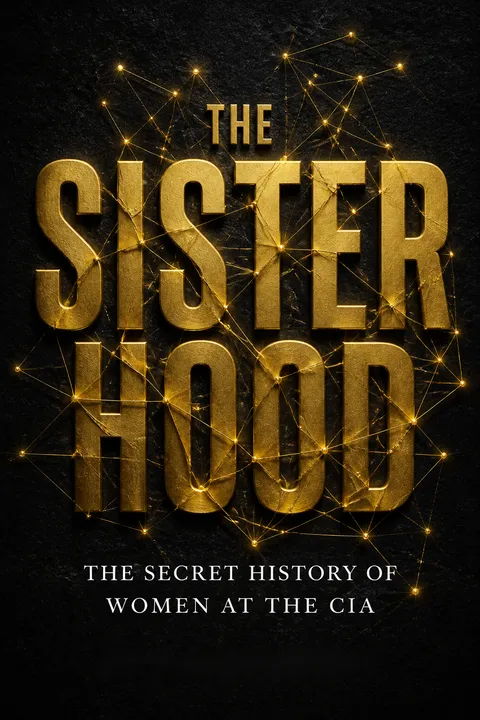
The Sisterhood receives an overall rating of 4.19/5, with readers praising Mundy's meticulous research and comprehensive history of women in the CIA. Many found it eye-opening and inspiring, highlighting the systemic gender bias these women overcame. Common criticisms include difficulty tracking the numerous characters across timelines, uneven pacing between sections, and some feeling the book focused more on mistreatment than women's actual accomplishments. The audiobook narration by the author received mixed feedback, with some appreciating her passion while others found her delivery monotone.
People Also Read








Download PDF
Download EPUB
.epub digital book format is ideal for reading ebooks on phones, tablets, and e-readers.








































