
Plot Summary
Judgment in the Rain
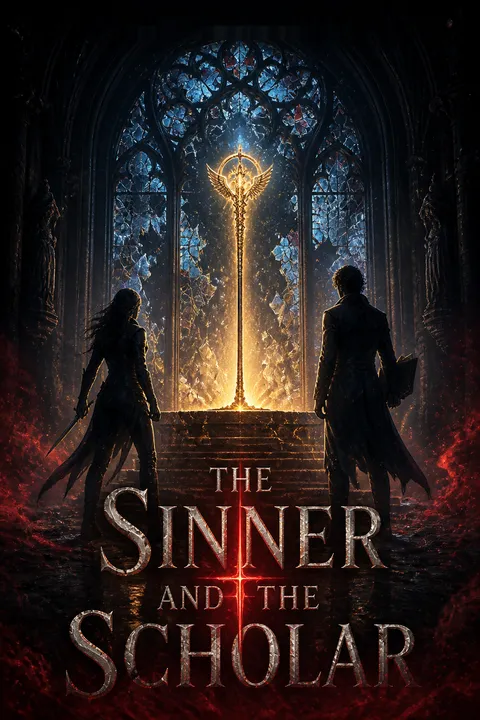
A lone figure rings a bell in rain-soaked Cardinal City, warning of apocalyptic seals breaking and the rise of evil. The city's indifference to the warning sets the stage for a world on the brink, where sin and judgment are inescapable. This chilling prologue introduces the book's central question: have you made peace with your sins? The sense of foreboding and the motif of judgment echo throughout the story, hinting at the personal and cosmic reckonings to come. The rain, the bell, and the signboard become recurring symbols of the thin line between salvation and damnation, and the urgency of confronting one's own darkness.
Sinner's Nightclub Hunt
Thea, a trained assassin for the Hildegard Sisterhood, infiltrates a seedy nightclub to investigate a suspected demonic possession. Her confidence and ruthlessness are on full display as she dispatches threats with calculated violence, but when she confronts her true target, she faces a horror beyond human depravity. The possessed man's transformation and Thea's visceral fear mark a turning point: demons are real, and so is hell. Thea's actions—killing the possessed and retrieving a severed, marked hand—set her on a collision course with forces far greater than herself, and introduce the book's central tension between sin, survival, and the supernatural.
Sisterhood's Secret Purpose
After her harrowing mission, Thea returns to the abbey, a sanctuary for the Sisterhood's Sinners—women trained to do the world's dirty work in the name of balance. But the abbey is in upheaval: rooms are cleared, alliances are shifting, and the Sinners are forced to share space as the Reverend Mother prepares for the arrival of Team Saint, their male Vatican counterparts. Thea's exhaustion and alienation are palpable, and the Sisterhood's history of using women's pain for a higher cause is laid bare. The chapter explores themes of belonging, erasure, and the cost of being a weapon in a world designed by men.
Saints Arrive, Tensions Ignite
The Vatican's Team Saint—five men with their own secrets and scars—arrive at the abbey, igniting instant rivalry and distrust. The Sinners bristle at the intrusion, seeing the Saints as both threat and temptation. Wesley, the scholar, is drawn to Thea's defiance, while the others size each other up, each hiding wounds and agendas. The forced merger is fraught with gendered power struggles, mutual suspicion, and the simmering potential for both violence and desire. The chapter sets up the central dynamic: can sinners and saints work together, or will their differences tear them—and the world—apart?
Relics, Marks, and Mergers
As the two teams awkwardly settle in, Thea and Wesley clash over arcane knowledge and the meaning of the strange Sumerian mark found on the severed hand. The Sinners discover a mysterious, half-blank manuscript in the archives, which, when united with a matching tome from Wesley's trunk, reveals the lost Gospel of Mary Magdalene and a cryptic prophecy. The merging of the books triggers supernatural visions and grants the Sinners a unique Sight, allowing them to perceive the true forms of demons. The relics, marks, and prophecy hint at a cosmic battle, with the Sinners and Saints as reluctant players.
Confession and Consequence
Thea's return to the Sin Bin for confession and self-flagellation exposes the psychological toll of her life as a Sinner. Her guilt over killing the possessed man, her longing for family, and her fear of damnation are laid bare. The chapter delves into the Sisterhood's brutal methods of atonement and the personal cost of wielding violence for a higher cause. Thea's internal struggle is mirrored by the physical marks on her body, and her interactions with Wesley—who sees both her pain and her strength—begin to blur the lines between enemy and ally, sinner and saint.
Crows, Symbols, and Sight
A murder of crows attacks Thea in the abbey's bathroom, signaling a supernatural escalation. Wesley intervenes with a geomantic spell, revealing his own occult skills and deepening the mystery of the marks and symbols. Thea discovers a demonic sigil carved into her skin, which later vanishes, and the Sinners realize their connection to the prophecy and the gospel grants them the Sight to perceive true evil. The chapter heightens the sense of danger and the personal stakes, as Thea and Wesley's fraught partnership becomes both a source of power and vulnerability.
Saints and Sinners Collide
Tensions between the teams boil over as secrets are revealed and boundaries are tested. Thea and Wesley's intellectual and sexual chemistry intensifies, culminating in a forbidden, passionate encounter that blurs the line between manipulation and genuine connection. The Sinners debate whether to trust the Saints with the gospel and the prophecy, while the men struggle with their own loyalties and desires. The chapter explores themes of trust, betrayal, and the transformative power of intimacy, as well as the dangers of keeping secrets in a house built on lies.
Forbidden Temptations Unleashed
Thea and Wesley's relationship deepens, exposing their wounds and desires. Both are haunted by past traumas—Thea's abuse and self-loathing, Wesley's cursed family and guilt—and find solace and absolution in each other's arms. Their union is both a rebellion against the roles imposed on them and a source of new strength. But the cost of vulnerability is high: their enemies exploit their connection, and the prophecy's warning about the enemy within becomes ever more urgent. The chapter is a crucible of passion, pain, and the hope for redemption.
Prophecy and the Gospel
The Sinners, now bonded by the Sight, work to translate the newly revealed gospel and decipher its prophecy. The text speaks of five relics, five sinners, and the need to mend the cracks between worlds and within themselves. The gospel's radical message—that true strength lies in embracing one's darkness and loving without judgment—challenges the foundations of both the Sisterhood and the Church. Thea and her sisters realize they are chosen to play a pivotal role in the coming apocalypse, but the meaning of the prophecy remains elusive, and time is running out.
Possession in the Abbey
Prudence, the oldest Sinner, becomes possessed by a powerful demon, and the abbey descends into chaos. Only the Sinners with the Sight can perceive the true horror, and their attempts at exorcism fail. The Saints' occult knowledge and the Sinners' determination are both needed, forcing a fragile alliance. The possession exposes the limits of violence and the need for compassion, as well as the dangers of pride and secrecy. The chapter is a harrowing test of loyalty, faith, and the willingness to sacrifice for one's chosen family.
Summoning the Demon Prince
With Prudence's life hanging by a thread, the teams summon Asmodeus, the demon prince, to learn how to save her. The ritual is fraught with danger and temptation, as Asmodeus toys with their desires and reveals uncomfortable truths. He tells them of the healing staff of Raphael, a relic that can save only one, and hints at the larger cosmic game being played. The summoning exposes the thin line between using evil for good and being corrupted by it, and sets the stage for a race against time to find the relic and choose who will be saved.
The Healing Relic Quest
Thea and Wesley travel to London to steal the staff from the British Museum, pursued by demons and haunted by their own secrets. Their partnership is tested by betrayal—Wesley's plan to use the relic for his dying friend Zeke—and by the growing realization that their love is both a weapon and a vulnerability. The heist is a crucible of action, deception, and sacrifice, culminating in a confrontation with Vepar, the demon who has haunted Wesley's life. Thea's choice to heal Wesley, despite his betrayal, marks a turning point in their relationship and the fate of the world.
London Heist and Betrayal
After the heist, Thea discovers Wesley's plan to betray her, but when he is mortally wounded and dying from demonic infection, she chooses to save him with the staff. Their mutual confessions and acts of forgiveness break the cycle of shame and self-destruction that has defined their lives. The relic's power is revealed to be greater than they imagined, and their love becomes a force for healing rather than harm. The chapter explores the cost of trust, the possibility of redemption, and the transformative power of choosing love over vengeance.
Vepar's Vengeance, Wesley's Sacrifice
Vepar, the demon who destroyed Wesley's family, returns for a final confrontation. Thea and Wesley, united in purpose and love, use the staff and their combined strengths to defeat her, but not before learning that the cracks between worlds are widening and that their personal healing is only the beginning. The battle is both physical and spiritual, forcing them to confront their deepest fears and the legacy of violence that has shaped them. Wesley's willingness to sacrifice himself for Thea, and her refusal to let him go, cements their bond and their role in the coming war.
Staff of Raphael's Power
Returning to the abbey, Thea and Wesley use the staff to heal Prudence, but discover that the demon inside her is Pestilence, one of the horsemen of the apocalypse. The staff's power is not unlimited, and its use comes with unforeseen consequences. The Sinners and Saints must confront the reality that their fight is only beginning, and that the prophecy's warnings about cracks, division, and the need for unity are more urgent than ever. The chapter is a meditation on the limits of power, the necessity of cooperation, and the hope that love can heal even the deepest wounds.
Pestilence Exorcised, Asmodeus Freed
The exorcism of Prudence is successful, but at a terrible cost: Asmodeus, the demon prince, is freed from his prison and reveals himself as War, another horseman. The abbey is thrown into chaos as violence erupts among the nuns, and the true scale of the apocalypse becomes clear. The Sinners mourn the loss of Prudence, but find solace in signs that her soul is at peace. The chapter is a reckoning with the price of victory, the inevitability of loss, and the need to find meaning and hope in the face of overwhelming darkness.
War Unleashed, Love Endures
Asmodeus's release unleashes a wave of violence and division, fulfilling the prophecy's warning that the enemy is within and that the age of sin has arrived. The Sinners and Saints, battered but unbroken, must confront the reality that their fight is far from over. Thea and Wesley, now united in love and purpose, become symbols of the possibility of healing the cracks between worlds and within themselves. The book ends with a sense of both loss and hope, as the survivors prepare for the battles to come, armed with the knowledge that forgiveness, compassion, and love are their greatest weapons.
Analysis
A modern parable of sin, forgiveness, and unityThe Sinner and the Scholar is a bold, subversive reimagining of the battle between good and evil, recasting the apocalypse as a struggle not just between heaven and hell, but within the human heart. By centering the story on women weaponized by patriarchy and men haunted by their own failures, the novel interrogates the cost of violence, the legacy of shame, and the possibility of redemption. The lost gospel of Mary Magdalene becomes a symbol of suppressed truth and the radical power of compassion, challenging both religious and societal dogma. The book's lesson is clear: true strength lies not in purity or violence, but in the willingness to embrace one's darkness, to forgive oneself and others, and to choose love in the face of despair. In a world fractured by division, Thea and Wesley's journey is a call to mend the cracks—within and without—by daring to hope, to heal, and to unite.
Review Summary
The Sinner and the Scholar receives polarized reviews averaging 3.82 stars. Fans praise its unique blend of paranormal romance with religious themes, comparing it to Buffy and The Da Vinci Code. Readers love the badass female assassins (Sinners) forced to work with male counterparts (Saints), the enemies-to-lovers romance between Thea and Wesley, and feminist undertones challenging patriarchy. Critics cite choppy pacing, rushed romance development, insta-lust, and problematic handling of misogyny. Some felt the religious themes were heavy-handed or that the plot lacked depth. The steamy scenes and found family dynamics earn consistent praise from positive reviewers.
People Also Read




Characters
Thea
Thea is the heart and soul of the Sisterhood's Sinners—a woman forged by trauma, trained as a seductive assassin, and burdened by guilt and longing. Her fierce intelligence and defiance mask deep wounds: abandonment, abuse, and the constant fear of damnation. Thea's journey is one of self-discovery and transformation, as she learns to trust, love, and forgive herself. Her relationship with Wesley is both a source of healing and a crucible of pain, forcing her to confront her own darkness and the possibility of salvation. Thea's arc is a testament to the power of vulnerability, the cost of violence, and the hope that even the most broken can be made whole.
Wesley
Wesley is the reluctant hero of Team Saint—a brilliant occult scholar haunted by the loss of his family to demonic forces and cursed with the belief that everyone he loves will die. His intellect is matched by his emotional scars, and his initial arrogance hides a deep well of compassion and self-doubt. Wesley's journey is one of atonement and sacrifice, as he risks everything to save his friend Zeke and ultimately chooses love over duty. His partnership with Thea is both redemptive and fraught, challenging his beliefs about sin, forgiveness, and the possibility of happiness. Wesley's arc is a meditation on the limits of knowledge, the necessity of faith, and the courage to choose love in a world of darkness.
Reverend Mother
The Reverend Mother is the moral and strategic anchor of the Sisterhood, guiding her Sinners with a mix of stern discipline and unexpected compassion. She is a survivor of institutional cruelty, determined to protect her charges while navigating the demands of a patriarchal world. Her wisdom and pragmatism are tested by the arrival of Team Saint and the escalating supernatural threat, forcing her to adapt and make painful choices. The Reverend Mother's arc is one of leadership under fire, the struggle to balance justice and mercy, and the recognition that true strength lies in unity and love.
Prudence (Prue)
Prudence is the oldest and most battle-scarred of the Sinners, a woman who has survived torture, loss, and possession. Her stoicism and discipline mask a deep vulnerability and a longing for peace. Prue's possession by Pestilence becomes the crucible for the entire Sisterhood, forcing her sisters to confront the limits of violence and the necessity of compassion. Her death is both a tragedy and a moment of grace, as she chooses to let go and is granted a sign of peace. Prue's arc is a meditation on endurance, the cost of survival, and the hope that even the most tormented souls can find rest.
Mercy
Mercy is the Sinners' team leader, a woman whose overactive sex drive and rebellious spirit mask a deep need for control and connection. She is both a source of comic relief and a fierce protector, unafraid to challenge authority or break the rules. Mercy's arc is one of learning to balance strength and vulnerability, to lead with both fire and compassion, and to accept that true power comes from embracing one's whole self. Her loyalty to her sisters and her willingness to fight for their survival make her a linchpin of the group.
Tawny
Tawny is the Sisterhood's American Pie sweetheart, a woman whose peaches-and-cream exterior conceals a fierce, coiled rage. She struggles with stress, self-doubt, and the fear of unleashing her inner demons. Tawny's arc is one of learning to accept her darkness, to channel her pain into action, and to find strength in vulnerability. Her bond with Prue and her role in the summoning of Asmodeus reveal her as both a victim and a survivor, capable of both great kindness and great violence.
Leila
Leila is the Sisterhood's weapons specialist, a woman whose dry wit and emotional distance mask a history of abandonment and trauma. She is fiercely protective of her autonomy and slow to trust, especially with men. Leila's arc is one of learning to let down her guard, to accept help, and to find connection in a world that has taught her to expect betrayal. Her rivalry with Zeke and her loyalty to her sisters make her both a formidable ally and a complex, wounded soul.
Raven
Raven is the Sisterhood's psychic, a woman whose visions and outsider status make her both invaluable and isolated. Her prophetic abilities connect her to the gospel and the unfolding apocalypse, but also mark her as different. Raven's arc is one of learning to trust her gifts, to find belonging among her sisters, and to use her Sight as a force for good. Her defiance and dark humor mask a deep longing for acceptance and love.
Zeke
Zeke is Team Saint's weapons expert, a man marked by the loss of his sister to demonic violence and a terminal illness that threatens his life. His bravado and recklessness hide a deep well of pain and a desperate need for connection. Zeke's arc is one of learning to accept help, to trust others, and to find meaning in sacrifice. His friendship with Wesley and his rivalry with Leila reveal the complexities of loyalty, pride, and the search for redemption.
Asmodeus
Asmodeus is the seductive, cunning demon prince who manipulates both Sinners and Saints, playing on their desires and fears. His release from prison marks the escalation of the apocalypse, as he reveals himself to be War, one of the horsemen. Asmodeus's arc is one of chaos and revenge, but also of exposing the cracks in the world and the dangers of division. He is both a mirror and a warning, embodying the consequences of unchecked sin and the need for unity in the face of destruction.
Plot Devices
Duality and the Enemy Within
The novel's central plot device is the motif of cracks—between heaven and hell, men and women, sinner and saint, self and other. The prophecy warns that the enemy is within, and the narrative structure mirrors this by alternating perspectives, revealing secrets, and forcing characters to confront their own darkness. Foreshadowing is used through the recurring imagery of rain, bells, and judgment, as well as the physical marks and relics that bind the characters to their fate. The merging of the gospel, the granting of Sight, and the summoning of demons all serve to blur the lines between good and evil, forcing the characters to question the nature of sin, forgiveness, and redemption. The use of forbidden love as both a source of vulnerability and strength is a key narrative engine, driving the emotional and thematic arc of the story.
The Sinner Sisterhood Series Series
About the Author
Other books by Lana Pecherczyk





Download PDF
Download EPUB
.epub digital book format is ideal for reading ebooks on phones, tablets, and e-readers.








































