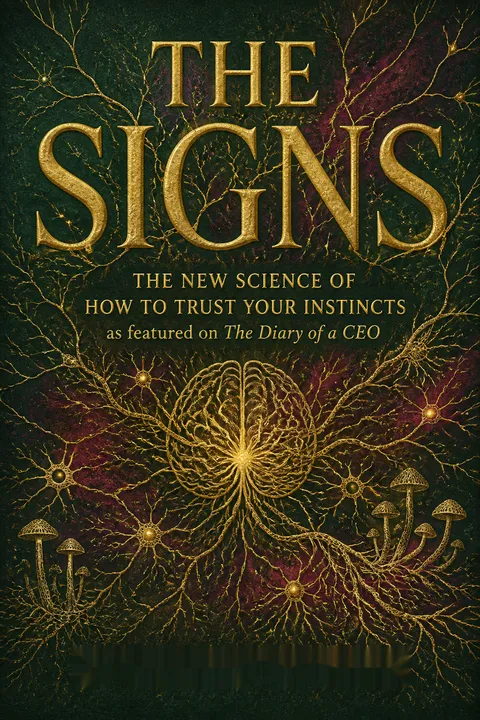

Key Takeaways
1. Embrace the Unexplained: Signs Guide Beyond Logic
This book is informed by the journey I took: from dismissing the things I couldn’t explain to accepting and even embracing them, allowing the signs I notice to show me a way forward.
Personal transformation. The author's journey began with profound grief after losing her husband, Robin, which challenged her deeply ingrained scientific and logical worldview. Initially dismissing phenomena like frequent robin sightings as mere coincidence, she later experienced vivid, unexplainable events, including seeing Robin's apparition and receiving messages through others.
Challenging skepticism. Despite years of medical and neuroscience training, these experiences forced her to question the limits of scientific explanation. A friend's premonition about Robin's visit, and later a medium's accurate, private messages, further eroded her skepticism. This shift highlighted that not everything profound can be rationally explained or dismissed as hallucination.
A new path. This personal journey led to a realization that solutions don't always reside within conventional understanding. By respecting the "small part of her mind" that wanted to believe, she found a new way forward, allowing unexplained signs to guide her through devastation and rediscover purpose.
2. Consciousness Transcends the Body: Evidence from Near-Death Experiences
In Dr Greyson’s opinion, there is too much consistency across these experiences to doubt them, and he believes, on balance, that ‘there are a lot of phenomena that suggest the brain does not create our consciousness’.
Mind-body debate. The question of whether the mind is separate from the body has puzzled philosophers and scientists for millennia. Dualism posits separation, while materialism argues consciousness is merely a product of the brain. Neuroscience currently lacks a physical mechanism to explain subjective experience, leaving the door open for alternative theories.
NDEs offer clues. Near-Death Experiences (NDEs) provide tantalizing glimpses into consciousness beyond the body. Individuals pronounced clinically dead (flatline EEG) report vivid experiences:
- Clear thought processes and intense emotions
- Out-of-body experiences, sometimes perceiving events in other rooms
- Encounters with lost loved ones or deities
- A profound sense of peace and a transformed outlook on life
Terminal lucidity. Further evidence comes from Terminal Lucidity (TL), where individuals with severe cognitive impairment, like dementia, regain full mental clarity shortly before death. This phenomenon suggests that a high-functioning mind might not be solely contingent on a healthy brain, challenging the materialist view and supporting the idea that consciousness can exist independently.
3. Prime Your Brain and Trust Your Intuition: Access Hidden Wisdom
If you are taking control of your perception, then you will be more able to notice signs.
Brain's filtering system. Our brains are designed for efficiency, constantly filtering information through the ascending reticular activating system (ARAS) and saliency network. This non-conscious process prioritizes survival-relevant data, often causing us to miss subtle but meaningful cues in our environment.
Intentional perception. We can consciously influence this filtering process to notice more. By priming our brains with intentional focus, such as through action boards or gratitude practices, we direct attention to what we value. This process, akin to pruning a rose bush, strengthens desired neural pathways and diminishes negative ones, enhancing our ability to perceive.
Intuition as superpower. Intuition, often dismissed as unscientific, is a powerful form of hidden wisdom. It's rooted in pattern recognition and embodied knowledge, providing access to insights beyond rational thought. By cultivating an abundant mindset and actively directing our perception, we empower our intuition to recognize and interpret signs.
4. Signs Offer Comfort, Guidance, and Purpose in Life
Feeling as though your lost loved one is not gone for ever, and that there are potentially means of communicating with them, provides real solace and comfort in the face of overwhelming grief.
Profound comfort. Signs provide immense solace, especially during grief, by suggesting a continued connection with deceased loved ones. This belief can transform the experience of loss, replacing despair with a sense of enduring love and presence, and alleviating the fear of death.
Invaluable guidance. Beyond comfort, signs act as powerful guides for navigating life's challenges and making important decisions. They offer external validation and direction, helping to build self-trust and reduce reliance on external opinions. This guidance empowers individuals to move forward with confidence and clarity.
Finding purpose. Embracing signs fosters a deeper sense of purpose, connecting individuals to something greater than themselves—be it the universe, a higher power, or a collective consciousness. This expanded perspective enriches life, cultivating joy, awe, and wonder, and transforming adversity into opportunities for profound personal growth and meaning.
5. Tune into Your Senses: Expand Awareness and Reduce Stress
It is important that we understand this complexity, because our senses are the best tools at our disposal for tuning in to the here and now, quietening the noise and distraction of modern life and understanding what our bodies are telling us.
Beyond five senses. We possess far more than the commonly acknowledged five senses; scientists identify up to 34, encompassing both exteroception (external stimuli) and interoception (internal body signals). Understanding this intricate sensory system is fundamental to expanding our awareness of ourselves and the world.
Sensory grounding. Our senses are powerful tools for grounding us in the present moment, effectively quieting the noise and distractions of modern life. Consciously engaging senses through practices like:
- Taste meditations (e.g., slowly chewing a raisin)
- Sound meditations (focusing on near and far sounds)
- Visual exercises (observing small details, then large vistas)
These practices enhance awareness and reduce mental clutter.
Stress reduction. A regulated nervous system, in the parasympathetic "rest and digest" state, is crucial for noticing signs. Stress narrows perception, but techniques like mindful sighs and "salamander" exercises activate the vagus nerve, promoting relaxation. This physiological calm creates the optimal conditions for heightened sensory perception and receptivity to signs.
6. Unlock Embodied Intuition: Connect Mind, Body, and Gut
If you can access this store of embodied wisdom and use it in conjunction with your brain, then it’s stronger than just thinking something in your head.
Intuition in the body. Intuition is not merely a mental process; it's deeply embodied, with unconscious memories and wisdom stored in our spinal cord, gut neurons, and potentially fascia. This "gut instinct" represents a vast, often untapped, reservoir of knowledge that influences our decisions.
Somatic release. Trauma and wisdom alike leave physical imprints on the body. Somatic therapies and physical movement, such as yoga or dance, are crucial for accessing and releasing this embodied information, providing emotional release and intuitive insight beyond purely cognitive approaches. Combining physical activity with mental reflection creates a powerful synergy.
Gut-brain axis. The gut-microbiome-brain axis highlights the profound connection between gut health and intuition. Inflammation, often triggered by stress, can disrupt this axis, leading to "brain fog" and impaired intuitive access. Optimizing gut health through a diverse, plant-based diet, probiotics, and adaptogens is vital for clear intuitive guidance.
7. Cultivate Creativity and Beauty: Boost Brain and Open Perception
By incorporating art, beauty and creativity in your life, you essentially train your brain to notice more, and this will in turn make you more highly attuned to noticing and interpreting signs.
Essential human need. Art, creativity, and beauty are not luxuries but fundamental aspects of human existence, deeply embedded in our evolutionary history. Neuroaesthetics, the study of how art impacts our brains, reveals tangible mental and physical benefits, from lowering mortality risk to boosting mental well-being.
Brain transformation. Engaging with beauty and creative pursuits—whether beholding art or making it—stimulates neuroplasticity, forging new neural pathways. This process releases "DOSE" hormones (dopamine, oxytocin, serotonin, endorphins), enhancing mood, resilience, and shifting the brain from a fear state to a love/trust state.
- Dopamine: Motivation and reward
- Oxytocin: Bonding and joy
- Serotonin: Mood and confidence
- Endorphins: Pain relief and mood boost
Heightened perception. Creative practices, regardless of skill level, bring us into the present moment, fostering mindfulness and "flow" states conducive to insight. By consciously adorning ourselves, surrounding our homes with beauty, engaging with music, cooking, or reading, we train our brains to notice more, making us highly attuned to perceiving and interpreting signs.
8. Reconnect with Nature: Our Innate Habitat for Well-being and Signs
If you actively engage with your environment and nature, you can optimise your brain to operate at a higher level, and also to notice even more signs.
Nature's profound impact. Nature is the ultimate enriched environment, profoundly impacting our health and well-being. Our physiology is deeply adapted to natural settings, and immersion reduces stress, lowers cortisol, and enhances cognitive function. Even short "nature doses" (20-30 minutes) yield significant stress reduction.
Sensory immersion. Immersing ourselves in nature, through practices like grounding (walking barefoot on natural surfaces) or forest bathing, fosters a sense of calm and connectedness. Engaging all senses—touching diverse textures, listening to birdsong, fire gazing, or stargazing—deepens this connection and opens us to subtle environmental cues.
- Grounding: Walking barefoot on grass or sand for electron transfer.
- Birdsong: Triggers feelings of safety and relaxation.
- Phytoncides: Chemicals from trees that boost human immune systems.
Ancient wisdom, modern science. Ancient cultures understood our inextricable link with nature, seeing it as a source of wisdom and spiritual connection. Modern science is now revealing complex communication networks in nature (e.g., mycelium networks, chemical signaling between trees), suggesting a deeper interconnectedness that, when acknowledged, can facilitate the perception and interpretation of signs.
9. Curate Your Tribe: Strengthen Connections for Support and Signs
A strong connection with others is also another major contributing factor in creating the conditions for you to receive and interpret signs, because it provides the psychological safety and faith to trust the signs that you receive or to discuss their interpretation should you need to.
Innate social need. Humans are intrinsically social creatures, evolved to thrive within tribes. Meaningful connections are essential for well-being, combating widespread loneliness, and providing a sense of purpose that transcends the individual. Social isolation is linked to decreased life expectancy and reduced brain grey matter.
Unconscious influence. Our interactions with others, both conscious and unconscious, profoundly influence our physiology and psychology. We are affected by:
- Social contagion (e.g., trends in behavior)
- Hormonal transfers (e.g., cortisol from stress, oxytocin from bonding)
- Non-verbal cues (body language, tone of voice)
This highlights the importance of mindfully curating our social circles.
Psychological safety. Cultivating a supportive "tribe" of like-minded individuals provides psychological safety, validating our experiences and fostering openness to signs. Small acts of kindness, engaging with contemporary culture, aligning values, and connecting with cultural heritage or ancestors all strengthen these bonds, enhancing our ability to perceive and trust signs.
10. Tap into Universal Consciousness: Signs as a Shared Language
I believe signs are the main way we can access this amazing source of knowledge and wisdom, allowing us a window into the universal consciousness.
Collective unconscious. Carl Jung's theory of the collective unconscious suggests shared mental concepts (archetypes) derived from universal human experiences across time. This hints at a deeper, universal consciousness that transcends individual minds, offering a point of psychological commonality for all humanity.
Accessing cosmic force. Many ancient and indigenous cultures believed in a "cosmic force," universal consciousness, or benevolent spirits (ancestors, deities, angels) accessible through practices like meditation, breathwork, nature immersion, and creative activities. These practices expand consciousness, creating a receptive state for receiving signs.
A language of guidance. By fostering a generous and open-minded spirit, and engaging in practices that expand consciousness, we create the optimal psychological state to tap into this universal wisdom. Signs become a daily language, offering comfort, guidance, and purpose, and enriching our lives in immeasurable ways, even if their source remains scientifically unproven.
Review Summary
The Signs by Dr. Tara Swart receives mixed reviews (3.71/5). Readers appreciate her blend of neuroscience and spirituality, particularly regarding intuition, grief, and signs from deceased loved ones. Many found comfort after personal loss and valued practical exercises. However, critics cite repetitive, superficial writing that could be more concise. Several expected deeper scientific evidence given Swart's credentials, finding the content more spiritual than research-based. The book resonates most with open-minded readers exploring manifestation and synchronicity, though some felt her podcast interviews were more compelling than the book itself.
People Also Read


Download PDF
Download EPUB
.epub digital book format is ideal for reading ebooks on phones, tablets, and e-readers.








































