
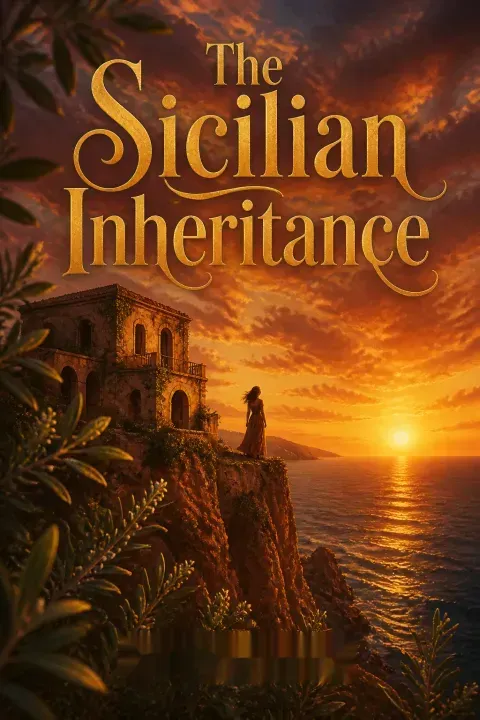


Plot Summary
Prologue
Sara1 sits in a freezing police station room in Sicily, one rickety table and two metal chairs the only furniture. A detective asks through a translator whether she killed the man on the mountain.10 Her ribs are broken, her abdomen throbs with sharp pain, and salty tears roll down her cheeks.
She does not cry for him, the one whose blood is dried on her skin and clothes. These tears are for herself, for what she might lose now: her family, her daughter.15 She had believed coming to Sicily would solve her problems. Instead she knows exactly what happened up on that cliff. And so she nods yes, she killed him.
The prologue inverts the expected confession scene by making Sara's tears self-directed rather than remorseful. We enter the story knowing a killing has occurred but not why, creating dramatic irony that charges every subsequent scene with dread. The framing establishes Sara's voice as unsentimental and physical: she registers pain in her body, not abstractions. The question that will haunt the novel is already planted: what drives a mother, a chef, a bankrupt businesswoman to take a life? The answer will involve not just self-defense but a web of manipulation stretching back a century.
When Pigs Fly
Sara Marsala1 closes her Philadelphia restaurant La Macellaia for the last time. The tables are sold, kitchen equipment awaits hauling, and only the plaster flying pig remains suspended from the ceiling, a gift from her soon-to-be-ex-husband Jack on opening night.
Jack arrives early with their four-year-old daughter Sophie,15 radiating resentment as he surveys the wreckage. He hands over mail that includes a letter from Aunt Rosie,6 who died before Sara1 could make one final visit. At Rosie's6 raucous funeral, complete with Dolly Parton karaoke and a limerick epitaph, Sara1 finally reads the letter.
Rosie6 bought her a plane ticket to Sicily, booked a hotel, and enclosed a deed for family land in Caltabellessa, the village where Rosie6 was born. But the letter also contains a second, more urgent request: find out what really happened to Rosie's6 mother, Serafina Forte,2 who allegedly died of the flu before she could join her husband14 in America.
Rosie's letter functions as a posthumous act of parenting. She recognizes that Sara is drowning in failure and self-recrimination, so she manufactures a quest that forces forward motion when paralysis has set in. The flying pig symbolizes everything Sara lost: not just a restaurant but an identity she never quite believed she deserved. By making the ticket nonrefundable and prepaying everything, Rosie removes every exit ramp. The letter is a final gift from a woman who raised children that were not hers and now reaches from beyond the grave to rescue her favorite one more time.
Too Late for Medicine
In 1908, fifteen-year-old Serafina Forte2 knows something is terribly wrong. Her blood has not come for three months. She confesses only to her best friend Cettina,5 who leads her up the mountain to consult la strega,13 the old witch living at the cliff's edge.
Inside the stone hovel, the witch's13 shelves overflow with medical books and glass jars. Serafina2 tells everything: the trip to the beach where a glamorous woman from Naples painted her lips red, the Feast of Saint Antonio where wine flowed freely, the field under the stars where she rolled toward Giovanni14 and let him trace invented constellations on her palm.
She had been the top student in her class, recommended for advanced schooling in Sciacca that no village girl had ever achieved. The witch13 places a warm hand on Serafina's2 barely curved belly. Her voice fills with regret: the medicine can do nothing now. It is too late for her.
One impulsive night collapses an entire future. The witch's home represents everything Serafina might have become: a woman of knowledge, independent, outside the village's rigid gender codes. The red lipstick is the forbidden emblem of female desire and agency. When the witch says it is too late, she delivers a death sentence for Serafina's dreams. The body's betrayal will now define her life. This scene establishes the central tragedy that the novel will spend the next hundred years undoing: a girl's intelligence and ambition are no match for biology in a society that grants women no second chances.
No Grave for Serafina
Driver Pippo navigates switchback roads to Caltabellessa, a whitewashed village clinging to a shark-fin mountain peak. At the cemetery, Sara1 searches the family plot for Serafina's2 headstone. It is not there. The ancient priest consults his registry, then spits on the ground and snarls that the Church does not bury women like her.
That night, Giusy,3 the hotel owner in a pink tracksuit, takes Sara1 to a raucous dinner where she sings Bellini and gossips about the local Mafia. After too much wine, Giusy3 produces a photocopied police report from 1925.
The victim, age thirty-two, was found tied by the neck to a stake outside a cave, naked from the waist down, her ankle shattered, her thighs slashed, her windpipe crushed. The name at the bottom: Serafina Forte.2 Giusy3 insists this is what Aunt Rosie6 wanted uncovered. In the village, Serafina2 is remembered as a witch and a whore who got what she deserved.
The missing grave is an erasure that speaks loudly. The Church's refusal to bury Serafina marks her as morally contaminated, and Giusy's gossip shows how that contamination narrative survived a century. Sara confronts the gap between her family's saintly stories and the brutal reality of a woman tortured to death. This is the moment the novel's central question crystallizes: who controls a woman's story after she dies? The police report is clinical yet horrifying, transforming Serafina from a name on a deed into a body that suffered.
The Witch's Apprentice
Serafina2 marries Giovanni14 in a hasty, shame-filled ceremony. Her first son Cosimo arrives after a near-fatal breech birth where the witch Rosalia13 reaches her entire arm inside Serafina's2 body to turn the baby. Gio14 works in sulfur mines, then crosses to the mainland, then sails for America.
He becomes a stranger who sends money and brief letters. Freed from constant pregnancy by his absence, Serafina2 begins visiting Rosalia13 regularly. She learns to deliver babies, treat infections, set broken bones, identify diseases from Latin medical texts. When the doctor from Sciacca stops coming, Serafina2 becomes the village's healer.
She saves a mare and her foal in the piazza by performing an emergency cesarean with a butcher's blade. Old men begin whispering the word witch. But the women come to her in secret, asking for tonics to prevent pregnancy when husbands return, trusting her with their bodies and their secrets.
Serafina's transformation from reluctant teenage bride to skilled healer parallels the village's transformation from patriarchal order to female-run society. The men's exodus creates an unintended liberation. The witch Rosalia represents a lineage of female knowledge passed outside male institutions. When Serafina operates on a horse in public, she crosses a line the remaining men find threatening. Her power is real, and real power in a woman provokes accusations of witchcraft. The novel suggests that 'witch' is simply what patriarchies call women who heal without male permission.
The Notaio's Calculator
Giusy3 arranges a meeting with Signor Raguzzo, the local notaio whose metal braces gleam under fluorescent lights. He confirms the land was deeded to Serafina2 by Mayor Marco Domenico4 in gratitude for her service as a healer. The neighboring farm, owned by the Puglisi family,10 has grazed sheep there for decades.
Now a foreign developer, an Arab sheikh, wants to buy both parcels to build a luxury resort with a golf course. Raguzzo taps his calculator: perhaps three hundred thousand dollars, life-changing money. But complications stack up. The neighbors claim squatter's rights. The town questions whether a woman could legally own land in 1920s Sicily.
And the old rumors about Serafina's2 witchcraft could undermine Sara's1 claim. After the meeting, someone ransacks her hotel room. Her passport vanishes. Later, on Giusy's3 rooftop, Sara1 teeters at the cliff's edge, unsure whether she was pushed or stepped too close herself.
Money transforms the quest from sentimental journey to high-stakes conflict. The deed is not just a historical artifact but a live grenade in a struggling village where poverty makes people desperate. The stolen passport is a classic isolation tactic: without documents, Sara cannot open a bank account, cannot leave, cannot prove identity. The ambiguity about whether she was pushed or jumped externalizes her psychological state. She has been passively suicidal since her business collapsed, and the near-fatal moment forces a confrontation with her own will to live.
The Mayor's Chocolate
Marco Domenico,4 the mayor and husband of Serafina's2 best friend Cettina,5 asks Serafina2 to accompany him to Sciacca to treat children infected with a skin mite. She goes, diagnosing the outbreak and instructing the women to burn infested linens. On the drive home in darkness, they strike a boy on a bicycle.
He is miraculously unhurt, but the car is disabled. The boy offers them rooms at his father's inn. That night, Marco4 shares a bar of spiced Modica chocolate, confessing he hides it from his own children. In the narrow hallway outside their rooms, their bodies nearly touch.
He kisses her cheek, lips lingering too long. She retreats alone. But weeks later, when Cettina's5 brutish brother Carmine attacks Serafina2 for failing to save a Mafia money man impaled on a pitchfork, it is Marco4 who comes to check on her. He stitches the gash on her scalp. She kisses him first. This time, neither stops.
The affair is presented not as simple betrayal but as the collision of two people trapped in different kinds of loneliness. Marco mourns his first wife and lives in a companionate marriage with Cettina, who only wanted children. Serafina has never been loved as an equal. Their attraction is intellectual as much as physical. The chocolate is a perfect sensory detail: a rare indulgence shared in darkness, symbolizing stolen sweetness. The stitching scene inverts gender roles; his hands shake while hers guide him. They perform the intimacy of care that their actual marriages lack.
The Ecclesiastical Register
Police officer Fina,9 towering and tattooed with a smirking Medusa on her shoulder, brings the church registry to a seaside lunch. The massive book shows Serafina2 was christened, married at fifteen, and gave birth to three sons within four years. But there is no record of her funeral.
Instead, hundreds of entries list patients who received last rites at a clinic on the contested land. Fina's9 voice drops low. The stolen passport is only the beginning. Old wounds have been reopened. Giusy3 and Fina9 explain, over Luca's7 squid ink pasta and tuna, how Sicilian women once ruled when the men departed for America.
That was the glorious interlude, before the men returned and forced the women back into their homes. But Serafina2 was murdered before her husband14 could drag her across the ocean. The two women toast with a strange word: Astarte.
The church registry is a palimpsest. Official history records baptisms and marriages but erases the inconvenient dead while inadvertently preserving evidence of Serafina's healings. The police report and the registry together form competing archives, neither complete. Fina's warning introduces the idea that the past is not past in Sicily. Serafina's murder remains a live wound because it represents an unresolved conflict about female power. The toast to Astarte, a pre-Christian goddess of female strength, connects Giusy and Fina to a lineage of women who preserved their own history in secret, beneath every official narrative.
Husband from America
Serafina2 wakes to sounds in her kitchen. It is not an intruder but her husband Giovanni,14 returned without warning from New York after nearly five years away. He has heard rumors from his mother about Serafina's2 closeness with the mayor.4 Over the following days, Gio14 struts through the village in his American suit, boasting of his success.
Then he makes his demand: Serafina2 must sell the clinic land Marco4 gave her. The money will buy them a house in Scranton, Pennsylvania, and start a business for their sons. She will never have to work again. When she protests that the land may not be legally hers to sell, he grabs her arm and says he is not asking.
Later, a letter arrives from Marco,4 who has been secretly receiving treatment in Palermo for a life-threatening illness. He begs Serafina2 to visit him. She tells Gio14 she must go to Palermo to resolve the deed. He is too ill with a cough to stop her.
Gio's return collapses the distance Serafina has constructed between her two lives. He represents the patriarchal order reasserting itself: his money, his plans, his name. The demand to sell the land is not about cash but about extinguishing the source of her independence. The clinic is her freedom made physical. Gio's threat of violence is barely contained; he was raised in a culture where husbands beat wives to preserve honor. Yet the novel grants him some sympathy: he worked in brutal conditions for years to support a family he barely knows. That understanding does not excuse his entitlement to erase her life's work.
The Catacombs of Women
After Luca's7 car windows are smashed with a hammer and a threatening note left behind, he drives Sara1 to Palermo to meet his wife. Agata8 is a tiny professor with a snake tattooed on her cheek, brilliant and bipolar, living in a church crypt surrounded by research.
She leads Sara1 through sewer tunnels into the Capuchin Catacombs, where ancient drawings cover the walls: nuns shielding children from vengeful fathers, the winged goddess Astarte, Saint Agata raped and mutilated yet surviving. For thousands of years, Agata8 explains, women gathered in underground spaces to preserve their history when they were forbidden literacy.
She also confesses she found Serafina's diary in a cave near Caltabellessa. She gave the journal to Giusy3 but kept ripped-out pages, which she now hands to Sara.1 The pages confirm Serafina2 loved her healing work and loved Marco.4 The final entry is chilling: Serafina2 fears someone will murder her.
The catacombs sequence transforms the novel's concerns from personal to archetypal. Agata's scholarship reveals that Serafina's story belongs to a millennia-long tradition of Sicilian women creating parallel power structures. The underground location literalizes 'herstory' as something buried beneath official narratives. Agata embodies the cost of this knowledge work through her mental illness and isolation. The diary pages are the novel's central textual artifact, and their incompleteness is significant. Missing passages, torn out by Giusy, suggest someone is still controlling which story gets told. Sara now holds fragments of her ancestor's truth.
A Bath in Palermo
Cettina,5 frantic, fetches Serafina2 to Marco's4 bedside. He is yellow with jaundice, burning with fever, dying. Serafina2 climbs into his bed and holds him, promising to save him. Cettina5 walks in and freezes in the doorway, saying nothing. They arrange to transport Marco4 to an experimental doctor in Palermo, where blood transfusions save his life.
Months later, healed but frail and bald, Marco4 sends for Serafina.2 She tells Gio14 she must go to Palermo to resolve the deed. In the city, Marco4 takes her to a roofless ruined monastery, to a restaurant famous for medicinal broth, to a steaming bath where he begs her not to leave for America.
She cannot promise, but she cannot resist him either. When she returns home, Gio14 is drunk and suspicious. His mother has been feeding him accusations. Serafina2 soon discovers she is pregnant. The child is Marco's,4 and she knows the baby's eyes will give everything away.
The Palermo idyll is deliberately lush and cinematic but shadowed by the knowledge that it cannot last. The roofless church is their cathedral of impermanence. Marco's proposal that she sell the land but stay in Sicily is a fantasy that ignores the reality of her marriage and his. The pregnancy is the biological betrayal that literature has used for centuries to expose female transgression. Serafina's body, which she spent years learning to control through contraception, now traps her. The novel asks an impossible question: what does a woman owe her husband, her lover, her children, and herself when those obligations contradict one another?
Nicolo's Testimony
The town council chamber is packed. Giusy,3 in a white suit and red heels, escorts Sara1 to the front row. Nino Puglisi,10 Giusy's3 Mafia cousin, takes the podium first, denouncing Sara1 as an American colonizer with a forged deed.
Then Nicolo,11 the nearly hundred-year-old sculptor who sketched Sara's1 portrait on her first night, rises slowly and walks to the microphone. He speaks in measured Italian. He was treated by Serafina2 as a child, he says. She saved his life and the lives of hundreds. She was not a witch but a godly healer, the reason many in this room have grandmothers who survived the great flus.
The old women in black at the back nod. Nicolo11 demands the village honor Serafina2 by honoring her descendant. Sara1 adds her own speech in halting Italian, presenting bank documents from Palermo confirming the deed's validity. The mayor bangs his gavel, promising a decision.
Nicolo's testimony functions as the novel's moral climax. He is the only living link between the two timelines, a man who knew Serafina's hands and now vouches for her character. His authority as a famous artist grants him a platform the village cannot ignore. The scene dramatizes the power of oral history and community memory to counter official narratives. The old women in black are a silent jury, their presence a reminder that Serafina's true legacy lives in the bodies she saved, not in the Church's condemnation. Sara's speech in Italian marks her transformation from passive tourist to active claimant of her heritage.
Green Eyes Cannot Lie
Serafina2 nearly dies in childbirth. When she wakes, Cettina5 is holding the baby by the window. The child is small but healthy, born a month early, which Serafina2 silently thanks the Virgin for. The timing lets her plausibly claim Gio14 as the father. But then the baby opens her eyes, and they are clear green, the exact shade of Marco's.4
Any villager would know. Cettina,5 who has not spoken to Serafina2 since discovering the affair, brings the baby to the bed and murmurs that she should name her Rosalia13 after the old witch.13 Then, with devastating calm, she says the words that change everything: she loves Serafina2 like her own blood, but Serafina2 cannot remain in this world.
Cettina,5 the betrayed wife, becomes the architect of salvation. She proposes they stage Serafina's2 murder, file a police report, and let the world believe she is dead while she escapes to America under a new name. Baby Rosalia6 will be raised as Gio's14 daughter.
Cettina's pivot from betrayed friend to co-conspirator is the novel's most psychologically complex turn. She has every reason to hate Serafina. Instead, she chooses to free her. The decision reflects a love that transcends conventional marriage: they pledged themselves to each other as children, and that bond proves stronger than romantic jealousy. Cettina also gains something. With Serafina gone, Marco remains hers alone. The escape plan requires Serafina to abandon her children, including the newborn she nearly died to deliver. The novel does not soften this moral cost. Serafina's survival depends on a sacrifice that will haunt her forever.
Knife on the Cliff
After the council meeting, Nino10 and his tall henchman drag Sara1 from her bed in the night. Giusy3 let them in, Nino10 claims. They throw Sara1 into a car and drive up the mountain past the Norman castle, past the dragon's cave. At the cliff's edge, Nino10 kicks her ribs, explains he will make her death look like suicide.
His henchman drives away. Nino10 prods Sara1 toward the three-hundred-foot drop at knifepoint. Then footsteps. Giusy3 appears in moonlight, pointing a gun. Nino10 mocks her, certain she will not shoot. Giusy3 fires into the air. The crack makes Nino10 release Sara,1 who tumbles.
Giusy3 throws a curved slaughtering knife at Sara's1 feet. With bound wrists, Sara1 grabs it, saws through the twine, and as Nino10 turns toward a sound in the darkness, she plunges the blade into his belly and rips upward, gutting him. He dies in the dirt. Giusy3 has vanished. Police lights appear.
The cliff scene literalizes the novel's central question about female survival in a violent world. Sara's hands, trained to dismember animal carcasses, know how to kill a man. The knife is Giusy's gift, and Sara's butchery skill is her dark inheritance, an echo of Serafina's healing. But the scene is also a trap within a trap. Giusy has orchestrated everything: she needed Nino dead to inherit his Mafia territory, and she needed Sara to do the killing because an American tourist would be exonerated where a Sicilian woman would not. The dragon's cave, where women once whispered secrets and sheltered the abused, becomes the site of a calculated murder framed as feminist justice.
Serafina Smiling in Stone
Sara's1 sister Carla12 arrives at the police station posing as her lawyer. Sara1 is released without charges: Fina's9 statement says she acted in self-defense. At the hotel, Giusy3 waits on Sara's1 bed. She confesses everything. She and Aunt Rosie6 were relatives through Marco Domenico,4 connected via a DNA site.
Giusy3 orchestrated the entire scenario: stealing Sara's1 passport to make her dependent, manipulating the town meeting, using Sara1 to eliminate Nino10 so Giusy3 could inherit his land and his Mafia connections.
Fina9 is Giusy's3 secret daughter, and the money will fund their future. Sara1 negotiates a 15 percent cut of Giusy's3 land sale. But the deepest revelation comes from Nicolo.11 The statue in the town fountain is Serafina2 as he saw her in America decades later.
Serafina2 faked her death with Cettina's5 help, escaped through Palermo and Rome, and became a licensed nurse in the United States. She secretly watched her daughter Rosie6 grow up through letters from village women. The deed was Serafina's2 gift, sent through Nicolo11 to Rosie,6 and now to Sara.1
The double revelation reshapes the entire narrative. Serafina was not a victim but an architect of her own survival, a woman who chose to lose everything, including her children, in order to live on her own terms. The statue in the fountain, which Sara has passed daily without recognizing her own ancestor's face, symbolizes how women's stories hide in plain sight. Giusy's confession equally complicates the moral landscape. She is neither villain nor savior but a pragmatist who uses whatever tools are available, including murder and manipulation, to seize power in a system designed to exclude her. Sara leaves Sicily not with justice but with something messier: complicity, money, and the knowledge that her inheritance includes both healing and killing.
Epilogue
In her own words, Serafina2 recounts the escape. Cettina5 staged the murder scene and filed the police report, knowing the village would dismiss a woman's killing as a crime of honor. Serafina2 sent her children and mother-in-law to America without her, keeping baby Rosalia6 for four precious months.
She boarded a ship to Baltimore, changed her name, and became a nurse, eventually earning her degree at age fifty-five. For decades, Cettina5 wrote monthly letters updating her on the children. Marco4 died never knowing the truth, though Cettina5 told him on his deathbed and he smiled. In her final years, Serafina2 traveled to the Poconos and watched her daughter Rosie6 from a parked car.
Rosie,6 middle-aged, walked out of her house, climbed into a black Mustang convertible, turned up the radio, and danced in her seat for no one but herself. She was everything Serafina2 had hoped: educated, independent, unashamed. Serafina2 never regretted leaving. She became exactly what the old witch13 had foretold.
The epilogue transforms the novel from a murder mystery into a survival story. Serafina's voice is unapologetic; she does not ask forgiveness for abandoning her children because she understands that her presence would have destroyed them all. The image of her watching adult Rosie from a car window is devastating and triumphant simultaneously. She sees a daughter who never knew her mother but who became everything Serafina hoped. The epilogue closes the loop on the novel's central question: what does a woman owe, and to whom? Serafina's answer is radical: she owes herself a life. Everything else flows from that.
Analysis
The Sicilian Inheritance operates as a literary exhumation, digging up not just a body but a counter-narrative buried beneath a century of patriarchal storytelling. The novel's dual timeline is not merely structural. Sara's1 journey in 2016 mirrors Serafina's2 a hundred years earlier, suggesting that the dilemmas of female ambition, bodily autonomy, and survival under male control are not historical artifacts but ongoing conditions. Both women lose everything they built, both are threatened with violence for overstepping their assigned roles, and both must decide what they are willing to sacrifice to remain alive and free.
The book's deepest insight concerns the politics of storytelling. Serafina2 exists in multiple, contradictory versions: the saintly martyr of family lore, the witch and whore of village gossip, the skilled healer of the church registry, the passionate woman of her diary, the survivor who outwitted everyone. Each version serves someone's interests. The family needed a pious ancestress to validate their respectability. The village needed a cautionary tale to police its women. The Church needed a sinner to exclude. Only Serafina's2 own words and actions, preserved in fragments by a network of women across decades, reveal the fuller truth. The novel argues that women's history is always incomplete because women have always had to hide parts of themselves to survive.
Giusy3 emerges as the novel's most provocative figure: a woman who embraces the very systems of power, including the Mafia, that have oppressed her, not to dismantle them but to claim her share. Her morality is transactional, her methods manipulative, yet her goal is liberation. She is what happens when a woman decides that playing by the rules of a rigged game is a losing strategy. Sara's1 complicity in Nino10's death and her negotiation for a percentage of Giusy's3 gains mark her departure from innocence. The inheritance she receives is not just land and money but the knowledge that survival sometimes requires blood on your hands, and that the line between healer and killer, between Serafina2 and Sara,1 is thinner than anyone wants to admit.
Review Summary
The Sicilian Inheritance received mostly positive reviews, with readers praising its dual timeline structure, rich historical details, and strong female characters. Many enjoyed the Sicilian setting and found the story engrossing. Some critics felt the modern timeline was less compelling than the historical one, and a few found the pacing slow. Overall, readers appreciated the blend of mystery, romance, and family history, with many recommending it as a captivating read.
People Also Read









Characters
Sara Marsala
Failed restaurateur, butcher, motherA Philadelphia chef and butcher whose acclaimed restaurant La Macellaia collapsed under debt, expansion pressure, and industry sabotage. She is tall, physically powerful from years of breaking down animal carcasses, with tattoos of a meat cleaver and a flying pig on her forearms. Recently separated from her husband Jack, she is fighting for custody of her four-year-old daughter Sophie15 while drowning in bankruptcy. She was Aunt Rosie's6 favorite, the one who needed to be loved a little more than her polished older sister Carla12. Her journey to Sicily forces her to rediscover a toughness she lost, culminating in an act of violence that both saves and burdens her. She thinks in terms of meat and joints, believing that one wrong cut can break down an entire system.
Serafina Forte
Healer, abandoned wife, survivorMarried at fifteen after a teenage pregnancy ended her dream of advanced schooling. When her husband Gio14 emigrated to America for work, she studied healing under the village witch Rosalia13 and became Caltabellessa's unofficial doctor, delivering babies, treating epidemics, and earning both gratitude and suspicion from the remaining men. Intelligent and ambitious in a world that punished both qualities in women, she fell in love with Marco4, the town mayor and her best friend's5 husband. She is a woman who learned that survival sometimes requires impossible sacrifices, including leaving behind everyone she loved in order to claim a life of her own making.
Giusy (Giuseppina)
Hotel owner, manipulator, survivorThe proprietor of Hotel Palazzo Luna in Caltabellessa, a widow whose abusive husband mysteriously disappeared years ago. She communicates in theatrical pronouncements, steals small items from guests for amusement, and knows everyone's secrets. She is actually a distant relative of both Sara1 and her enemy Nino10 through bloodlines she carefully tracks. Her entire assistance to Sara1 masks a long game of her own design, one that requires the elimination of certain men who have stood in her way. She operates on a pragmatic moral code that prioritizes female survival and power above all other virtues.
Marco Domenico
Town mayor, Serafina's loverThe principled mayor of Caltabellessa who fought for his village against corrupt politicians and the Mafia. He married Cettina5 after his brother Liuni's murder and his first wife's death in childbirth, but their marriage was companionate rather than romantic. He fell deeply in love with Serafina2 and gave her the land for her clinic, deeding it in her name alone. His green eyes, inherited by their daughter Rosalia6, became the visible proof of their affair. He represents a different kind of Sicilian man: one who valued female intelligence and capability rather than feeling threatened by it.
Cettina
Serafina's lifelong best friendSerafina's2 lifelong best friend, closer than a sister. She married Liuni, who was murdered by the Mafia for his political activism, then married his brother Marco4 as custom dictated. Unable to bear children herself, she became a devoted mother to Marco's4 children and to Serafina's2 sons. When she discovered the affair between her husband and her best friend2, she initially withdrew in hurt, but ultimately made a choice that changed the course of both their lives. Her love for Serafina2, forged when they were small girls who braided their hair together and threw it to the wind, proved stronger than betrayal.
Aunt Rosie
Sara's deceased great-aunt, catalystSerafina's2 daughter, raised by Gio14 as his own child in Scranton, Pennsylvania. She became a school principal, never married, raised her three nephews when their parents died in a car crash, and was the keeper of family stories. Profane, loving, and fiercely independent, she taught Sara1 to drive stick shift at age ten and insisted a real woman lights her own fires. In her final months, she connected with Giusy3 through DNA testing and learned the truth about her mother. She bought Sara's1 plane ticket to Sicily and left the deed, engineering one last adventure for her favorite great-niece from beyond the grave.
Luca
Chef, Sara's loverA chef who runs a seaside restaurant near Caltabellessa, having returned to Sicily after years working in kitchens across New York City. He is separated from but still legally married to Agata8, whom he wed at eighteen to protect her from the fate of orphaned women with no family to defend them. Generous with food and affection, he becomes Sara's1 lover after an electric encounter at his restaurant. His connection to Nino10 as a restaurant investor complicates his relationship with Sara1, though he remains genuinely unaware of the violent machinations swirling around her.
Agata
Professor of women's historyLuca's7 wife in name only, a brilliant but mentally unstable history professor who researches Sicilian women's secret traditions. Her own mother was raped and died by suicide, leaving Agata an orphan in Caltabellessa. She discovered Serafina's2 diary in a cave and preserved its missing pages in her underground archive beneath a Palermo church. Her work on the goddess Astarte and the hidden lineage of female resistance provides the mythic framework for understanding the novel's women. She moves through the world with a small body and an enormous, fragile intellect.
Fina
Police officer, secret daughterA young police officer in Caltabellessa, tall and formidable, with tattoos of Medusa and Astarte on her shoulders. She provides Sara1 with the church registry that proves Serafina's2 clinic existed. Her relationship to Giusy3 is a carefully guarded secret that, when revealed, illuminates the full scope of Giusy's3 long-term plan for female power on the island. She represents the next generation that will benefit from the bloody work of the women who came before her.
Nino Puglisi
Mafia cousin, land claimantGiusy's3 cousin, a low-level Mafia associate who runs drug operations through the family farm adjacent to Serafina's2 land. He wears an Armani belt and dreams of becoming a DJ in Ibiza. He wants to sell the family land to the Arab developer to finance his escape from Sicily and pay off his two girlfriends and their children. His violence toward Sara1 escalates from verbal threats to armed confrontation and kidnapping, making him both a genuine danger and a useful pawn in someone else's larger game.
Nicolo
Elderly sculptor, living witnessA nearly hundred-year-old sculptor of international fame who chose to return to his birth village to die. As a child, he was mute and was treated by Serafina2 at her clinic. He became a world-renowned artist and, decades later, met Serafina2 at his exhibition in Atlanta. His statue of her in the town fountain is the only public monument to her true legacy, though almost no one recognizes her face.
Carla
Sara's older sister, lawyerSara's1 polished older sister, a successful lawyer, mother of twins, and wife to a woman. She was always the beloved, sparkly daughter while Sara1 struggled. When Sara1 stops responding to texts, Carla spends all her frequent-flier miles on a same-day flight to Sicily and poses as Sara's1 lawyer to get her out of police custody. She is the person who has known Sara1 longest and loves her most unconditionally.
Rosalia (la strega)
Village witch and healerThe old woman who lived on the mountain's edge, shunned by the village but depended upon by every woman in it. She was educated by a doctor in Palermo who taught her to read, write Latin, and practice medicine. She trained Serafina2 as her successor, seeing in the teenage mother a sharp mind and steady hands. She died of heart failure, leaving Serafina2 her house, her books, and her legacy of female knowledge passed outside male institutions.
Giovanni (Gio) Marsala
Serafina's absent husbandA gentle but limited man who worked in sulfur mines, then on Calabrian docks, then in a New York toilet factory before settling in Scranton, Pennsylvania. He was absent for most of his marriage, sending money regularly but remaining emotionally distant from the wife he married as a teenager. He never questioned whether Rosalia6 was his biological daughter because the alternative was unthinkable, and he raised her as his own after being told Serafina2 died of the flu.
Sophie
Sara's four-year-old daughterSara's1 young daughter, resilient and joyful despite the upheaval of her parents' separation. She is the gravitational center of Sara's1 life, the reason Sara1 fights to rebuild herself. Her absence during the Sicily trip is a constant ache for Sara1, and the fear of never seeing her again gives Sara1 the will to survive when survival seems impossible.
Plot Devices
The Land Deed
Catalyst for the entire questA legal document transferring a plot of land in Caltabellessa from Mayor Marco Domenico4 to Serafina Forte2, given in gratitude for her service as a healer. The deed was hidden for decades: Serafina2 gave it to Nicolo11 in the 1950s with instructions to send it to her daughter Rosie6 after Gio's14 death. Rosie6 held it for thirty years before passing it to Sara1. The land sits adjacent to the Puglisi family10 farm and contains the ruins of Serafina's2 clinic plus a crucial water source. Its potential sale to a foreign developer for a luxury resort creates the financial stakes that drive the modern timeline's conflict.
Serafina's Diary
Reveals Serafina's true characterA leather-bound journal discovered by Agata8 in a cave near Caltabellessa. Written in Sicilian dialect, it contains Serafina's2 personal account of her training as a healer, her recipes for medicines and tonics, her love for Marco4, and her growing fear of the violence closing in around her. Giusy3 tore out certain pages, while Agata8 preserved others in her underground archive. The fragmented diary allows Sara1 to know her ancestor as a flesh-and-blood woman rather than a family legend, though crucial gaps in the narrative must be filled by other sources.
The 1925 Police Report
Official record of staged murderA partially redacted document from the Polizia di Municipale describing the brutal killing of Serafina Forte2: tied by the neck to a stake, beaten, slashed, and strangled. Filed by Cettina5 and the widow Gaetana as part of the staged death, it became the accepted historical record. The report initially convinces Sara1 and the reader that Serafina2 was murdered, driving the mystery plot until Nicolo11 reveals the truth. Its existence shows how official documents can be both factual records and complete fabrications simultaneously.
The Church Registry
Proof of Serafina's clinicA massive ecclesiastical record book spanning 1890 to World War II, containing baptisms, weddings, and death records for Caltabellessa. It documents Serafina's2 christening at fifteen, her marriage the same year, and the baptisms of her three sons. Hundreds of entries show patients who received last rites at her clinic. But the registry contains no record of her funeral mass, a deliberate omission that marks her as morally condemned. Fina9 borrows the book from the hostile priest and uses it to provide Sara1 with documentary evidence of Serafina's2 legitimate work as a healer.
The Astarte Tradition
Mythic framework for female resistanceAn underground female spiritual lineage traced by Professor Agata8 from pre-Greek goddess worship through Roman Venus and Diana to the Christian Virgin Mary. Astarte, a Canaanite and Phoenician goddess of love, war, and female self-defense, symbolizes the continuous tradition of Sicilian women protecting one another across millennia. Her image appears in cave drawings near Caltabellessa, on Fina's9 tattoos, and in the coded toasts shared by Giusy3 and her allies. The tradition provides a mythic explanation for why women like Serafina2, Giusy3, and Fina9 instinctively understand that survival requires mutual aid and occasional ruthlessness.
FAQ
Synopsis & Basic Details
What is The Sicilian Inheritance about?
- Dual timelines intertwine: The story follows Sara, a modern-day woman grappling with personal and financial struggles, and Serafina, her great-grandmother, a Sicilian woman living in the early 20th century.
- A mysterious inheritance: Sara inherits a deed to land in Sicily from her aunt, prompting her to investigate her family's past and the circumstances surrounding Serafina's death.
- Unraveling family secrets: The narrative explores themes of family legacy, female empowerment, and the search for identity as Sara uncovers hidden truths about her ancestors and their lives in Sicily.
Why should I read The Sicilian Inheritance?
- Compelling dual narrative: The novel offers a captivating blend of historical fiction and contemporary mystery, seamlessly weaving together two timelines and perspectives.
- Strong female characters: The story features complex and resilient women who defy societal expectations and fight for their independence, making it a powerful and inspiring read.
- Intriguing family secrets: The plot is driven by a compelling mystery surrounding Serafina's death, keeping readers engaged as Sara uncovers hidden truths and family secrets.
What is the background of The Sicilian Inheritance?
- Historical Sicily: The novel is set against the backdrop of early 20th-century Sicily, exploring the cultural and historical context of the time, including the roles of women, family dynamics, and the impact of emigration.
- Sicilian folklore and traditions: The story incorporates elements of Sicilian folklore, such as the belief in witches and the importance of family honor, adding depth and authenticity to the narrative.
- Immigration and the American Dream: The novel touches on the theme of Italian immigration to America, highlighting the motivations and challenges faced by those seeking a better life in a new country.
What are the most memorable quotes in The Sicilian Inheritance?
- "In Sicily, women are more dangerous than shotguns.": This quote, used as an epigraph, foreshadows the strength and resilience of the female characters and the dangers they face.
- "All of Sicily is a dimension of the imagination.": This quote highlights the mystical and otherworldly nature of the setting, emphasizing the importance of the island's history and culture.
- "Those who speak little never have regrets.": This Sicilian saying, often repeated by Aunt Rosie, underscores the importance of silence and discretion in a world filled with secrets and danger.
What writing style, narrative choices, and literary techniques does Jo Piazza use?
- Alternating perspectives: Piazza employs a dual narrative structure, alternating between Sara's first-person present-day perspective and Serafina's third-person historical perspective, creating a dynamic and engaging reading experience.
- Vivid descriptions: The author uses rich and evocative language to bring the Sicilian setting to life, immersing readers in the sights, sounds, and smells of the island.
- Foreshadowing and suspense: Piazza skillfully uses foreshadowing and suspense to build tension and keep readers guessing about the true nature of Serafina's death and the secrets surrounding her life.
Hidden Details & Subtle Connections
What are some minor details that add significant meaning?
- The flying pink pig: The mascot of Sara's restaurant, La Macellaia, symbolizes her dreams and aspirations, and its eventual sale represents the loss of her career and identity.
- Rosie's mug collection: The mugs collected by Aunt Rosie from various trips represent her desire for adventure and her connection to the world beyond her small town.
- The red jumpsuit: Sara's bright red jumpsuit, worn to Rosie's funeral, symbolizes her attempt to honor her aunt's vibrant spirit and her own desire to break free from her current struggles.
What are some subtle foreshadowing and callbacks?
- The mention of a one-lane road: Early in the book, Pippo mentions the one-lane roads in Sicily, foreshadowing the dangerous and unpredictable nature of Sara's journey.
- Rosie's love of limericks: The limerick found on Rosie's table after her death foreshadows the playful and mischievous nature of her final wish for Sara.
- The phrase "You've fucking got this": This phrase, often used by Rosie, becomes a mantra for Sara, reminding her of her aunt's strength and encouragement as she faces challenges in Sicily.
What are some unexpected character connections?
- Giusy and Rosie's relationship: The revelation that Giusy and Rosie had a close relationship, communicating via computer and WhatsApp, adds a layer of complexity to Giusy's character and her motivations for helping Sara.
- Luca and Agata's marriage: The fact that Luca and Agata are married but live separate lives reveals the unconventional relationships and societal norms in Sicily.
- Nicolo's connection to Serafina: The revelation that Nicolo, the sculptor, knew Serafina in America adds a layer of depth to her story and highlights the enduring impact of her life.
Who are the most significant supporting characters?
- Pippo: The taxi driver who becomes a friend to Sara, providing her with transportation and insights into Sicilian culture, and also a connection to Rosie.
- Agata: The historian who helps Sara uncover the truth about Serafina's life, offering a unique perspective on the role of women in Sicilian history.
- Luca: The chef who provides Sara with food and comfort, and also a connection to the local community, and a romantic interest.
Psychological, Emotional, & Relational Analysis
What are some unspoken motivations of the characters?
- Sara's desire for control: Sara's need to control her life and her business stems from her fear of failure and her desire to provide a stable future for her daughter.
- Giusy's need for power: Giusy's manipulative behavior and her desire for control stem from her past experiences of being marginalized and disempowered as a woman in Sicily.
- Marco's internal conflict: Marco's internal struggle between his love for Serafina and his loyalty to his wife and community reveals the complexities of his character and his desire to do what is right.
What psychological complexities do the characters exhibit?
- Sara's self-doubt: Despite her outward strength, Sara struggles with self-doubt and a fear of failure, stemming from her recent personal and professional setbacks.
- Serafina's yearning for independence: Serafina's desire for education and independence clashes with the societal expectations placed upon her as a woman in early 20th-century Sicily.
- Giusy's manipulative nature: Giusy's manipulative behavior and her willingness to use others to achieve her goals reveal a complex and often ruthless personality.
What are the major emotional turning points?
- Sara's discovery of Serafina's murder: The revelation that Serafina was murdered, not simply died of illness, forces Sara to confront the dark side of her family's history and fuels her determination to uncover the truth.
- Sara's encounter with Nino on the cliff: The near-death experience on the cliff forces Sara to confront her own mortality and the dangers of her quest, leading to a moment of self-discovery and empowerment.
- Serafina's decision to leave her family: Serafina's decision to leave her family and her home in Sicily highlights her desire for independence and her willingness to sacrifice everything for a better future.
How do relationship dynamics evolve?
- Sara and Jack's strained marriage: The novel explores the breakdown of Sara and Jack's marriage, highlighting the challenges of balancing personal and professional ambitions and the impact of betrayal on their relationship.
- Sara and Giusy's complex alliance: The relationship between Sara and Giusy evolves from a transactional alliance to a complex friendship, marked by both trust and suspicion.
- Serafina and Cettina's enduring bond: The friendship between Serafina and Cettina is a central theme, highlighting the importance of female companionship and support in a patriarchal society.
Interpretation & Debate
Which parts of the story remain ambiguous or open-ended?
- The true nature of Serafina's death: While the novel reveals that Serafina escaped to America, the exact circumstances of her disappearance and the role of others in her staged death remain somewhat ambiguous.
- Giusy's ultimate motivations: Giusy's true motivations for helping Sara and her long-term goals remain open to interpretation, leaving readers to question her loyalty and intentions.
- The future of Sara's relationships: The novel leaves the future of Sara's relationships with Jack and Luca open-ended, allowing readers to imagine the possibilities for her personal life.
What are some debatable, controversial scenes or moments in The Sicilian Inheritance?
- Serafina's affair with Marco: The relationship between Serafina and Marco raises questions about morality and the complexities of love and desire in a restrictive society.
- Giusy's manipulation of Sara: Giusy's manipulation of Sara and her willingness to use others to achieve her goals raise ethical questions about the nature of power and ambition.
- Sara's decision to kill Nino: Sara's act of self-defense, while justified, raises questions about the morality of violence and the consequences of taking a life.
The Sicilian Inheritance Ending Explained: How It Ends & What It Means
- Sara's empowerment: The ending sees Sara embracing her strength and independence, using her newfound knowledge and resources to rebuild her life and secure a better future for her daughter.
- Serafina's legacy: The revelation that Serafina lived a fulfilling life in America challenges the traditional narrative of her death and highlights her resilience and determination.
- The cyclical nature of history: The ending suggests that the struggles and triumphs of the past continue to influence the present, emphasizing the importance of understanding and learning from history.
About the Author

Download PDF
Download EPUB
.epub digital book format is ideal for reading ebooks on phones, tablets, and e-readers.








































