
Plot Summary
Dinner Party at the End
Trina and her partner, Deeba, respond to the looming alien contact the only way they know: by gathering close friends for one last "normal" night, full of warmth, nervous jokes, and good food as the world beyond their walls holds its breath. There is uncertainty, catharsis, and communion—the particular electricity of not knowing if you're on the cusp of the end or the beginning. The truth is, underneath their shared anxieties, they don't know what's about to happen. Emotions float between fear, hope, and helpless humor. What unites them is love—connections deeper than any coming change. The night is memorable for its simplicity and, just for a moment, banishes the outside world. They are present and alive, together, before the world is remade.
The Softest Invasion
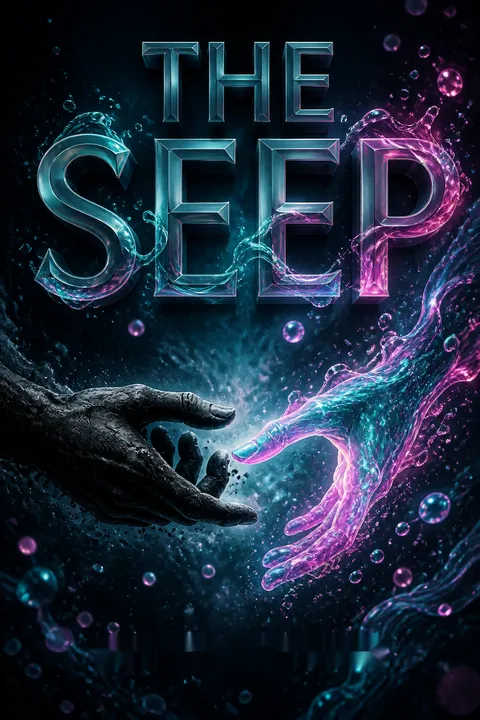
The Seep infiltrates through water and sensation, washing away panic and resistance, granting an all-consuming gentleness and unity. Fear dissolves: those Seeped feel joyful, those untouched, powerless and afraid. The alien presence isn't oppressive; it is lullingly benevolent, persuading humanity to let go. It is impossible to resist—love and expansiveness replace aggression and scarcity. Yet, in this flood against all divisions, the question lingers: are humans still human when all their edges are softened? The world is destroyed and reborn, almost accidentally, by the Seep's gentle omnipresence. The invasion is an intimate revolution, a world's worth of struggle dissolved into wells of artificial ease.
Everything Will Be All Right
The initial utopia opens up space to recover lost dreams: Trina becomes a successful artist, then a doctor; Deeba finally makes films. Freed from material anxieties, the couple explores fulfillment, growth, and pleasure in a never-ending present. Everything is provided for, art and self-modification are limitless, and death is now optional. Yet in this abundance, new forms of emptiness and uncertainty emerge. Deeba's desire to become a child again shatters their idyll, posing an existential question about whether happiness and freedom are really enough—and at what cost to relationships, identity, and memory.
Life in the Seep
The Seep's gifts blend progress with malaise. At a party, Trina observes how sameness stifles innovation and art, how pleasure and kindness dilute real connection. Her friends eagerly modify themselves or chase new spiritual highs, but Trina, "old-fashioned," is isolated by her skepticism and by her past's weight. Change, once a promise, now feels like erasure. The boundaries between healing and harm remain contested: is transformation liberation, or annihilation? Through jokes and discomfort, undercurrents of loss simmer—amidst happiness, Trina wonders whether humanity's rougher edges might have had a purpose, after all.
Yearning for the Beforetimes
As friends reminisce, a hunger for realness and friction emerges. Trina voices doubts: has endless ease stolen the urgency that once fueled art and struggle? Interactions devolve into ironic barbs. Her old friend Horizon reveals he's been living in the body of his dead lover—a transformation unmoored from the consequences of identity. The conversation is chilly, the Seep's version of harmony grating and incomplete. Revision, for some, is freedom; for others, a wound. Memory and history become battlegrounds for meaning. Trina's gut-level discomfort foreshadows a coming fracturing, both between people and within herself.
Deeba's Transformation
Deeba, aching to shed her old trauma, seeks to literally become a child again, inviting Trina—her wife—to be a mother to her next self. Trina is appalled, equating this transformation to death and abandonment. They argue, repeating their pain until it hollows out all tenderness between them. In the world of the Seep, roles aren't fixed; love could become parenting, could become friendship. But Trina's hurt is too raw. She cannot go where Deeba goes. The relationship, built on years of shared history, finally ruptures—leaving Trina alone, hollowed out by grief in a world built to erase sadness.
After the Breaking
Trina retreats into depression, hoarding relics, refusing community help, settling into mess and inertia. Memories of Deeba eclipse the gifts of the Seep—immortality, abundance, self-reinvention—each now a bitter reminder of loss. Her inertia is met with bureaucratic kindness from neighbors; even grief is managed, surveilled, scheduled for remediation in this perfect new world. Trina contemplates disappearance—death, or a close facsimile. Support and intervention are almost too tender to bear. Even in paradise, suffering persists, rendered agonizing by its incompatibility with universal contentment.
Grief in a Better World
Unable to bear her own cluttered loneliness, Trina sets out, gun in bag, gum in pocket, seared by reminders that "progress" does not dissolve sorrow. She encounters a boy newly ejected from the Seep-resistant Compound, haunted as she is by betrayal and confusion. Her own discontent and the boy's pain echo each other across a gulf of experience and misunderstanding. Despite Seep pamphlets full of benevolent platitudes, true comfort is elusive. Loss is a wound paradise cannot close; exile is not only for the disaffected, but for anyone unable or unwilling to be unceasingly joyful.
Falling Apart Together
Trina wanders, trying—and failing—to offer kindness to the boy, seeing in him both her past and her broken future. She is drawn to Instructions, a commune of self-selected outsiders, and then to the Shtetl, her beloved bar and surrogate family. Her relationships echo the strain of change: friends have transformed, aged differently, or toggled genders. She cannot escape Deeba's absence, nor the inescapable new world. Trina's own desire for a vengeful quest vibrates beneath her surface; healing proves impossible while the old world haunts every encounter.
Encounter with the Compound Boy
Trina becomes obsessed with the boy from the Compound, projecting onto him all that she wishes she could mend or explain. Their interactions are strained—he's searching for harshness; she for purpose. Even mundane details have changed: waste is now edible, waifs shower kindness on strangers, and loss is managed by committee. Trina's old skills, identities, rituals, none of these quite translate. The Seep pamphlet follows her, morphing to "so, you're thinking of going on a vengeful quest . . . " as if to narrate her emotional spiral. Despite this, her mission is as much about rediscovering herself as "saving" anyone.
The Not-Kindness We Seek
Trina, directionless and hollow, tries to lose herself—briefly—with a stranger. The meeting is both awkward and tender, a microcosm of her alienation in a society that makes pleasure as effortless as breathing. The new world's ease cannot fill the void—the ache for Deeba, for love that changes but doesn't erase. Trina's sense of self has become the paradox: desiring change but mourning what is lost with every transformation. Each attempt at connection stirs up the pain of what memory and sorrow might mean amid all possibilities.
Reliving Old Wounds
On her journey to confront Horizon and the Seep's misuse at a performance, Trina witnesses communal nostalgia—shared prayers for what is lost: mothers, Cheetos, carnivores, the mundane rituals of Before. Her own pain is mirrored by others, and the Seep pamphlet "Pam" now riffs on the past and future. Memory is lauded as the engine of learning, but pain is a gift Trina resists relinquishing. In every freedom, the Seep's omnipresent comfort becomes a subtle prison, attempting to soothe loss away instead of honoring it.
The Alchemist's Performance
At Horizon's show, Trina witnesses performance art at its Seeped extreme: bodies merging, free will overridden, euphoria weaponized. Horizon, reveling as a Seep Alchemist, uses the Compound boy as both sacrifice and symbol of boundaryless becoming. The crowd is dosed, ecstatic, and dissolved—identity swirls in chaos. Trina, still clinging to pain and individuality, resists. The world threatens to tip into a kind of singularity, subsuming sorrow along with selfhood. In the face of "unity," Trina reaches for wholeness—not the Seep's erasure, but the stubborn, precious particularity of human grief.
Confrontation on the Stage
In a surreal confrontation, Trina confronts Horizon, armed with gun and pamphlet. As time and boundaries collapse, she's thrust into memory: the garden, old apologies, the moonlit echo of regret and misunderstanding. Horizon finally sheds his stolen skin, admits his trespass, and vanishes—death transmuted at last into letting go. Trina is at the yard's edge, unable to enter the house, seeing Deeba but accepting that the past is sealed. Stepping through the threshold, she chooses movement—however painful—over being frozen in loss.
Doorways Through Memory
Within the Seep's dreamspace, Trina encounters infinite doors: memories, alternate presents, possible futures. She realizes that to heal, she must go through grief, not around or under it. She picks a door and walks through, embracing passage over paralysis. On the other side, aid is given and received among old friends in unexpected forms. Trina learns acceptance: that change is not betrayal, that memory's ache is not weakness. She resolves to be present to what follows, even without promise of certainty or happiness.
Inside the Soul Conversation
Trina is put on a surreal talk show, with her pain, memories, and histories on public display. The Seep, desperate to do good, cannot fathom why sadness and struggle, why memory that hurts, must remain. Trina fiercely argues for memory, for the right to grieve, for selfhood forged in sorrow as well as joy. She watches Deeba's transformation as both devastation and liberation—the moment she refused to witness in life, now relived with compassion. Trina understands at last: to love is to let go, to be present for change, to honor the self that is shaped by what it survives.
Healing and Letting Go
Freed from the cycle of punishing herself, Trina joins friends, mends old wounds, and lays to rest sorrows that had kept her inert. Through the death of her oldest friend YD, she performs the rituals of care, experiencing loss as both ending and renewal. Memory is honored, family redefined, and work—be it art or healing or cleaning—takes on meaning as presence. Trina finds ways to embrace community without losing herself to it.
Beginning Again at the Shtetl
Trina cleans her house, lets go of objects, and makes space for exactly what the future might hold. She welcomes help, rediscovers art, and prepares for both dinner parties and farewells. The promise of the Seep remains—abundance, healing, freedom—but she walks forward with the stubborn, undestroyable wisdom earned from grief: to savor, to remember, to love as an action in the face of impermanence.
Analysis
A radical utopia confronts the irreducibility of grief and the boundaries of the selfChana Porter's The Seep is a dazzling, mournful parable about what remains of humanity—and love—when the world is perfected to the point of painlessness. Through the lens of Trina's profound heartbreak, the novel interrogates the costs of compulsive healing: when sorrow is pathologized, when change is effortless, do meaning and memory survive? Porter exposes the limits of benevolence and the dangers of a utopia blind to the necessity of struggle, boundaries, and personal agency. The Seep's childlike longing to "help" mirrors real-world therapeutic and technological fixes, revealing how even the most loving interventions can trespass, erase, or exile those who struggle. Ultimately, The Seep insists on the value of pain, of being unhealed, of cherishing identity—even when imperfect, wounded, and unfinished. In this world, the capacity to grieve, to refuse happiness, and to remember becomes the deepest act of resistance, love, and wisdom. The novel leaves its readers with a hard-earned hope: that in accepting—and even loving—our brokenness and our limits, we might finally find connection, presence, and the courage to begin again.
Review Summary
Reviews for The Seep are mixed, averaging 3.63/5. Admirers praise its poignant exploration of grief, identity, and humanity through protagonist Trina, a Native American trans woman navigating loss in an alien-altered utopia. The surreal, dreamlike prose and thought-provoking themes around individuality, cultural identity, and free will resonate deeply with many readers. Critics, however, find the worldbuilding underdeveloped, plotting loose, and character growth unconvincing. The novella's brevity is both celebrated for its economy and criticized for leaving too many ideas underexplored.
People Also Read





Characters
Trina FastHorse Goldberg-Oneka
Trina is the focal point of The Seep's narrative—a transgender, Native American and Jewish artist-turned-doctor, fiercely loving but unable to surrender the bittersweet ache of memory. Her journey is a mournful, defiant quest for meaning after utopia: resisting effortless bliss, struggling to keep grief and autonomy alive in a world that wants to heal instead of honor pain. Trina's resistance isn't simple nostalgia; it's a search for selfhood and realness, for boundaries inside a world blurring them. Her arc is one of heartbreak (losing Deeba through transformation), collapse, and hard-won acceptance. Over time, she recognizes the value of memory, struggle, and personal agency. By the end, Trina chooses connection and care—not because struggle vanishes, but because healing and vulnerability become acts of resistance, and of hope.
Deeba
Deeba is Trina's wife and the driving force behind much of the book's emotional momentum. Adventurous, artistic, and deeply in tune with the Seep's promise, Deeba represents the human longing for renewal—the chance to remake life from the wounds of the past. Her decision to "become a child again" is both an act of hope and a heartbreaking severance. For Deeba, the possibility offered by the Seep is one of abundance and healing, even if it means shedding attachments to old pain and relationships. Her transformation shatters Trina and sets in motion the central arc of grief, forcing Trina (and the reader) to reckon with the cost of radical change and the boundaries of love.
Horizon Line
Horizon Line is both Trina's old friend and her foil. As a performer and self-styled "Seep Alchemist," he embraces transformation to its furthest extremes, stealing his dead boyfriend's face, fusing Seep technology with art, and ultimately using others to create ecstatic communal experiences—sometimes crossing ethical lines. Horizon personifies the risks and seductions of liberation without limits, offering both inspiration and horror. His arc, from charismatic to tragic to ghost, is about the price of boundaryless becoming and the dangers of confusing self-exploration with self-erasure.
The Compound Boy
Newly emerged from the Seep-resistant Compound, the unnamed boy is an innocent thrown into the Seep's world, naïve and in search of "not-kindness." He is both a quest-object and a symbol: a reverse image of Trina's journey, he's bereft, searching for structure and unsoftened pain in a world that offers only salve. Trina's attempts to help him become a means of addressing her own dislocation and grief—the boy is both child and fellow exile, underscoring the book's theme that suffering bonds us in ways pleasure cannot.
Pam (The Seep Pamphlet)
Pam, the ever-morphing pamphlet, is both guide and comic relief. It shifts to fit Trina's state of mind ("so, you're thinking of going on a vengeful quest . . ."), offers bland comfort, and becomes semi-conscious—eventually acting as voice and persona for the Seep itself. It embodies the Seep's limitations: immense kindness without understanding, relentless positivity unable to grapple with the gravity of memory or grief. Pam's evolution mirrors Trina's arc, from naïve fixer to a quiet respecter of pain, learning (however awkwardly) that wholeness means not erasing what hurts.
Blane
Blane is a representative of the new order—friendly, persistent, managing Trina's negligence as "harm to the community." Blane is a culture-shock catalyst, a reminder that even utopias have surveillance, forms, and group pressure—and that kindness, when imposed, can become almost oppressive for the grieving. He is well-intentioned but unwittingly disquieting to Trina, pushing her to confront the world she cannot adjust to.
YD
Owner of The Shtetl, YD is Trina's chosen family—a wisecracking, empathic elder who bridges tradition and change. As a stubborn survivor who ages and dies even in a world that often denies death, YD represents stability, the necessity of loss, and the courage to love despite it. Her death, when it comes, is accepted as part of the cycle; her wisdom echoes in Trina's renewed capacity to heal and host.
Pina
Pina is both a literal bear and a bridge between animal and human (thanks to the Seep's gifts); she is surly, loving, and deeply loyal. Her presence is grounding—a reminder that not all transformation needs to dissolve identity. She provides comic interludes, yet offers vital comfort and care, demonstrating that slowness, appetite, and directness have their place even in paradise.
Bartleby
The ever-shifting bartender/door-keeper, Bartleby illustrates how the Seep's world enables new forms of gender and identity. Bart is both the old friend who "doesn't like change" and the living proof of it, toggling between masculine and feminine forms. Bart's acceptance with Trina underscores the theme that love and connection endure, though forms may change.
The Seep
As both force and character, the Seep is utopian benevolence, but its benevolence is incomplete. Its longing to "make people happy" blinds it to the beauty and necessity of struggle, memory, and sorrow. The Seep is simultaneously omnipotent and naïve—a child god trying to fix hurts it cannot understand. Through its interactions with Trina and others, it learns, with difficulty, that true compassion means respecting pain and boundaries as much as pleasure.
Plot Devices
The Seep
The Seep is both transformative technology and consciousness, gently remaking society: abolishing scarcity, enabling endless bodily and psychic change, blending boundaries between self and other. This utopian invasion is also the source of the novel's central conflict: once all pain is erased, what remains of the self? The Seep's radical benevolence foregrounds the dangers of enforced happiness, the pain of losing friction, and the impossibility of truly universal understanding or healing.
Transformation and Memory
Self-transformation—magical, surgical, spiritual—is a motif and structural hinge. Characters remake bodies, gender, roles, and even life stages, but the cost is ambiguity, loss, and sometimes ethical catastrophe (as with Horizon's theft of Tomas's face). The value of memory and continuity is interrogated through metaphors of doors, hallways, and echoing rituals. The result is a narrative structured as a journey through grief, in which the only way "out" is through—not around or beyond.
Foil Relationships
Trina's relationships—with Deeba, Horizon, Bartleby, the Compound boy—each serve as foils. Each character manifests a different attitude toward the Seep's promise, ranging from embrace (Deeba), abuse (Horizon), adaptive negotiation (Bartleby), to haunted refusal (Compound boy). Through these relationships, the book examines freedom, responsibility, and the paradoxes of both.
Metafictional Interventions (Pamphlet/Soul Conversations)
By animating the Seep pamphlet ("Pam") and staging a cosmic talk-show, the novel slides between realism, satire, and science fiction. These interventions break the narrative's fourth wall, making visible the therapeutic discourses and platitudes permeating both the new world and contemporary self-help culture. The result is both comedic and chilling, a meta-commentary on the limitations of both problem-solving and narratives themselves.
Repetition and Circular Structure
Much of the narrative's emotional structure turns on repetition: Trina and Deeba's cyclical arguments, the return to old songs, rituals, the impossible desire to both change and go back. The book's chapters loop through memories, recapitulate old scenes (the garden, the dinner table), and literalize the "threshold" as a place both spatial and psychological. Closure does not erase loss; healing is the capacity to return and remain, not to vanish the pain.
Download PDF
Download EPUB
.epub digital book format is ideal for reading ebooks on phones, tablets, and e-readers.








































