
Key Takeaways
1. Livingstone's Legacy Ignites European Ambition in Africa
"I beg to direct your attention to Africa; I know that in a few years I shall be cut off in that country, which is now open: Do not let it be shut again! I go back to Africa to try to make an open path for commerce and Christianity; do you carry out the work which I have begun. I leave it with you!"
A Dying Plea. David Livingstone, the renowned missionary and explorer, issued a powerful call to action in 1857, urging Europe not to let Africa "be shut again" but to open it for "commerce and Christianity." His death in 1873, deep in Central Africa, became a rallying cry, particularly in Britain, for continued exploration and the suppression of the slave trade, which he famously called the "open sore of the world." His vision, however, was soon reinterpreted and exploited by various European powers.
Stanley's Quest. Henry Morton Stanley, the American journalist who "found" Livingstone, took up this mantle, embarking on his own epic journey across Africa from 1874-1877. He confirmed the Lualaba River was the mighty Congo, not the Nile, and reported Central Africa as a land of "unspeakable richness" awaiting "enterprising capitalists." Stanley's sensational discoveries, widely publicized, transformed the abstract idea of opening Africa into a tangible, lucrative prospect, fueling the ambitions of European monarchs and entrepreneurs.
The "3 Cs" and Exploitation. Livingstone's "3 Cs" – Commerce, Christianity, and Civilization – became the moral justification for European expansion. While missionaries genuinely sought to spread Christianity and end slavery, commercial interests quickly dominated. The promise of vast resources like ivory, rubber, and minerals, coupled with the need for new markets, overshadowed humanitarian concerns, setting the stage for intense competition and exploitation.
2. Leopold II Masterminds a Personal Empire in the Congo
"I do not want to miss a good chance of getting us a slice of this magnificent African cake."
Philanthropy as a Mask. King Leopold II of Belgium, a monarch obsessed with acquiring an overseas empire, shrewdly used Livingstone's humanitarian legacy as a cover for his personal ambitions. He convened the 1876 Brussels Geographical Conference, publicly declaring a "crusade worthy of this century of progress" to civilize Africa, while secretly plotting to seize the vast Congo basin for himself. His initial organization, the International African Association, was a facade for his true commercial and territorial designs.
Stanley's Instrument. Leopold hired Henry Morton Stanley, leveraging his fame and expertise, to establish a network of stations and sign treaties with local chiefs along the Congo River. Stanley, initially hoping to secure the Congo for Britain, eventually became Leopold's key agent, unknowingly laying the groundwork for a private empire. This involved arduous rock-breaking and river navigation, often through hostile territory, to secure strategic points like Stanley Pool.
The "Free State" Illusion. To counter rivals like France and Britain, Leopold transformed his commercial venture into the "Congo Free State," presenting it as a neutral, philanthropic entity dedicated to free trade and anti-slavery. He secured international recognition at the 1884-85 Berlin Conference by promising open access and humanitarian governance, while secretly consolidating a brutal state monopoly on rubber and ivory, which would later lead to horrific atrocities.
3. France and Germany Enter the Scramble with Strategic Annexations
"The Tunisian ‘pear’, said the great man smacking his lips, was ripe ‘to be plucked’."
Bismarck's Strategic Shift. Initially dismissive of colonies, German Chancellor Otto von Bismarck strategically entered the Scramble in 1884. His motives were complex: to divert French attention from Alsace-Lorraine, to gain leverage against Britain in European diplomacy, and to appease a growing domestic colonial lobby driven by "Torschlusspanik" (door-closing panic). He swiftly annexed Togo, Cameroon, and German South-West Africa, catching Britain and France off guard.
French Ambitions. France, seeking to restore national prestige after its defeat in the Franco-Prussian War, also pursued colonial expansion. Pierre de Brazza, a romantic Italian-born explorer, secured the French Congo by signing treaties with chiefs like Makoko, directly challenging Leopold's claims. France also moved to consolidate its influence in Tunisia, a "ripe pear" offered by Bismarck, and expanded its presence in West Africa, particularly along the Niger River, leading to direct confrontations with British interests.
The Berlin Conference. The 1884-85 Berlin Conference, convened by Bismarck, aimed to set rules for African colonization, particularly concerning free trade in the Congo and Niger basins, and the principle of "effective occupation." While ostensibly promoting humanitarian ideals, the conference primarily legitimized the partition of Africa among European powers, with Bismarck skillfully using it to advance German interests and play rivals against each other.
4. Britain's Internal Divisions Hamper a Coherent Imperial Strategy
"I heartily wish we had never gone into Egypt. Had we not done so, we could snap out fingers at all the world. But the national, or acquisitional feeling has been aroused; it has tasted the fleshpots and it will not let them go …"
Gladstone's Reluctance. British policy during the early Scramble was marked by internal conflict. Prime Minister William Gladstone, a staunch anti-imperialist, viewed formal colonial expansion with moral distaste, seeing it as "blood guiltiness." He preferred "informal empire," relying on trade and indirect influence, and was reluctant to commit British resources to new African territories, especially after costly setbacks like the Zulu War and the First Boer War.
The Egyptian Entanglement. Despite Gladstone's reservations, Britain's strategic interest in the Suez Canal led to the 1882 occupation of Egypt, a move that deeply alienated France and became a persistent drain on British resources and diplomatic capital. This "veiled protectorate" forced Britain into further interventions, notably in the Sudan, to protect the Nile's headwaters, creating a complex web of commitments that contradicted Gladstone's principles.
The Rise of Imperialist Factions. While Gladstone's government dithered, figures like Joseph Chamberlain, Lord Salisbury, and colonial administrators like Sir Alfred Milner pushed for a more assertive imperial policy. They argued for strategic acquisitions, economic opportunities, and the need to counter rival European powers. This internal struggle between anti-imperialists and expansionists often resulted in inconsistent and reactive policies, leaving Britain vulnerable to the initiatives of other nations.
5. African Leaders Employ Diverse Strategies Against European Encroachment
"I am master here and while I’m alive the kingdom of Garanganja [Katanga] shall have no other master than me."
Resistance and Adaptation. African leaders faced an unprecedented challenge from European expansion, employing a range of strategies from armed resistance to diplomatic maneuvering and alliances. Figures like King Cetshwayo of the Zulus and the Mahdi in Sudan led powerful military forces, inflicting significant defeats on European armies, but ultimately succumbed to superior firepower and organization.
Diplomacy and Exploitation. More astute leaders, such as Emperor Menelik II of Ethiopia and King Lobengula of the Ndebele, sought to play European powers against each other. Menelik famously defeated Italy at Adowa in 1896 by acquiring modern arms from France and Russia, while Lobengula attempted to limit concessions to Rhodes's company. However, even diplomatic successes often proved temporary or were undermined by European deceit and overwhelming force.
The Cost of Defiance. Many African rulers, like Msiri of Katanga, fiercely defended their sovereignty, often with brutal methods against both internal rivals and European encroachers. However, the relentless pressure for land, resources, and labor, combined with the devastating impact of European weapons and diseases, ultimately led to the collapse of most independent African kingdoms, leaving their populations vulnerable to exploitation.
6. The Fashoda Crisis Highlights Anglo-French Rivalry for the Nile
"Where our flag goes up, it does not quickly come down. But what it meant to me, and I think to most of us, was not that we had added so many thousand square miles to the British Empire, but that we had pledged ourselves to complete the work for which Gordon died thirteen years ago, and to free this land from brutality and tyranny."
The Nile's Strategic Importance. The upper Nile, particularly the region around Fashoda, became a flashpoint for Anglo-French rivalry due to its perceived strategic importance for controlling Egypt. British imperialists, driven by the "Cape-to-Cairo" vision and the desire to avenge General Gordon's death, saw control of the Nile headwaters as essential for Egyptian security and broader imperial ambitions.
Marchand's Audacious Dash. In 1898, French Captain Jean-Baptiste Marchand led a small, arduous expedition across Central Africa from the French Congo to Fashoda, aiming to establish a French presence on the Nile and challenge British claims. This audacious "pistol shot on the Nile" was a desperate attempt by France to gain leverage in negotiations over Egypt and to link its West African empire with the Red Sea.
A Diplomatic Showdown. Marchand's arrival at Fashoda coincided with Kitchener's Anglo-Egyptian forces, fresh from their decisive victory over the Mahdists at Omdurman. The ensuing standoff, known as the Fashoda Crisis, brought Britain and France to the brink of war. Despite Marchand's heroic defiance, the overwhelming British military presence and diplomatic pressure forced France to withdraw, solidifying British control over the Nile Valley and marking a significant victory for Salisbury's foreign policy.
7. The Boer Wars Expose the High Cost of Imperial Conquest
"I precipitated the crisis, which was inevitable, before it was too late … It is not a very agreeable, and in many eyes, not very creditable piece of business to have been largely instrumental in bringing about a big war."
Rhodes's Ambition and the Jameson Raid. Cecil Rhodes, a diamond and gold magnate, envisioned a vast "All-Red" British dominion from Cape to Cairo. His aggressive expansion into Mashonaland and Matabeleland (Rhodesia) was driven by the lure of gold and the desire to outflank the independent Boer republics. The ill-fated Jameson Raid in 1895, a private military incursion into the Transvaal, exposed Rhodes's reckless methods and his collusion with British officials, including Joseph Chamberlain, severely damaging Anglo-Boer relations.
The Second Boer War. The Raid's fallout, coupled with the grievances of British Uitlanders in the gold-rich Transvaal and the assertive policies of High Commissioner Alfred Milner, escalated tensions. Milner, believing war was "inevitable," deliberately provoked a crisis, leading to the Second Boer War (1899-1902). This conflict, initially underestimated by Britain as a "tea-time war," proved to be a brutal and costly struggle against determined Boer commandos.
"Methods of Barbarism." The war exposed the dark side of British imperialism. Despite superior numbers and modern weaponry, British forces struggled against Boer guerrilla tactics. Kitchener's scorched-earth policy, including farm burning and the establishment of "concentration camps" for Boer women and children, led to appalling mortality rates and widespread international condemnation. The war, costing 20,000 British lives and £200 million, ultimately secured British control over South Africa but left a bitter legacy of resentment and exposed the moral compromises of empire.
8. The Congo Free State's Brutality Sparks International Outcry
"Wild beasts – the leopards – killed some of us while we were working away in the forest and others got lost or died from exposure or starvation and we begged the white men to leave us alone, saying we could get no more rubber, but the white men and the soldiers said: Go. You are only beasts yourselves. You are only Nyama [meat]."
Leopold's Rubber Empire. While Europe celebrated the "civilizing mission," King Leopold II's Congo Free State became a horrific example of colonial exploitation. Driven by the insatiable global demand for wild rubber, Leopold implemented a brutal system of forced labor, where African villagers were compelled to collect rubber quotas under threat of extreme violence. This system, disguised by philanthropic rhetoric, generated immense personal wealth for the King.
Systematic Atrocities. The collection of rubber was enforced by the Force Publique, Leopold's private army, which routinely resorted to mutilation, torture, and murder to meet quotas. Villages were burned, women and children held hostage, and severed hands became a grim tally of rubber collected. Missionaries and traders, initially silenced or co-opted, gradually began to expose these systematic atrocities, leading to a growing international scandal.
Morel and Casement's Crusade. Edmond Morel, a British shipping clerk, uncovered the economic deception behind Leopold's "philanthropy" by analyzing trade figures, revealing that vast quantities of rubber were being extracted without corresponding imports. Joined by British Consul Roger Casement, whose eyewitness report detailed the horrors, Morel launched the Congo Reform Association. Their relentless campaign, fueled by public outrage, eventually forced international attention and pressured Belgium to take over the Congo from Leopold in 1908.
9. German Colonial Atrocities Lead to Reforms and Resistance
"Colonization is always inhumane."
Brutal Suppression of Rebellions. German colonial rule, particularly in South-West Africa, was marked by extreme brutality. Governor Theodor von Leutwein, despite his initial attempts at diplomacy, ultimately presided over a system that dispossessed the Herero and Nama peoples of their land and cattle, forcing them into labor. When the Herero rebelled in 1904, General Lothar von Trotha issued an infamous "extermination order" (Vernichtungsbefehl), driving tens of thousands into the Omaheke desert to die of thirst and starvation, a genocidal act that decimated the Herero population.
Widespread Abuses. Beyond South-West Africa, scandals involving German officials in Cameroon and Togoland revealed widespread abuses:
- Excessive flogging, sometimes to death.
- Rape of African women.
- Summary executions and massacres of villagers.
- Corruption and illegal confiscation of property.
These atrocities, often covered up by colonial authorities, sparked outrage in Germany, particularly from Socialist and Catholic politicians.
The Maji-Maji Uprising. In German East Africa, the imposition of forced cotton cultivation and new taxes, enforced by corrupt local agents, led to the Maji-Maji rebellion in 1905. Led by spirit mediums who promised magical protection against German bullets, the uprising united diverse ethnic groups. Though initially successful, the rebellion was brutally suppressed by German forces, who employed a "famine strategy" that resulted in the deaths of 250,000-300,000 Africans, highlighting the devastating human cost of colonial rule.
10. The Scramble's Legacy: A Continent Reshaped by European Power
"Carving up Africa without breaking the crockery in Europe; that was Lord Salisbury’s achievement."
A New Map of Africa. By the early 20th century, the Scramble for Africa had redrawn the continent's map, replacing indigenous kingdoms and fluid territories with arbitrary European colonial boundaries. Lord Salisbury, Britain's Prime Minister, skillfully navigated the diplomatic complexities, ensuring Britain acquired the "lion's share" of profitable territories, including the gold-rich Transvaal and strategic control of the Nile.
Economic Exploitation and Social Disruption. The European powers, driven by economic motives, transformed African societies. Traditional economies were disrupted, forced labor became widespread, and vast resources like rubber, ivory, and minerals were extracted for European benefit. While some infrastructure like railways and telegraphs were introduced, they primarily served colonial interests, not the development of African communities.
Enduring Impact. The Scramble left a profound and lasting legacy on Africa, shaping its political, economic, and social landscape for generations. The arbitrary borders, the imposition of foreign governance, the exploitation of resources, and the brutal suppression of resistance laid the groundwork for future conflicts and challenges, whose echoes would resonate long after the colonial era officially ended.
Review Summary
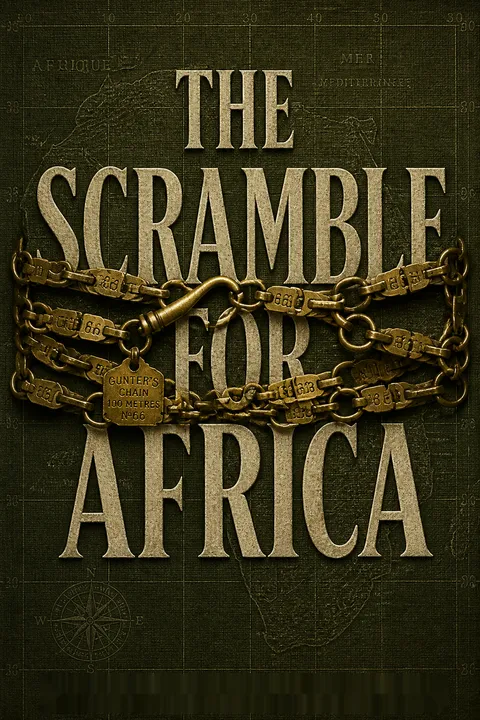
The Scramble for Africa receives overwhelmingly positive reviews (4.15/5) for its comprehensive narrative of European colonization from 1876-1912. Readers praise Pakenham's extensive research and engaging storytelling, though some critique the Eurocentric perspective and limited African voices. The 700+ page work effectively explains how Britain, France, Germany, Belgium, and other powers divided the continent through greed, racism, and political maneuvering. While accessible and detailed, critics note dated language, occasional stereotypes, and assumptions of British historical knowledge. Most consider it essential reading for understanding Africa's colonial legacy and modern borders.
People Also Read



Download PDF
Download EPUB
.epub digital book format is ideal for reading ebooks on phones, tablets, and e-readers.








































