


Key Takeaways
Ask why you're marrying before you ask who to marry
The central thesis reframes the entire search. Gary Thomas, a Christian author who has spent over fifteen years writing about marriage, argues that whether you cry tears of joy or tears of pain on your tenth anniversary depends less on who you marry than on why. He opens with two contrasting scenes: a pastor who calls his marriage "the biggest cross of my life," and a woman who says her husband is her greatest earthly joy.
Settle the purpose first. For Thomas, the right "why" is a shared spiritual mission, drawn from Matthew 6:33 ("Seek first the kingdom of God"). Getting the reason straight, he claims, automatically narrows and clarifies the field of suitable candidates. A wrong motivation, like chasing romantic intensity, steers you toward the wrong person no matter how carefully you evaluate them.
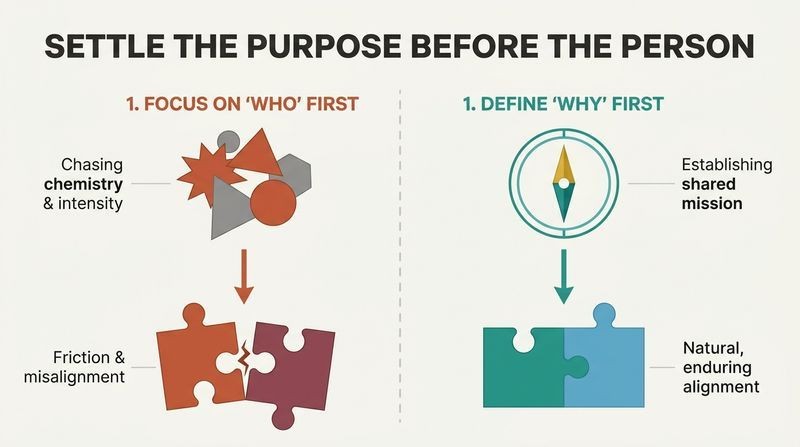
What's striking is how neatly this inverts the standard dating-advice sequence, which obsesses over compatibility checklists and "finding the one." Thomas is essentially applying a purpose-driven design principle: define the mission, then recruit for it. Secular relationship research echoes a version of this. Studies on shared goals and "companionate love" find that couples united by common values and projects outlast those united by passion alone. The framework's limitation is that it assumes both partners agree on the mission's content. For readers outside a Christian worldview, the "why" still translates: know what your marriage is for before choosing a co-founder.
Infatuation is a 12-to-18-month brain high, not a compass
Romantic obsession has a shelf life. Citing anthropologist Helen Fisher, Thomas describes infatuation as a neurochemical state that lights up the same brain regions as cocaine or gambling. It typically lasts twelve to eighteen months, rarely past two years. Its markers: idealizing the beloved, sleeplessness, euphoria, obsessive thinking, and passion that intensifies under opposition.
This state actively sabotages judgment. One woman told Thomas her boyfriend had no flaws at all. He replied that Scripture guarantees everyone stumbles, so she should not marry him until she could name how. Fisher found couples together about twenty-eight months held far more realistic views of partners than those at eight months. Because infatuation cannot assess character, Thomas argues you are "vulnerable and stupid" while in it, and getting engaged in under a year is unwise without trusted outside counsel.
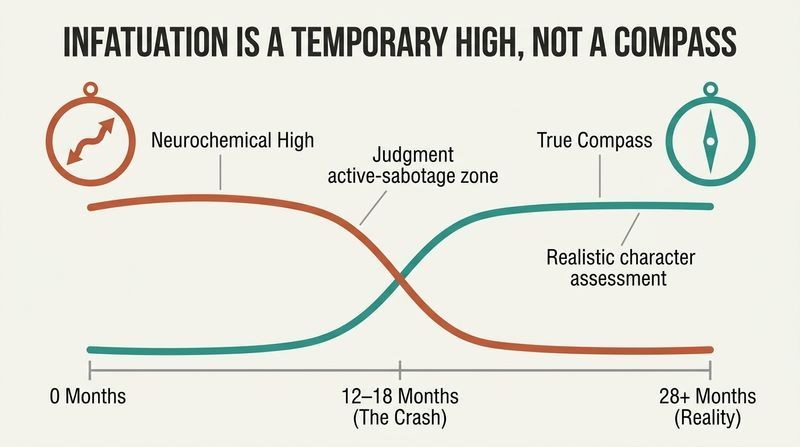
The neuroscience holds up well. Dopamine-driven reward circuitry does drive early romance, and the elevated stress hormone cortisol plus dipped serotonin resemble obsessive-compulsive patterns. Thomas's practical move, treating your own feelings as unreliable data during this window, mirrors advice from behavioral economists about decision-making under emotional arousal. Where he adds theological nuance is insisting the initial rush is involuntary but what you do with it is not. One caution: the twelve-to-eighteen-month figure is an average masking huge variance, and some durable marriages did move fast. The safer takeaway is not a fixed calendar but a demand for corroborating evidence beyond the chemical fog.
Stop hunting for a soul mate; build a sole mate
The soul mate myth has a strange pedigree. Thomas traces the "one destined person" idea to Plato's myth of split-apart beings searching for their lost half. In that story love makes you weaker and more desperate; in the biblical view, he argues, love should make you stronger. A Rutgers study found 94 percent of single women in their twenties want a soul mate and 87 percent expect to find one.
Scripture points to wise choice, not fated discovery. Thomas cites Paul: a woman is "free to marry anyone she wishes," provided he belongs to the Lord. So he proposes the pun "sole mate": someone who walks out (like the sole of a shoe) the daily, sacrificial love of laying down your life for a friend. Love here is a policy and commitment, not an emotion, something you make rather than find.
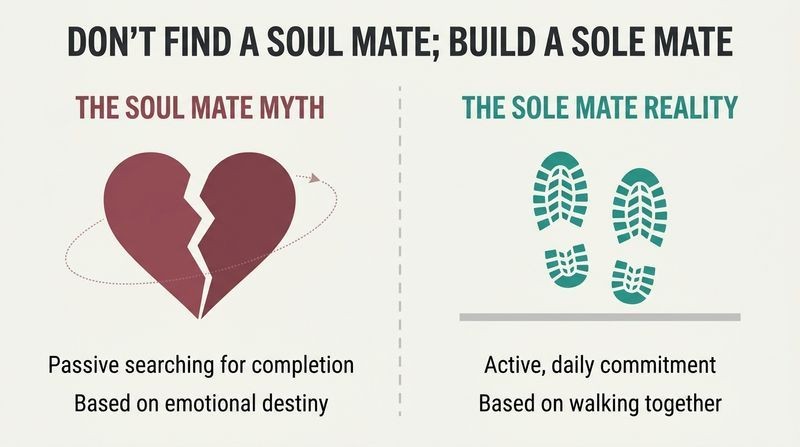
The soul mate critique aligns with research by psychologist Raymond Knee on "destiny beliefs" versus "growth beliefs." People who believe relationships are either meant-to-be or doomed tend to bail at the first serious conflict, while those who believe relationships are cultivated persevere and report higher satisfaction. Thomas's "sole mate" is essentially a growth mindset dressed in Scripture. The wordplay is memorable, though skeptics might note that reframing love as pure commitment risks underselling attraction's genuine role. Thomas concedes elsewhere that sexual interest matters. Still, the core insight, that a good marriage is manufactured stitch by stitch, is both humbling and liberating.
You don't want the exciting partner; you want the durable one
What draws you in rarely sustains you. Thomas warns that the traits driving initial attraction are usually not the ones that serve a fifty-year marriage. Women, he says, gravitate toward dominant men who thrill for a year then frustrate for decades; men fixate on physical beauty, the very thing that changes most with age. He notes wives almost never email him complaining about a husband's looks, only his character.
Weight the qualities you'll value at year ten. He urges women to seek godliness, humor, a strong work ethic, and involved fatherhood over sexual chemistry, and men to prize a woman of virtue and kindness over appearance, citing Proverbs 31's "charm is deceptive, and beauty is fleeting." A pre-marriage relationship sustained by lust, he argues, signals selfishness that will corrode intimacy after the wedding, not fuel it.
This maps onto evolutionary-psychology findings that short-term and long-term mating preferences genuinely diverge, and onto Gottman's research showing that kindness and responsiveness, not passion, predict marital longevity. Thomas's "dominant men thrill then frustrate" claim, drawn from Lieberman and Hatfield, is real but overstated as destiny; plenty of assertive partners are also warm. The gendered framing feels dated and he acknowledges the stereotype risk. The transferable wisdom survives the packaging: run a mental simulation of the ordinary Tuesday a decade out, not the highlight reel of courtship. Character compounds; novelty depreciates. Choosing for the depreciating asset is the predictable error.
Stop waiting for God to deliver a spouse; walk toward the music
Passivity dressed as piety is still passivity. Thomas mocks the attitude of "I'll just wait and God will bring the right one" by translating it to other domains: nobody refuses to apply to college assuming an acceptance letter will simply arrive. He tells of arriving in a quiet German town at night, hearing faint music, and following it to a lively concert. His philosophy: when doors seem closed, walk toward signs of life.
Be intentional and improve yourself. Quoting Steve Watters ("people who marry well aren't lucky in love, they're intentional in their path"), Thomas urges singles to put themselves in places with good candidates, throw parties, use reputable dating sites without shame, get out of debt, get in shape, and learn to hold a conversation. Proverbs 31 assumes an active search: "A wife of noble character who can find?"
This is a refreshingly unspiritualized nudge that echoes findings from economist Paul Oyer, who applied job-search theory to online dating: thin markets and low search effort produce bad matches. Thomas's "walk toward the music" reframes serendipity as a numbers-and-exposure game, consistent with sociological data that most couples meet through expanded social networks or, increasingly, apps. The self-improvement angle also has bite: attractiveness as a partner is partly endogenous, meaning you shape it. The mild tension is theological: Thomas holds providence and agency together, insisting God can lead while you still do the legwork. Determinists on either side may find that balance unsatisfying, but it is practically sound.
Name your marriage style out loud, because silent assumptions collide
Two people can both say "married" and mean opposite things. Thomas argues most couples never articulate the picture of marriage in their heads, then feel betrayed when reality differs. He points to Prince Charles's cringing "whatever in love means" beside Diana's confident "of course," a public preview of two people wanting different things. He offers a catalog of styles to rank honestly: spiritual sole mate, romantic idealist, business buddy, house-and-home, kids-are-us, bohemian, and toxic patterns like the horror-show house (drama-and-makeup cycles) and police partners (one polices, one gets policed).
Discuss it deliberately, with witnesses. He recommends dedicated conversations plus group discussions with other couples, because people confess honestly when peers voice the same thing. If your visions of evenings, kids, location, and church diverge in ways that won't change, that is a deal-breaker, not a detail.
The underlying insight, that unspoken expectations poison relationships, is well supported by communication research on "covert contracts" and by therapist Terrence Real's work on the assumptions partners smuggle into marriage. Thomas's typology is loose and admittedly borrowed and modified from Robert Sternberg's love taxonomy, so it functions better as a conversation starter than a validated instrument. Its real value is forcing tacit preferences into explicit language, a move akin to writing a startup's founding agreement before problems arise. The named toxic patterns (drama addiction, rescuer dynamics) are genuinely useful red flags that map onto codependency literature. The exercise's power is diagnostic honesty, not taxonomic precision.
Test whether they can climb Everest, not just enjoy a picnic
Marriage demands crisis-grade character. Thomas compares marriage to a Mount Everest expedition requiring serious gear, then argues most dating (movies, restaurants, hikes) only proves someone is pleasant during easy times. He recounts real couples: Darell, a bodybuilder who developed multiple sclerosis; Grace, a high-earning executive felled by an autoimmune disorder, leaving her husband as caregiver. A disturbingly high share of marriages with severely disabled children end in divorce.
You're also hiring a parent and inheriting in-laws. Because money, health, and looks can all vanish, character is the only reliable asset. Thomas presses readers to ask if this person is the best possible mother or father for their future children, and to weigh the extended family, since addiction, abuse, and mental illness can echo across generations. He also wants a spouse with "humble spirituality": someone who prays privately, studies Scripture, and admits they need to grow.
The framing usefully stress-tests a decision people make on best-behavior data. Insurance-style thinking, choosing partners who can absorb tail-risk events, aligns with research showing that caregiving strain and financial shocks are top divorce predictors. The generational point has empirical backing too: adverse childhood experiences and addiction show heritable and environmental transmission, so scrutinizing family history is not superstition. One caveat worth flagging: predicting who will show up in a health crisis is genuinely hard, and past behavior under stress is the best available proxy, not a guarantee. Thomas is honest that even wise choices carry risk, which keeps the Everest metaphor from becoming false certainty.
One act of violence while dating should end it, no second chance
Certain traits are non-negotiable filters. Among the skills required to "make" a marriage, Thomas lists humility, forgiveness, healthy conflict resolution, communication, prayer, and the ability to keep friends. On physical abuse he is absolute: one strike and he's out, no second chance. His reasoning is that a boyfriend is on his best behavior while courting; if he cannot control anger now, marriage and children will only intensify the danger.
Watch how conflict gets handled. Healthy signs include owning your share of fault (even just 10 percent), refusing to confess wrongs you didn't commit merely to keep peace, and willingness to seek a counselor when stuck. Unhealthy signs include stonewalling, the silent treatment, and gossiping about your partner to others before talking to them. He compares a spouse afraid of counseling to someone afraid of mechanics: the car will eventually break down.
The zero-tolerance abuse stance is well founded. Domestic-violence research consistently shows escalation over time and that courtship rarely reveals a partner's worst behavior. Thomas's insight that leaving may be the abuser's best chance at getting help aligns with the logic that enabling patterns entrench them. His conflict-resolution markers track Gottman's "Four Horsemen" (criticism, contempt, defensiveness, stonewalling) almost point for point, which lends credibility. The gossip caution is subtler and valuable: venting to third parties before addressing your partner can calcify resentment and recruit allies against the relationship. The mechanic analogy reframes counseling as routine maintenance rather than emergency failure, a helpful destigmatizing move for couples who see therapy as admission of defeat.
Premarital sex floods your brain with bonding chemicals that blind you
Sex is a cement, not a test. Thomas explains that after intimacy the brain releases oxytocin, a bonding neurochemical women carry in far higher baseline amounts. Within marriage this is a brilliant design that renews affection. But while you are still supposed to be evaluating a relationship, that same chemistry cements attachment to someone your reason might reject, launching what he calls a neurochemical war against your judgment.
Compatibility is not the real test. He dismisses the "sexual compatibility" argument: nearly anyone can bring you to orgasm, so enjoying sex proves only that God designed bodies well, not that this person can build a family. Sexual difficulties in marriage stem more from relational issues than physical mismatch, and two kind, committed people can learn to please each other over a lifetime.
The oxytocin story is broadly accurate though simplified; the hormone plays roles in trust, bonding, and stress regulation for both sexes, and its effects are context-dependent rather than a simple love glue. Thomas's stronger point is behavioral, not just chemical: introducing a powerful attachment mechanism during an evaluation phase corrupts the assessment, much as sunk-cost dynamics distort financial decisions. His "cement versus test" distinction is genuinely clarifying. The rebuttal to "sexual compatibility" also lands, since sex therapists routinely treat mismatch as learnable rather than fixed. Readers who reject the religious premise can still extract the decision-hygiene principle: do not let bonding chemistry vote before your judgment finishes deliberating.
A troubled sexual past has consequences forgiveness alone won't erase
Grace forgives; healing still takes work. Thomas states plainly that 80 to 90 percent of people marry as non-virgins, and factoring in pornography the figure of "sexual brokenness" approaches universal. But forgiveness and sanctification differ: a porn-shaped brain has trained itself toward novelty and self-focus, sometimes preferring fantasy to a real spouse. He recounts a young husband who confessed he preferred masturbation to sex with his attractive wife.
Do the repair before, not after, the wedding. He advises seeing at least a year or two of victory over compulsive patterns, ideally with professional counseling, before marrying. His colleague Dr. Wilke tells former strippers and models they can experience sex as "virgins" in God's design, but only after serious therapeutic work. Crucially, once you marry someone with a past, you must never wield that past as a weapon.
The claim that repeated behavior rewires expectation and arousal has real support in the literature on habituation and the Coolidge effect, and clinicians do report that heavy porn use can shift arousal templates. Thomas avoids the trap of shame-only messaging by pairing consequence with genuine hope of change, which is psychologically healthier than either denial or condemnation. The "never use it as a weapon" rule is quietly profound and maps onto forgiveness research showing that rehearsing a partner's offenses predicts relational decay. A fair critique: framing a spouse as effectively "virgin" after healing is theologically motivated and may overpromise clinical outcomes, especially where trauma is involved, which Thomas himself flags as needing more therapy.
Never marry out of mercy, guilt, or sunk cost
Kindness is a terrible reason to say I do. Thomas warns against "mercy marriages," going through with a wedding to avoid hurting someone, dodge embarrassment, or because you've already invested years, bought the dress, or slept together. Committing to fifty years to escape a few weeks of pain, he says, is like fleeing the country to avoid a small jaywalking fine. Sunk cost is not love.
A clean break can free two better futures. He tells of Rowdy and Anna, who fell in love at camp, relocated for each other, and got engaged, but wisely recognized their personalities and life visions clashed. They broke up, painfully. Years later both thrive in ministry and marriage, just not with each other. When ending things, he advises: do it sooner than later, be honest but not a counselor, own the decision without blaming God, and if it's over, say so unambiguously.
Behavioral economics names the exact trap Thomas targets: the sunk-cost fallacy, our tendency to honor past investment rather than evaluate future value. His mercy-marriage taxonomy (fear of the partner's reaction, self-pity, misplaced obligation) reads like a field guide to the emotional pressures that override rational exit. The Rowdy-and-Anna story is effective precisely because it refuses the tidy reconciliation ending, modeling that a "failed" relationship can be a successful decision. The breakup protocol is unusually practical and humane. One tension: distinguishing a mercy marriage from a genuine calling to love a struggling partner is genuinely hard, and Thomas leans on pastoral counsel to draw that line, which places heavy weight on the quality of one's advisors.
Analysis
The Sacred Search is a thesis-driven Christian relationship book aimed at singles, engaged couples, and the dating young adult. Its structural genius is a single pivot: replace the culture's obsessive "who" question with a prior "why" question. Everything downstream (evaluating character, resisting infatuation, testing compatibility, ending bad relationships) flows from that reframe. Thomas writes as a pastor and marriage veteran, blending Scripture, behavioral neuroscience (Helen Fisher, oxytocin, brain-scan studies), cross-cultural data (arranged marriages outperforming love marriages by the second decade), and pastoral war stories.
What elevates the book above genre boilerplate is its willingness to be contrarian toward its own audience. Thomas attacks Christian passivity ("God will bring the one") as hard as he attacks Hollywood romanticism, and he dismantles the Platonic soul mate myth using both philosophy and Paul. His most transferable ideas survive translation out of the religious frame: a good marriage is made not found; feelings are unreliable data during infatuation; character compounds while novelty depreciates; sunk cost is not love.
The limitations are real. The gender framing is dated and essentialist, leaning on averages as if they were rules. The neuroscience is accurate but simplified, and the twelve-to-eighteen-month infatuation figure gets treated more firmly than variance warrants. The complementarian material is presented as one defensible reading while clearly favored. And the promise that wise choosing yields rich marriage is honestly hedged by Thomas himself with the "you won't know your spouse until thirty-five" chapter, which concedes people change unpredictably.
That hedge is the book's quiet sophistication. By subordinating marriage to mission, Thomas builds an antifragile frame: even a disappointing marriage cannot fully derail a life oriented around something larger than the marriage. Whether or not one shares his theology, the psychological architecture, purpose before partner, evidence before emotion, is durable, testable advice.
Review Summary
The Sacred Search received mixed reviews. Many praised its practical advice on choosing a spouse based on character and shared faith rather than emotions alone. Readers appreciated the emphasis on seeking God's kingdom first in relationships. However, some found the tone condescending and overly critical of singles. Critics also noted gender stereotypes and a lack of grace. Despite disagreements, many readers found valuable insights on marriage preparation and recommended it for mature Christians considering relationships.
People Also Read


Glossary
Sole mate
Partner for shared sacrificial missionThomas's deliberate pun on "soul mate." A sole mate is someone who walks out (like the sole of a shoe) the daily, sacrificial love of laying down one's life for a friend, and with whom you can jointly seek first the kingdom of God. Unlike the fated soul mate, a sole mate is chosen wisely and loved by commitment and policy rather than by feeling.
Matthew 6:33 marriage
Marriage built on shared missionThomas's core standard, drawn from the verse "Seek first the kingdom of God and His righteousness." It means choosing a spouse primarily as a partner for a shared spiritual mission rather than for romance, looks, or status. He treats spiritual compatibility on this axis as non-negotiable and argues it is the foundation that keeps couples caring across five to six decades.
Mercy marriage
Marrying from guilt or obligationThomas's term for going through with a wedding for the wrong reasons: pity for the partner, fear of hurting them, embarrassment at calling it off, sunk-cost investment of time or money, or because a couple already had sex. He argues these motives trade a few weeks of pain for a lifetime of regret and are acts of poor stewardship toward oneself, one's future children, and one's community.
Trinity Talk
Three-way God-centered communicationThomas's practice of communication that includes God as the third party. Rather than only sharing past history or events, couples discuss what God is currently revealing, forgiving, and calling them toward. Thomas argues this keeps conversation perpetually fresh because both partners keep becoming new people through spiritual growth, preventing the relational boredom that kills long marriages.
Complementarian vs. egalitarian
Two views of marital gender rolesTwo theological positions on gender roles. Egalitarian marriages reject fixed gender roles, treating partners as fifty-fifty with no designated leader. Complementarian marriages assign the husband a role of loving, sacrificial servant leadership and the wife a helper role. Thomas favors the complementarian view but argues the crucial point is that both partners agree with each other, treating disagreement here as a deal-breaker.
FAQ
What's "The Sacred Search" about?
- Purpose of Marriage: "The Sacred Search" by Gary L. Thomas explores the idea that the purpose of marriage should be about more than just finding the right person; it should focus on why you want to get married.
- Spiritual Foundation: The book emphasizes building a marriage on a spiritual foundation, seeking first the kingdom of God, and aligning with biblical principles.
- Practical Guidance: It provides practical advice for singles on how to make wise decisions in choosing a life partner, focusing on character and shared mission rather than just romantic attraction.
- Avoiding Common Pitfalls: Thomas addresses common misconceptions about marriage and dating, encouraging readers to avoid the pitfalls of infatuation and cultural myths about love.
Why should I read "The Sacred Search"?
- Insightful Perspective: The book offers a fresh perspective on marriage, challenging the conventional focus on finding "the one" and instead emphasizing the importance of understanding why you want to marry.
- Biblical Wisdom: It provides a biblically grounded approach to dating and marriage, making it a valuable resource for Christians seeking to align their relationships with their faith.
- Practical Advice: Readers will find practical advice on how to evaluate potential partners, understand their own motivations, and build a marriage that honors God.
- Personal Growth: The book encourages personal growth and self-reflection, helping readers to become better partners and make more informed decisions about marriage.
What are the key takeaways of "The Sacred Search"?
- Focus on "Why": The book emphasizes the importance of understanding why you want to get married, suggesting that this question is more crucial than who you marry.
- Character Over Chemistry: It advises prioritizing character and shared spiritual goals over mere romantic attraction or chemistry.
- Marriage as a Mission: Thomas encourages viewing marriage as a partnership in seeking God's kingdom, rather than just a source of personal happiness.
- Avoiding Infatuation Traps: The book warns against the dangers of infatuation and the cultural myths that can lead to poor marital choices.
How does Gary L. Thomas define a "sole mate" in "The Sacred Search"?
- Sole Mate Concept: A "sole mate" is someone who walks with you in seeking first the kingdom of God, focusing on spiritual partnership rather than just romantic connection.
- Biblical Love: This concept is rooted in the biblical definition of love, which involves sacrifice and commitment rather than just feelings.
- Shared Mission: A sole mate is someone with whom you can share a life mission, growing together in faith and purpose.
- Long-term Affection: The relationship is built on long-term affection and friendship, which deepens over time, unlike fleeting infatuation.
What advice does "The Sacred Search" offer for evaluating potential marriage partners?
- Character Assessment: Evaluate a potential partner's character, looking for humility, forgiveness, and the ability to handle conflict healthily.
- Spiritual Compatibility: Ensure spiritual compatibility by finding someone who shares your commitment to seeking God's kingdom and growing in faith.
- Relational Skills: Assess their relational skills, such as communication, friendship, and the ability to pray and grow spiritually.
- Avoiding Red Flags: Be aware of red flags like a history of violence, inability to forgive, or lack of respect, which can undermine a marriage.
How does "The Sacred Search" address the issue of premarital sex?
- Neurochemical Impact: The book explains how premarital sex can create a neurochemical fog, making it difficult to objectively evaluate a relationship.
- Biblical Guidance: It emphasizes the biblical teaching that sexual activity should be reserved for marriage, as a way to honor God and protect the relationship.
- Long-term Consequences: Engaging in premarital sex can have long-term consequences, affecting future marital satisfaction and intimacy.
- Encouragement for Purity: Thomas encourages readers to pursue sexual purity, suggesting that it leads to a more fulfilling and God-honoring marriage.
What are the dangers of marrying for the wrong reasons according to "The Sacred Search"?
- Mercy Marriages: Marrying out of pity or obligation, rather than genuine love and compatibility, can lead to long-term dissatisfaction and regret.
- Cultural Myths: Believing in cultural myths about love and marriage, such as the idea of a "soul mate," can result in poor marital choices.
- Infatuation: Relying on infatuation or romantic feelings as the basis for marriage can lead to disappointment when those feelings fade.
- Lack of Purpose: Entering marriage without a shared mission or purpose can result in a lack of fulfillment and direction.
How does "The Sacred Search" suggest handling family and external influences in marriage decisions?
- Parental Advice: Consider parental and pastoral advice, as they often have valuable insights and want the best for you.
- Cultural Pressures: Be aware of cultural pressures and myths that can influence your decision-making, and focus on biblical principles instead.
- Extended Family: Evaluate the potential influence of extended family, as they can play a significant role in your future family dynamics.
- Community Support: Seek support from your faith community to help you make wise and informed decisions about marriage.
What role does prayer play in "The Sacred Search"?
- Seeking Guidance: Prayer is emphasized as a crucial tool for seeking God's guidance in making wise marital choices.
- Spiritual Growth: It is a means of growing spiritually and aligning your desires with God's will for your life and relationships.
- Discernment: Prayer helps in discerning the character and suitability of a potential partner, beyond just emotional attraction.
- Foundation for Marriage: A strong prayer life is seen as foundational for a healthy and God-honoring marriage, providing strength and unity.
What are the best quotes from "The Sacred Search" and what do they mean?
- "Seek first the kingdom of God": This quote encapsulates the book's central message that marriage should be about pursuing God's kingdom and righteousness.
- "A good marriage isn’t something you find; it’s something you make": This emphasizes the idea that marriage requires effort and intentionality, rather than just finding the right person.
- "Marriage is about more than you": This quote highlights the importance of considering the broader impact of marriage on family, community, and God's kingdom.
- "Infatuation is a dangerous and false god": This warns against relying on infatuation as the basis for marriage, as it can lead to poor decisions and disappointment.
How does "The Sacred Search" address the concept of compatibility in marriage?
- Spiritual Compatibility: The book stresses the importance of spiritual compatibility, sharing a commitment to seeking God's kingdom.
- Relational Compatibility: It advises finding someone whose personality and character you genuinely like and respect, rather than just focusing on similarities.
- Recreational Compatibility: Shared interests and activities can enhance intimacy and satisfaction in marriage, providing common ground for connection.
- Environmental Compatibility: Discussing and agreeing on lifestyle preferences, such as where to live and how to raise children, is crucial for long-term harmony.
What is the significance of the "mission first, marriage second" concept in "The Sacred Search"?
- Primary Focus: The concept emphasizes that the primary focus of marriage should be on fulfilling God's mission and purpose, rather than just personal happiness.
- Resilience in Trials: By prioritizing mission, couples can remain resilient in the face of marital challenges, knowing their purpose extends beyond personal satisfaction.
- Spiritual Growth: This approach encourages spiritual growth and maturity, as couples work together to seek God's kingdom and righteousness.
- Eternal Impact: A mission-focused marriage aims for an eternal impact, contributing to God's work in the world and leaving a lasting legacy.
About the Author
Other books by Gary L. Thomas


Download PDF
Download EPUB
.epub digital book format is ideal for reading ebooks on phones, tablets, and e-readers.








































