
Key Takeaways
1. The Odyssey's Enduring and Protean Influence
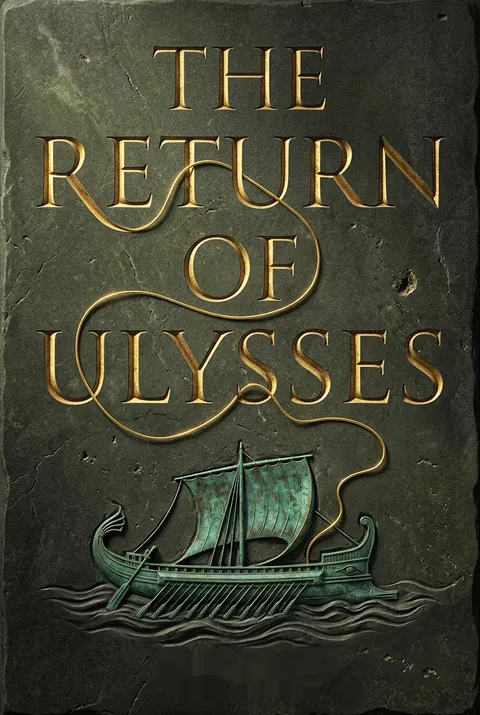
The Return of Ulysses represents a major contribution to how we assess the continuing influence of Homer in modern culture.
Timeless appeal. For nearly three millennia, Homer's Odyssey has captivated audiences, deeply shaping our imagination and cultural values. Its enduring presence is evident across a breathtaking range of material, from high culture to popular media, spanning continents and diverse artistic forms like literature, film, and opera. This book explores the profound reasons behind this immense cultural footprint.
Dynamic reception. The Odyssey's influence is not static; it evolves with each era, reflecting contemporary concerns such as feminism, post-colonialism, and modernism. Each new artistic or critical response to the epic subtly alters its place within the "ideal order" of cultural history, as T.S. Eliot observed. This dynamic interplay ensures the poem remains perpetually relevant, continuously re-shaped by the very cultures it inspires.
Generic shape-shifter. The Odyssey itself is a "generic shape-shifter," transforming from heroic epic into quest narrative, revenge tragedy, domestic comedy, romance, and Bildungsroman. This protean quality, symbolized by the sea-divinity Proteus, allows it to absorb and mutate into countless forms, making it a fertile ground for new artistic expressions and a constant source of inspiration for creative minds across the globe.
2. A Foundational Text for Narrative and Oral Tradition
The Odyssey is, in other words, untrue narratives that offer pleasure are celebrated for their own sake.
Birthplace of fiction. The Odyssey is often hailed as the "first novel of Europe" and the archetype of all fiction, celebrated for its complex narrative structure and its embrace of pleasurable, even untrue, stories. Its juxtaposition of time levels, digressions, and embedded anecdotes, along with its self-conscious exploration of storytelling, has made it a textbook example for creative writing and a precursor to modern narrative techniques.
Oral roots. Originating in an oral tradition, the Odyssey possesses distinctive features like recurring epithets, formulaic phrases, and ring composition, which have fascinated cognitive psychologists and computer programmers studying memory. This oral genesis has also elevated the status of other oral epic traditions worldwide, from the South Slavic guslars studied by Milman Parry to the African griots and even modern Rap music.
Translation's challenge. Translating the Odyssey's mesmerizing hexameters and nuanced Greek into other languages has always been a formidable task, yet it has been rendered into dozens of tongues, making it globally accessible. The challenge of capturing its "much-turning" hero, Odysseus (polútropos), in translation highlights the poem's rich layers of meaning and its continuous re-interpretation across linguistic and cultural boundaries.
3. A Lens for Exploration and Colonial Critique
The Cyclops is the original man-eater, but reports of cannibalism the world over have been exaggerated.
Frontier archetype. Odysseus, the mythical explorer, embodies the human impulse to venture into unknown territories, making the Odyssey a foundational text for narratives of discovery and expansion. From Columbus's journals to Western films and space odysseys like 2001: A Space Odyssey, the epic has symbolized the thrill and danger of traversing new frontiers, whether geographical or cosmic.
Colonial critique. While inspiring tales of conquest, the Odyssey also serves as a powerful lens for critiquing colonial conflict and racism. The Cyclops episode, traditionally seen as a triumph of "manly wisdom over brutish force," has been reinterpreted in post-colonial theory. Figures like the Cyclops are now seen as victims of colonial arrogance, representing radical difference and the "other" subjected to Western domination.
Rehabilitating the Cyclops. Modern interpretations, influenced by thinkers like Adorno, Horkheimer, and Aimé Césaire, challenge Odysseus's heroism, portraying him as a trespasser who abuses his intellect. The Cyclops, once a symbol of savage barbarism, is now re-envisioned as a victim of racist oppression or a marker of radical alterity. This shift reflects a broader re-evaluation of the classical canon in a post-colonial world.
4. Odysseus: A Complex Archetype of Masculinity
There is scarcely a manly pursuit for which he does not offer himself as an idealized forerunner.
Intellectual hero. Odysseus stands out among Greek heroes for his distinctive blend of cunning intelligence (mētis), self-control, and versatility, representing an intellectual advance over the simpler warriors of the Iliad. His ability to navigate complex situations with strategic planning and covert operations, akin to modern superheroes like Batman, defines a unique model of heroism.
Renaissance man. Odysseus is the archetypal "Renaissance man," skilled in diverse pursuits from carpentry and navigation to farming and athletics. This multifaceted competence has made him an enduring ideal for various fields, from business management (Management By Objectives) to national leadership, offering a mythic resonance for figures from humble backgrounds to quasi-royal dynasties.
Problematic leadership. Despite his idealized status, Odysseus's leadership is not without flaws; his negligence leads to the deaths of his men, and his poor personnel management is occasionally highlighted by dissident voices within the poem. This complexity allows for nuanced interpretations of his character, challenging simplistic notions of heroism and reflecting modern anxieties about leadership and accountability.
5. Reimagining Women: From Penelope's Loom to Erotic Power
The Odyssey glosses over all its hero’s sexual unions, not only with Penelope and Circe, but in Calypso’s ‘arching caverns’ (5.154–5).
Penelope's enigma. Penelope's loom, a central symbol, represents both female collaboration and the demarcation of gender roles. Her intelligence and loyalty are celebrated, yet her emotional complexity and motivations remain enigmatic, prompting centuries of speculation. This ambiguity has made her a powerful figure for feminist reinterpretations, challenging patriarchal narratives.
Feminist re-readings. Modern feminist scholars and writers have reclaimed Penelope, seeing her unweaving as a metaphor for women's resistance to enforced silence and their quest for self-determination beyond traditional roles of marriage and motherhood. Authors like Margaret Atwood and Inge Merkel have given Penelope agency, intelligence, and even flaws, transforming her into a complex, often cynical, post-feminist heroine.
Eroticized figures. Despite the poem's narrative restraint regarding sex, its female figures—Circe, Calypso, Nausicaa, and even Penelope—have been highly eroticized in later art and literature. From Petronius's bawdy Satyrica to Victorian burlesques and modern cinema, these women embody a spectrum of sexual fantasy, reflecting societal views on female desire, temptation, and power, and inspiring explorations of diverse sexualities.
6. A Mirror for Class and Social Dynamics
The Odyssey insists that its audience remember that there, but for the grace of the gods, go they.
Diverse social strata. Unlike the Iliad, the Odyssey features a diverse cast beyond the aristocracy, including loyal slaves like Eumaeus and Eurycleia, ordinary rowers, and beggars. This broad social canvas, often inspected from the "bottom up" through Odysseus's disguise, has made the poem susceptible to class-conscious readings, highlighting the fragility of liberty and the realities of poverty.
Radical interpretations. While some scholars view the Odyssey's class politics as conservative, others emphasize its radical potential, particularly in its portrayal of social mobility and the critique of aristocratic excess. From 18th-century ballad operas setting the story in working-class taverns to 19th-century Greek novels featuring beggar heroes, the epic has been adapted to articulate progressive political points.
Modern cinematic realism. Contemporary films transplanting the Odyssey's plot to modern, often impoverished, settings frequently feature lower-class Odysseus figures. Movies like Sommersby, Cold Mountain, and O Brother, Where Art Thou? use the epic framework to explore social deprivation, the trauma of war, and the search for identity within marginalized communities, often in the American South.
7. The Philosophical Odyssey of the Mind
Philosophie ist eigentlich Heimweh, ein Trieb, überall zu Hause zu sein.
Cerebral hero. Odysseus's intellect, celebrated in his epithets like polumētis ("capable of many kinds of cunning"), has made him a central figure in philosophical discourse. From Plato's use of him to illustrate self-control to Wordsworth's comparison of Newton's mind to Odysseus's voyaging, the hero embodies the pursuit of knowledge and the definition of cerebral activity.
Metaphysical journey. The Odyssey is a profound metaphysical text, exploring questions of being, knowledge, and ethics. Odysseus's rejection of immortality and his journey through physical space have been allegorically interpreted as the soul's journey across time, a quest for spiritual homeland, or the evolution of consciousness, as seen in Neoplatonist readings and modern philosophical reflections on Heimat.
Truth and deception. The poem's fascination with disguise and recognition, and its celebration of "untrue narratives that offer pleasure," raises fundamental epistemological questions about how we acquire true knowledge and the nature of truth itself. This aspect has influenced logicians like Frege and inspired self-reflexive narratives that explore the complex relationship between reality, perception, and storytelling.
8. Exile, Nostalgia, and the Quest for Home
Ithaka has given you your lovely journey. Without Ithaka you would not have set out. Ithaka has no more to give you now.
The pain of nostos. The Odyssey's central theme of nostos (return home) resonates deeply with the human experience of exile and longing. This "home pain" (Heimweh) has been a powerful point of identification for countless migrants, refugees, and displaced persons, from the Ugandan singer Geoffrey Oryema to the Greek diaspora and characters in Milan Kundera's Ignorance.
Spiritual biography. Cavafy's iconic poem "Ithaca" transformed the journey into a metaphor for life's spiritual quest, where the value lies in the journey itself, not just the destination. This idea of "Ithaca of the Mind" underpins modern understandings of the Odyssey as a spiritual biography, a journey of self-discovery and maturation that transcends mere physical return.
Collective displacement. The Odyssey's narrative of displacement has been reclaimed by communities grappling with collective trauma, such as the transatlantic slave trade. Derek Walcott's Omeros re-patterns the African diaspora after Odysseus's exile, creating a poetic bond among all displaced persons. This universalization of Odysseus's suffering makes him a paradigmatic figure for the global village's experience of displacement.
9. The Bloodbath: A Contested Act of Violence
Old woman, rejoice in silence; restrain yourself, and do not make any noise about it; it is an unholy thing to vaunt over dead men.
Brutal climax. The slaughter of the suitors in Book 22 is one of the Odyssey's most visceral and controversial episodes, depicting Odysseus's brutal retribution with cinematic detail. This scene, while a favorite in antiquity, has been a source of discomfort for modern audiences, prompting diverse interpretations ranging from righteous justice to psychotic savagery.
Moral ambiguity. The bloodbath's five key features—strategic ambush, tension, moral justification, absurd odds, and extreme gore—have exerted an incalculable indirect influence on action movies and Westerns, particularly those of Clint Eastwood. However, the moral probity of Odysseus's violence is often questioned, as he becomes as ruthless as his adversaries, reflecting societal anxieties about the ethics of revenge.
Modern re-evaluations. Contemporary adaptations frequently problematize or erase the violence. Films like Atanarjuat: The Fast Runner offer pacifist resolutions, while plays like Wyspianski's Return of Odysseus portray the hero as psychotically disturbed. These reinterpretations reflect a post-war sensibility that condemns violence and explores the psychological trauma of soldiers, challenging the traditional heroic justification for bloodshed.
10. Dialogue with Death: The Enduring Nekuia
Souls of the dead are not to be called up without blood, or by the application of some part of their relict Body.
Journey to Hades. Odysseus's nekuia, his journey to the Underworld and dialogue with the dead, is a foundational myth for confronting mortality and the afterlife, influencing works from Dante's Inferno to modern literature. The terrifying rituals, including blood libations, have fascinated occultists and provided a framework for exploring the human psyche's hidden depths.
Modernist horror. The nekuia became a central myth for Modernist authors, symbolizing the material and spiritual dislocations of Western capitalism and the hellish trenches of World War I. Figures like Elpenor, the ordinary man who dies an unnecessary death, resonated with poets commemorating the unsung dead, transforming the Underworld into a metaphor for the collective trauma of the 20th century.
Post-Holocaust consciousness. After World War II, the nekuia took on new, profound significance, becoming identified with the shape of individual and collective subjectivity in a post-traumatic age. Primo Levi's accounts of Auschwitz, framed as a katabatic journey through Dante's Inferno, illustrate how the Holocaust irrevocably changed the meaning of death and survival, making Odysseus's "much-enduring" epithet resonate with survivors of genocide.
People Also Read


Download PDF
Download EPUB
.epub digital book format is ideal for reading ebooks on phones, tablets, and e-readers.








































