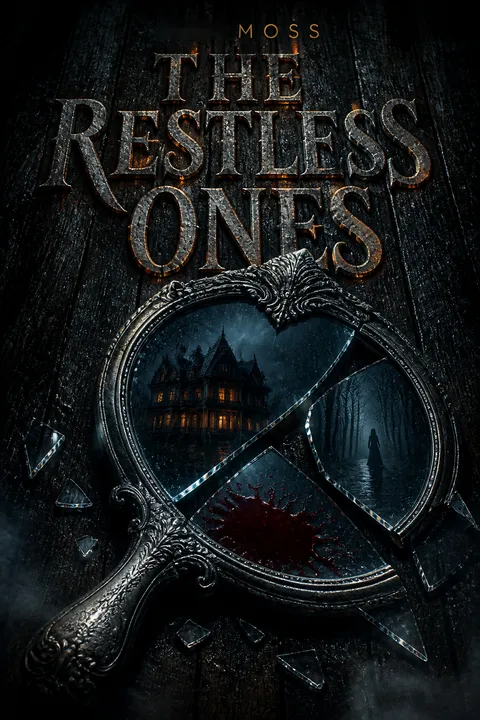

Plot Summary
Midnight Call, Bloodied Doorway
Whitley Adams races through the Oregon night after her younger sister Nora calls, pleading to be picked up from a remote coastal mansion. Arriving at the imposing Hartnett House, Whitley's annoyance turns to horror when a blood-soaked girl staggers out the front door and collapses at her feet. The house, once a place of privilege and laughter, is now a scene of carnage. Whitley's world fractures in an instant, her mind reeling between disbelief and terror as she realizes something unspeakable has happened inside. The night's events will mark her forever, setting the stage for years of trauma, guilt, and unanswered questions.
Four Years of Shadows
Four years after the massacre, Whitley is a shell of her former self, haunted by nightmares and visions of the dead girls. She lives in isolation, her relationships frayed, her mind plagued by PTSD. Nora, meanwhile, has turned the tragedy into a public narrative, writing a bestselling book and thriving in the spotlight. When Nora proposes they return to Hartnett House for a documentary, Whitley resists, unable to face the ghosts of her past. Yet the pull of closure—and financial desperation—slowly erodes her resolve. The sisters' coping mechanisms diverge, exposing deep rifts and resentments that threaten to consume them both.
Sisters and Survivors
Nora arrives unannounced, pushing Whitley to join the documentary project. Over bagels and tense conversation, their differences are laid bare: Nora's performative healing versus Whitley's raw, unprocessed pain. Nora insists the return will be cathartic, but Whitley suspects ulterior motives. The sisters' dynamic is fraught with jealousy, guilt, and a lifetime of misunderstandings. When Whitley finally agrees to meet the director, Heather Mosley, she does so with trepidation, sensing that the journey back to Hartnett House will dredge up more than just memories.
Return to Hartnett House
The sisters, accompanied by Heather and her film crew, drive the winding road to the now-abandoned mansion. The house looms, unchanged yet heavy with the weight of tragedy. Whitley's anxiety mounts as they prepare to film, the camera's gaze feeling as invasive as the house's own. The crew's curiosity is palpable, their questions tinged with morbid fascination. As Whitley steps onto the porch, every detail—the missing garden gnomes, the echo of screams—threatens to pull her under. The past is no longer dormant; it waits, hungry and restless.
The Massacre Revisited
The narrative fractures as Whitley relives the night of the massacre: the blood, the bodies, the masked killer. She recalls her desperate attempts to save her sister and the wounded girl, the frantic call to 911, and the brutal confrontation with the murderer. The violence is immediate and visceral, the trauma fresh as ever. Whitley's actions—fighting back, killing the attacker—leave her both a survivor and a participant in the horror. The memory is a wound that refuses to heal, shaping every moment of her present.
Hauntings and Hallucinations
Inside the house, Whitley is beset by visions: the dead girls appear in corners, their wounds accusing and unhealed. The crew experiences strange phenomena—unexplained noises, fleeting shadows, a chilling voice caught on audio. Whitley's grip on reality falters as the house's oppressive atmosphere amplifies her fears. The line between psychological trauma and supernatural haunting blurs, leaving everyone on edge. The house is not just a backdrop; it is an active participant, feeding on the pain of its visitors.
The Interview Trap
Heather's interviews with Whitley and Nora are anything but routine. She digs into their childhoods, their relationship, and the events of the massacre with unsettling precision. Whitley feels exposed, her vulnerabilities weaponized for the camera. Nora's answers are evasive, her composure increasingly suspect. Heather's true interest seems to lie beneath the surface, hinting at a personal stake in the story. The interviews become a battleground, old wounds reopened and new suspicions sown.
Ghosts in the Audio
Reviewing the day's footage, the crew discovers a chilling anomaly: a voice, not belonging to any of them, whispers "she's here" during a key moment. The revelation unsettles everyone, especially Whitley, who feels the house's malevolence closing in. The group's camaraderie fractures as fear and distrust take hold. The supernatural seems undeniable, yet the true danger may be more human—and closer—than anyone realizes.
Old Wounds, New Fears
As night falls, Whitley and Nora's simmering resentments boil over. Accusations fly: about childhood betrayals, parental favoritism, and the ways they've each exploited or ignored their trauma. The argument is raw, exposing the deep scars left by both the massacre and their upbringing. Whitley's sense of isolation intensifies, while Nora's bravado begins to crack. Outside, the storm builds, mirroring the chaos within.
Nightfall: Secrets Unravel
Whitley awakens to find Nora missing and the house eerily empty. Searching for her sister, she stumbles upon the crew's sinister plot: Heather and her team have lured the sisters back not for healing, but for vengeance. Heather and her brother Hunter reveal themselves as siblings of one of the murdered girls, convinced that Nora was complicit in the killings. The sisters are bound and interrogated, the line between victim and perpetrator blurring as old secrets come to light.
Basement Revelations
In the basement, Heather confronts Nora with damning evidence: a video of her with the killer, inconsistencies in her story, and the murder weapon itself. Nora's denials grow desperate as the crew's anger turns violent. But the house has its own agenda. Ghostly apparitions appear, and the crew is picked off one by one by an unseen force—possibly the vengeful spirit of the killer, or the restless dead. Whitley's visions intensify, offering glimpses of the true events of the massacre.
The True Face of Evil
As chaos erupts, Whitley is forced to confront the reality: Nora was not just a survivor, but an architect of the massacre. Driven by jealousy, failure, and a toxic relationship with the killer, Nora orchestrated the deaths of her friends and manipulated Whitley into playing the hero. The house, now a crucible of vengeance, turns on Nora. The spirits of the murdered girls and the killer himself manifest, enacting a final, bloody reckoning.
Sister Against Sister
Wounded and desperate, Whitley and Nora face off in the basement. Their fight is brutal, fueled by years of resentment and betrayal. Whitley, aided by the ghosts of the victims, manages to survive Nora's attack. Heather, driven by her own grief and rage, delivers the final blow, avenging her sister's death. The cycle of violence is complete, but at a terrible cost.
The Restless Ones
With the house littered with bodies—both living and dead—Whitley and Heather, the only survivors, stagger into the rain-soaked dawn. The house, its hunger sated, finally falls silent. Whitley, forever changed, leaves behind the ghosts of her past, but knows the scars will never fully heal. The story ends with the house at rest, its secrets buried for now, but the trauma it inflicted echoing in the lives of those who survived.
Vengeance and Release
As the authorities arrive and the story is pieced together, Whitley and Heather must reckon with what they've done—and what was done to them. The documentary footage, the confessions, and the supernatural events defy easy explanation. The survivors are left to navigate a world that will never understand the true horror of Hartnett House. The restless dead may finally sleep, but the living must carry the burden of memory.
Epilogue: The House at Rest
In the aftermath, Hartnett House stands empty, its secrets locked away. The camera's red light, once a silent witness, flickers out. The ghosts, their vengeance fulfilled, fade into the shadows. For the first time in years, the house is truly at rest. But for Whitley, the journey toward healing has only just begun.
Analysis
A modern gothic of trauma, complicity, and the hunger for narrativeThe Restless Ones is a chilling meditation on the ways we process, exploit, and are haunted by violence. Through its layered structure and shifting perspectives, the novel interrogates the ethics of storytelling—how survivors, perpetrators, and outsiders all seek to control the narrative of tragedy. The haunted house is both literal and psychological: a space where the past refuses to die, and where the living must reckon with the ghosts of their own making. The story's greatest horror lies not in its supernatural elements, but in its portrayal of how trauma warps relationships, erodes trust, and breeds new violence. The final catharsis is hard-won and incomplete; the dead may rest, but the living must carry the weight of memory, guilt, and the knowledge that some wounds never truly heal. In an age obsessed with true crime and the spectacle of suffering, The Restless Ones asks: who owns a story of pain, and what is the cost of telling it?
Review Summary
People Also Read
Characters
Whitley Adams
Whitley is the emotional core of the story—a woman shattered by trauma, guilt, and the burden of survival. Her relationship with Nora is fraught with resentment and longing for connection, complicated by their shared history and divergent coping mechanisms. Whitley's psychological landscape is marked by isolation, hypervigilance, and recurring hallucinations of the massacre's victims. Her journey is one of reluctant confrontation: forced to return to the site of her greatest pain, she must face not only the ghosts of the dead but the living specter of her sister's betrayal. Whitley's arc is one of painful growth, as she moves from passive victim to active agent, ultimately finding a measure of agency and closure, though not without profound scars.
Nora Adams
Nora is Whitley's younger sister and the story's most complex figure—a survivor who has turned tragedy into personal gain, yet whose composure masks deep-seated insecurity and sociopathy. Outwardly, Nora is charming, successful, and seemingly untroubled by the past, but beneath the surface lies a capacity for cruelty and self-preservation at any cost. Her relationship with Whitley is defined by rivalry, manipulation, and a desperate need for validation. Nora's involvement in the massacre is gradually revealed, exposing her as both victim and perpetrator. Her psychological profile is one of narcissism, denial, and a chilling ability to rationalize her actions, culminating in a final, violent confrontation with her sister.
Heather Mosley
Heather is the documentary filmmaker whose true motives are slowly unveiled. Initially presenting as professional and detached, Heather is in fact the sister of one of the massacre's victims, driven by a need for answers and retribution. Her interactions with Whitley and Nora are probing, manipulative, and increasingly hostile as her personal stake becomes clear. Heather's psychological journey is one of grief weaponized into obsession, her quest for justice blurring into vengeance. She is both a catalyst and a participant in the story's final violence, her actions shaped by loss, anger, and a desperate need for closure.
Hunter Mosley
Hunter, Heather's brother, is a quieter but equally driven presence. His grief over his sister's death manifests as simmering anger and a willingness to cross moral lines in pursuit of the truth. He is instrumental in the plan to confront and punish Nora, but is ultimately a tragic figure—caught between justice and the destructive pull of revenge. Hunter's psychological state is marked by unresolved trauma, loyalty to his family, and a growing sense of helplessness as events spiral out of control.
Kenneth Masterson (The Killer)
Kenneth is the original perpetrator of the Hartnett House massacre, a figure whose presence lingers both in memory and, possibly, as a supernatural force. His relationship with Nora is central to the story's mystery, revealing a toxic, codependent bond that fuels the violence. In death, Kenneth becomes a symbol of the house's malevolence—a restless spirit enacting vengeance on the living. Psychologically, he embodies the seductive allure of evil, the danger of unchecked charisma, and the enduring impact of trauma.
The Restless Victims (Emily, Bethany, Karen, Hadley)
The four murdered girls are both literal and figurative ghosts—haunting Whitley's psyche and the house itself. Each represents a lost future, a life cut short by betrayal and violence. Their appearances in visions and supernatural events serve as reminders of unresolved guilt, the cost of survival, and the need for justice. Hadley, in particular, is given depth as Heather and Hunter's sister, her death the emotional fulcrum of the story's revenge plot.
Julien
Julien is part of Heather's crew, initially a bystander but ultimately a victim of the house's violence. His presence underscores the dangers of voyeurism and the thin line between observer and participant. Julien's fate is a grim reminder that proximity to trauma can be fatal, even for those who believe themselves detached.
Nick
Nick's role is to document the unseen, but he becomes a believer when confronted with the house's supernatural phenomena. His technical expertise is no defense against the violence that erupts, and his death is both shocking and symbolic—the silencing of those who seek to expose the truth.
Hadley Hartnett
Hadley is the most prominent of the victims, her death the spark for Heather and Hunter's quest for justice. In life, she was a friend to Nora and the others; in death, she becomes a guiding spirit, aiding Whitley in the final confrontation. Hadley's presence is a reminder of the enduring bonds of friendship and the power of the past to shape the present.
The House
Hartnett House is more than a setting—it is a character in its own right. The house absorbs and amplifies the pain, guilt, and violence of its inhabitants, becoming a crucible for supernatural and psychological horror. Its influence is pervasive, shaping events and refusing to let the past rest. The house's ultimate silence at the end is both a relief and a warning: some wounds never truly heal.
Plot Devices
Nonlinear Narrative and Flashbacks
The story weaves between present-day events and flashbacks to the night of the massacre, mirroring Whitley's fractured psyche. This structure heightens suspense, gradually revealing the truth behind the killings and the sisters' relationship. The use of documentary interviews as a framing device allows for unreliable narration, shifting perspectives, and the slow unmasking of hidden motives.
Unreliable Narration and Psychological Horror
Whitley's PTSD and hallucinations create ambiguity: are the hauntings real, or manifestations of her damaged mind? The narrative leverages this uncertainty, keeping readers off-balance and deepening the sense of dread. The house itself becomes a psychological antagonist, its influence both literal and metaphorical.
Supernatural Elements and Foreshadowing
The recurring appearances of the murdered girls and the killer's spirit foreshadow the story's climax, where the supernatural intervenes to mete out vengeance. Audio anomalies, unexplained noises, and shifting shadows build tension and suggest that the house's evil is not confined to memory. The garden gnome, a mundane object, becomes a symbol of both violence and agency, linking past and present.
The Documentary and Meta-Narrative
The documentary project serves as both a plot engine and a commentary on the commodification of trauma. Heather's probing questions, the crew's voyeurism, and Nora's self-mythologizing all interrogate the ethics of turning real pain into entertainment. The camera's unblinking eye is both witness and accomplice, its final extinguishing a metaphor for the end of the story's hold on its survivors.
Sibling Rivalry and Cycles of Violence
The central conflict between Whitley and Nora is mirrored in Heather and Hunter's quest for justice. The story explores how trauma is inherited, how love curdles into resentment, and how the desire for closure can become indistinguishable from the urge for revenge. The sisters' final confrontation is both personal and archetypal—a battle for identity, agency, and the right to define the past.
About the Author
Other books by Abe Moss
Download PDF
Download EPUB
.epub digital book format is ideal for reading ebooks on phones, tablets, and e-readers.








































