
Plot Summary
1. Arrest and Betrayal Unfold
Reign Foster, daughter and sister to a family of law enforcement, is unceremoniously arrested in front of the men she loves—bikers known as the Kings of Carnage. Accused of a violent crime she knows nothing about, Reign's world shatters as she glimpses the horrified and protective faces of her family and lovers. This moment, surreal and public, sets the stage for the emotional and psychological unraveling to come. What began as a life on the periphery of chaos suddenly turns into a maelstrom, with Reign as both a pawn and a queen in a game she doesn't fully understand. The world tips, and Reign's fight to survive and be believed begins, warping once-familiar bonds and drawing out secrets long hidden.
2. Foster Bonds and Police Secrets
The Foster family, a lineage of badge-wearers, debates the slippery boundary between loving protection and overbearing surveillance. Reign is the youngest, with five imposing brothers and a protective father, all serving as law-keepers and warriors. The family home is warm but fraught, their conversations packed with coded warnings about the dangers that lurk outside and the gray areas inside their own police work. Even as they crack jokes and tease, Reign feels an undercurrent of unease—especially with Captain Garrett, whose advances feel more threatening than flattering. The power of family is both a shield and a shackle as Reign's journey launches from the edge of this tight, complex world.
3. The Stalker First Strikes
At first, Reign ignores the anonymous bouquets and chocolates left on her doorstep, chalking it up to friendly neighbors or family. But as the gifts escalate to suggestive lingerie and a letter dripping with religious condemnation and threats of "rebirth," dread floods her life. The stalker's words are invasive, intimate, and fixated, escalating her sense of vulnerability and paranoia. Her police-trained instincts flare; she calls her brothers, but quickly realizes her own safety is a fragile illusion. This chilling reality destabilizes Reign's world—the threatening gifts highlight how quickly the mundane can morph into the malicious, and foreshadow a personal war that's only just begun.
4. Kings of Carnage Revealed
Motorcycles, power, and violence form the backdrop as Reign is drawn into the chaotic orbit of the Kings of Carnage, led by co-presidents Bates, Priest, and, soon to return, Saint. The club's history is as bloody as it is charismatic; leadership changed hands through violence, swear loyalty, and a code forbidding harm to women and children. The MC is both a refuge and a threat: full of larger-than-life personalities, shifting allegiances, and rules that serve some but endanger others. Reign is at once attracted and wary, knowing her connection to these men—Bates's menace, Priest's ancient wounds, Saint's shadowed heroism—could save or doom her.
5. Shadows and Suspicion
Tensions crackle as Reign's safety feels increasingly in question, not just from her stalker, but also from Captain Garrett, whose advances grow more menacing. Family and club power structures intersect as suspicion seeps into daily life. Reign's MC connections deepen through both banter and violence, and she senses she walks a razor's edge between being protected and being caught. The stalker's presence is everywhere and nowhere, and Reign's own agency is under fire—from those sworn to protect her and those who would possess her.
6. Reign Under Siege
The stalker escalates—Reign's home is broken into, her sanctuary violently trashed. Photos of herself, taken in secret, are displayed, signaling an obsession well past its boiling point. Her family doubles down on their protection, but the threat has penetrated too deeply; even brotherly love is no defense against this invasion. Forced to abandon her beloved home, Reign must reckon with the loss of agency, the violation of trust, and the chilling reality that the line between her private life and public danger is gone.
7. Bloodlines and Brotherhood
As Saint emerges from prison, his story of wrongful imprisonment for defending a stranger collides with the MC's bloody past. The club's presidents revisit old traumas—loyalty, betrayal, and a system rigged for power, not justice. Saint's return signals both hope and uncertainty. The MC is a place where chosen family can heal or perpetuate cycles of violence, where men haunted by history are forced to choose between vengeance and virtue. Reign and Saint's fates become intertwined, both hunted and haunting in their own right.
8. Love Amid Chaos
Love, lust, and violence braid together as Reign becomes the "old lady" of the Kings' triad—Priest, Bates, and Saint. Their relationship is tempestuous, charged with power play, jealousy, and a surprising tenderness hidden beneath rough insistence. Amid the threat, the MC's code of loyalty—and Reign's refusal to simply be claimed, used or saved—produces a combustible, passionate mix. Their love offers sanctuary, but also heightened danger, amplifying Reign's vulnerability and her need to claim power on her own terms.
9. Safe Havens Shattered
Not even the MC compound is safe as the stalker's reach grows, manipulating minds and sowing discord among both family and bikers. Reign, forced into a defensive crouch, arms herself physically and emotionally, but paranoia strains every relationship. The MC's female "old ladies" prove as treacherous as the world outside, and sisterhood is no easy road. Acts of defiance and violence become the way to earn respect—or ensure survival. Bonds with men deepen, but so do the risks; home is no longer an address, but a people willing to bleed for you.
10. Old Ladies and Vices
Reign's journey to full "queen" status in the MC is marked by confrontations with jealous club girls, violent put-downs, and the imperative to carve out not just a romantic but a political space for herself. Sisterhood is won through blunt force and fearless candor; to claim respect, she must meet violence with violence, wit with wit. The MC's view of power and femininity is both seductive and brutal, offering Reign unprecedented freedom and new forms of captivity. Through shared risk, she finds both self-affirmation and new danger.
11. Misdirection and Descent
As both the MC and police struggle to track the stalker, misdirection abounds: suspects are identified, only for evidence to exonerate them; clues multiply, but nothing fits. Guitar-string-fine tension hums as Reign's lovers, brothers, and club allies maneuver, suspect, interrogate, and sometimes fail each other. The stalker's reach is wide—a master manipulator hiding behind false faces and manufactured alibis. Grief, anger, and confusion spiral as violence intensifies, and the line between friend and predator blurs.
12. Abduction and Terror
Reign's arrest is revealed as a ruse; the police "protecting" her are wolves in blue. Jake, a detective, and Garrett, the captain, conspire to deliver her to her tormentor—a truth Reign realizes too late. As the men she trusted become her jailers, her powerlessness reaches a nadir. The terror is compounded when Garrett, exposed as both stalker and serial killer, eliminates Jake, leaving Reign utterly at his mercy. Her cries go unheard—her hope now dangling by the thinnest thread.
13. The Crucifixion Room
Reign awakes in a decaying chapel, nailed to the floor in sacrificial parody—her stalker's twisted religious ideology culminating in ritualized violence. Muddy memories, physical agony, and suffocating fear flood her mind as she confronts corpses and hallucinates her own mortality. The literal and symbolic crucifixion strips her of autonomy, pushing her past the brink of what she thought endurable. But it also hardens her resolve, as the prospect of rescue and vengeance rises with the dawn.
14. Extraction and Aftermath
Motorcycle engines and boots break through the quiet of death. The MC and Foster brothers—enemies in uniform but allies in desperation—storm the chapel. Reign, barely conscious, is torn from her bloody bonds. The aftermath is awash in blood, tears, lost years, and the sick knowledge that her torturer has evaded justice—at least for now. The MC reasserts its code: no one harms an "old lady" and lives to boast of it. Yet Reign's wounds—emotional and physical—run deep; survival alone is no victory.
15. Healing and Reckonings
The hospital room is a theatre for both suffering and reconciliation. Broken hands and scars are only the visible wounds—trust, guilt, and responsibility gnaw at the survivors. Bates, Priest, and Saint, wracked by survivor's guilt and their own histories, recommit to Reign's protection. Family redefine what it means to love both blood and choice. As Reign battles through pain and dreams laden with threat, her courage and humor resurface—her scars become not just reminders of harm, but marks of endurance.
16. Hidden Identities Surfaced
As the dust settles, a secret surfaces: Derek—the boss who pointed Reign to Carnage, the man who "died," is in fact Flex, twin brother of villain Garrett and a federal undercover operative. The MC's foundations groan under the weight of betrayal, as old allies are exposed as ghosts, and the realization dawns that the fight is not merely against outsiders, but against secrets harbored among supposed friends. Derek's real debt is to his daughter Ava, another of Garrett's victims; the cycle of violence, the cost of silence, and the hope of redemption hinge on truth at last.
17. Forbidden Histories Exposed
The collapse of Derek's alias brings with it revelations about Garrett's abuse, the religious poison that fueled generations of violence, and the hidden wounds binding both the MC and Foster lineages. Saint—the literal and symbolic child of these wars—must come to terms with being the villain's son. "Family" is revealed as ambiguous, sometimes a cage, sometimes sanctuary. With the MC's and police's worlds interwoven through past crimes and present devotion, the chance for true healing or mutual destruction is never more fragile.
18. Family Versus Found Family
The climactic dynamic is laid bare: brother versus brother, chosen versus blood, law versus outlaw. Reign's journey—and the reader's—circles around the discovery that "family" is an act as much as a fact. MC codes and Foster principles must align if Reign's world is to be remade; forgiveness and survival are measured not in apologies, but in actions and who stands beside you when the next battle comes. Mutual sacrifice, not dominance or control, becomes the core test.
19. An Incomplete Victory
Though Reign is rescued, and some villains are dead or unmasked, Garrett—the architect of carnage—remains at large. The MC, police, and new allies gear up for a hunt without borders or mercy. But the shadows that haunt them do not fade: loss is real, trauma lingers, and trust is slow to regrow. No narrative closure erases such wounds. Instead, Reign, her lovers, and her family adapt, finding sanctuary in each other and meaning in the act of surviving—even as a new generation of victims begins the cycle again.
20. The Cycle of Darkness
A new disappearance—Ava, Derek's daughter—shows the shadow of Garrett and men like him is not easily dispelled. Trauma and love, crime and justice, recur in endless variation. Yet seeds of defiance and care remain: Diesel, Lucky, and Rebel, MC brothers forged in loss and rage, take up the search. Reign, battered but unbroken, refuses surrender. "Why bow when you can reign?" becomes not just a tagline but a principle: survival is both resistance and inheritance, handed down among women who refuse to break, and the men who learn to follow them into the dark, bloodied but not bowed.
Analysis
Cycle of violence, trauma, and the paradox of sanctuary
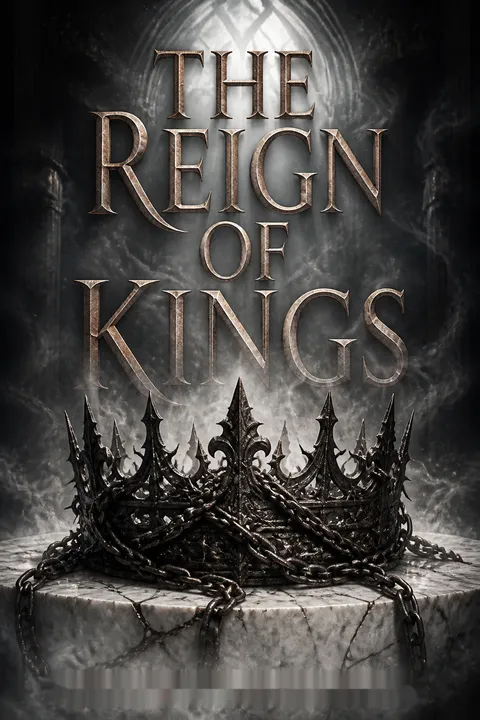
Candice M. Wright's The Reign of Kings is a tour de force of dark romantic suspense that interrogates cycles of power—within families, among outlaws, and under the law's gaze. It explores how trauma warps both individuals and communities, and how the search for sanctuary often pushes survivors deeper into labyrinths of control and risk. The novel's greatest strength lies in its refusal to grant simple, cathartic closure: survival is not triumph, and rescue never truly banishes threat. Instead, Wright suggests, authority itself is a double-edged sword—police and MCs alike are both protectors and abusers, and true loyalty is always complicated. Through Reign's evolution from hunted daughter to iron-willed queen, the story models survival as restless adaptation, demanding both strength and the humility to ask for help. The lesson: you can inherit violence or remake it, but never erase it. At its heart, the book is about the possibility—and necessity—of choosing love even when it cannot guarantee safety, and of holding fast to agency when every system is designed to strip it away. Ultimately, the only kingdom worth reigning over is the self, surrounded by those willing to bleed and be remade alongside you.
People Also Read



Characters
Reign Foster
The youngest in a family of law enforcers, Reign is both protected and unprotected—her fighting spirit and foul mouth conceal deep trauma and longing for agency. Her wit is a shield, but she is never truly safe, even among those who love her. Through stalking, abduction, and brutality, Reign survives by adapting—claiming power as both MC "old lady" and queen of her own fate. Trauma reshapes her, but she refuses victimhood, embodying the principle that strength lies not in unbreakability, but in the willingness to rise again, bloodied, wiser, and still loving.
Bates
Once a shadow in the crowd, Bates steps forward as both protector and tormentor, his violence serving as both shield and challenge for Reign. Psychologically, he is marked by trauma, a need for control, and obsessive love—his temper is legendary, but so is his capacity for tenderness, given rarely and at great cost. Bates's journey is one of learning the limits of power: that true strength is in devotion, not dominance, and that vulnerability opens doors violence cannot force.
Priest
A president by necessity and tragedy, Priest is both tactician and wounded heart. Raised in a world where violence answers every question, he is tormented by the ghosts of old betrayals and failed redemptions. Priest's arc interlaces care for Reign, longing for stability, and persistent doubts about whether outlaw life can offer safety or only new forms of captivity. His protective instincts war with his inability to control fate—and his greatest fear is letting his loved ones down.
Saint
Emerging from wrongful imprisonment, Saint is both symbol and reality of cycles of violence and revenge. His psychological makeup is a mixture of anger at injustice, reluctance to trust, and deep need for belonging. The paternity revelation—that his father is the villain—further destabilizes him, but it is his capacity to love and be loved that offers him potential healing. Saint's struggle is emblematic of the novel's central question: can we escape the darkness written into our bloodlines?
Captain Garrett/Coil
Garrett is the ultimate predator—melding the authority of law with the depravity of a cultist and rapist. His obsession with Reign, masquerading as protection or "sanctification," is fueled by deep-seated misogyny, religious mania, and a sadist's need for control. His dual roles—as police and outlaw, lover and torturer—reveal how power structures protect monsters. Psychologically, he is a whirring machine of rationalization and violence, convinced of his own righteousness.
Derek/Flex
Derek is Garrett's brother, living under assumed names in a web of witness protection and betrayal. His decision to remove and raise Ava—daughter of abuse—put him at odds with both blood and biker law. His survival and reemergence complicate the loyalties of all around him. Torn between debts to family and to justice, Flex is a mirror for what might have been—a "good cop" who never truly escapes the shadows of violence.
Ava
Ava, daughter of Garrett and Derek's charge, embodies the aftermath of trauma: stunted by abuse, visible and invisible bruises marking everything she does. As the cycle of abduction, rescue, and disappearance continues, Ava's pain ripples out to touch new generations. Her journey is only beginning—a symbol of how cycles of violence and survival continue beyond the chosen family, and demand new forms of love and attention.
Tate Foster
As Reign's eldest brother, Tate is torn between duty, rage, and helplessness in the face of his sister's suffering. His a SWAT mentality of "fixing" everything comes up against the corrosiveness of actual evil. Tate's psychological journey follows him from denial, through guilt and anger, to a grudging acceptance that trust and love sometimes mean admitting you cannot protect everyone. His struggle is emblematic of the wider Foster family dynamic: wanting obedience, but needing connection.
Owen Foster
Closer in age and temperament to Reign, Owen tries and often fails to separate professional from personal responsibility. His analytical mind is undermined by emotional attachment—he is the brother who believes, the one to investigate Garrett, and the one most shocked by the abyss staring back. His arc is about learning the cost of trust, and the importance—and limitations—of evidence in a world ruled by violence.
Lexi (and MC women)
Lexi and the "old ladies" of Carnage are less individuals than avatars for the challenges Reign must overcome: envy, hostility, and the brutality of female politics in a man's world. Their pettiness and aggression both test and prove Reign's status as "queen"—she wins respect not by compliance, but by out-fighting and outwitting those who would challenge her, reflecting the larger dynamics of survival and power.
Plot Devices
Twisted Double Identity and Undercover Web
The novel exploits the classic double-identity device in extreme form: not only are heroes and villains brothers, but the lawmen are also outlaws, their histories and motives as much a tangle as their bloodlines. Witness protection, alias, and staged "deaths" all blur the line between self and other, making every alliance suspect and every clue potentially a trap. These shifting identities fuel the narrative's ambiguity and suspense, echoing the theme that evil and salvation exist side by side.
Misdirection, False Leads, and Red Herrings
Throughout the story, MC and Foster family members chase red herrings planted with meticulous care, chasing men who "fit the profile" until, with sick realization, it emerges that the monster has always been among them—in positions of trust. The police, motorcycle club, and family all experience the agony of misjudgment and lost time. The stalker's manipulation of evidence and manipulation of others mirrors the broader dynamic of power and control.
Ritual and Symbolic Violence
Garrett's use of ritual—notes quoting scripture, crucifixion, "redemption" by knife—elevates the violence from random to systemic, making the horror both specific and allegorical. The tension between sexuality and "purity," autonomy and submission, is violently inscribed in bodies, especially Reign's and Ava's, echoing the wider battle against patriarchal control and the misuse of religious authority.
Power, Agency, and the MC Code
The MC's outlaw code operates as both empowering and imprisoning. For Reign, being "claimed" by the presidents is both shelter and danger—her struggle is to navigate and redefine the terms, reclaiming power lost to trauma and asserting self even within a world built on violence. Frequent reversals—where Reign resorts to violence or wit to survive challenges from both men and women—demonstrate agency in environments stacked against her.
Parallel Structure: Family at War
The central structural device is the mirroring of cycles: law and outlaw, family of origin and found family, generation to generation. Each reveals both the persistence of trauma and the hope that cycles can be interrupted—not by erasure but by confrontation, confession, and new bonds. The narrative is mapped as a series of false resolutions and fresh wounds, echoing the reality of survival in a world of repeated violence.
Open-Ended Resolution and Cyclicality
Victory is always incomplete: after rescue, new victims disappear; new alliances of vengeance and search are formed. The "ending" is a pause, not a solution—trauma is not erased, but adapted to, with love and vigilance as the only enduring weapons.
Underestimated Series Series






Download PDF
Download EPUB
.epub digital book format is ideal for reading ebooks on phones, tablets, and e-readers.








































