
Plot Summary
Blood and Lies Begin
The story opens with a brutal act of vengeance: Atlas and his father slaughter an entire wedding party, seeking retribution for a crime against their family. The violence is cold, calculated, and leaves a young girl, Emma Walsh, as the sole survivor—her family wiped out by a lie. This act of blood sets the tone for a world where power, loyalty, and revenge are currency, and where Atlas is shaped by violence from birth. The myth of his own bloody origins haunts him, and the consequences of this night ripple through every relationship and decision that follows, binding him to a legacy of brutality and guilt.
Stranded Hearts Collide
Ivy, struggling and alone, finds herself stranded on the roadside when her car breaks down. Atlas, enigmatic and dangerous, offers her a ride. Their meeting is charged with tension and wary attraction—she's cautious, he's persistent. Ivy's independence clashes with Atlas's dominance, but necessity forces her to accept his help. This encounter is more than coincidence; it's the beginning of a dangerous dance between predator and prey, where Ivy's vulnerability draws Atlas in, and his darkness both terrifies and fascinates her. Their connection is immediate, but fraught with unspoken threats and the promise of something more.
Dangerous Rides Home
Atlas and his bodyguard Kenzo drive Ivy home, their conversation laced with flirtation and warning. Ivy's instincts scream at her to be careful, but Atlas's charisma is magnetic. He's protective, yet controlling, and Ivy senses the danger beneath his charm. The ride is a microcosm of their relationship: Atlas tests boundaries, Ivy pushes back, and both are drawn to the thrill of the unknown. When Atlas returns Ivy's lost phone, she realizes he knows more about her than he should. The seeds of obsession are sown, and Ivy's world begins to tilt on its axis.
Shadows at The Drift
Ivy juggles two jobs, barely scraping by. At The Drift, a high-end nightclub, she faces harassment from customers and the indifference of management. Atlas's presence looms—he arranges for her to be driven home, his concern blurring the line between care and control. Ivy's independence is threatened by his interventions, but she can't deny the safety he provides. When a customer attacks her after work, Atlas's world collides with hers in violence and rescue. Ivy wakes in Atlas's bed, cared for but stripped of agency, and the power imbalance between them grows ever more pronounced.
Stalked and Shaken
Ivy's life spirals as she becomes the target of a stalker. Flowers appear at her door, notes hint at surveillance, and her sense of safety evaporates. Atlas's protectiveness intensifies—he installs security, replaces her door, and insists on controlling her movements. Ivy is torn between gratitude and resentment, her autonomy eroding under Atlas's watchful eye. The stalker's presence is a constant shadow, pushing Ivy further into Atlas's orbit even as she resists his dominance. The tension between desire and fear, freedom and captivity, becomes the central conflict of her world.
Atlas's Obsession Unveiled
Atlas's obsession with Ivy deepens, manifesting in increasingly controlling behavior. He tracks her phone, dictates her transportation, and punishes perceived disobedience with sexual dominance. Ivy is both aroused and alarmed by his intensity—her body betrays her even as her mind rebels. Their relationship becomes a battleground of wills, with Atlas determined to own every part of her, and Ivy struggling to maintain her sense of self. The line between protection and possession blurs, and Ivy is forced to confront the reality of loving a man who is as much monster as savior.
Seduction and Surrender
The sexual tension between Atlas and Ivy explodes into passion, their encounters marked by roughness, vulnerability, and a desperate need for connection. Atlas's dominance is absolute—he marks Ivy as his, both physically and emotionally. Ivy surrenders to the intensity of their bond, even as she fears the consequences. Their lovemaking is a form of communication, a way to express what words cannot: pain, longing, and the hope for redemption. But beneath the surface, the threat of violence and betrayal simmers, and Ivy knows that surrendering to Atlas means risking everything.
Flowers, Threats, and Fear
The stalker's actions become bolder—flowers, notes, and surveillance cameras invade Ivy's life. Atlas's response is to tighten his grip, isolating Ivy from friends and work. Ivy's world shrinks to the confines of Atlas's protection, her independence sacrificed for safety. The stalker's identity remains a mystery, but the sense of being hunted is ever-present. Ivy's trust in Atlas is tested as she discovers the extent of his manipulation, and the realization that her protector may also be her jailer. The boundaries between love and coercion, safety and captivity, are shattered.
Power, Control, and Coercion
Atlas's machinations come to light—he orchestrated Ivy's job loss, her isolation, and even aspects of the stalking to force her dependence on him. Ivy is devastated by the betrayal, her trust in Atlas destroyed. The revelation that Atlas owns The Drift, her former workplace, and manipulated events to bring her into his world, leaves Ivy reeling. She confronts the reality that her life has been shaped by Atlas's will, her choices an illusion. The power dynamic between them is laid bare, and Ivy must decide whether to fight for her freedom or accept her role as Atlas's possession.
Betrayal and Boundaries Broken
Atlas's need for control reaches its zenith—he restrains Ivy, subjects her to psychological torment, and blurs the line between lover and captor. Ivy's resistance is met with punishment, her pleas for autonomy ignored. The stalker is revealed to be a pawn in Atlas's game, and Ivy's sense of reality fractures. The violence of their relationship mirrors the violence of Atlas's past, and Ivy is forced to confront the darkness within herself as well as in Atlas. The boundaries of consent, love, and morality are obliterated, leaving only raw survival.
Stalker in the Shadows
The stalker's identity is finally revealed—a man from Ivy's world, manipulated by Atlas and driven by his own twisted desires. The confrontation is brutal: Ivy fights for her life, Atlas arrives in time to save her, and the stalker is killed. The violence is cathartic but leaves Ivy traumatized, her sense of safety forever shattered. Atlas's capacity for brutality is laid bare, and Ivy must reconcile her love for him with the reality of his actions. The cycle of violence that began with blood and lies comes full circle, and the cost of survival is innocence lost.
Love, Violence, and Vengeance
Atlas's family history is revealed—his father's legacy of violence, the massacre that orphaned Emma Walsh, and the lies that set everything in motion. Ivy learns the truth of her own past: she is Emma, the girl who survived the wedding massacre, her memories buried by trauma and time. The revelation is devastating—her love for Atlas is built on the ruins of her own family's destruction. The cycle of vengeance threatens to consume them both, as old enemies return and the debts of blood demand payment. Ivy must choose between forgiveness and retribution, love and justice.
Truths, Traps, and Trauma
The truth of Ivy's identity shatters the fragile peace she and Atlas have built. As Abigail, Atlas's sister, seeks her own revenge, the past and present collide in a final confrontation. Betrayals are exposed, alliances shift, and the cost of survival is paid in blood. Ivy is forced to defend herself and her unborn child, shooting Atlas to escape the cycle of violence. The trauma of her past and the reality of her present converge, leaving her adrift and alone. The price of truth is steep, and the wounds of the past may never fully heal.
The Monster's Confession
Atlas survives Ivy's bullet, but the damage to their relationship is profound. He confesses his sins, his manipulations, and the depth of his obsession. Ivy, in a coma after being shot by Abigail, hovers between life and death. Atlas is forced to confront the consequences of his actions, his love for Ivy both his salvation and his curse. The monster he became to possess her is laid bare, and the possibility of redemption hangs in the balance. Ivy's awakening is both a miracle and a reckoning, as she must decide whether to forgive or to flee.
The Past Returns
The ghosts of the past refuse to rest—Atlas's father, Abigail, and the legacy of the Walsh massacre haunt every moment. The cycle of violence is finally broken as Abigail is killed, and Atlas's father meets his end. Ivy, now a mother, must reconcile her love for Atlas with the knowledge of all that has been lost. The hope for peace is fragile, built on the ashes of vengeance and the promise of a new beginning. The past cannot be undone, but the future is theirs to shape—if they can find the strength to forgive.
Blood Debts Paid
Ivy's recovery is slow and painful, but the birth of her daughter brings hope and healing. Atlas, changed by love and loss, relinquishes his hold on the criminal world, choosing family over power. The debts of blood are paid, and the cycle of violence is ended—not by vengeance, but by the choice to love and to let go. Ivy and Atlas build a new life together, scarred but stronger, their love forged in fire and tempered by forgiveness. The legacy of the past is not forgotten, but it no longer defines them.
The Final Reckoning
Atlas and Ivy confront the final truths of their story—their capacity for darkness, the limits of forgiveness, and the meaning of freedom. Their love is imperfect, marked by pain and betrayal, but it endures. The cost of survival is high, but the reward is a life lived on their own terms. Ivy claims her agency, Atlas surrenders his need for control, and together they find a fragile peace. The reckoning is not just with the past, but with themselves, and the choice to love is both their punishment and their redemption.
Healing, Hope, and Home
In the aftermath of violence and loss, Ivy and Atlas find healing in each other and in their daughter. The scars of the past remain, but they are no longer chains. Their home is a sanctuary, built on trust hard-won and love that refuses to die. The story ends not with a fairytale, but with the promise of a future—one where darkness and light coexist, and where the choice to love, despite everything, is the bravest act of all.
Analysis
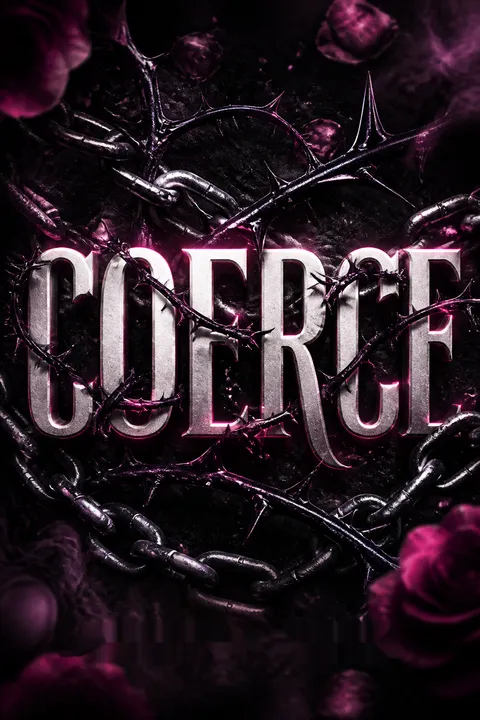
"Coerce" is a dark, psychological romance that interrogates the boundaries between love and obsession, protection and control, victim and survivor. At its core, the novel is a meditation on trauma—how it shapes, distorts, and ultimately defines the lives of those who endure it. The relationship between Atlas and Ivy is both a love story and a cautionary tale, illustrating the dangers of conflating possession with affection and the seductive power of dominance. The novel refuses to offer easy redemption or simple morality; instead, it presents a world where survival often requires complicity, and where the line between hero and villain is razor-thin. The lessons of "Coerce" are hard-won: that healing requires honesty, that love without freedom is another form of captivity, and that breaking the cycle of violence demands both courage and forgiveness. In the end, the story is less about the triumph of good over evil than about the possibility of building something new from the ruins of the past—a home, a family, a fragile peace.
Review Summary
Coerce is a dark romance novel that has garnered mixed reviews. Many readers praise its intense, obsessive hero and steamy scenes, while others criticize the lack of character development and predictable plot twists. The book features an age-gap relationship between a possessive, wealthy man and a young, naive woman. Some reviewers found the hero's actions too extreme, bordering on abusive, while others enjoyed the toxic dynamic. The writing style and pacing received both praise and criticism, with some finding it entertaining and others feeling it rushed or underdeveloped.
People Also Read





Characters
Ivy Brookes / Emma Walsh
Ivy is a young woman shaped by trauma, loss, and the struggle for survival. Orphaned by violence she cannot remember, she builds a life of independence and resilience, working multiple jobs and trusting no one. Her relationship with Atlas is both her salvation and her undoing—he offers protection and passion, but at the cost of her autonomy. Ivy's journey is one of self-discovery: she must confront the truth of her past as Emma Walsh, the sole survivor of a massacre, and choose whether to perpetuate the cycle of vengeance or to break free. Her psychological complexity is marked by a fierce will to live, a longing for love, and the courage to face her own darkness.
Atlas Monroe
Atlas is a man forged in blood and betrayal, his childhood marked by brutality and the legacy of his father's crimes. He is both protector and predator, his love for Ivy bordering on obsession. Atlas's need for control is rooted in fear—of loss, of vulnerability, of the chaos he cannot tame. His psychological profile is that of a man who confuses possession with love, and who will do anything to keep what he claims as his. Over the course of the story, Atlas is forced to confront the consequences of his actions, the limits of his power, and the possibility of redemption through vulnerability and surrender.
Kenzo
Kenzo is Atlas's right hand, a man of action and few words. He is fiercely loyal, but not blind to Atlas's flaws. Kenzo serves as a bridge between Atlas and the world, offering pragmatic advice and occasional humor. His relationship with Ivy is one of cautious respect—he recognizes her strength and the danger she poses to Atlas's carefully constructed world. Kenzo's psychological role is that of the loyal retainer, but he is not without his own code of ethics, often serving as the voice of reason when Atlas's obsession threatens to spiral out of control.
Abigail
Abigail is Atlas's stepsister, whose lie sets the entire story in motion. Manipulated by her mother and abandoned by her family, Abigail is both victim and perpetrator. Her psychological profile is marked by guilt, grief, and a desperate need for validation. Abigail's actions are driven by a longing for love and a desire for revenge, and her ultimate fate is a tragic reminder of the cost of secrets and the impossibility of undoing the past.
Atlas's Father
Atlas's father is a man consumed by power, vengeance, and the need to control. His legacy is one of blood and betrayal, and his relationship with Atlas is fraught with competition and resentment. He serves as both mentor and antagonist, embodying the dangers of unchecked ambition and the corrosive effects of violence. His psychological complexity lies in his ability to justify any action in the name of family, even as he destroys the very thing he claims to protect.
Pete
Pete is Atlas's driver and a quiet presence throughout the story. He is dependable, discreet, and deeply loyal. Pete's role is to facilitate Atlas's plans and to ensure Ivy's safety, but he is not without empathy. His interactions with Ivy reveal a gentler side to the world of violence and control, and his loyalty is ultimately to Atlas, even when it conflicts with his own sense of right and wrong.
Marvin
Marvin is Ivy's coworker and one of the few genuine friends she has. He provides comic relief and emotional support, but is ultimately powerless to protect Ivy from the forces arrayed against her. Marvin's fate is a reminder of the dangers of proximity to power, and his loss underscores Ivy's isolation and vulnerability.
The Stalker (KT/Kane)
The stalker is both a tool of Atlas's manipulation and a genuine threat to Ivy. His obsession mirrors Atlas's, but without the veneer of love or protection. He is a reminder of the dangers that lurk in the shadows, and his violence serves as a catalyst for Ivy's final transformation. Psychologically, he represents the externalization of Atlas's own predatory instincts, and his death is both a victory and a loss of innocence for Ivy.
Henry
Henry is the manager of the gym where Ivy works, a man easily bought and manipulated by Atlas. He represents the ways in which power corrupts and the ease with which the vulnerable can be exploited. His complicity in Ivy's downfall is both personal and systemic, and his fate is a warning about the dangers of moral compromise.
Detective Miles
Detective Miles is the face of law and order, but his allegiance is ultimately to Atlas. He provides the illusion of protection and investigation, but is complicit in the cover-ups and manipulations that define Ivy's world. His presence underscores the futility of seeking justice in a world ruled by power and corruption.
Plot Devices
Duality of Love and Violence
The narrative structure of "Coerce" is built on the interplay between love and violence, protection and possession. The story uses alternating perspectives and shifting power dynamics to explore the ways in which trauma shapes identity and relationships. Foreshadowing is employed through recurring motifs—flowers, blood, and surveillance—to signal impending danger and the cyclical nature of revenge. The use of unreliable narration, particularly in Ivy's fragmented memories, creates suspense and ambiguity, forcing the reader to question what is real and what is manipulation. The story's pacing is relentless, mirroring the psychological intensity of the characters' inner lives, and the resolution is both cathartic and unsettling, refusing easy answers or neat moral conclusions.
About the Author


Download PDF
Download EPUB
.epub digital book format is ideal for reading ebooks on phones, tablets, and e-readers.








































