
Key Takeaways
1. The 1990s: A Decade of Political Turmoil Beneath Economic Prosperity
That happy narrative, however, masks the reality of our politics in the 1990s.
Hidden divisions. While the 1990s are often remembered for economic prosperity, soaring markets, and a sense of peace, the political landscape was marked by intense confrontation, gridlock, and a new form of tribalism. This era, nestled between the Cold War's end and the War on Terror's start, was far more tumultuous than commonly perceived. The apparent "Era of Good Feelings" was a facade for deep partisan rifts.
Clashing personalities. The disorder stemmed from a collision between two titanic figures: Bill Clinton, who sought to revive the Democratic Party, and Newt Gingrich, who aimed to end decades of Republican minority status in Congress. Their rivalry unleashed historic backlashes, including a "Republican Revolution" and a subsequent backlash against Gingrichism itself, shaping the decade's political battles.
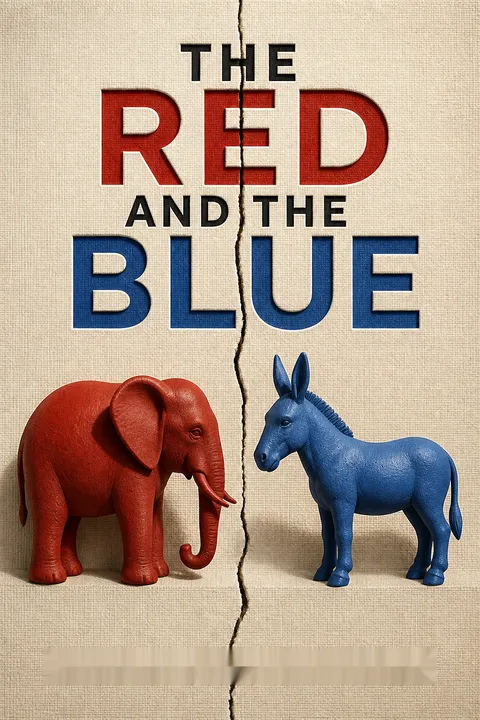
Echoes of today. The policy fights of the 1990s, including debates over budget deficits, spending, taxes, healthcare, gay rights, and gun control, laid the groundwork for contemporary political divisions. The decade saw the country cleave into distinct political groupings, with "Red America" and "Blue America" emerging as shorthand for the two parties and their entrenched loyalties.
2. Clinton's Early Struggles and the "Comeback Kid" Persona
New Hampshire tonight has made Bill Clinton the comeback kid!
Early ambition and setbacks. Bill Clinton, a young Arkansas governor, harbored national ambitions but faced early political missteps, including a humbling defeat in his 1980 gubernatorial reelection bid. His "naked ambition" and his wife Hillary's unconventional role as First Lady alienated some Arkansans, forcing him to adapt his image and approach to win back voters.
Scandal and resilience. Clinton's 1992 presidential campaign was plagued by early scandals, including allegations of extramarital affairs (Gennifer Flowers) and draft-dodging during the Vietnam War. These controversies, amplified by a new, aggressive media environment post-Gary Hart, threatened to derail his candidacy before a single vote was cast.
Mastering the narrative. Despite the barrage of negative headlines, Clinton demonstrated remarkable resilience and a knack for turning adversity into advantage. His "Comeback Kid" moment in the New Hampshire primary, where he defied expectations to secure a strong second-place finish, showcased his ability to connect with voters and project toughness, setting the stage for his eventual nomination.
3. Gingrich's Rise: Weaponizing Partisanship and the "Contract with America"
The Speaker as a tyrant; the Democratic majority as a dissent-crushing machine; the House as an institution corrupted by a generation of single-party rule: Gingrich was planting seeds with his fellow Republicans, prodding them to renounce coexistence and take up arms against their oppressors.
Challenging the old order. Newt Gingrich, a history professor turned congressman, arrived in Washington determined to dismantle the "Permanent Democratic Congress" that had dominated the House since 1954. He saw the institution's clubby culture as ripe for a populist backlash, using tactics like:
- Exploiting C-SPAN for partisan attacks.
- Provoking confrontations with Democratic leadership, notably Speaker Tip O'Neill.
- Weaponizing ethics complaints, leading to Speaker Jim Wright's resignation.
The "Contract with America." After years of cultivating a combative, ideologically conservative wing within the GOP, Gingrich orchestrated the "Contract with America" for the 1994 midterms. This national platform, signed by nearly all Republican candidates, promised specific legislative actions within the first 100 days, including:
- Term limits for members of Congress.
- Tax cuts and credits.
- A balanced budget amendment.
Revolutionary success. The Contract galvanized conservative voters and, combined with public dissatisfaction with Clinton's early presidency, led to a historic Republican landslide in 1994. This ended 40 years of Democratic control of the House, elevating Gingrich to Speaker and fulfilling his long-held vision of a combative, unified Republican Party.
4. The Perot Phenomenon: Anti-Establishment Disruption in 1992
I don’t have any experience in running up a four-trillion-dollar debt.
Populist billionaire. Ross Perot, a folksy Texas billionaire, emerged as an unprecedented independent candidate in 1992, tapping into widespread anti-establishment rage and economic anxiety. His direct, no-nonsense style and focus on government waste resonated with millions of voters disillusioned with both major parties.
Unconventional campaign. Perot's candidacy began spontaneously after he challenged Americans on "Larry King Live" to get him on the ballot in all 50 states. He bypassed traditional media filters, using:
- Infomercials to present his policy ideas directly to voters.
- A grassroots volunteer network, United We Stand America, to secure ballot access.
His appeal transcended traditional ideological lines, drawing support from disaffected Democrats and Republicans alike.
Disrupting the race. Perot's presence profoundly impacted the 1992 election, at one point leading in national polls ahead of both George H.W. Bush and Bill Clinton. While his erratic behavior and abrupt withdrawal (and reentry) ultimately limited his electoral success, his 19% popular vote share was the best for an independent in 80 years, highlighting a deep vein of voter dissatisfaction that would continue to shape American politics.
5. Triangulation: Clinton's Strategic Pivot and Political Revival
Triangulation was how one of his consultants, Dick Morris, described it—‘Take the best from each party’s agenda, and come to a solution somewhere above the positions of each party.’
Post-1994 strategy. After the devastating 1994 midterm elections, which saw Republicans seize control of Congress, President Clinton adopted a "triangulation" strategy. This involved positioning himself as a pragmatic centrist, distinct from both the liberal wing of his own party and the perceived excesses of the Republican Congress.
Defining against the opposition. Clinton used the Republican Revolution to his advantage, allowing Gingrich and his allies to push a far-right agenda, then stepping in to defend popular programs and moderate proposals. Key examples include:
- Vetoing Republican budget bills that proposed deep cuts to Medicare and education.
- Adopting a tough stance against the government shutdowns initiated by Republicans.
- Signing welfare reform legislation, fulfilling a campaign promise while angering some liberals.
Political comeback. This strategy allowed Clinton to regain public trust and redefine his presidency. By portraying himself as the defender of mainstream values against an extreme Republican Congress, he saw his approval ratings soar. This pivot was instrumental in his successful 1996 reelection campaign, where he effectively neutralized Republican attacks and presented himself as a "bridge to the future."
6. The Republican Overreach: From Revolution to Backlash
If this budget is not balanced in seven years, the same thing will happen here to our leadership that happened to George Bush when he broke his promise of no new taxes. You will have an internal revolt. You have to balance in seven. Period!
Gingrich's miscalculations. Despite the triumph of the 1994 Republican Revolution, Speaker Newt Gingrich's aggressive tactics and uncompromising ideology led to significant public backlash. His confidence in a conservative mandate blinded him to the complexities of public opinion, particularly on issues like:
- Proposing orphanages as a solution for welfare reform.
- Attempting to overhaul the popular school lunch program.
- His "Cry Baby Newt" incident after complaining about seating on Air Force One.
The government shutdowns. The most damaging misstep was the series of government shutdowns in 1995, initiated by Gingrich and congressional Republicans in a standoff with Clinton over the budget. Republicans believed Clinton would buckle, but public opinion overwhelmingly blamed them for the disruption, severely damaging their image.
Loss of momentum. The shutdowns and Gingrich's polarizing rhetoric eroded the Republican Party's popularity, turning their revolutionary momentum into a defensive struggle. By the 1998 midterms, the GOP lost seats, a rare occurrence for the party out of the White House, leading to Gingrich's resignation as Speaker and signaling the limits of his confrontational approach.
7. Impeachment: A Partisan Battle Over Private Conduct
The great story here for anybody willing to find it and write about it and explain it is this vast right-wing conspiracy that has been conspiring against my husband since the day he announced for president.
Lewinsky scandal erupts. In January 1998, Independent Counsel Ken Starr's investigation expanded to include allegations that President Clinton had an affair with White House intern Monica Lewinsky and encouraged her to lie under oath. This quickly escalated into a full-blown scandal, threatening Clinton's presidency.
Clinton's denials and confession. Clinton initially denied "sexual relations with that woman, Miss Lewinsky," a statement famously made with Hillary by his side. However, after Lewinsky cooperated with Starr and provided evidence, Clinton confessed to an "inappropriate" relationship, but maintained his testimony was "legally accurate" and criticized Starr's investigation as a "pursuit of personal destruction."
Public vs. political reaction. Despite the gravity of the allegations and Clinton's admitted deception, public opinion remained largely supportive of the president's job performance. While many Americans believed he had lied, they viewed the affair as a private matter and opposed impeachment. In contrast, congressional Republicans, fueled by their base and years of animosity, pressed forward with impeachment proceedings, ultimately impeaching Clinton in the House but failing to secure a conviction in the Senate.
8. The 2000 Election: The Crystallization of Red and Blue America
Red America and Blue America as we now know them were born on November 7, 2000, the product of an entire nation torn perfectly in half.
A deeply divided nation. The 2000 presidential election between George W. Bush and Al Gore was the closest in modern American history, ultimately decided by 537 votes in Florida and a Supreme Court ruling. This razor-thin outcome highlighted the profound political polarization that had developed throughout the 1990s.
Emergence of "Red" and "Blue" states. Television networks, for the first time, consistently used red for Republican states and blue for Democratic states, creating a new visual shorthand for the nation's political geography. This map revealed distinct regional, demographic, and cultural divides:
- Blue America: Northeast, Pacific Coast, upper Midwest (large cities, diverse populations, college-educated professionals, unionized blue-collar workers).
- Red America: Mountain West, Plains states, Appalachia, the South (rural areas, conservative values, white voters).
Legacy of the 1990s. The election was a direct consequence of the decade's partisan warfare, which had redefined both parties. Clinton's presidency, initially seen as a Democratic revival, ultimately contributed to the hardening of these divisions, as his efforts to move the party to the center were met with fierce Republican opposition, pushing voters to pick sides and entrenching the tribal loyalties that would define 21st-century American politics.
People Also Read




Download PDF
Download EPUB
.epub digital book format is ideal for reading ebooks on phones, tablets, and e-readers.








































